Janet Craig Dracaena Repotting: When, How, and Mistakes
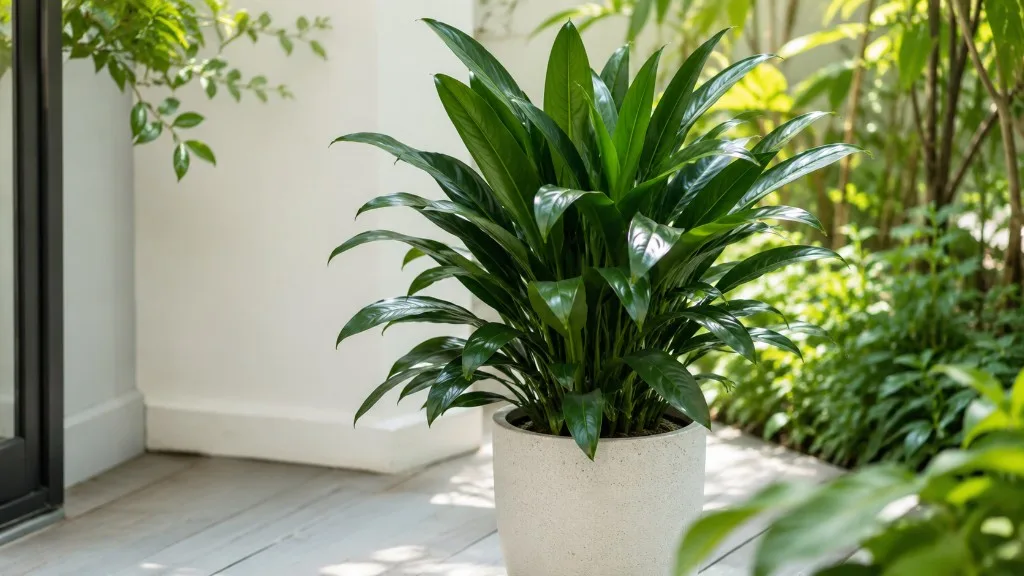
Janet Craig Dracaena Repotting: When, How, and Mistakes to Avoid
Janet Craig Dracaena Repotting: When, How, and Mistakes to Avoid
Janet Craig Dracaena (Dracaena fragrans ‘Janet Craig’, still widely sold under the older name Dracaena deremensis ‘Janet Craig’) is one of the most forgiving upright houseplants you can keep in a dim office or living room, but it is not a plant you can ignore forever in the same pot. Its dark, glossy leaves and thick cane-like stems grow slowly - often only a few inches of height per year indoors - which makes root problems easy to miss until drainage fails or leaf tips start scorching from salt buildup. Repotting is the moment you restore air to the root zone, replace depleted mix, and give the plant room to keep filling vertical space without fighting a cramped, circling root mass.
Done at the right season, with a modest pot increase and a well-draining, fluoride-aware mix, a Janet Craig repot is usually quiet: a day of careful handling, a week or two of slight limpness, and then steady new growth at the top of the cane. Done in an oversized container, with roots stripped bare, or with fluoridated tap water flooding fresh soil, the same move can yellow lower leaves, stall growth for months, and leave you wondering whether a plant that tolerated low light for years has suddenly become fragile. This guide covers when to repot, how to execute the move step by step, and the mistakes that turn a routine upgrade into a long recovery.
Why Repotting Matters for Janet Craig Dracaena
Repotting addresses three problems that all eventually show up as foliage symptoms if you wait too long. First, roots circle the inside of a pot until they form a dense mat that absorbs water unevenly and leaves dead airless zones in the center of the ball. Second, peat- and coir-based mixes break down over two to three years - particles compress, perlite crumbles or floats, and the pore spaces that keep dracaena roots breathing disappear. Third, salts from tap water, fluoride, and fertilizer accumulate at the root zone, which on Janet Craig Dracaena often appears as brown, dead leaf tips and margins even when you believe you are watering conservatively.
Janet Craig belongs to Asparagaceae and behaves like a tropical understory plant that wants evenly moist but never waterlogged soil. The most common repotting failure - jumping to a pot that is much too large - creates exactly the stagnant wet environment dracaena roots tolerate least. The plant above ground looks like a tough architectural specimen, but below ground it depends on oxygen moving through loose mix between waterings. Repotting rebuilds that balance before decline becomes obvious in the form of soft stems, sour-smelling soil, or leaves that yellow from the bottom up.
What fresh soil and extra root room actually fix
Fresh mix restores structure: the air pockets, organic matter, and drainage speed that compacted old soil lost over seasons of watering and root pressure. Extra root room lets new white tips spread outward instead of spiraling against pot walls, which directly improves the plant’s ability to pull water from the full soil volume after each thorough drink. You notice the difference in pot behavior. A root-bound Janet Craig often dries out in uneven layers - the top feels dry while the center stays wet - or water runs through channels without wetting the whole mass, producing wilting that looks like underwatering but is really poor root-to-soil contact.
A repot also gives you the only convenient moment to inspect roots for root rot - brown, mushy, sour-smelling tissue that must be trimmed before it spreads. Catching rot during repotting is far simpler than diagnosing it from yellow leaves alone, because dracaenas drop lower leaves naturally as they grow taller and can mask rot symptoms behind normal senescence. If roots are mostly white or tan and firm, you are upgrading space and soil. If they are not, repotting becomes a rescue operation with lighter watering afterward and no fertilizer until new growth confirms recovery.
How slow-growing Janet Craig Dracaena uses its root system
Most indoor Janet Craig specimens reach roughly 1.2–1.8 m (4–6 feet) in height over many years, though older plants in bright conditions can push toward 3 m (10 feet) according to NC State Extension and Clemson HGIC descriptions. Growth is slow and vertical, with new leaves emerging from the top of the cane while lower leaves yellow and drop - a normal habit, not automatically a repotting signal. That slow pace is why repotting advice written for fast herbs or pothos does not transfer cleanly. A Janet Craig in a 15 cm nursery pot may sit comfortably for two or three years before roots demand more space.
As a working baseline, plan on a full repot every two to three years for a healthy indoor Janet Craig, or sooner if multiple root-bound signals appear together. NC State Extension advises repotting when the plant starts to lift out of the pot or sends roots through drainage holes - a signal-based rule that fits Janet Craig Dracaena overview better than a rigid annual schedule. The calendar is a reminder to lift the plant and look, not a command to repot on a fixed date regardless of what the roots show you.
Signs Your Janet Craig Dracaena Needs Repotting
The clearest sign is visual: roots emerging from drainage holes or circling tightly when you slide the plant partway out of the pot. Reliable secondary signals include water that runs straight through without absorbing, a plant that wilts even though the top half of the soil still feels slightly moist, and growth that stalls for a full growing season despite stable light and appropriate watering. When two or more of these appear during spring or summer, repotting is usually the right move.
Do not repot simply because lower leaves turned yellow. Janet Craig naturally sheds older foliage as the cane elongates, and single yellow leaves can also mean fluoride burn, low humidity, or inconsistent watering. Repotting a plant that is already stressed for unrelated reasons adds another variable and often makes diagnosis harder. Confirm that the root zone or mix condition is the bottleneck before you commit to the work.
Root-bound and drainage signals
Lift the pot and inspect the bottom first. Roots peeking through holes mean the plant has used the volume it was given. Slide the plant out gently - if the root ball holds a perfect pot-shaped mold with little visible mix on the sides, you are looking at a classic root-bound situation. Circling roots at the bottom are not an instant emergency on a slow dracaena, but they tell you the plant has been asking for space for a while and salt buildup in the old core may already be affecting leaf tips.
Fast surface drainage after watering sounds healthy until you realize water is bypassing a hydrophobic or compacted center. If you water thoroughly and the pot feels oddly light again within an hour while leaves still look thirsty, the mix may be spent rather than the plant under-watered on purpose. Slow drainage combined with sour smell or soft stem tissue at soil level points to rot that requires immediate repotting into fresh, airy mix regardless of season. Before repotting for slow drainage alone, confirm holes are open and the plant is not sitting in a full saucer of standing water - cachepot mistakes mimic root problems.
Growth and leaf symptoms tied to root stress
Stunted new top growth over an entire warm season is a late-stage root-bound signal. Janet Craig normally produces new leaves periodically when light and water are adequate, even in moderate indoor brightness. When the crown stops pushing fresh foliage for months, or new leaves arrive smaller and paler than the previous generation, depleted or compacted soil is a prime suspect after you rule out fluoride injury and cold drafts.
Top-heavy wobble - where the cane and foliage mass outweigh the root anchor - is another clue, especially if the plant tips easily despite being watered on its normal schedule. Pale or scorched leaf tips can indicate salt and fluoride accumulation in old mix, particularly if you have used tap water faithfully and the tips brown from the outer edge inward. Flushing the pot helps short term, but repotting with fresh mix is the durable fix when crust appears on the soil surface or flushing no longer clears the burn pattern within a few weeks.
Best Time of Year to Repot Janet Craig Dracaena
Timing matters because Janet Craig recovers fastest when it is already geared for growth. Spring through early summer is the safest window for most indoor growers in temperate climates. Rising temperatures and lengthening days support root colonization of fresh mix before short winter days and indoor heating alter drying speed.
Repot on an ordinary indoor day, and avoid extreme heat spikes that add stress on top of root disturbance. Janet Craig tolerates low light but leaf discoloration can occur above 24°C (75°F). You need consistent warmth, Janet Craig Dracaena light guide, and a watering hand that respects how much slower a disturbed dracaena pulls moisture in the first week.
Spring and early summer windows
During active growth, Janet Craig can show new firm leaves at the crown within three to six weeks after a well-executed repot - slower than fast-growing foliage plants, but steady if soil stays evenly moist without sitting saturated. Early summer still works if you missed spring; keep the plant in bright indirect light, not direct sun, for the first two weeks after repotting, then return it to its normal spot.
When winter repotting is still justified
Winter repotting is a backup plan, not a default. Growth slows, days are short, and a disturbed root system sits in wet mix longer because the plant is not pulling water actively. That combination increases rot risk on a species already sensitive to overwatering on Janet Craig Dracaena. Skip winter repotting if the plant is merely slightly tight but still producing occasional new top leaves and watering on a normal rhythm.
Repot in winter only when delay would clearly harm the plant: severe root-binding with repeated instability or wilting, active root rot that requires trimming and fresh mix, or a pot that has cracked or become unusable. If you must repot then, use a modest size increase, keep temperatures above roughly 15°C (59°F) and ideally closer to 18°C, provide bright indirect light, and water more cautiously than you would in spring - let the top 3–5 cm of mix dry further between waterings until new growth appears. NC State Extension recommends keeping corn plants above 50 degrees F for general health; repotting in cold rooms stacks stress on stress.
Choosing the Right Pot Size and Material
The single most important pot decision is diameter, not aesthetics. Janet Craig wants one step up, not a mansion. Jumping from a 17 cm pot to a 25 cm pot feels generous, but the unused soil volume stays wet for days while the slow root system catches up. That wet zone is where dracaena roots fail most often, and because Janet Craig is already watered on a “top half dry” rhythm, an oversized pot can keep the bottom soggy for weeks without you noticing from a surface finger test alone.
Measure the current inner diameter and choose a new pot 2–5 cm (about 1–2 inches) wider, with similar depth unless the plant is extremely top-heavy. For a Janet Craig in a 15 cm pot, move to 17–18 cm. From 20 cm, move to 22–23 cm. Repeat the one-size-up rule each time you repot across the plant’s life rather than skipping sizes to save future effort - dracaenas punish large jumps more than they reward them.
The one-size-up rule for slow growers
Choose a container two inches larger in diameter than the existing one - roots grow into soil progressively, and excess mix stays wet until they colonize it. Slow growth means that mismatch lasts longer than on fast herbs, which is why patience with pot size matters more here, not less.
The one-size-up rule keeps Janet Craig Dracaena watering guide predictable. Janet Craig is typically watered when the top half of the soil is dry, and fresh mix in a correctly sized pot should still allow you to feel that layer with a finger or chopstick. If the top stays dry for two weeks while lower stems feel soft, the pot is probably too large or the mix too heavy.
Drainage holes and pot materials compared
Every Janet Craig pot needs drainage holes. No exceptions for long-term indoor care. Decorative cache pots without holes are fine only if the plant remains in an inner nursery pot that drains freely into a saucer you empty after every watering.
Unglazed terracotta dries faster - useful if you tend to overwater. Plastic retains moisture longer, which suits dry rooms but demands sharp saucer emptying. Glazed ceramic sits between the two; weight adds stability for tall canes. Match material to your watering habits, not display aesthetics alone.
Best Soil Mix for Repotting Janet Craig Dracaena
Janet Craig wants loose, well-draining potting mix that holds moisture without becoming waterlogged. Commercial indoor potting soil in a drained container is the standard starting point. Target pH 6.0–6.5, which Clemson HGIC notes helps reduce fluoride availability to roots on dracaenas sensitive to fluoride injury.
A reliable DIY blend for repotting:
- 60% quality peat- or coir-based indoor potting mix
- 20% perlite, pumice, or coarse sand for aeration
- 20% orchid bark or coarse coco chips for long-term structure
That ratio drains within seconds of watering while holding enough moisture that Janet Craig is not stressed between its normal deep drinks. Adjust aeration upward if your home is cool or you tend to water heavily; reduce perlite slightly if you are already using highly fluoridated tap water and see tip burn after repotting, because Clemson HGIC cautions that some high-perlite mixes can contribute to fluoride-related leaf injury in dracaenas - a nuance worth knowing even though many growers successfully use moderate perlite without problems.
Fluoride-aware blends that stay airy
Mix ingredients in a tub before you repot rather than layering them in the pot. Dry blending distributes amendments evenly and prevents the “drainage layer of gravel at the bottom” mistake, which does not improve drainage and can create a perched water table that keeps the root zone wetter, not drier.
Full repot - removing the plant, loosening outer circling roots, and replacing essentially all old mix - is appropriate when roots are bound, mix is compacted or sour, salt crust is present, or you are correcting rot. Top-dressing - scraping out the top 3–5 cm of old mix and replacing it with fresh blend without disturbing roots - is a gentler mid-season option when drainage is still acceptable but surface salts have built up. Top-dressing in early spring can buy you a season if the plant is not yet root-bound, but it will not solve circling roots at the bottom. Never reuse old mix from a rot case; fresh mix is simpler and safer.
After repotting, water with distilled, rainwater, or filtered water if your tap supply is fluoridated - NC State Extension and Clemson HGIC both flag Janet Craig as sensitive to fluorides and built-up salts. Avoid superphosphate-based fertilizers after repot, as Clemson notes they can carry fluorine. Hold all fertilizer for at least a month regardless, which the step-by-step section below explains in detail.
Step-by-Step: How to Repot Janet Craig Dracaena
Repotting Janet Craig is straightforward if you prepare materials first and minimize root exposure time. Gather the new pot, pre-mixed soil, clean scissors, a chopstick or pencil, and a watering can filled with appropriate water. Work on a surface you can wipe clean - mature plants are heavy, and dropped leaves are normal if you handle the cane roughly.
Step 1: Water the plant 24 hours before repotting if the soil is very dry. A lightly moist root ball holds together and slips out more cleanly than a bone-dry ball that crumbles or a soggy one that tears roots.
Step 2: Add a small mound of fresh mix to the bottom of the new pot. Do not create a thick gravel drainage layer; it does not improve drainage in container science tests and can worsen bottom wetness.
Step 3: Tilt the plant and slide it out, supporting the base of the cane with your hand. If it resists, squeeze flexible nursery pots or run a knife around the inside edge of rigid pots.
Step 4: Inspect roots. Trim brown, mushy tissue with clean scissors. Tease circling roots at the bottom and sides gently so they point outward. Remove loose old mix from the outer layer without bare-rooting the entire ball unless rot forces a wash.
Step 5: Set the plant in the new pot so the previous soil line sits about 1–2 cm below the rim. Do not bury the cane deeper than it was growing; stem burial invites rot on dracaenas.
Step 6: Backfill with fresh mix, working soil between roots with a chopstick while holding the plant centered. Firm lightly - enough to remove large air gaps, not enough to compress mix into concrete.
Step 7: Water thoroughly with non-fluoridated water until excess runs from drainage holes. Empty the saucer. Place the plant in bright indirect light, out of direct sun, for 10–14 days.
Step 8: Hold fertilizer for at least four to six weeks while roots settle. Resume normal watering checks - top half dry - rather than a calendar schedule alone.
Preparing the plant and inspecting roots
The goal of root preparation is to redirect growth, not to destroy the root ball. Janet Craig relies on fine root hairs for water uptake; washing every particle of old soil away strips those hairs and extends recovery time unnecessarily on a slow grower that already takes weeks to show new top leaves. Keep most of the original root mass intact while freeing the outer circling layer and removing clearly dead tissue.
If roots are densely matted but healthy, you may slice 1–2 cm off the bottom of the root ball with a clean knife to stimulate new white tips - a standard nursery technique adapted for houseplants. Avoid removing more than one-third of total root mass unless you are rescuing rot. Tall Janet Craig plants with reduced roots may need a bamboo stake adjusted after repotting to prevent cane lean while the anchor re-establishes; that is normal on mature specimens and not a sign of failure.
Placement, backfill, and the first watering
Center the plant so the cane stands without wobbling. Wobble usually means insufficient backfill beneath the root ball or a pot that is too shallow for the root depth. Add mix under the ball, not just around the sides, until the plant sits firmly at the correct depth.
The first thorough watering settles mix and closes small air pockets. If the soil level drops noticeably after watering, top up with a little more mix before roots grow into empty space. For the first two weeks, expect to check moisture deeper than the surface - the top may dry faster than the center while roots reconnect. Mild limpness for a few days is common on dracaenas after repotting; Mild post-repot limpness for one to two weeks is common on dracaenas. Recoverable limpness improves after a careful drink when the top half of the mix is dry. Limpness that worsens daily despite careful moisture, plus sour smell, usually means rot, oversized pot, or buried stem tissue - inspect accordingly rather than watering repeatedly.
Common Janet Craig Dracaena Repotting Mistakes and Recovery
Oversized pots top the list. More soil without more roots means chronic bottom wetness and yellow lower leaves that look like nutrient problems but are really oxygen problems. Stick to one size up even if you imagine a tall Janet Craig “will grow into it soon” - this species grows slowly by design.
Bare-rooting or over-washing removes the fine hairs that absorb water. Tease outer circling roots and remove spent mix from the exterior, but do not scrub the ball clean unless rot forces full exposure. Recovery on a slow dracaena can stretch to two months when roots are set back this far.
Immediate fertilizing after repot burns tender new root tips in fresh, already nutrient-containing mix and adds fluoride risk if you use the wrong product. Wait until you see new top growth of normal size and colour, then resume a balanced feed at half strength during spring and summer if your routine includes fertilizer. NC State Extension suggests monthly feeding in active growth; that schedule assumes an established root system, not a plant days out of the pot.
Using fluoridated tap water on the first deep soak after repotting can produce fresh tip burn within weeks even if everything else was done correctly. Switch water sources for the first month at minimum, and flush the saucer after every watering so salts do not wick back up.
Repotting while the plant is already declining from cold injury, pest infestation, or severe underwatering adds stress without fixing the trigger. Diagnose first, repot when roots or mix are clearly the issue. Mealybugs and thrips - both listed by NC State Extension as dracaena pests - should be treated before or during repotting if present, because fresh mix does not solve insect pressure on stems and leaf axils.
Using a pot without drainage holes turns repotting into a long-term rot trap. If you love a decorative container, use it as a cover pot only.
Ignoring pet safety during the messy phase: the ASPCA lists Dracaena species as toxic to cats and dogs, with ingestion causing vomiting, depression, anorexia, and hypersalivation from saponins. Keep repotting debris and trimmed leaves out of reach while you work.
Mild transplant shock usually shows as slight limpness, a pause in new top leaves, or one or two dropped lower leaves for one to two weeks. Full root re-establishment typically takes four to eight weeks in warm, bright conditions. New firm leaves at the crown mean roots have found the new mix. Keep the plant in bright indirect light during recovery, not direct sun, and check moisture deep enough to judge the top half dry threshold rather than assuming the old schedule still applies. If limpness persists beyond three weeks, inspect for rot, buried stems, or an oversized pot.
Conclusion
Janet Craig Dracaena repotting comes down to reading the roots, choosing spring or early summer when you can, moving the plant one pot size up with fresh, well-draining, fluoride-aware mix, and giving it a quiet two weeks in bright indirect light while a slow root system settles. Check every two to three years rather than waiting for obvious distress, but never repot on autopilot when the real problem is fluoride burn, pests, or watering inconsistency.
Get the pot size, soil, and water source right and Janet Craig rewards you with steady top growth and the dark glossy foliage that made it a commercial interior staple. Oversize the container, fertilize too soon, soak with fluoridated tap water on day one, or bare-root without cause and the same plant will look punished for weeks or months. Watch roots and soil condition, not just lower leaf drop, and treat repotting as a targeted fix - not a reflex - and you will rarely set back a healthy Janet Craig with a routine upgrade.
When to use this page vs other Janet Craig Dracaena guides
- Janet Craig Dracaena overview - Start here for whole-plant context before deep-diving this topic.
- Janet Craig Dracaena problems hub - Jump to symptom-specific fix guides when this care topic does not resolve the issue.
Related Janet Craig Dracaena guides
- Janet Craig Dracaena overview
- Janet Craig Dracaena watering
- Janet Craig Dracaena light
- Janet Craig Dracaena soil
- Janet Craig Dracaena propagation
- Janet Craig Dracaena fertilizer
- Janet Craig Dracaena problems
Related tool
Try the Pot Size Calculator with janet-craig-dracaena pre-selected to estimate needs for your setup.