Janet Craig Dracaena Watering: Schedule and Soil Checks
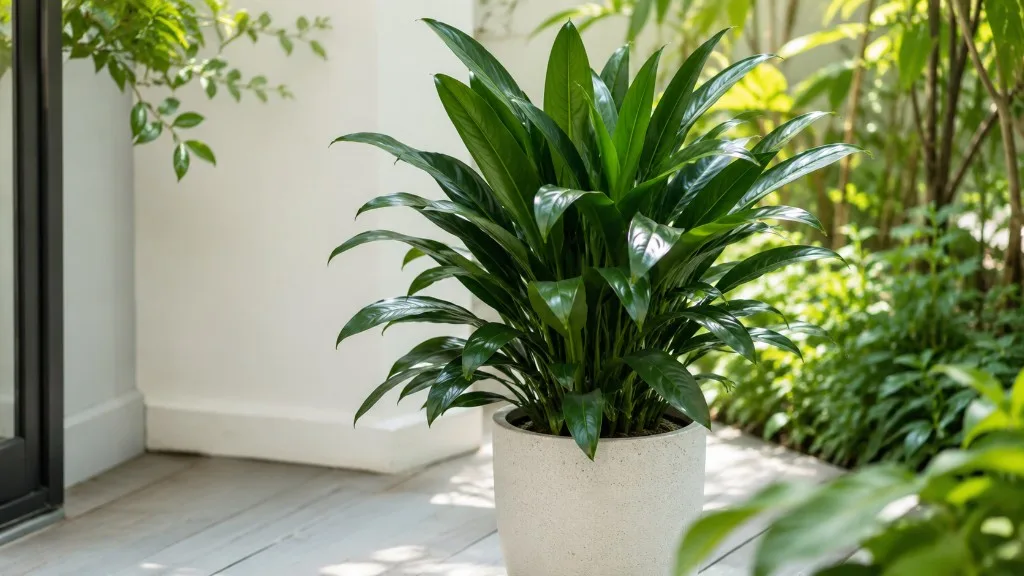
Janet Craig Dracaena Watering: Schedule and Soil Checks
Janet Craig Dracaena Watering: Schedule and Soil Checks
Janet Craig Dracaena watering is less about memorizing a day of the week and more about reading what the pot is telling you. Dracaena deremensis ‘Janet Craig’ is a slow-growing, upright foliage plant that tolerates low light better than most houseplants - and that tolerance changes everything about how fast its soil dries. The practical rule is simple: let the top half of the mix dry before you water again, then soak thoroughly until water runs from the drainage holes. In a dim office corner, that can mean watering only every 21 to 28 days or longer. In brighter indirect light, you might reach for the watering can every 10 to 14 days. Neither number is a law. Both are starting points until you learn how your specific container behaves.
There is a second rule that matters just as much: use water low in fluoride. Janet Craig Dracaena is among the most fluoride-sensitive houseplants you can grow. Municipal tap water often contains fluoride added at roughly 1 ppm to support dental health in humans. Dracaena roots take that fluoride up with every watering, and it accumulates in leaf margins over time - producing the brown, crispy tips that make an otherwise handsome plant look neglected. The tips are not always a watering-frequency problem. Sometimes they are a water-quality problem, and no amount of schedule tweaking will fix them until you change what is in the can.
This guide covers how often to water, how deep to check soil moisture, which water sources work best, how to water without creating root rot, and how to tell overwatering on Janet Craig Dracaena, underwatering, and fluoride damage apart before you change three variables at once.
Why Watering Checks Beat a Fixed Calendar
A weekly watering habit is one of the fastest ways to kill a Janet Craig Dracaena - not because the plant hates water, but because the same calendar interval produces opposite outcomes in different homes. A plant in a north-facing office with sealed windows and cool air conditioning may still have damp mix three weeks after its last drink. The same cultivar on a bright interior shelf near a west window in a warm apartment may need water twice as often. Temperature, humidity, pot material, soil composition, root mass, and light intensity all change evaporation and root uptake. Treating every Tuesday the same ignores all of that.
Janet Craig Dracaena is moderately drought tolerant once established. Its thick cane and relatively slow metabolism mean it stores some resilience against a missed week. What it does not tolerate well is continuously wet, airless soil - especially in low light, where the plant uses water slowly and roots sit in stale moisture. Overwatering is the more common serious mistake. Underwatering is real but usually easier to recover from if you catch it before repeated drought cycles damage fine roots.
The reliable approach is a check-first routine: on whatever day you might normally water, inspect the pot instead of pouring automatically. If the top half is still damp and the pot feels heavy for its size, wait. If the upper mix is dry, the lower mix is approaching dry, and the pot feels light, water thoroughly. Your calendar becomes a reminder to check, not a command to irrigate. That single shift prevents most root problems and keeps you from compensating for fluoride brown tips by watering more or less at random.
How Often to Water Janet Craig Dracaena
There is no honest one-number answer that fits every Janet Craig Dracaena in every home. What you can use is a dry-down target and a realistic interval range adjusted for light.
For most indoor setups with moderate indirect light, expect to water roughly every 10 to 14 days during active warm months when the plant is growing. In low-light positions - the environment where Janet Craig Dracaena is often placed because it performs well there - stretch that to every 21 to 28 days or more. Some growers in very dim, cool rooms report intervals approaching five weeks between thorough waterings without harm, provided the deep mix is not bone-dry for extended periods and water quality is good.
North Carolina Extension Gardener Plant Toolbox notes that Dracaena prefers allowing the top inch of soil to dry between waterings (NC Extension - Dracaena). That is a conservative minimum. For Janet Craig specifically, especially in low light, waiting until roughly the top half of the potting mix has dried is safer because the lower root zone still holds usable moisture while the upper layer breathes. Extension references similarly emphasize letting soil dry between drinks for Dracaena. The exact percentage matters less than the principle: do not water on a schedule that keeps the mix perpetually moist.
If you are new to the plant, start checking every seven days but only water when tests confirm dryness at the appropriate depth. Within a month you will know whether your pot lands closer to the two-week end or the four-week end. Write that interval down as a personal baseline, then still verify with a finger or skewer before every watering. Season, Janet Craig Dracaena repotting guide, and moving the plant to a new window will reset the timeline.
The Top-Half-Dry Rule Explained
Let the top half dry means the upper 50 percent of the potting mix should lose most of its available moisture before you add more water. You are not waiting for the entire root ball to turn to dust - Janet Craig Dracaena still has access to water in the lower half - but you are refusing to top up while the surface and mid-depth remain cool and damp. That dry-down creates air exchange in the upper root zone, which Dracaena roots need to stay healthy.
Think of the pot in layers. The top two inches might look lighter in color when dry, but color alone is unreliable on peat-based mixes that stay dark when dry. Push your finger, a bamboo skewer, or a moisture meter probe to roughly half the pot depth. At that depth you want no cool damp cling - just dryness or barely perceptible moisture. A wooden skewer pulled up should feel dry to the touch, not stained with wet soil. A moisture meter in the dry zone typically reads 1 to 3 on a 1–10 scale, depending on the brand.
This rule pairs naturally with Janet Craig Dracaena’s low-light tolerance. Less light means less photosynthesis, less transpiration, and slower water use. A plant that barely moves water through its leaves in a dim corner will keep soil wet far longer than a fast-growing tropical in a greenhouse window. Applying a “top inch dry” rule in that low-light pot often still overwaters because the bottom half never dries. Waiting for half-depth dryness aligns watering with actual uptake.
One nuance from the Pacific Northwest Pest Management Handbooks: for Dracaena deremensis, cultural guidance recommends keeping soil evenly moist rather than cycling through extreme drought (PNW Handbooks - Dracaena-Tip Burn). That sounds contradictory until you read it carefully. “Evenly moist” in production horticulture means avoiding long drought stress between irrigations - not keeping soil soggy daily. For home growers, the practical translation is: allow a substantial dry-down, then water thoroughly so moisture distributes evenly through the root ball - rather than giving tiny sips that wet only the surface or letting the plant bake dry for weeks while leaf margins desiccate.
Low-Light Timelines: Every 21 to 28 Days or More
Janet Craig Dracaena earned its reputation in lobbies, offices, and interior corridors precisely because it survives lower light than many competitors. That placement comes with a watering consequence: very infrequent irrigation. In a typical low-light office - fluorescent or LED panels, no direct sun, stable cool temperature - a well-drained pot in a 10-inch container might not need a full watering for three to four weeks after a proper soak-and-drain cycle.
Use 21 to 28 days as a sanity-check range, not a timer. If you hit day 21 and the top half is still damp, do not water because the calendar says so. If you hit day 28 and the pot is light, the skewer is dry at half depth, and lower leaves look slightly less rigid than usual, water that day even if your previous interval was only eighteen days. Low light compresses the plant’s metabolism; your job is to match water supply to that slow demand.
Signs you are on the right low-light interval include firm upright leaves, slow but steady new growth at the crown during warm months, and no yellowing lower leaves from chronic wet feet. Signs you are watering too often in low light include persistent damp surface soil, musty smell, fungus gnats, and yellow leaves that drop while still partially green. When in doubt in a dim spot, wait an extra three to five days and re-check. Janet Craig forgives drought hesitation more readily than it forgives another pour onto already-wet mix.
How to Test Soil Moisture Before You Water
Every reliable Janet Craig Dracaena watering decision starts with measurement, not assumption. You need at least one method you will actually use consistently. Switching between guesswork and precision week to week is how experienced growers still rot roots.
The goal of testing is to answer one question: has enough of the root zone dried that adding water will refresh the plant without waterlogging what’s left? For Janet Craig, that usually means confirming dryness through roughly half the pot depth, plus assessing whether the container feels appropriately light.
Finger, Skewer, and Pot-Weight Methods
The finger test is the fastest tool and sufficient for most pots six to ten inches wide. Insert your index finger to the second knuckle - roughly two inches in a standard indoor pot. If you feel cool, clinging moisture, wait. If the mix feels dry and crumbly with no coolness, combine with a deeper check before watering large pots where two inches is not half depth.
The skewer or chopstick test improves accuracy on deeper containers. Insert a dry bamboo skewer or unfinished wooden chopstick through the drainage hole if the pot is tight, or straight down from the top near the cane but avoiding major roots. Leave it thirty seconds, pull it out, and feel the wood. Wet soil stains and feels cool; dry soil leaves the stick mostly clean and room temperature. For half-depth assessment, mark the stick at half the pot height with tape if that helps until you learn the depth by feel.
Pot-weight comparison is underrated and especially useful for large Janet Craig specimens in heavy ceramic pots where finger depth is awkward. Lift the pot right after a thorough watering when you know the mix is fully saturated - note the effort required. Lift again before each potential watering. A pot that has dried appropriately feels noticeably lighter, often by a quarter to a third of the saturated weight in plastic nursery pots. Weight alone can mislead if roots fill the pot and hold structure, so combine it with a skewer reading until you trust the heft signal.
Moisture meters help beginners but require calibration. Probe to half depth in two spots, not only at the edge where mix dries fastest. Readings in the dry zone (typically 1–3) support watering; readings in the moist zone (5–8) mean wait. Meters fail when salts accumulate or probes crack - cross-check monthly with a skewer.
Fluoride Sensitivity and Water Quality
If you remember one non-schedule fact about Janet Craig Dracaena, make it this: the plant is highly sensitive to fluoride. Clemson University’s Home & Garden Information Center states plainly that Dracaena is very sensitive to fluoride, with symptoms including yellowing tips or margins and dead scorched areas (Clemson HGIC - Dracaena). The Pacific Northwest Pest Management Handbooks list both Dracaena deremensis and D. fragrans as especially vulnerable, noting that municipal water injected with fluorine at about 1 ppm for human dental health can produce toxicity symptoms on sensitive plants over time (PNW Handbooks - Fluorine Toxicity).
Fluoride is an accumulative problem in foliage. It enters through roots (and to a lesser extent through stomata), moves in the transpiration stream, and concentrates at leaf margins and tips - the same places growers blame on underwatering. Because accumulation is gradual, a plant can look fine for months on tap water, then slowly develop widespread tip burn that no humidity tray or misting will reverse on already-damaged tissue.
Clemson also notes that superphosphate fertilizers can carry high fluorine levels, and that soils with very high perlite content may contribute to fluoride availability - relevant if you are also choosing potting mix. Keeping soil pH in the 6.0 to 6.5 range can reduce fluoride uptake, though water source remains the primary lever for most indoor growers.
Why Sitting Tap Water Out Does Not Remove Fluoride
You have probably heard the advice to let tap water sit overnight before watering houseplants. That practice helps with chlorine, which is added as a disinfectant and can off-gas when water stands open. It does not remove fluoride, which is a dissolved ion that does not evaporate from a bucket on the counter. This distinction matters enormously for Janet Craig Dracaena because tip burn from fluoride is often misdiagnosed as low humidity or inconsistent watering - leading growers to change the wrong variable while continuing to irrigate with the same tap source.
Chlorine sensitivity exists in some plants, but Dracaena’s documented problem is fluorine toxicity, not chlorine alone. If your brown tips persist after you improve your dry-down discipline and drainage, switch water source before you switch schedule again. NC Extension explicitly recommends filtered or rain water for Dracaena when tap water contains salts, chlorine, and fluoride that cause browning (NC Extension - Dracaena).
Also avoid water softened by ion-exchange home softeners. Softened water carries sodium that damages roots and leaf tissue on many houseplants, including Dracaena. Extension guidance recommends avoiding fluoridated and salty tap water on Dracaena. If your home has a softener, draw irrigation water from a hard-water tap before the softener line, or use purchased distilled or RO water for plants.
Distilled, Rain, and Filtered Water Options
The best water for Janet Craig Dracaena is any source low in fluoride and excess salts:
- Rainwater collected from clean roofs into food-safe containers is excellent where rainfall is available and pollution is low. Let it reach room temperature before use.
- Distilled water from grocery or hardware stores is reliably low in minerals and fluoride - practical for one or two medium plants, though cost adds up for large collections.
- Reverse osmosis (RO) water from under-sink systems or refill stations removes most fluoride and is the most scalable long-term solution for serious Dracaena growers.
- Charcoal-filtered water helps with taste and some chemicals but may not remove enough fluoride unless the filter is certified for fluoride reduction - check the product spec rather than assuming “filtered” equals safe for Dracaena.
You do not need laboratory purity. You need consistency and lower fluoride load than typical municipal tap. Many growers alternate: tap for less sensitive plants, distilled or rain for Janet Craig only - a reasonable compromise if bulk RO is not available.
If you must use tap temporarily, avoid hot tap (higher mineral concentration from water heater sediment) and do not assume overnight resting fixes fluoride. Monitor new growth: healthy new leaf tips are the best sign your water and watering rhythm are aligned. Old burned tips will not green up; trim them cleanly if they bother you aesthetically.
How to Water Janet Craig Dracaena Correctly
When your moisture checks say it is time, water thoroughly in one session rather than dribbling small amounts every few days. Partial surface watering encourages shallow root growth and leaves dry pockets in the center of the root ball where the cane needs support.
Use room-temperature water. Place the pot in a sink or tub if possible. Pour slowly and evenly around the base of the cane, not directly into the leaf crown where stagnant water can encourage rot on tightly packed new growth. Continue until water runs freely from the drainage holes - usually after the volume of water equals roughly one-quarter to one-third of the pot’s volume, depending on how dry the mix was. Let the pot drain for 15 to 30 minutes.
Empty the saucer or lift the pot out of any decorative cachepot so it never sits in runoff. Standing water at the bottom rewets the mix from below and eliminates the dry-down you waited for. If the plant lives in a heavy outer pot permanently, water in the sink, drain completely, then return it to the display container.
Bottom watering - setting the pot in a tray of water and letting the mix wick upward - can work for Janet Craig when the mix has become hydrophobic and repels top watering, but it is not the default method. If you bottom water, still soak until the surface glistens slightly, then drain. Do not leave the pot in the tray indefinitely.
After watering, note the date and how the pot felt before irrigation. Over two months that log teaches you your home’s true interval better than any blog’s day count.
Signs You Are Overwatering
Overwatering is the leading cultural killer of Janet Craig Dracaena because the plant looks tolerant until roots fail silently. Low light slows visible wilting, so damage accumulates before leaves scream for help.
Watch for these patterns together rather than in isolation:
- Yellow leaves, often starting on lower or inner foliage, sometimes dropping while still partially yellow-green
- Soft, mushy, or wrinkled cane near the soil line when rot advances
- Persistent wet surface days after watering with no dry-down
- Musty or sour smell from the mix when you lift the plant or probe deep
- Fungus gnats hovering at the soil surface - their larvae feed in constantly moist organic matter
- Brown tips that spread inward with yellow halos - can overlap with fluoride, but if soil stays wet and roots are dark and slimy when inspected, rot is the primary issue
Overwatering often pairs with low light and poor drainage: a dense peat mix, no drainage hole, or a cachepot holding water in exactly the conditions where Janet Craig uses water slowest.
Yellow Leaves, Soft Stems, and Root Stress
When yellow leaves appear on an otherwise healthy-looking Janet Craig, check moisture at half depth before assuming nutrient deficiency or natural senescence. Dracaena does drop older lower leaves as the cane matures - that is normal. Abnormal yellowing comes in clusters, often with no new crown growth, and coincides with heavy pots that never lighten.
If you suspect overwatering, stop watering and let the mix dry longer than usual - potentially an extra week or more in low light - while you improve airflow around the pot. If the plant worsens or the base softens, unpot and inspect roots. Healthy Dracaena roots are firm and whitish to tan. Brown, black, or slimy roots require trimming back to solid tissue, repotting into fresh well-draining mix, and a conservative watering restart only after the plant stabilizes. That recovery path belongs in a repotting or problem guide; the watering lesson is do not resume calendar watering until checks confirm genuine dry-down.
Signs You Are Underwatering
Underwatering shows up more honestly because Janet Craig Dracaena wilts when roots cannot supply water, especially if drought repeats before roots recover from the last dry cycle.
Common underwatering signals:
- Drooping or curling leaves that perk up within hours after a thorough watering
- Dry, shrunken potting mix pulling away from the pot walls
- Extremely light pot weight and skewer dry from top to bottom
- Brown, crispy tips and margins - overlap with fluoride, but if you use good water and tips brown only after long dry spells, drought is suspect
- Slowed growth or pale new leaves when light is otherwise adequate
PNW Handbooks note that excessive drying between waterings can also lead to brown tips and margins, especially if the plant is fertilized heavily during drought stress (PNW Handbooks - Dracaena-Tip Burn). The takeaway is not to keep soil wet - it is to avoid swinging from bone-dry to flooded. When you do water after a long dry period, soak thoroughly once rather than giving daily teaspoons that never rehydrate the center of the root ball.
Recovery from a single missed watering is usually quick. Recovery from repeated drought - fine roots dying off - takes longer and may cause leaf drop when water finally returns because the reduced root system cannot support full foliage. If you forgot the plant for five weeks but half-depth checks still show moisture, do not water out of guilt; trust the skewer.
Seasonal Watering Adjustments
Janet Craig Dracaena grows most actively in warm, bright conditions - typically spring through early fall in temperate climates, or year-round in consistently heated, lit interiors. During active growth, metabolism and transpiration increase, and dry-down accelerates. Your 28-day low-light winter interval might compress to 14 to 18 days in the same spot during summer if sunlight intensity rises through a nearby window or HVAC runs less.
In cool, dim months, growth slows even without a visible dormancy. The plant uses less water, and evaporation drops. Stretch intervals and rely more heavily on moisture checks. Many growers water 30 to 50 percent less often in winter than in summer without any other change. If new crown growth pauses entirely from November through February, that is normal in many homes - not a signal to push water to force growth.
| Season | Typical light change | Watering adjustment |
|---|---|---|
| Spring | Increasing daylight, warming rooms | Resume checks weekly; intervals shorten as growth resumes |
| Summer | Peak brightness and heat | Shortest intervals; watch AC dryness vs outdoor humidity |
| Fall | Shorter days, cooler nights | Gradually extend dry-down; reduce frequency |
| Winter | Lowest light, slower growth | Longest intervals; prioritize fluoride-free water quality |
Heat sources matter independently of season. A Janet Craig above a radiator or near a heat vent may dry faster in January than in June. Cold drafty windows slow drying but stress leaves - watering less does not fix cold injury. Adjust for the microclimate, not only the month.
Active Growth vs Cool-Season Slowdown
During active growth, you should see new leaves unfurling from the crown periodically and the pot weight cycling predictably from light (ready to water) to heavy (just watered) over your established interval. That rhythm is your feedback loop. When growth is active and leaves look firm, missing one check day rarely matters. When growth is active and soil stays wet past your usual interval, investigate root bound conditions, compacted mix, or reduced light before blindly waiting longer.
During cool-season slowdown, resist feeding and resist compensatory overwatering because the plant “looks quiet.” Quiet is expected. The worst winter combination is low light plus weekly watering plus tap water fluoride - roots stay wet, fluoride accumulates, and tips brown while yellow leaves drop. Instead, extend dry-down, maintain good water quality, and wait until spring growth returns before expecting visual improvement from any care change.
Pot Size, Soil, and Drainage Effects on Drying Speed
The same Janet Craig Dracaena watering rules express differently depending on container geometry and mix structure. A newly repotted plant in an oversized pot dries much slower because excess mix holds moisture with fewer roots to draw it up. After repotting, reset expectations: what was a fourteen-day rhythm may become twenty-one days until roots explore the new volume.
Pot material changes evaporation. Unglazed terra-cotta breathes and dries faster; glazed ceramic and plastic retain moisture longer. Drainage holes are non-negotiable for Janet Craig Dracaena overview. A holeless decorative pot forces you to guess at bottom moisture and almost always leads to overwatering in low light.
Soil composition determines how fast the top half dries. A standard well-draining indoor mix with perlite suits Janet Craig when paired with appropriate dry-down. Extremely heavy peat blends compact over time and hold water at the bottom even when the surface looks dry - the skewer test at half depth catches that false dry surface. Clemson cautions that very high perlite percentages can interact with fluoride sensitivity; balance drainage with a quality peat or coco-based mix rather than pure perlite.
Root-bound plants in small pots may need more frequent watering because there is little mix left to store water - but they also dry evenly fast, which Dracaena handles well. If water runs straight through without absorbing, the root ball may be hydrophobic or pot-bound; superficial watering will fail until you address structure.
Common Janet Craig Dracaena Watering Mistakes
Even careful growers hit predictable errors. Avoiding these saves more plants than any single “perfect” day count:
Watering on autopilot. Same day every week without checking soil depth - the root cause of most low-light rot.
Using tap water for fluoride-sensitive Dracaena while chasing brown tips with humidity hacks. Misting does not leach fluoride from leaf tissue. Fix the water.
Letting tap water sit overnight expecting fluoride removal. Chlorine off-gasses; fluoride stays.
Softened water from the kitchen tap. Sodium damage masquerades as tip burn and general decline.
Small sips instead of full soaks. Surface dampness with a dry core stresses roots and encourages uneven uptake.
Leaving runoff in saucers or cachepots. Bottom rewetting cancels your dry-down discipline.
Watering a struggling plant to “help” it without checking roots first. Wet soil on rotting roots accelerates decline. Dry-down and inspection come before the next pour.
Ignoring light when applying internet intervals. A “every 10 days” meme from a bright-light grower will overwater your office Janet Craig.
Extreme drought swings. Letting the plant bake for six weeks, then flooding daily - tip burn and leaf drop from both stresses.
Watering and the Rest of Your Care Routine
Water does not exist in isolation. Light sets the pace at which Janet Craig Dracaena uses the water you provide. Lower light means longer dry-down; brighter indirect light means more frequent checks. If you move the plant, reset your interval assumptions and watch the pot for a full month.
Soil and repotting determine how water moves and how much air roots get. Fresh mix dries on a different curve than old compacted mix. After repotting, pause aggressive schedule changes until you learn the new rhythm.
Fertilizer should follow water quality logic. Use sparingly on Dracaena, avoid superphosphate-heavy formulas, and never feed a plant sitting in soggy soil. PNW guidance links excessive fertilization combined with drought stress to marginal burn. Feed only during active growth on moist - not saturated - mix.
Humidity in the average home (40–50%) is generally adequate for Janet Craig Dracaena. Low humidity may crisp edges on stressed plants but rarely causes the uniform marginal necrosis pattern of fluoride. Do not increase watering to fix humidity problems.
Pet safety: The ASPCA lists Dracaena species as toxic to cats and dogs, causing vomiting, drooling, and weakness if ingested. Keep the plant and any drained water out of reach.
When problems repeat - yellow leaves, brown tips, gnats - compare watering, light, soil, and water source before changing all four at once. Adjust one lever, wait two to three weeks for new growth to reflect the change, then evaluate.
Conclusion
Janet Craig Dracaena watering succeeds when you treat the plant as a low-light, fluoride-sensitive Dracaena - not as a generic “water weekly” houseplant. Let the top half of the mix dry, confirm with finger, skewer, or pot-weight checks, then soak and drain completely. In dim interiors, that often means every 21 to 28 days or longer; in brighter rooms, roughly every 10 to 14 days during active growth. The calendar reminds you to look; the pot decides.
Equally important, use water low in fluoride - rain, distilled, or reverse osmosis - and do not rely on overnight tap sitting to fix tip burn. Avoid softened water, empty saucers after every watering, and learn to separate overwatering, underwatering, and fluoride damage by inspecting soil moisture and root health before you pour again.
Master those two pillars - proper dry-down and proper water quality - and Janet Craig Dracaena becomes one of the most forgiving architectural foliage plants for offices and homes. Ignore them, and no amount of schedule tweaking will keep those dark green leaves looking clean at the tips.
When to use this page vs other Janet Craig Dracaena guides
- Janet Craig Dracaena overview - Start here for whole-plant context before deep-diving this topic.
- Janet Craig Dracaena problems hub - Jump to symptom-specific fix guides when this care topic does not resolve the issue.
- Overwatering on Janet Craig Dracaena - Escalate here when watering adjustments are not enough.
Related Janet Craig Dracaena guides
- Janet Craig Dracaena overview
- Janet Craig Dracaena light
- Janet Craig Dracaena soil
- Janet Craig Dracaena propagation
- Janet Craig Dracaena fertilizer
- Janet Craig Dracaena repotting
- Overwatering on Janet Craig Dracaena
- Janet Craig Dracaena problems
Related tool
Try the Plant Watering Calculator with janet-craig-dracaena pre-selected to estimate needs for your setup.