Janet Craig Dracaena Light Requirements: Low to Medium
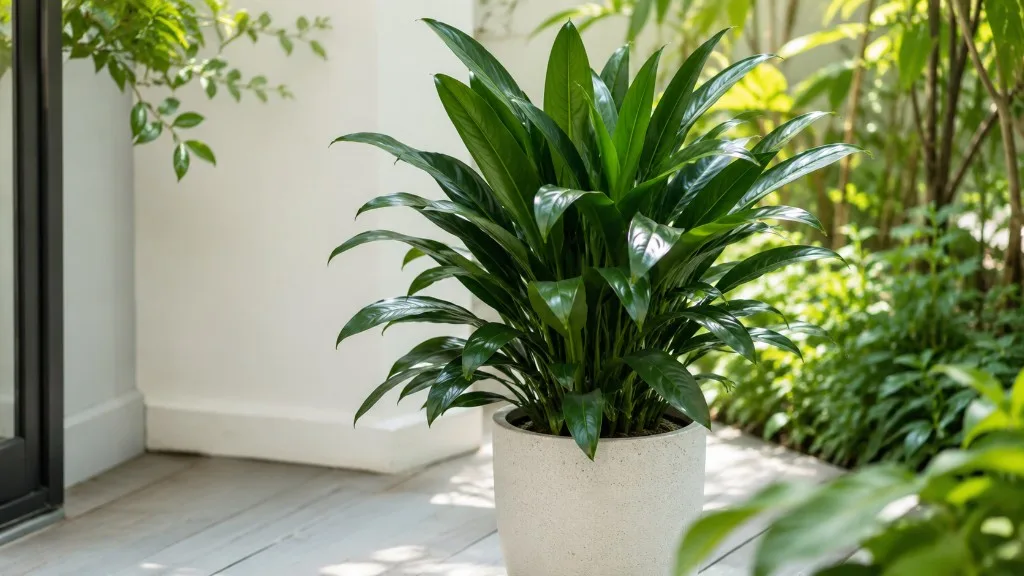
Janet Craig Dracaena Light Requirements: Low to Medium Indirect
Janet Craig Dracaena Light Requirements: Low to Medium Indirect
Janet Craig Dracaena earned its reputation in lobby planters and windowless offices for a reason. Dracaena fragrans ‘Janet Craig’ - still widely sold under the older trade name Dracaena deremensis ‘Janet Craig’ - carries wide, deep green, glossy leaves on upright canes and tolerates the dim, still-air conditions that wreck fussier foliage plants. That tolerance does not mean light is optional. It means the usable range is low to medium indirect light, with medium indirect producing the firmest new growth, the widest leaves, and the steadiest upright habit most buyers expect from a floor plant.
The single most common Janet Craig light mistake is trusting room brightness instead of plant-facing exposure. A living room that feels bright to your eyes at noon can still deliver too few photons to a pot sitting eight feet from a curtained window. The opposite failure - parking a Janet Craig in unfiltered south or west glass because “houseplants need sun” - produces bleached patches, crisp leaf margins, and sudden leaf drop on a species evolved for filtered tropical understory, not desert windowsills. Chicago Botanic Garden classifies this cultivar for partial shade and notes that its lustrous dark leaves tolerate the low light and humidity levels found in interior plantscapes, which matches decades of commercial use but still assumes some ambient brightness, not zero light forever. (Chicago Botanic Garden)
This guide focuses on placement decisions that keep Janet Craig glossy and upright: how much light it actually needs, why it survives offices, where to put it by window direction, how to handle artificial light, when direct sun is never worth the risk, and how to read warning signs before legginess or scorch becomes the plant’s permanent shape.
How Much Light Janet Craig Dracaena Actually Needs
Janet Craig Dracaena is a tropical understory shrub in the Asparagaceae family, native to Africa, where mature plants can reach impressive heights outdoors but behave as slow, architectural floor specimens indoors. Clemson Cooperative Extension summarizes the genus well: most dracaenas grow best in bright, indirect light, but many tolerate lower light, and plants moved from dim spots to brighter ones produce thicker, stronger new leaves with faster growth. (Clemson HGIC) That sentence is the backbone of Janet Craig care - not “low light only,” not “sun plant,” but a wide indirect band with a clear preference toward the brighter end when you want visible development.
For home and office growers, translate “bright, indirect” and “tolerates lower light” into a practical target: medium indirect light for active growth, with low indirect light as a survival floor in well-run interior installations. Medium indirect means the plant sees open sky brightness or strong reflected light for much of the day without direct sunbeams landing on the leaves for more than a few minutes. Low indirect means a spot still receives noticeable daylight - not a closet - but at reduced intensity, such as several feet from a north window, deep in a bright room, or under consistent fluorescent office lighting.
NC State Extension lists Janet Craig for bright to moderate, filtered light and notes that direct sun can burn the foliage, while light that is too low narrows leaves. Clemson summarizes the genus as growing best in bright, indirect light with many species tolerating lower light. Those references agree on the shape of the range: Janet Craig is forgiving downward, rewarding upward, and punished by harsh direct rays.
Light also sets the pace for water use, pest pressure, and leaf retention. A Janet Craig in stronger indirect light dries its pot faster, produces wider new leaves, and sheds fewer lower leaves because it can support more crown mass. A dim plant grows slowly, stays wet longer, and becomes vulnerable to overwatering on Janet Craig Dracaena rot if you keep a bright-window Janet Craig Dracaena watering guide. Treat light as the throttle for the whole care system, not a decorative detail you set once and forget.
The Short Answer for Busy Growers
If you only remember four rules, use these. Default placement: medium indirect light - near an east window, a bright north window, or a filtered south/west window where the plant never sits in direct sunbeams during midday. Low light is survivable, not optimal: Janet Craig can hold glossy foliage in offices and dim corners, but expect slow or minimal growth and longer intervals between waterings. Avoid direct sun: unfiltered south or west glass, outdoor patios in full sun, and hot window contact scorch leaves quickly on this cultivar. Judge by new growth: firm, dark green, normally spaced leaves on the newest cane section mean the current light works; stretching, pale new leaves, or bottom leaf drop mean adjust before changing fertilizer or Janet Craig Dracaena repotting guide.
Give any placement change two to three weeks before declaring failure. Old damaged leaves do not recover - only new leaves and the next internode tell the truth about the current spot.
Why Janet Craig Dracaena Tolerates Lower Light Than Most Houseplants
Janet Craig is not magic. It does not photosynthesize without photons. What it offers is efficient use of moderate light and slow metabolic demand relative to fast-growing tropicals like coleus or fiddle-leaf fig. Its dark green, relatively wide leaves pack chlorophyll densely, which helps capture limited light in interiorscapes. Its upright cane habit presents foliage vertically - a practical advantage in floor planters where lower light at carpet level would starve trailing plants.
Commercial interior plantscaping built an industry assumption around this cultivar: stick Janet Craig in offices with limited natural light and mediocre air circulation, water conservatively, and replacement rates stay low. Clemson and botanic garden references describe Janet Craig as maintaining appearance in interior plantscapes where showier plants yellow and drop. That track record explains the marketing shorthand “low light plant,” which helps beginners choose wisely but also creates false confidence.
Understanding why Janet Craig endures dim sites helps you use that tolerance without abusing it. The plant survives by slowing growth, reducing new leaf size, and eventually shedding older lower leaves it can no longer energize - a controlled retreat, not infinite patience. In a well-lit home where you want a lush floor specimen, “survival mode” looks like a thin, sparse plant you did not pay for.
Surviving vs Thriving in Offices and Interior Spaces
Survival in low light means the Janet Craig keeps glossy existing foliage for months, may produce little to no visible new cane length, and requires ** sharply reduced watering** because the root zone stays damp longer when transpiration drops. Many windowless offices with bright fluorescent troffers meet this survival band - roughly the 500–750 lux range cited in experienced grower references for maintained (not growing) Janet Craig specimens. The plant behaves more like a preserved sculpture: acceptable for design, risky if you treat it like a actively growing patio tropical.
Thriving requires stepping up toward medium indirect - roughly 1,000–2,500 lux at the leaf surface as a practical indoor target, though exact numbers matter less than new-growth quality. In thriving light, Janet Craig pushes wider new leaves, shorter internodes, and cleaner lower stem lines before natural aging drop begins. Clemson notes that dracaenas moved from dim light to brighter indirect produce thicker, stronger leaves and increased growth rate - the same physiology you exploit when rehabbing a leggy office plant at home. (Clemson HGIC)
The trade-off is explicit: lower light demands lower water and zero aggressive feeding. Overwatering - not darkness itself - is the primary killer in commercial installs. If your Janet Craig lives in a dim office, success looks like stable appearance and dry-down discipline, not fast height gain.
What Happens When Light Drops Too Low
Below the survival floor - truly starved spots with minimal daily light, such as interior hallways with only distant incandescent bulbs - Janet Craig eventually thins from the bottom up. Lower leaves yellow and drop because the crown cannibalizes older tissue to support what little new growth remains. New leaves emerge smaller, paler, and farther apart on the cane (etiolation), and the plant may lean toward any weak light source.
Chronic deep shade also couples to root stress: slow transpiration keeps soil wet, anaerobic conditions favor root decline, and the grower often responds by watering on schedule anyway because the top looks dry while the core stays soggy. Yellow leaves in low light are therefore not purely a “needs fertilizer” signal - check moisture, light, and root health together before stacking interventions.
If you cannot raise light, adjust expectations: choose Compacta for tighter spaces, reduce water dramatically, skip fertilizer until new growth proves the plant is active, and dust leaves occasionally so whatever light exists is not blocked by grime. Dusty glossy dracaena leaves lose efficiency faster than matte foliage because the shine is functional, not cosmetic.
Medium Indirect Light - The Sweet Spot for Healthy Growth
Medium indirect light is the band where Janet Craig looks like the catalog photo: upright canes, arching clusters of wide green leaves, and steady but unhurried vertical development. This is not “as much light as possible without sun.” It is consistent ambient brightness spread across the day so the plant never scrambles for photons nor gets blasted at one hot hour.
Indoors, medium indirect commonly comes from:
- An east-facing window with the pot within 3–6 feet (1–2 m) of the glass, receiving soft morning rays that rarely scorch
- A north-facing window in a room with open sky view, especially in summer when north light is stronger than winter growers expect
- A south or west window with sheer curtain diffusion or placement to the side of the glass so leaves never sit in direct beam paths at midday
- A bright interior zone within line-of-sight of a large window but out of direct sun, such as a plant placed beside a patio door on the wall perpendicular to the glass
Outdoors in frost-free climates (USDA zones 10–11 for dracaena), Janet Craig belongs in shaded patios, covered porches, and bright shade - never all-day sun. Even outdoor shade is often brighter than indoor “bright” rooms because open sky delivers more total daily light. Acclimate indoor plants gradually if you summer them outside, and always place them where direct sun never touches leaves.
Reading New Growth as Your Light Report Card
Janet Craig tells you whether light works on the newest section of cane, not on leaves from last year. Old scorch marks and old stretch do not heal. Evaluate:
- Internode length: healthy medium light produces short gaps between leaf whorls; long empty cane between leaf clusters means stretch
- Leaf width and color: new leaves should match or slightly exceed mature width and hold deep, even green without yellowing except on natural old lower leaves
- Firmness: new foliage should feel turgid and glossy, not floppy or thin
- Directional lean: strong lean toward glass means insufficient total light or one-sided exposure; rotate weekly and consider brighter placement
- Lower leaf drop rate: some bottom drop is normal as canes age; accelerating bare stem in an otherwise stable environment often signals chronic under-lighting or overwatering in dim conditions
Run this check 14–21 days after any move. If new growth improves, the light change succeeded even if older leaves still show old damage. If new growth stays pale or stretched, step brightness up one notch - closer to window, remove shear if too dim, or add a grow light - before repotting or feeding.
Direct Sun - Why Janet Craig Dracaena Needs Protection
Direct sun means unfiltered solar rays strike leaf tissue long enough to raise leaf temperature and overwhelm photoprotective capacity. Janet Craig leaves are broad and dark, which helps in shade but makes them fast heat absorbers in sun. NC State and Clemson align: avoid direct sunlight because it scorches leaves on corn-plant dracaenas.
Scorch on Janet Craig often appears as bleached or tan patches on the sun-facing side, crisp brown margins, or sudden wilting on moist soil when leaf temperature spikes. Hot window glass magnifies damage: a pot touching south pane can burn leaves that would survive the same compass direction outdoors in open shade. Reflected heat from white walls, mirrors, and dark furniture also counts as direct exposure even if the window label says “indirect.”
Janet Craig is sometimes confused with Dracaena fragrans ‘Massangeana’ (Corn Plant), which tolerates slightly brighter conditions when acclimated. Janet Craig’s solid dark leaves lack the variegated stripe that reflects some energy in Massangeana, and in practice Janet Craig is less forgiving of sun mistakes. Treat them as different light contracts even though they share a genus.
Acclimation and the Rare Morning-Sun Exception
Acclimation means increasing exposure gradually so new leaves form under higher light before old shade-grown tissue is asked to endure it. For Janet Craig, acclimation is a tool for moving from low office light to a brighter home window, not for pushing the plant into midday direct sun, which remains a poor target.
A limited morning-sun exception exists in cool seasons: one hour or less of gentle early direct sun through east glass on leaves that were already receiving medium indirect may deepen color slightly and speed growth without immediate scorch, especially in winter when sun angle is low and leaf heat stays moderate. Increase by 30–60 minutes per week only while new leaves stay clean. The moment you see bleaching or crisping on young tissue, step back - Janet Craig will never become a cactus.
Never jump a Janet Craig from a dim office to a west patio or unfiltered south window in summer. That acclimation failure produces mass leaf drop growers misdiagnose as disease or root rot while the crown still firms up after relocation to shade.
Best Window Placement for Janet Craig Dracaena
Compass direction is a starting guess, not a verdict. A “south window” deep under a porch roof may deliver less usable light than an open east window. What matters is hours of bright indirect and zero harsh direct beams on the canopy for Janet Craig.
Place the pot where leaves receive light, not where the room looks bright to you standing in the doorway. Janet Craig is often used as a floor plant; if the canopy sits below window sill height, raise it on a stand or choose a taller window so the top leaves enter the brighter zone. Canes that spend years with only the crown in adequate light while lower sections live in shadow often develop bare lower stems faster.
Rotate the pot a quarter turn weekly to prevent permanent lean toward glass. Dracaenas do not require perfect symmetry, but one-sided exposure in marginal light exaggerates tilt and uneven leaf size.
East, North, South, and West Windows Compared
An east-facing window is the best default for Janet Craig in most homes. Morning sun is cooler and shorter than afternoon sun, and east exposures typically deliver medium indirect for the rest of the day without the heat load that west glass creates. Place the plant 2–5 feet (0.6–1.5 m) from the pane unless sheer curtains soften already-gentle rays.
A north-facing window works when the view is open sky, not obstructed brick. North light is softer but can sustain Janet Craig close to the glass in spring and summer. In winter at high latitudes, north windows often drop below thriving range - watch for stretch and pale new leaves and add a grow light if needed.
A south-facing window can support excellent Janet Craig growth with diffusion - sheer panel, translucent blind, or placement to the side so the plant sees sky brightness without sitting in the beam. Unfiltered south sun, especially afternoon in summer, scorches leaves within days. Pull pots back from glass when heat radiates from the pane.
A west-facing window is the highest-risk common exposure: strong afternoon rays plus heat. Janet Craig near west glass needs curtain diffusion or several feet of setback into the room. If west is your only bright option, treat it as filtered brightness, not direct sun, and monitor the leaf surface facing the window daily in summer.
Distance From the Window and Why It Matters
Light intensity drops quickly as you move away from windows. A Janet Craig on a side table across the room may live under low indirect even in a “bright” south room because leaves intercept far fewer photons. Rule of thumb for floor plants: keep the top of the canopy within 3–8 feet (1–2.5 m) of the window for medium indirect, closer for north, farther only if sheer south/west would otherwise scorch.
Sheer white curtains often convert harsh direct into usable indirect - a simple upgrade for south and west rooms. Tinted or low-E windows reduce intensity further; plants that thrived before a window upgrade may suddenly stretch afterward.
If the only aesthetic location is too dim, do not pretend distance does not matter - add a grow light or choose a smaller Compacta on a bright side table instead of a tall cane in a dark corner.
Janet Craig, Compacta, and Dracaena Lisa Compared
Trade names overlap in nurseries, but light logic stays consistent across these related interior cultivars with subtle habit differences.
Janet Craig (standard) - Dracaena fragrans ‘Janet Craig’ - develops wide, glossy leaves on thick canes and can reach 6–10 feet (1.8–3 m) indoors over years. It wants the same low to medium indirect band; medium indirect supports the widest leaf development. Standard Janet Craig in dim light often looks acceptable longer than faster plants because of its reserve habit, but lower stem bareness shows eventually.
Janet Craig Compacta - sold as Dracaena deremensis ‘Janet Craig’ Compacta or Dracaena fragrans ‘Compacta’ - packs shorter, tightly clustered leaves on slower stems. It tolerates similar light but reads dim corners better because of smaller crown spread. Compacta still needs real indirect light; it simply fits brighter-table and desk-scale placements where a floor cane would starve.
Related interior dracaena cultivars follow the same light contract as Janet Craig: low to medium indirect, no direct hot sun. If your unlabeled glossy dracaena has narrower leaves than classic Janet Craig photos, apply the same placement rules rather than assuming lower tolerance for direct sun - Lisa is tougher in low light, not sun.
When buying, match pot size to light: large floor specimens in dim lobbies depend on stored stem reserves; small pots in low light fail faster because they lack carbohydrate reserves to coast.
Artificial Light and Fluorescent Office Setups
Janet Craig is one of the few popular houseplants that honestly works under fluorescent office lighting when natural windows are absent or distant. NC State notes Janet Craig tolerates deep shade and partial shade indoors, which reflects commercial use - but active growth still needs meaningful ambient brightness, not zero light forever.
Office survival typically requires:
- Overhead cool-white or full-spectrum fluorescent fixtures that stay on most of the workday, not a single desk lamp aimed sideways
- Canopy positioned within a few feet of fixture output, not under the desk
- Conservative watering because transpiration stays low
- Occasional leaf wiping to remove dust that blocks light capture on glossy surfaces
A desk lamp alone rarely replaces window indirect unless it is a horticultural full-spectrum LED sized for plants, not human task lighting.
Grow Light Setup When Natural Light Is Weak
When home windows cannot deliver medium indirect - north rooms in winter, basement apartments, interior bedrooms - a full-spectrum LED grow light is the most reliable upgrade. Janet Craig responds well to supplemental light for holding density and preventing stretch, though it will not race like a lettuce crop.
Practical starting points:
- Position a full-spectrum white LED (5000–6500 K) 12–24 inches (30–60 cm) above the crown, depending on fixture intensity
- Run 12–14 hours daily on a timer to extend photoperiod in dim seasons
- Combine overhead LED with window light when possible so growth stays balanced, not one-sided
- Adjust by new growth: if leaves still pale and internodes lengthen after two weeks, lower fixture 2 inches or add one hour; if leaf edges bleach only under the lamp, raise fixture or reduce hours
Grow lights do not exempt Janet Craig from direct sun damage if you also move it into harsh window beams - treat supplemental and natural exposures as one combined budget, not separate passes.
Seasonal Light Changes and Winter Adjustments
Seasonal shifts change Janet Craig light more than many growers notice because human eyes adapt to shorter days. Winter lowers sun angle, day length, and window intensity, especially on north and east exposures. A placement that thrived in July may sit at low indirect by January, triggering slow growth, pale new leaves, and extended soil wetness.
Winter response should be light-first, water-second:
- Move the pot closer to the brightest suitable window if scorch risk is absent, or extend grow-light hours slightly (not both dramatically at once)
- Stretch watering intervals because transpiration drops with cooler, dimmer conditions
- Hold fertilizer until new growth shows the plant is metabolically active again in spring
- Rotate more often because low-angle sun enters windows farther into the room and can create one-sided exposure
Spring brings the opposite risk: a Janet Craig that survived winter close to south glass may scorch when March sun angle suddenly delivers direct beams earlier in the day. Watch west and south windows especially as seasons transition - diffusion beats relocation panic.
Summer air conditioning can also desiccate leaf tips near cold vents while light is adequate; misting is not the fix, but moving the pot off the vent line prevents tip browning misread as sun scorch.
Warning Signs Your Janet Craig Has the Wrong Light
Janet Craig reports light problems on new tissue and recent cane sections first. Make one placement change, then wait two to three weeks before also changing water, fertilizer, or pot size. Overlapping edits make diagnosis guesswork because yellow leaves, crisp tips, and drop overlap across stress types.
Too Little Light vs Too Much Sun - Symptom Breakdown
Too little light typically shows as:
- Long internodes - visible empty cane between leaf clusters on new growth
- Smaller, paler new leaves compared with leaves formed in brighter conditions
- Strong lean toward the brightest direction without rotation
- Accelerating bottom leaf yellowing and drop on an otherwise stable watering schedule, especially if soil stays wet
- Slow or absent new cane extension for months in an office or dark corner
- Increased spider mite risk in dim, warm, stagnant air - mites are not a light symptom alone, but chronic under-lighting plus dust weakens plants
Fixes for too little light: move closer to window, clear obstructions, add sheer curtain removal if it over-dims, raise plant on stand, add grow light, rotate weekly, and reduce watering until new growth proves faster transpiration.
Too much sun or heat typically shows as:
- Bleached, tan, or gray-white patches on sun-facing leaf areas
- Crisp brown margins or tips appearing soon after a move to brighter glass or outdoor sun
- Leaf curl or fold during midday on the window-facing side while soil is moist
- Sudden mass leaf drop after relocation to unfiltered south/west exposure without acclimation
- Hot glass contact burning leaves that touch the pane
Fixes for too much sun: move back from glass, add sheer diffusion, shift to east or filtered north, never place outdoors in direct sun, acclimate only within indirect bands, and trim cosmetically damaged old leaves after new growth stabilizes - cut leaves do not heal, but new ones can be clean.
If symptoms conflict - yellow lower leaves plus moist soil in a dim room - suspect overwatering amplified by low light before sun stress. If crisp patches appear only on the window side in summer - suspect direct exposure before root disease.
Conclusion
Janet Craig Dracaena light requirements are straightforward once you stop treating “low light tolerant” as “any dark corner forever.” The usable range runs low to medium indirect, with medium indirect producing the widest leaves, shortest internodes, and steadiest upright habit most growers want. Direct sun is the main enemy - hot window glass, unfiltered south and west beams, and outdoor full sun scorch glossy foliage fast on this partial-shade tropical.
Janet Craig earns its office reputation by surviving on fluorescent brightness and thriving when you nudge exposure upward without crossing into direct rays. Place it east or bright north by default, filter south and west, keep the canopy in the light cone not just the pot base, and read new growth after every move. Pair brighter light with more frequent moisture checks and dimmer sites with longer dry-down - light sets the rhythm for the whole plant. Get the band right and Janet Craig stays one of the most forgiving architectural floor plants you can grow indoors; miss it and even perfect watering produces a pale, bare-stemmed ghost of the lobby specimen you remember.
When to use this page vs other Janet Craig Dracaena guides
- Janet Craig Dracaena overview - Start here for whole-plant context before deep-diving this topic.
- Janet Craig Dracaena problems hub - Jump to symptom-specific fix guides when this care topic does not resolve the issue.
- Not Enough Light on Janet Craig Dracaena - Escalate here when light adjustments are not enough.
- Leggy Growth on Janet Craig Dracaena - Escalate here when light adjustments are not enough.
- Sunburn / Scorched Leaves on Janet Craig Dracaena - Escalate here when light adjustments are not enough.
Related Janet Craig Dracaena guides
- Janet Craig Dracaena overview
- Janet Craig Dracaena watering
- Janet Craig Dracaena soil
- Janet Craig Dracaena propagation
- Janet Craig Dracaena fertilizer
- Janet Craig Dracaena repotting
- Not Enough Light on Janet Craig Dracaena
- Leggy Growth on Janet Craig Dracaena
- Sunburn / Scorched Leaves on Janet Craig Dracaena
- Janet Craig Dracaena problems
Related tool
Try the Plant Problem Diagnosis Tool with janet-craig-dracaena pre-selected to estimate needs for your setup.