Sunburn Scorched Leaves on Janet Craig Dracaena: Causes
Quick answer
Sunburn on Janet Craig Dracaena appears as bleached, papery, or brown crispy patches on leaves facing a window-usually after unfiltered south or west afternoon sun, a sudden jump from a dim office to bright glass, or outdoor summer placement. First step: move the plant out of direct sunbeams and filter the window or sit it several feet back in bright indirect light.
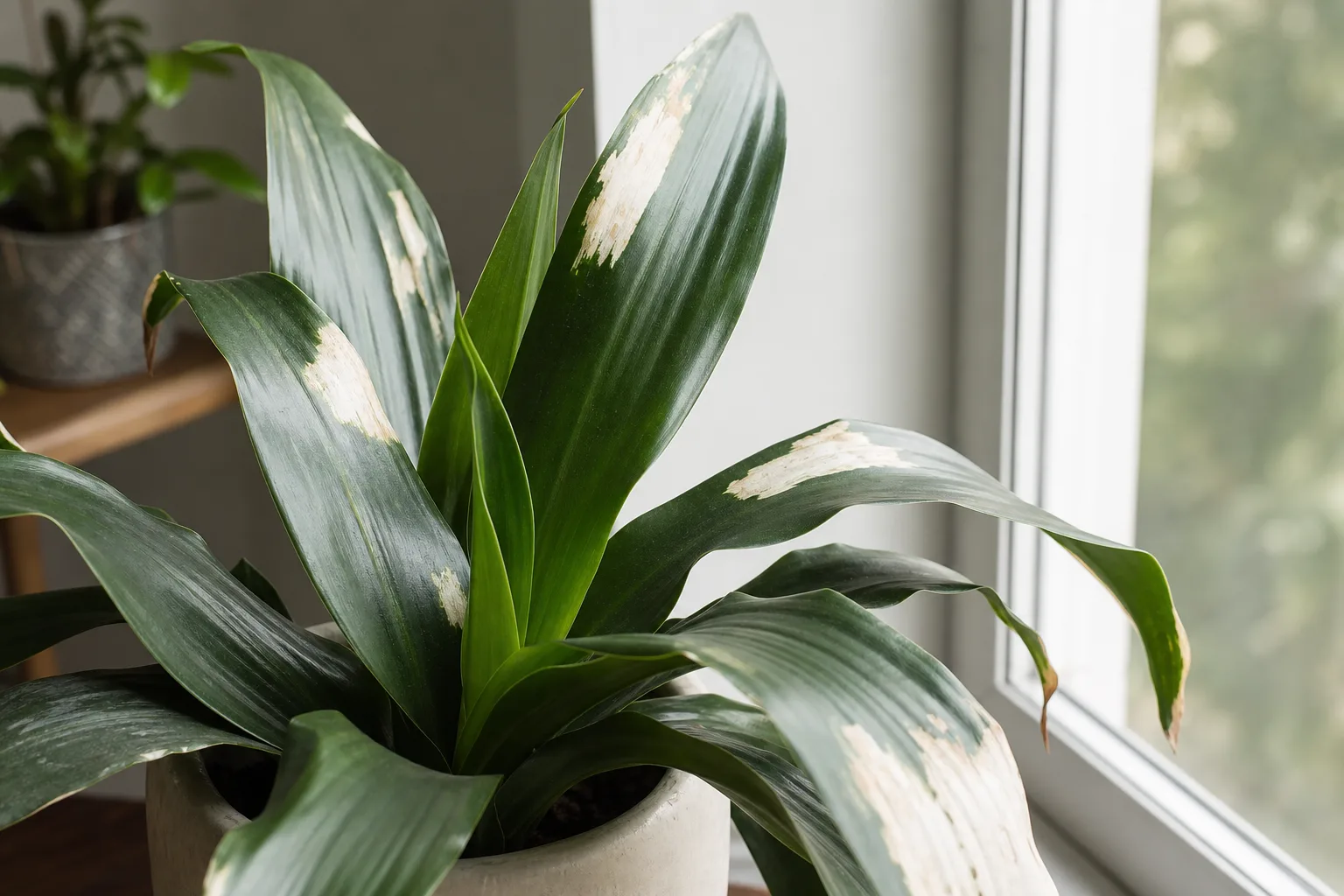
Sunburn Scorched Leaves on Janet Craig Dracaena: Causes, Checks & Fixes
This guide covers sunburn / scorched leaves on Janet Craig Dracaena. See also the general Sunburn / Scorched Leaves guide, watering, and light pages for this plant.
Sunburn Scorched Leaves on Janet Craig Dracaena: Causes, Checks & Fixes
Quick answer
Sunburn on Janet Craig Dracaena (Dracaena fragrans ‘Compacta’, widely sold as Dracaena deremensis ‘Janet Craig’) shows up as bleached, papery, or brown crispy patches on strap leaves facing the sun-not uniform brown tips on every leaf. Janet Craig is marketed as a low-light survivor, but its wide, dark green foliage evolved for filtered tropical understory, not harsh midday rays through glass.
The most common triggers are unfiltered south or west window sun, moving a shade-acclimated office plant to a bright sill without acclimation, and outdoor summer placement after months indoors. Leaves formed in deep shade lack the sun-hardening that outdoor-grown foliage has, so a sudden light jump burns them fast.
First step: move the plant out of direct sunbeams today. Pull it several feet back from the glass, add a sheer curtain, or shift it to an east window with bright indirect light. Do not respond with extra water, misting, or a fluoride water switch-those fix different problems.
Sun scorch vs. fluoride margins vs. rot on Janet Craig
Sun scorch, fluoride injury, and root rot all damage Janet Craig leaves, but the pattern and recent history point to different fixes.
| What you see | Likely cause | Key differentiator |
|---|---|---|
| Bleached or tan papery patches on the window-facing leaf side | Sun scorch | One-sided damage; recent brighter placement or curtain removed |
| Uniform tan or brown tips and margins on many leaves, all sides | Fluoride or salt burn | Tap-water history; Dracaena is sensitive to fluoride; tips persist after correct light |
| Yellow lower leaves, heavy wet pot, soft cane, sour soil | Overwatering / root rot | Wet mix in low light; no one-sided bleaching pattern |
| Long bare cane, small pale crown leaves, lean toward window | Not enough light | Stretch without crispy sun-facing patches - see not enough light |
| Brown edges on leaves near a heat vent, not aligned to glass | Heat stress | Draft pattern; see heat stress |
Sun scorch is a placement and acclimation problem. Fluoride burn is a water chemistry problem. Rot is a wet soil in slow growth problem. Starting with filtered water when the real issue is a west windowsill wastes weeks while damage spreads.
What sunburn scorched leaves look like on Janet Craig
Healthy Janet Craig carries glossy, deep green, arching strap leaves in a crown at the top of a tan cane. Sun scorch changes texture and color on exposed surfaces first.
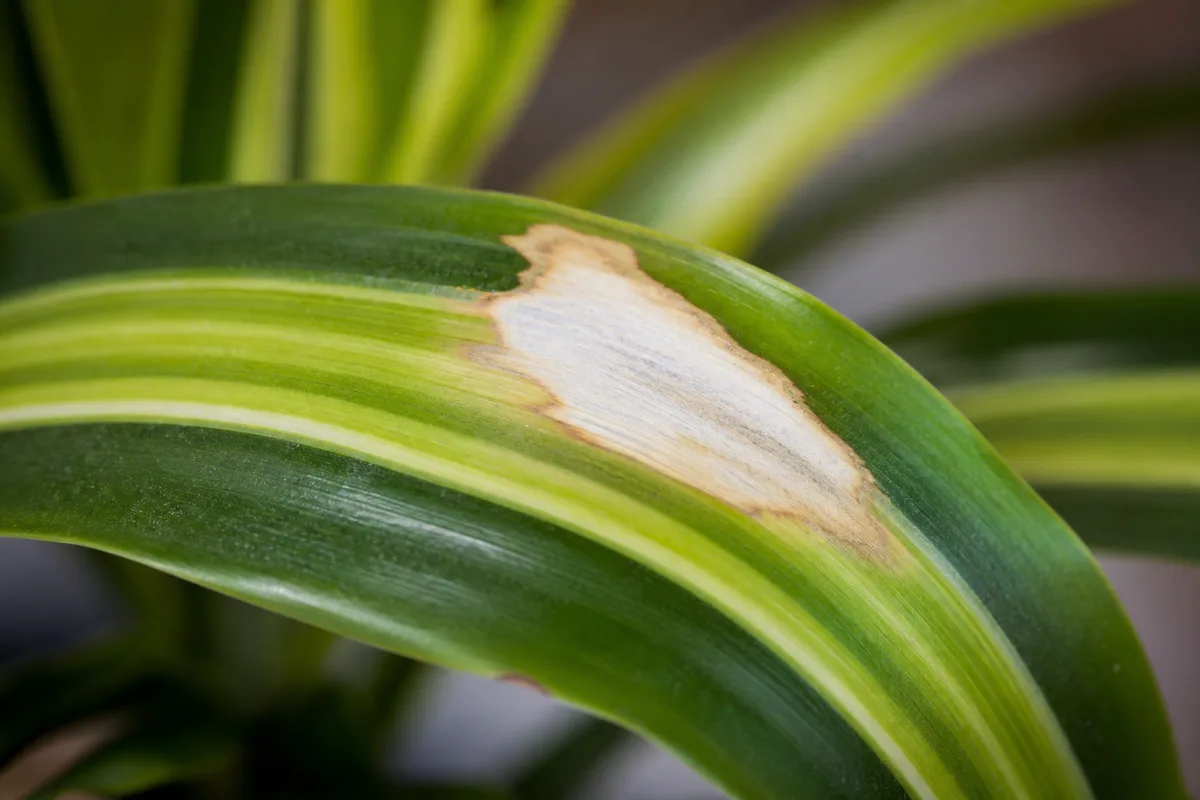
Sunburn / Scorched Leaves symptoms on Janet Craig Dracaena - compare with healthy tissue on the same plant.
Typical signs on this cultivar:
- Bleached white or pale yellow patches on the leaf half facing the window-tissue looks thin or papery compared with the shaded side
- Tan or brown crispy blotches where direct sun hit longest, sometimes with a dry, crackly feel along the margin
- One-sided damage - the leaf back or side away from the glass often stays dark green while the sun-facing face shows scorch
- Newest crown leaves affected when the plant was recently moved into a hot beam-soft shade-grown foliage burns before older, slightly tougher leaves
- Sudden appearance over days, not gradual tip browning over months
What you usually do not see with sun scorch alone: uniform brown tips on every leaf from fluoride, long bare cane between leaf whorls (low light), sticky residue (pests), or sour-smelling wet soil (advanced rot-though combined stress is possible).
Bleached patches, brown scorch, and sun-facing leaf pattern
Early sun stress often bleaches chlorophyll before tissue dies completely-you may see chalky patches that later turn tan. Prolonged exposure produces brown, dead zones that feel crisp. On Janet Craig’s wide leaves, the damage often follows the geometry of the sunbeam: a vertical stripe on leaves that faced west glass at afternoon peak, or a horizontal band on leaves that sat above the window sill in direct contact with hot glass.
Compare damaged leaves to others on the same plant. If only the outer crown leaves touching the window or the south-facing side of the canopy show symptoms, sun scorch is the leading diagnosis.
Why Janet Craig gets sunburn scorched leaves
Janet Craig tolerates dim interiors better than most houseplants, which creates a trap: owners assume it can handle any bright spot, including unfiltered midday sun. It cannot. NC State Extension recommends bright to moderate filtered light and notes that direct sun can burn the foliage. The species is an African understory shrub-dark leaves capture limited light efficiently in shade but overheat and photobleach when intense rays hit them through glass.
Direct afternoon sun through glass
South and west windows deliver the strongest indoor sun, especially midday to late afternoon when beam intensity peaks. Janet Craig placed on the sill or within a foot of unfiltered glass receives direct radiation that tropical understory leaves never experience in habitat. Clemson HGIC describes round dry patches and streaks on leaves caused by excessive sunlight on the foliage-distinct from fluoride margin burn or low-humidity tip crisping.
Dark green Janet Craig leaves absorb more light energy than pale variegated dracaenas, which accelerates heating on the leaf surface. A hot western windowsill in summer can scorch foliage within a few days even when the room air temperature feels comfortable.
Sudden relocation from deep shade without acclimation
Office and lobby Janet Craig specimens often live for months under fluorescent light or deep interior shade. Leaves formed in those conditions have thinner cuticle and less pigment protection than leaves grown in brighter indirect light. When the plant moves to a bright south window “to help it grow,” the existing foliage cannot acclimate instantly.
Clemson end-of-winter guidance warns to slowly increase light exposure when moving houseplants from low light to brighter windows to avoid sun scorch. Janet Craig needs one to two weeks of gradual adjustment-closer to the window by inches every few days, or sheer-curtain filtering that you slowly open-not a single-day jump from a dim cubicle to a west sill.
This is the opposite fix from leggy growth: leggy plants need brighter indirect light, not direct sun. Moving a stretched shade plant onto harsh glass trades one problem for a worse one.
Outdoor summer placement shock
Janet Craig sometimes goes outdoors on a patio for summer. After months indoors, full outdoor sun-even dappled patio sun stronger than office light-can bleach leaves within days. Outdoor UV intensity and wind desiccation compound leaf damage. Always acclimate over one to two weeks in bright shade before any outdoor direct sun, and prefer a covered porch over open pavement reflected heat.
How to confirm the cause
Work through these checks before changing water chemistry or Janet Craig Dracaena repotting guide:
- Window orientation and beam path - Does midday or afternoon sun hit the crown directly through south or west glass? East windows rarely scorch except in hot summer when leaves press against the pane.
- Which leaf side is damaged - Sun scorch is directional. Fluoride tips affect margins broadly on many leaves regardless of orientation.
- Recent placement history - New window, removed sheer curtain, rotated pot so a different face points at glass, spring move closer to light, or outdoor relocation in the last one to two weeks?
- Distance from glass - Leaves touching hot glass or sitting within 12 inches of unfiltered south/west panes are high risk. See the Janet Craig light guide for safe distances.
- Cane firmness and soil smell - Firm cane with dry-to-normal soil supports isolated sun scorch. Soft cane with sour wet mix suggests rot layered on stress-different urgency.
- New growth quality - If only old leaves scorch but new crown leaves emerge clean after you moved the plant back, the current placement may already be acceptable.
Confirmation decision table
| Check result | Points toward |
|---|---|
| Bleached/brown patches only on sun-facing leaf surfaces | Sun scorch - relocate and filter |
| Brown tips on all leaves, tap water, no recent move | Fluoride - see brown tips |
| Long bare cane, pale small leaves, no crispy patches | Low light - see not enough light |
| Wet heavy pot, yellow spread, soft base | Root rot - inspect roots; see overwatering |
| Crispy margins near HVAC vent, not window-aligned | Heat stress - see heat stress |
First fix for Janet Craig
Move the plant out of direct sunbeams immediately.
Practical steps:
- Pull back from glass - Place Janet Craig 3 to 6 feet (1 to 2 m) back from south or west windows, or behind a sheer curtain that diffuses midday rays
- Shift to east exposure - An east window offers bright indirect light with only gentle morning direct sun, often the safest default for this cultivar
- Filter before you brighten - If moving from deep shade to fix legginess, increase light over one to two weeks with partial curtain or shorter daily exposure-never jump to an unfiltered west sill
- Rotate after relocation - Once out of the burn beam, rotate a quarter turn weekly so new growth fills evenly
Do not increase watering, mist scorched leaves, or switch to filtered water as the first response. Scorched tissue is not thirsty-it is photodamaged. Extra moisture on a low-light Janet Craig in a dim corner after you moved it away from the window can invite root rot while the scorch pattern is already fixed by placement alone.
If scorched straps are mostly dead and unsightly, you may snip the damaged leaf at the base with clean shears once the plant sits in stable indirect light-but trimming is cosmetic. The functional fix is light correction.
Recovery timeline
Sun-damaged leaf tissue does not re-green. Janet Craig recovers by producing new crown leaves in corrected light.
- Immediately to 48 hours - Stop new scorch once direct beams no longer hit foliage; existing patches do not spread if light is fixed
- Two to three weeks - New leaves emerging at the crown should look firm and deep green if placement is right; old bleached straps remain unchanged
- Four to eight weeks - One or two clean leaf whorls confirm the acclimated spot works; cosmetic pruning of dead straps is safe if desired
- Three to six months - Canopy looks normal from the top down while older scorched leaves you kept may still show history until you remove them
Signs you are winning: no new bleaching, glossy dark green new crown leaves, firm cane, stable leaf count.
Signs the problem is worsening: fresh bleaching after relocation (still too much direct sun), yellowing climbing the cane on wet soil (rot or combined stress), or crown leaves staying pale and tiny in very dim recovery spots (moved too far back-see not enough light).
What not to do
Do not flood or mist scorched leaves hoping to rehydrate them-sunburn is not drought. Wet foliage in low transpiration conditions adds rot risk without healing bleached tissue.
Do not place in unfiltered south or west sun to fix legginess quickly. Janet Craig scorches in direct sun; acclimate toward brighter indirect light instead. See leggy growth for the safe path.
Do not switch to filtered water first when the pattern is one-sided bleaching on window-facing leaves-that is fluoride advice misapplied to a light injury.
Do not fertilize a recently scorched plant. Salts stress roots while the crown recovers from light shock.
Do not assume all brown leaf damage is sunburn. Uniform tip burn from tap water, heat vents, and wet-soil yellowing need different guides-use the comparison table above.
Janet Craig is toxic to cats and dogs if chewed. That matters when relocating a floor plant to a brighter window ledge pets can reach-scorched leaf trimmings should go in the trash, not within pet access.
How to prevent sunburn scorched leaves next time
- Default to bright filtered indirect - East windows, or south/west placement behind sheer curtain or several feet back from the pane; match guidance in the overview and light guide
- Acclimate over one to two weeks when moving from dim offices or shop shelves to brighter windows-shorten curtain time or move closer by inches every few days
- Inspect weekly during spring window moves and summer sun angle changes; a spot that was indirect in winter may receive direct beams by June
- Never press leaves against hot glass - air gap between foliage and pane reduces heat scorch
- Outdoor summer - Start in bright shade only; increase exposure gradually; bring indoors before intense late-summer sun if the plant was never hardened
- Fix legginess with indirect light, not direct sun-see leggy growth and not enough light
Practical checks
Urgency check
Cosmetic scorch only - bleached or brown patches on sun-facing leaves, firm cane, normal dry-down: relocate and filter light; not same-day emergency.
Escalate promptly if scorch appears with soft cane at the base, sour-smelling soil, or spreading yellow leaves on a heavy wet pot-combined light stress and overwatering in low light is common on office Janet Craig plants. Stop watering, inspect roots if decline continues, and fix placement together.
Best inspection order
Window orientation and beam path → which leaf surfaces show damage → recent move or curtain change → distance from glass → cane firmness and pot weight → new crown leaf color → rule out crispy leaves from drought or heat if pattern is not window-aligned.
When to worry - combined rot on wet mix or whole-plant decline
Sun scorch alone rarely kills Janet Craig-it is cosmetic on existing foliage once light is corrected. Worry when:
- More than half the canopy yellows within weeks while soil stays wet-unpot and inspect for mushy roots before repotting into fresh well-draining mix
- Crown feels soft or collapses-advanced rot or stem damage; salvage healthy cane sections if any
- New crown leaves stay bleached or fail to emerge after four weeks in filtered indirect light-you may still have too much direct beam at part of the day, or too little light if you moved excessively far back
Slow cosmetic scorch on an otherwise firm plant can wait for a planned curtain install or window move. Sudden wet-soil collapse cannot.
Conclusion
Sunburn scorched leaves on Janet Craig Dracaena is a light placement and acclimation problem, not a water-quality mystery. Confirm it with one-sided bleached or brown patches on sun-facing strap leaves after direct glass sun or a sudden move from deep shade-then relocate out of sunbeams and filter the window before you touch watering or tap-water chemistry. Damaged tissue will not re-green; new glossy crown leaves tell you the fix worked. For safe brightening without burn, use the light guide and gradual acclimation-not a harsh western windowsill shortcut.
When to use this page vs other Janet Craig Dracaena guides
- Janet Craig Dracaena watering guide - Use for routine moisture checks before assuming sunburn / scorched leaves is the main issue.
- Janet Craig Dracaena problems hub - Browse all 50 common issues on this species.
- Brown Leaves on Janet Craig Dracaena - Different entry point when symptoms overlap with sunburn / scorched leaves.
- Brown Tips on Janet Craig Dracaena - Different entry point when symptoms overlap with sunburn / scorched leaves.
- Curling Leaves on Janet Craig Dracaena - Different entry point when symptoms overlap with sunburn / scorched leaves.