Curling Leaves on Janet Craig Dracaena: Causes, Checks &
Quick answer
Curling on Janet Craig Dracaena usually means drought in brighter rooms, cold drafts below about 55°F (13°C), thrips scarring new crown leaves, or root stress from wet mix in low light-not dry air. First step: lift the pot and check half-depth moisture before changing water, placement, or buying a humidifier.
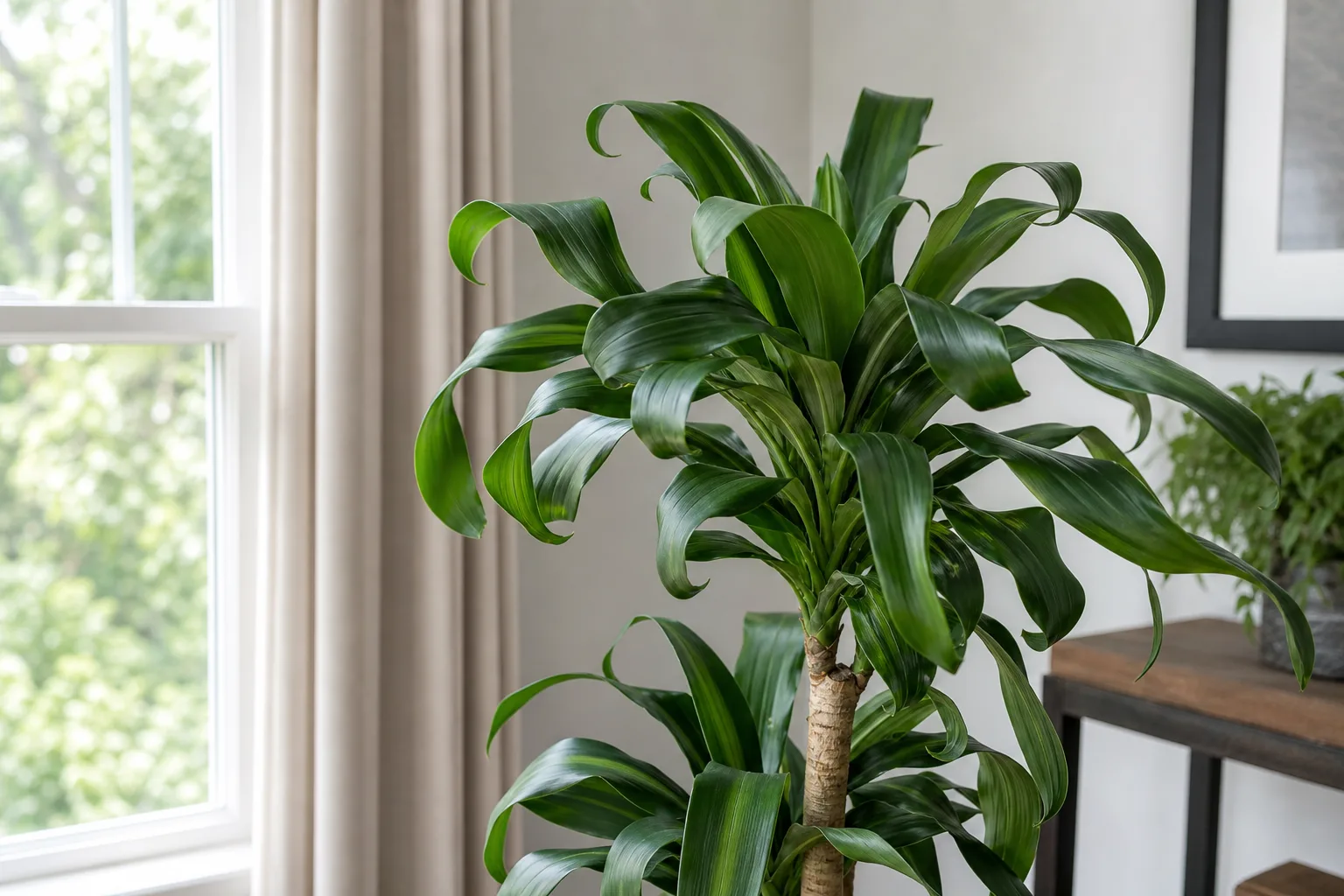
Curling Leaves on Janet Craig Dracaena: Causes, Checks & Fixes
This guide covers curling leaves on Janet Craig Dracaena. See also the general Curling Leaves guide, watering, and light pages for this plant.
Curling Leaves on Janet Craig Dracaena: Causes, Checks & Fixes
Quick answer
Janet Craig Dracaena (Dracaena deremensis ‘Janet Craig’) shows curling when strap leaves roll inward, cup lengthwise, or twist at the crown-a stress response that narrows the leaf surface to conserve water or protect tissue from cold, pests, or failing roots. Unlike limp drooping foliage, curled leaves often stay firm and dark green while the blade changes shape.
On this cultivar, the most common triggers are drought in brighter placements, cold drafts below about 55°F (13°C), thrips feeding on emerging crown leaves, and root stress from overwatering in low-light offices-not low humidity. Janet Craig handles average indoor conditions well; curling from dry air alone is uncommon. Brown tips from fluoride in tap water are a separate pattern.
First step: lift the pot and push a finger or skewer halfway into the mix. A very light, dry pot with firm inward-rolled leaves points to underwatering. A heavy, wet pot with yellow lower neighbors points to root stress. New crown leaves with silvery scarring point to thrips. Leaves curling after nights near a drafty window point to cold. Do not buy a humidifier or change watering until you know which branch fits-see the low-humidity guide for why dry air is rarely the primary fix on Janet Craig.
Full species context: Janet Craig overview.
Curling vs. drooping vs. brown tips on Janet Craig
These three symptoms overlap on stressed dracaenas but mean different fixes. Misreading curl as droop-or humidity stress as fluoride burn-wastes weeks.
| What you see | Leaf texture | Pot / mix | Likely cause | Where to go next |
|---|---|---|---|---|
| Inward margin roll, slight cupping | Firm, dark green | Light, dry at half depth | Drought / underwatering | Underwatering, watering guide |
| Lengthwise curl on newest crown leaves | Firm; may pale slightly | Normal moisture | Cold draft below ~55°F | Move away from vents; overview |
| Twisted, scarred, silvery new growth | Firm; stippling underneath | Variable | Thrips | Thrips guide |
| Whole leaves limp, hanging down | Soft, lost turgor | Wet and heavy OR very dry | Root stress or severe drought | Drooping leaves |
| Crisp tan-brown tips/margins only | Firm; blade flat | Normal dry-down | Fluoride / salts | Brown tips |
| Cupping with yellow lower neighbors | Softening at base | Wet, sour smell possible | Overwatering / root stress | Overwatering |
Curling is a shape change; drooping is a turgor failure. Brown tips are necrosis at margins without necessarily changing leaf geometry.
What curling leaves look like on Janet Craig
Janet Craig carries broad, glossy, dark-green strap leaves on thick cane stems. Curl patterns depend on the stressor.
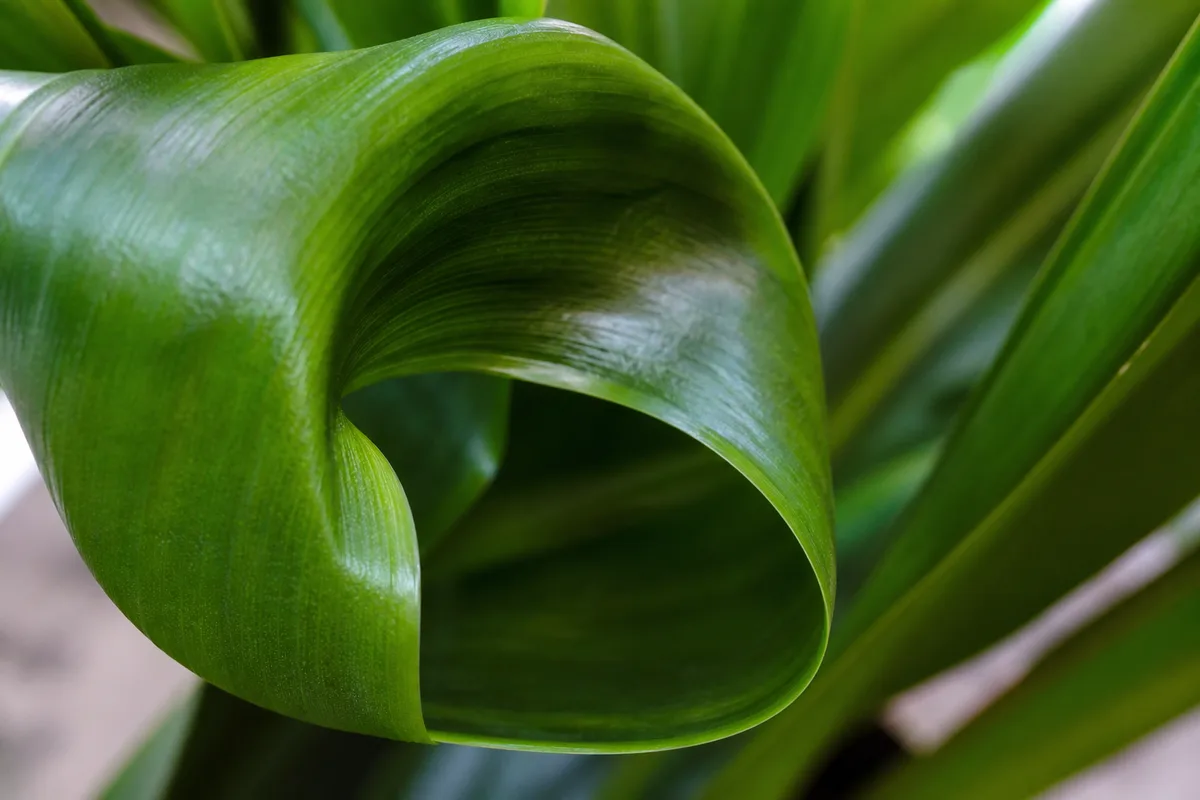
Curling Leaves symptoms on Janet Craig Dracaena - compare with healthy tissue on the same plant.
Drought inward roll
In brighter rooms or near heat vents, dry mix pulls water from wide leaves faster than roots replace it. Margins roll inward toward the midrib while the rest of the blade stays firm and green. The pot feels very light. Mix is dry at half depth and may shrink from the pot wall. This pattern is more common in window placements than in fluorescent offices where transpiration is slow-see underwatering on Janet Craig.
Cold curl on new crown growth
Janet Craig loses tolerance quickly below 55°F (13°C). Sustained cold exposure stalls crown growth and can curl or distort newest emerging leaves while older strap foliage looks normal. Watch plants beside winter windows, frequently opened exterior doors, or directly under AC vents. Curl often appears within a day or two of a cold night, not after weeks of neglect.
Thrips distortion on crown flush
Slender thrips rasp sap from tender new strap leaves at the crown. Look for irregular silvery or bronze stippling, tiny black frass specks on undersides, and twisted or scarred new growth that emerges smaller than prior leaves. Damage concentrates on the growing tip-not uniform brown margins from fluoride. Shake a suspect leaf over white paper to confirm quick-moving insects. Full inspection steps: thrips on Janet Craig.
Root-stress cupping in low light
In dim offices, Janet Craig uses water slowly and owners often overwater on autopilot. Saturated mix suffocates roots; the plant cannot move water to crown leaves even when the pot is heavy. Lower leaves may yellow while upper leaves cup or curl slightly. Soft cane at the soil line, fungus gnats, or sour-smelling mix support root stress-not drought. Drought curl comes with a light pot; root-stress cupping comes with a heavy one.
Why Janet Craig gets curling leaves
Drought in brighter placements
Owners accustomed to low-light advice-water every three to four weeks in deep shade-may underwater a Janet Craig moved to a bright east or west window. Warm air and stronger light dry medium floor pots in 10 to 14 days during active growth. Wide strap leaves curl inward to reduce transpiration surface when roots cannot keep pace. Excessive drying between waterings can also brown tips on fluoride-sensitive dracaenas, so drought and water-quality stress may overlap.
Cold drafts and temperature swings
Tropical understory ancestry does not make Janet Craig immune to indoor HVAC. A plant that tolerated a summer hallway may curl new growth after autumn nights beside an uninsulated window. Dracaena prefers stable warmth and reacts badly to sudden chill. Curl from cold is not fixed by watering more-adding moisture to cold-stressed roots can worsen decline.
Thrips on slow crown flush
Janet Craig replaces crown leaves slowly. Thrips that scar one new flush leave visible distortion for months even after pests are gone. Warm, stable indoor offices let thrips reproduce year-round on sheltered cane crotches and crown tissue. Dry winter air can increase mite pressure, but thrips scarring is mechanical feeding damage-not humidity deficiency.
When humidity is not the cause
Janet Craig tolerates 40 to 50% household humidity without curling. Tip burn from true dry air is uncommon; fluoride sensitivity and watering rhythm dominate most indoor complaints. If every blog tells you to mist for curl, check water source and pot weight first-the low-humidity guide explains why humidifiers are rarely the first fix on this species.
How to confirm the cause
Work through these checks in order. Change one variable at a time so you know what worked.
- Pot weight and half-depth moisture - Lift the pot. Very light with dry skewer halfway down supports drought. Heavy with damp core supports root stress-do not add water.
- Placement and drafts - Note distance to AC vents, heat registers, and winter windows. Recent cold nights with curled new crown leaves point to temperature, not fluoride.
- Crown new growth - Inspect emerging strap leaves with a phone light along the crown. Silvery stippling, black frass, or twisted flush point to thrips before you repot or fertilize.
- Cane firmness - Firm cane throughout: environmental or watering stress. Soft base with wet mix: escalate to root inspection.
- Water source history - Months of municipal tap with crisp brown tips suggests fluoride-a margin problem more than curl. Switching to filtered water helps tips but will not uncurl drought-rolled leaves until you also water deeply.
Confirmation decision guide
- Light pot + dry half-depth + firm inward roll → underwatering. Soak once; curl should relax within 24 to 48 hours.
- Heavy pot + yellow lower leaves + wet core → overwatering/root stress. Stop watering; inspect roots if decline continues.
- Curled new crown only + draft exposure + normal moisture → cold. Relocate above 65°F; do not increase watering.
- Silvery scars + frass on new leaves → thrips. Isolate and rinse before sprays.
- Flat leaves + brown tips only → fluoride/salts, not curl-see brown tips.
First fix for Janet Craig (by likely cause)
Match the fix to your confirmation branch. Do not stack Janet Craig Dracaena repotting guide, pruning, fertilizer, and humidity hacks on the same day.
Drought curl (most common in bright rooms): Water thoroughly with low-fluoride water until a modest amount runs from the drainage hole; empty the saucer. If mix repels water, bottom-water 30 minutes or poke channels to rewet evenly. Resume top-half dry-down in moderate light-not daily shallow sips.
Cold curl: Move the plant away from drafts and maintain 65 to 80°F (18 to 27°C). Hold watering steady unless the pot is genuinely dry-cold-stressed roots absorb poorly when saturated. New crown leaves should emerge flatter within one to two weeks in stable warmth.
Thrips curl: Isolate, rinse all leaf surfaces and cane crotches with lukewarm water, then begin labeled insecticidal soap on a weekly cycle. Do not prune the entire crown before confirming pests-see thrips guide for the full treatment rhythm.
Root-stress cupping: Stop watering until the mix dries deeply-often several weeks in low light. If cane softens or smell turns sour, unpot, trim brown mushy roots, and repot into fresh well-draining mix before resuming conservative dry-down per the watering guide.
Not humidity: Skip the humidifier unless a hygrometer at canopy height reads below 30% and outer margins crisp while soil moisture is normal. On Janet Craig, that combination is far less common than drought or fluoride issues.
Recovery timeline
Drought inward roll often relaxes within 24 to 48 hours after one thorough watering when the pot was light and roots are intact. Crisp brown tips from long drought may persist until new leaves emerge.
Cold curl on new growth improves over one to three weeks once temperatures stay above 55°F and drafts stop. Older leaves that browned from freeze exposure will not re-green.
Thrips-scarred crown tissue does not uncurl cosmetically. Plan four to six weeks of treatment; judge success by clean new strap leaves without fresh stippling.
Root-stress cupping recovers slowly-several weeks to months-after you correct watering and any rot. New crown growth that stays firm and flat is the positive signal.
What not to do
Do not buy a humidifier as the first response-check pot weight and water quality per the low-humidity scope guide.
Do not increase watering when leaves curl beside a cold window or AC vent; wet cold roots decline faster.
Do not assume all curl means drought-a heavy wet pot needs the opposite fix.
Do not use untreated tap water if tips also brown repeatedly; fluoride accumulates at margins on sensitive dracaenas.
Do not water on a calendar in a dark office-allow soil to dry between waterings matched to light level.
Keep treatments away from pets; Dracaena is toxic to cats and dogs.
How to prevent curling leaves next time
Match dry-down to placement: top half dry in moderate light, much longer intervals in deep shade-often 21 to 28 days or longer in cool offices.
Use filtered, distilled, or rainwater as the default to avoid stacking fluoride stress on drought cycles.
Keep Janet Craig away from winter window sills and AC paths; stable 65 to 80°F prevents cold curl on new flush.
Rinse crown foliage occasionally in dry heated months to deter spider mites-distinct from thrips but also favored by dry air.
Inspect new crown leaves weekly during routine dusting or watering checks; early thrips stippling is easier to clear than scarred mature strap leaves.
Practical checks
Urgency check
Same-day action if: cane tissue softens at the base, soil smells sour, yellowing spreads on a heavy wet pot in low light, or thrips stippling jumps to multiple crown leaves. These patterns suggest rot or active pest spread-not cosmetic curl alone.
Lower urgency: firm inward roll on a light dry pot in a bright room-one deep watering usually suffices.
Best inspection order
Crown new growth → pot weight → half-depth moisture → draft and vent placement → water source → thrips shake test over white paper → roots only if wet decline persists.
When to worry - wet mix with soft cane
Curling plus soft cane, sour mix, and spreading yellow on a heavy pot is root rot territory-not drought. Stop watering, inspect roots, trim mushy tissue, and repot into fresh mix before resuming dry-down. If the crown stalls for months after correction, the plant may be too far gone-propagate clean cane sections only from firm tissue above any rot.
Related Janet Craig problems
- Janet Craig overview - light, temperature, and troubleshooting hub
- Watering guide - dry-down matched to office vs. window light
- Underwatering - drought curl in brighter placements
- Drooping leaves - limp turgor loss vs. curl
- Brown tips - fluoride margins, not inward roll
- Low humidity - why dry air rarely drives Janet Craig symptoms
- Thrips - silvery crown scarring and distorted new growth
When to use this page vs other Janet Craig Dracaena guides
- Janet Craig Dracaena watering guide - Use for routine moisture checks before assuming curling leaves is the main issue.
- Janet Craig Dracaena problems hub - Browse all 50 common issues on this species.
- Spider Mites on Janet Craig Dracaena - Different entry point when symptoms overlap with curling leaves.
- Thrips on Janet Craig Dracaena - Different entry point when symptoms overlap with curling leaves.
- Not Enough Light on Janet Craig Dracaena - Different entry point when symptoms overlap with curling leaves.