Not Enough Light on Janet Craig Dracaena: Causes, Checks &
Quick answer
Janet Craig Dracaena tolerates low light better than most houseplants, but very dim spots still cause leggy cane, small pale crown leaves, and bottom-up leaf drop. Move the crown into brighter filtered light or add a grow light-then cut back watering so damp soil does not rot slow roots.
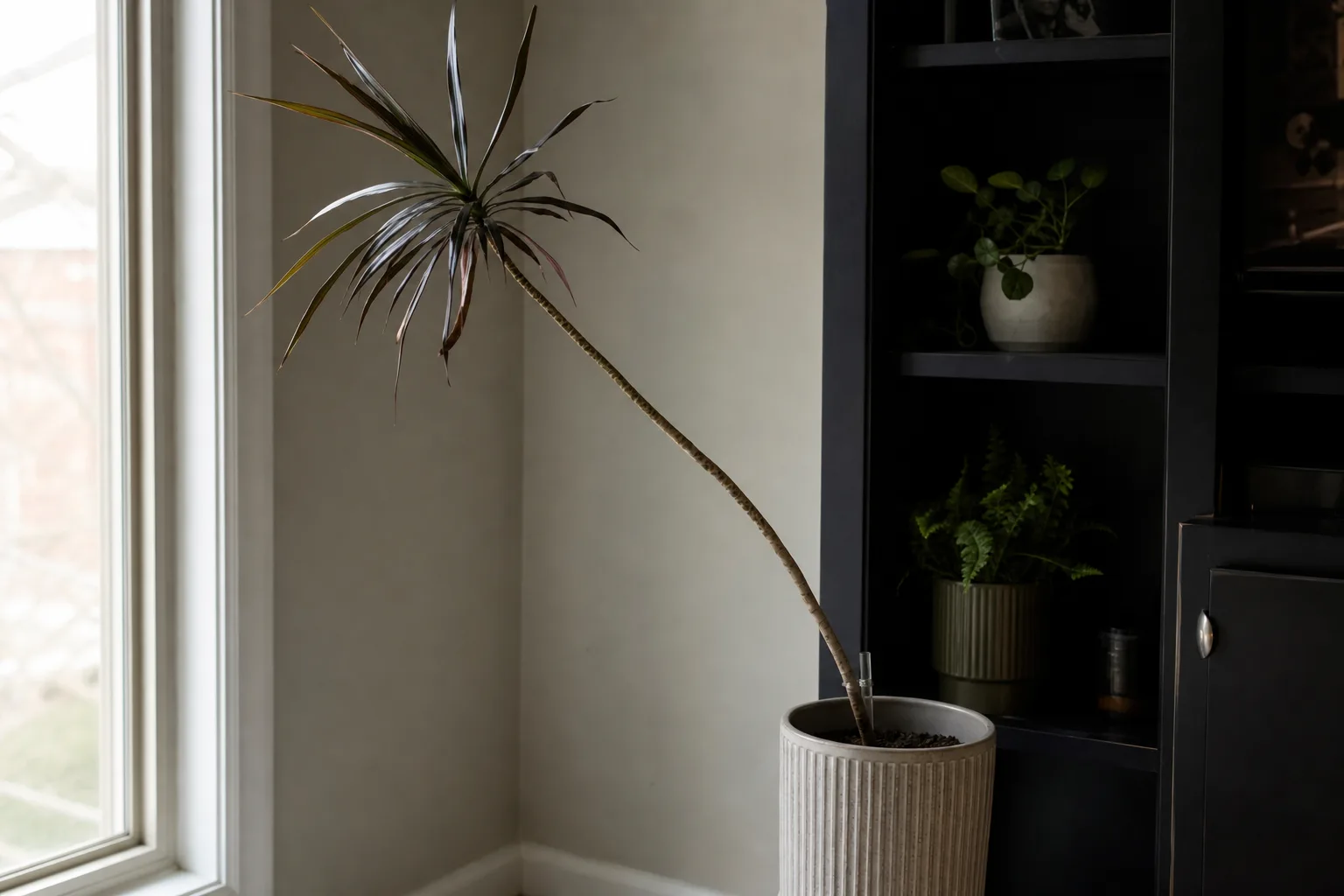
Not Enough Light on Janet Craig Dracaena: Causes, Checks & Fixes
This guide covers not enough light on Janet Craig Dracaena. See also the general Not Enough Light guide, watering, and light pages for this plant.
Not Enough Light on Janet Craig Dracaena: Causes, Checks & Fixes
Quick answer
Janet Craig Dracaena (Dracaena fragrans ‘Compacta’, formerly D. deremensis ‘Janet Craig’) is sold as a low-light floor plant-and it really does survive dim offices better than most tropicals. Surviving is not the same as thriving. In light that is too weak for too long, the cane stretches, crown leaves shrink and pale, and lower foliage drops until the plant looks thin and top-heavy.
The hidden complication is water. Janet Craig in deep shade uses very little moisture. Owners who keep a bright-room Janet Craig Dracaena watering guide leave the top half of the mix wet for weeks-and yellow leaves plus soggy soil then look like overwatering on Janet Craig Dracaena when the root cause is light.
First step: move the crown into brighter filtered light or add artificial light. Do that before Janet Craig Dracaena repotting guide, fertilizing, or trimming hard. Once light improves, adjust watering to match slower uptake in the new spot.
What not enough light looks like on Janet Craig Dracaena
Healthy Janet Craig carries dense clusters of glossy, deep green leaves on a slow-growing upright cane. When light is insufficient, the change is gradual-often masked for months in an office-then suddenly obvious.
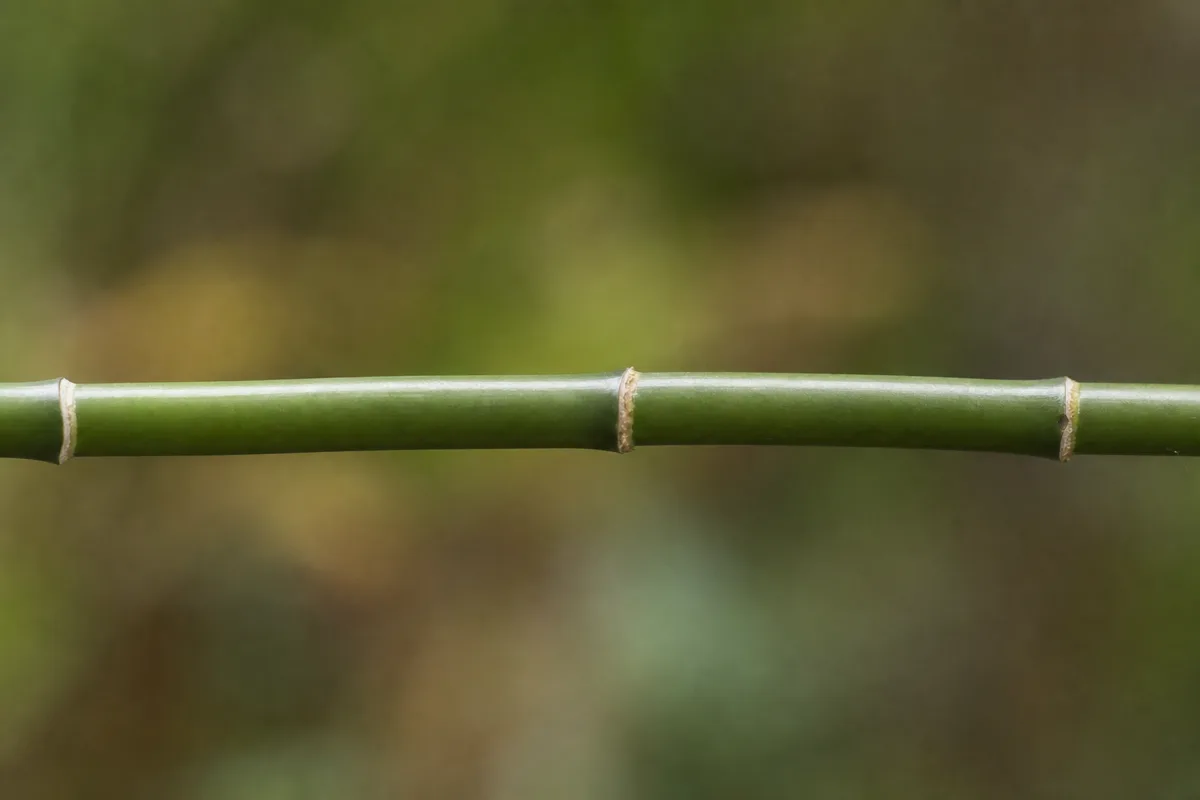
Not Enough Light symptoms on Janet Craig Dracaena - compare with healthy tissue on the same plant.
Typical signs on this cultivar:
- Leggy cane - New leaves emerge farther apart, leaving long bare sections between leaf whorls. The plant looks taller but thinner, not fuller.
- Smaller, paler crown leaves - Fresh growth at the top loses the wavy, corrugated look and deep green sheen. Leaves may look olive or dull rather than glossy.
- Lean toward the window - The cane bends toward the brightest direction. One side stays fuller; the shaded side thins faster.
- Progressive lower-leaf drop - Janet Craig naturally sheds some old lower leaves as it ages, but in dim light the bottom clears out faster while the top struggles to produce replacements.
- Stalled growth - No new leaf whorls for many weeks, even in warm rooms with regular watering.
What you usually do not see with light stress alone: crispy brown patches on sun-facing leaves (that points to sunburn), sticky residue or webbing (pests), or a sour smell from wet soil (advanced root rot-though low light often sets that up).
Why Janet Craig gets not enough light
Janet Craig earned its reputation in interior plantscaping because it holds green foliage under fluorescent office lighting and north-facing windows where showier plants fail. Marketing labels call it a “low-light plant,” which leads owners to tuck it into corners that are dark even by houseplant standards.
The species still needs usable light for photosynthesis. NC State Extension recommends bright to moderate filtered light for corn plants and notes that if light levels are too low, leaves will narrow-Janet Craig’s compact leaf clusters are exactly what suffer first. University of Maryland Extension classifies dracaena among medium-bright indoor plants that do best around 100–500 foot-candles-roughly an east or west window or well-filtered south light, not a hallway with no window view.
Common placement mistakes specific to Janet Craig Dracaena overview:
- Far from the glass - Light intensity drops sharply with distance. A spot that looks “bright” to your eyes six feet from a north window may be too dim for steady crown growth.
- Blocked windows - Sheers, tinted film, overhangs, and neighboring buildings cut usable light more than people expect.
- Competing with taller furniture - Large Janet Craig specimens on the floor often sit below window sills while the room feels bright at eye level.
- Seasonal fade - Shorter winter days reduce light even when the pot never moved. Growth that paused in summer may not restart without a small placement shift or supplemental lighting.
- Assuming tolerance equals preference - Janet Craig can maintain color in moderate shade, but months in very low light trigger stretch and leaf loss as the plant reallocates energy toward any available photons.
Because Janet Craig is a slow grower, light stress builds quietly. You may not notice the cane lengthening until one day the plant looks sparse compared to when you bought it.
How to confirm the cause
Work through these checks before changing water, soil, or fertilizer:
- Light at the crown - Stand where the top leaves are. Can you see sky, or only a wall? Within two to three feet of an unobstructed east window or filtered south or west glass is ideal for active growth. More than six feet from any window, or in a room with no windows, usually means supplemental light is required.
- Growth pattern on the cane - Measure or eyeball the gap between the last three leaf whorls. Increasing distance between whorls compared to older growth confirms etiolation from low light.
- Direction of lean - A consistent tilt toward one window or lamp strongly supports light as the driver-not random mechanical damage.
- Soil dry-down speed - Push your finger halfway into the mix. In dim light the top half should stay dry for two to three weeks or longer in cool rooms. If soil stays damp that long while leaves yellow, low light plus overwatering may both be in play.
- Pot weight and root check - A chronically heavy pot with yellowing lower leaves suggests roots sitting in moisture the plant cannot use. Unpot only if you suspect rot; firm white roots with a firm cane point back to light and watering rhythm, not disease.
- Pest scan - Inspect leaf axils and undersides for mealybugs and scale. Pests can yellow leaves too, but they leave residue or bumps light stress does not.
If the plant sits in harsh direct south or west sun and shows bleached or brown patches on exposed leaves, you may have too much light, not too little. Janet Craig scorches in direct sun-different fix, same priority of correcting placement first.
First fix for Janet Craig Dracaena
Move the plant one step brighter, or add a grow light aimed at the crown.
Practical targets:
- East window - Often the easiest upgrade: bright morning sun filtered through glass, then indirect light the rest of the day.
- Filtered south or west - Three to five feet back from the glass, or behind a sheer curtain, gives the filtered light corn plants prefer without midday burn.
- Office or interior room - Mount a full-spectrum LED grow lamp 12–18 inches above the crown for 12–14 hours daily. Clemson HGIC notes that fluorescent or LED supplementation can replace or extend natural light when windows are insufficient, with about 16 hours maximum per day for most houseplants.
Increase light gradually over one to two weeks if the plant lived in very deep shade-sudden harsh sun can scorch leaves that acclimated to dim conditions. Clemson also warns to avoid sun scorch by slowly increasing exposure when moving plants from low light to brighter windows.
After the move, do not increase watering to “help” the plant. Brighter light may eventually mean slightly more frequent drinks, but a plant recovering from dim stress needs the top half of the mix to dry thoroughly between waterings-often every three to four weeks in moderate light, and longer in still-dim spots.
Rotate the pot a quarter turn every two weeks so new growth fills evenly instead of leaning.
Step-by-step recovery
Once light is corrected, support recovery in this order:
- Hold water - Let the top half of the potting mix go fully dry before the next drink. Use filtered or distilled water if your tap is high in fluoride, which dracaenas are sensitive to-but fixing light comes before chasing water chemistry.
- Remove only dead leaves - Pull or snip fully yellow or brown leaves at the base. Do not mass-prune healthy green tissue trying to force bushiness.
- Wait for new crown leaves - Judge success by the next one or two whorls at the top. They should be wider, darker, and closer together than the stretched section below.
- Optional cane pruning later - If the bare stem is unacceptable cosmetically, cut the cane to the desired height in spring or early summer after new growth looks stable. Janet Craig often sprouts side shoots below the cut-but only when light and watering already support active growth.
- Resume light feeding only after improvement - If you fertilize at all, wait until new leaves look normal for several weeks, then use balanced liquid feed at half strength during active growth. Fertilizer does not substitute for photons.
Do not repot on the same week you change light unless roots are clearly rotting or the mix is failing. Transplant shock plus a light transition stacks stress on a slow plant.
Recovery timeline
Janet Craig is a slow grower, so light recovery is measured in weeks to months, not days.
- Two to three weeks - Lean may stop worsening; soil should dry more predictably if you adjusted watering.
- Four to eight weeks - New crown leaves often look noticeably wider and greener if light is adequate. This is the best early confirmation.
- Three to six months - The plant can look substantially fuller at the top, though old bare cane sections remain unless you prune.
- Lower dropped leaves - They do not regrow on the bare stem. Only new whorls at the crown or side shoots after pruning replace lost foliage.
Signs you are winning: shorter internodes on new growth, glossier deep green leaves, stable leaf count at the bottom, faster dry-down of the top half of the mix.
Signs the problem is worsening: continued stretch despite a move, yellowing that climbs the cane while soil stays wet, soft cane near the base, or sour-smelling mix-those suggest root rot or another issue layered on top of light stress, and unpotting becomes necessary.
Lookalike symptoms
- Overwatering in low light - Yellow lower leaves and wet soil, but the cane may still be firm. Fix dry-down and light together; this is the most common Janet Craig mistake in offices.
- Fluoride or salt brown tips - Tan or brown leaf margins with otherwise normal spacing and color. Switch to filtered water and flush salts; tips do not heal but new leaves stay clean.
- Normal age-related lower drop - A few old leaves yellowing at the bottom on an otherwise compact, glossy plant in good light is normal senescence-not a crisis.
- Heat or cold stress - Drafts from HVAC can curl or spot leaves without stretch. Check air direction, not just windows.
- Mealybugs or scale - White cottony patches or brown bumps on stems; sticky honeydew on leaves or nearby surfaces. Treat pests if confirmed-light alone will not clear an infestation.
- Too much direct sun - Bleached, papery patches or brown scorch on leaves facing the glass. Move back from harsh rays or filter the window; do not treat as “needs even more sun.”
What not to do
Do not flood the plant because growth stalled-wet roots in dim light rot faster than dry roots recover.
Do not place in unfiltered midday south or west sun to fix legginess instantly. Janet Craig burns in direct sun; quick moves cause scorch on leaves that spent months in shade.
Do not fertilize heavily on a pale, stretched plant. Salts stress roots that are already underperforming in low light.
Do not repot into a larger container hoping for bushier growth. Extra soil volume stays wet longer and worsens the overwatering risk that low light invites.
Do not assume the label “low light” means any dark corner. Windowless bathrooms, interior hall pots, and spots far from glass often fall below the minimum light needed to maintain foliage density long term.
Janet Craig care cross-check
Light and watering move together on this species. In brighter filtered light, the top half of the mix may dry in one to two weeks during warm active growth. In dim offices, three to four weeks or longer between thorough waterings is common-and still not a license to keep soil constantly moist.
Use the pot, not the calendar: when the top half is dry, water until a little drains out, empty the saucer, and wait again. If dry-down takes more than four weeks even in moderate light, the pot may be oversized, the mix too heavy, or the room too cool-address those after light is fixed.
Average household humidity (40–50%) is fine. Janet Craig does not need misting to recover from low light. Keep temperatures roughly 65–80°F; cold wet soil slows metabolism further.
How to prevent not enough light next time
- Place new Janet Craig plants where the crown sees filtered daylight, not just where the base fits the floor plan.
- Rotate the pot regularly for even growth.
- Add grow lights before stretch starts in windowless workspaces; run them 12–14 hours on a timer.
- Re-check placement each autumn when daylight shortens; move closer to glass or extend lamp hours slightly.
- Match watering to the spot every time you move the plant-brighter location usually means slightly faster dry-down, but still let the top half dry fully.
Keep Janet Craig out of reach of pets and children-it is toxic to cats and dogs if chewed, causing vomiting and drooling. That matters when relocating a floor plant to a brighter window ledge.
When to worry
Escalate beyond a simple light move if:
- The cane feels soft or collapses near the soil line while mix is wet-suspect root or stem rot and inspect roots promptly.
- More than half the foliage has yellowed in a few weeks and soil smells sour-unpot, trim mushy roots, repot into fresh well-draining mix, and place in corrected light only after wounds callus.
- New crown leaves stay pale and tiny after eight weeks in clearly brighter filtered light-re-check that sun is not too harsh (scorch) or that pests are not draining the plant.
Slow cosmetic thinness on an otherwise stable office plant can wait for a planned move or lamp install. Sudden wet-soil collapse cannot.
Conclusion
Not enough light on Janet Craig Dracaena is a placement problem disguised as a “easy low-light” success story. Confirm it with stretched cane, pale small crown leaves, lean, and bottom-up drop-then move filtered light onto the crown or add a grow lamp before you change anything else. Pair that fix with sparse, top-half dry watering so slow roots are not left in wet soil. New glossy leaves tell you the diagnosis was right; bare cane below tells you patience or later pruning comes next-not more water.
When to use this page vs other Janet Craig Dracaena guides
- Janet Craig Dracaena watering guide - Use for routine moisture checks before assuming not enough light is the main issue.
- Janet Craig Dracaena problems hub - Browse all 50 common issues on this species.
- Leggy Growth on Janet Craig Dracaena - Different entry point when symptoms overlap with not enough light.
- Yellow Leaves on Janet Craig Dracaena - Different entry point when symptoms overlap with not enough light.