Leggy Growth on Janet Craig Dracaena: Causes, Checks & Fixes
Quick answer
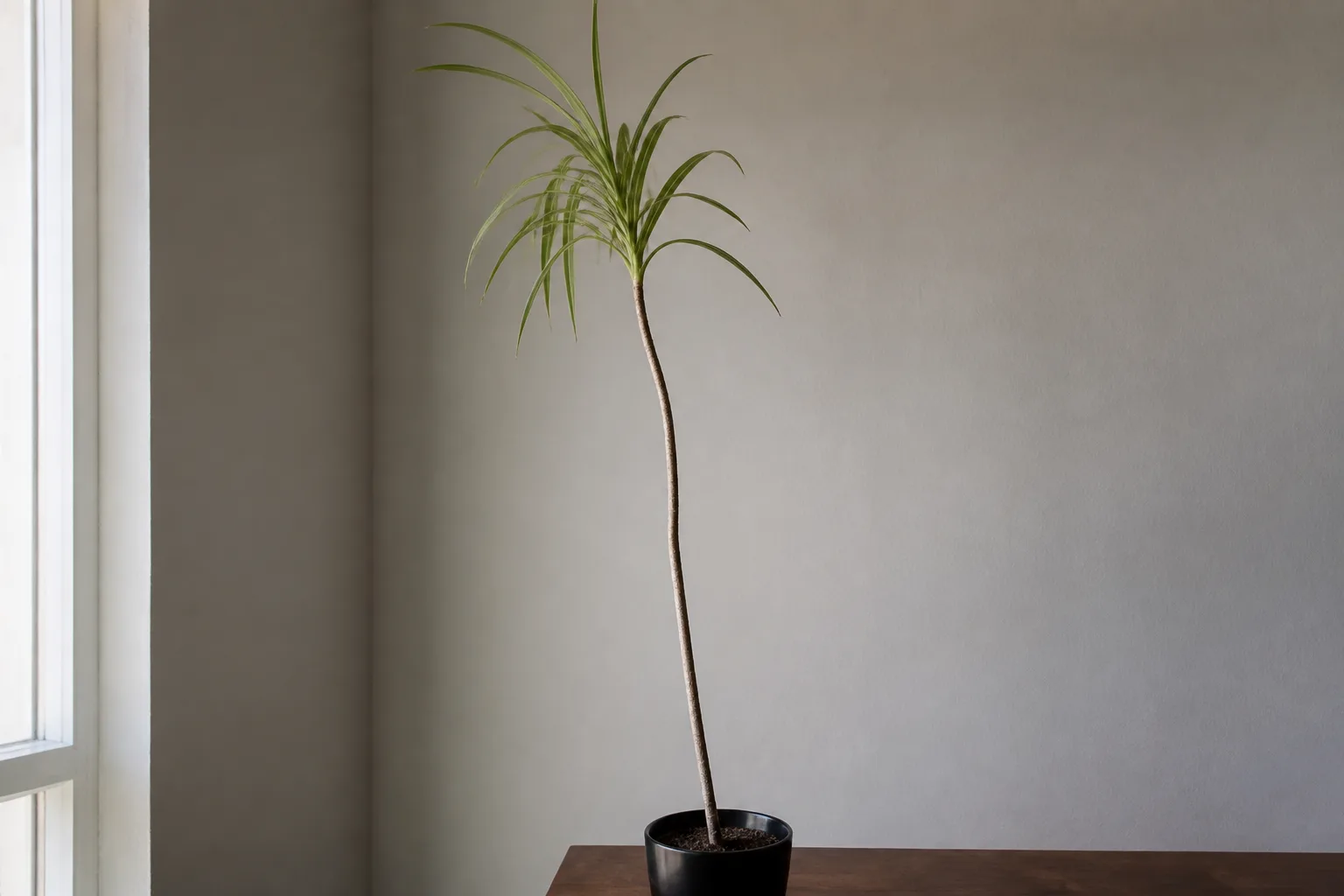
Leggy Janet Craig Dracaena shows long bare cane between sparse leaf clusters, usually from surviving in light that is too dim-not from underwatering. First step: move the plant one step closer to bright, filtered indirect light before pruning or fertilizing.
Leggy Growth on Janet Craig Dracaena: Causes, Checks & Fixes
This guide covers leggy growth on Janet Craig Dracaena. See also the general Leggy Growth guide, watering, and light pages for this plant.
Leggy Growth on Janet Craig Dracaena: Causes, Checks & Fixes
Quick answer
Leggy growth on Janet Craig Dracaena (Dracaena fragrans ‘Compacta’, often sold as Dracaena deremensis ‘Janet Craig’) means the plant is stretching for light. You will see long bare tan cane between leaf clusters, smaller or paler new leaves, and often a lean toward the brightest source. Janet Craig is famous for tolerating dim interiors, but tolerance is not the same as good growth-prolonged low light produces sparse, weak structure.
First step: move the plant one step brighter-within a few feet of an east window, several feet back from a filtered south or west window, or under a full-spectrum grow light for 12–14 hours daily. Do not start with fertilizer, Janet Craig Dracaena repotting guide, or heavy pruning. Once new leaves emerge closer together, you can trim leggy cane tips if you want a bushier shape.
What leggy growth looks like on Janet Craig Dracaena
Janet Craig grows as an upright cane with a rosette of glossy, dark green leaves at the top. In healthy light, leaves are broad and arch gracefully from a fairly tight crown. When light is marginal, the signature changes:
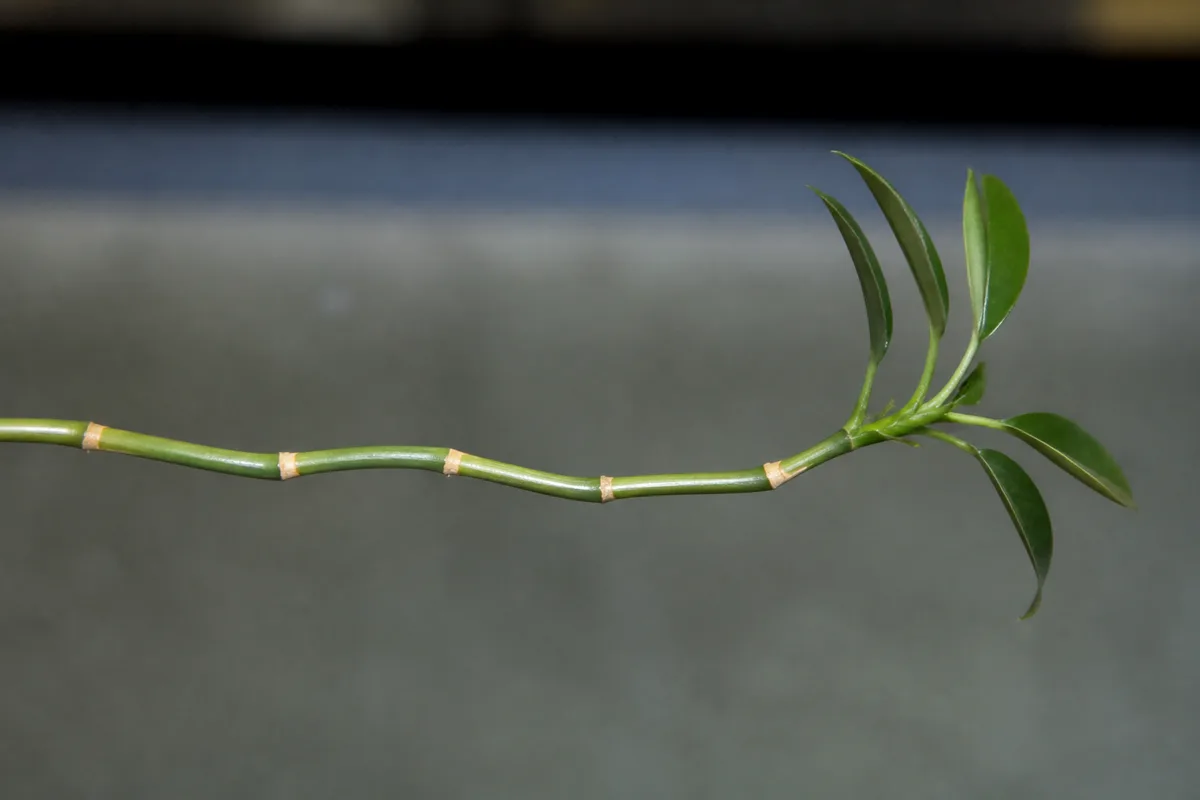
Leggy Growth symptoms on Janet Craig Dracaena - compare with healthy tissue on the same plant.
- Long internodes - visible inches or feet of bare woody stem between leaf whorls
- Smaller new leaves - crown foliage looks narrower or thinner than older leaves formed in better light
- Pale or dull green new growth - not the deep gloss Janet Craig is known for
- Strong lean - the crown tilts toward a window, doorway, or lamp
- Thinning from the bottom - lower leaves yellow and drop, leaving a top-heavy silhouette
- Slow or stalled new leaves - in very dim spots, the plant may hold a few leaves but barely add new ones
This is etiolation-indoor plants become spindly or leggy as they stretch to reach for more light: the plant invests in stem length to reach photons, not in dense foliage. It can look like “fast height” when it is actually weak growth.
Normal vs. leggy: Janet Craig naturally sheds lower leaves as the cane lengthens-a mature floor plant often shows some bare trunk. Legginess is the pattern: recent growth is sparse, leaves are undersized, and the plant leans or reaches rather than holding a full, balanced crown.
Why Janet Craig gets leggy
Janet Craig evolved as a slow-growing tropical understory plant-the ‘Compacta’ cultivar carries short leaves on slow-growing stems. Indoors, it survives corners other plants reject. That survival comes at a cost.
Insufficient light intensity
NC State Extension recommends bright to moderate filtered light for corn plants and notes that if light levels are too low, leaves will narrow. Janet Craig’s ‘Compacta’ form is bred for shorter, denser leaves-but it still stretches when footcandles at the crown stay in the low range for months.
University of Maryland Extension classifies Dracaena among medium-bright light houseplants (roughly 100–500 footcandles). Many homes, especially far from windows or in north-facing rooms, deliver less than the plant needs for compact growth. The result is spindly, leggy stems that reach for brighter zones.
Low light plus Janet Craig’s slow metabolism
In deep shade, Janet Craig uses very little water and grows slowly. Growers often keep watering on a summer schedule while light drops-wet soil and weak growth overlap, but the visible symptom at the top is still stretch and thin leaves. Legginess here is primarily a light problem; watering mistakes make recovery harder.
Uneven or one-sided exposure
Janet Craig’s cane does not branch much on its own. If light hits one side, new growth follows that direction. Clemson HGIC notes that plants moved from dim to brighter spots produce thicker, stronger new leaves-until you fix direction and intensity, one-sided legginess persists.
Seasonal light drop
Winter shortens daylight even beside a window. A plant that looked acceptable in August may stretch between November and February. This is still etiolation, not a separate disease.
Overfertilizing in dim light
Janet Craig needs light feeding at most during active growth. Extra fertilizer in a dark office cannot replace photons and may produce soft, weak tissue. Increase light first; feed only after the plant is visibly growing in better conditions.
Causes to rule out
- Normal aging - some bare lower cane on a tall, otherwise full-crowned plant
- overwatering on Janet Craig Dracaena stress - yellowing and leaf drop from wet soil in low light; fix water and light together
- Pest weakness - mealybugs or scale can thin foliage, but you would see residue, sticky honeydew, or deformed new leaves
- Sudden sun scorch - pale bleached patches from harsh direct sun, not long bare cane
How to confirm the cause
Work through these checks in order:
- Light at the crown - Hold your hand above the top leaves at midday. A sharp, dark shadow suggests usable indirect light; a faint or absent shadow in a room that feels “bright” means the plant is too far from the source.
- Leaf spacing trend - Compare newest leaves to ones six months ago. Increasing gaps between whorls confirm stretch.
- Lean direction - Crown points toward the brightest opening? That supports low-light etiolation.
- Pot weight and soil - In dim corners, soil should stay dry a long time. A heavy, damp pot with leggy top growth suggests you are watering for brighter-light conditions the plant is not in.
- Season - Did stretching accelerate after days shortened? Seasonal light is a likely contributor.
- Pest scan - Inspect leaf axils and cane joints for white cottony masses (mealybugs) or brown bumps (scale). Clean plants with stretch still point to light.
If light is clearly adequate-compact new growth in a well-lit east or filtered south spot-look at watering and pests before pruning.
The first fix to try
Move Janet Craig one step closer to bright, filtered indirect light.
Practical placements:
- East window - plant a few feet inside the glass, out of direct morning beam on hot summer days
- Filtered south or west - behind sheer curtain or 4–6 feet back from the pane
- Dim room supplement - full-spectrum LED grow light 12–14 inches above the crown, 12–14 hours daily
Acclimate gradually. Clemson HGIC warns that abrupt jumps to intense direct sun can bleach or scald leaves. Janet Craig scorches in direct sunlight-you want brighter indirect light, not a hot western windowsill.
Do not prune heavily on day one. Give the plant two to four weeks in better light so new leaves can emerge tighter before you cut cane.
Step-by-step recovery
Once light is improved:
- Rotate the pot a quarter turn weekly so all sides of the crown receive similar exposure and the lean corrects slowly.
- Match watering to new light - when growth speeds up, the top half of the mix will dry faster. Check with your finger; in low light Janet Craig may need water only every three to four weeks, while a brighter plant may need it sooner.
- Wait for one flush of tighter new leaves - confirm the fix is working before pruning.
- Prune leggy cane if needed - in spring or early summer, use clean shears to cut the cane at your desired height, just above a leaf scar or node. Janet Craig often sprouts new shoots below the cut, producing a bushier top over months.
- Propagate the top - the removed crown section can root as a stem-tip cutting if healthy; the parent cane can branch below the cut.
- Feed lightly, if at all - after active new growth appears, use balanced liquid fertilizer at half strength monthly through spring and summer. Skip feed on a stressed or recently pruned plant for several weeks.
If the plant is extremely tall and unstable, stake loosely until new growth stiffens-do not rely on stakes instead of fixing light.
Recovery timeline
Janet Craig is slow-growing. Expect:
- 2–4 weeks - new leaves may emerge slightly closer together; lean may slow
- 1–3 months - visible improvement in leaf size and crown density in better light
- 3–6+ months - side shoots below a spring cane cut fill out a sparse top
- Old stretched cane - bare sections do not shorten; only new growth is compact
Judge success by new leaf spacing, gloss, and upright habit-not by old bare trunk disappearing.
Lookalike symptoms
| What you see | Likely cause | What to check |
|---|---|---|
| Long bare cane, small pale crown leaves, lean to window | Low light (etiolation) | Footcandles at crown; distance from glass |
| Yellow lower leaves, wet heavy pot, no strong lean | Overwatering in low light | Soil moisture deep in pot; watering frequency |
| Brown crispy leaf edges, not long bare cane | Fluoride/salt burn, low humidity | Water source; white crust on soil |
| Bleached patches on leaves facing window | Sun scorch | Direct afternoon sun on foliage |
| Sticky leaves, white fuzz in axils | Mealybugs or scale | Pests along cane and leaf bases |
Mistakes to avoid
- Pruning before improving light - the plant will stretch again from the same dim spot
- Jumping to harsh direct sun - scorches Janet Craig foliage; move in steps
- Overwatering a dim leggy plant - slow growth plus wet soil invites root problems
- Fertilizing heavily to “bulk up” a dark-corner plant - wastes feed and can burn roots
- Assuming height equals health - cane extension with few leaves is weakness, not vigor
- Ignoring one-sided light - rotation and even exposure matter on a single-cane plant
Janet Craig care cross-check
While correcting legginess, align the basics:
- Light target - medium to bright filtered indirect for compact form; deep shade only if you accept sparse growth
- Water - allow the top half of the mix to dry; very infrequent in low-light positions (often three to four weeks or more)
- Soil - well-draining potting mix with perlite; never let the pot sit in a full saucer
- Temperature - comfortable room range; avoid cold drafts below about 50°F (10°C)
- Humidity - average household levels are fine; low humidity causes brown tips, not classic legginess
How to prevent leggy growth next time
- Place Janet Craig where it receives consistent filtered indirect light, not just where the pot looks good in a dark lobby
- Rotate every few weeks for even crown development
- Add supplemental lighting in winter or interior offices-16 hours maximum combined natural and artificial light per day is a common ceiling for houseplants
- Prune proactively when the plant outgrows its space, cutting cane in spring so branching stays low and full
- Scale watering to light - brighter placement means faster drying and slightly more frequent checks
When to worry
Legginess alone rarely kills Janet Craig. Escalate when:
- Wet soil for weeks in a dim spot with yellowing and soft cane base - suspect root rot; inspect roots before watering again
- Cane tips blacken or feel mushy - not etiolation; check for stem rot or cold damage
- Plant topples - tall leggy canes are unstable; secure or prune, and keep toxic plants away from pets that might chew fallen leaves
Otherwise, leggy Janet Craig is a correctable culture issue. Improve light, adjust water, prune once new growth proves the placement works, and the next leaves will tell you if you succeeded.
When to use this page vs other Janet Craig Dracaena guides
- Janet Craig Dracaena watering guide - Use for routine moisture checks before assuming leggy growth is the main issue.
- Janet Craig Dracaena problems hub - Browse all 50 common issues on this species.
- Not Enough Light on Janet Craig Dracaena - Different entry point when symptoms overlap with leggy growth.
- Yellow Leaves on Janet Craig Dracaena - Different entry point when symptoms overlap with leggy growth.
- Plant Leaning on Janet Craig Dracaena - Different entry point when symptoms overlap with leggy growth.