Plant Leaning on Janet Craig Dracaena: Causes, Checks &
Quick answer
Janet Craig Dracaena leans when the upright cane reaches toward one-sided light, when a mature crown gets top-heavy, or when wet roots lose grip in low light. First step: note which way the cane tilts relative to your brightest window, then lift the pot and check whether the cane is firm or soft on wet soil.
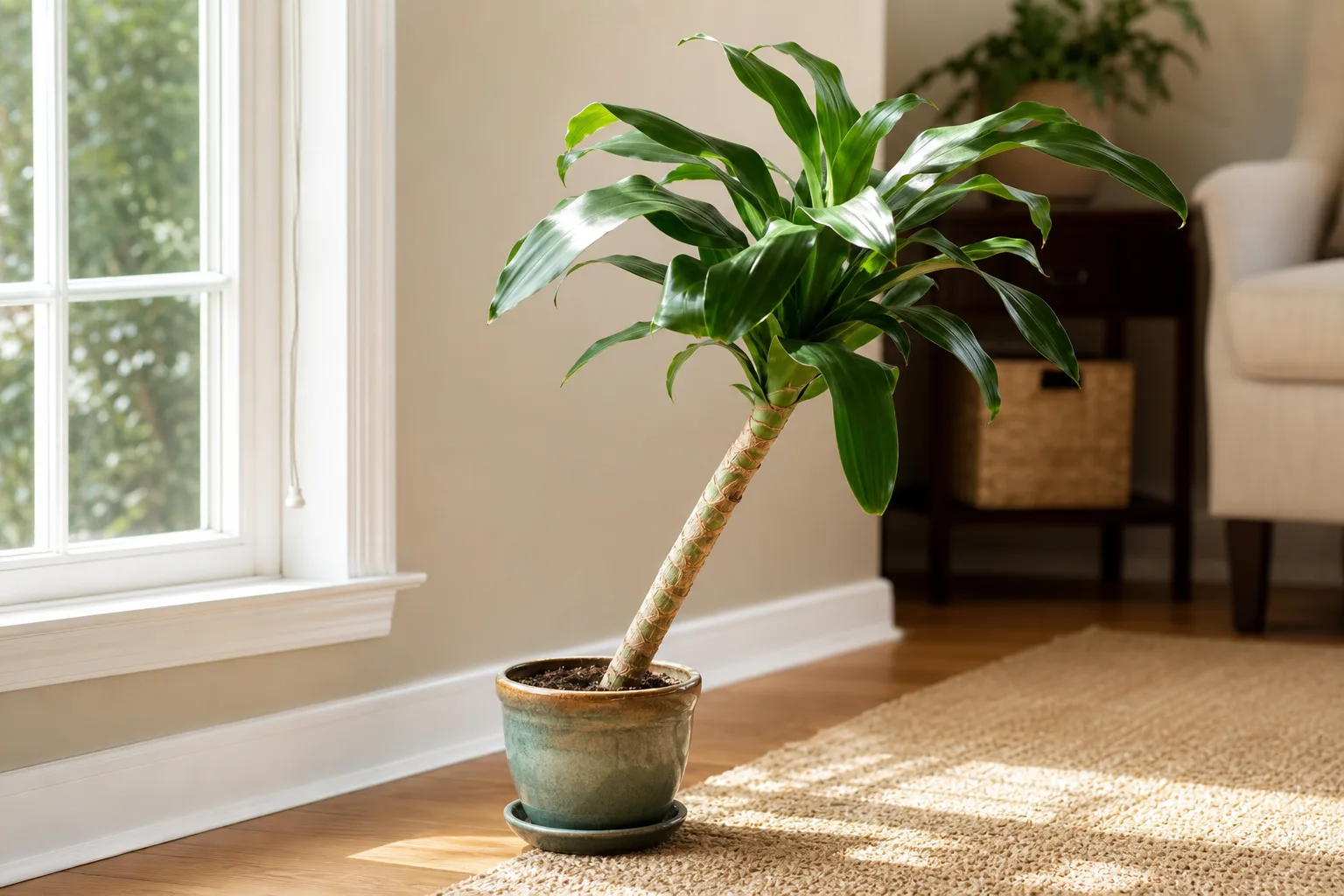
Plant Leaning on Janet Craig Dracaena: Causes, Checks & Fixes
This guide covers plant leaning on Janet Craig Dracaena. See also the general Plant Leaning guide, watering, and light pages for this plant.
Plant Leaning on Janet Craig Dracaena: Causes, Checks & Fixes
Quick answer
A leaning Janet Craig Dracaena (Dracaena fragrans ‘Janet Craig’, formerly D. deremensis ‘Janet Craig’) is usually a structure and placement problem, not brown tips or fluoride injury. The species grows as a slow-growing upright cane with whorled strap leaves on a single woody stem. When light hits from one direction only, the crown bends toward the brightest source-phototropism. In dim offices, that reach often pairs with long gaps between leaf clusters. Mature specimens can also tip when a heavy crown outweighs a narrow nursery pot, or when wet roots in low light lose the grip that kept the cane vertical.
First step: stand behind the plant and note which way the cane tilts relative to your brightest window or lamp. Lift the pot. If the cane is firm and the top half of mix is dry or approaching dry, rotate a quarter turn so the lean faces the light source and watch new growth for two weeks. If the pot feels heavy, the cane softens near the soil line, or lower leaves yellow on damp mix, stop watering and inspect roots before staking- that is overwatering collapse, not a window reach.
This page covers tilt, stake, and rotation fixes for a leaning cane. For general low-light stretch, pale crown leaves, and bottom-up drop, see not enough light on Janet Craig-that guide explains why dim placement causes lean; this one explains how to correct and support the tilted stem.
What plant leaning looks like on Janet Craig Dracaena
Healthy Janet Craig sits upright in its container with crown leaves radiating evenly from the top of a thick tan cane. Leaning shows up differently than drooping or brown margins:
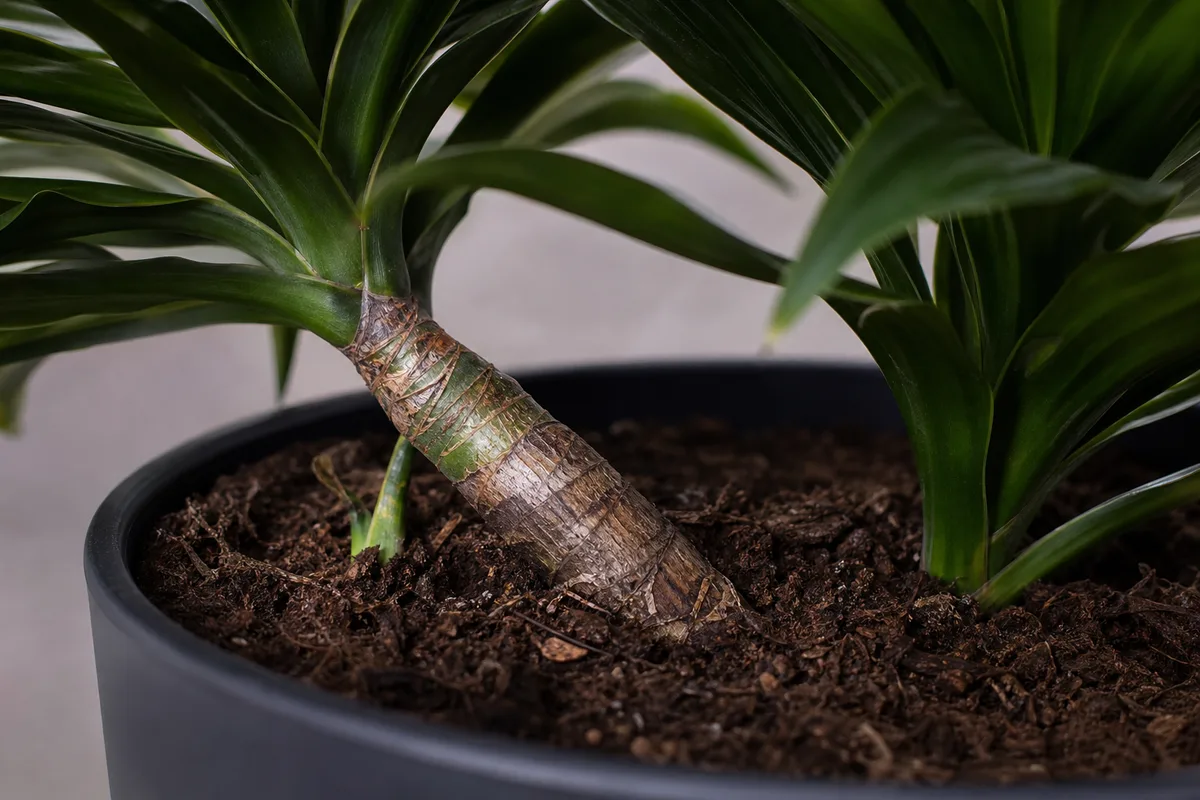
Plant Leaning symptoms on Janet Craig Dracaena - compare with healthy tissue on the same plant.
- Cane tilt toward one window - the whole stem arcs toward the brightest wall; crown leaves face the same direction while the shaded side thins
- Pot tip or wobble - a tall floor plant in a lightweight cache pot wants to fall when the crown mass sits off-center
- One-sided stretch - longer bare gaps between leaf whorls on the side reaching for light, with compact older whorls below
- Soft flop at the base - cane bends at soil level on a heavy wet pot; leaves may still point sideways but stems lack firmness (root weakness, not phototropism)
- Recent move lean - after shifting from a bright spot to a dim hallway, all new growth redirects toward the nearest window within days
What leaning is not: tan crispy leaf margins (fluoride or salt-see brown tips on Janet Craig); limp leaves hanging straight down with no directional reach (drooping leaves); or only smaller pale leaves without visible cane bend (not enough light covers the full low-light syndrome).
Why Janet Craig leans
One-sided light and phototropism
Indoor light usually enters from one window. When light reaches plants from one direction, they can develop a lean as auxin builds on the shaded side and cells elongate toward photons. Janet Craig is marketed for low light, but it still grows toward whatever brightness exists-often a distant window in an office corridor. Clemson HGIC notes that many dracaenas tolerate lower light, yet plants moved to brighter spots produce thicker, stronger new leaves-evidence that dim one-sided exposure produces weaker, reaching growth.
Top-heavy crown on a single upright cane
Unlike bushy pothos, Janet Craig typically carries one or a few unbranched canes. NC State describes an unbranched woody stem with broad strap leaves arranged spirally. As lower leaves shed naturally, the crown sits higher on a visible trunk. A 4- to 6-foot specimen in a small decorative pot becomes a lever: healthy roots may still be intact, but the display tilts from weight alone.
Weak roots from overwatering in low light
Janet Craig in deep shade uses water slowly. Owners who water on a calendar leave the bottom half of the mix saturated for weeks. Dracaena prefers allowing soil to dry between waterings, and root rot from too much water is a common problem per Clemson. Damaged roots cannot anchor the cane; the plant flops sideways on wet soil even when leaves still green. Yellow lower leaves, fungus gnats, and a sour smell confirm this branch-overlap with root rot on Janet Craig and overwatering.
Repot instability and floor placement
Fresh repots with loose soil, tall narrow pots, or sliding a heavy plant into a lightweight cache pot without a weighted base can tip the cane before roots re-anchor. Floor pots placed below window sills often lean toward glass above while the base stays in shadow-classic phototropism amplified by placement.
How to confirm the cause
Work through these checks in order:
- Direction test - mark which way the cane points. Consistent aim at one window or lamp supports phototropism.
- Internode comparison - on the leaning side, measure gaps between recent leaf whorls versus older compact sections. Long gaps confirm etiolation from low light driving reach, not random mechanical damage.
- Pot weight and half-depth moisture - lift the container. Light pot with dry-to-touch top half and firm cane: drought is not the lean driver. Heavy pot with cool wet skewer at half depth: suspect root stress before staking.
- Cane firmness - gently upright the plant. Firm tan cane that springs back suggests structural lean or phototropism. Soft, mushy tissue at the soil line on wet mix means inspect roots first.
- Stability test - if the pot rocks when the crown is centered, mechanical top-heaviness or a too-small base is likely. Firm roots with a tipping pot still benefit from staking or a wider base-not more water.
- Scope check - if the cane is firm, dry-down is normal, and only tips reach toward glass, treat as phototropism. If lean worsens while soil stays wet and lower leaves yellow, treat as wet-root collapse first.
| Pattern | Cane feel | Pot / soil | Likely cause |
|---|---|---|---|
| Tips and cane aim at one window | Firm | Normal dry-down | Phototropism / one-sided light |
| Tall crown, firm roots, pot tips | Firm | Normal | Top-heavy mechanical lean |
| Bend at soil line, yellow lower leaves | Soft base | Heavy, wet mix | Wet-root weakness / rot |
| Lean after dim move | Firm, reaching | May stay damp longer | Low light + phototropism |
First fix for Janet Craig
Rotate the pot a quarter turn so the current lean faces your brightest filtered light source, then leave it one week.
This single step tests whether the tilt is normal directional growth. Rotating houseplants regularly shares light evenly and reduces one-sided reach. On Janet Craig, watch the next crown whorl: if new leaves emerge more centered after two to three weeks, phototropism was the main driver.
Do not water heavily, fertilize, or repot solely because the cane tilts. Those steps do not correct directional light hunger and can worsen wet-soil collapse in dim offices.
When to improve light instead of only rotating
If internodes keep lengthening with smaller crown leaves after rotation, the spot is too dim overall-not just uneven. Move the crown one step brighter (east window, filtered south or west, or a grow lamp 12–18 inches above the crown) per the Janet Craig light guide. Deep-shade survival is not the same as enough light to stay upright; see not enough light on Janet Craig for the full light-upgrade path.
When to stake a mature floppy cane
If the cane is firm, roots are healthy, and the crown simply outweighs the pot, stake before the stem cracks. Insert a bamboo stake into the mix near the cane-not through roots-deep enough to reach the root ball. Tie the cane with soft fabric or plant tape in a loose figure-eight, adding a second tie higher on tall specimens. Clemson notes that bare stems can be cut to force new leaves; staking is preferable when the plant is otherwise healthy and you want to preserve height.
Do not stake without fixing light if etiolation is the driver-ties on weak stretched tissue only hold a struggling plant in place.
When wet soil means root inspection first
If the pot is heavy, the cane softens at the base, or yellow leaves drop on damp mix, pause watering and slide the plant out. Trim brown mushy roots, repot into fresh well-draining mix with perlite, and place in corrected light only after wounds callus. Staking a rotting cane masks a fatal problem. Follow the root rot workflow before any support hardware.
Step-by-step recovery
After the initial rotation:
- Improve light if stretch continues - relocate toward filtered indirect exposure; acclimate over one to two weeks if moving from very deep shade. Avoid sudden unfiltered midday sun-Janet Craig scorches in direct sun.
- Establish rotation habit - quarter turn every one to two weeks, aligned with your watering check rhythm so all sides see similar light.
- Stake top-heavy canes - add bamboo support and a wider stable base pot if the display tips in cache planters.
- Match watering to light - in brighter filtered light, let the top half of mix dry before soaking; in dim offices, three to four weeks between drinks is common. Wet soil in low light weakens anchoring roots.
- Optional cane pruning later - if hardened curve is unacceptable cosmetically, cut the cane to desired height in warm active growth after light and watering stabilize. New side shoots often emerge below the cut on healthy plants.
- Inspect roots only if stems soften - firm cane with directional lean never needs day-one Janet Craig Dracaena repotting guide.
Lean vs. drooping vs. not enough light
These Janet Craig problems overlap but need different first fixes:
- Plant leaning (this page) - cane or pot tilts directionally; crown may still look glossy; firm cane on normal moisture means rotate, brighten, or stake
- Drooping leaves - leaves lose turgor and hang limply; often drought or root failure, not a consistent reach toward one window
- Not enough light - leggy cane, pale small crown leaves, bottom-up drop, and lean together; primary fix is brighter filtered light on the crown, with sparse watering
- Wilting - sudden limpness across the whole plant, often heat or transplant shock
- Overwatering - yellow lower leaves on heavy wet pot; lean from soft base, not window aim
If lean worsens while soil stays soggy, treat the root zone first-not rotation alone.
Recovery timeline
Janet Craig is slow-growing, so straightening is measured in weeks:
- Two to three weeks - new crown growth should point more evenly after rotation and adequate light; lean stops worsening
- Four to eight weeks - closer-spaced new whorls confirm the fix; old curved cane section remains bent
- Three to six months - mature plants look substantially more balanced at the crown after consistent rotation and light; bare trunk below unchanged unless pruned
Signs you are winning: tips point in multiple directions after rotation, new leaves emerge closer together, pot stays stable, firm cane, predictable dry-down of the top half of mix.
Signs the problem is worsening: increasing tilt on wet heavy soil, soft cane at base, sour smell, yellowing climbing the stem-escalate to root inspection immediately.
Hardened woody cane does not fully straighten. Success means new upright growth direction, not a rubber trunk snapping back.
What not to do
Do not stake heavily without improving light when internodes are stretched- you lock in weak architecture.
Do not water more because the plant tilted in a dim office; wet roots collapse faster than dry roots recover.
Do not move suddenly into harsh direct south or west sun to fix lean; scorch damages leaves acclimated to shade.
Do not repot into an oversized container for stability; extra soil volume stays wet longer in low light.
Do not fertilize a leaning stressed plant hoping for thicker stems; fix light and moisture first.
Do not ** confuse fluoride brown tips with lean**- margins can brown while the cane stays vertical (brown tips guide).
Keep the plant out of pet reach when relocating to brighter ledges-Janet Craig is toxic to cats and dogs if chewed.
How to prevent plant leaning next time
- Rotate the pot a quarter turn every one to two weeks during routine watering checks
- Place the crown, not just the pot base, where filtered daylight reaches the top leaves-see light requirements
- Stake early on mature floor specimens before the crown overbalances a narrow pot
- Use a stable weighted base for tall plants in decorative cache pots
- Match watering to placement every time you move the plant-brighter spots dry faster; dim offices need longer intervals
- Re-check each autumn when daylight shortens; lean often starts when winter light drops and watering stays on summer autopilot
When to worry
Escalate beyond rotation if:
- The cane collapses or feels soft at the soil line on wet mix-same-day root assessment
- More than half the foliage yellows in weeks with sour-smelling soil-unpot, trim rot, repot, then correct light
- The pot tips hard enough to crack the cane or pull the plant out of the soil-stabilize immediately and inspect roots
- Lean persists with firm cane but crown leaves stay tiny and pale after eight weeks in clearly brighter filtered light-re-read not enough light and check for pests
Cosmetic window reach on a firm healthy office plant can wait for the next rotation. Wet-soil collapse cannot.
Janet Craig care cross-check
Light and watering move together on this species. A plant corrected for lean in a brighter spot may need water every 10 to 14 days during active growth; the same plant in a dim hallway may go three to four weeks between thorough soakings. Always let the top half of mix dry before watering-details in the Janet Craig overview.
Average household humidity (40–50%) is adequate; leaning is not fixed by misting. Keep temperatures roughly 65–80°F; cold wet soil slows metabolism and prolongs root recovery.
Conclusion
Plant leaning on Janet Craig Dracaena is a placement and structure problem far more often than a mystery disease. Note the lean direction, check cane firmness and pot weight, rotate toward filtered light, upgrade brightness when internodes stretch, and stake mature top-heavy canes before they flop. If wet soil and a soft base accompany the tilt, inspect roots before any support hardware. New crown growth pointing more evenly tells you the fix is working-even when the old cane keeps its curve.
Practical checks
Urgency check
Soft cane on heavy wet pot, sour soil, pot tipping hard enough to uproot, or lean worsening with spreading yellow leaves-address within a day, not after another week of rotation alone.
Best inspection order
Lean direction → internode gaps → pot weight and half-depth moisture → cane firmness at soil line → stake or root inspection based on wet vs. dry branch.
When to use this page vs other Janet Craig Dracaena guides
- Janet Craig Dracaena watering guide - Use for routine moisture checks before assuming plant leaning is the main issue.
- Janet Craig Dracaena problems hub - Browse all 50 common issues on this species.