Ants on Janet Craig Dracaena: Causes, Checks & Fixes
Quick answer
Ants on Janet Craig Dracaena are a warning sign, not the root problem. They almost always farm honeydew from mealybugs, aphids, or soft scale hidden in cane joints and the crown. First step: follow the ant trail and inspect leaf axils and the pot rim for sap-sucking pests before treating ants.
Ants on Janet Craig Dracaena: Causes, Checks & Fixes
This guide covers ants on plant on Janet Craig Dracaena. See also the general Ants on Plant guide, watering, and light pages for this plant.
Ants on Janet Craig Dracaena: Causes, Checks & Fixes
Quick answer
When ants march up your Janet Craig Dracaena (Dracaena deremensis ‘Janet Craig’), they are usually after honeydew-the sugary waste that aphids, mealybugs, and soft scale excrete while feeding on phloem sap. On this upright floor plant, those pests target sheltered tissue: leaf axils where broad strap leaves wrap thick canes, the crown where new growth emerges, and sometimes roots below the soil line.
Ants protect and tend these sap feeders in exchange for honeydew, which keeps the infestation going even after you knock pests off once. Your first job is not ant spray. Follow the trail to the pest. Inspect cane crotches and the crown with a bright light, remove any mealybugs, aphids, or scale you find, and wipe sticky residue from glossy leaves. Once the food source is gone, ants typically disappear within a few days.
What ants on Janet Craig look like
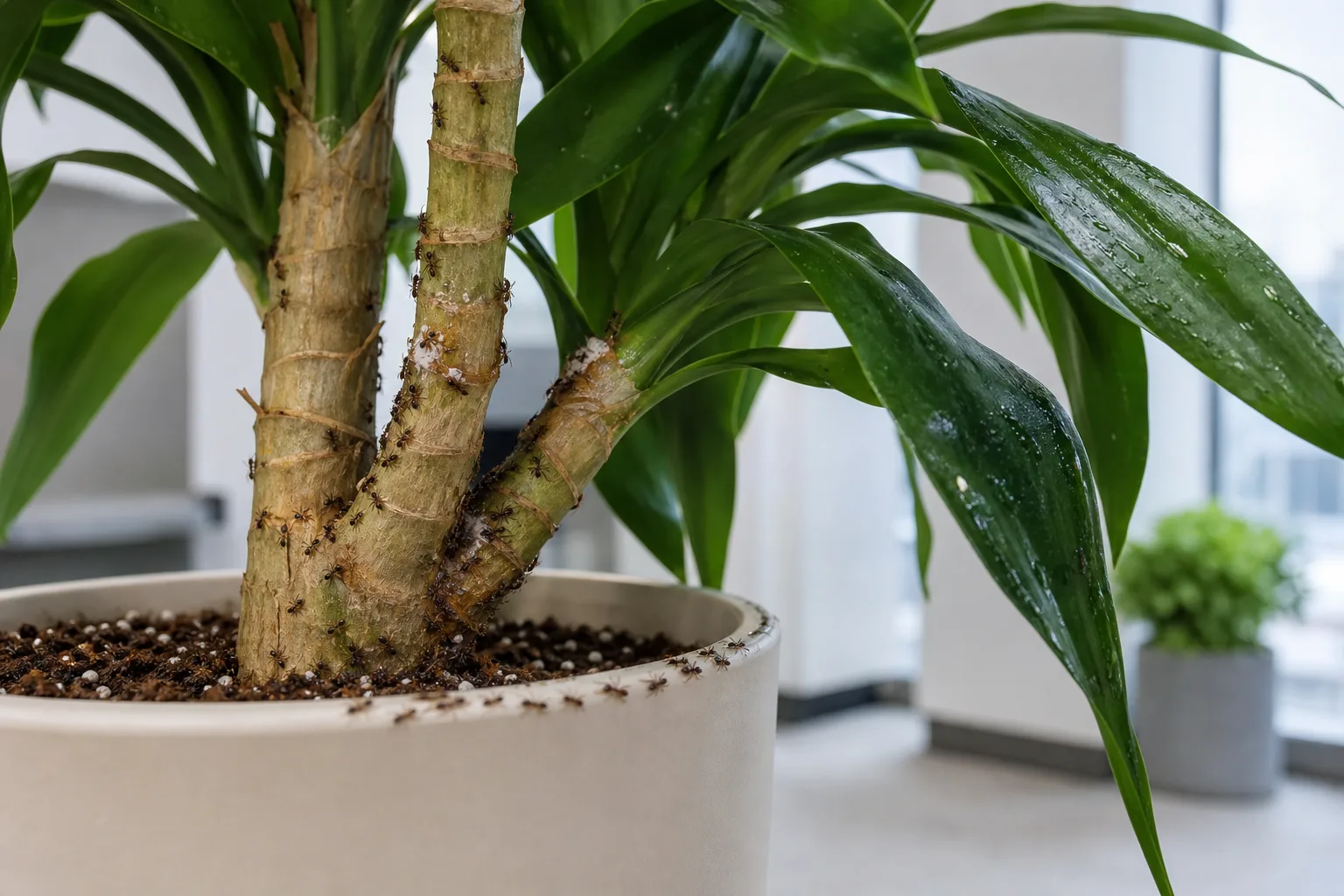
Ants on Janet Craig show up as thin, steady trails along tan cane stems, across the pot rim, down the outside of the container, or across the saucer and floor tiles beneath a floor specimen. You might notice them most on warm indoor days when pest colonies are active and honeydew production peaks.
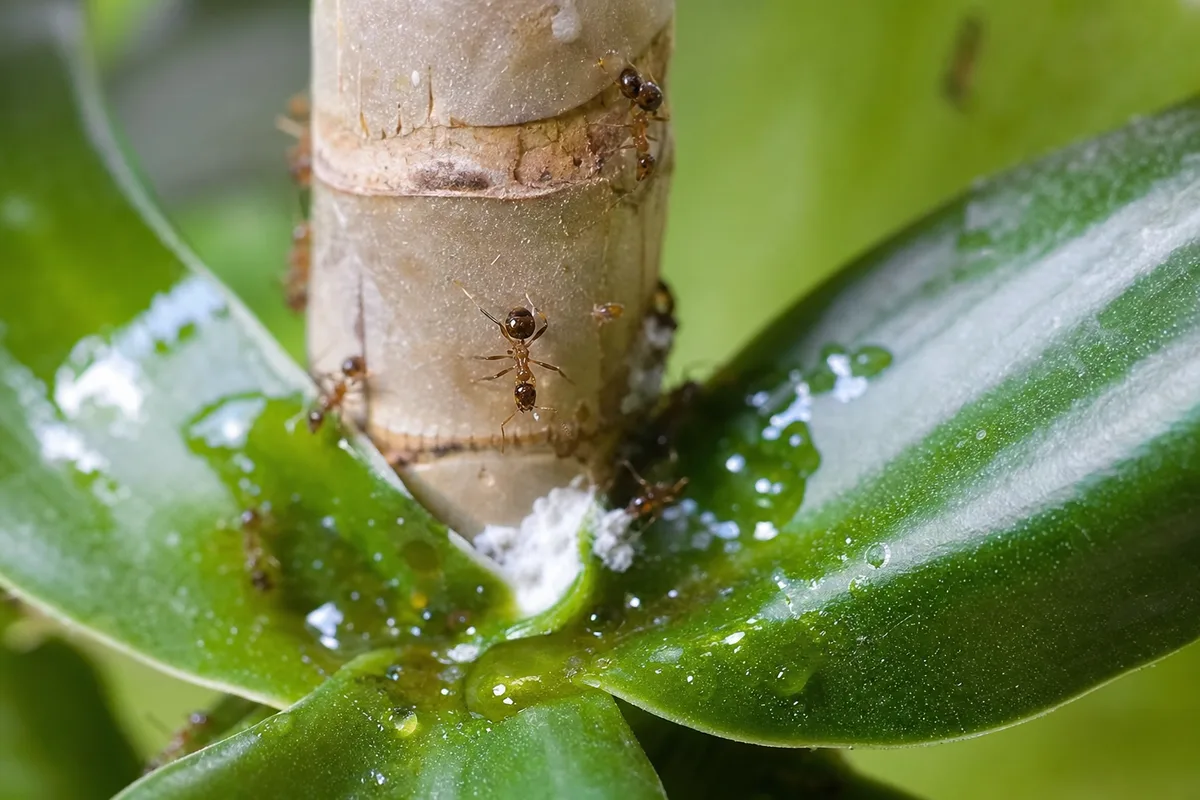
Ants on Plant symptoms on Janet Craig Dracaena - compare with healthy tissue on the same plant.
Common companion signs:
- Shiny, sticky leaves or pot surfaces from fresh honeydew on glossy strap foliage below feeding sites
- Black sooty coating on lower leaves where honeydew has dried and mold has grown
- White cottony patches tucked into cane crotches or the crown from mealybugs-the most common honeydew source on this cultivar
- Clusters of soft-bodied aphids on tender crown leaves or new strap-leaf tips
- Tan or brown scale bumps glued to cane joints; field ants also farm honeydew from scale
The cane itself should stay firm. Ants alone do not rot Janet Craig stems-but if you also see soft cane tissue and sour-smelling wet mix, treat that as a separate overwatering issue before assuming pests are the only problem.
Unlike fluoride tip burn-common on Janet Craig when tap water is used-honeydew stickiness sits on the leaf blade surface and often coats leaves below a hidden colony; brown tips stay dry and crisp at margins without ants on the saucer.
Why Janet Craig gets ants
Ants discover honeydew and defend the pest colony from predators that would otherwise knock sap feeders down. Indoors, without lady beetles or lacewings, mealybug and aphid numbers can climb quietly on office Janet Craig specimens while ants keep the cycle going.
Several Janet Craig habits make this pattern easy to miss:
Cane architecture. Wide strap leaves spiraling up thick canes create dozens of sheltered crotches where mealybugs and scale build colonies out of sight. Ant trails on the pot rim or floor tiles are often the first clue visible from across the room-the actual pests sit protected in joints you only see with a phone light.
Slow crown growth. Janet Craig replaces leaves slowly. Sap loss from hidden mealybugs in the crown may not show as yellowing for weeks, but ants on the saucer can appear early-treat them as scouts pointing uphill to the food source, not as the main enemy.
Low-light office culture. Janet Craig tolerates deep shade, but specimens kept in dim corners with chronically wet mix stay stressed. North Carolina Extension notes Janet Craig is susceptible to mealybugs alongside thrips-stressed indoor plants attract pests that ants then farm.
Introduction from nursery stock. Longtailed mealybugs favor Dracaena as a host, and infestations often begin on brought-in floor plants rather than ants flying in from outdoors. A new lobby specimen can seed honeydew pests across a row of Janet Craig canes on shared saucers.
Root mealybugs. Some species feed below the soil. If stem joints look clean but ants persist on the pot exterior and the plant yellows anyway, root mealybugs belong on your checklist-especially when ants are found associated with houseplants that were rotated outdoors or share drainage trays.
How to confirm the cause
Work through this inspection in order before buying ant bait or stacking sprays:
- Follow the ant line to where it ends-usually a cluster of pests, fresh honeydew, or both on a cane crotch or crown tissue.
- Inspect the crown and upper cane joints with a phone light held at leaf level. Janet Craig’s dense leaf clusters hide the worst colonies.
- Check leaf axils and sheath bases where each strap leaf meets the cane-UMN Extension recommends examining these junctions for mealybugs and related pests.
- Look for white mealybug cotton, soft aphids on tender crown tips, or immobile scale bumps on tan cane tissue.
- Feel leaves and the pot rim for stickiness even if ants are not visible right now-dried honeydew confirms past or hidden feeding.
- Check the saucer and floor tiles beneath the pot; ant highways often run from honeydew drip points to colony sites.
- Inspect neighboring floor plants on the same bench-ants often signal an infestation on a different pot in the same room.
If you find no pests, no honeydew, and ants are only passing through the saucer, they may be foraging spilled food or moisture elsewhere. Wipe the area and watch whether ants return to stems within 48 hours.
Lookalike symptoms
| What you see | Likely cause | How to tell apart |
|---|---|---|
| Ant trail ending at sticky cane crotch | Honeydew farming (mealybugs, aphids, or scale) | Find sap feeders at trail end; leaves below are shiny |
| Ants on saucer, stems look clean | Hidden crown or root mealybugs; or foraging only | Re-inspect crown with light; check roots if decline continues |
| Ants after watering, no stickiness | Nesting in wet organic mix (uncommon on dry-down Janet Craig) | Soil disturbance at surface; no honeydew on leaves |
| Ants on saucer, no pests after thorough check | Spilled juice, soda, or fertilizer on tray | Wipe saucer; ants do not return to cane |
| Brown crisp leaf tips, no ants on pot | Fluoride or salt tip burn | Margins only; no wax clusters or stickiness on blade |
| Soft cane, sour soil, yellow lower leaves | Overwatering / root stress | No honeydew trail; wet heavy pot in low light |
The first fix to try
Follow the ant trail and physically remove the sap-sucking pests you find at the end of the line.
Move the plant away from other Dracaenas and floor specimens while you work. Dab visible mealybugs and aphids with a cotton swab dipped in 70% isopropyl alcohol-UC IPM recommends this spot treatment for houseplant mealybugs-or scrape soft scale bumps with an alcohol-soaked swab. Work systematically from crown down each cane, including soil-line joints.
After removal, wipe honeydew from strap leaves, cane tissue, and the pot rim so ants lose their food source and you can spot any pests that return. Wait three to five days and re-inspect the same joints before adding sprays or ant bait.
That single focused pass tells you whether you are dealing with a light hitchhiker problem or a colony that needs follow-up treatment on this slow-growing cultivar.
Step-by-step recovery if pests persist
Once you have confirmed active mealybugs, aphids, or scale:
-
Repeat alcohol dabbing every three to four days on fresh wax or aphid clusters until you stop finding new pests on previously cleaned joints. Colorado State Extension notes alcohol is a contact kill with no residual effect, so missed nymphs will reappear if you skip passes.
-
Apply insecticidal soap or horticultural oil to crown tissue and cane crotches, covering pests directly. Insecticidal soaps work on contact against soft-bodied pests but must wet the insect-repeat weekly for two to three cycles on Janet Craig’s sheltered architecture.
-
Wipe sooty mold from glossy lower leaves with a damp cloth after honeydew is gone; mold is cosmetic once insects are controlled.
-
Inspect the collection. Check other floor plants, shared saucers, and stakes. Crawlers walk between pots on the same bench.
-
Address root mealybugs if suspected. When stems look clean but decline continues and ants persist on the pot exterior, partly unpot and look for white cotton on roots-see the mealybugs on Janet Craig guide for root-zone treatment.
-
Use enclosed ant bait stations near the pot (not in the soil) only after pest numbers drop, if ants still defend remaining colonies. UC IPM advises managing honeydew-producing insects before ant bait-otherwise pests rebound when ant pressure eases.
-
Hold fertilizer until new crown growth looks normal for two weeks. Sap loss, not nutrient lack, is the immediate problem.
Wear gloves when handling cut cane or treated leaves-Janet Craig Dracaena is toxic to cats and dogs. Keep alcohol swabs, bait stations, and pruned material away from pets; wash hands after handling sap.
Avoid stacking Janet Craig Dracaena repotting guide, heavy pruning, and pesticide on the same day. One intervention at a time makes it easier to see what helped on a slow-growing floor plant.
Recovery timeline
Because Janet Craig grows slowly, ant and honeydew recovery is measured in days to weeks, not hours.
| Timeframe | What to expect |
|---|---|
| 1–3 days | Ant traffic drops once honeydew is wiped and visible pests are removed |
| 3–7 days | Ant trails on pot rim and saucer fade if no new honeydew appears |
| 1–2 weeks | With repeated alcohol or soap treatments, new crawlers become rare; stickiness dries up |
| 2–4 weeks | Judge success by clean new crown leaves, not by old yellowed foliage-which will not fully re-green |
| 4–8 weeks | A large floor specimen may still look thin until enough new strap leaves fill gaps; normal for this cultivar |
Improvement signs: fewer ants, no fresh stickiness, firm canes, healthy new leaves at the crown.
Worsening signs: ants return to the same cane crotches after treatment, expanding sooty mold, cottony masses ring the crown despite alcohol passes, or soft cane with sour soil-soft cane points to rot or severe stress, not ants alone.
What not to do
- Spray ants only. You treat the symptom and leave the mealybug, aphid, or scale colony intact in sheltered cane joints.
- Bait ants before clearing pests. Ant management guidance prioritizes honeydew producers first; bait alone lets sap feeders rebound indoors.
- Shower the whole plant as your opening move if that soaks an already heavy pot in a low-light office-Janet Craig roots hate stale moisture during pest stress.
- Confuse fluoride tip burn with honeydew. Brown dry margins without stickiness or ants on the saucer need filtered water, not pest spray.
- Return a quarantined plant to the collection before two weeks of clean inspections.
- Place ant bait inside the pot where pets might dig-Janet Craig is toxic if ingested, and bait belongs outside the root zone in enclosed stations.
How to prevent ants next time
Ants are useful early-warning scouts on Janet Craig. When they show up, read them as a prompt to find honeydew-not as the main enemy.
- Quarantine new floor plants for two to three weeks before placing them near existing Janet Craig specimens.
- Inspect cane joints weekly during routine dusting-the same pass you use to wipe broad glossy leaves.
- Keep watering matched to light level-allow the top half of mix to dry in bright placements; go longer in deep shade. Stressed wet plants attract pests ants then farm.
- Check saucers and shared drainage trays when ants appear on one pot in a row; honeydew pests spread on contact between leaves and benches.
- Treat sap feeders promptly when you see cottony wax or scale bumps-before ant trails intensify across the office floor.
For species-specific pest ID and treatment depth, see mealybugs on Janet Craig, aphids on Janet Craig, and scale insects on Janet Craig.
Practical checks
Urgency check
Treat as urgent when ants swarm multiple cane sections, honeydew coats lower glossy leaves across the canopy, cottony masses ring the crown, or several floor plants in the same room show ants and stickiness. A thin ant line on one saucer with a single mealybug cluster on an upper cane is manageable with isolation and alcohol dabs-act within days before crawlers spread, but it is not an emergency unless the crown is heavily infested.
Ants alone on a firm Janet Craig with no honeydew and no visible pests after a full crown-to-soil inspection rarely justify chemical treatment-monitor for one week before intervening.
Best inspection order
Crown and newest leaves → upper cane crotches → leaf sheath bases and midribs → pot rim and exterior → saucer and floor tiles beneath specimen → neighboring floor plants and shared saucers. Work top to bottom with a phone light at leaf level so sheltered joints are not missed.
Related Janet Craig problems
- Mealybugs on Janet Craig - primary honeydew source; cottony wax in cane crotches ants farm
- Aphids on Janet Craig - soft clusters on tender crown growth with sticky residue below
- Scale insects on Janet Craig - tan bumps on cane joints; ants harvest soft-scale honeydew
- Brown tips on Janet Craig - fluoride margins without ant trails or leaf stickiness
- Overwatering on Janet Craig - soft cane and sour soil when mix stays wet, separate from honeydew farming
- Janet Craig care overview - light, watering, and fluoride constraints during pest recovery
Conclusion
Ants on Janet Craig Dracaena are scouts for honeydew-not the root problem. Follow trails from saucer and pot rim up to cane crotches and the crown, confirm mealybugs, aphids, or scale at the endpoint, then remove sap feeders and wipe sticky residue before baiting ants. Judge recovery by fading ant traffic and clean new crown leaves on this slow cultivar, not by old yellowed strap foliage. Quarantine new floor plants, inspect joints during routine care, and treat pests promptly when ants first appear on the saucer.
When to use this page vs other Janet Craig Dracaena guides
- Janet Craig Dracaena watering guide - Use for routine moisture checks before assuming ants on plant is the main issue.
- Janet Craig Dracaena problems hub - Browse all 50 common issues on this species.