Bacterial Wilt on Janet Craig Dracaena: Causes, Checks &
Quick answer
True bacterial wilt on Janet Craig Dracaena is rare in home offices-most limp cane-and-strap-leaf collapse is wet-soil root failure instead. First step: lift the pot and rule out wet wilt before cutting stems; if you see rapid wilt on green foliage, dark vascular streaks, or bacterial ooze, isolate the plant and contact your local extension plant clinic.
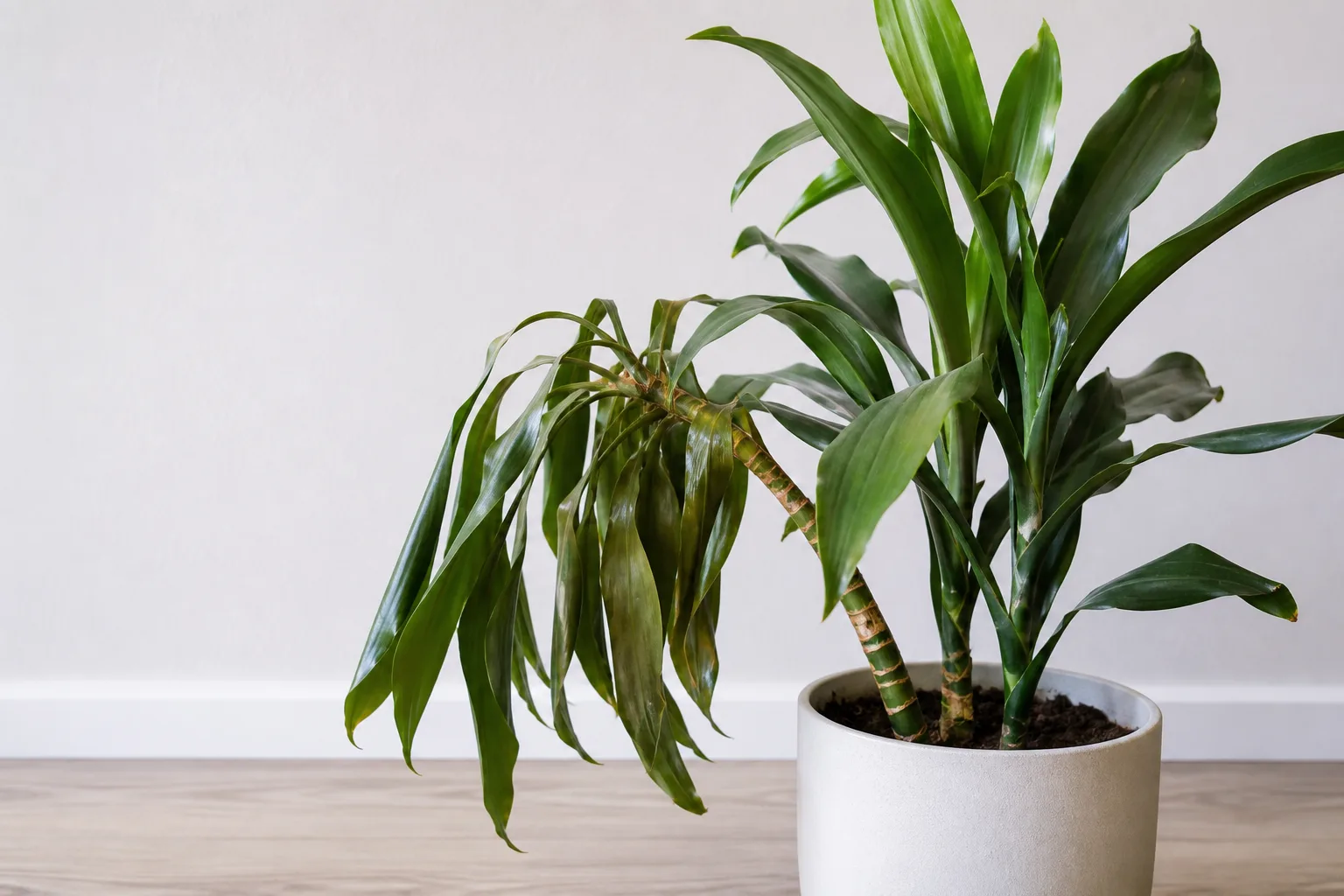
Bacterial Wilt on Janet Craig Dracaena: Causes, Checks & Fixes
This guide covers bacterial wilt on Janet Craig Dracaena. See also the general Bacterial Wilt guide, watering, and light pages for this plant.
Bacterial Wilt on Janet Craig Dracaena: Causes, Checks & Fixes
Quick answer
Bacterial wilt on Janet Craig Dracaena (Dracaena fragrans ‘Compacta’, the cultivar sold as Janet Craig) means a bacterium has clogged the cane’s water-conducting tissue-not the everyday limp leaves that follow wet soil in a dim office. That distinction matters because the wrong diagnosis sends you toward repotting and filtered water when you actually need isolation, diagnostic testing, and likely disposal.
On home Janet Craig, true bacterial wilt is rare. What owners label “bacterial wilt” is almost always wet wilt or root rot: a low-light-tolerant dracaena sitting in soil that stays moist for weeks while roots suffocate. See wilting on Janet Craig and root rot first when the pot feels heavy and lower strap leaves yellow on wet mix.
Reserve bacterial-wilt suspicion for a narrower pattern: rapid collapse while foliage is still green, one-sided branch wilt, dark streaks inside the cane when you cut cross-sections, or milky bacterial strands streaming from cut tissue in water. Southern bacterial wilt caused by Ralstonia solanacearum can also show plants that appear to recover overnight then wilt again when temperatures rise-unlike slow wet-wilt decline over weeks.
First step: isolate the plant and rule out wet wilt before cutting stems. Lift the pot. If it is heavy and the top half of mix is still damp, stop watering and inspect roots per the root rot guide-not a bacterial protocol. If soil moisture is normal yet a cane section collapses rapidly with green leaves still attached, move the plant away from other dracaenas, bag trimmings for trash (not compost), and contact your local extension plant clinic for confirmatory testing before repotting or propagating.
Bacterial wilt vs. wet wilt - why most Janet Craig “wilt” is not bacterial
Janet Craig is built for slow transpiration in low light: thick cane, broad dark-green strap leaves, and a metabolism that uses water gradually. In office cubicles and interior hallways, the mix often stays wet long after the plant looks thirsty-because damaged roots cannot move water even though the soil is saturated. That wet-wilt paradox is the dominant wilt story on this species, not bacterial vascular clogging.
| Pattern | Likely cause | What to do first |
|---|---|---|
| Heavy wet pot, yellow lower leaves, sour smell, soft cane base | Wet wilt / root rot | Stop watering; unpot and inspect roots - root rot guide |
| Light dry pot, dusty dry skewer at half depth, leaves perk after soak | Underwatering | Thorough soak with fluoride-free water - wilting guide |
| Crisp brown tips and margins only; cane firm; no rapid collapse | Fluoride injury | Switch water source - brown tips guide |
| Rapid wilt on green foliage, vascular dark streaks, bacterial ooze or streaming | Suspected bacterial wilt | Isolate; do not propagate; contact extension |
Bacterial wilt pathogens multiply inside warm, wet conditions and enter through microscopic wounds on stems and roots-common in greenhouse propagation and nursery benches with high plant density, less so on a single mature floor plant that has not been recently cut, repotted, or shared tools with infected stock. If your Janet Craig has sat undisturbed in the same office pot for years and only started wilting after you increased watering in winter, root failure is far more probable than Ralstonia.
What bacterial wilt looks like on Janet Craig
True vascular bacterial wilt on ornamentals follows a pattern extension pathologists describe consistently, even though Janet Craig is not the most common host in home collections.
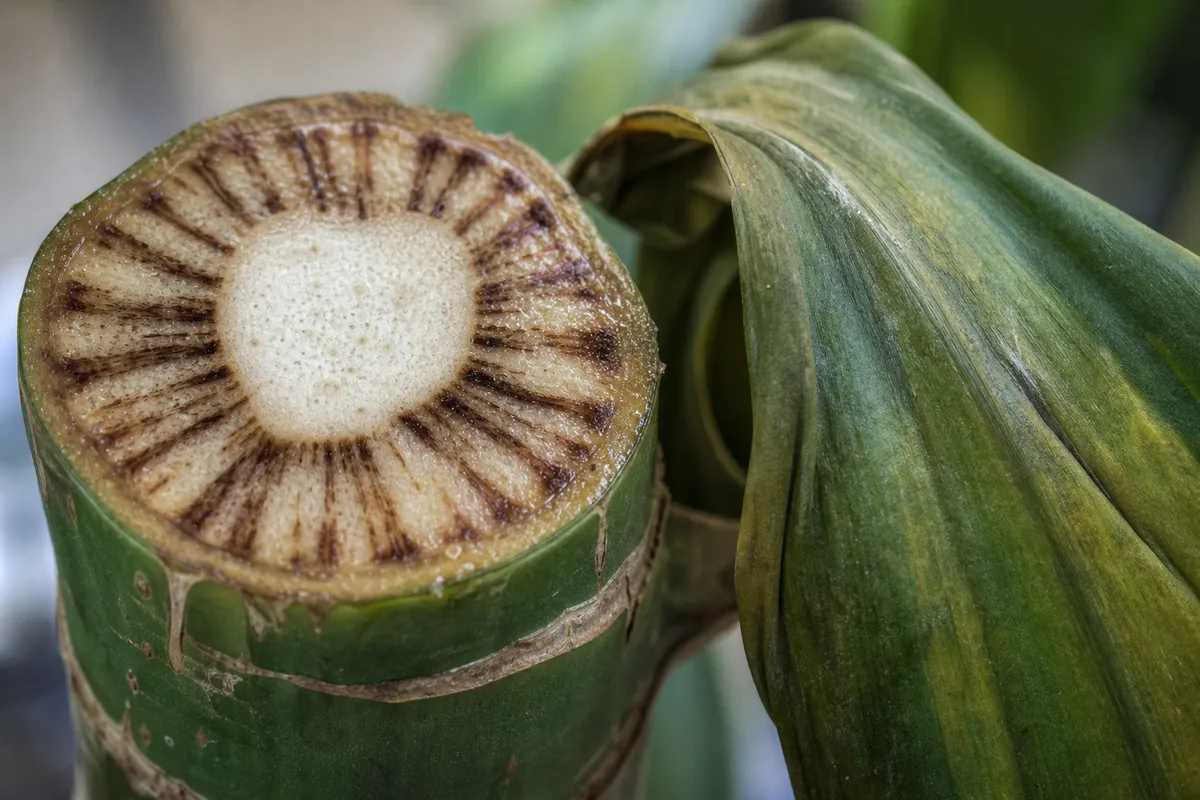
Bacterial Wilt symptoms on Janet Craig Dracaena - compare with healthy tissue on the same plant.
Vascular wilt signs
- Rapid wilting while leaves are still green - the plant collapses because bacteria block water transport in the cane, not because leaves have dried out first
- Partial overnight recovery, then daytime collapse again when temperatures warm - a hallmark of southern bacterial wilt on susceptible ornamentals
- One-sided branch or cane-section wilt before the whole plant fails - vascular blockage often starts in one stem sector
- Dark brown streaks in the vascular tissue when you cut through the cane cross-section - healthy Janet Craig pith should be pale; discolored water-conducting tissue points to bacterial infection
- Stunting and dull gray-green foliage as the infection advances, sometimes before total collapse
Advanced signs
- Stem softening and internal rot from the inside out on severely infected canes
- Bacterial ooze - slimy exudate when you cut and press stem pieces together, or milky strands in the streaming test below
- Death within roughly one to two weeks after first obvious wilt on highly susceptible hosts - NC State notes infected plants often die within 7–14 days once symptoms are clear
Janet Craig also suffers a separate, also-rare syndrome: bacterial blight on dracaenas linked to Burkholderia cepacia in nursery and research reports. That pattern often shows small dark lesions expanding into necrotic areas on strap leaves and stem crumpling in humid propagation environments-not always the same rapid whole-plant vascular collapse as Ralstonia. Either way, there is no reliable home cure; management is sanitation and disposal of infected stock.
What it is usually instead (lookalikes)
Before you treat for bacteria, walk through the problems Janet Craig actually gets indoors.
Wet-soil root rot and wet wilt
Chronic overwatering in low light destroys roots so the plant cannot absorb water despite wet mix. Lower strap leaves yellow and droop; the pot stays heavy; the mix may smell sour; fungus gnats appear. The cane may soften at the base while the upper stem still looks firm briefly. This is cultural root failure, not a contagious bacterium-fixable with dry-down discipline and root trimming when caught early. Full workflow: wilting and root rot.
Fluoride tip burn
Fluoride-sensitive dracaenas develop crisp tan-to-brown tips and margins on otherwise firm foliage. The cane does not collapse rapidly; there is no vascular streaking inside the stem. Municipal tap water and superphosphate fertilizers are usual triggers-not pathogens. See brown tips and the watering guide.
Mislabeling wet wilt as “bacterial wilt” leads to harmful mistakes: continuing to water a heavy pot, applying unnecessary sprays, or propagating from a cane that is actually rotting from the base-not infected with a regulated pathogen but still not a viable cutting source.
Why true bacterial wilt is rare on home Janet Craig
Three facts calm most worried owners:
- Host and strain context - Ralstonia solanacearum race 1 is endemic in parts of the United States but most documented ornamental outbreaks involve greenhouse bedding crops (geranium, impatiens, vinca) under warm wet production conditions, not decades-old office Janet Craig specimens.
- Entry wounds - Bacteria need a wound or transplant stress point to invade vascular tissue. A plant that has not been recently pruned, repotted, or handled with unsterilized tools on a propagation bench faces lower risk.
- Your watering pattern - Janet Craig in deep shade transpires slowly; allow soil to dry between waterings often means weeks, not days. The resulting wet-root problem is far more common than bacterial clogging.
When bacterial wilt does appear on dracaenas, it is more often traced to nursery-propagated stock, shared cutting tools, contaminated potting media, or splashing water between benches-not spontaneous infection in an isolated home pot.
How to confirm the cause
Work through checks in order. Do not skip straight to stem surgery when the pot is waterlogged.
Pot weight and moisture checks first (rule out wet wilt)
- Lift the pot - heavy and wet means root-zone problem, not vascular bacteria
- Skewer at half depth - damp mix weeks after watering in a north-facing office confirms slow uptake, not bacterial block
- Crown leaf color - yellow soft lower leaves on wet mix fit root failure; rapid wilt on green upper crown leaves with normal soil moisture raises bacterial suspicion
- Cross-check watering habits against light - see Janet Craig watering before assuming disease
If wet wilt is ruled out and collapse is rapid on green tissue, proceed to stem diagnostics.
Stem cross-section and bacterial streaming test
Vascular streak check: With a clean, sharp blade, cut a thin cross-section through symptomatic cane tissue above the soil line. Healthy tissue is pale and uniform. Dark brown streaking in the vascular ring supports bacterial wilt over drought or fluoride.
Streaming test (field version):
- Cut a fresh section through wilted but not fully desiccated cane tissue
- Suspend the cut piece in a clear glass of clean water for 30–60 seconds without shaking the glass
- Positive: milky, cloudy, or thread-like bacterial strands stream from the cut edge into the water
- Negative: no stream after a proper cut - consider fungal wilt lookalikes, root rot, or cultural wilt instead
Extension guides describe bacterial streaming as a rapid, inexpensive field test for bacterial infections in stem tissue. A negative test does not prove your plant is healthy-it redirects you toward root inspection and cultural causes.
When to submit to extension or a plant diagnostic clinic
Contact your local cooperative extension office or university plant disease clinic when:
- Rapid wilt on green foliage persists after you confirm soil moisture is appropriate
- Vascular streaking or positive streaming appears
- Multiple plants from the same nursery shipment show matching collapse
- You suspect Ralstonia - certain aggressive strains are regulated by USDA APHIS and require official reporting if confirmed
Bring photos, a brief care history (water source, repot date, light level), and a symptomatic cane section in a sealed bag if the clinic requests tissue. Do not mail suspected regulated pathogens without clinic instruction.
First response for suspected bacterial wilt
Once wet wilt and root rot are ruled out and vascular bacterial signs are present, home repotting is not the first fix.
Isolate, stop propagation, disposal protocol
First action: move the plant away from other houseplants - especially other dracaenas, peace lilies, and anything on the same shelf. Bacteria spread through contaminated tools, water splash, and infected cuttings, not through the air like rust spores.
Then:
- Stop all propagation - do not take cane cuttings from a suspect plant
- Bag infected leaves and cane sections; discard in household trash, not compost
- Sterilize scissors and knives used on the plant before touching other pots
- Do not reuse potting mix or drip trays from the infected container
- Contact extension for confirmatory testing before you decide salvage vs. discard
Wisconsin Horticulture guidance on Ralstonia wilt states there are no known home treatments that save plants with confirmed Ralstonia wilt-official disposal and decontamination protocols apply when regulated strains are involved.
What not to do at home
- Do not repot on day one - moving contaminated soil and roots spreads bacteria to benches, sinks, and neighboring pots
- Do not apply random bactericides or copper sprays without a diagnosis - they will not unblock vascular tissue and may delay proper testing
- Do not propagate “just in case” - cuttings from infected canes carry the pathogen
- Do not compost diseased tissue indoors
- Do not ignore immunocompromised handlers - Burkholderia cepacia, reported on dracaenas in nursery literature, is a human pathogen; have someone else bag and discard severely infected plants if you are immunocompromised
Dracaena is toxic to cats and dogs if chewed-keep bagged trimmings away from pets during disposal.
Recovery timeline (lookalikes only)
Confirmed bacterial vascular wilt on ornamentals is typically lethal-plan for disposal after extension confirmation, not a multi-month rehab schedule.
For wet wilt and root rot (the usual misdiagnosis):
- Dry wilt from underwatering - leaves often perk within 24 hours of a proper soak when roots are healthy
- Mild root rot - two to six weeks to see clean new crown leaves after trim-and-repot, judging by firm cane and stopped yellowing
- Damaged strap leaves - brown or yellow tissue does not re-green; recovery shows as new deep-green crown growth
If you fixed watering and still see rapid green-leaf collapse with vascular streaks, return to isolation and extension testing-cultural recovery timelines do not apply.
What not to do
- Do not water a wilting Janet Craig without a moisture check - this habit prevents most office rot cases and avoids masking wet wilt as “mystery bacteria”
- Do not use untreated tap water as your only fix when tips brown but the cane is firm - that is fluoride, not wilt
- Do not stack repotting, heavy pruning, and fertilizer on the same day on any stressed Janet Craig
- Do not assume every wilt needs a stem cut - unnecessary wounds create entry points for real pathogens
How to prevent bacterial wilt next time
Prevention is almost entirely sanitation and source quality, not humidity trays or fertilizer schedules.
- Buy from reputable sources; quarantine new Janet Craig plants for two weeks away from established specimens
- Use clean pots, fresh pasteurized potting mix, and sterilized tools when taking cuttings
- Avoid splashing water between pots on shared trays; water at soil level
- Match watering to light so roots stay healthy - healthy vascular tissue resists entry better than stressed, waterlogged cane
- Scout after repotting or pruning - watch for rapid wilt on green leaves in the following week
For everyday wilt prevention in offices, dry-down discipline from the watering guide prevents more damage than any antibacterial precaution you could take at home.
Practical checks
Urgency check
Same-day isolation and extension contact when:
- Rapid wilt on green foliage with vascular streaking or positive streaming
- Multiple plants from one purchase wilt within days
- Cane tissue oozes slime when cut
Lower urgency (still act this week) when:
- Heavy wet pot and yellow lower leaves - likely root rot; stop watering and inspect roots
- Only brown tips on firm cane - fluoride or drought margin damage
Best inspection order
- Crown leaves - green vs. yellow, tip-only vs. whole-leaf collapse
- Pot weight and half-depth moisture
- Soil smell and cane firmness at the base
- Water source and recent repot or prune history
- Stem cross-section and streaming test - only if steps 1–4 do not explain wet wilt
- Extension sample submission if bacterial signs persist
Related Janet Craig guides
- Janet Craig overview - baseline care and troubleshooting hub
- Wilting - dry vs. wet wilt fork (start here for most limp leaves)
- Root rot - sour soil, mushy roots, soft cane base
- Brown tips - fluoride margins without cane collapse
- Watering guide - dry-down rhythm for low-light offices
Conclusion
Bacterial wilt on Janet Craig Dracaena is a rare vascular disease-rapid green-leaf collapse, internal cane streaking, and bacterial streaming-not the slow yellowing that follows wet soil in a low-light office. Lift the pot first. When true bacterial signs appear, isolate, stop propagating, and contact extension rather than repotting or spraying at home. Most owners who search this topic need the wilting and root rot guides instead; use this page when cultural wilt is ruled out and vascular bacterial symptoms remain.