Heat Stress on Janet Craig Dracaena: Causes, Checks & Fixes
Quick answer
Heat stress on Janet Craig Dracaena comes from concentrated hot dry air near HVAC vents, radiators, sun-heated window glass, or grow lights - not from fluoride or watering alone. Move the pot at least 60–90 cm away from the heat source into stable bright indirect light before changing water rhythm.
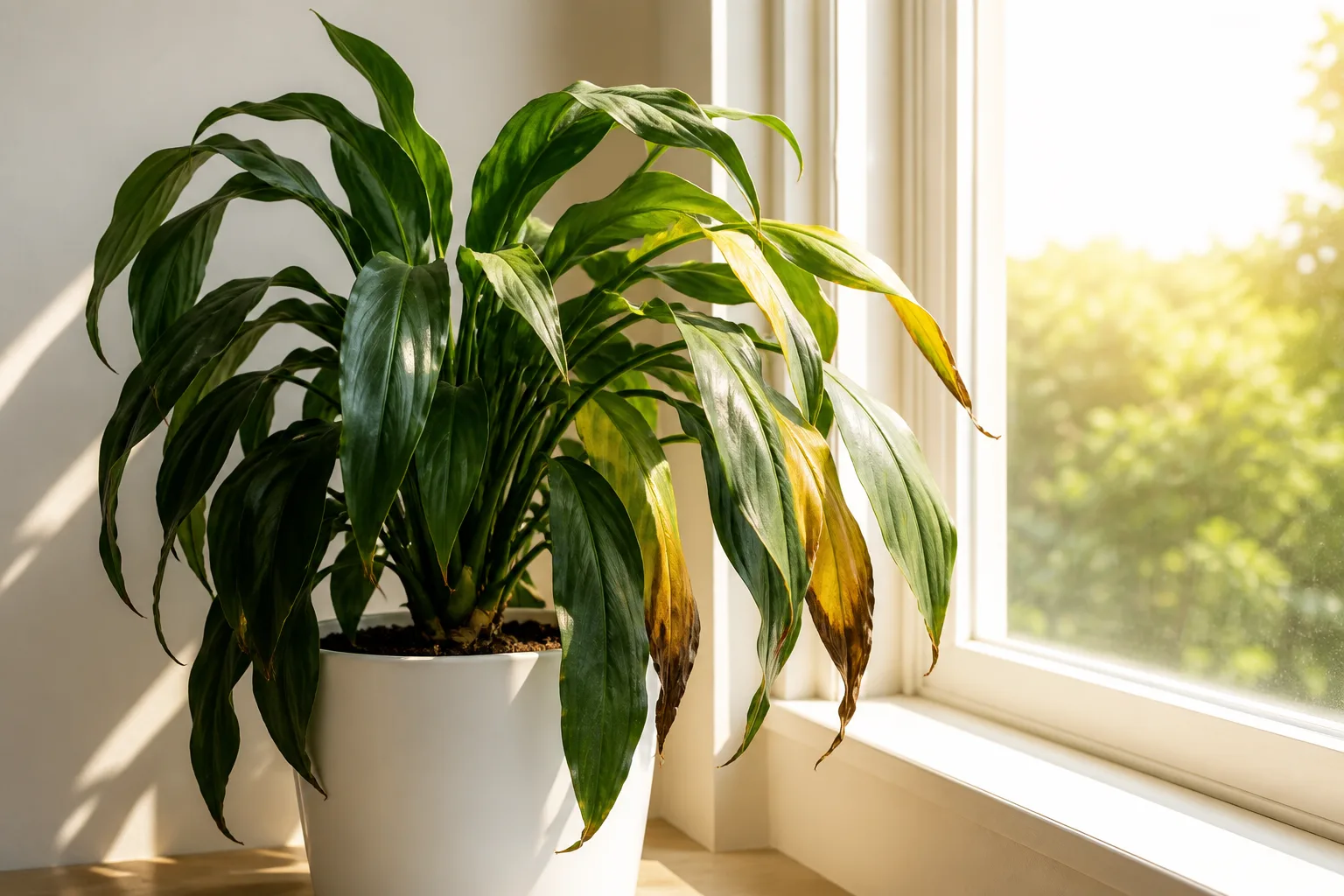
Heat Stress on Janet Craig Dracaena: Causes, Checks & Fixes
This guide covers heat stress on Janet Craig Dracaena. See also the general Heat Stress guide, watering, and light pages for this plant.
Heat Stress on Janet Craig Dracaena: Causes, Checks & Fixes
Quick answer
Heat stress on Janet Craig Dracaena (Dracaena deremensis ‘Janet Craig’) happens when hot, dry air from HVAC supply vents, radiator tops, sun-heated window glass, or grow lights hits broad dark-green strap leaves faster than this slow-transpiring cultivar can replace moisture. Ambient room temperature can look fine while the microclimate at the pot rim stays damagingly hot.
First step: move the pot at least 60–90 cm away from the heat source into stable bright indirect light at roughly 65–80°F (18–27°C) - the range where corn plants thrive indoors. Do not change watering rhythm or switch to filtered water until placement is corrected; heat near a low-light office Janet Craig often masquerades as a water-quality problem when the real trigger is a vent or hot sill.
What heat stress looks like on Janet Craig
Janet Craig shows heat injury on localized leaf tissue before whole-plant collapse:
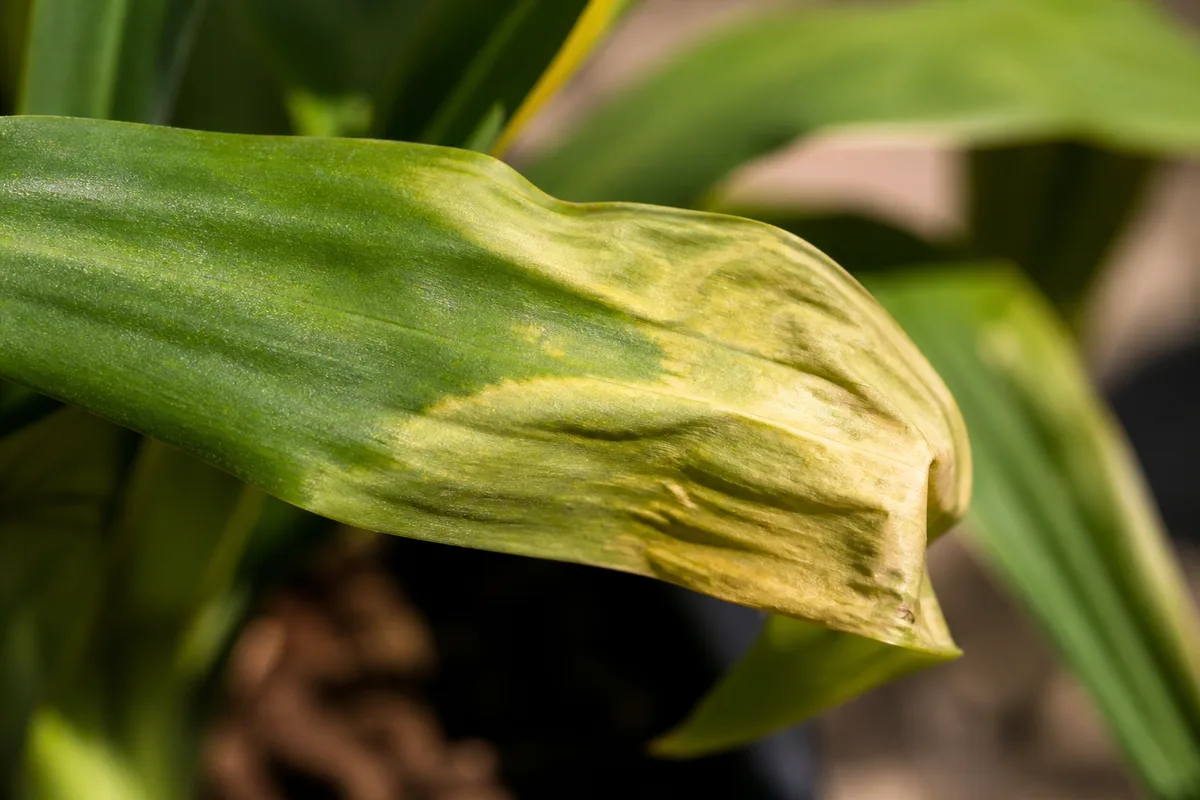
Heat Stress symptoms on Janet Craig Dracaena - compare with healthy tissue on the same plant.
- Yellow-green chlorosis or pale notching on margins, often worse on the leaf surface facing the heat source
- Crisp brown edges that appear suddenly after the plant sits above a floor vent or against hot afternoon glass
- One-sided damage - the side toward the vent or window looks stressed while opposite leaves stay darker green
- Warm pot rim when you touch the container edge near a vent or sun-heated cachepot in summer
- Faster surface dry-down in the hot microclimate, tempting owners to water on an old low-light schedule
- Fine stippling or webbing if spider mites move in after dry heated air desiccates foliage
Whole-canopy yellowing on a heavy wet pot in a dim office points to overwatering on Janet Craig - not heat alone. Bleached tan patches on the window-facing leaf face without a vent pattern suggest sunburn on Janet Craig. Uniform brown tips on all leaves with good placement and tap-water history fit fluoride tip burn better than heat stress.
Why Janet Craig struggles in heat despite tropical origins
Janet Craig descends from tropical African understory, where warm humid air is filtered by canopy - not blasted from metal radiator surfaces or sun-heated glass. Indoors, the cultivar prefers stable temperatures between about 65 and 80°F (18–27°C) during active growth, with brief tolerance toward warmer rooms if soil moisture and humidity keep pace. Sustained exposure below about 55°F (13°C) triggers leaf drop; sustained hot dry microclimates above the comfort band cause chlorosis, notching, and margin burn even when the thermostat reads 72°F.
The complication on Janet Craig is slow transpiration in low light. Office and lobby specimens transpire slowly, so warm soil lingers wet longer while leaf tissue still desiccates on the vent-facing side - a double stress that looks like watering failure when placement is the root cause. Clemson HGIC notes that sudden leaf loss can follow changes in temperature and drafts, and that excessive sunlight on foliage produces round dry patches - the same localized scorch pattern heat vents create on one side of the cane.
Broad, dark, glossy leaves absorb radiant heat quickly. That is useful in filtered shade but punishing when a leaf rests against hot glass or a grow lamp. Missouri Botanical Garden recommends keeping corn plants in bright indirect light protected from significant direct sun and drafts - both extremes stress this species.
How to confirm the cause
Work through placement before opening a watering or repotting checklist:
Five-step placement and temperature checklist
- Map heat sources - forced-air floor or ceiling vents, radiator tops, fireplace hearths, oven-adjacent shelves, sun-heated west or south glass, and grow lights closer than 30 cm to the crown.
- Read damage direction - is discoloration worse on one side of the rosette facing the heat?
- Touch the pot rim on a warm afternoon; a rim that feels hot while room air feels mild confirms a heat trap.
- Check season and HVAC - did symptoms appear when heating started, during a heatwave, or after moving the pot to a brighter sill?
- Cross-check moisture at half depth - heat-stressed pots may dry faster at the surface; overwatered low-light pots stay heavy while margins crisp from vent desiccation.
If the plant recently jumped from a dim office to a hot bright window, both light shock and heat can brown margins - move to bright indirect light without glass contact and reassess over two weeks.
Heat vs. sunburn vs. fluoride vs. overwatering lookalikes
| Pattern | Likely cause | Key differentiator |
|---|---|---|
| One-sided yellowing or notching near vent or radiator | Heat stress | Damage faces the heat source; pot rim may feel warm |
| Bleached or tan patches on window-facing leaf face | Sunburn | Uniform on glass side; direct beam history |
| Brown tips on all leaves, no heat-source pattern | Fluoride / salts | Tap-water history; tips persist after relocation |
| Soft yellow lower leaves, heavy wet pot, sour smell | Overwatering | Whole plant decline; soil wet at half depth |
| Crisp tips after long dry spell, very light pot | Drought | No localized one-sided scorch near vents |
First fix for Janet Craig
Relocate the pot away from heat sources the same day you identify the pattern. Aim for bright indirect light at stable room temperature - roughly 60–75°F is the range Missouri Botanical Garden cites as best for container culture - with no leaf contact against hot glass, metal radiator surfaces, or direct vent airflow. Penn State Extension advises keeping houseplants away from drafts, heat registers, and air conditioners because dramatic temperature fluctuations trigger stress responses.
HVAC vents, sun-heated glass, and grow-light heat
Common Janet Craig traps:
- Floor plant above a supply vent - winter heat rises directly into the crown; one-sided chlorosis on vent-facing leaves is classic.
- Pot on a west-window sill or inside a sun-heated cachepot - enclosed outer pots cook root zones in afternoon sun even when leaves look indirectly lit.
- Grow light too close - Janet Craig under a fixture that heats upper leaves needs 30–60 cm clearance and monitoring for leaf-edge bleach.
After moving, check soil moisture with finger or pot weight before watering. Hot rooms dry surface mix faster; low-light Janet Craig still needs deep dry-down - do not pour because the room feels warm. See Janet Craig watering for heat-vent dry-down adjustments.
What not to do the same day
Do not increase watering to “cool” a heat-stressed plant sitting in warm wet mix - that compounds root stress in low light. Do not mist foliage as heat relief; brief misting rarely fixes margin desiccation and can leave wet leaves spotting in poor airflow. Do not repot, fertilize, or switch water sources until the plant has spent one to two weeks in stable placement; change one variable at a time so you can read the response.
Recovery timeline
Chlorotic or crisp margin tissue will not revert to deep green. Mild one-sided heat injury often stabilizes within two to four weeks after relocation. Because Janet Craig grows slowly, judge recovery by firm cane tissue and clean new crown leaves over four to eight weeks in spring and summer - not by old tips re-greening.
If margins keep browning after relocation, review whether the new spot still catches afternoon sun through glass, whether a hidden vent blows on the pot, and whether fluoride in tap water adds a second stress layer.
What not to do
Do not leave the pot on a radiator because Janet Craig “likes warmth.” Do not assume tropical ancestry means heat tolerance above 80–90°F (27–32°C) in dry indoor air - prolonged hot dry conditions cause leaf discoloration and notching on this cultivar. Do not water on a fixed calendar because the room feels hot; confirm half-depth dry-down matched to light level per the Janet Craig overview temperature guidance.
Avoid placing behind closed curtains on a sunny sill where stagnant air overheats. When trimming damaged margins, keep leaf pieces away from pets - Dracaena is toxic to cats and dogs.
How to prevent heat stress next time
Position Janet Craig in bright indirect light away from heating and cooling vent lines - see Janet Craig light requirements for window placement that avoids hot afternoon glass. Pull floor pots back from leaky windows when cold drafts alternate with radiator heat - both extremes stress this species. Run a seasonal placement audit: winter heating layouts and summer west-window cachepots change microclimates even when the thermostat stays constant.
In dry heated flats, consider a humidifier or grouping plants to keep humidity near 40–50% - enough to reduce margin desiccation without misting leaves directly. NC State notes that a humidifier may help prevent leaf tip browning when the house is heated in winter. Watch for spider mites in low humidity after heat stress; warm dry air favors pest flare-ups on indoor dracaenas.
Related Janet Craig problem guides
Use these if your symptoms do not match one-sided heat injury:
- Janet Craig overview - baseline care ranges for temperature, light, and growth pace
- Light needs - confirm window distance and indirect-light placement
- Watering - adjust interval after moving away from heat
- Brown tips - separate fluoride or salt buildup from heat stress
- Sunburn/scorched leaves - direct-sun tissue damage patterns
- Overwatering - whole-plant yellowing with persistently wet mix
- Low humidity - dry-air stress without a clear vent or radiator source
- Spider mites - post-heat pest flares in dry rooms
Practical checks
Urgency check
Relocate today when you see one-sided chlorosis or notching near a vent, hot glass, or grow light. Escalate to root or pest inspection when:
- Cane bases soften with wet soil and sour smell
- Yellowing spreads across the whole plant while the pot stays heavy for weeks
- Fine webbing and stippling appear despite moving away from heat
- Leaf drop is sudden and widespread after a cold draft - that is cold injury, not heat
Best inspection order
Heat source and pot placement → direction of leaf damage → pot-rim temperature → season/HVAC timing → half-depth moisture and pot weight → crown new-growth color → pest check on leaf undersides if air was hot and dry.
Conclusion
Heat stress on Janet Craig is usually reversible when you correct placement early: move it away from vent or radiator airflow, keep leaves off hot glass, and stabilize conditions before changing watering habits. Old damaged margins will not recover, so track success by healthy new crown growth over the next month. If yellowing becomes whole-plant while the pot stays wet, or if webbing appears after relocation, escalate to overwatering/root-health or spider-mite checks rather than repeating heat-only fixes.
Related tool
Use the Plant Problem Diagnosis Tool to narrow causes for heat stress on this plant before changing multiple variables at once.