Sunburned Plant Leaves: Diagnosis and Recovery
'Light is the engine of houseplant health. Sunburn / Scorched Leaves appears as Pale, bleached, crispy patches on leaves exposed to harsh sun when a plant receives too little energy to thrive-or too much direct sun for its leaves to handle. Matching light to species prevents most leaf fade, stretch, and scorch issues indoors. Track weekly progress after you change care, and note watering, light, and repotting dates so you can tell whether the symptom is improving or returning.'. Compare upper versus lower leaves, new versus old growth, and soil moisture at root depth before you treat, because the same visible symptom can come from watering, light, pests, or normal aging on different plants.
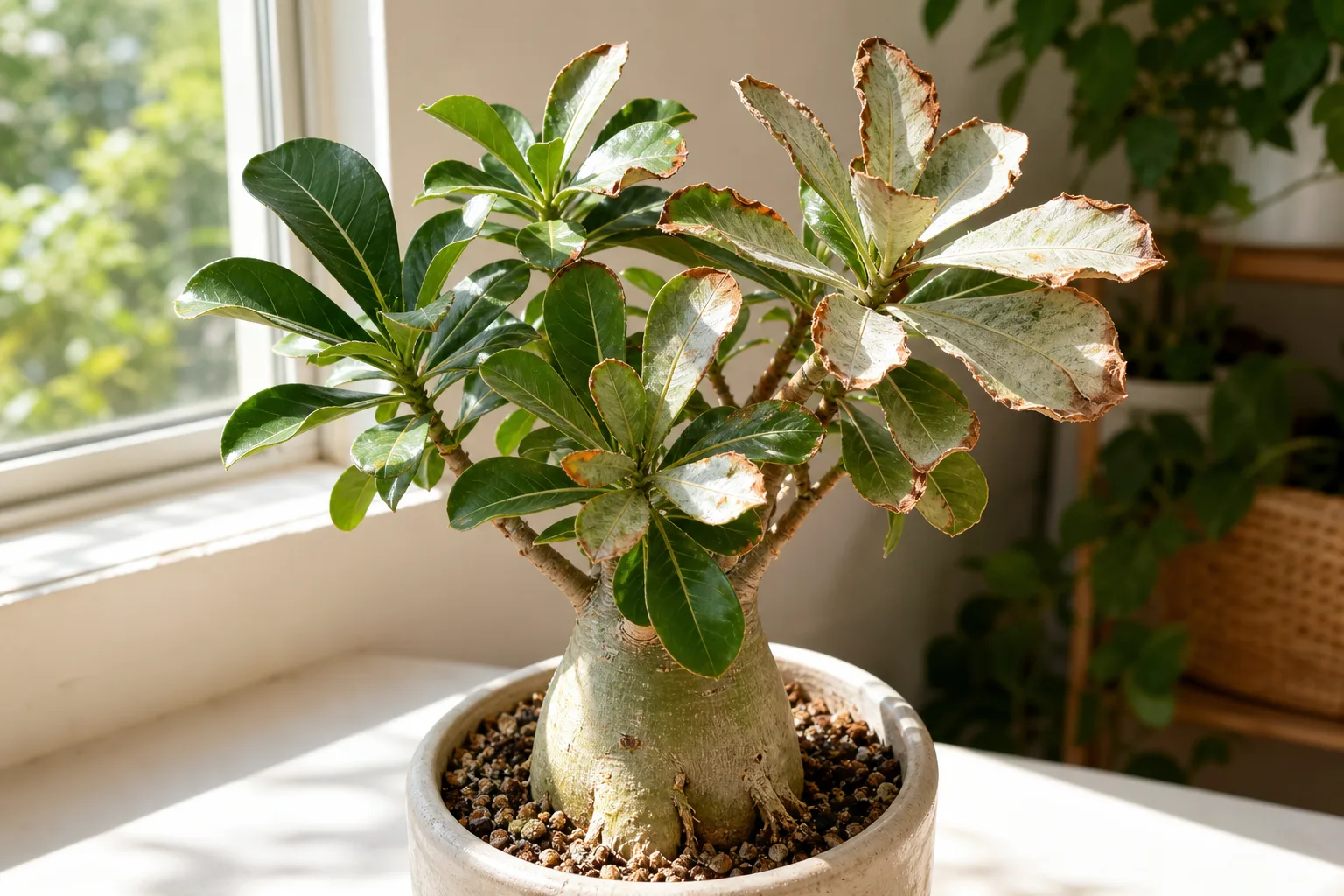
Sunburn / Scorched Leaves on Houseplants
Still unsure?Match your symptoms to the most likely problems in under a minute.Run diagnosis →Understand and fix sunburn / scorched leaves
'Light is the engine of houseplant health. Sunburn / Scorched Leaves appears as Pale, bleached, crispy patches on leaves exposed to harsh sun when a plant receives too little energy to thrive-or too much direct sun for its leaves to handle. Matching light to species prevents most leaf fade, stretch, and scorch issues indoors. Track weekly progress after you change care, and note watering, light, and repotting dates so you can tell whether the symptom is improving or returning.'. Compare upper versus lower leaves, new versus old growth, and soil moisture at root depth before you treat, because the same visible symptom can come from watering, light, pests, or normal aging on different plants.
Overview
'Light is the engine of houseplant health. Sunburn / Scorched Leaves appears as Pale, bleached, crispy patches on leaves exposed to harsh sun when a plant receives too little energy to thrive-or too much direct sun for its leaves to handle. Matching light to species prevents most leaf fade, stretch, and scorch issues indoors. Track weekly progress after you change care, and note watering, light, and repotting dates so you can tell whether the symptom is improving or returning.'. Compare upper versus lower leaves, new versus old growth, and soil moisture at root depth before you treat, because the same visible symptom can come from watering, light, pests, or normal aging on different plants.
How to identify it
- Plant leans or stretches toward the window (too little light)
- Pale, washed-out leaves far from the glass
- Crispy bleached patches on sun-facing leaves (too much light)
- Slow growth in winter far from windows
- Compare care routine-watering unchanged but leaves declining
When to worry
Bleached, papery patches after sudden sun exposure or total leaf drop after a dark move need quick light adjustment, not fertilizer.
Common causes
Plant too far from the brightest window
Indoor light drops sharply with distance. What looks 'bright' to us may be low light for a fiddle leaf fig or succulent.
Sudden move into direct sun
Plants acclimated to indirect light burn quickly when placed in south-facing direct rays-classic Sunburn / Scorched Leaves.
Seasonal daylight reduction
Winter short days trigger fade, drop, and leggy growth even if the plant stayed in the same spot all year.
Dirty windows or obstructed glass
Sheers, tint, furniture, and grimy panes can cut usable light more than owners realize.
Step-by-step fix
Measure light at the plant's location
Within 2 feet of a window is bright indirect for most tropicals. Farther than 6 feet is usually low light.
Move gradually
Increase light over 1–2 weeks to avoid shock. Pull back from harsh direct sun the same way.
Add grow lights if windows are insufficient
Full-spectrum LEDs 12–14 hours daily support plants in dark rooms or north-facing windows.
Rotate the pot weekly
Even growth prevents one-sided lean and uneven fading.
Adjust watering with light changes
Plants in brighter spots dry faster-recheck soil when you move them.
Prevention tips
- Research light needs before placing a new plant
- Acclimate to direct sun slowly over two weeks
- Supplement with grow lights in winter for high-light species
- Keep windows clean and unobstructed
Common mistakes
- Assuming all 'indoor plants' tolerate the same light
- Moving a plant into direct sun to 'fix' legginess instantly
- Ignoring seasonal light drop in winter care
Sunburned plant leaves often develop pale, bleached, tan, or brown patches on the surfaces that received sudden intense light or heat. The affected tissue may become dry and papery. Damage can appear after a houseplant is moved outdoors, shifted against bright glass, exposed when a shade tree is pruned, or placed too close to a powerful grow light.
Those visual signs overlap with drought scorch, cold injury, fertilizer burn, spray damage, and leaf disease. Diagnosis depends on the map of exposure and the timeline. If damage is limited to the source-facing side and began soon after a light change, sun injury moves higher on the list. If spots keep appearing in shade or spread with halos and wet margins, investigate other causes.
This guide uses an exposure-map method synthesized from extension guidance: compare exposed and protected tissue, reconstruct the light-and-heat event, inspect lesion texture and progression, and check root moisture before acting. Photographs can illustrate distribution and boundaries, but they cannot measure the dose or rule out disease. Treat sunburn as a working diagnosis that must stop predicting new damage once the acute exposure is removed.
Quick answer: what plant sunburn looks like
Typical clues include:
- Bleached, ivory, pale yellow, tan, or brown patches.
- Damage strongest on the side facing sun or a lamp.
- A boundary corresponding to a window frame, neighboring leaf, or prior shade.
- Tissue that later becomes crisp, papery, or necrotic.
- Symptoms beginning after a sudden increase in exposure.
- Unaffected shaded leaves on the same plant.
Washington State University Hortsense describes sunscald as bleached or necrotic tissue caused by intense sunlight and heat, particularly where plants have not acclimated. The pattern matters more than the precise shade of brown.
Move the plant out of the acute exposure, but do not place it in darkness. Stabilize it in suitable bright or moderate indirect light, depending on species. Check root moisture before watering; sunburn does not automatically mean the pot is dry.
Why leaves scorch
Leaves develop under the conditions in which they formed. Their pigments, protective compounds, orientation, and internal structure reflect that environment. A leaf produced in a shaded greenhouse or indoor winter setting may be poorly prepared for sudden intense direct sun.
Excess radiant energy and heat can overwhelm protective and repair processes. At the same time, high temperature increases water loss. If roots cannot replace water fast enough, dehydration adds margin scorch and wilt. University of Maryland’s discussion of heat stress in plants notes that high temperature can disrupt photosynthesis, water relations, and growth.
Sunburn is irreversible where cells have died. Shade prevents additional injury; it does not turn a dead tan patch green. Recovery means the damage stops expanding and healthy new leaves develop.
Build the diagnosis from pattern and timing
Draw an exposure map. Mark the window, lamp, reflective wall, pavement, radiator, or outdoor direction. Compare the damaged and shaded sides of individual leaves. Look underneath overlapping leaves: protected silhouettes can be strong evidence of an exposure event.
Reconstruct the previous week. Was the plant moved outside, was a curtain opened, did a grow-light timer change, did glass become unusually hot, or did a heat wave coincide with dry soil? Note any sprays, fertilizer, cold nights, and watering problems.
Use a hand lens to inspect for mites, thrips, fungal structures, and tiny lesions. Check the underside, nodes, and new growth. One diagnosis should explain the distribution, progression, and history.
Organize the evidence before acting:
| Observation | Sunburn becomes more likely | Another cause becomes more likely |
|---|---|---|
| Distribution | Window-, lamp-, or sky-facing surface | Random lesions throughout protected foliage |
| Timing | Soon after stronger exposure or heat | No environmental change and steady spread |
| Boundary | Sharp shadow or overlap pattern | Circular spots with halos or wet margins |
| Texture | Bleached area becomes dry and papery | Tissue remains greasy, mushy, or actively expanding |
| Root zone | Normal roots, exposure event fits | Severe wetness, drought, salts, or decay explain decline |
Several aligned observations make a stronger case than one brown patch. It is possible for two causes to coexist: a dry root ball can make leaves more vulnerable during a sudden exposure increase, and damaged tissue can later host secondary decay.
Do not scratch, peel, or wet a lesion to “test” it. That creates wounds and can move pathogens. Observe with clean hands and tools.
Exposed surfaces, sharp boundaries, and rapid onset
Sunburn often has direction. Upper or window-facing surfaces are affected while shaded tissue remains green. A neighboring leaf can create a recognizable protected shape. Damage may appear rapidly after intense exposure, though full browning can develop later as injured tissue dries.
A thermal component may produce wilt and edge scorch in addition to bleaching. Leaves touching hot glass or sitting near a reflective wall can experience conditions different from the room-air temperature.
Photographs taken before and after relocation are useful. They show whether damage was present at purchase and whether it follows the new exposure. Photograph in neutral light because camera processing can make pale patches look more dramatic.
Sunburn versus drought, disease, and chemical injury
Drought scorch often begins at margins and tips across much of the plant, paired with a light pot or dry root ball. Sunburn is more likely to follow the exposed face. The two can occur together because dry roots reduce the plant’s ability to tolerate heat.
Leaf-spot diseases may create discrete lesions, halos, water-soaked margins, fungal structures, or continuing spread independent of the brightest side. Distribution and progression are more useful than trying to diagnose from one spot. Isolate a plant when a contagious cause is plausible.
Chemical or fertilizer injury often follows a specific application and may occur where droplets dried. Oil, soap, pesticide, cleaner, or foliar fertilizer can injure sensitive foliage, especially under intense light. Follow product labels on plant compatibility, temperature, and light conditions.
Cold injury can produce translucent, dark, or collapsed tissue after contact with cold glass or an outdoor chill. This can mimic scorch once it dries. A temperature timeline distinguishes it from a bright-light event.
Common situations that trigger scorch
The classic trigger is abrupt change. A plant moves from filtered indoor light to midday outdoor sun. A curtain that remained closed all winter opens. A tree is pruned and previously shaded foliage receives full exposure. A grow light is lowered without changing duration.
Plant type changes risk. Cacti and Adenium generally need strong light, but even high-light plants can burn when leaves or stems formed in shade. Thin-leaved tropicals, ferns, orchids, and variegated plants may tolerate less direct exposure. Cultivar and local climate matter.
Do not treat the phrase “full sun” as permission for an instantaneous move. It describes a destination under suitable acclimation and cultural conditions, not the transition.
Container plants can be more vulnerable than established garden plants because their roots occupy a small volume that heats and dries rapidly. A black nursery pot on concrete may create a different root environment from the same plant in the ground. Shielding the container, improving spacing, and moving it off a heat-reflective surface can reduce stress without depriving the canopy of all light.
Recent pruning can also expose tissue that developed in shade. Remove dead or unsafe branches when needed, but avoid opening a dense canopy drastically immediately before exceptional heat. If pruning is necessary, temporary shade may protect newly exposed leaves and stems during adjustment.
Variegated plants deserve closer monitoring because pale sectors contain less chlorophyll and can show injury sooner. That does not mean all variegated plants require deep shade; their species, cultivar, and acclimation still determine suitable exposure.
A sudden move outdoors or closer to glass
Outdoor light can be far stronger than indoor light, even when both locations seem bright. Begin with sheltered shade and gentle morning exposure appropriate to the species. Increase gradually while checking leaves daily.
Windows modify exposure but do not eliminate sunburn risk. Direct beams can heat leaves and containers. Seasonal sun angles may suddenly send light deeper into a room. A plant that was safe in summer may receive more direct winter-window sun, or vice versa.
Use a sheer curtain, increase distance, or shift the plant out of peak direct rays. Preserve enough light for healthy growth; overcorrection into deep shade can create stretching and prolonged wetness.
Heat waves, dry roots, and reflected heat
Heat, light, wind, and root moisture interact. Hot weather raises evaporative demand. Pavement, pale walls, metal, and glass can reflect radiation. Containers—especially dark ones—can heat the root zone.
NC State Extension describes sunscald and heat-related disorders as linked to intense exposure and high temperature. Provide temporary shade during exceptional heat, ensure the root ball is appropriately moist, and avoid midday relocation or pruning that suddenly exposes sheltered tissue.
Do not keep soil waterlogged as heat protection. Saturated roots can lose function, leaving foliage less able to meet demand. Water based on root-zone evidence and species tolerance.
Grow lights and concentrated artificial exposure
A strong lamp placed too close can bleach or scorch the top canopy. Risk depends on fixture output, distance, duration, heat, and plant sensitivity. Symptoms often align with the footprint of the lamp and affect the uppermost leaves.
Raise or dim the fixture and shorten exposure modestly if evidence supports excess. Use a timer. Check the manufacturer’s horticultural guidance and ensure ventilation around the light and power supply.
Do not diagnose from brightness to the eye. Compare plant response and, when possible, take repeatable measurements at canopy level. Existing burned tissue remains as a record; evaluate changes in new leaves.
The wider image helps compare exposed and protected zones. It does not reveal the exact light dose, root moisture, or event timeline.
Immediate care for a scorched plant
First, stop the acute exposure. Move the plant to species-appropriate indirect or gentler light, or add temporary diffusion. Second, check moisture at depth and pot weight. Water thoroughly only when the root ball is genuinely at its watering point. Third, stabilize temperature and avoid fertilizer.
University of Maryland Extension lists faded, bleached, or scorched foliage among excess-light symptoms and recommends moving affected indoor plants farther from the source. Make that move proportionate rather than exchanging excess exposure for deep shade.
Keep care simple for several days. Do not repot merely because leaves are burned unless the roots have a separate problem. Do not spray oils, soaps, or tonics on injured foliage in bright or hot conditions. Avoid wetting leaves unnecessarily where disease risk is high.
Use a first-48-hours checklist:
- Photograph the full plant and close lesions.
- Record the exact exposure change and weather.
- Move to a stable, suitable light level.
- Check moisture at depth and empty standing water.
- Inspect roots only if separate evidence justifies disturbance.
- Pause fertilizer and nonessential sprays.
- Recheck whether new lesions form on protected leaves.
Avoid ice water, leaf-coating products, homemade sunscreens, or heavy misting. These do not repair dead tissue and can introduce temperature shock, residues, or persistent moisture.
Document damage boundaries. If lesions continue forming in protected areas after exposure is corrected, revisit the diagnosis.
Stabilize light, temperature, and root moisture
Suitable recovery light allows photosynthesis without repeating the stress. For a high-light plant, that may still be a bright location with peak rays filtered. For a shade-adapted plant, moderate indirect light may be safer. Darkness weakens recovery.
Keep roots in their normal moisture range. A sunburned plant can also be overwatered, underwatered, rootbound, or diseased. Soil evidence decides the watering response. If the pot is hot, shade the container and allow it to cool naturally rather than pouring cold water over heated roots.
Maintain moderate airflow but avoid a fan blasting fragile tissue. Stable conditions make progression easier to interpret.
Decide whether to keep or remove damaged leaves
Do not strip every damaged leaf immediately. Green portions still contribute energy, and sudden defoliation can expose previously shaded stems and leaves to more light. Keep partially green, dry, stable leaves while the plant recovers.
Remove a leaf when it is fully dead, mushy, diseased, attracting decay, or blocking inspection. Use clean sharp tools and make a species-appropriate cut without tearing the stem. Avoid pruning heavily during peak stress.
Cosmetic pruning is a preference, not a cure. A brown patch will not spread merely because it remains attached if the tissue is dry and the cause is abiotic. Progressing wet lesions are different and deserve disease evaluation.
Acclimate plants without repeating the injury
Once the plant is stable, define the appropriate light destination for the species. Increase exposure in small steps. Outdoor transitions often begin in bright shade, then introduce limited gentle sun before longer or stronger exposure. Indoor transitions can use greater window proximity or less diffusion over time.
There is no universal seven-day schedule. Cloud cover, latitude, season, species, and prior conditions change the pace. Let leaf response guide progression. Pause or step back at the first bleaching, unusual upward curl, persistent wilt, or hot leaf surface.
Use a response threshold rather than a calendar promise. Increase only after the plant has remained stable at the current step through several representative clear days, not merely a cloudy interval. If a species-specific source or grower provides an acclimation protocol, use it as the starting framework and reduce exposure when local heat, wind, or root dryness raises stress.
A written acclimation log is useful. Record the location, hours of direct exposure, weather, watering status, and leaf response. Increase only one exposure variable at a time. A run of cloudy days should not be counted as equivalent to the same hours under clear midsummer sun.
Outdoor shade is not uniform. Open shade beneath a bright sky can be far stronger than an indoor windowsill, while dense shade beneath a roof may provide little useful light. Begin conservatively and observe.
For plants returning indoors, reverse acclimation matters too. Abruptly moving to much lower light can slow water use and increase overwatering risk. Reduce watering according to the root zone rather than carrying the outdoor schedule inside.
New leaves formed under brighter conditions may handle exposure better than old shade-grown leaves, but they still have limits. Keep checking as seasons change.
For grow lights, change one parameter at a time—distance, dimming, or duration. Multiple simultaneous increases make the injurious dose impossible to identify.
Monitor recovery and know when to escalate
Draw a small pencil boundary near a lesion or use dated photographs. Stable dry damage supports an old abiotic injury. Expanding lesions, new spots in shade, water-soaked margins, odor, soft stems, or rapid leaf drop suggest that sunburn may not be the only problem.
This is the falsification rule: after exposure is corrected, fresh lesions appearing on protected leaves or crossing the old light boundary weaken the sunburn diagnosis. Isolate the plant if a contagious disorder remains plausible, avoid spraying over unidentified lesions, and seek a local diagnosis rather than repeatedly moving, watering, or pruning it.
Assess at three scales. At the tissue scale, note whether lesions are dry and stable. At the whole-plant scale, check turgor, new leaves, and stem firmness. At the root-zone scale, track moisture use, drainage, and odor. A plant can stop developing leaf scorch while still declining from root damage, so canopy stability alone is not enough.
If most foliage is damaged but stems and roots remain sound, allow time. The plant must balance energy reserves with new growth, and heavy pruning can remove remaining photosynthetic area. If the crown, cambium, or growing point is dead, recovery may be limited even when some leaves remain.
Where the diagnosis remains unclear, contact a local extension service. Washington State’s sunscald guidance advises preventing additional stress and protecting exposed tissue; a local diagnostician can help determine whether the visible injury fits regional conditions or a disease.
Healthy recovery signs include no new scorch, firm unaffected tissue, normal water use, stable stems, and sound new growth. Old bleached areas may remain pale or become brown as they dry.
Seek local extension or professional help for valuable plants when symptoms progress despite corrected exposure, when a pathogen is plausible, or when most of the canopy and roots are affected. A sample and full care history are more useful than a cropped photograph.
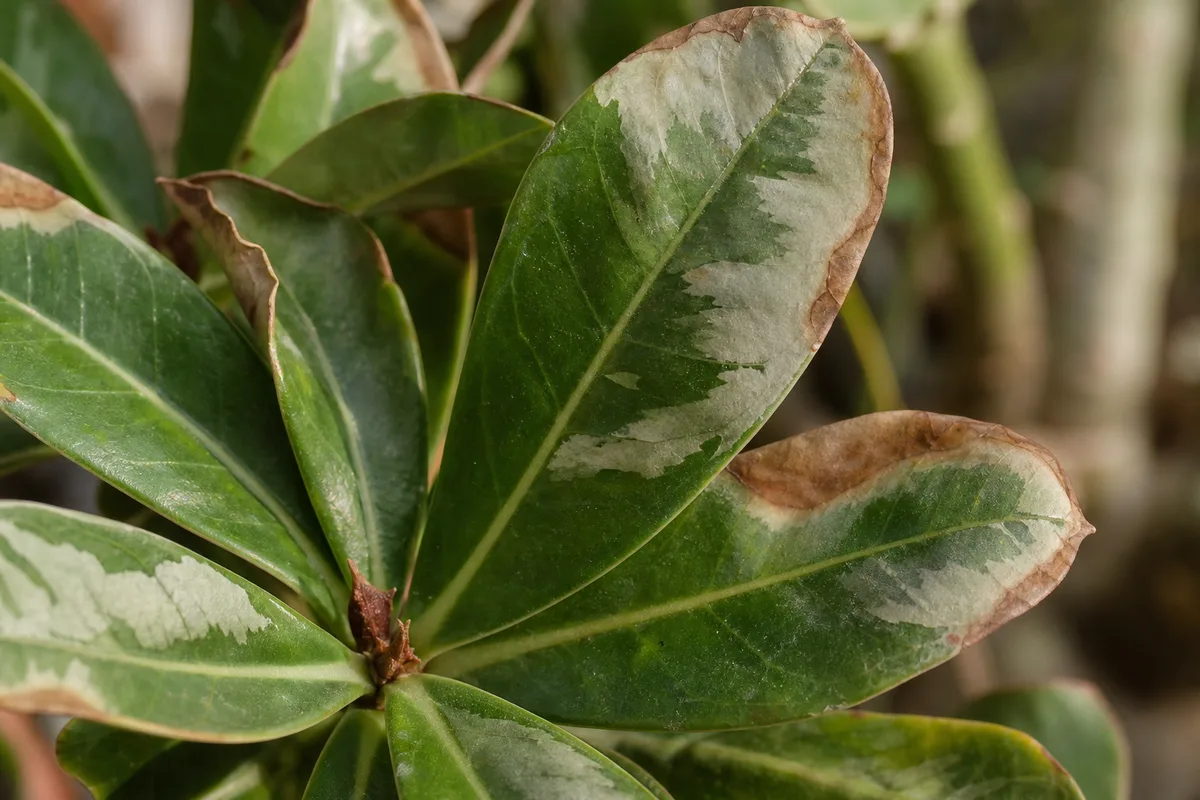
Close inspection can show whether tissue is dry, stippled, or water-soaked. Use it with the whole-plant exposure map.
Prevent future sunburn and scorch
Acclimate after purchase, overwintering, shipping, greenhouse culture, or any major move. Increase exposure progressively and avoid moving a dry plant into midday sun. Check forecasts for heat waves and cold nights.
Match plant to site. High-light succulents need more energy than shade-adapted ferns, but both benefit from gradual transitions. Use curtains, shade cloth, or fixture dimming to manage peak intensity while retaining sufficient daily light.
Water from root-zone evidence, not because the day is sunny. Keep containers draining, protect dark pots from extreme heat, and avoid spraying products outside their labeled temperature and light conditions. University of Delaware Extension notes that heat and sun injury can combine with water imbalance and exposed tissue, reinforcing the value of managing the whole environment.
Keep a seasonal placement record. The angle and duration of direct sun change, so a safe position may not remain safe all year.
Build redundancy into prevention. A sheer curtain can manage peak window rays; a timer can prevent accidental all-night lighting; a minimum grow-light distance marker can keep leaves from growing into the fixture; and a weather reminder can prompt temporary outdoor shade. These controls are more reliable than noticing damage after the fact.
Inspect after environmental changes, not only on watering day. Opening blinds, cleaning tinted film, moving furniture, trimming outdoor trees, installing a stronger bulb, or relocating a reflective object can change exposure without moving the pot.
Finally, keep expectations species-specific. A mature Adenium can ultimately require high exposure, while many ferns need protection from strong direct rays. The prevention principle is shared—match the destination and acclimate—but the destination itself is not universal.
Conclusion
Sunburned plant leaves are most convincing when bleached or necrotic patches follow the exposed surface and a recent increase in light or heat. Confirm that pattern, then rule out drought, wet-root stress, cold, chemicals, pests, and disease. Remove the acute exposure, stabilize root moisture and temperature, and preserve useful green tissue. Dead patches will not recover, but halted damage and healthy new growth show that the plant is moving forward. Future protection comes from gradual acclimation, species-appropriate placement, and attention to the interaction between light, heat, and roots.
If damage continues outside the original exposure map, stop treating it as straightforward sunburn. That boundary protects a plant from delayed diagnosis of root failure, chemical injury, pests, or disease.
Plants commonly affected
These houseplants often struggle with sunburn / scorched leaves. Open a care guide or plant-specific troubleshooting page for tailored fixes.
 Medium
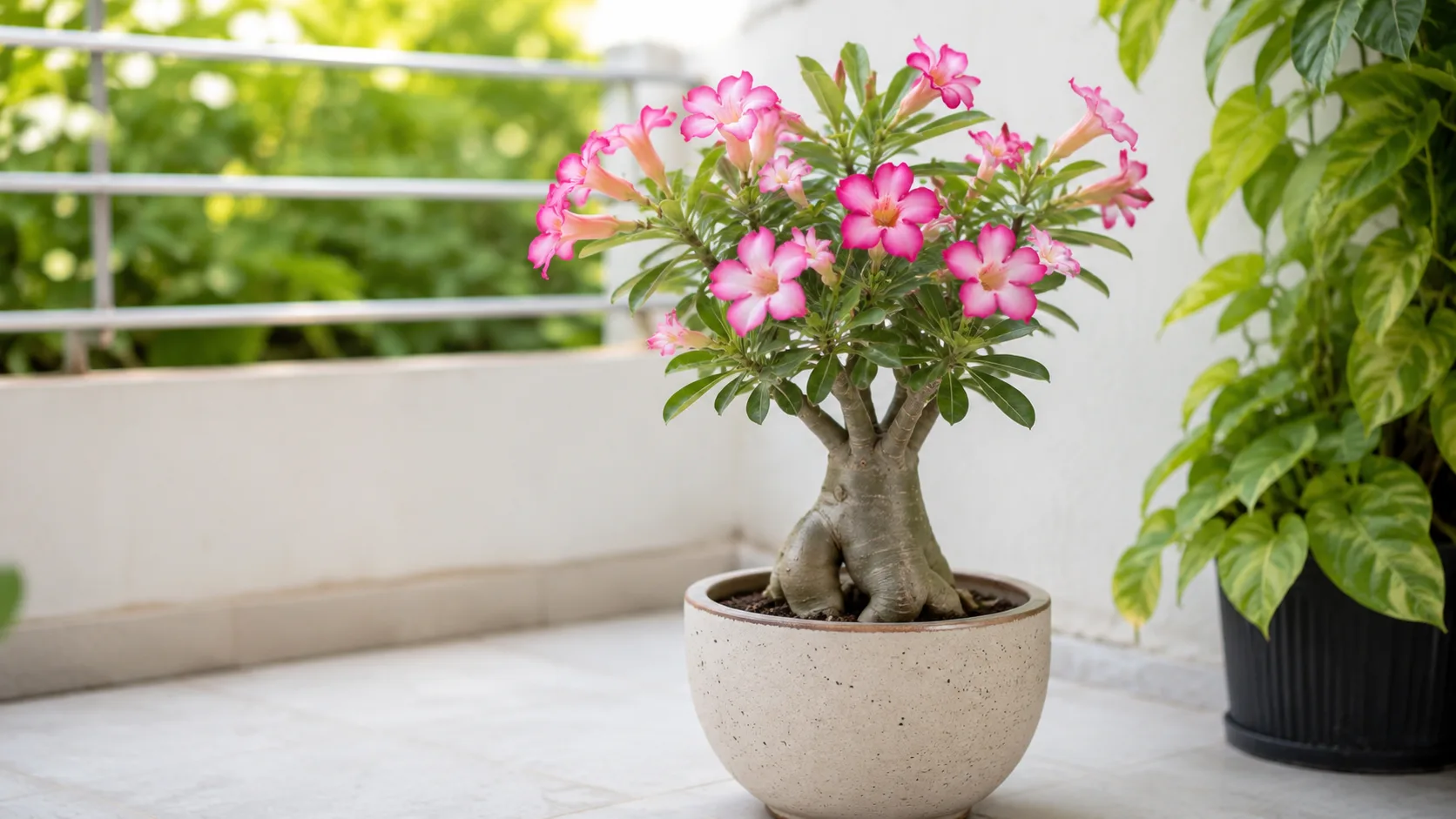
Adenium
Likely causeSudden intense sun on unacclimated plants burns leaf edges and can trigger defoliation.
Quick fixMove to bright indirect light, remove dead leaves, and re-acclimate to direct sun over 1–2 weeks.
 Easy
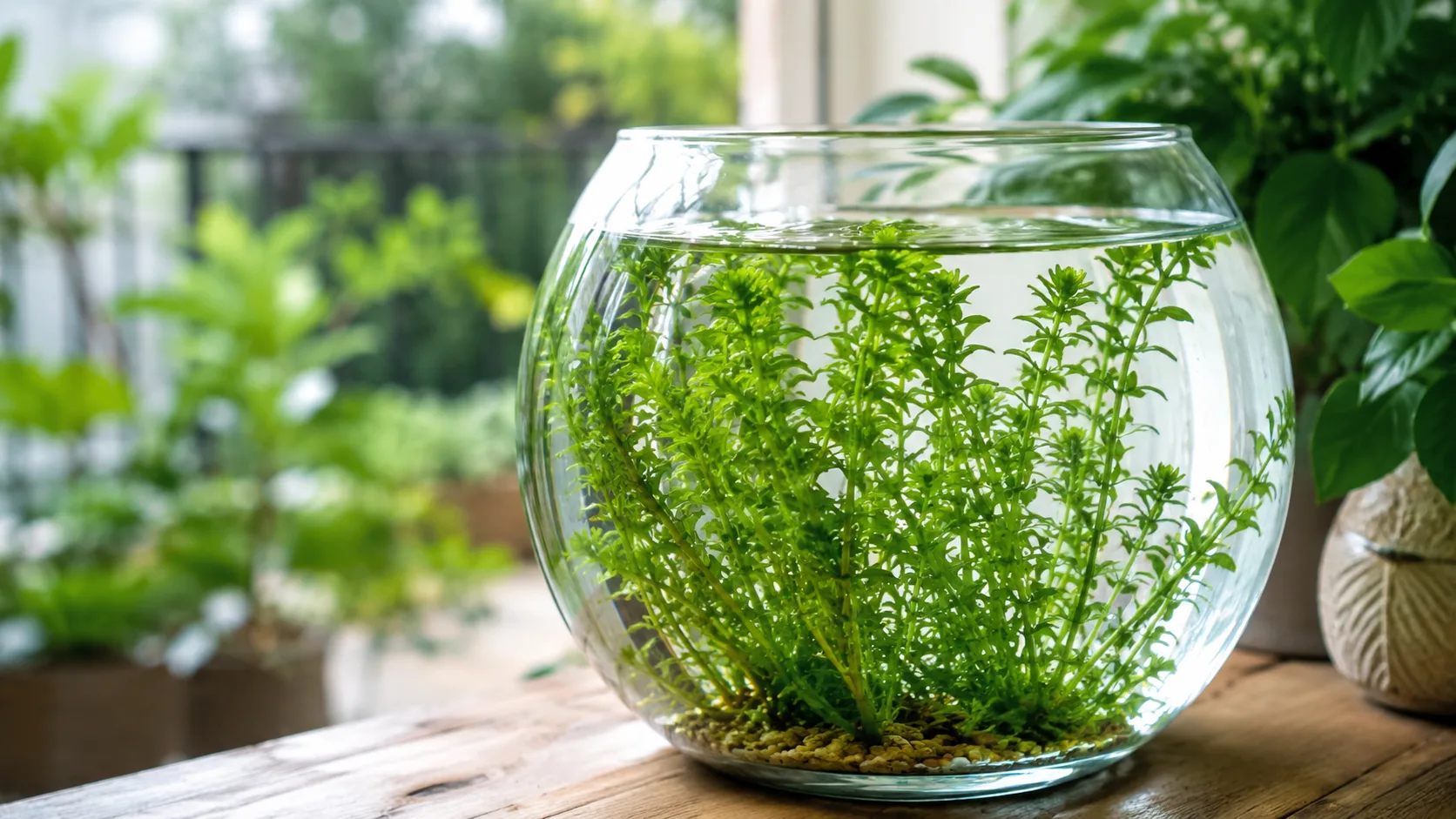
EasyAnacharis / Elodea
Likely causeMoving plants to harsh pond sun or jumping from low to high PAR without acclimation.
Quick fixShade or float stems, shorten photoperiod, acclimate gradually, and trim bleached tissue.
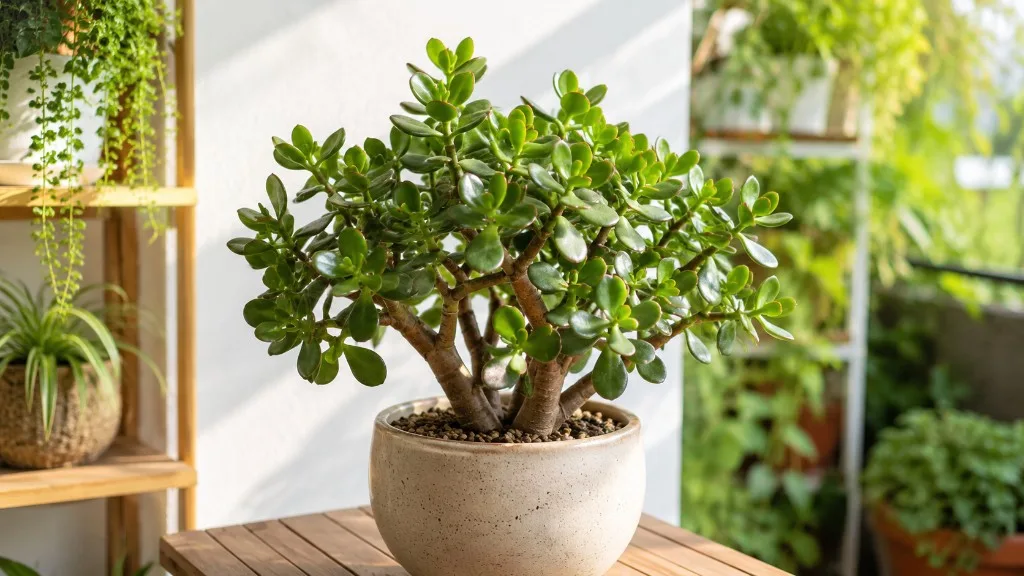 Medium
Barrel Cactus
Likely causeCommon on this plant type; confirm with recent watering, light, and root checks.
Quick fixInspect the plant and correct the most likely care stressor before stacking treatments.
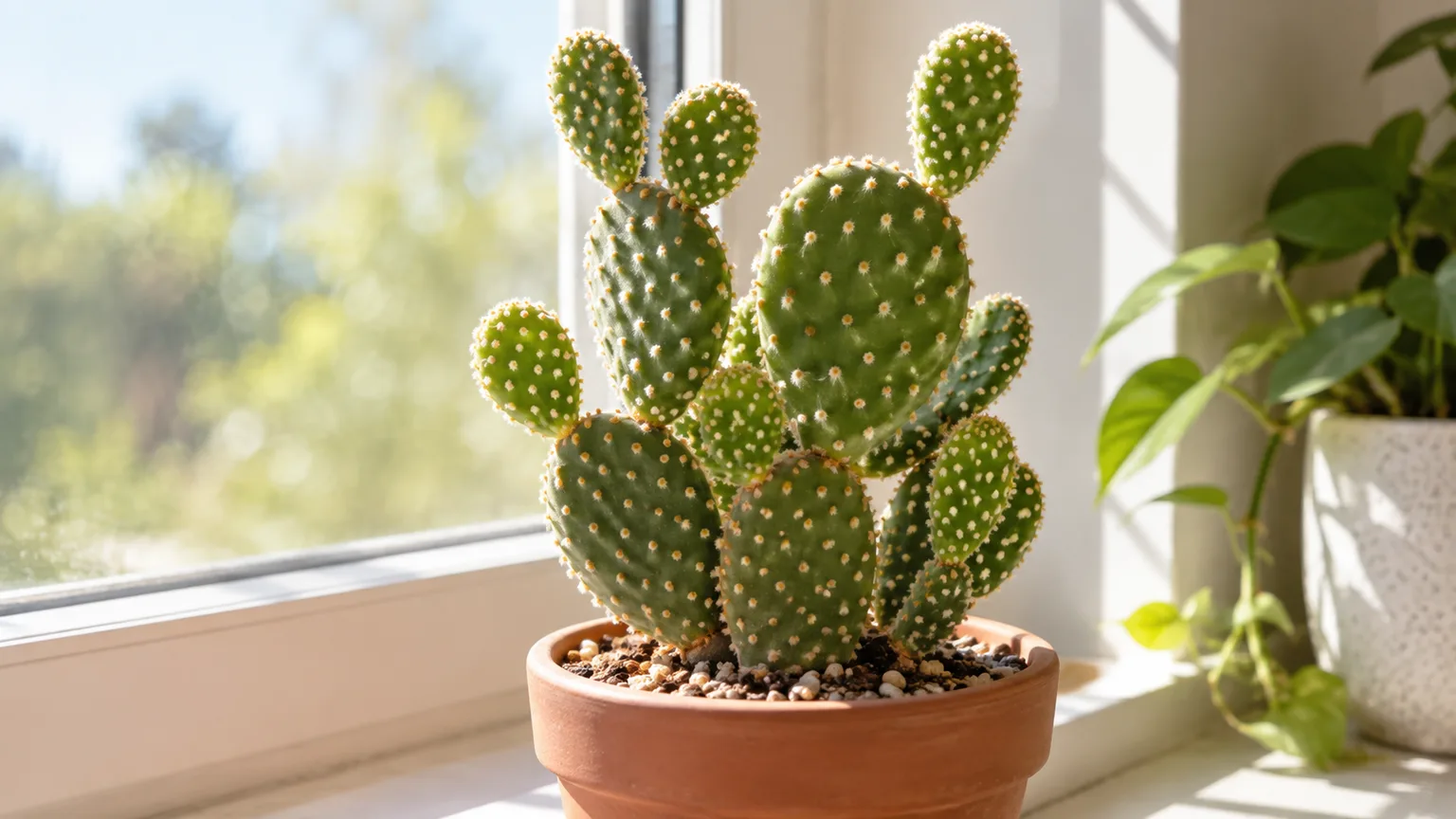 Medium
Bunny Ear Cactus
Likely causeCommon on this plant type; confirm with recent watering, light, and root checks.
Quick fixInspect the plant and correct the most likely care stressor before stacking treatments.
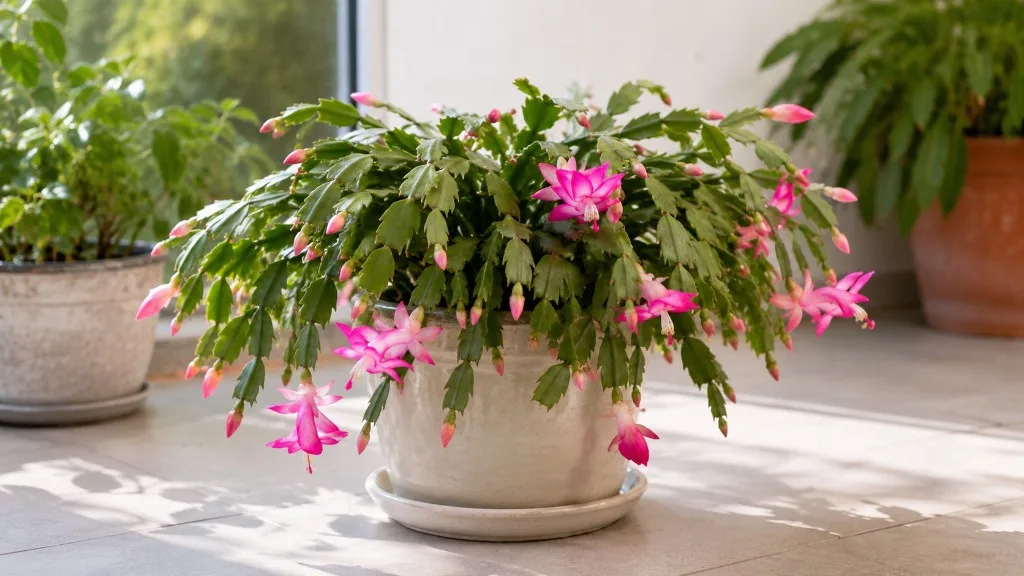 Medium
Christmas Cactus
Likely causeCommon on this plant type; confirm with recent watering, light, and root checks.
Quick fixInspect the plant and correct the most likely care stressor before stacking treatments.
- Medium
Fairy Castle Cactus
Likely causeCommon on this plant type; confirm with recent watering, light, and root checks.
Quick fixInspect the plant and correct the most likely care stressor before stacking treatments.
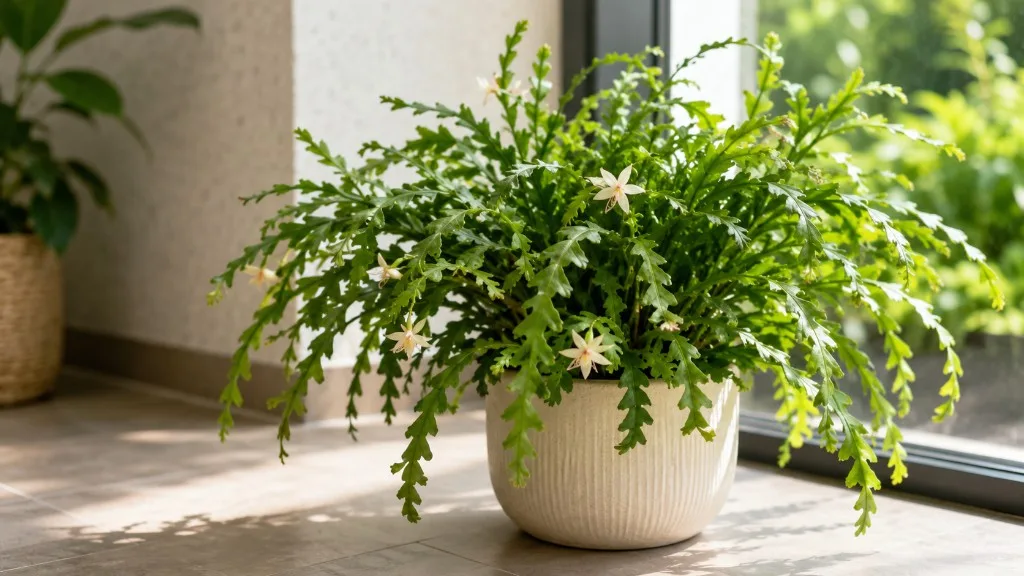 Medium
Fishbone Cactus
Likely causeCommon on this plant type; confirm with recent watering, light, and root checks.
Quick fixInspect the plant and correct the most likely care stressor before stacking treatments.
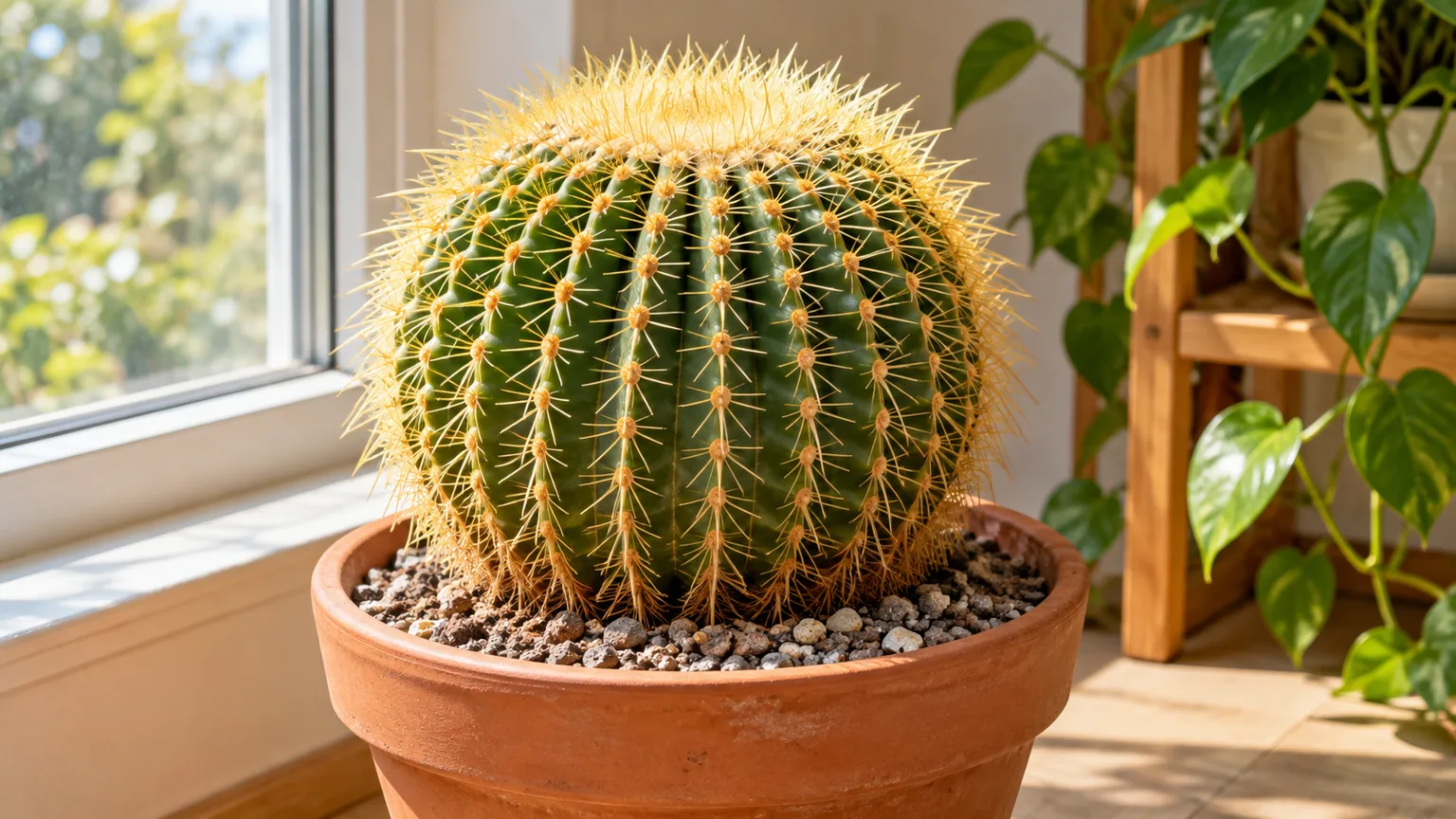 Medium
Golden Barrel Cactus
Likely causeCommon on this plant type; confirm with recent watering, light, and root checks.
Quick fixInspect the plant and correct the most likely care stressor before stacking treatments.
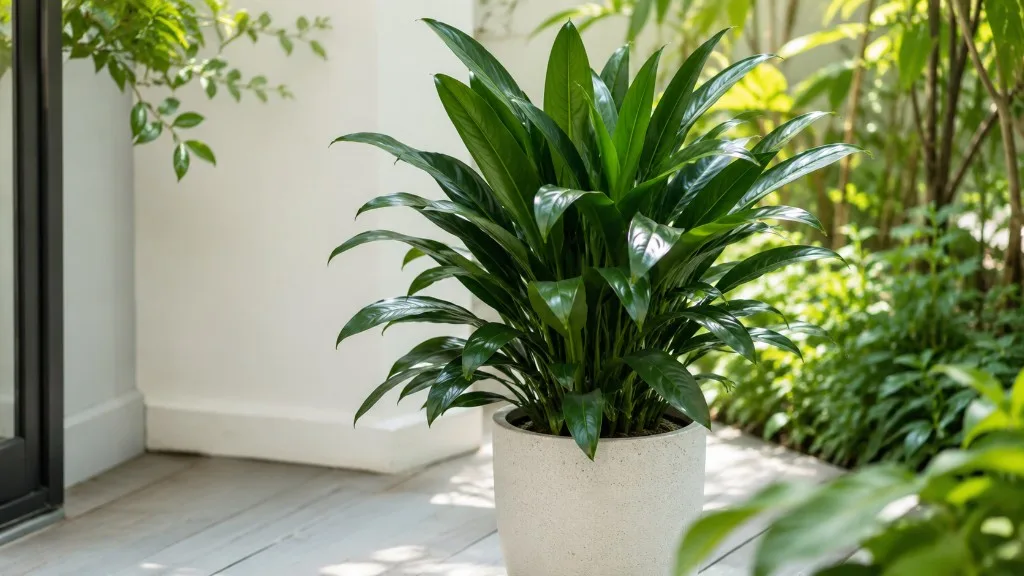 Medium
Janet Craig Dracaena
Likely causeDec 10, 2023 · This article will guide you through the process of nursing your sunburnt Janet Craig Dracaena back to health. We'll cover everything from identifying the damage to implementing effective recovery strategies.
Quick fixConfirm diagnosis on your Janet Craig Dracaena, then address the most likely care or pest factor described in current extension guidance.
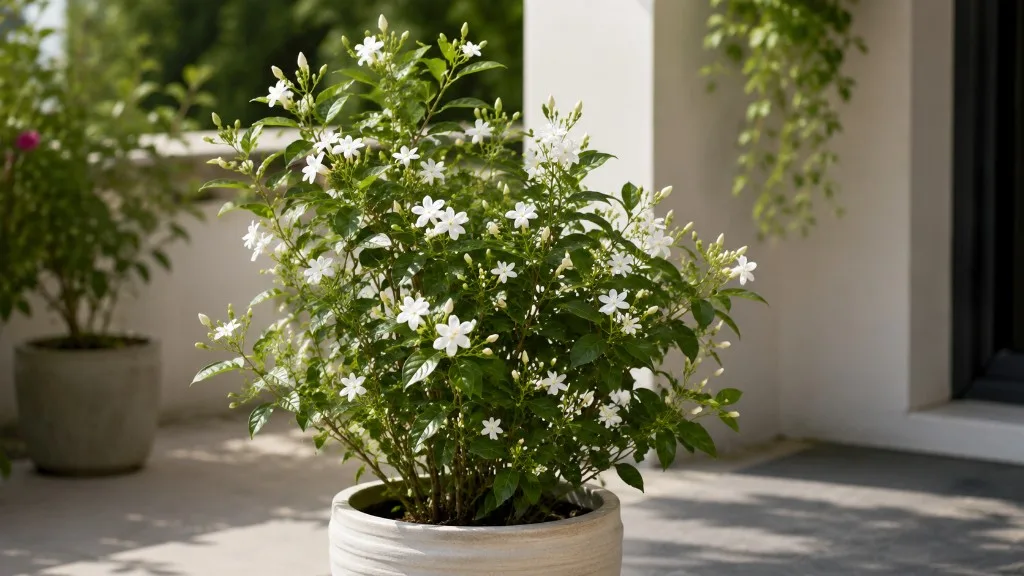 Medium
Jasmine
Likely causeDec 11, 2023 · However, if it gets too much sun, it can suffer from sunburn , leaving its leaves scorched and unhappy. In this article, we'll go through everything you need to know to nurse your sunburnt Madagascar jasmine back to health.
Quick fixConfirm diagnosis on your Jasmine, then address the most likely care or pest factor described in current extension guidance.
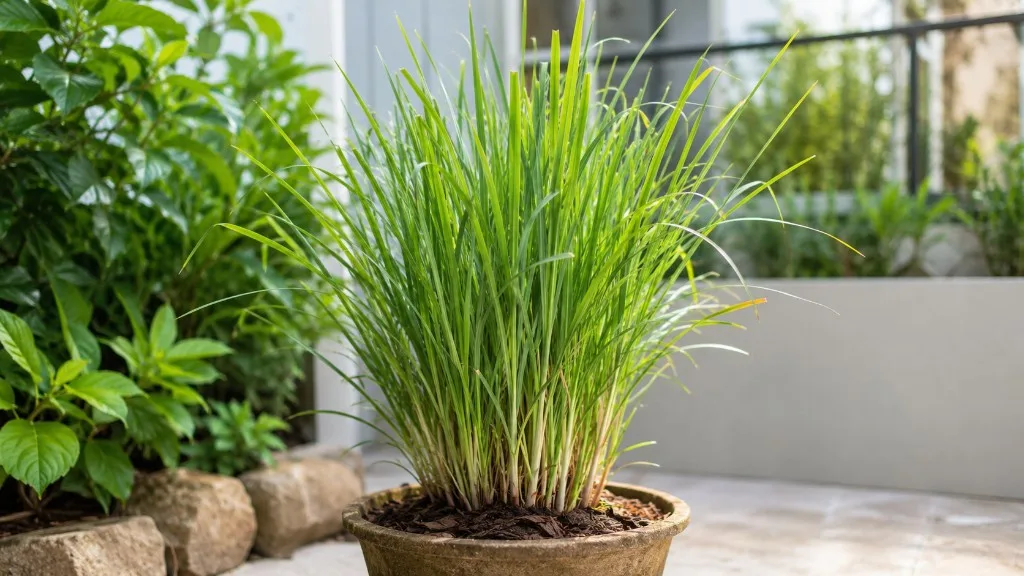 Medium
Lemongrass
Likely causeSep 25, 2024 · Scorched Leaves : In hot climates, intense afternoon sun can scorch the leaves . Provide some shade during the hottest part of the day. Sunburn : Newly planted lemongrass may be susceptible to sunburn if transplanted directly
Quick fixConfirm diagnosis on your Lemongrass, then address the most likely care or pest factor described in current extension guidance.
 Medium
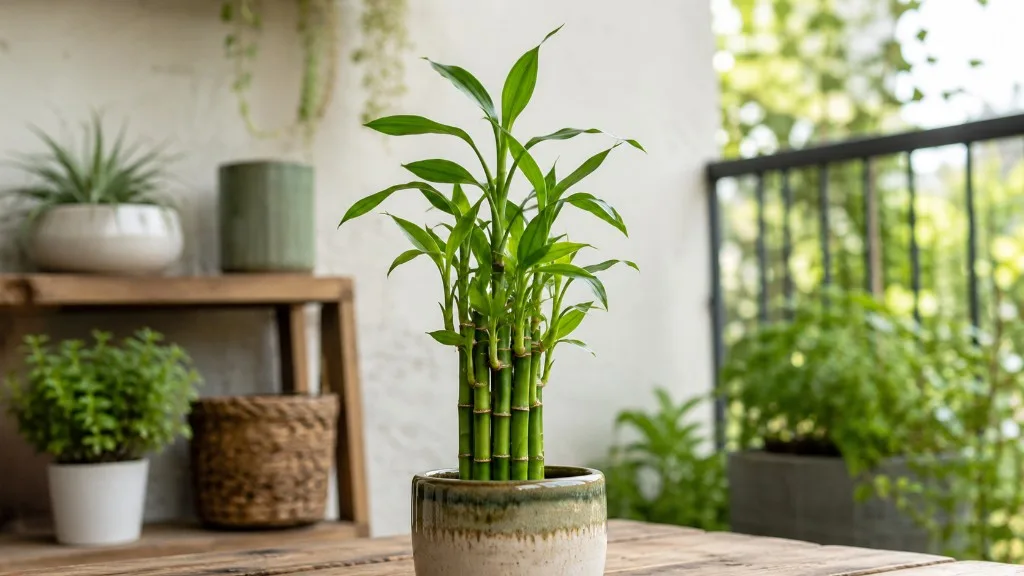
Lucky Bamboo
Likely causeDec 15, 2023 · Lucky bamboo prefers indirect light. This means it should be placed in a spot where it receives bright but filtered sunlight. A north or east-facing window is usually ideal, as these locations provide gentle, indirect light t
Quick fixConfirm diagnosis on your Lucky Bamboo, then address the most likely care or pest factor described in current extension guidance.