Sunburn and Scorched Stems on Fishbone Cactus: Causes
Quick answer
Sunburn on fishbone cactus shows as bleached yellow-white patches or crisp tan ridges on the sun-facing flat stem segments-not classic leaves. It usually follows harsh midday or afternoon direct sun through unfiltered south or west windows, or a sudden jump from a dim shop to blazing exposure. First step: move the basket out of the direct sun beam and add a sheer curtain or shift to bright indirect light before changing water or fertilizer.
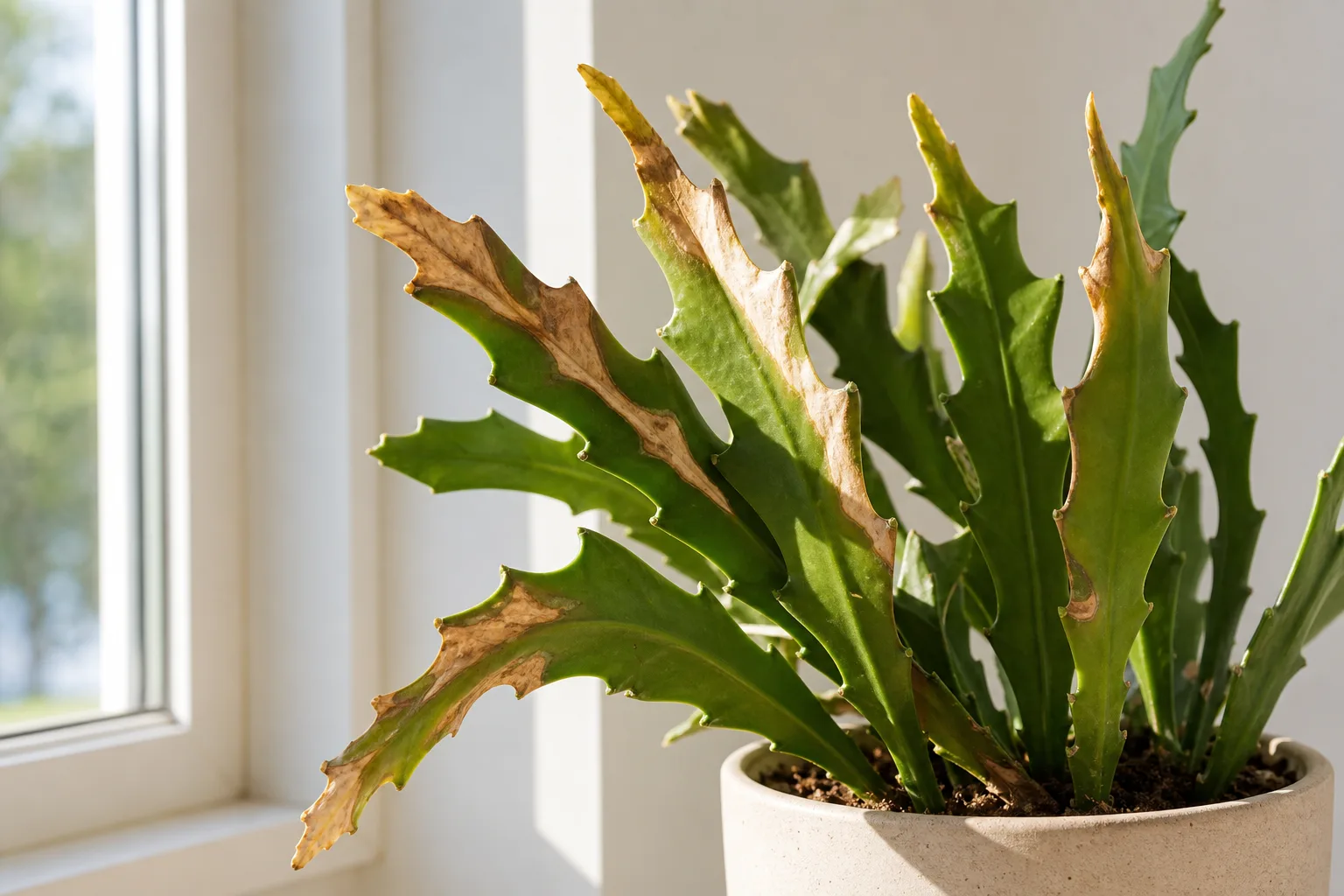
Sunburn and Scorched Stems on Fishbone Cactus: Causes, Checks & Fixes
This guide covers sunburn / scorched leaves on Fishbone Cactus. See also the general Sunburn / Scorched Leaves guide, watering, and light pages for this plant.
Sunburn and Scorched Stems on Fishbone Cactus: Causes, Checks & Fixes
Quick answer
Sunburn on fishbone cactus (Disocactus anguliger) appears on flat phylloclade stems, not spiny desert pads or broad leaves. Scorched segments show bleached yellow-white zones, crisp tan or brown patches on sun-facing ridges, or sudden soft collapse after a rapid move from dim indoor shade to harsh window or patio sun.
The usual trigger is too much direct sun for an epiphytic jungle cactus-especially hot afternoon rays through unfiltered west or south glass, or skipping acclimation when moving from a shaded nursery bench to a blazing sill. The RHS notes fishbone cactus is more sensitive to full sun than desert cacti and prefers bright filtered light with partial shade.
First fix: pull the basket out of the direct sun beam today-behind a sheer curtain, deeper into the room, or to an east window with gentle morning sun only. Do not repot, fertilize, or soak heavily while scorched tissue re-firms. Watch new stem tips for two to three weeks; scorched segments do not turn green again, so recovery is judged by healthy new flat growth without fresh bleaching.
For full window placement and acclimation steps, see the fishbone cactus light guide. This page focuses on recognizing phylloclade scorch, confirming window-direction causes, and recovering without repeating the exposure jump that burned the stems.
What sun scorch looks like on Fishbone Cactus
Healthy fishbone cactus carries thick, flat zigzag phylloclades-wide lobes with an even green color. Sun scorch changes the sun-exposed face of those segments first:
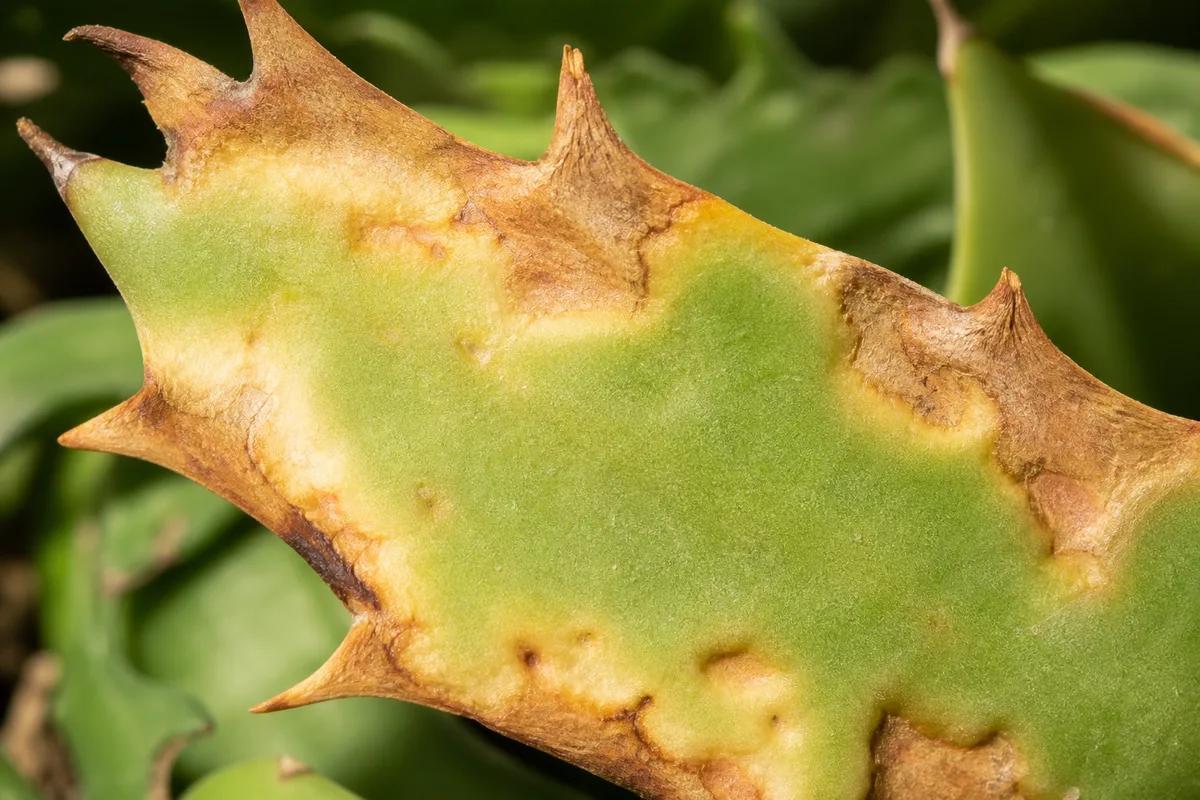
Sunburn / Scorched Leaves symptoms on Fishbone Cactus - compare with healthy tissue on the same plant.
- Bleached yellow-white patches on ridges that faced the window or outdoor sun-photobleaching from intensity the thin cuticle cannot handle
- Crisp tan or brown dry patches on the exposed flat face, often firm and papery, not mushy
- One-sided damage-segments facing the pane scorch while trailing lobes on the shaded side stay green
- Stem curling or folding during peak sun hours on segments that later show bleaching
- Soft segment collapse after a sudden move from a dim shop to unfiltered west glass or a blazing patio
The BBC Gardeners’ World Magazine warns that a full day of direct sun quickly produces scorch on this species. That pattern differs from desert cacti hardened to all-day radiation-fishbone cactus evolved under filtered cloud-forest canopy, as the Missouri Botanical Garden documents for epiphytic Disocactus anguliger.
A single bumped segment or mechanical scrape is different. Sun scorch clusters on sun-facing tissue after recent placement or season change, especially when multiple stems show the same bleached ridge pattern.
Why Fishbone Cactus gets sunburn
Owners often burn fishbone cactus because the label says “cactus.” Disocactus anguliger shares water-storage tissue with desert species but not their full-sun radiation budget. It wants bright indirect light for most of the day with optional gentle morning direct sun when acclimated-not harsh midday or afternoon beams magnified by hot window glass.
Common triggers in real homes:
- Unfiltered south or west windows in late spring and summer, when sun angle and intensity spike
- Sudden move from a shaded nursery aisle or dim living room to full afternoon sun on a west sill or deck railing
- Failed acclimation-jumping straight to two hours of midday west sun instead of 7–14 day gradual steps
- Hot glass amplification-dark walls, west railings, or reflected pavement raising leaf temperature on flat phylloclades
- Overcorrecting low light-moving a leggy plant into harsh direct sun to fix etiolation instantly (see not enough light on fishbone cactus for the safer bright-indirect path)
There is a dangerous overlap: owners sometimes water heavily or mist scorched stems hoping to “cool” them. Wet surfaces on stressed epiphytic tissue invite fungal spotting when airflow is poor. Fix light first; adjust watering only after dry-down rhythm stabilizes in the new placement.
Sun scorch vs. underwatering shrivel vs. etiolation
Flat phylloclades confuse diagnosis because stretch, drought, and scorch all change stem shape. Use pattern, pot weight, and recent history together:
| Pattern | Segment look | Pot / mix | Recent change |
|---|---|---|---|
| Sun scorch | Bleached or crisp tan only on sun-facing ridges; one-sided | Normal weight; mix neither bone dry nor soggy | Sudden bright move, new west window, spring sun angle shift |
| Underwatering | Edges flatten or shrivel along whole segments; uniform drought look | Light pot; dry deep down | Missed waterings, heat spike without extra soak |
| Etiolation (low light) | Thin round cords or wide zigzag gaps; lean toward window | Often wet longer in dim corners | Months in dim spot; no direct sun history |
| Overwatering in dim light | Soft yellow segments; may wilt | Heavy wet pot; sour smell | Wet schedule in low light |
For underwatering workflow, see underwatering on fishbone cactus. For stretch without scorch, see not enough light and leggy growth.
Suspected scorch: bleached ridges after a window move. Confirmed scorch: one-sided crisp or bleached patches on sun-facing tissue with no spread to shaded lobes after you pull back from direct sun.
How to confirm the cause
Work through this window-direction checklist before Fishbone Cactus repotting guide or feeding:
- Window direction - Did west or south glass hit the stems during 11 a.m. to 4 p.m.? East morning sun rarely scorches acclimated plants; west afternoon is the highest indoor risk per the fishbone cactus light guide.
- Hours in direct beam - Trace the basket hook: did flat phylloclades sit inside the direct sun rectangle on the floor for multiple hours daily?
- Acclimation history - Was the plant moved within the past week from shade to sun, indoors to patio, or winter glass to summer angle without gradual steps?
- One-sided pattern - Do damaged ridges face only the pane side? Uniform segment shrivel fits drought better.
- Segment texture - Crisp dry tan on exposed ridges supports scorch; soft mushy yellow with wet mix points to rot-see overwatering.
- Two-week hold test - After pulling back to bright indirect light, do new tips stay green without fresh bleaching? That confirms light shock was the driver.
Indoor plants need appropriate light levels-what looks “bright” to human eyes may still scorch thin epiphytic stem tissue when direct rays concentrate on flat surfaces for hours.
First fix for Fishbone Cactus
Move the basket out of the direct sun beam today.
For most homes that means:
- Pull back from west or south glass until stems receive bright indirect light only-or hang sheer curtain between pane and plant
- Shift to an east window where gentle morning sun replaces hot afternoon exposure
- Outdoor recovery: move to open bright shade under high tree canopy, not unfiltered deck sun
Keep the same watering rhythm for the first week so you isolate the light change. Scorched tissue re-firms faster when you do not stack repotting, heavy pruning, and fertilizer on the same day. If the new spot is brighter indirect than a dim corner, check the top inch of mix every few days-appropriate light increases dry-down speed once growth resumes (details in the fishbone cactus watering guide).
Do not “finish acclimating” by pushing scorched plants into more afternoon sun during recovery. Hold stable indirect light until two to three weeks of healthy new segments prove the placement works, then use the 7–14 day acclimation sequence in the light guide if you want more intensity later.
Step-by-step recovery
After the first move:
- Hold bright indirect light-no direct midday or afternoon rays until new growth looks stable.
- Watch newest phylloclade tips, not old scarred segments. Success means flat zigzag lobes with even green color and no fresh bleaching.
- Adjust watering only after dry-down changes-scorched plants in recovery use less water while tissue re-hardens; do not soak hoping to revive crisp patches.
- Optional cosmetic prune - Once new growth is clean for two to three weeks, trim firm but ugly scorched segments for shape. Cut just above a healthy lobe joint with clean shears; full technique is in the fishbone cactus pruning guide.
- Gradual re-acclimation - If you need more brightness later, add 30–60 minutes of morning direct sun every few days over 7–14 days, stopping if any ridge bleaches again.
Rotate the basket weekly once stable so future growth does not hard-lean toward one pane.
Recovery timeline
Expect no new bleaching on fresh tips within two to three weeks after pulling back from direct sun. Old scorched phylloclades stay discolored permanently-that is normal; damaged stem tissue does not fully revert on most houseplants.
Cosmetic scorch on firm segments can remain while the plant grows past it. Severe soft collapse across multiple stems may take several weeks to stabilize and can require removing collapsed segments before rot spreads.
Worsening signs during recovery: fresh bleaching continues after the move, segments go soft and yellow with persistently wet soil, or sour smell from the mix-shift focus to drainage and roots, not more light.
What not to do
Do not fertilize scorched fishbone cactus hoping to push green tissue back onto burned ridges-salts stress roots while phylloclades are already shocked.
Do not mist or overhead water heavily to “cool” scorched stems; wet flat surfaces with poor airflow can invite fungal issues on epiphytic cacti.
Avoid moving instantly into harsh direct sun again to fix any residual legginess from the prior dim spot-that repeats the burn cycle. Use bright indirect light first, then acclimate per the light guide.
Do not remove all scorched segments at once before new growth proves stable-leave firm photosynthetic tissue while the plant adjusts.
Do not repot on day one unless roots are clearly failing; light shock recovery rarely needs a new container.
How to prevent sunburn next time
Place fishbone cactus where bright indirect light is the default, not all-day direct sun:
- East windows for bright indirect plus cool morning sun on acclimated plants
- South and west windows with sheer diffusion or setback so midday beams do not strike phylloclades for hours
- Seasonal re-check at spring equinox-January placement that was safe may scorch in May on the same south sill
Acclimate every exposure increase over 7–14 days when moving from shade to brighter glass or from indoors to patio. The RHS epiphyllum growing guide recommends bright filtered light indoors and light or dappled shade outdoors-match that band before adding afternoon direct rays.
Clean windows, open sheers during daylight, and rotate hanging baskets weekly. When you increase light, recheck watering the same week-evaporation and growth rate change together on the fishbone cactus hub.
When to prune scorched segments
Cosmetic scorch on firm, dry tan tissue can stay on the plant indefinitely if new growth looks healthy-no rush to cut.
Prune when:
- Segments are soft, collapsed, or weeping after light shock
- Scorched tissue spreads despite stable indirect light-remove affected segments to inspect whether rot is advancing
- You want shape cleanup after two to three weeks of confirmed healthy new tips
Use clean shears, cut above a healthy lobe joint, and let cut surfaces dry before misting. Full sanitation and timing notes live on the pruning guide.
When to worry
Pure cosmetic scorch on firm segments is not an emergency-pull back from direct sun and monitor new tips.
Escalate if multiple stems collapse soft after a sudden exposure jump, yellowing spreads with wet soil, or pests explode on stressed tissue-those combinations need root inspection or pest control alongside light correction.
If fresh bleaching continues for two weeks after moving to bright indirect light, verify the basket truly sits outside the direct beam at 10 a.m., 1 p.m., and 4 p.m.-trace the sun rectangle on the floor rather than guessing from compass direction alone.
Fishbone Cactus care cross-check
Sun scorch is a light problem first, but recovery sits inside the whole care system:
- Light - placement, acclimation, window direction; see light guide and not enough light
- Water - brighter correct light dries mix faster after recovery; see watering guide
- Prune - remove collapsed or cosmetic scorched segments after stable new growth; see pruning guide
- Overview - epiphytic ecology and seasonal placement on the fishbone cactus hub
Conclusion
Sunburn on fishbone cactus is too much direct sun on flat phylloclades, not generic “leaf” scorch. Confirm with one-sided bleached or crisp tan ridges after west or south exposure, then pull back to bright indirect light before repotting or feeding. Scorched segments do not turn green again-healthy new flat zigzag tips without fresh bleaching tell you the fix worked. Acclimate toward stronger light over 7–14 days next time, and pair this page with the fishbone cactus light guide for full window placement and seasonal adjustments.
When to use this page vs other Fishbone Cactus guides
- Fishbone Cactus watering guide - Use for routine moisture checks before assuming sunburn / scorched leaves is the main issue.
- Fishbone Cactus problems hub - Browse all 18 common issues on this species.
- Brown Tips on Fishbone Cactus - Different entry point when symptoms overlap with sunburn / scorched leaves.