Not Enough Light on Fishbone Cactus: Causes, Checks & Fixes
Quick answer
Fishbone Cactus in dim light stretches its zigzag stems and blooms poorly. First step: move the plant to the brightest indirect spot in your home-within a few feet of an east window or filtered south light-before changing water or fertilizer.
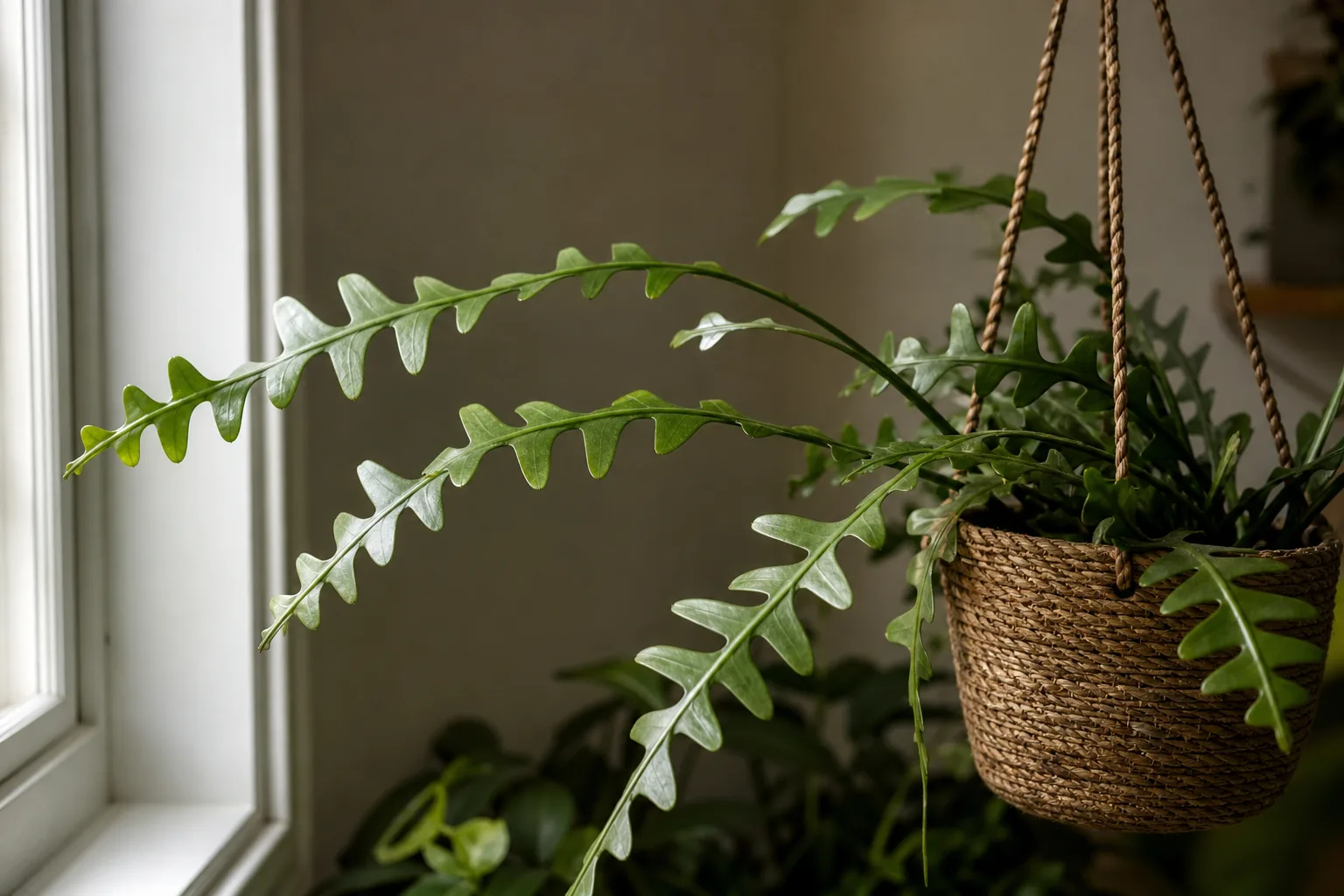
Not Enough Light on Fishbone Cactus: Causes, Checks & Fixes
This guide covers not enough light on Fishbone Cactus. See also the general Not Enough Light guide, watering, and light pages for this plant.
Not Enough Light on Fishbone Cactus: Causes, Checks & Fixes
Quick answer
Fishbone Cactus (Disocactus anguliger) is a cloud-forest epiphyte, not a desert cactus. In nature it grows under tree canopies in filtered light. Indoors it needs bright indirect light for compact zigzag stems and reliable flowering-not a dark shelf and not harsh midday sun through bare glass.
When light is too weak, the plant reaches toward windows, stretches between lobes, grows slowly, and often skips blooms. The first fix is simple: move it to the brightest safe indirect spot you have-typically within a few feet of an east-facing window or behind a sheer curtain on a south or west window. Do not repot, fertilize, or water more until you have tried that move for two weeks and watched the newest stem tips.
What not enough light looks like on Fishbone Cactus
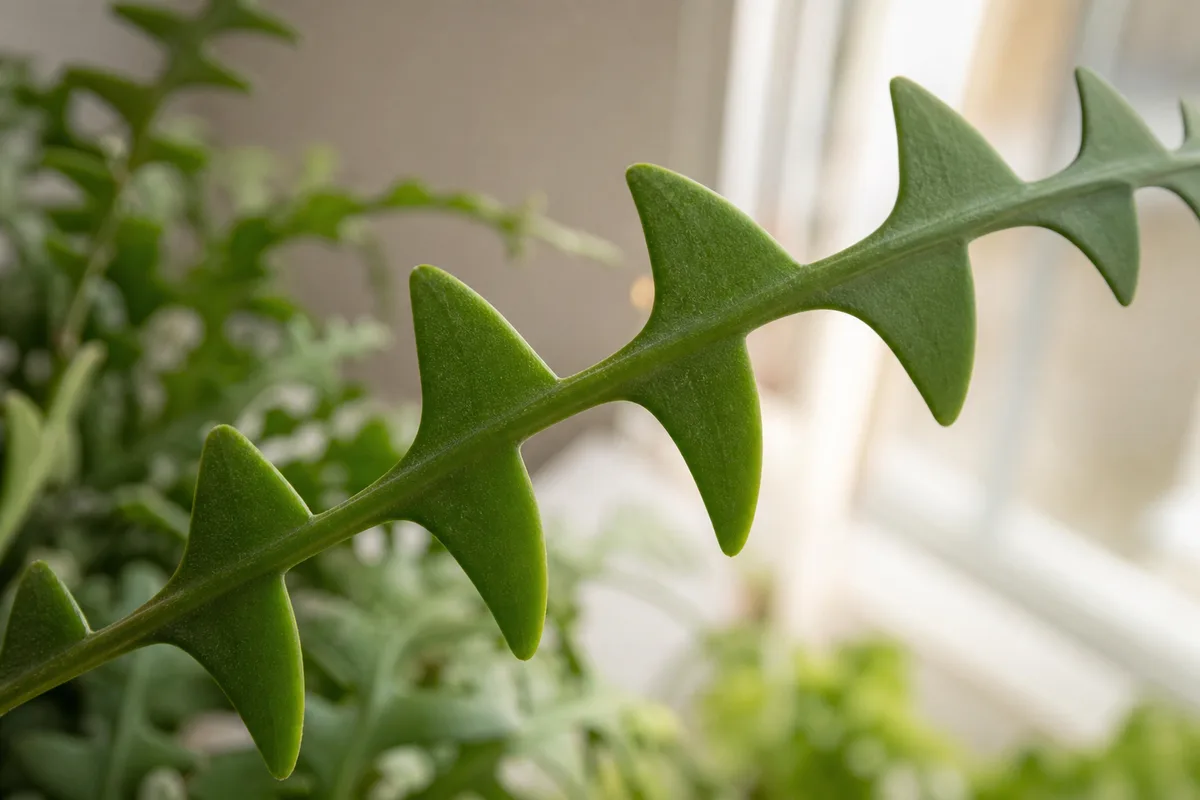
Stretched zigzag stem with widened lobe gaps and deep green color - Fishbone Cactus etiolation when bright indirect light is too weak.
Low light shows up on the flat zigzag stems, not classic spines. Healthy fishbone cactus has thick, evenly lobed segments with a fresh green color. In dim conditions you will usually see:
- Long, thin stem sections with wider spacing between the fishbone lobes
- Deep, dark green color on foliage that looks healthy at first glance but feels soft and weak
- One-sided growth-trailing stems lean or grow faster toward the window
- Slow or stalled new tips, especially from autumn through winter when daylight drops
- No flower buds even when watering and temperature seem fine
The pattern builds gradually. A single pale tip is more often sun stress or mechanical damage; repeated stretching on several stems across weeks fits insufficient light better.
Fishbone cactus can survive in lower light longer than a true high-light succulent, which is why owners miss the problem until stems look stringy. Survival is not thriving-the plant is spending stored energy to reach photons it cannot collect efficiently.
Why Fishbone Cactus gets too little light
Owners often treat it like any “cactus” and tuck it on a north wall or in a bathroom with a small frosted window. That mismatch is the core issue. Fishbone cactus shares its tribe with jungle or epiphytic cacti-Christmas cactus, orchid cactus-plants that evolved in humid forests with dappled light, not on open desert rock.
Common triggers in real homes:
- Placement for décor, not photons-hanging baskets centered in a room, bookshelves, or hallways more than six feet from glass
- Winter daylight drop in the same spot that worked in summer
- Dirty, tinted, or obstructed windows that cut intensity more than you notice
- Competing light from other plants or furniture blocking one side of the basket
- Overcorrecting from sunburn fear-pulling the plant too far back after one scorch event
There is a dangerous overlap: low light slows water use. Many fishbone cactus problems start when someone keeps a summer Fishbone Cactus watering guide while the plant sits in a dim winter corner. [Wet mix that never dries invites root rot](https://www.missouribotanicalgarden.org/gardens-gardening/your-garden/help-for-the-home-gardener/advice-tips-resources/insects-pests-and-problems/environmental/[overwatering on Fishbone Cactus](/plants/fishbone-cactus/overwatering/)) even though the visible complaint is “leggy” growth.
How to confirm the cause
Work through these checks before changing fertilizer or pot size:
- Window direction and distance - Can you see sky from the plant’s location, or only a wall? Within about two feet of an unobstructed east window counts as bright indirect for most foliage plants. Deep interior rooms usually read as low light.
- Stem direction - Do new tips grow toward one window? That phototropic lean strongly supports too little light on the current spot.
- Segment spacing - Compare the newest zigzag section to segments from when you bought the plant. Increasing gap length between lobes on fresh growth confirms stretching.
- Soil dry-down speed - Push a finger into the top inch. If the pot stays damp for ten days or more without obvious underwatering on Fishbone Cactus shrivel, low light may be slowing evaporation-check roots if stems feel soft.
- Two-week trial move - Shift the plant to your brightest indirect location without changing water or feed. Compact new lobes within two to three weeks confirm light was the limiter.
Suspected, not confirmed: slow growth alone in winter can include normal seasonal rest. Confirmed: lean plus thin new segments that improve after the trial move.
Lookalike symptoms
- Underwatering - Zigzag edges flatten or shrivel while stems stay short; the pot feels light and mix is dry deep down. Rehydrate once, then reassess light.
- Overwatering in dim light - Soft, yellowing stems with sour soil smell; may wilt despite wet mix. Stop water and inspect roots-do not only add light.
- Sunburn - Bleached, reddish, or crisp patches on segments that faced direct sun, often after a sudden move to a south window. Pull back and diffuse light; do not assume more shade fixes legginess elsewhere.
- Normal post-repot pause - Short stall after disturbance with firm stems and appropriate light; wait two weeks before diagnosing low light.
First fix for Fishbone Cactus
Move the plant to the brightest indirect location available-today.
For most homes that means:
- An east-facing window where stems get bright morning light but not hot afternoon rays
- A south or west window with a sheer curtain or three to five feet of setback so light is filtered
- A hanging spot near the glass, not in the center of the room
Keep the same watering rhythm for the first week so you isolate the light change. If the new spot is substantially brighter, check soil moisture every few days-plants in stronger appropriate light dry faster, and you may need to water slightly sooner once growth picks up.
If no window gives enough intensity, add a full-spectrum LED grow light six to twelve inches above the trailing stems for twelve to fourteen hours daily. That setup supports compact growth through winter without sunburn risk.
Do not jump straight to direct midday sun to fix legginess. Fishbone stems burn quickly when acclimation is skipped. Increase intensity over one to two weeks if you want more light than indirect glass provides.
Step-by-step recovery
After the first move:
- Rotate the pot weekly so all sides of the trailing stems receive similar light and the plant stops leaning.
- Watch the newest zigzag tips, not old stretched segments. Success looks like shorter lobe spacing and slightly thicker stems on fresh growth.
- Adjust watering only after dry-down changes-when the top inch dries faster in the brighter spot, resume your normal spring/summer rhythm; do not preemptively soak a plant that is still in wet mix.
- Optional cosmetic prune - Once new compact growth is obvious, trim leggy ends for shape. Old segments will not shorten on their own.
- Resume mild fertilizer only after two weeks of stable new growth in spring or summer-never feed a stressed plant in dim wet soil hoping to “push” growth.
If you rely on grow lights, keep the timer consistent and dust the leaves lightly so segments intercept light evenly.
Recovery timeline
Expect visible improvement in new stem tips within two to three weeks after a meaningful light increase. Full trailing stems may take several months to look balanced if you trim and let side branches fill in.
Old stretched segments do not revert-that is normal for most houseplants responding to better light. Judge success by the next one or two sets of zigzag lobes, not the full hanging length.
Worsening signs during the trial: new tips stay thin, stems soften and yellow while soil stays wet, or the plant drops segments with a sour smell-shift focus to drainage and roots, not more light alone.
What not to do
Do not fertilize heavily to compensate for dim light-salts stress roots that are already underperforming. Do not repot into a larger container hoping volume fixes stretch; extra wet soil in low light makes rot more likely.
Avoid moving instantly into harsh direct sun after months in shade. Scorch shows as reddish or bleached patches on thin segments and can set recovery back further.
Do not water on a fixed calendar without checking the pot. Low-light plants use less water; the same weekly soak that worked in summer by a bright window can waterlog the same plant in a dim winter corner.
Do not remove all leggy stems at once before new growth proves the light fix-leave some photosynthetic tissue while the plant adjusts.
How to prevent low-light stress
Place fishbone cactus where bright indirect light is realistic year-round, not only in June. Before winter, either move the basket closer to glass or start supplemental lighting early so short days do not trigger another stretch phase.
Clean windows seasonally, open sheers during daylight, and rotate hanging plants weekly. When you increase light, recheck watering the same week-evaporation and growth rate change together.
If you want night-blooming flowers, light is only half the story; autumn drought and cool nights also trigger buds. A well-lit plant still may not bloom in a permanently warm, evenly watered room-but dim light guarantees no buds regardless of other care.
When to worry
Pure low light is rarely an emergency; it is a chronic stress. Escalate if stems go soft and yellow with persistently wet soil, segments collapse in a dark bathroom, or pests explode on weak stretched growth-those combinations need root inspection, pest control, or both, not just a window move.
If two weeks in your brightest indirect spot produce no change in new tip thickness, verify that the location truly receives usable daylight (not just “bright to human eyes”) and consider a stronger grow light before assuming another problem.
Conclusion
Not enough light on Fishbone Cactus is a placement problem disguised as slow growth. Confirm it with leaning stems, wide zigzag spacing, and compact new tips after a brighter trial spot. Move once to strong indirect light-or add a timed grow light-before Fishbone Cactus repotting guide or feeding. Old stretched trails will stay long; healthy new lobes tell you the fix worked.
When to use this page vs other Fishbone Cactus guides
- Fishbone Cactus watering guide - Use for routine moisture checks before assuming not enough light is the main issue.
- Fishbone Cactus problems hub - Browse all 18 common issues on this species.
- Leggy Growth on Fishbone Cactus - Different entry point when symptoms overlap with not enough light.
- Slow Growth on Fishbone Cactus - Different entry point when symptoms overlap with not enough light.
- Yellow Leaves on Fishbone Cactus - Different entry point when symptoms overlap with not enough light.