Fishbone Cactus Watering: Schedule, Soil Checks & Mistakes
Fishbone Cactus Watering: Schedule, Soil Checks & Mistakes
Fishbone Cactus Watering: Schedule, Soil Checks & Mistakes
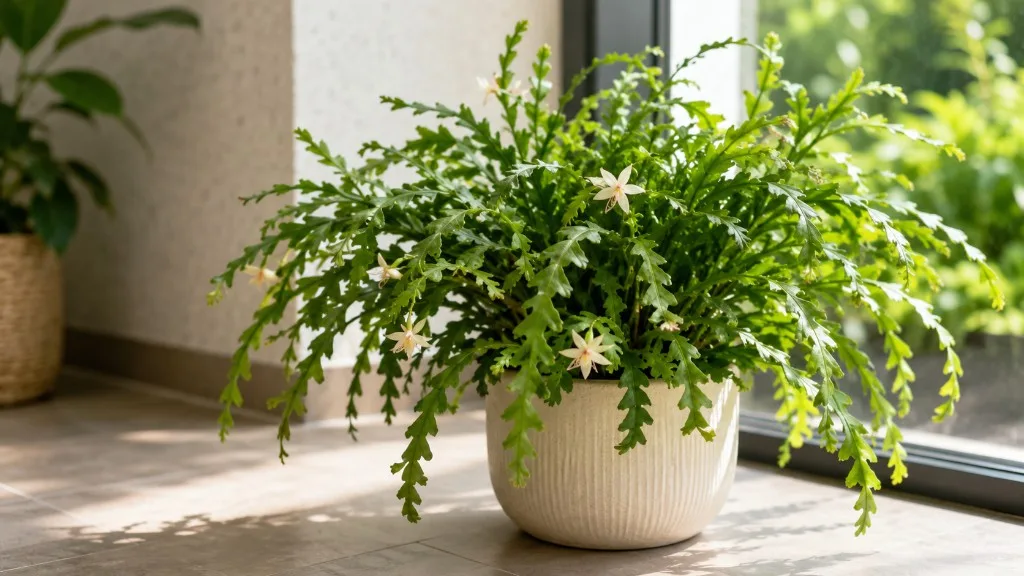
Fishbone cactus watering trips up more growers than light or fertilizer ever do - and almost always for the same reason. Disocactus anguliger (the fishbone, ric rac, or zig-zag cactus) is sold in the cactus section, looks succulent, and gets treated like a desert plant that should stay bone dry for weeks. It is not. It is an epiphytic jungle cactus from the cloud forests of southern Mexico, where it grows on tree bark in filtered light and cycles through moist organic debris followed by partial drying - not permanent wetness and not desert-level drought either.
The practical rule that works in most homes is the epiphytic drought protocol: let the top half of the potting mix dry before you water again, give a thorough soak until water runs from the drainage holes, then let the mix breathe until the upper half dries down again. Water more often during active growth - roughly every 7–14 days in spring and summer for a typical indoor pot - and reduce significantly in autumn and winter, often stretching to every 3–4 weeks when growth slows. The biggest failure mode is not underwatering on Fishbone Cactus; it is root rot on Fishbone Cactus from soggy mix that stays wet at the root zone while the surface looks dry.
This guide explains why the watering rhythm differs from desert cacti, how to check moisture reliably, what seasonal adjustment looks like month by month, and how to read the plant when you have gone too wet or too dry.
Why Fishbone Cactus Watering Is Not Desert Cactus Care
The word “cactus” in the common name sends most people down the wrong path. Fishbone cactus belongs to Cactaceae, yes, but its evolutionary niche is the tropical cloud forest understory of Oaxaca, Jalisco, Guerrero, and neighboring Pacific-slope states in Mexico, not an arid desert floor. Missouri Botanical Garden notes that Disocactus anguliger is native to Mexico and grows as an epiphyte on trees. Epiphytes anchor in pockets of leaf litter and bark debris. Their roots expect air, quick drainage, and intermittent moisture - a rhythm closer to an orchid than to a barrel cactus.
Desert cacti store massive water reserves in thick tissue and tolerate long dry periods because their native rainfall is sparse and their mix is extremely porous. Fishbone cactus stores some water in its flattened, zigzag stems, but those stems are thinner and more exposed than a barrel cactus body. In the wild canopy, moisture arrives regularly from rain, mist, and decomposing organic matter around the roots. Let the plant go completely bone dry for weeks in a small indoor pot and the stems flatten and shrivel along the lobed edges. Keep the mix permanently damp because “jungle cactus” sounds thirsty, and fine roots suffocate in anaerobic, soggy substrate.
| Feature | Fishbone cactus (epiphytic) | Desert cactus (e.g. barrel) |
|---|---|---|
| Native habitat | Cloud forest canopy, Mexico | Arid deserts |
| Root environment | Bark pockets, airy organic debris | Mineral grit, extreme drainage |
| Dry-down target | Top half of mix dry | Entire mix fully dry |
| Typical indoor interval (active season) | Every 7–14 days | Every 2–6+ weeks |
| Main watering risk | Root rot from soggy mix | Rot from cold + wet, but tolerates dryness |
The comparison is not about pampering a fussy plant. It is about matching the dry-down speed your pot actually achieves to the plant’s tolerance band. Fishbone cactus wants more water than a desert cactus and less constant wetness than a peace lily. Most problems come from picking the wrong end of that range and sticking to a calendar instead of the mix.
The Epiphytic Drought Protocol Explained
The epiphytic drought protocol is a simple decision rule: water only after the upper portion of the mix has dried, then water fully and evenly so the entire root zone gets moisture, then stop until the upper portion dries again. It is not “drought” in the desert sense. It is controlled partial drying that mimics how an epiphyte’s root pocket dries between rain events without baking solid for a month.
Three principles make the protocol work indoors. First, partial dry-down preserves root oxygen. Epiphytic roots evolved in loose, airy substrates. When the mix stays wet from top to bottom for days, air spaces fill with water, microbial activity shifts, and roots lose function before you see obvious damage above the soil line. Second, the top of the pot dries faster than the bottom, which is why surface color alone misleads you. A pale, dusty-looking top can sit above a root zone that is still damp and cool. Third, season and light change dry-down speed, so the protocol is a check, not a fixed number of days.
For most indoor fishbone cactus in a 6–8 inch hanging basket with a chunky epiphytic mix, “top half dry” means the upper 50% of the soil column feels dry to a finger or skewer, the pot weighs noticeably lighter than right after watering, and the lower half may still hold slight moisture without feeling wet or cold. That is the sweet spot: roots get a drink, then air returns before the next cycle. If your home runs warm and bright, you may hit that point every seven to ten days in summer. If your home is cool and dim in winter, the same pot may need three to four weeks between drinks.
When to Water Fishbone Cactus: Active Growth vs Rest
Timing follows growth phase more than a day-of-the-week reminder on your phone. Fishbone cactus pushes new stem segments and roots most actively when temperatures are warm, days are longer, and light is stronger. It slows in cooler, dimmer months. Watering on a summer schedule through winter is one of the fastest routes to soggy mix and root rot, because the plant uses less water while the pot still holds the same volume of mix.
Treat calendar ranges as starting guesses you refine with moisture checks. A plant under grow lights in a heated room may grow longer into fall than one in an unheated porch. A plant recently repotted into fresh bark-heavy mix dries slower until roots explore the new volume. The growth signal matters: if new zigzag segments are forming at stem tips and roots are visibly active when you slip the plant from its pot, the active-season protocol applies. If growth has stalled and the pot stays damp for weeks, you are already in the rest-phase protocol whether the calendar says July or January.
Spring and Summer Watering Frequency
During active growth - typically spring through summer - fishbone cactus uses water steadily and rewards consistent partial dry-down cycles. For a typical indoor plant in Fishbone Cactus light guide, that usually translates to every 7–14 days between thorough waterings. The BBC Gardeners’ World Magazine recommends watering when the top couple of centimetres of compost are dry, which in a shallow hanging basket often aligns closely with the top-half-dry rule.
Warmer rooms, stronger light, smaller pots, and terracotta containers all shorten the interval. A fishbone cactus on a bright east-facing windowsill in June may need water weekly. The same plant in a larger plastic pot in moderate light may sit at the two-week end. Both are normal if the top half is actually dry before you pour. Do not interpret “more in growing season” as “keep the mix lightly moist at all times.” Epiphytic cacti still need that dry-down window. They just need it more often than a desert species because the acceptable dryness window is narrower and the stems hold less reserve water.
| Season / phase | Typical indoor interval | What to watch |
|---|---|---|
| Early spring (new growth starting) | Every 10–14 days | Increase frequency as light and heat rise |
| Late spring–summer (peak growth) | Every 7–14 days | Top-half-dry check before every water |
| Early autumn (growth slowing) | Every 14–21 days | Begin stretching interval |
| Late autumn–winter (rest) | Every 3–4 weeks | Pot weight and deep skewer more important |
Use the table as a framework, not a law. Your pot, mix, and room will differ. The plant’s stem texture and pot weight tell you whether the framework fits.
Fall Taper and Winter Reduction
Reduce watering significantly in autumn and winter. As daylight shortens and indoor temperatures drop, fishbone cactus metabolism slows. The mix stays wet longer because the plant pulls less moisture and evaporation drops. Continuing on a summer schedule leaves the root zone damp for extended periods - exactly the condition that breeds root rot in soggy mix.
Many growers taper in early autumn, moving from a 7–14 day rhythm toward every 2–3 weeks, then toward every 3–4 weeks in mid to late winter for typical indoor conditions. Some sources suggest autumn dryness helps trigger blooming the following season; whether that applies to your plant depends on age, light, and cultivar, but the safety rationale alone justifies the reduction: a resting plant in a cool room cannot process constant moisture.
Winter watering still follows the top-half-dry rule, but the half-dry point arrives much later. Check deep with a skewer before assuming dryness from a light pot. A common winter mistake is seeing slightly shriveled stem edges and panicking with a heavy soak while the lower mix is still wet - that compounds rot risk. Confirm dryness through the upper half, water thoroughly once, and give the plant time to plump up over several days.
The Top-Half-Dry Rule and How to Check It
The top-half-dry rule means you do not water until the upper 50% of the potting column has lost noticeable moisture, while the lower portion may still feel slightly cool or barely damp but not wet. This is the single most reliable fishbone cactus watering check because it balances the plant’s epiphytic preference for regular moisture with its intolerance of a permanently saturated root zone.
Should the entire pot go bone dry? No - not for weeks at a stretch in a small container. Fishbone cactus is not a desert cactus. Complete dryness from top to bottom for long periods causes flattened, shriveled stem lobes and can damage fine roots that die during drought and then rot when water finally returns. Should the mix stay evenly moist? Also no. Even moisture from top to bottom without a dry-down phase is how soggy mix develops indoors, especially in peat-heavy potting soil with poor aeration.
The useful middle path is partial drying of the upper half, followed by a full soak. Learn how that feels in your pot and you stop needing internet calendar answers.
Finger, Skewer, and Pot-Weight Checks
Use at least two methods consistently until you can read the pot by weight alone.
Finger or chopstick test: Insert your finger or a dry bamboo chopstick 3–4 inches deep in a standard 6-inch pot - deeper in larger containers - and feel for coolness and cling. If the probe comes up with bits of wet mix clinging at mid-depth while the surface looks dry, the top half is not ready. When the upper zone feels dry and crumbly and the lower zone is only slightly cool without wet cling, you are in range.
Skewer test: A plain wooden skewer inserted to the bottom of the pot and left for a few minutes pulls moisture up visibly. Dark wet marks on the upper half mean wait. Dry skewer through the upper half with faint damp only at the very bottom matches the protocol.
Pot-weight check: Lift the pot right after a thorough watering and note the heft. Lift again before each decision. A pot that feels ** noticeably lighter** and passes the skewer test is ready. This method shines for hanging baskets where reaching the mix is awkward.
Moisture meters can help beginners but lie in chunky bark mixes if the probe bridges air gaps. Treat them as a secondary signal, not a override for soggy lower zones. Whatever method you choose, apply it before autopilot watering on the same weekday every week.
How to Water Fishbone Cactus Correctly
Correct technique matters as much as timing. Fishbone cactus responds best to deep, even watering followed by complete drainage - not shallow sips that wet only the top inch and leave the lower roots chronically dry or, worse, repeated shallow water on still-wet lower mix.
Water slowly until you see runoff from the drainage holes, then continue briefly so water moves through the entire column. For hanging baskets, water until drips run steadily from the bottom. Skip cold tap water straight from the fridge line; room-temperature or tepid water avoids root shock. The RHS recommends well-drained epiphytic compost and consistent moisture during the growing season - letting hard tap water sit overnight or using filtered water helps if stem tips brown despite good technique.
After watering, empty saucers and cachepots within thirty minutes. Never let the pot sit in a pool of runoff. Decorative outer pots without drainage are a common hidden cause of root rot from soggy mix: the inner pot drains, but the cachepot traps water and wicks it back up. Either remove the inner pot to water at the sink, or pour out standing water religiously. Misting the stems is not a substitute for proper root-zone watering; brief mist raises humidity for minutes and can encourage fungal spotting on flat stems without fixing underwatered roots.
Thorough Soaks and Drainage Essentials
Every watering event should be a full event or no event at all. Partial top watering on a schedule mimics the worst of both worlds: repeated moisture at the surface atop an already wet root zone, encouraging stem rot near the soil line and fungus gnats. One thorough soak, then silence until the top half dries, mimics a rain event in the canopy.
Drainage essentials are non-negotiable: holes in the pot, a chunky epiphytic mix, and no standing water. If your fishbone cactus is planted in straight peat-based houseplant soil that stays wet for ten days in winter, fix the mix or repot before chasing a better calendar. Technique cannot overcome a substrate that holds too much water for too long.
Best Soil Mix for Proper Dry-Down
Watering and soil are one system. Fishbone cactus watering fails in dense, water-retentive mix no matter how carefully you count days. The plant needs an airy epiphytic blend that holds some moisture in bark and perlite pores but releases excess quickly and preserves air spaces.
A proven home recipe is 40% potting compost, 30% perlite, and 30% orchid bark - the mix referenced across LeafyPixels fishbone cactus care data and aligned with recommendations from multiple horticultural sources that emphasize bark and perlite for epiphytic cacti. The BBC Gardeners’ World Magazine recommends mixing perlite and orchid bark into peat-free cactus compost for loamy, moist-but-well-drained conditions. The exact brand matters less than the outcome: when you water, moisture distributes, drains within minutes, and the top half reaches dryness in a reasonable window for your season.
Avoid two extremes. Straight desert cactus grit dries so fast in indoor humidity that you fight constant underwatering stress unless you water very frequently. Straight peat potting soil stays wet too long and compacts, eliminating air pockets epiphytic roots require. If Fishbone Cactus repotting guide, choose a pot only one size up with drainage; oversized pots hold excess mix that stays wet around sparse roots - a classic soggy mix trap for slow-growing epiphytic plants.
Target substrate pH around 5.5–6.5 if you are mixing from components; most quality peat- or coir-based blends land near this range without adjustment. Refresh mix every one to two years as bark breaks down and fine particles accumulate, slowing dry-down even if your watering habit has not changed.
Signs You Are overwatering on Fishbone Cactus Fishbone Cactus
Overwatering is the dominant killer indoors. The plant cannot scream “roots suffocating,” so it signals through stems and base tissue. Learn these signs and pause watering to inspect the root zone before the damage spreads.
Yellowing, translucent, or mushy stems near the soil line often mean tissue saturation and early rot. Healthy fishbone stems are firm and bright green. Soft spots that yield to gentle pressure are advanced trouble.
Brown, mushy segments spreading up from the base match the BBC Gardeners’ World Magazine description of root rot from overwatering - affected tissue should be removed, and prevention focuses on dry-down and drainage.
Sudden leaf or stem drop on an otherwise green plant sometimes follows hidden root loss. The upper plant still looks okay while roots have died below.
Persistent wet soil smell, algae on the mix surface, or chronic fungus gnats point to mix that stays wet too long - often paired with low light, which slows plant uptake further.
No new growth for months while the pot stays heavy and cool can mean roots are inactive or dying in anaerobic conditions, not that the plant needs more water.
If several signs appear together, stop watering, unpot if feasible, and inspect roots. Healthy roots are firm and white or tan. Brown, slimy roots confirm rot. Trim affected tissue with sterile tools, repot into fresh airy mix, and resume the epiphytic drought protocol only after the plant stabilizes - often weeks later.
Root Rot from Soggy Mix: Causes and Recovery
Root rot from soggy mix happens when the root zone stays wet long enough that oxygen drops, pathogens multiply, and roots die. On fishbone cactus, the sequence often starts innocently: a well-meaning grower waters because the top looks dry, not realizing the lower half has been wet for two weeks. Peat-heavy soil, oversized pots, low light, cool winter rooms, and cachepots multiply the risk.
Soggy mix is not just “too much water once.” It is too much water relative to dry-down capacity - the same volume might be fine in bright summer heat in terracotta and deadly in a dark winter corner in plastic. Epiphytic roots are particularly sensitive because they evolved for flash wetting and rapid draining, not submerged conditions.
Recovery depends on timing. Early cases with a few soft stem bases may save if you trim rot, let cut surfaces callus, repot into fresh bark-heavy mix, and water sparingly after the top half dries. Advanced cases with mushy stems climbing far above the soil line often require cutting healthy tops for propagation and discarding the base - rot rarely reverses once it moves extensively through stem tissue. Honest assessment saves you months of watching a dying plant shed segments.
Prevention beats surgery every time: top-half-dry checks, seasonal reduction, drainage holes, appropriate mix, and bright indirect light so the plant actually uses the water you provide. Light and water are linked; a dark, wet fishbone cactus is a countdown to rot.
Signs of Underwatering and How to Rehydrate Safely
Underwatering is less common than overwatering but still happens - especially when growers swing too hard toward desert cactus dryness or leave plants untended during travel. Signals include flattened or shriveled zigzag lobes, thin, brittle stem edges, and slow or stalled growth despite good light. A single dry episode usually plumps back after one proper soak. Repeated drought cycles damage fine roots and can cause dieback when water returns, because dead root tissue rots in suddenly wet mix.
Rehydrate with one thorough watering, full drainage, then return to the epiphytic drought protocol. Do not compensate with daily small sips; that keeps the surface wet while failing to rewet the lower column evenly. If the pot has dried so completely that water runs straight through, bottom watering for twenty to thirty minutes in a basin can help rehydrate shrunken mix once, then resume top watering thereafter.
If stems remain shriveled seven to ten days after a confirmed good soak and the mix was genuinely dry before watering, look beyond water alone - root loss from past rot, pest stress, or extreme light may limit uptake. Fixing hydration without fixing roots repeats the cycle.
Seasonal and Environmental Adjustments
Season sets the default interval, but environmental variables fine-tune it every week. Think of season as the coarse dial and light, pot, humidity, and container type as fine dials on the same fishbone cactus water schedule.
Light, Humidity, Pot Size, and Cachepots
Light intensity drives water use more than almost any other factor. Fishbone cactus in bright indirect light dries the mix on a predictable rhythm; in a dim hall the interval lengthens automatically if you keep checking the top half. Stretching in good light often means underwatering; stretching in low light usually means the plant needs better placement, not more water.
Humidity in the 40–60% range suits most homes. Very dry winter air can make the surface look dry while the bottom stays wet - skewer checks matter more than finger checks then.
Pot size and material change dry-down speed: small terracotta pots dry fastest; glazed ceramic and plastic retain moisture longer. After repotting, expect slower dry-down until roots fill the new volume. Cachepots often hide standing water - lift the inner pot, water at the sink, drain fully, then return it.
Temperature comfort roughly 18–27°C (65–80°F) aligns with steady growth. Cold drafts below 10°C (50°F) paired with wet mix are especially dangerous. Heat accelerates surface drying - check more often in heat waves, but still confirm the top half is dry before watering.
Water Quality, Temperature, and Common Mix Mistakes
Tap water is usually fine, but hard water high in minerals can leave deposits on mix and stems over time. If tips brown despite correct dry-down and light, try filtered water or overnight-set tap water. Cold water straight from the tap can shock warm roots in heated rooms; room-temperature water is a simple upgrade.
Common mix mistakes that sabotage watering include repotting into oversized containers, adding a drainage layer of gravel (which creates a perched water table in science, not better drainage), using sand to “lighten” peat without enough bark or perlite, and top-dressing with decorative moss that holds moisture against the stem base. Each trick makes the top half look dry while the root zone behaves like a swamp.
Do not fertilize on dry roots or as a response to rot smell. Fix moisture first. Do not mist instead of watering hoping humidity replaces root moisture; fishbone cactus is not an air-root orchid in your living room. Water the mix when the protocol says so.
Watering and Other Fishbone Cactus Care
Water connects directly to light, soil, and season. Bright indirect light lets the plant use water efficiently; low light plus frequent water is the rot formula. Fertilizer applies only during active growth on moist - not soggy - mix; pause in winter when watering is reduced. Repot every one to two years into fresh bark-heavy mix, usually in early spring, and expect slower dry-down until roots settle.
When troubleshooting, change one variable at a time: check moisture at depth, then light, then pests, before repotting, fertilizing, and moving all at once.
Common Fishbone Cactus Watering Mistakes
The most common errors: watering on a calendar without checking the mix; treating fishbone cactus like a desert cactus and letting the whole pot go dust-dry for weeks; watering because the surface looks dry while the lower half stays wet; using dense potting soil without bark or perlite; leaving standing runoff in saucers or cachepots; increasing winter water because heated air is dry while the plant has slowed and the mix is wet at depth; shallow frequent sips instead of one thorough soak; and panicking at slight shrivel and soaking a pot that is still wet below. Each is fixable with the epiphytic drought protocol: top half dry, full soak, full drain, seasonal adjustment, airy mix.
Conclusion
Fishbone cactus watering succeeds when you stop copying desert cactus rules and start copying cloud forest rhythm - partial drying, then a full drink, then air back to the roots. Let the top half of the mix dry before you water, soak thoroughly until drainage runs clear, and adjust frequency with the season: more often in spring and summer, much less in autumn and winter. Check with finger, skewer, and pot weight until the pattern becomes intuitive in your home.
Watch stems and roots, not the calendar. Firm green zigzag segments and a pot that cycles from heavy after watering to light before the next soak mean you are in range. Mushy yellow stems and a cold, heavy pot mean root rot from soggy mix - pause, inspect, and fix drainage and dry-down before you lose the plant. Shriveled lobes on genuinely dry mix mean a thorough rehydration, not a daily dribble. Match mix, light, pot, and season together, and Disocactus anguliger becomes one of the easier hanging plants to keep - not because it is undemanding, but because its water logic is consistent once you read it as an epiphyte, not a desert survivor.
When to use this page vs other Fishbone Cactus guides
- Fishbone Cactus overview - Start here for whole-plant context before deep-diving this topic.
- Fishbone Cactus problems hub - Jump to symptom-specific fix guides when this care topic does not resolve the issue.
- Overwatering on Fishbone Cactus - Escalate here when watering adjustments are not enough.
- Underwatering on Fishbone Cactus - Escalate here when watering adjustments are not enough.
- Root Rot on Fishbone Cactus - Escalate here when watering adjustments are not enough.
Related Fishbone Cactus guides
- Fishbone Cactus overview
- Fishbone Cactus light
- Fishbone Cactus soil
- Fishbone Cactus propagation
- Fishbone Cactus fertilizer
- Fishbone Cactus repotting
- Overwatering on Fishbone Cactus
- Underwatering on Fishbone Cactus
- Root Rot on Fishbone Cactus
- Wilting on Fishbone Cactus
- Drooping Leaves on Fishbone Cactus
- Mold on Soil on Fishbone Cactus
Related tool
Try the Plant Watering Calculator with fishbone-cactus pre-selected to estimate needs for your setup.