Fishbone Cactus Light Needs: Bright Indirect and Morning Sun
Fishbone Cactus Light Needs: Bright Indirect and Morning Sun
Fishbone Cactus Light Needs: Bright Indirect and Morning Sun
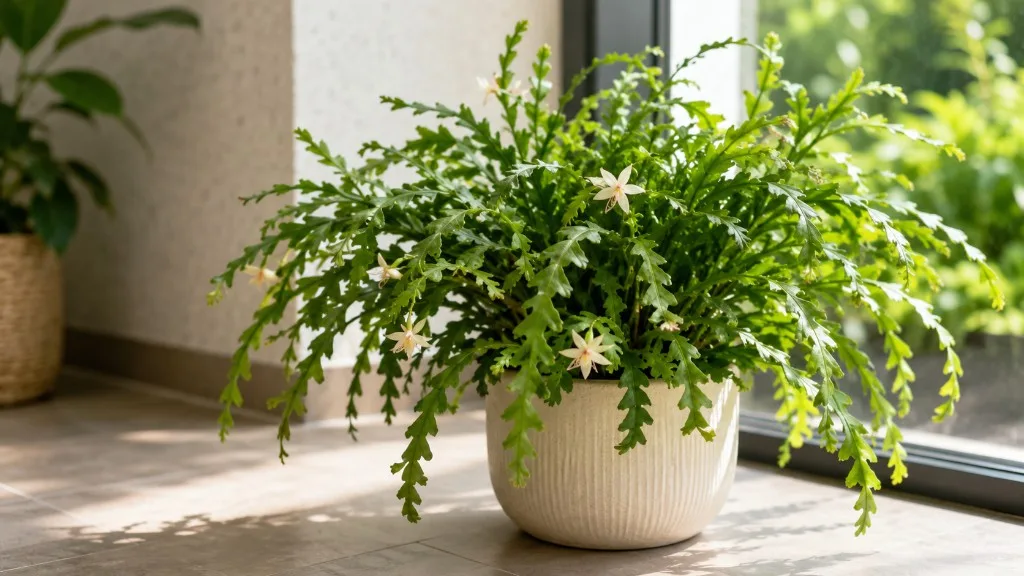
The fishbone cactus sells itself with flat, zigzag stems that look like someone folded green ribbon into a living sculpture. Disocactus anguliger - still widely sold under the older name Epiphyllum anguliger - is an epiphytic tropical cactus from the cloud forests of southern Mexico, not a desert dweller that wants a baking windowsill all afternoon. Light is the variable that keeps those stems wide and architectural or turns them into thin, round, reaching cords that barely resemble the plant on the nursery tag.
The practical target is bright indirect light for most of the day, with some morning direct sun acceptable when the plant is acclimated and the exposure stays gentle. Harsh midday direct sun - the hot, low-angle blast through west glass or unfiltered south exposure in summer - is where scorch, bleaching, and sudden stem collapse show up. Low light does not usually kill a fishbone cactus quickly, but it produces etiolation: stretched internodes, pale thin stems that lose their signature zigzag flattening, slow growth, and flowering that never arrives.
This guide focuses on placement decisions you can test at a real window or under a grow light: how much light the plant actually uses, why its needs differ from desert cacti, where to hang the pot indoors and out, how to acclimate safely, when to add supplemental lighting, and how to read warning signs before etiolation or scorch becomes the plant’s permanent shape.
How Much Light Fishbone Cactus Actually Needs
Fishbone cactus evolved as an understory epiphyte in humid Mexican forests, attached to tree branches where light arrives filtered through canopy gaps rather than as uninterrupted full-day radiation. The BBC Gardeners’ World Magazine classifies fishbone cactus as needing bright, indirect light in a warm, humid room. The RHS recommends bright filtered light and partial shade, noting fishbone cactus is more sensitive to full sun than desert cacti and performs best in light that mimics dappled shade under trees.
For home growers, translate that ecology into a measurable habit: the pot should receive bright indirect light for most of the daylight hours, with optional one to two hours of gentle direct sun in the early morning when leaves and stems are acclimated. The RHS epiphyllum growing guide recommends indoor placement with bright filtered light without harsh rays, and outdoor placement with light or dappled shade when grown in warm climates.
The fishbone cactus is not asking for dim corner survival light, and it is not asking for desert-cactus noon exposure. It occupies a middle band where photon flux is high enough to maintain compact flat stem growth and flower bud initiation, but heat load and UV intensity stay moderated. Judge success by new stem segments over a two-week window: healthy new growth stays flat with pronounced zigzag margins, holds even green color without yellow bleaching, and extends at a steady pace without obvious lean toward the glass.
Light also sets the pace for the rest of care. A fishbone cactus in correct bright light dries its epiphytic mix faster, uses water actively during the growing season, and tolerates the airy bark-heavy potting blends this genus prefers. A plant in chronic low light grows slowly, stays wet longer, and invites root stress if you keep watering on a bright-window schedule copied from another plant. Treat light as the throttle for the whole system, not an isolated detail you adjust after everything else fails.
The Short Answer for Busy Growers
If you only remember four rules, use these. Default placement: bright indirect light all day, with an east window or filtered bright south/west exposure as the safest starting point. Morning sun is OK for acclimated plants - one to two hours of early direct sun supports compact growth and can help flowering - but avoid harsh midday direct sun on unfiltered south or west glass, especially in summer. Low light produces etiolation: thin, round, stretched stems instead of flat fishbone segments; move brighter before fertilizing harder. Read new growth, not old damage: stems formed in poor light will not reflatten retroactively; only the newest segments tell you whether the current spot works.
Give any placement change 10 to 14 days before calling it a failure. Fishbone cactus responds on a moderate timeline - faster than a fiddle-leaf fig, slower than a coleus - and old etiolated sections remain as history even after conditions improve.
Why Fishbone Cactus Light Differs From Desert Cacti
The most expensive fishbone cactus mistake is treating it like a barrel cactus because the word “cactus” is on the label. Cactaceae is a family, not a single light prescription. Desert cacti from arid high-light regions evolved thick cuticles, columnar or globose shapes, and CAM water storage precisely to harvest all-day direct sun. Fishbone cactus shares water-storage tissue but not that radiation budget. It shares a forest niche with orchids and bromeliads: high humidity, frequent mist and rain episodes, and light that flickers as clouds and canopy move.
The BBC Gardeners’ World Magazine notes that leggy growth or thin and rounded stems suggest insufficient light, while brown spots can follow too much humidity or water on leaves - and that a full day of direct sun quickly produces scorch. That dual failure mode - rot-prone in shade, scorch-prone in harsh sun - is the signature of an epiphyte, not a desert survivor.
Epiphytic Cloud Forest vs Full-Sun Desert Expectations
In Oaxaca, Jalisco, Guerrero, and neighboring Pacific-slope states cloud forest, Disocactus anguliger roots into mossy bark and receives filtered light, warm nights, and steady humidity. Outdoors in frost-free climates, the best match is often full morning sun with afternoon shade, which the RHS supports with partial shade and sheltered exposure. Indoors, you replicate canopy-filtered brightness by sitting the plant inside the direct sun beam at a south or west window - close enough that the stems are brightly lit, but behind sheer fabric or far enough that midday rays do not strike the tissue full strength for hours.
Desert cactus rules that actively harm fishbone cactus include: placing an unacclimated nursery plant in unfiltered south glass all afternoon because “cacti need sun”; keeping the pot in a pretty but dim hallway because “tropical cacti tolerate shade”; and assuming winter etiolation is a water or fertilizer problem when the daily photon total has collapsed. The stem shape itself is a diagnostic tool the BBC Gardeners’ World Magazine highlights: healthy fishbone segments are flat with wide zigzag edges; if all stems become thin and round, the plant is asking for more light, not a different potting mix.
Understanding this distinction saves money and patience. You are not fighting a weak plant - you are matching a cloud-forest epiphyte to a brightness band most living rooms can supply if the pot hangs near the window rather than across the room where your eyes see brightness but the stems do not.
Best Window and Room Placement for Fishbone Cactus
Compass direction is a starting guess, not a verdict. A labeled “south window” blocked by a neighbor’s wall may deliver less usable light than an open east window. Fishbone cactus is commonly grown in hanging baskets, which adds a vertical variable: a basket at ceiling height in a bright room may receive less canopy-level light than a shelf pot six inches from the glass. Place the stems, not the room, in the light band.
Indoors, aim for the pot within 12 to 18 inches (30 to 45 cm) of the brightest suitable window, with the zigzag stems facing into the room’s main light source. Rotate the hanger a quarter turn every week so growth does not hard-lean toward one pane. Outdoors in frost-free climates, hang under open bright shade - a pergola, tree canopy with high branches, or an east patio - rather than on a west railing that catches reflected heat from pavement.
Because fishbone cactus is trailing, check light at the growing tips, not only at the hanger hook. Lower older segments may shade newer ones if the basket is crowded; thin out congested stems during pruning season if the outer tips etiolate while inner stems still look fine.
East, South, West, and North Exposures Compared
An east-facing window is the most reliable fishbone cactus default indoors and on balconies. Morning sun is bright but cooler than late-day sun, which supports compact growth and can supply the gentle direct rays the RHS ties to summer flowering without the heat spike that bleaches stems on west exposures. Many plants that scorch on west windows thrive east.
A south-facing window delivers the strongest winter sun in the northern hemisphere and can be excellent for fishbone cactus just inside the direct beam from fall through spring. In summer, south glass can overheat stems and magnify midday intensity. Use a sheer curtain, pull the basket back slightly, or accept that south works seasonally with diffusion in peak summer. South is ideal when you combine window light with a small overhead LED in winter.
A west-facing window provides strong afternoon rays - the highest scorch risk for epiphytic cacti. If west is your only bright option, diffuse peak hours with sheer fabric, hang the basket deeper into the room so only bright indirect light reaches the stems during late afternoon, or move the plant temporarily toward an east exposure in summer. Watch for one-sided bleaching on stems facing the pane.
A north-facing window rarely supplies enough brightness for long-term compact fishbone growth at temperate latitudes. North may maintain slow survival in high-latitude summer but expect etiolation, smaller new segments, and no blooms unless you add supplemental light. Treat chronic north exposure as grow-light territory, not a permanent display spot if you want the classic flat fishbone silhouette.
Morning Sun Tolerance and Midday Direct Sun to Avoid
Some morning direct sun is OK - even helpful - for acclimated fishbone cactus. One to two hours of early sun mimics the forest edge where canopy opens to the east. The BBC Gardeners’ World Magazine recommends a north- or west-facing window with bright indirect light, where gentle morning sun on east exposures is usually safe when acclimated.
Harsh midday direct sun is the exposure to avoid. The RHS lists partial shade and sheltered exposure, warning that strong midday sun can scorch stems. Midday problems intensify with hot window glass, dark walls that radiate heat, and west-facing afternoon sun that combines high light intensity with elevated leaf temperature. Scorched fishbone stems show bleached yellow-white zones, crisp tan patches on the sun-facing ridge, or sudden soft collapse after a rapid move from a dim shop to a blazing patio.
If you want more brightness without midday risk, increase indirect flux first: open blinds fully while keeping the plant out of the direct beam, clean the window, remove exterior obstructions, or add a reflective white surface nearby - not mirror glare onto the stems. Add morning direct before you add afternoon direct. The sequence matters because acclimated morning-hardened tissue tolerates afternoon brightness better, but unacclimated plants rarely skip straight to harsh midday without paying for it.
Indoor Light vs Outdoor Brightness
Indoor fishbone cactus is harder than outdoor placement in frost-free climates because human eyes adapt to dim rooms and because window glass cuts intensity and alters the daily curve. A spot that feels bright while you walk past may still produce etiolated stems within three to four weeks - visible lean toward the pane, lengthening between zigzag nodes, and new growth that looks rounder and thinner than older segments formed at the nursery.
Outdoor shade that qualifies as “bright indirect” under a high tree often delivers more total daily light than an indoor south window because skylight enters from multiple angles and UV and intensity cycles are less filtered over the whole day. A fishbone cactus that looks perfect on a sheltered June porch may stretch indoors in the “same” window come November not because the plant is sick, but because photoperiod and intensity both dropped. That is normal seasonal behavior, not a mysterious decline - but it is a signal to move closer to glass or add a lamp.
Distance matters more indoors than many growers expect. The Missouri Botanical Garden notes that Disocactus anguliger grows as an epiphyte in filtered forest light - indoors, keeping fishbone cactus inside the bright zone near a window but out of harsh direct midday rays mimics that habitat. The correct distance is whichever position produces flat new stems; use the morphology test rather than a fixed tape measure.
Why Low Light Causes Etiolation and Thin Round Stems
Etiolation is the plant’s escape response to insufficient light: stems stretch toward the brightest vector, internodes lengthen, and tissue often becomes thinner and more cylindrical because the plant prioritizes reaching photons over maintaining decorative structure. On fishbone cactus, chronic low light is visually unmistakable once you know the contrast: instead of wide, flat, zigzag ribbons, new growth looks like round green string reaching for the window.
The BBC Gardeners’ World Magazine ties stringy or leggy fishbone cactus directly to insufficient bright indirect sunlight. The same source confirms: thin and rounded stems mean move closer to the window, not repot immediately.
Low light also suppresses nocturnal flowering. Fishbone cactus produces striking night-blooming flowers when mature, but bud formation requires adequate light energy accumulated over weeks, plus the cooler night cues and seasonal rhythm that belong in a bloom guide. If your plant never flowers indoors, light is the first suspect after immaturity - not because flowers need blasting sun, but because chronic shade prevents the plant from building the reserves flowering demands.
Low light couples dangerously with overwatering on Fishbone Cactus. The BBC Gardeners’ World Magazine notes brown, soft stems are a sign of root rot on Fishbone Cactus from overly wet mix - a risk that rises in low light when evaporation drops. If stems etiolate and the pot stays wet, fix light and dry-down together - move brighter, extend the interval between waterings, and verify the mix drains fast. Fertilizer on a dim, wet plant compounds stress without fixing shape.
Acclimating Fishbone Cactus to Brighter Light
Fishbone cactus bought from a shaded nursery bench or a dim garden center aisle cannot jump to two hours of midday west sun without protest. Stems formed in lower light have ** thinner cuticles and less pigment protection** than stems hardened gradually. Sudden exposure jumps produce bleached patches, curling during brightest hours, or segment drop within days - symptoms easily mistaken for disease when the real cause is light shock.
Acclimation is the same principle orchid growers use: increase exposure in steps over 7 to 14 days, watching new tissue daily during the first week. Start from your current stable spot - even if etiolated - and move toward the target, not past it in one motion.
Safe Steps When Moving to Stronger Exposure
A reliable acclimation sequence for fishbone cactus moving toward more sun:
- Days 1–3: Hold in bright indirect light only. If the plant was in deep shade, first move to strong indirect near an east window without direct rays. Confirm stems firm and not wilting on your normal water schedule.
- Days 4–6: Add 30 to 60 minutes of early morning direct sun if the target includes morning exposure. East windows accomplish this naturally; elsewhere, place the basket where early rays graze the stems briefly.
- Days 7–10: Increase to one to two hours of gentle direct morning sun, or move six inches closer to a filtered south window while still avoiding midday beam entry.
- Days 11–14: Reach the intended summer placement - east with morning sun, or bright filtered south/west - only if new segments show no bleaching and no crisping on ridges.
If bleaching appears, hold at the previous level for a full week before advancing. If soft collapse or yellowing spreads, step back to pure indirect light and reduce watering slightly until tissue re-firms. Never acclimate by simultaneously Fishbone Cactus repotting guide, fertilizing heavily, and moving to full sun; change one variable so you can read the plant’s response.
Outdoor moves from indoor overwintering deserve extra caution in spring. A fishbone cactus acclimated to winter glass is not automatically ready for unfiltered patio sun. Harden it on an east porch or under open shade for two weeks before any experiment with stronger exposure. Reverse acclimation matters too: when bringing outdoor plants in for frost, expect some temporary stretch near windows unless you add a lamp - plan placement before the night temperatures drop, not after the stems already lean.
Grow Lights When Natural Light Falls Short
When windows cannot deliver enough brightness for flat zigzag growth - north rooms, winter at high latitude, office spaces with tinted glass, or baskets hung too far from panes - a full-spectrum LED grow light is the most reliable fix. Fishbone cactus responds well to artificial light in propagation and overwintering setups; the goal is canopy-level brightness, not decorative room lighting.
Choose a horticultural full-spectrum white LED rated for plants, not a standard bulb optimized for human lumens. Fishbone cactus uses the same photosynthetic bands as leafy houseplants; you do not need exotic bloom-only red spectra for basic healthy stem morphology.
Fixture Distance, Hours, and Spectrum
A workable starting setup for indoor fishbone cactus:
- Position the fixture 12 to 18 inches (30 to 45 cm) above the top of the trailing stems - close enough for intensity at the growing tips, far enough to avoid hot spots on small enclosed shelves.
- Run the light 12 to 14 hours daily on a timer to approximate long-day brightness through winter. Consistent photoperiod beats irregular manual switching.
- Choose 5000–6500 K white full-spectrum LEDs unless you are experimenting with known fixtures; avoid extremely red-heavy “bloom” lamps as the sole source for foliage health.
- Combine overhead LED with a bright window when possible so growth does not lean hard toward a single sideways source.
Adjust using new stem morphology after two weeks. If segments still etiolate - round, thin, reaching - lower the fixture 2 inches or add one hour to the timer, not both at once. If ridges bleach or stems curl upward only under the lamp, raise the fixture 2 to 3 inches or reduce hours slightly. Enclosed cabinets can still overheat despite efficient LEDs; place your hand at stem level at midday lamp-on to check heat.
For overwintered plants you plan to move outdoors in spring, keep light bright but not hotter than natural winter sun would be - the goal is compact holding, not forced midsummer growth in December. Transition back outside with the same 7–14 day acclimation you would use for any sun move.
Light, Watering, and Blooming Connection
Light is not separate from water for epiphytic cacti. Brighter correct light increases transpiration and dry-down speed; dim light slows both and raises rot risk if watering habits stay aggressive. When you move fishbone cactus brighter, check moisture more often at the top of the mix. When you move dimmer - rarely intentional, but sometimes necessary during recovery from scorch - extend dry-down before watering again.
Blooming is the optional reward of adequate light, not the baseline survival requirement. Mature fishbone cactus can produce large fragrant nocturnal flowers under good care, and the BBC Gardeners’ World Magazine ties flowering to bright indirect light plus a cool winter rest around 11–14°C. Chronic low light rarely kills the plant outright but practically eliminates bloom because the plant never accumulates enough reserves. If stems look flat and healthy but no buds appear, age, cool autumn dry-down, and seasonal rhythm matter too - but do not skip verifying light first.
Avoid stacking interventions. If you move to a brighter east window because of etiolation, wait two weeks before repotting or increasing fertilizer. If you rescue a scorched plant by pulling back to indirect light, do not water heavily to “cheer it up” while tissues re-harden. Let new flat segments confirm recovery before pushing growth again.
Warning Signs Your Fishbone Cactus Has the Wrong Light
Fishbone cactus reports light problems on new stem tissue first. Old etiolated or scorched segments will not revert to perfect form; watch the youngest zigzag nodes and the direction of active growth. Make one light change, then wait 10 to 14 days before also changing water, fertilizer, or pot size - overlapping edits make diagnosis guesswork because wilt, bleaching, and stretch overlap across stress types.
Too Little Light - Stretching, Thin Stems, Weak Growth
Thin, round new stems instead of flat fishbone segments are the classic etiolation signature the BBC Gardeners’ World Magazine describes. Visible lean toward the window or lamp shows directional starvation, common on single-window hanging baskets without rotation. Long gaps between zigzag nodes confirm chronic deficit, not a bad week. Pale, yellow-green new color with weak turgor suggests insufficient light energy, especially if the pot stays wet. No flowering year after year on an otherwise mature plant often traces back to chronic shade indoors. Slow or absent new side branches after pruning means the plant lacks reserves to branch. Lower segment drop on moist soil in cool dim rooms often couples low light to overwatering; fix both.
Fixes: move closer to glass, hang lower in the bright zone, remove obstructions, shift to east or filtered south, add or lower a grow light, extend photoperiod on the timer, and rotate the basket weekly. After light improves, prune etiolated tips to encourage compact replacement growth rather than tolerating endless string.
Too Much Light - Bleaching, Scorched Patches, Sudden Collapse
Yellow-white bleached zones on sun-facing ridges indicate photobleaching, especially after sudden exposure jumps. Crisp tan or brown patches that feel dry on the exposed side suggest scorch, not underwatering on Fishbone Cactus. Stem curling or folding during peak hours can be a protective response to excess light or leaf temperature load on flat tissue. Soft segments collapsing after a move from dim shop to blazing patio is classic acclimation failure. One-sided damage only on the pane-facing side implicates direct glass magnification, especially west afternoon. Sudden segment drop after relocation without gradual hardening points to light shock before disease.
Fixes: pull back from direct beam, add sheer diffusion, shift to east or open shade, shorten midday exposure outdoors, acclimate gradually over 7–14 days, and avoid watering heavily while scorched tissue re-firms. For baskets on hot west railings, move before crisping becomes widespread - epiphytic stems do not heal sunburned tissue; they grow past it.
Seasonal Light Adjustments Through the Year
Fishbone cactus light needs shift with season even when the window direction stays fixed. Winter lowers sun angle and shortens photoperiod; indoor plants stretch or pale unless moved closer to glass or supplemented with a 12–14 hour LED. Spring brings stronger rays - a spot that was perfect in January may scorch in May on south or west glass; add sheer diffusion or pull the basket back before bleaching appears, not after. Summer outdoor hanging under high tree canopy often delivers ideal bright indirect; unfiltered deck sun usually does not. Autumn light softens; many growers use the season to trigger blooming with slightly cooler nights and adjusted dry-down, but only if stems already show flat healthy morphology from adequate brightness.
Track the plant, not the calendar alone. A fishbone cactus near a deciduous tree outdoors receives more direct light in winter when leaves drop and more shade in summer when canopy fills - sometimes the opposite of what indoor south glass does. Re-walk your placements at each equinox: where are the growing tips relative to the direct beam at 10 a.m., 1 p.m., and 4 p.m.? That three-point check catches midday scorch risk and morning sun opportunity better than compass direction alone.
If you overwinter indoors and summer outdoors, treat each transition as a mini acclimation rather than a shock move. The plant that thrived under a June tree may still need two weeks to adjust to stronger winter glass or a lamp in October. Symmetry in care - same patience going in both directions - prevents the alternating stretch-and-scorch cycle that makes fishbone cactus look harder than it is.
Conclusion
Fishbone cactus light needs are not the desert-cactus meme repeated on social media. Disocactus anguliger wants bright indirect light for most of the day, tolerates some morning direct sun when acclimated, and suffers under harsh midday direct exposure that bleaches and crispens flat stems. Low light does not always kill quickly, but it reliably produces etiolation - thin, round, stretched segments that lose the fishbone silhouette and rarely bloom.
Place hanging baskets where new stems receive real brightness, not where the room merely looks lit. Favor east windows, filter aggressive south and west summer sun, and use a full-spectrum LED when north exposure or winter intensity falls short. Acclimate in 7–14 day steps, read flat new growth instead of hoping old etiolated cords recover, and pair every light increase with adjusted watering. Get the band right and fishbone cactus becomes one of the most sculptural trailing plants you can grow indoors; miss it and even perfect bark mix produces a leggy green impostor of the zigzag form you bought.
When to use this page vs other Fishbone Cactus guides
- Fishbone Cactus overview - Start here for whole-plant context before deep-diving this topic.
- Fishbone Cactus problems hub - Jump to symptom-specific fix guides when this care topic does not resolve the issue.
- Not Enough Light on Fishbone Cactus - Escalate here when light adjustments are not enough.
- Leggy Growth on Fishbone Cactus - Escalate here when light adjustments are not enough.
- Sunburn / Scorched Leaves on Fishbone Cactus - Escalate here when light adjustments are not enough.
Related Fishbone Cactus guides
- Fishbone Cactus overview
- Fishbone Cactus watering
- Fishbone Cactus soil
- Fishbone Cactus propagation
- Fishbone Cactus fertilizer
- Fishbone Cactus repotting
- Not Enough Light on Fishbone Cactus
- Leggy Growth on Fishbone Cactus
- Sunburn / Scorched Leaves on Fishbone Cactus
- Fishbone Cactus problems
Related tool
Try the Plant Problem Diagnosis Tool with fishbone-cactus pre-selected to estimate needs for your setup.