Fishbone Cactus Soil: Epiphytic Mix and Drainage Guide
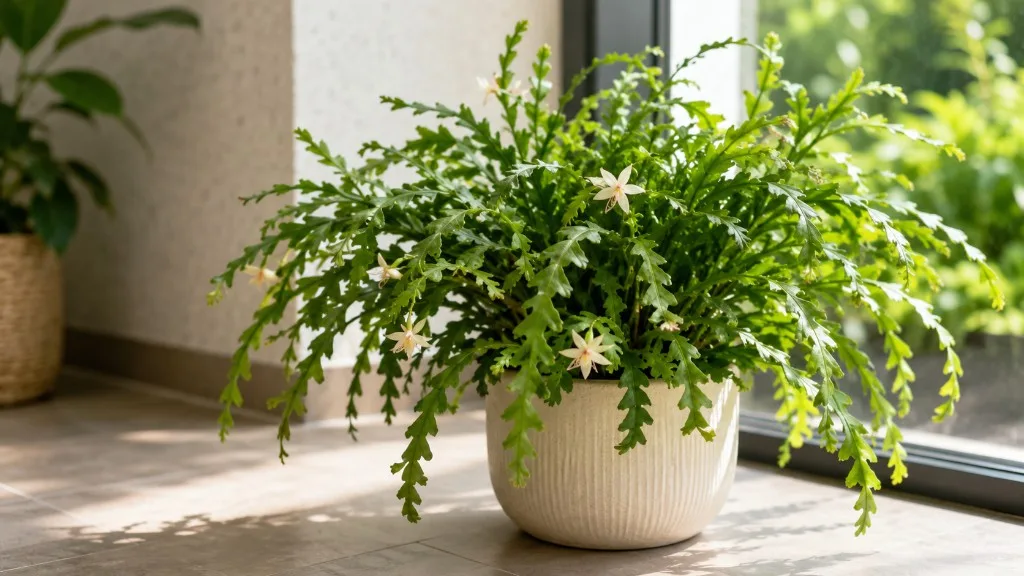
Fishbone Cactus Soil: Epiphytic Mix and Drainage Guide
Fishbone Cactus Soil: Epiphytic Mix and Drainage Guide
Fishbone cactus (Disocactus anguliger) is sold under names like ric rac cactus and zig zag cactus, and every one of those labels sends growers down the wrong soil path. The word “cactus” suggests sand, grit, and bone-dry substrate. The plant itself tells a different story. It is a jungle epiphyte from the cloud forests of Mexico, where it anchors to tree bark and draws moisture from leaf litter, moss, and humid air - not from dense, waterlogged ground. The soil you put in the pot is not decoration. It is the life-support system that decides how much oxygen reaches the roots after every watering, how fast the mix dries in your room, and whether a beautiful trailing plant turns into a rotting mess hidden inside a hanging basket. Get the fishbone cactus soil right and everything else - Fishbone Cactus watering guide, bloom potential, stem firmness - becomes dramatically easier to manage.
Why Fishbone Cactus Soil Is Not Cactus Soil
The most expensive mistake in fishbone cactus care is reading the common name and reaching for a bag labeled cactus and succulent mix. Desert cactus substrates are engineered for plants that store water in thick stems and tolerate long dry spells between deep soaks. They lean heavily on coarse sand, pumice, and fine grit. That structure drains fast - often too fast for an epiphyte that evolved in a humid canopy where organic debris holds a moderate, steady moisture level around fibrous roots. Fishbone cactus roots are adapted to airy, organic, well-drained pockets, not to a desert floor.
Standard indoor potting soil fails from the opposite direction. It is blended for leafy tropicals in nursery production, where moisture retention keeps plants saleable on retail shelves. Peat-heavy mixes compact after six to twelve months of watering. Compacted mix squeezes out air pockets, slows drainage, and keeps the root zone damp long after the surface looks dry. Fishbone cactus tolerates short dry windows, but it does not tolerate stagnant, oxygen-starved substrate. The correct mental model is closer to a Christmas cactus or orchid bark blend than to anything sold for barrel cacti.
Jungle Epiphyte, Not Desert Survivor
In Oaxaca, Jalisco, Guerrero, and neighboring Pacific-slope states cloud forests, Disocactus anguliger grows on tree trunks and branches under filtered light. Rain arrives frequently, but water never pools around the roots because the substrate is loose, chunky, and exposed to moving air. Decomposing bark, moss, and leaf litter provide organic matter without forming mud. Your indoor mix should mimic that structure: open, springy, and barky rather than heavy and muddy. When growers treat fishbone cactus like a desert species, stems may shrivel from chronic underwatering on Fishbone Cactus in ultra-gritty mix, or roots may rot when the same gritty mix is overcompensated with extra watering. The soil category matters because it sets the acceptable dry-down window - the time between a thorough watering and the moment the root zone is ready for another drink.
What Natural Habitat Tells Us About the Right Mix
Habitat is not trivia on a plant tag. It is the blueprint for substrate design. Cloud forest epiphytes face three consistent conditions: high humidity in the surrounding air, excellent drainage at the root attachment point, and a steady but modest supply of organic nutrients from decomposing surface material. The mix in your pot must recreate that balance inside a container that has no natural side drainage through a tree trunk.
The practical translation is a three-part system: a base that holds some moisture and nutrients (potting compost with peat or coco coir), a structural ingredient that keeps the mix open (orchid bark), and a drainage accelerator that prevents saturation (perlite or pumice). Remove any one leg and the system wobbles. All potting compost and no bark gives you a wet sponge. All bark and perlite with no organic base dries so fast that you are fighting constant stress in heated winter air. Fishbone cactus soil is an engineering problem, not a single-product purchase.
How Roots Grow on Tree Bark in Cloud Forest
Epiphytic cactus roots are not deep anchors. They spread across surfaces, gripping bark and exploring crevices where organic debris collects. They expect constant air access along much of their length. In a pot, those same roots depend entirely on the void spaces between bark chips and perlite grains. When those voids collapse - through decomposition, overwatering on Fishbone Cactus, or compaction - the roots behave as if they have been buried in clay. Growth stalls, new stem segments stay thin, and the plant becomes vulnerable to fungal infection even before you see obvious rot. Understanding this explains why chunk size and mix freshness matter as much as the ratio on a recipe card.
The Ideal Fishbone Cactus Soil Mix
Fishbone cactus soil should be loamy, moist but well-drained, and rich enough in organic matter to support moderate nutrient uptake without staying soggy. A reliable starting point is an epiphytic blend of potting compost, perlite, and orchid bark per the BBC Gardeners’ World Magazine recommendation to mix perlite and orchid bark into peat-free cactus compost. The exact percentages can shift with your home conditions, but the principle is fixed: more air than a standard houseplant mix, more moisture retention than a desert cactus mix.
If you want a single answer to “what soil does fishbone cactus need,” here it is: a chunky, fast-draining epiphytic mix built from quality potting compost amended with coarse orchid bark and perlite or pumice, with a target pH near 5.5–6.5. That answer covers the primary search intent. The sections below explain how to build it, adjust it, and know when it has failed.
The 40/30/30 Recipe: Potting Compost, Perlite, and Orchid Bark
A balanced fishbone cactus soil mix that works in most homes:
- 40% potting compost - provides organic matter, minor nutrients, and moderate moisture retention
- 30% coarse perlite - creates air pockets and speeds drainage
- 30% orchid bark - maintains long-term structure and mimics epiphytic debris
Measure by volume, not weight. Mix thoroughly in a clean tub until the bark and perlite are evenly distributed. The finished substrate should feel light, with visible bark chips throughout. When you squeeze a handful, it should hold together briefly and then fall apart - not form a tight ball.
An equally popular alternative is equal thirds: one part potting mix, one part orchid bark, one part perlite. That version dries slightly faster and suits growers who tend toward overwatering or keep the plant in a humid bathroom. A moisture-retentive variant - two parts potting mix, one part bark, one part perlite - works better in very dry, heavily heated rooms where pots shrink in a day or two. None of these recipes require precision to the gram. They require honesty about how your room behaves.
Peat vs Coco Coir for Moisture Retention
Most commercial potting compost already contains peat moss or coco coir as the primary moisture-holding component. You rarely need to add either separately unless you are building mix from scratch. Peat is acidic and holds water well, which supports the fishbone cactus pH target of 5.5–6.5. Coco coir is more sustainable, rewets more easily when dry, and breaks down somewhat slower in warm conditions. Both work.
Choose peat-based compost if your home runs dry and cool; the slight extra retention reduces watering stress. Choose coco-based compost if you fight fungus gnats in peat or if your mix repeatedly dries to a hydrophobic crust. If you are a chronic overwaterer, reduce the potting compost fraction to 30% and push bark to 40% regardless of peat or coco inside the compost. The bark fraction is the fastest lever for fixing a mix that stays wet too long.
Orchid Bark, Perlite, and Why Chunk Size Matters
Not all amendments are interchangeable. Orchid bark sold for phalaenopsis orchids is typically chunked fir or pine bark in the 1/4 to 3/4 inch range. That chunk size is ideal for fishbone cactus because it creates durable air channels that survive months of watering. Fine bark dust or shredded mulch breaks down in a single season and loses its structural value. Perlite should be coarse grade, not the fine dust used in seed-starting blends. Coarse perlite keeps its shape; fine perlite compacts into a cement-like layer at the pot bottom over time.
Pumice substitutes cleanly for perlite if you prefer a heavier, more mineral amendment with similar aeration. Horticultural charcoal is optional at 5–10% of total volume. It does not replace bark or perlite, but it can slow souring in mixes that stay slightly damp and may reduce the musty smell of old organic substrate. Avoid sand as a drainage shortcut. Sand fills void spaces between bark and perlite, reducing air porosity - the opposite of what an epiphyte needs.
When you open a finished bag of commercial orchid potting mix, check whether it is mostly bark or mostly fine peat with bark garnish. A bark-dominant orchid mix can serve as half your fishbone cactus blend, topped up with perlite and a smaller portion of general potting compost. A peat-dominant orchid mix should be treated as compost, not as structural bark.
Drainage Speed and the One-Minute Pot Test
Excellent drainage for fishbone cactus means water moves through the pot within seconds of application, exits the drainage holes freely, and leaves the root zone evenly moist - not waterlogged. After a full watering, excess water should never pool around the lower roots for more than a minute or two. If you use a saucer or cachepot, empty it once draining finishes.
Run this one-minute drainage check monthly: water the pot slowly and evenly until water runs from the holes. Watch the surface. Water should sink in without forming a persistent puddle. Lift the pot after thirty seconds - it should feel heavy with moisture but not slosh. After twenty-four hours, press a finger or dry chopstick two inches into the mix. It should feel cool and slightly moist, not wet mud. By day three to seven in a typical indoor setup, the top inch should approach dry while the deeper mix still holds slight moisture. If the surface stays dark and cold on day ten, your fishbone cactus soil is too dense or the pot is too large.
Drainage speed is a partnership between soil and pot. A perfect mix in an oversized plastic pot with no airflow will still dry unevenly. A slightly heavy mix in a small terracotta hanging pot may perform beautifully because the clay wicks moisture from the root zone. Evaluate the system, not the recipe alone.
Drainage Holes Are Non-Negotiable
Drainage holes are not optional for long-term fishbone cactus care. Even though Fishbone Cactus overview wants more moisture than a desert cactus, it still cannot tolerate stagnant water collecting at the pot bottom. A decorative pot without holes turns every watering error into a root-rot event. If you want aesthetics, use a nursery pot with holes inside a cachepot, and empty the outer shell after every watering. Hanging baskets must drain freely onto a tray or into open air - never into a sealed decorative sleeve that holds runoff.
Some growers ask whether a layer of gravel at the pot bottom improves drainage. It does not. What gravel actually does is reduce the volume of quality substrate available to roots and create a perched water table where fine particles settle above the coarse layer. Skip the gravel. Invest in better bark and perlite instead.
Hanging Basket Soil and Pot Considerations
Fishbone cactus is a trailing epiphyte that earns its keep cascading from a hanging basket. That display choice changes soil management in ways a tabletop pot does not. Hanging pots dry faster from increased air circulation around all sides. They also weigh more when fully watered, which stresses cheap plastic hooks and warped basket rims. The soil must drain sharply enough that you can water thoroughly without the basket dripping for an hour, yet hold enough moisture that you are not watering daily in summer.
For hanging baskets, lean slightly bark-heavy - toward 35% bark, 30% perlite, 35% compost - if you water on a normal schedule. The extra bark stabilizes the root ball when the plant becomes top-heavy and prevents the mix from slumping and compacting on the bottom curve of the basket. Line wire baskets with sphagnum moss or coco liner, but still use a proper inner pot with drainage holes whenever possible. Moss-lined baskets alone make it hard to judge moisture depth and nearly impossible to repot without root damage.
Weight, Watering Access, and Stem Protection
A mature fishbone cactus with stems trailing 60–90 cm can become top-heavy. Wide, shallow baskets outperform deep narrow ones because they lower the center of gravity and keep more roots in the upper, faster-drying zone. Deep pots concentrate unused wet mix below the active root ball - a common hidden cause of rot in hanging plants. When you water, move the spray or watering can spout under the foliage rather than dumping water on fragile stem tips. Wet stems in poor airflow invite fungal spotting.
Terracotta hanging pots wick moisture and add weight; they suit growers who overwater. Plastic baskets are lighter and retain moisture longer; they suit dry homes and high light. Removable inner pots are the most practical long-term setup: you lift the plant out to water, let it drain completely, and rehang without dripping on furniture. Whatever container you choose, match soil drainage to the material. Terracotta plus an ultra-fast mix in a dry apartment can create chronic drought stress. Plastic plus a heavy peat mix in a cool room can create chronic root suffocation.
pH, Minerals, and When to Refresh the Mix
Fishbone cactus prefers slightly acidic to neutral soil with well-drained loam per RHS cultivation guidance. Most peat-based potting compost and orchid bark land inside the 5.5–6.5 pH window without amendment. Tap water and fertilizer salts push pH upward over time. If leaf tips brown while roots look healthy, or if a white mineral crust forms on the mix surface, flush the pot with plain water until runoff flows clear, or refresh the substrate at the next repot.
Organic components decompose. Bark softens. Perlite gathers fine silt. Peat breaks into powder. A mix that drained perfectly at Fishbone Cactus repotting guide can behave like swamp mud eighteen months later even if you never changed your watering habits. Refresh fishbone cactus soil when:
- The mix compacts and water runs straight down the pot sides without wetting the root ball
- A sour or stagnant smell rises from the drainage holes
- Dry-down time shrinks to less than forty-eight hours in a moderate indoor setup
- New growth is weak despite good light and sensible watering
Repotting on a calendar alone is less useful than repotting when the substrate structure fails. Many fishbone cacti happily occupy the same pot for two to three years if the mix stays open and the plant is not root-bound to the point of drought stress.
DIY vs Store-Bought: What Actually Works
Commercial options can save time if you read labels carefully. A bag labeled orchid bark mix with visible chunks plus added perlite is a strong base - amend with roughly 30% general potting compost for nutrient content. A cactus and succulent mix from a reputable brand can work as the compost fraction (30–40%) but should not be the entire substrate; combine it with equal volumes of bark and perlite to open the structure.
Pre-mixed jungle cactus or epiphytic cactus blends appear occasionally at specialty nurseries. Test any purchased mix with the squeeze test and the one-minute drainage check before trusting it with a prized specimen. Store mixes vary by batch. If the bag feels uniformly fine with no visible bark, add coarse orchid bark and perlite until roughly one-third of the volume is chunky.
DIY mixing costs less at scale and lets you tune for your home. Store-bought saves effort for a single hanging basket. Either path works when the final product is airy, drains fast, and includes real bark chunks you can see with your eyes.
Adjusting Your Mix for Your Home Environment
No single fishbone cactus potting mix is perfect for every room. Adjust the base recipe using these decision rules:
If the pot stays wet longer than seven days after a normal watering, increase bark and perlite by 10% each and reduce compost by 20%. Check whether the pot is oversized, light is too low, or a cachepot is holding runoff.
If the pot dries completely in under forty-eight hours and stems show slight wrinkling between waterings, increase compost to 50% or add a small fraction of coco coir, and consider a plastic pot instead of terracotta. Verify that light and temperature are not extreme.
If you grow in a humid bathroom or greenhouse, favor drainage. Extra perlite prevents the chronic dampness that high ambient humidity already provides.
If you grow in dry, air-conditioned winter heat, favor slight moisture retention in the compost fraction but never eliminate bark entirely.
If you tend to water on a schedule instead of checking the mix, build a more forgiving fast-draining blend rather than a moisture-retentive one. Overwatering in dense mix kills roots; underwatering in open mix causes recoverable wrinkling.
Your finger is the final instrument. The recipe is a starting point.
Repotting Fishbone Cactus Into Fresh Mix
Repot when roots circle heavily at the drainage holes, when the plant dries out within a day of watering, when growth stalls despite good care, or when the mix has clearly broken down. The best season is active growth in spring or early summer. Avoid repotting a stressed, recently shipped, or actively blooming plant unless the substrate is visibly failing.
Steps:
- Water lightly one to two days before repotting so the root ball releases more easily.
- Choose a new pot only one to two inches larger in diameter unless the plant is exceptionally root-bound and fast-growing. Oversized pots hold excess wet mix.
- Mix a fresh batch of fishbone cactus soil using the ratios above.
- Gently remove the plant, supporting trailing stems to prevent snaps.
- Tease away old decomposed mix from the outer root zone without bare-rooting completely unless rot is suspected.
- Trim dark, mushy roots with clean scissors; dust cuts with cinnamon if you wish.
- Set the plant at the same depth as before. Never bury stem segments that were above the old soil line.
- Fill around the root ball with fresh mix, tapping the pot to settle without compacting.
- Wait five to seven days before watering thoroughly so cut roots callus.
- Hold fertilizer for four to six weeks while new roots explore the fresh substrate.
Fishbone cactus often blooms more readily when slightly root-bound. Repot for substrate health, not on a rigid annual schedule.
Soil Mistakes That Cause root rot on Fishbone Cactus and Leggy Growth
Using desert cactus mix alone starves roots of the organic moisture buffer they expect. Stems may thin, and the plant becomes a watering minefield - too dry between soaks, too stressed to bloom.
Using straight peat-heavy potting soil suffocates roots and mimics the exact opposite of a tree-branch habitat. Rot starts at the base where moisture lingers longest.
Oversized pots with wet periphery leave roots sitting in unused damp mix while the grower thinks the plant is “fine” because the top inch is dry.
No drainage holes or permanent cachepot water is the fastest route to total root loss. The stems can look green until the entire root system dissolves.
Bottom gravel layers reduce effective pot depth and worsen drainage science, not improve it.
Repotting too deep buries stem tissue that expects air. Buried segments rot, inviting fungal spread into healthy tissue.
Ignoring decomposed mix turns a once-good fishbone cactus soil into anaerobic sludge. Growers blame watering when the real failure is substrate age.
Chasing blooms with heavy feeding in bad soil cannot fix a root-zone oxygen problem. Fix the mix first.
Leggy, thin new growth is usually a light problem, but weak roots from poor soil make the plant less able to support compact growth even when light improves. Soil and light work as a pair.
Signs Your Fishbone Cactus Soil Needs Changing
Watch for these root-zone signals before leaves show full distress:
- Persistent surface mold or algae in bright light means the mix stays wet too long.
- Musty smell from drainage holes indicates anaerobic decomposition.
- Water runs down the inside wall of the pot and out the bottom without moistening the center - a sign of shrunken, compacted peat pull-away.
- Stem base softening at the soil line points to crown or root rot linked to moisture and poor airflow.
- Chronic fungus gnats in large numbers often correlate with constantly damp organic matter.
- White mineral crust with tip burn despite modest feeding suggests salt buildup in old, exhausted mix.
- Extreme dry-down in hours after years in the same pot can mean roots fill the container entirely and have no substrate left to hold moisture.
One or two symptoms may have other causes - pests, sudden light change, cold draft. When several appear together, treat the soil system as the prime suspect and inspect roots at repot.
Conclusion
Fishbone cactus soil is an epiphytic blend, not a desert formula and not a generic houseplant peat bag. Build it around orchid bark, perlite, and potting compost - a practical starting ratio is 40% compost, 30% perlite, and 30% bark - and adjust toward more bark if your home runs humid or you overwater, toward slightly more compost if your pots dry in a day. Peat-based and coco-based composts both work inside that framework. Target excellent drainage with visible holes, a one-minute pot test after watering, and hanging basket setups that let you drain fully before rehanging. Refresh the mix when structure collapses, not when the calendar says so. When the substrate breathes the way cloud-forest bark does, fishbone cactus roots stay firm, stems trail cleanly, and the rest of your care - light, water, bloom timing - finally has a stable foundation to build on.
When to use this page vs other Fishbone Cactus guides
- Fishbone Cactus overview - Start here for whole-plant context before deep-diving this topic.
- Fishbone Cactus problems hub - Jump to symptom-specific fix guides when this care topic does not resolve the issue.
- Root Rot on Fishbone Cactus - Escalate here when soil adjustments are not enough.
- Mold on Soil on Fishbone Cactus - Escalate here when soil adjustments are not enough.
Related Fishbone Cactus guides
- Fishbone Cactus overview
- Fishbone Cactus watering
- Fishbone Cactus light
- Fishbone Cactus propagation
- Fishbone Cactus fertilizer
- Fishbone Cactus repotting
- Root Rot on Fishbone Cactus
- Mold on Soil on Fishbone Cactus
- Fishbone Cactus problems
Related tool
Try the Soil Mix Calculator with fishbone-cactus pre-selected to estimate needs for your setup.