Root Rot on Fishbone Cactus: Causes, Checks & Fixes
Quick answer
Root rot on fishbone cactus starts when epiphytic roots sit in waterlogged bark mix-often from surface-dry checks while the lower half stays wet, winter calendar watering, or desert-cactus soil. Stop watering, unpot, trim mushy roots and soft stem bases, callus 24–48 hours, then repot into fresh airy mix.
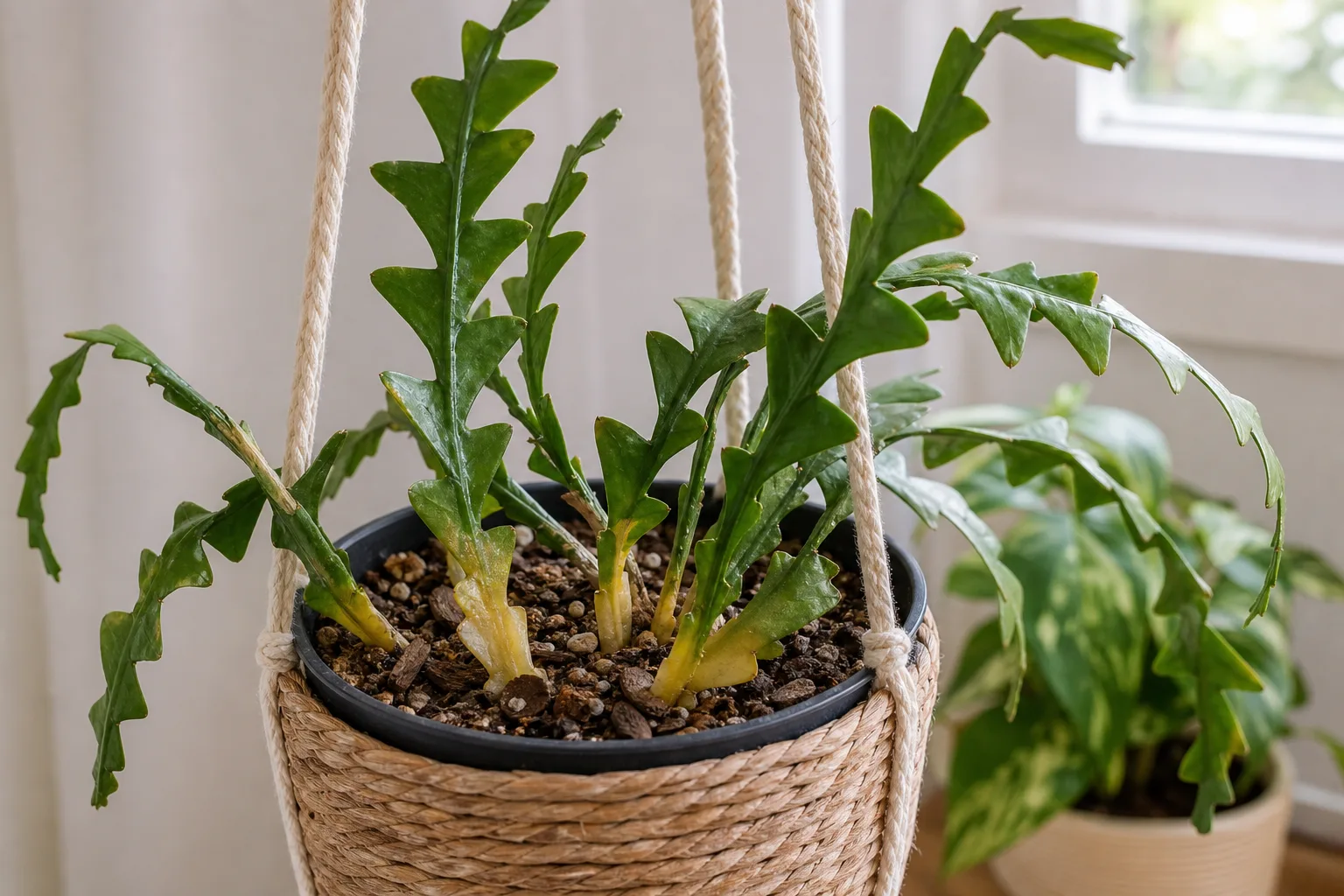
Root Rot on Fishbone Cactus: Causes, Checks & Fixes
This guide covers root rot on Fishbone Cactus. See also the general Root Rot guide, watering, and light pages for this plant.
Root Rot on Fishbone Cactus: Causes, Checks & Fixes
Quick answer
Root rot on fishbone cactus (Disocactus anguliger, ric rac or zigzag cactus) is a drainage and watering failure on an epiphytic jungle cactus-not a mysterious fungal curse. This cloud-forest epiphyte from Mexico expects airy bark pockets, quick drainage, and partial dry-down between drinks. When bark-heavy mix stays wet at depth while the surface looks pale and dry, roots lose oxygen and decay. Stem bases turn yellow and mushy, flat phylloclades go limp despite moist substrate, and the pot may smell sour.
First step: stop all watering. Gently unpot the plant and inspect roots and stem bases before repotting, fertilizing, or misting. Trim mushy tissue with sterile tools, let cut surfaces callus, and repot into fresh epiphytic mix only if firm segments remain. Advanced rot climbing far up phylloclades often means salvaging healthy top cuttings per the propagation guide and discarding the base.
Full moisture protocol and seasonal rhythm live on the watering guide; this page covers rot confirmation, numbered rescue, and stem-tip salvage.
What root rot looks like on fishbone cactus
Fishbone cactus has flat zigzag phylloclades (stem segments), not leaves. Rot shows on stems and roots, usually starting where segments meet wet mix.
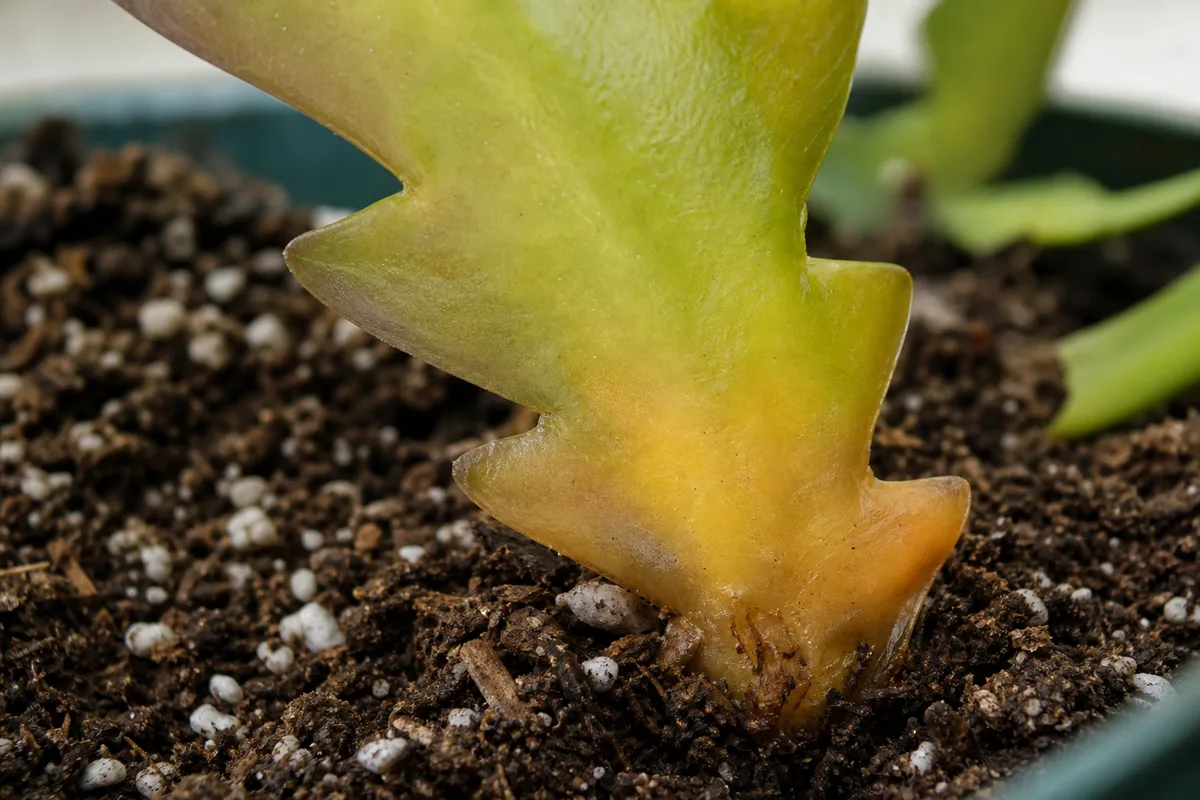
Root Rot symptoms on Fishbone Cactus - compare with healthy tissue on the same plant.
Early signs:
- Yellowing or translucent segments at the soil line while upper mix still feels cool and damp
- Limp flat phylloclades that lose their crisp zigzag profile despite moist bark mix-the plant looks thirsty while soil is wet because damaged roots cannot move water upward
- Pot stays heavy and cool for weeks without new segment growth at stem tips
- Sour or rotten smell when you disturb mix or lift the plant partly from its pot
- Fungus gnats hovering persistently-often an early wet-mix signal; see fungus gnats on fishbone cactus when gnats appear before obvious mush
Advanced signs:
- Soft, brown mush climbing from stem bases into lower phylloclades
- Aerial roots on trailing segments turning brown or collapsing when rot has destroyed the root ball below
- Segment drop on an otherwise green plant-upper stems still look okay while roots have died below
- Blackening where firm green tissue meets rotted base tissue
Healthy fishbone stems feel firm and plump when you pinch a lobe. Any segment that yields to gentle pressure at the base on wet mix is urgent.
The BBC Gardeners’ World Magazine describes brown, soft stems as root rot from overwatering and advises removing the plant from its pot immediately to dry out and trim affected roots.
Why fishbone cactus gets root rot
Fishbone cactus is sold beside desert cacti but evolved as an epiphyte in humid Mexican forest-anchored in bark debris with constant air around roots. Indoors, rot follows when that epiphytic logic breaks down.
Common triggers on Fishbone Cactus overview:
- Surface-dry watering checks on bark-perlite mix-the top inch looks pale while the lower half has been wet for two weeks; the top-half-dry protocol exists because surface color misleads on chunky epiphytic substrates
- Calendar watering through winter when growth slows and mix holds moisture far longer than in summer
- Dense peat-heavy houseplant soil or straight desert cactus grit-the first stays anaerobic too long; the second is often paired with wrong watering habits; the soil guide covers the bark-perlite-orchid blend this epiphyte needs
- Oversized pots with excess mix that stays wet around sparse roots after repotting
- Saucers and cachepots holding standing runoff-water wicks back up into bark mix overnight
- Low light in dim corners-slow uptake leaves mix wet longer even when you water correctly
- Cool rooms below about 15°C (59°F) paired with wet mix-metabolism drops while substrate stays damp; the RHS recommends a minimum of 15°C during the growing season for epiphytic cacti indoors
Overwatering deprives roots of oxygen and invites decay organisms. On epiphytic cacti, the failure mode is almost always too much water relative to dry-down capacity, not a single accidental soak. Overlap with general wet-mix stress is covered on overwatering; this page focuses on confirmed rot and rescue.
Lookalike symptoms: root rot versus underwatering
Both can make segments look unhappy. Texture, pot weight, and mix moisture depth tell them apart.
| Pattern | Pot weight | Mix moisture | Segment feel | Stem base | Urgency |
|---|---|---|---|---|---|
| Root rot | Heavy, cool | Wet at depth; surface may look dry | Limp, yellow, translucent | Soft or mushy | Same-day rescue |
| Overwatering (pre-rot) | Heavy | Evenly damp but no sour odor yet | Slightly limp, still springy | Firm | Correct watering this week |
| Underwatering | Very light | Dry 2–3 inches down | Thin, shriveled, firm | Firm | Water promptly |
| Low humidity | Normal to light | Upper mix slightly cool | Thin edges, firm base | Firm | Gradual environment tweaks |
| Repot shock | Normal | Evenly moist after recent repot | Slight sag, firm | Firm unless rot pre-existed | Observe 7-10 days |
Root rot paradox: segments look thirsty and limp while mix is wet-watering again worsens collapse. Underwatering: segments shrivel and flatten on a light dry pot; one thorough soak fixes firm tissue within days if roots are healthy. See underwatering on fishbone cactus for drought recovery.
Do not treat fishbone cactus like a compact rosette foliage plant with “lower leaves” yellowing first. This trailing epiphyte fails at stem bases and roots on wet bark mix.
How to confirm root rot
Work through this checklist before repotting or cutting:
- Pot weight - Lift the basket. A pot that stays heavy for weeks after your last soak suggests slow dry-down or root death, not healthy uptake.
- Skewer or chopstick test - Insert a dry skewer to the bottom. Dark wet marks through the upper half mean the top-half-dry window has not arrived-continued saturation supports rot even when the surface looks pale.
- Stem-base firmness - Press where phylloclades meet mix. Mushy or yielding tissue confirms advanced trouble; firm green bases with only a few bad roots may still be salvageable.
- Smell - Sour, rotten, or fermented odor from mix strongly supports rot.
- Root inspection - Slide the plant partly from its pot. Firm pale or tan roots suggest another issue; brown, translucent, or slimy roots confirm decay.
- New growth - Absence of new zigzag tips for months on a heavy wet pot often means roots are inactive or dying below.
If three or more checks point to rot-especially mushy roots, soft stem bases, and sour smell on wet mix-treat root rot as confirmed and begin rescue. If the top half is genuinely dry, segments are thin but firm, and roots look pale on inspection, look to underwatering or low humidity instead.
First fix for fishbone cactus: numbered rescue workflow
Stop all watering. That is the single first action-not repotting, not misting, not fertilizer.
Then work through these steps in order:
- Unpot gently - Knock the plant out of its container. Shake away wet bark mix without tearing healthy roots.
- Assess severity - Note how far mush climbs stem bases. If more than one-third of roots are slimy or stem softness extends several inches above soil line, plan for stem-tip salvage (next section) rather than saving the whole plant.
- Trim decay - Cut away brown, mushy roots and soft stem tissue with clean scissors or a sharp knife. Cut into firm green phylloclade above any yellow translucency.
- Callus cuts - Let trimmed roots and stem ends air-dry in bright indirect light for 24–48 hours. Epiphytic cactus tissue rots again if planted wet immediately after surgery.
- Repot into fresh epiphytic mix - Use the 40% potting compost, 30% perlite, 30% orchid bark blend from the soil guide, in a pot one size up at most with open drainage holes. Do not return to dense peat or straight desert grit.
- Withhold fertilizer - Stressed roots cannot process feed. Resume only after firm new segment growth appears.
- First post-rescue water - Wait until the top half of fresh mix dries before one thorough soak with full drainage. That may take 7–14 days in warm growth or longer in winter-confirm with skewer and pot weight, not a calendar.
Plants with partial rot may be salvaged by pruning out the rotted part and repotting into better conditions. Make one major change at a time-do not also move windows, fertilize, and prune heavily on rescue day.
Stem-tip salvage when the base is lost
When mush has consumed most of the root ball and softness climbs far up trailing stems, discard the rotted base and propagate firm tops.
- Identify healthy green segments with no yellow translucency-usually several inches above the mush line.
- Cut with sterile shears; each cutting needs at least two to three phylloclade segments for stable rooting.
- Callus cut ends 24–48 hours in bright indirect light until the wound looks dry.
- Root in fresh airy epiphytic mix or water until roots reach 2–3 cm, then pot up-full steps on the propagation guide.
- Water sparingly until new roots anchor; treat young cuttings like rot-recovery plants, not established baskets.
Rot rarely reverses once it moves extensively through stem tissue. Honest salvage saves weeks of watching a dying plant shed segments. The overview explains normal trailing habit so you can judge how much healthy stem length remains.
Water-rooting vs mix-rooting after rot
Both methods can work for fishbone cactus cuttings, but conditions matter. Water-rooting helps you see root initiation quickly, yet weakens oxygen access if water is not refreshed often; move cuttings to airy mix once roots reach 2-3 cm to avoid transition stall. Mix-rooting in loose bark-perlite substrate gives better long-term root architecture for epiphytic cacti and lowers transplant shock when watering is controlled.
If your home is very humid or cool, prefer mix-rooting so cut ends are less likely to stay wet too long. If your home is hot and dry, short water-rooting can be useful for monitoring progress, but keep light bright and indirect and avoid direct sun on unrooted cuttings.
Recovery timeline
Early rot (few bad roots, firm stem bases): After trim, callus, and repot, expect 2–4 weeks before the pot feels lighter on a normal dry-down cycle and new zigzag tips appear. Old yellowed segments may not re-green; judge success by fresh firm growth, not saved lower phylloclades.
Moderate rot (major root loss, minor stem-base trim): 4–6 weeks of reduced watering and stable bright indirect light before consistent new segments. One missed overwater during this window can restart collapse.
Salvaged top cuttings: Rooting takes 3–6 weeks in warm conditions; the parent basket habit returns slowly as cuttings elongate.
Worsening signs during recovery: Mush spreading up stems, persistent sour smell after repot, or limp segments on fresh wet mix mean stop watering, re-inspect, and trim again-or accept propagation-only salvage.
What not to do
Do not keep watering because segments look limp when mix is already wet-watering a wilted plant with rotting roots makes the problem worse.
Do not repot into dense garden soil, an oversized pot, or a container without drainage holes-each traps moisture around epiphytic roots.
Do not use straight desert cactus grit alone without organic bark and perlite; fishbone cactus needs well-drained but humus-rich conditions, not mineral desert substrate.
Do not fertilize, mist heavily, or move to direct sun on a rotting plant-fix roots first.
Do not assume surface dryness means the plant needs water; confirm top-half dry before any post-rescue soak per the watering guide.
Fishbone cactus is non-toxic to cats and dogs per ASPCA listings for Epiphyllum (the older botanical name for this species), but wash hands after handling mushy tissue.
How to prevent root rot next time
Prevention beats surgery on every epiphytic cactus.
- Water when the top half of mix dries-finger, skewer, and pot-weight checks from the watering guide, not when the surface alone looks pale
- Reduce frequency in autumn and winter when growth slows-often every 3–4 weeks indoors versus 7–14 days in active summer growth
- Use airy epiphytic mix with bark and perlite; refresh every one to two years as bark breaks down and holds water longer
- Empty saucers and cachepots within 30 minutes of every soak
- Bright indirect light so the plant uses water predictably-see light requirements when baskets sit in dim corners
- Right-size pots after repotting; oversized containers are a classic soggy-mix trap
- Watch for fungus gnats as an early wet-mix warning on fungus gnats
The RHS recommends epiphytic cactus compost in bright filtered light with careful drainage-matching the cloud-forest logic that keeps Disocactus anguliger healthy indoors.
When to worry
Treat as urgent when:
- Stem-base softness spreads upward daily on wet mix
- More than half the root mass is mushy on inspection
- Most trailing segments are limp and yellow despite moist substrate
- Black tissue appears where green phylloclades meet soil
In those cases, propagate firm tops immediately and discard the base. Waiting for “one more week” rarely saves advanced epiphytic rot.
Conclusion
Root rot on fishbone cactus is usually recoverable only when firm stem tissue remains above the mush line. Use the decision path from this page: heavy wet pot plus soft stem base means rescue now; light dry pot with firm tissue means drought correction; widespread black mush means move straight to propagation salvage. Keep future risk low with the top-half-dry rhythm from the watering guide, airy epiphytic structure from the soil guide, and a fast switch to top cuttings from the propagation guide when base tissue fails.
When to use this page vs other Fishbone Cactus guides
- Fishbone Cactus watering guide - Use for routine moisture checks before assuming root rot is the main issue.
- Fishbone Cactus problems hub - Browse all 18 common issues on this species.
- Overwatering on Fishbone Cactus - Different entry point when symptoms overlap with root rot.
- Yellow Leaves on Fishbone Cactus - Different entry point when symptoms overlap with root rot.
- Wilting on Fishbone Cactus - Different entry point when symptoms overlap with root rot.