Mold on Soil on Fishbone Cactus: Causes, Checks & Fixes
Quick answer
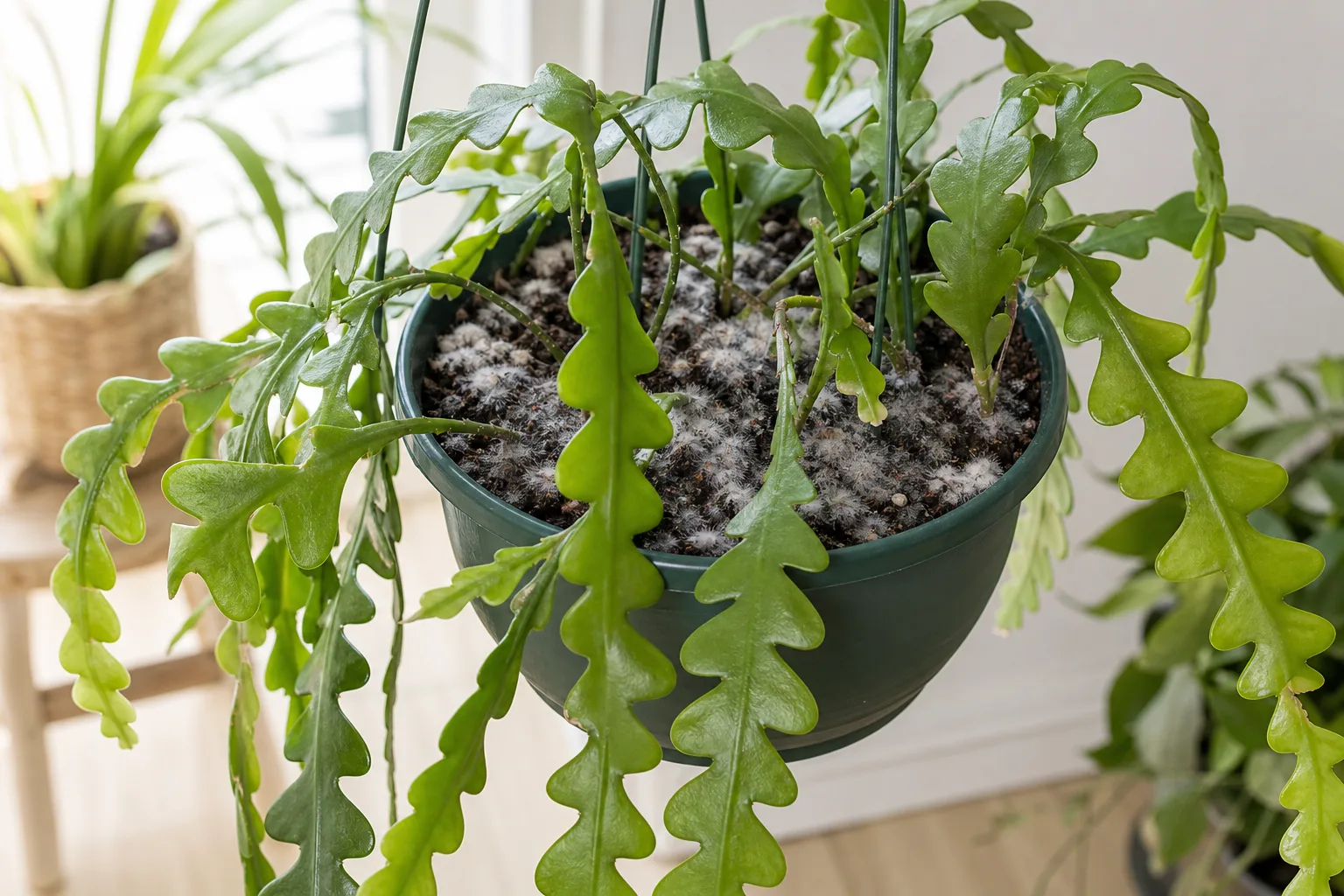
Fluffy white or gray mold on Fishbone Cactus soil is usually harmless saprophytic fungus feeding on wet organic mix-not a plant disease. First step: scrape the top quarter-inch, then let the upper half of the mix dry before you water again.
Mold on Soil on Fishbone Cactus: Causes, Checks & Fixes
This guide covers mold on soil on Fishbone Cactus. See also the general Mold on Soil guide, watering, and light pages for this plant.
Mold on Soil on Fishbone Cactus: Causes, Checks & Fixes
Quick answer
White or gray fuzz on the soil of a Fishbone Cactus (Disocactus anguliger) is almost always saprophytic fungus-a decomposer feeding on organic matter in persistently damp potting mix, not a pathogen attacking living stems. The zigzag segments above the soil can look perfectly healthy while the surface molds.
That does not mean you should ignore it. Surface mold signals that the top layer of mix is staying wet too long, which is the same condition that invites fungus gnats and, on this epiphytic jungle cactus, can progress to root stress if watering never adjusts.
First step: scrape off the top quarter-inch of moldy mix and discard it, then pause watering until the upper half of the pot feels dry. Do not reach for fungicide on day one. Confirm the stems are firm and the deeper mix is not sour before you resume a normal Fishbone Cactus Fishbone Cactus watering guide.
What mold on soil looks like on Fishbone Cactus
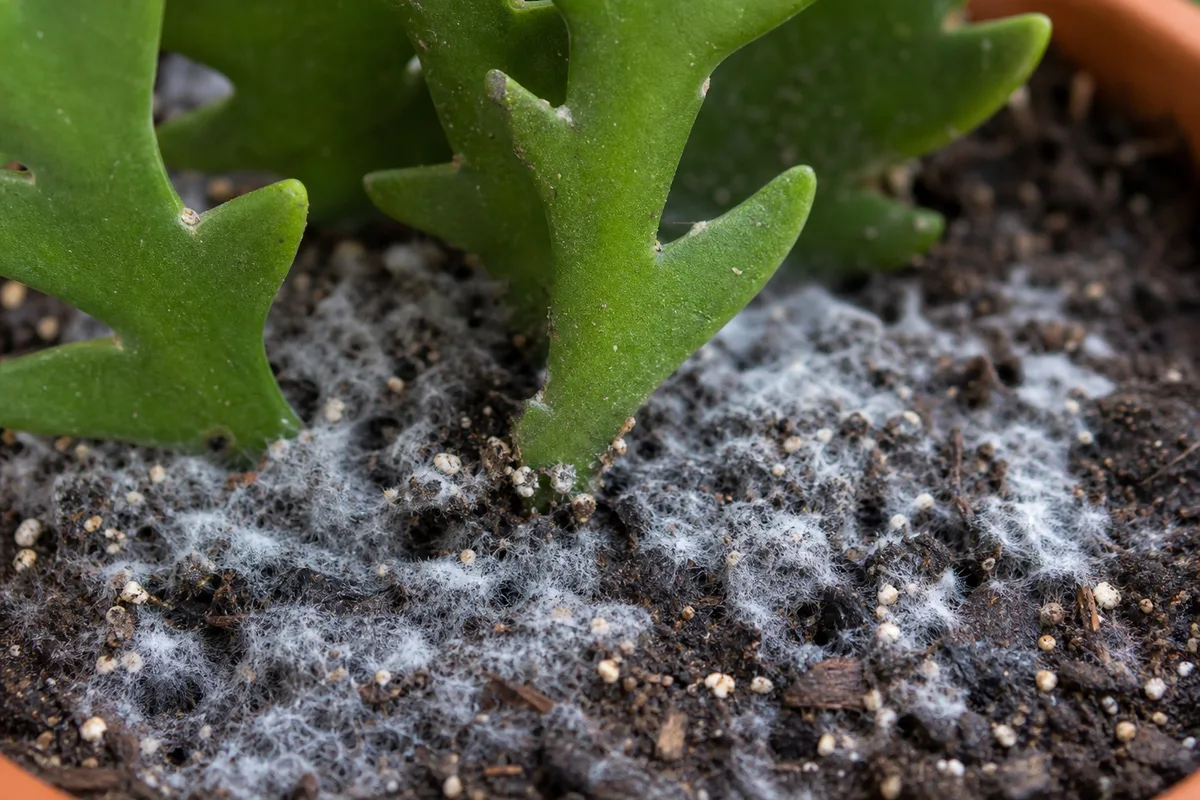
White or gray cottony saprophytic mold on damp Fishbone Cactus potting mix - trailing stems may stay firm while the surface never dries.
Surface mold on Fishbone Cactus overview usually appears as:
- White or gray cottony patches spread across the top of the mix, sometimes threading between bark chips or peat particles
- A damp, musty smell when you lift the pot or disturb the soil
- Soil that looks wet days after watering, especially in a hanging basket where airflow under the pot is limited
- Optional small mushrooms-yellow parasol types are common on wet houseplant soil and are unrelated to the fishbone stems themselves
Healthy Fishbone Cactus stems should remain firm and plump along the zigzag lobes. If only the soil surface is fuzzy and segments feel turgid, treat this as an environmental moisture issue.
Green slimy film on the soil is usually algae from constant surface moisture and low light-not the same as white saprophytic mold, though the fix (dry the surface, brighten indirect light slightly) overlaps.
White powder on stems or leaf-like segments is a different problem (mealybugs or powdery mildew on tissue), not mold on soil. Keep diagnosis on the substrate, not the zigzag foliage.
Why Fishbone Cactus gets mold on soil
Fishbone Cactus is an epiphytic jungle cactus from Mexican cloud forests. It needs more moisture than desert cacti but still requires airy, well-drained mix and oxygen around the roots. Mold appears when the surface of that mix behaves like a wet sponge while the plant sits in a typical indoor room.
overwatering on Fishbone Cactus or watering on a calendar
Many growers water Fishbone Cactus like a tropical foliage plant-every few days because the label says “cactus” but the stems look thin. Others water on a fixed weekly schedule through autumn and winter when growth slows and the pot barely dries. Both patterns keep the top inch saturated, which is where saprophytic fungi colonize first.
Fishbone Cactus should be watered when the top half of the mix dries, then soaked until runoff drains freely. In active growth that might mean every 7–14 days indoors; in cooler months every 3–4 weeks is common. Mold often shows up when that dry-down never happens at the surface.
Heavy or aged potting mix
The recommended epiphytic blend-potting compost with perlite and orchid bark-drains well when fresh. After a year or two, peat and fine particles break down, the surface compacts, and water sits in the top layer even if the bottom of the pot is merely moist. Organic debris in that layer is exactly what surface fungi consume.
Trailing growth and hanging placement
Fishbone Cactus is often grown in hanging baskets. Trailing stems shed small tissue fragments and flower debris onto the soil below. In a crowded canopy, air movement under the pot is weak, so the surface dries slower than on a benchtop succulent. Decaying bits plus constant surface moisture create a mold buffet.
Oversized pots and slow winter growth
This species tolerates being slightly pot-bound and does not need a large volume of mix relative to roots. An oversized container holds excess wet soil that roots never pull dry-especially in winter when the plant uses little water. The surface molds while deeper mix stays cold and stagnant.
Low light slowing evaporation
In dim corners, Fishbone Cactus transpires less and the mix evaporates slowly. Combined with generous watering, the surface can stay damp long enough for fungal threads (mycelium) to spread visibly.
How to confirm the cause
Work through these checks before Fishbone Cactus repotting guide or spraying:
- Stem firmness - Pinch a lower zigzag segment near the soil. Firm, plump tissue with surface mold only suggests harmless fungus. Soft, translucent, or yellowing bases suggest overwatering damage-see root rot on Fishbone Cactus guidance.
- Soil moisture depth - Insert a finger or dry skewer several inches down. Surface mold with a soggy top inch but merely moist below confirms overwatering rhythm. Bone-dry deep mix with surface mold may mean you splash the top frequently without thorough soaks.
- Pot weight - Lift the hanger after a known dry period. A pot that stays heavy for two weeks indoors is holding too much water for current growth.
- Smell - Musty surface odor fits saprophytic mold. Sour or rotten smell from drainage holes suggests anaerobic mix and possible root decline.
- Fungus gnats - Small black flies hovering when you water mean the surface has been moist long enough for insects to breed in moist soil-often alongside mold.
- Recent care changes - New bag of mix, repot into a much larger pot, move from bright porch to dim room, or continued summer-frequency watering into autumn are common triggers.
If stems are firm, roots are white when you gently probe the edge of the root ball, and only the surface is fuzzy, diagnosis is surface mold from wet organic mix-not a stem infection.
First fix for Fishbone Cactus
Scrape off the top quarter-inch of moldy soil with a spoon, discard it, and stop watering until the upper half of the mix is dry.
That single action removes visible spore mass and breaks the wet cycle fueling new growth. Do not water “just a little” to comfort the plant during this pause-Fishbone Cactus stores water in its stems and tolerates dry mix better than constantly wet roots.
After the dry-down:
- Replace the scraped layer with a thin topping of dry, fresh epiphytic mix (same bark-perlite blend you use for the plant-not garden soil)
- Resume watering with a full soak only when the top half feels dry, then let excess drain completely
- Empty saucers or drip trays so the pot never sits in standing water
Hold off on repotting, cinnamon dusting, and fungicide unless mold returns within two weeks despite corrected drying.
Step-by-step recovery
If mold was recent and stems are healthy:
- Remove debris - Pick off fallen stem bits, old flower tubes, and dead material resting on the soil.
- Improve airflow - Space hanging baskets so air moves under and around them; a gentle room fan helps surface drying without blasting cold drafts on the plant.
- Adjust watering method - Bottom-water by setting the pot in a basin until the mix wicks moisture upward, then remove it once saturated. This keeps the surface drier while still hydrating roots-useful for hangers you water from above awkwardly.
- Brighten indirect light slightly - Move toward a brighter filtered window so the plant uses water faster, without jumping to direct sun that scorches segments.
- Monitor for gnats - If flies appear, let the surface stay dry longer and add yellow sticky traps at soil level; mold and gnats share the same wet-surface habitat.
- Repot only if mold recurs - Chronic return after scraping and dry-down usually means compacted or oversized mix. Repot in spring into fresh epiphytic blend in a pot one size up at most, with open drainage.
Lookalike symptoms
| What you see | Likely cause | What to do |
|---|---|---|
| White fuzz on soil only; firm stems | Saprophytic mold on wet surface | Scrape, dry top half, fix watering |
| Green film on soil and pot rim | Algae from constant moisture + lower light | Reduce surface wetness; slightly more light |
| Yellow mushrooms on soil | Harmless decomposer fruiting bodies | Remove if pets chew soil; fix moisture |
| White powder on zigzag segments | Mealybugs or mildew on plant tissue | Inspect stems-not a soil mold issue |
| Mushy yellow stems at base | Overwatering / root rot | Stop water; inspect roots; repot if needed |
Recovery timeline
Surface mold should not reappear within one to two weeks once the top layer stays dry between waterings and debris is cleared. Visible mycelium you scraped away does not “heal”-you are waiting for conditions to stop new growth.
Fishbone Cactus stems do not need to regenerate from mold damage because the fungus was not consuming living tissue. Judge success by dry soil on schedule, absence of new fuzz, and continued firm new lobes at stem tips.
If mold returns within days, the pot is still too wet, the mix is too dense, or the container is too large for the root mass-move to repotting and watering revision, not repeated scraping alone.
Mistakes to avoid
- Drenching with fungicide for harmless surface mold-cultural fixes outlast sprays and avoid stressing fuzzy stem surfaces with chemicals.
- Watering more because mold looks “dry and fungal”-mold thrives in wet mix, not dry.
- Leaving trailing stems piled on wet soil-debris feeds fungi and blocks surface drying.
- Assuming desert-cactus dryness-Fishbone Cactus needs periodic thorough watering; the goal is dry top half between soaks, not bone-dry pots for weeks while the surface is misted.
- Ignoring fungus gnats on Fishbone Cactus-they confirm the surface has been wet too long even if stems still look fine.
- Repotting immediately into a much bigger pot-extra wet mix volume often makes mold and rot more likely on epiphytes.
Fishbone Cactus care cross-check
Mold is a moisture-and-airflow signal. Align these basics after the first fix:
- Mix - Chunky epiphytic blend with bark and perlite; not heavy peat-only potting soil.
- Water - Top half dry, then soak; reduce frequency in autumn and winter when growth slows.
- Pot - Drainage holes mandatory; slightly snug fit preferred over oversized decorative hangers.
- Light - Fishbone Cactus light guide so the plant uses water at a predictable rate.
- Placement - Allow air under hanging baskets; avoid clustering many wet pots together.
How to prevent mold next time
Prevention is mostly letting the surface dry while still meeting this species’ deeper moisture needs:
- Water on soil dryness, not weekdays-check the top half every time.
- Remove debris when segments shed or after flowering.
- Refresh the top inch of mix annually if it compacts, without full repot if roots are healthy.
- Bottom-water when top-splash keeps the surface soggy in hangers.
- Match pot size to roots-repot every two years or when roots escape, not into dramatically larger containers.
- Cut back watering in cool months when Fishbone Cactus growth slows, even if indoor heating keeps air warm.
Treat recurring mold as an early warning-the same habits that grow surface fungus eventually stress epiphytic roots in stagnant mix.
When to worry
Surface mold alone on firm Fishbone Cactus stems is low urgency. Escalate when:
- Stems soften or yellow near the soil line
- The mix smells sour or drainage water is foul
- Mold returns within days after scraping and corrected dry-down
- Fungus gnats persist in large numbers with stunted new growth
- Lower segments shrivel while soil stays wet-possible root rot, not cosmetic mold
In those cases, unpot, inspect roots, trim mushy tissue, and repot into fresh airy mix before returning to a conservative watering schedule.
When to use this page vs other Fishbone Cactus guides
- Fishbone Cactus watering guide - Use for routine moisture checks before assuming mold on soil is the main issue.
- Fishbone Cactus problems hub - Browse all 18 common issues on this species.
- Fungus Gnats on Fishbone Cactus - Different entry point when symptoms overlap with mold on soil.
- Overwatering on Fishbone Cactus - Different entry point when symptoms overlap with mold on soil.
- Root Rot on Fishbone Cactus - Different entry point when symptoms overlap with mold on soil.