Fishbone Cactus Repotting: When, How, and Mistakes to Avoid
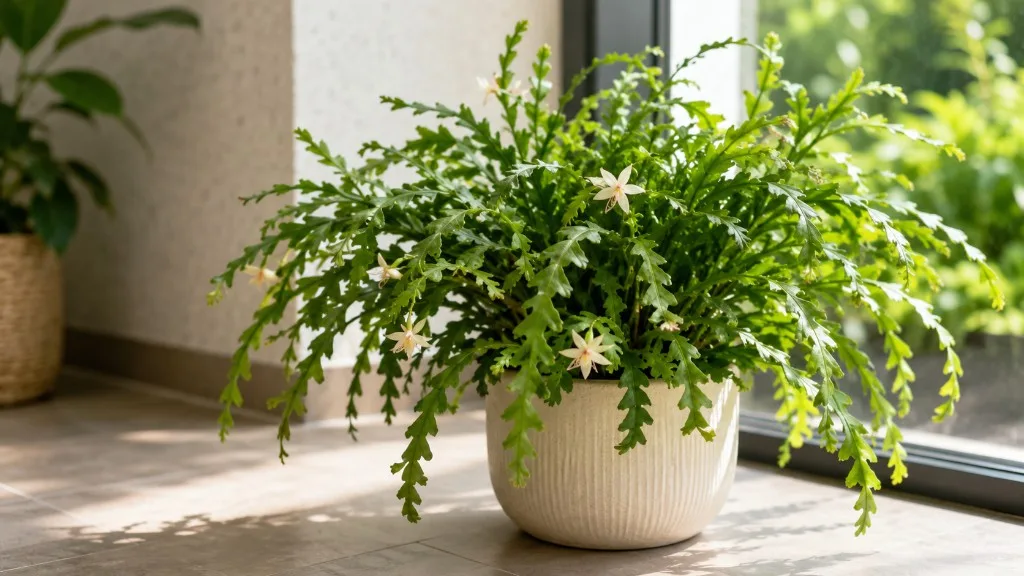
Fishbone Cactus Repotting: When, How, and Mistakes to Avoid
Fishbone Cactus Repotting: When, How, and Mistakes to Avoid
A fishbone cactus that droops for weeks after a pot change, sheds stem segments, or refuses to bloom the following summer is usually not a difficult plant. It is a plant that was repotted at the wrong moment, into a container that held too much wet mix around a small root system, or with more root disturbance than its shallow, epiphytic roots can tolerate. Disocactus anguliger-still widely sold under its former name Epiphyllum anguliger-is a trailing cloud-forest cactus from the cloud forests of Mexico, not a desert dweller. It wants an airy, epiphytic-style mix, a shallow wide pot or hanging basket, and a spring repotting window that respects its active growth rhythm. Get those variables right and the same plant that looked stressed after transplant will push new zigzag stems within a month and set buds when conditions align.
This guide covers every decision that matters: when repotting is actually necessary, the spring timing that protects flowers, how to choose a shallow wide container or hanging basket one size up (or refresh mix in the same pot), the epiphytic blend that mimics a mossy tree branch, the step-by-step procedure that keeps trailing stems intact with minimal root disturbance, and the post-repot care that determines whether the plant recovers cleanly. Guidance is grounded in botanical references including the Missouri Botanical Garden, Royal Horticultural Society, and BBC Gardeners’ World Magazine.
Why Fishbone Cactus Repotting Is Different From Desert Cacti
Most people reach for a bag labeled “cactus mix” and a deep pot because the word “cactus” is on the label. Fishbone cactus breaks both assumptions. In the wild, Disocactus anguliger grows as an epiphyte on tree branches and rock ledges in humid Mexican cloud forests, where its roots cling to decaying leaf litter, moss, and bark rather than sitting in deep desert sand. The RHS classifies fishbone cactus as an epiphytic cactus with a trailing habit-one reason it is so often displayed in hanging baskets where the flat, zigzag stems can cascade freely.
That biology changes every repotting decision. You are not trying to recreate a desert. You are trying to recreate a thin, airy root zone on a tree limb: enough organic matter to hold moisture between waterings, enough coarse material to let excess water drain immediately, and a container wide enough for the trailing stems but shallow enough that the roots are not buried in a deep column of unused wet soil.
Disocactus anguliger as an Epiphytic Cloud Forest Plant
Epiphytic plants do not parasitize their host trees. They use them as scaffolding. Fishbone cactus roots in nature are shallow, fibrous, and constantly exposed to moving air in the humid canopy. Rain arrives, soaks the moss and bark debris for a few hours, then the branch dries. The roots breathe again. Indoors, the closest analogue is a chunky epiphytic mix in a container with drainage holes-not a deep bed of fine peat that stays saturated for days.
The flat, serrated stems-often called phylloclades-store water, which is why fishbone cactus can tolerate brief dry spells even though it is not a desert plant. But those same stems are also why overwatering on Fishbone Cactus after repotting is so dangerous: the visible plant looks fine while the roots below are suffocating in soggy mix. Repotting is your chance to refresh that root environment before decomposition, salt buildup, or compaction becomes the bigger problem.
Why Shallow Roots and Slightly Snug Pots Support Flowering
Here is the counterintuitive part that separates fishbone cactus care from most other houseplants: these plants often perform better when their roots are somewhat snug in the pot. The BBC Gardeners’ World Magazine notes that fishbone cactus needs a cool winter rest around 11–14°C to trigger flowering - slightly snug pots paired with that rest support bloom more reliably than frequent upsizing.
That does not mean you should never repot. It means you should repot less often, into only slightly larger containers, and with a clear reason-not because the calendar says so. Jumping two sizes up because you want the plant to “grow faster” usually backfires: the extra soil holds moisture the small root mass cannot use, establishment slows, and bud formation may stall. Many experienced growers refresh the epiphytic mix in the same shallow pot every two to three years, teasing only the outermost circling roots, rather than sizing up at all.
When to Repot Fishbone Cactus: Signs You Actually Need It
Fishbone cactus is patient. It can look healthy on top while the mix below has quietly degraded for years. The signs below are worth checking every spring, especially if your plant has not been repotted in three or more years.
Roots emerging from drainage holes in significant numbers. A single white root tip exploring the hole is normal. Several thick roots curling out of multiple holes, or a dense mat visible when you lift the plant, means the container is full.
Water runs straight through the pot within seconds. When the root mass displaces most of the soil volume, irrigation has nowhere to linger. The plant may wilt between waterings even though you are watering on schedule.
The mix dries out within one to two days of a thorough soak. Same underlying problem viewed from the other direction: too little functioning substrate for the root mass you have.
Growth has stalled during spring and summer. If stems are not lengthening, new segments are not forming, and the plant has good light and reasonable temperatures, depleted or compacted mix may be the limit.
The epiphytic mix has broken down. Pull back the top layer. If the mix smells sour, looks like fine mud, or has collapsed into a dense brick that repels water, it is time for a fresh epiphytic refresh regardless of how the stems look.
Aerial roots have thickened and darkened. Fishbone cactus produces aerial roots along stems in humid conditions. When those roots become thick and woody, the plant may be searching for a better substrate than what sits in the pot.
The pot has no drainage holes, or is clearly oversized and deep. A sealed decorative container or a deep vessel keeps the mix waterlogged and invites root rot on Fishbone Cactus.
Roots, Mix Breakdown, and Growth Signals That Mean It Is Time
Two signs deserve a closer look because beginners misread them. A wobbly, top-heavy plant is not always root-bound. Fishbone cactus stems can trail 60–90 cm while the root system stays modest and shallow. A mature specimen can lean even in fresh mix. Lift the pot. If it feels unusually light right after watering, the soil volume has likely shrunk from decomposition. If it feels normally heavy, the wobble may be a staking or display issue, not a pot-size issue.
Fewer flowers than last year can indicate depleted mix, but it can also mean insufficient light, interrupted cool nights in autumn, or a recent move. Do not repot solely because blooming was disappointing unless you also see mix or root problems. Repotting itself can delay flowering for up to a season while the plant re-establishes-so using bloom failure as the only trigger can create a cycle where you never let the plant settle enough to set buds.
When an Emergency Repot Cannot Wait for Spring
The ideal window is early to mid-spring when active growth resumes. Two situations override that schedule.
Active root rot. Soft, mushy stem bases at the soil line, a sour smell from the mix, or black, slimy roots when you probe the surface mean you need to unpot immediately, trim damaged tissue, and repot into fresh, barely moist epiphytic mix-regardless of season. Delaying lets rot climb the stem.
A pot with no drainage or severe overpotting. If the plant sits in a sealed decorative container or a vessel so large and deep that the mix never dries, treat it as an emergency. The seasonal ideal matters less than stopping chronic waterlogging.
Emergency repots in autumn or winter carry more risk because the plant is not in its active growth phase and the mix stays wet longer in cooler rooms. If you must repot off-season, use the smallest appropriate shallow container, the chunkiest epiphytic mix you can manage, wait at least five to seven days before the first watering, and keep temperatures in the 65–80°F (18–27°C) range with Fishbone Cactus light guide.
Best Time of Year and How Often to Repot
The single most important timing rule for fishbone cactus: avoid repotting while the plant is in bud or bloom. Night-blooming, fragrant flowers on mature specimens represent a significant energy investment. Disturbing the roots during that phase commonly causes bud drop, and you may lose the display you waited seasons to see. The RHS lists summer flowering for Epiphyllum anguligerum - avoid repotting while buds are forming.
The best window opens in early to mid-spring-roughly March through May in the Northern Hemisphere-as the plant enters active growth after winter rest. The RHS epiphyllum growing guide supports spring repotting into fresh epiphytic compost, and the BBC Gardeners’ World Magazine recommends watering when the top of compost dries - hydrate lightly a few days before repotting to reduce transplant shock.
Early summer can work as a backup if you missed spring, but finish any transplant by midsummer so the plant has months to rebuild roots before autumn bloom preparation begins. Avoid routine repotting in the coldest part of winter when growth is minimal and wet mix lingers dangerously long in cool rooms.
Frequency: most healthy fishbone cactus plants need repotting every two to three years, not annually - refresh epiphytic mix when structure breaks down even if the pot size stays the same. The spread reflects how root-bound you are willing to let the plant stay for blooming performance. A plant that is thriving, producing new zigzag segments, and blooming well can wait. A plant with degraded mix or roots circling the pot cannot.
Choosing the Right Container: Shallow Pot, Hanging Basket, or Same Pot
Three decisions define the container: width, depth, and whether water can leave the bottom. For a trailing epiphyte whose stems outweigh its roots, display format matters as much as diameter.
The One-Size-Up Rule and Why Depth Matters Less Than Width
When the plant has genuinely outgrown its container, move up only one pot size-about one to two inches (2.5–5 cm) wider in diameter than the current pot. The RHS notes a modest ultimate spread of 0.1–0.5 metres relative to trailing stems, so oversized pots hold unused wet mix around shallow roots. A jump from a 6-inch pot to a 10-inch pot surrounds a small root ball with a reservoir of wet soil it cannot colonize quickly.
Depth matters less than width for Fishbone Cactus overview. Fishbone cactus roots are shallow. A deep pot full of unused mix at the bottom is another version of the overpotting problem. Choose a shallow wide pot-sometimes sold as a bulb pan or azalea pot-over a standard deep nursery container. The wide surface gives trailing stems room to spread while keeping the functional root zone concentrated near the top where oxygen exchange happens.
Often the better move is same pot, fresh epiphytic mix. The BBC Gardeners’ World Magazine recommends mixing perlite and orchid bark into peat-free cactus compost when refreshing substrate. That refreshes nutrients and mix structure without sacrificing the slightly root-bound conditions that support blooming. Choose size-up only when roots clearly fill the current pot and you see the drainage-hole and fast-dry symptoms described earlier.
Whatever container you choose, verify the drainage hole is open-not plugged by a factory sticker or a layer of gravel. Skip the myth that gravel at the bottom “improves drainage.” It creates a perched water table that keeps the root zone wetter, not drier.
Hanging Baskets vs Table Pots for Trailing Stems
Fishbone cactus is one of the houseplants that genuinely earns its reputation as a hanging basket plant. The RHS lists patio and container plants among suggested uses, and the trailing zigzag stems look best when they can cascade 30–60 cm or more without resting on a shelf.
When repotting into a hanging basket, apply the same one-size-up rule to the basket diameter. Wire or coco-lined baskets work well with a thin mesh liner to prevent mix from washing out. A shallow wide table pot on a plant stand achieves a similar display if you prefer not to hang anything from the ceiling. If you are moving between formats at similar diameter, treat it as a same-size refresh with new mix rather than an upsize.
Unglazed terracotta is an excellent default for table display because porous clay wicks moisture through the walls, helping the epiphytic root zone dry evenly. Plastic works well in hanging baskets where weight matters; it dries more slowly, so pair it with a chunkier mix. Glazed ceramic is acceptable with a drainage hole but behaves like plastic: less airflow through the walls, longer dry-down times.
The Best Epiphytic Mix for Fishbone Cactus Repotting
Soil-or more accurately, substrate-is the variable that determines whether repotting succeeds or triggers rot within weeks. The target is a mix that holds moisture for several days but drains fast enough that the roots never sit in stagnant water. This is an epiphytic mix refresh, not a desert grit swap.
Why Standard Cactus Soil Alone Falls Short
Commercial cactus and succulent mixes drain well but often dry too quickly for a cloud-forest epiphyte in heated indoor air. Fishbone cactus evolved on mossy branches where organic matter retains moisture between rain events. Straight cactus grit leaves the roots cycling between too dry and briefly soaked, which stresses the plant over time.
Standard indoor potting soil swings the opposite direction. Fine peat particles and water-holding polymers keep typical foliage plants happy, but they are a poor match for epiphytic roots that evolved on airy tree bark. In an unchanged peat-heavy mix, water lingers around the shallow root zone, oxygen drops, and fungal rot follows. The BBC Gardeners’ World Magazine recommends a loose, well-draining blend by mixing perlite and orchid bark into peat-free cactus compost - a starting point that still needs visible bark chunks for long-term indoor success.
A Practical DIY Epiphytic Blend and Same-Pot Refresh
A reliable starting blend for fishbone cactus repotting combines three components in roughly equal proportions, matching BBC Gardeners’ World Magazine epiphytic compost guidance:
- 40% peat-free potting compost or coco coir - supplies organic matter and slow moisture release
- 30% perlite or pumice - creates pore space and prevents compaction
- 30% orchid bark - mimics the epiphytic substrate and improves drainage
For plastic pots or humid climates, shift toward 35% compost, 35% perlite, 30% bark. For terracotta in dry indoor air, 45% compost, 25% perlite, 30% bark retains a little more moisture. If you buy pre-made cactus mix, stir in extra perlite and orchid bark until the blend feels chunky, not like uniform mud. Moisten the mix lightly before potting-dry mixes repel water and create dry pockets around roots.
For a same-pot epiphytic mix refresh, remove the plant, discard all old mix, rinse the pot, and replant with entirely fresh substrate. Do not top-dress over degraded material. Target pH in the 5.5–6.5 range suits Disocactus anguliger.
Step-by-Step: How to Repot Fishbone Cactus With Minimal Root Disturbance
The procedure is straightforward once mix, container, and timing are settled. The highest-risk moments are pulling on fragile trailing stems, bare-rooting the plant, burying stems too deep, and watering too soon afterward. Minimal root disturbance is the guiding principle throughout.
Preparing the Plant and Sliding It Out Safely
Water lightly one to two days before repotting, not the morning of the job. The BBC Gardeners’ World Magazine recommends regular watering when the top of compost dries - hydrate lightly 24 hours before repotting to prevent transplant shock. You want the root ball cohesive enough to hold together, but not saturated. Soggy mix smears onto roots and makes the plant heavier and harder to handle.
Gather a clean workspace, fresh epiphytic mix, the new container, and sterilized scissors. If the plant is large and cascading, have a second empty pot or soft surface nearby to rest the stems while you work-this prevents segments from snapping under their own weight.
Turn the pot on its side and slide the plant out by supporting the root ball, not yanking stems. If the pot is stuck, squeeze flexible plastic sides or run a dull knife around the inner edge. Never pull on individual zigzag segments; they break cleanly and open wounds that rot easily in humid mix.
Root Inspection, Gentle Loosening, and Correct Planting Depth
Once out, brush away loose old mix from the sides and bottom only. Healthy fishbone cactus roots are white to light tan and firm. Trim black, mushy, or foul-smelling roots with clean scissors. Do not prune healthy roots-the RHS lists no pruning required for routine maintenance on this species. If the root ball is a dense circle at the bottom, gently tease the outer layer apart with your fingers or a chopstick. No aggressive washing, bare-rooting, or shaking every particle of old mix free unless you are treating active rot.
Add an inch or two of fresh epiphytic mix to the new shallow container. Set the plant so the base of the stems sits at the same depth as before. Burying stems lower than they originally grew invites basal rot. There should be roughly half an inch to an inch of space between the mix surface and the pot rim for watering room.
Fill around the sides with mix, using a chopstick or pencil to settle substrate into gaps without compacting the center. Firm the surface lightly with fingertips and stop. The plant may wobble slightly until new roots anchor; that is normal. In a hanging basket, hang the basket immediately at its normal height so stems are not stressed by an unfamiliar orientation for long.
Post-Repotting Recovery: Watering, Light, and Feeding
The two to three weeks after repotting determine whether your work sticks. Fishbone cactus forgives a lot, but it does not forgive wet mix on torn roots or harsh sun on a recovering plant.
Wait five to seven days before the first watering. The BBC Gardeners’ World Magazine recommends watering thoroughly then allowing excess to drain - after repotting, pause several days so disturbed roots callus before the first soak. The stems store enough water to sustain the plant through this interval.
When you resume, water thoroughly until excess runs from the drainage hole, then let the top inch of mix dry before soaking again. During recovery, err slightly dry rather than wet. Overcompensating with extra water is one of the most common post-repot errors and shows up as limp, slightly shrivelled stems within days.
Light: keep the plant in bright, indirect light for the first one to two weeks. An east-facing window, or a few feet back from a south or west window, is ideal. Direct sun on a stressed root system accelerates water loss faster than the roots can replace it, and sunburn on stems is permanent.
Temperature and humidity: aim for 65–80°F (18–27°C) and avoid cold drafts or hot heating vents. Target 40–60% humidity if you can; fishbone cactus tolerates average indoor air but recovers faster when humidity is not desert-dry.
Fertilizer: hold all feeding for at least four weeks, and many growers wait six weeks. Fresh mix contains residual nutrients, and salts on healing roots cause tip burn. Resume a diluted balanced fertilizer only after you see new stem growth.
Bloom expectations: if you repotted in the correct spring window with minimal root disturbance, bud set the following summer or autumn should proceed normally. If you repotted late, sized up aggressively, or bare-rooted the plant, accept that flowering may be sparse for one season. That is not failure; it is the plant prioritizing roots over buds.
Common Repotting Mistakes and Transplant Shock Recovery
Most post-repot problems trace back to a short list of avoidable errors.
Repotting during bud formation or bloom. Buds drop, and you lose the night-blooming display. Wait until flowers finish.
Choosing a pot two or more sizes larger, or a deep container. Excess wet mix around a small root mass causes slow rot and stalled growth. Go one size up in width, stay shallow, or refresh mix in the same pot.
Bare-rooting or aggressively washing the root ball. Stripping fine root hairs removes the structures that absorb water and nutrients. Keep as much of the original root zone intact as possible and only loosen the outer circling layer.
Using unamended potting soil or straight desert cactus grit. Heavy peat mixes stay wet too long; pure grit dries too fast. Use the epiphytic blend above.
Watering immediately after repotting. Torn roots plus wet mix equals fungal infection. Wait at least five days, preferably seven.
Burying stems deeper than they grew before. Basal segments rot where they touch soggy mix. Match the original planting depth exactly.
Pulling stems instead of supporting the root ball. Broken segments are open wounds. Always unpot from the container side.
Pruning healthy roots routinely. Unlike some houseplants, fishbone cactus does not benefit from root haircuts. Trim only dead or rotting tissue.
Fertilizing in the first month. Salt burn on healing roots sets growth back further than no feed at all.
Placing the plant in direct sun right away. Stems desiccate and blush with sun stress. Recover in indirect light first.
Mild transplant shock-slight limpness, dull color, or a brief pause in growth for one to two weeks-is normal and usually self-corrects if you keep conditions stable and avoid overwatering. Severe wilting with mushy stem bases after repotting suggests rot. Unpot, trim all soft tissue back to firm stem and healthy root, let the plant dry on a paper towel for a day, and repot into fresh, barely moist epiphytic mix. Restart the no-water waiting period.
If a few stem segments drop but the remaining tissue is firm and the mix is appropriately dry, the plant is often reallocating resources rather than dying. Maintain the recovery routine and watch for new growth at stem tips within three to six weeks.
Conclusion
Fishbone cactus repotting is less about giving the plant room to explode in size and more about refreshing the epiphytic root zone on a schedule the plant actually tolerates. Repot every two to three years, or sooner only when roots crowd the pot, the mix has collapsed, or drainage has failed. Do the work in early to mid-spring, never while buds are open, and finish by midsummer at the latest so autumn bloom preparation stays on track.
Use a shallow wide pot or hanging basket one size up-with a drainage hole-or the same container with entirely fresh epiphytic mix if blooming performance matters more than spread. Fill it with a chunky blend of peat-free compost, perlite, and orchid bark, not straight peat and not desert-only grit. Handle the root ball gently with minimal disturbance, keep stems at the same depth, wait five to seven days before the first watering, and hold fertilizer for a month. Keep the plant in bright indirect light while it settles.
Follow that sequence and repotting becomes routine maintenance instead of a gamble with next season’s flowers. The zigzag stems will firm up, new segments will appear by late spring, and the plant will do what it was built to do in a Mexican cloud forest: cling to an airy substrate, trail freely, and reward patient care with spectacular night blooms when the timing is right.
When to use this page vs other Fishbone Cactus guides
- Fishbone Cactus overview - Start here for whole-plant context before deep-diving this topic.
- Fishbone Cactus problems hub - Jump to symptom-specific fix guides when this care topic does not resolve the issue.
- Root Rot on Fishbone Cactus - Escalate here when repotting adjustments are not enough.
Related Fishbone Cactus guides
- Fishbone Cactus overview
- Fishbone Cactus watering
- Fishbone Cactus light
- Fishbone Cactus soil
- Fishbone Cactus propagation
- Fishbone Cactus fertilizer
- Root Rot on Fishbone Cactus
- Fishbone Cactus problems
Related tool
Try the Pot Size Calculator with fishbone-cactus pre-selected to estimate needs for your setup.