Overwatering on Fishbone Cactus: Causes, Checks & Fixes
Quick answer
Overwatering on Fishbone Cactus shows up as limp yellow zigzag stem segments on wet bark mix, a heavy cool pot, and sometimes a sour smell at the base. First step: stop watering until the top half of the mix dries, then confirm with pot weight and stem-base firmness before watering again.
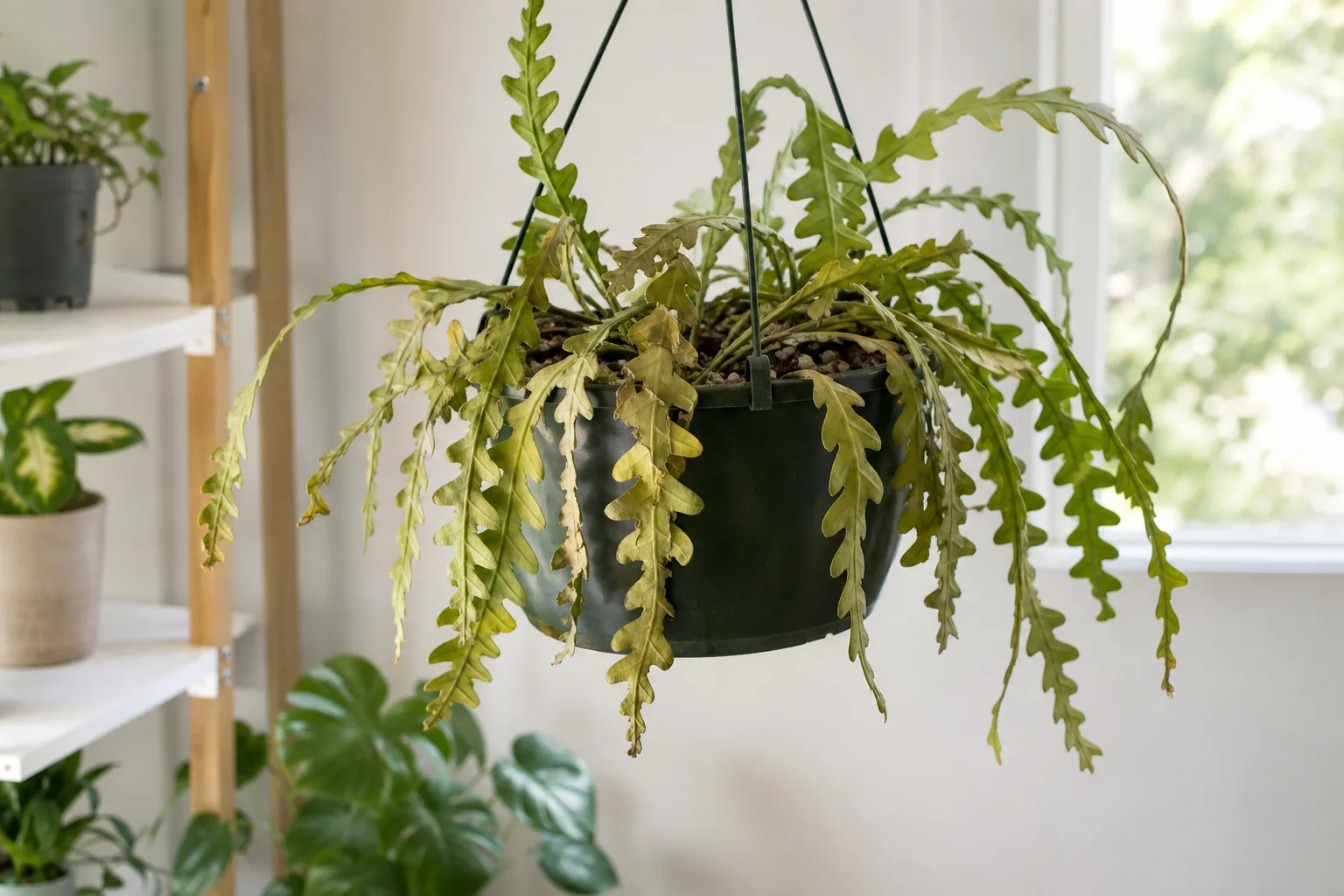
Overwatering on Fishbone Cactus: Causes, Checks & Fixes
This guide covers overwatering on Fishbone Cactus. See also the general Overwatering guide, watering, and light pages for this plant.
Overwatering on Fishbone Cactus: Causes, Checks & Fixes
Quick answer
Overwatering on Fishbone Cactus (Disocactus anguliger, ric rac or zigzag cactus) means the root zone has stayed wet too long for an epiphytic jungle cactus that needs partial dry-down between drinks. The classic warning is limp yellow zigzag stem segments on a heavy, cool pot - flat phylloclades lose their crisp profile while bark-heavy mix stays damp at depth, even when the surface looks pale and dry.
First step: stop all watering today. Do not soak a wilting fishbone cactus until you confirm the upper half of the mix has actually dried. Lift the pot, check moisture depth with a skewer, and feel stem bases where segments meet soil. If the pot is heavy, the mix is cool and damp several inches down, and bases are soft or yellow, you are dealing with saturation or early rot - not thirst.
Fishbone cactus is a cloud-forest epiphyte, not a desert cactus. It tolerates short dry spells better than constant sogginess, but beginners often overcorrect in the wrong direction after a prior drought scare - or water on a calendar while winter growth slows and mix holds moisture far longer than in summer. Full moisture rhythm lives on the watering guide; this page covers wet-mix diagnosis, confirmation, and early rescue before rot advances to the root rot stage.
What overwatering looks like on Fishbone Cactus
On this species, excess moisture shows on the flat zigzag phylloclades (stem segments), not as classic leaf yellowing. Fishbone cactus has no true leaves - the lobed cladodes are the main photosynthetic tissue. When roots suffocate in wet mix, they cannot move water upward, and segments collapse even though soil feels moist.
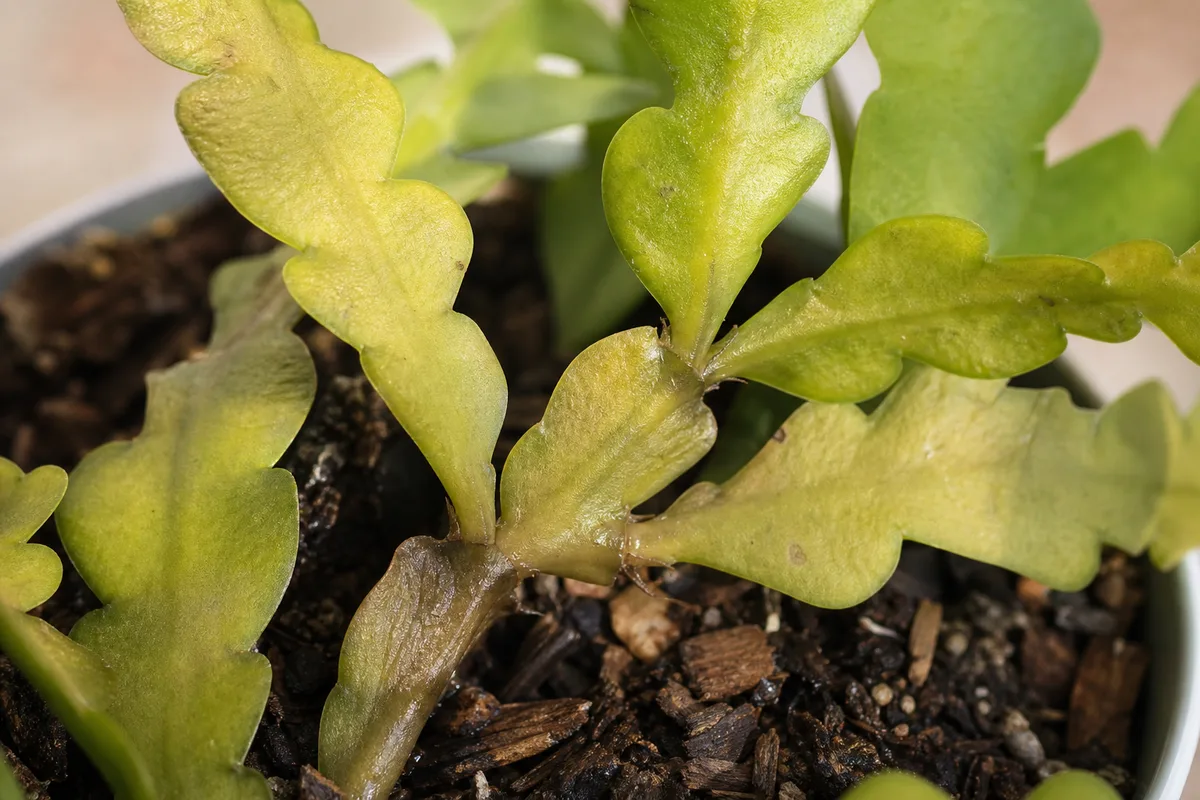
Overwatering symptoms on Fishbone Cactus - compare with healthy tissue on the same plant.
Typical overwatering patterns:
- Limp, dull green or yellowing segments along trailing stems, especially lower phylloclades nearest the pot
- Loss of crisp zigzag depth - lobes look flattened and thin rather than plump and architectural
- Soft or translucent tissue at the stem base where segments meet wet mix; gentle pressure may yield on advanced cases
- Pot stays heavy and cool for one to two weeks without the weight dropping between waterings
- Persistent damp smell when you disturb mix or slide the plant partly from its pot
- Fungus gnats on Fishbone Cactus hovering around the surface - often an early signal that bark mix has not dried through the upper half
Unlike underwatering, there is no very light pot, no dusty dry mix several inches down, and segments at the base feel mushy rather than wrinkled. Old segments may develop brown edges after repeated wet-dry stress, but fresh yellow collapse on wet substrate points to root-zone failure, not simple drought.
In a hanging basket, the top of chunky epiphytic mix often dries days before the lower root zone. A pale surface can sit above damp bark and perlite at depth - the core diagnostic trap on fishbone cactus. That is why the top-half-dry rule matters more than glancing at the top inch.
Why Fishbone Cactus gets overwatered
The common name “cactus” sends most growers toward desert habits. Disocactus anguliger evolved as an epiphyte in Mexican forest habitat, growing on tree bark in filtered light with regular mist and rain followed by partial drying - not permanent wetness. Its stems store some water, but epiphytic roots still need air pockets between drinks. When mix stays saturated from top to bottom, roots in saturated soil lose oxygen and function.
Typical triggers:
- Desert-cactus watering habits - waiting for bone-dry soil, then drenching heavily on a schedule that leaves the lower half wet for weeks
- Surface-dry checks only - watering when the top inch looks pale while the lower 50% of bark mix has been damp since the last soak
- Calendar watering through winter - the same seven-day rhythm in a cool dim room when the plant uses far less water and mix dries slowly
- Heavy peat-based houseplant soil - holds moisture too long and compacts, eliminating air pockets epiphytic roots require; see the soil guide for the bark-perlite blend this species needs
- Oversized pots or blocked drainage - excess mix stays wet around sparse roots; cachepots and full saucers wick standing water back up overnight
- Low light in dim corners - slow uptake leaves mix wet longer even when you water less often
- Overcorrection after underwatering - swinging from chronic drought to daily misting or repeated shallow sips that keep the root zone constantly damp
There is one lookalike: trailing posture on long healthy stems can look droopy without any rot. Firm green segments on a pot that lightens normally between waterings are normal growth, not overwatering.
Overwatering vs. underwatering - symptom vocabulary
Both can make zigzag segments look unhappy. Pot weight, mix moisture depth, and stem texture tell them apart.
| Pattern | Pot weight | Mix moisture | Segment feel | Stem base |
|---|---|---|---|---|
| Overwatering | Heavy, cool for weeks | Upper half still damp to skewer | Limp, yellow, thin on wet mix | Soft, mushy, or translucent |
| Underwatering | Very light | Upper half bone dry | Wrinkled, flattened, crispy edges | Firm; dry shrivel, not mush |
If the pot is heavy and segments are limp, do not soak - wilted appearance with moist soil can indicate damaged roots that cannot take up water. Soaking makes saturation worse. Full drought-branching detail lives on underwatering.
How to confirm the cause
Work through these checks in order:
- Pot weight - Lift the container and compare to right after a thorough watering. A heavy, cool pot that has not lightened for many days strongly supports overwatering.
- Moisture at depth - Insert a dry wooden skewer into the upper half of the mix. Dark wet marks through the top 50% mean the plant does not need water - even if the surface looks pale.
- Stem-base firmness - Pinch where phylloclades meet soil. Firm green tissue on damp mix may mean early saturation only. Soft yellow tissue that yields to pressure is urgent - inspect roots.
- Segment texture - Limp and yellow on wet mix points to overwatering. Wrinkled and thin on dry mix points away from it.
- Watering history - How many days since the last thorough soak? Did winter frequency match slower growth? Has water been sitting in a saucer?
- Smell and gnats - Sour odor or persistent fungus gnats suggest mix has stayed wet too long; fungus gnats often appear when soil stays wet.
- Root peek (if bases are soft) - Slide the plant partly from its pot. Firm, pale roots support a pause-and-dry rescue. Brown, mushy, foul-smelling roots mean stop here and follow the root rot protocol instead.
If the pot is very light, upper mix is dusty dry several inches down, and stems are wrinkled - you likely have underwatering, not excess moisture.
First fix for Fishbone Cactus
Stop watering until the top half of the mix dries.
That single pause is the entire first fix. Move the plant to brighter indirect light if it sits in a dim corner - slow evaporation worsens wet mix, though light alone cannot fix rot. Empty any standing water from saucers or cachepots. Do not fertilize, repot, mist heavily, or prune yellow segments on day one.
Check daily with pot weight and a skewer through the upper half. When the top 50% feels dry and the pot has lightened noticeably, you can resume the top-half-dry watering protocol with one thorough soak - but only if stem bases are still firm. If bases turned soft during the dry-down wait, unpot and inspect before the next drink.
Step-by-step recovery
If stems firm up after the mix dries:
- Resume top-half-dry rhythm - Water only after the upper portion of epiphytic mix has lost noticeable moisture, then soak until excess runs from drainage holes.
- Soak fully each time - Shallow sips that only wet the surface recreate damp roots below and briefly dry soil on top.
- Adjust for season - During active spring and summer growth, many indoor fishbone cacti need a thorough drink every 7 to 14 days. In cooler autumn and winter, stretch toward every 3 to 4 weeks; mix holds moisture far longer when growth slows.
- Improve airflow and light - Fishbone Cactus light guide and open drainage help the upper half reach dryness on a predictable schedule without baking the plant.
- Hold fertilizer - Skip feed until new segment tips look plump and firm for two weeks. Salt on stressed roots slows recovery.
- Repot only if mix is the problem - Dense peat that never dries through the upper half may need fresh chunky epiphytic mix when the plant stabilizes - not on the same day you stop watering.
If segments stay limp after the top half has genuinely dried, or bases soften further, inspect roots. Trim any brown mushy tissue with sterile scissors, let cuts callus 24 to 48 hours, and repot into airy mix per the root rot guide before resuming watering.
Recovery timeline
Mild saturation - When roots are still firm and only the mix was too wet, segments often regain turgor within three to seven days after the upper half dries and roots breathe again.
Moderate stress - Yellow or thin tissue on old phylloclades may not fully green up, but new plump zigzag tips should appear within one to three weeks during warm active growth. Recovery is measured by stable new growth, not by old segments reversing.
Chronic wet mix with fine root loss - Dry-down alone may not be enough. Expect four to eight weeks after root trim and repot before consistent new segments, if salvageable.
Worsening signs - Bases turn mushy, yellow spreads up stems, mix smells sour after a dry-down attempt, or segments drop while upper growth still looks green. Those point to advancing root rot - escalate to unpotting and stem-tip salvage rather than waiting.
What not to do
Do not soak a limp fishbone cactus because wilting “always means thirst.” On wet mix, that accelerates base rot.
Do not fertilize a waterlogged plant. Do not repot into a larger pot to “help drying” - more mix usually stays wet longer around sparse epiphytic roots.
Do not mist instead of fixing soil moisture - surface humidity does not aerate a saturated root ball.
Do not water on a fixed calendar through winter without checking pot weight - the BBC Gardeners’ World Magazine notes that brown, soft stems from overwatering require removing the plant from its pot to dry out and trim affected roots - prevention through dry-down beats rescue.
Skip pruning all yellow segments immediately - firm tissue above damaged bases may still recover if roots stabilize.
How to prevent overwatering next time
Match watering to how fast your pot dries, not a desert-cactus calendar. For most indoor fishbone cacti in active growth, water when the compost begins to dry out in the upper half, then soak until excess drains and let excess drain away without leaving plants standing in water.
Use a chunky epiphytic mix - potting compost, perlite, and orchid bark - so the root zone breathes between drinks. Keep drainage holes open and empty saucers within 30 minutes of watering.
In winter, reduce frequency but do not keep the entire pot saturated - cool rest with only just-damp lower mix is correct; constant wetness in a dim room is not.
Hang or shelf the plant where you will lift the pot regularly - trailing stems hide a heavy, wet container until segments are already yellow at the base. Weekly stem-base checks catch trouble before mush climbs the phylloclades.
When to worry
Escalate the same day if stem bases feel soft and yield to gentle pressure, the mix smells sour, or yellow mush is spreading up from the soil line on a wet pot. That pattern often means advancing rot - follow the root rot rescue path rather than waiting for surface dryness alone.
If segments stay limp one week after the top half has genuinely dried and bases remain firm, inspect roots for hidden damage. If more than half the base tissue is mush with no firm green segments remaining, propagating healthy upper cuttings may be safer than repeated dry-down cycles - see the propagation guide and wilting page for overlap symptoms.
Conclusion
Overwatering on Fishbone Cactus is a wet-root problem disguised by trailing stems and a cactus label. Confirm it with heavy pot weight, damp upper mix on a skewer, and limp yellow segments on wet bark mix, then fix it with one pause until the top half dries before any soak. Old yellow tissue may not reverse, but firm new zigzag tips mean the plant is back on track - and that is the recovery sign worth watching for. For species background and the full seasonal rhythm, see the fishbone cactus overview and watering guide.
When to use this page vs other Fishbone Cactus guides
- Fishbone Cactus watering guide - Use for routine moisture checks before assuming overwatering is the main issue.
- Fishbone Cactus problems hub - Browse all 18 common issues on this species.
- Root Rot on Fishbone Cactus - Different entry point when symptoms overlap with overwatering.
- Yellow Leaves on Fishbone Cactus - Different entry point when symptoms overlap with overwatering.
- Wilting on Fishbone Cactus - Different entry point when symptoms overlap with overwatering.
Related Fishbone Cactus guides
- Fishbone Cactus overview
- Fishbone Cactus watering
- Fishbone Cactus light
- Fishbone Cactus soil
- Root Rot on Fishbone Cactus
- Yellow Leaves on Fishbone Cactus
- Wilting on Fishbone Cactus
- Fungus Gnats on Fishbone Cactus
- Mold on Soil on Fishbone Cactus
- Drooping Leaves on Fishbone Cactus
- Fishbone Cactus problems