Drooping Leaves on Fishbone Cactus: Causes, Checks & Fixes
Quick answer
Drooping on fishbone cactus usually means trailing flat stems hang lower than usual-from normal gravity on long phylloclades, slight thirst, root failure on wet bark mix, or repot shock. First step: lift the basket and check whether segments feel firm-plump or thin-shriveled, then probe the top 1–2 inches of mix before watering.
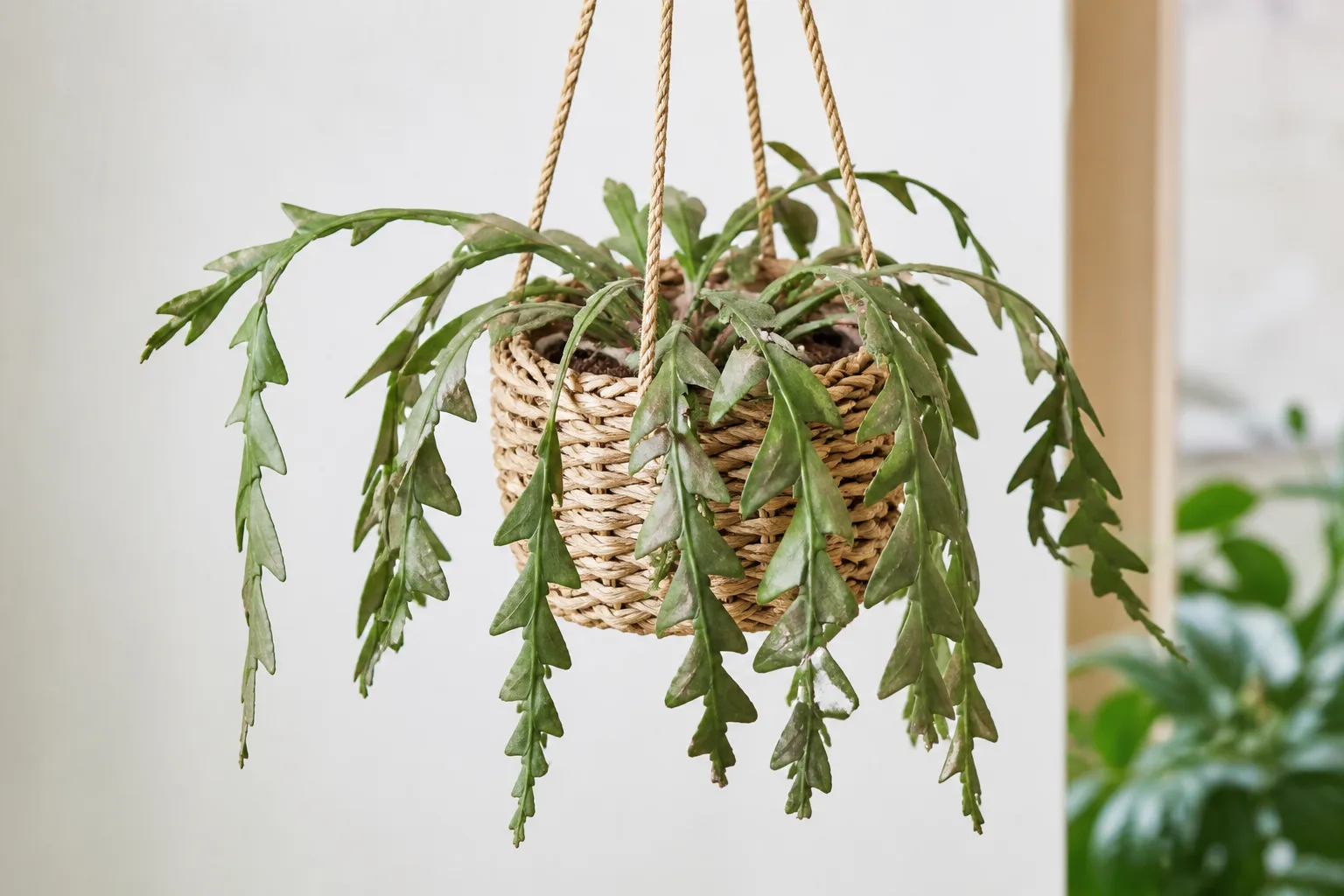
Drooping Leaves on Fishbone Cactus: Causes, Checks & Fixes
This guide covers drooping leaves on Fishbone Cactus. See also the general Drooping Leaves guide, watering, and light pages for this plant.
Drooping Leaves on Fishbone Cactus: Causes, Checks & Fixes
Quick answer
Drooping on fishbone cactus (Disocactus anguliger) means the flat phylloclade stems-the zigzag segments that do the plant’s photosynthesizing-hang lower than they did last week. Searchers often say “drooping leaves,” but this species has no true leaves; all visible movement happens on these succulent flat stems.
Droop is not always an emergency. Long trailing segments naturally arch downward from hanging baskets-that is healthy posture on a cloud-forest epiphyte built to cascade from tree branches. Stress droop adds texture clues: firm but thin flattened lobes on a light dry pot point to drought; limp yellow segments on heavy wet bark mix point to root failure.
First step: lift the basket, feel whether segments are firm-plump or thin-shriveled, and check moisture in the top 1–2 inches of mix before you water. Dry and light with thin edges → one thorough soak. Wet and heavy with limp segments → stop watering and inspect stem bases. Full turgor-loss workflows live on the wilting guide; this page focuses on posture, gradual hang, and dry-pot versus wet-pot branching.
What drooping looks like on fishbone cactus
Healthy fishbone cactus carries flat, deeply lobed phylloclades with a crisp zigzag silhouette. Drooping changes how those segments hang in space, not always how they feel in your fingers.
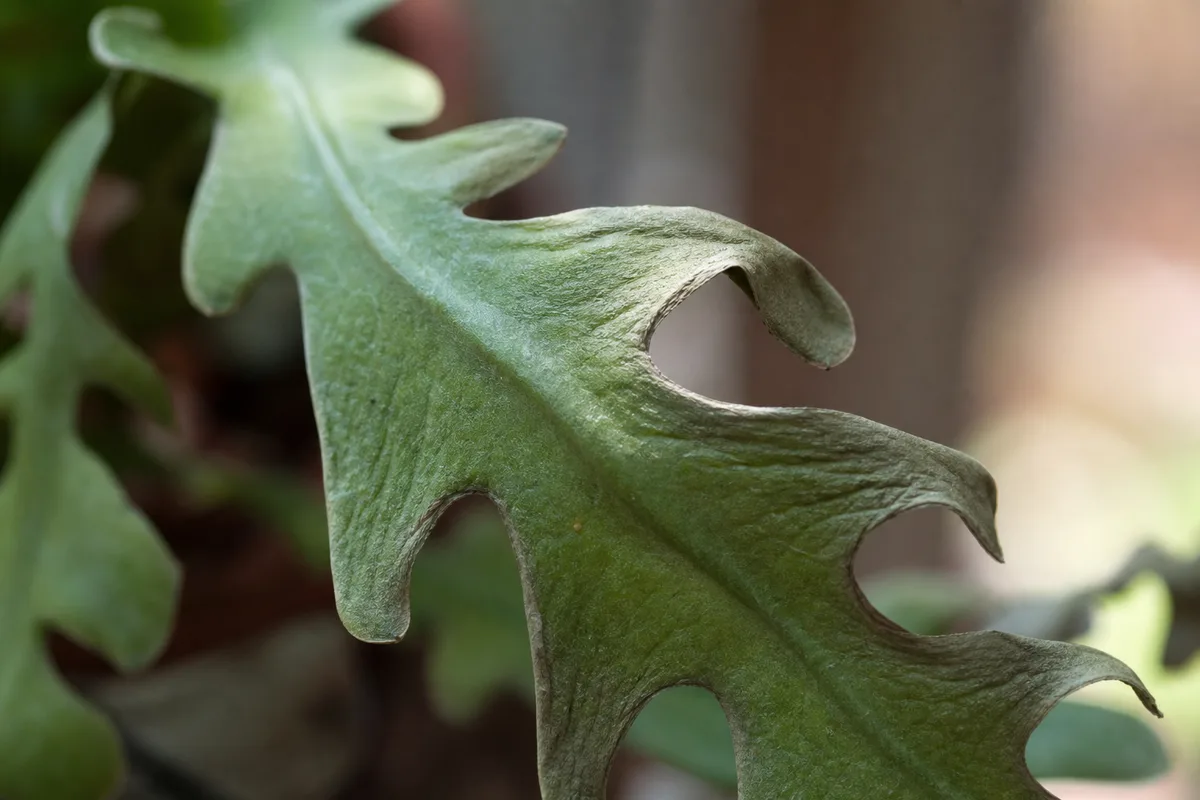
Thin shriveled phylloclade lobe with flattened edges on a light dry basket - compare with firm plump segments on the same trailing stem.
Normal trailing droop (healthy):
- Long mature segments arch gracefully off the basket rim
- Stems feel firm and plump when you pinch a lobe between thumb and finger
- Color stays even green; only gravity pulls trails downward
- Pot weight and mix moisture sit in the normal range for your watering rhythm
- New zigzag tips at stem ends stay compact and turgid
Drought droop (underwatering):
- Trailing segments hang lower and look thinner; lobed edges flatten or shrivel
- Stems feel leathery or slightly papery but bases stay firm
- Pot feels noticeably light; upper mix is pale and dry 2–3 inches down
- Often follows missed waterings, heat spikes, or desert-cactus habits after an overwatering scare
Wet-mix droop (overwatering / root stress):
- Segments hang limp, sometimes yellowing from the base upward
- Mix stays dark, cool, and wet at the surface for many days; pot feels heavy
- Sour smell when you disturb mix or slide the plant partly from its pot
- Soft stem base on advanced cases-urgent overlap with root rot
- The paradox: plant looks thirsty while soil is wet because damaged roots cannot supply moisture
Repot shock and cold-draft droop:
- Segments sag suddenly after repotting or a window move near AC or cold glass
- Mix moisture may look normal; bases stay firm unless rot was already present
- Often temporary if temperature stabilizes above 15°C (59°F) as the RHS recommends for epiphytic cacti
Mechanical droop:
- Weak hanger hook, undersized basket, or stems tangled and pulling each other down
- Segments stay firm; fixing support restores appearance without watering changes
The BBC Gardeners’ World Magazine notes that wrinkled segments indicate insufficient water and can be corrected with gradual rehydration-while limp segments on persistently wet mix need a different path entirely.
Photo checklist before you intervene
Before watering or unpotting, take three quick photos in bright indirect light. These images make it easier to compare changes over the next 2-7 days and avoid over-correcting:
- Whole basket profile: shows whether this is normal trailing architecture or sudden whole-plant collapse.
- One middle segment close-up: captures lobe thickness (firm-plump vs thin-flattened vs limp).
- Stem-base and mix surface: documents yellowing, softness, algae crust, or persistent surface wetness that can point to low oxygen in saturated media.
If the second and third photos show limp tissue plus wet mix, treat as a wet-root emergency first; University of Maryland Extension notes that excess water can damage fine roots and cause wilt-like droop even while soil is wet (overwatered indoor plants).
Normal trailing versus stress droop
Fishbone cactus is sold for trailing habit. Stems 30 to 60 cm long on a typical houseplant will hang below the pot rim by design-that is not pathology.
Use this quick separation:
| Signal | Normal trailing | Stress droop |
|---|---|---|
| Segment feel | Firm, plump lobes | Thin, papery, or mushy |
| Color | Even green | Yellowing, bleached, or brown bases |
| Pot weight | Matches your usual dry-down cycle | Very light (drought) or heavy for weeks (wet) |
| New tips | Compact zigzag growth | Stalled, thin, or absent |
| Timeline | Gradual as stems lengthen | Noticeable change over days |
If only the oldest longest trails hang while new tips stay plump, you are probably seeing gravity on mature growth, not a care crisis. If multiple stems droop together with texture change, run the confirmation checklist below.
Why fishbone cactus droops
Disocactus anguliger stores water in flat stem tissue, but far less than a desert barrel cactus. In a small indoor basket, droop usually traces to one of these pathways:
Underwatering and edge flattening - Letting the upper and middle mix stay dry too long during active growth deflates lobes before full wilting sets in. Owners who switched to desert-cactus drought after one overwatering scare often see gradual hang before shrivel. See underwatering on fishbone cactus for drought recovery.
Overwatering and root failure - Calendar watering in dim winter rooms keeps bark mix saturated at the root zone while the surface looks merely damp. Epiphytic roots lose oxygen; uptake stops. Trailing segments hang limp on wet mix. Watering again deepens overwatering damage. Heavy peat without enough orchid bark accelerates this.
Repot shock - Fresh mix, trimmed roots, and changed light temporarily reduce support. Mild droop for one to two weeks after spring repotting is common if you did not keep the mix soggy. Details on timing sit in the repotting guide.
Cold drafts - Sustained cold on a winter windowsill or direct AC airflow collapses segments even when watering was correct. The RHS advises protection below 10°C (50°F) and minimum 15°C (59°F) during active growth.
Weak support and weight - As stems lengthen, an undersized hook or tangled mass pulls trails lower without any root problem. Rehang or gently comb stems apart before assuming disease.
Low light with slow dry-down - Dim corners keep mix wet longer; roots suffocate while owners interpret limp hang as thirst. See not enough light when stretching accompanies droop.
Drooping versus wilting versus yellowing
Casual search mixes these terms. On fishbone cactus the inspection order differs:
| Symptom | What you feel | Typical cause | Best guide |
|---|---|---|---|
| Drooping | Trailing stems hang lower; may stay plump | Normal gravity, slight thirst, weak support, early root stress | This page |
| Wilting | Thin, shriveled, or limp segments; lost turgor | Drought, root failure, cold shock | Wilting guide |
| Yellowing | Color change with or without hang | Wet roots, drought, light shock, aging | Yellow leaves guide |
If segments are thin or mushy, use the wilting guide dry-pot versus wet-pot workflow first. If they are firm but lower, start with support check and moisture at depth here.
How to confirm the cause
Work through these checks in order-pot weight and segment texture before any soak:
- Segment texture - Pinch a lobe. Firm and plump with lower hang suggests normal trailing or mechanical support. Firm but thin flattened edges suggest drought. Soft or yellow on wet mix suggests root failure.
- Pot weight - Lift the basket. Very light supports drought. Heavy and cool for weeks supports saturation or rot.
- Moisture at depth - Probe the top 1–2 inches of mix (BBC Gardeners’ World recommends checking the top couple of centimetres before watering). Dry several inches down confirms drought. Wet cling with limp segments means do not soak.
- Stem-base firmness - Press where segments meet mix. Mushy tissue means stop watering and inspect roots per root rot.
- Hanger and stem tangle - Rehang if the basket lists or stems pull each other down while tissue stays firm.
- Recent events - Repot within two weeks, window move, heat spike, or missed watering month narrows cause quickly.
- New tip quality - Plump new zigzag segments mean the plant is coping; stalled thin tips mean ongoing stress.
Drooping is not always a call for water. Root injury from too much water decreases uptake; soaking a drooping epiphyte on soggy mix can worsen collapse within days.
First fix for fishbone cactus
Branch on segment texture and pot weight-one action only.
If segments are firm but thin with a light dry pot: Give one thorough soak. Water across the mix until water runs from drainage holes, then drain completely-never leave epiphytic cactus standing in runoff. That single drink is the entire first fix for drought droop. Reassess hang and lobe thickness in 24–48 hours.
If segments are limp on a heavy wet pot: Stop watering immediately. Move to bright indirect light if the basket sits in deep shade-slow evaporation worsens wet mix. Inspect stem bases; if soft or yellow, unpot before repotting into fresh airy bark mix per overwatering and root rot guides. Do not fertilize or repot on the same day unless base rot is confirmed.
If segments are firm, plump, and only gravity-hanging on long trails: Adjust support-sturdier hook, wider basket, or gentle untangling. No watering change needed if pot weight matches your normal rhythm.
If droop followed repot or cold draft: Stabilize temperature above 15°C (59°F), keep mix lightly moist but not soggy, and wait one week before a second intervention.
One care change at a time lets you read the plant’s response. Stacking soak, repot, prune, and fertilizer on day one obscures which step helped.
Recovery timeline
Mild drought droop - Segments often regain thickness and lift slightly within 24 to 48 hours after one thorough soak. Short-term dehydration on houseplants can reverse quickly when roots are intact.
Moderate root stress on wet mix - After watering stops and damaged roots are trimmed, expect one to three weeks before new plump zigzag tips appear. Old limp segments may stay angled downward even after roots heal.
Repot or cold-draft droop - One to two weeks of stable conditions often restores posture without extra watering beyond the normal top-half-dry rhythm from the watering guide.
Normal trailing - No recovery needed; stems lengthen and hang further as the plant matures.
Judge success by new segment firmness and growth, not by every old trail re-angling perfectly. Segments that stayed thin for more than a week may not fully plump and can be removed cosmetically once the plant stabilizes.
Recovery example (dated observation workflow)
Use this as a practical benchmark log when you confirm a dry, light pot with firm-but-thin segments:
- Day 0 (evening): Pot is very light, top layers dry, lobes flattened but not mushy. Perform one full soak and drain completely.
- Day 1: Most segments feel less papery; tip posture changes little.
- Day 2: Mid-stem lobes usually feel thicker; hanging angle may remain lower on older trails.
- Day 5-7: Newer tips look plumper and hold zigzag shape better; if not, re-check roots and light instead of repeating deep soaks.
This timeline fits the common extension pattern that drought stress can mimic other issues at first, while overwatered plants can also appear wilted; confirm by texture and root-zone moisture before the second intervention (UMD overwatering guidance, UC IPM houseplant diagnostics).
Lookalike symptoms
- Wilting - Acute turgor loss; thin or papery segments. Use when texture collapse dominates over posture.
- Underwatering - Shriveled firm segments, light pot, dry upper mix.
- Overwatering - Limp segments on persistently wet mix, fungus gnats, sour smell.
- Leggy growth - Long thin stretching toward light; segments may hang from length but stay firm.
- Intentional autumn drought for flowering - Slight hang during cool rest with only just-damp mix; expected if triggering buds per the overview.
What not to do
Do not soak automatically because trailing stems look sad-confirm dryness first. Do not keep watering limp segments on wet heavy mix-that accelerates base rot on epiphytic roots.
Avoid fertilizing before posture and texture stabilize. Skip repotting on day one unless rot is confirmed or mix is hydrophobic and water will not penetrate. Do not prune all hanging segments immediately-firm drought-stressed lobes often plump after one correct soak.
Do not mist instead of soaking a dry root ball-surface humidity does not rehydrate flattened lobes below. Do not confuse healthy trailing with pathological collapse and overcorrect with unnecessary soaks or repots.
How to prevent drooping next time
Match watering to how fast your bark-heavy mix dries, not a fixed calendar. For most indoor fishbone cacti in active growth, water when the compost begins to dry out, then soak until excess drains. The fishbone cactus watering guide covers top-half-dry checks, seasonal reduction, and pot-weight technique.
Lift the basket weekly during problem seasons-trailing stems hide a light dry pot until lobes flatten. Use chunky epiphytic mix with drainage holes and saucers emptied within 15 minutes.
Size hangers for mature trail length so gravity does not torque the pot sideways. Rotate the basket a quarter turn when you water so all sides dry evenly in bright indirect light per the light guide.
In winter, reduce frequency without abandoning checks entirely. Dim rooms slow dry-down and invite wet-mix droop if summer schedules continue unchanged.
When to worry
Escalate same-day if segments are limp on soggy mix with soft yellow bases-that pattern advances quickly toward base rot. Also escalate if multiple trails thin and collapse on bone-dry mix during active summer growth, or if firm segments stay flattened 48 hours after a confirmed thorough soak on dry mix (inspect roots).
Pure gravity hang on firm plump trails is not urgent. Mechanical list of the pot is a five-minute hanger fix, not a root crisis.
Related fishbone cactus problems
- Fishbone cactus overview - hub care and troubleshooting
- Wilting - acute turgor loss and dry-pot versus wet-pot workflow
- Underwatering - shriveled segments on dry mix
- Overwatering - wet mix and limp segments
- Root rot - mushy bases and sour soil
- Watering guide - top-half-dry rhythm and seasonal checks
Conclusion
Drooping on fishbone cactus is often posture, not panic-but flat phylloclades also telegraph drought and root failure through how they hang and how they feel. Confirm with segment texture, pot weight, and top 1–2 inch mix moisture, then branch: soak once if thin on a light dry pot, stop watering if limp on wet heavy mix, adjust support if firm trails simply arch with age. Pair this page with the wilting guide when turgor collapse-not just lower hang-is the main worry.
When to use this page vs other Fishbone Cactus guides
- Fishbone Cactus watering guide - Use for routine moisture checks before assuming drooping leaves is the main issue.
- Fishbone Cactus problems hub - Browse all 18 common issues on this species.
- Underwatering on Fishbone Cactus - Different entry point when symptoms overlap with drooping leaves.
- Overwatering on Fishbone Cactus - Different entry point when symptoms overlap with drooping leaves.
- Root Rot on Fishbone Cactus - Different entry point when symptoms overlap with drooping leaves.