Yellow Stems on Fishbone Cactus: Causes, Checks & Fixes
Quick answer
Yellow segments on fishbone cactus usually mean overwatered roots or underwatering stress-not desert-cactus drought habits. First step: poke the top 1–2 inches of mix; if wet and segments feel soft at the base, stop watering until dry; if wrinkled and light, soak thoroughly.
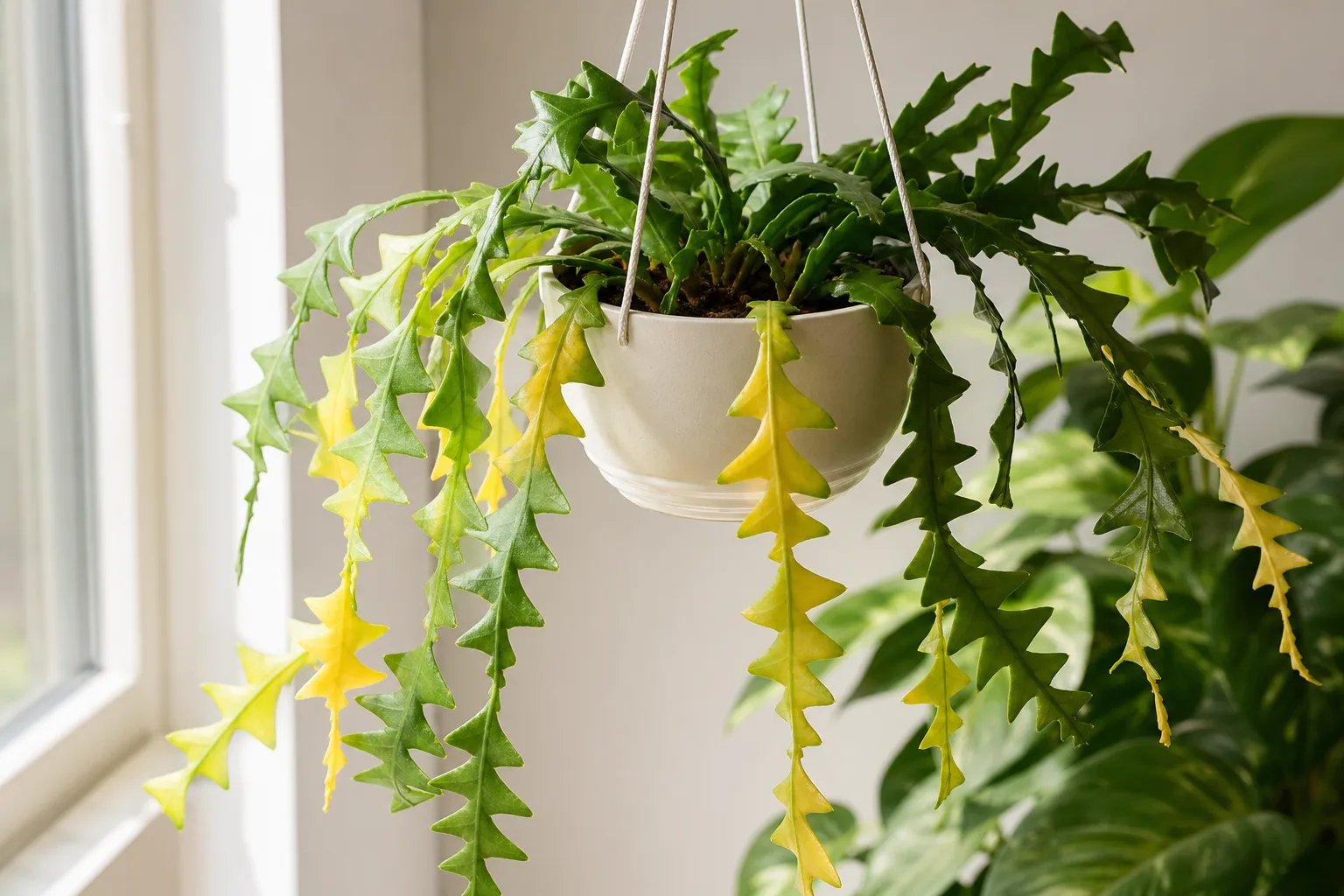
Yellow Stems on Fishbone Cactus: Causes, Checks & Fixes
This guide covers yellow leaves on Fishbone Cactus. See also the general Yellow Leaves guide, watering, and light pages for this plant.
Yellow Stems on Fishbone Cactus: Causes, Checks & Fixes
Quick answer
Fishbone cactus (Disocactus anguliger, also sold as Epiphyllum anguliger) is an epiphytic jungle cactus from Mexican forests with flattened zigzag phylloclades-stem segments, not true leaves. Yellow segments almost always trace to watering mismatch: too wet (most common indoors) or too dry for too long. Epiphyllum cacti dislike waterlogging and extremely dry conditions-this species needs more regular moisture than desert cacti but must never sit in soggy mix.
First step: check the top 1–2 inches of mix and segment texture at the base. Wet soil plus soft yellow segments at the pot rim means stop watering until the upper layer dries. Wrinkled thin segments on dusty dry mix means soak thoroughly, then resume the epiphytic dry-down rhythm. Full species context: fishbone cactus overview.
What yellow segments look like on fishbone cactus
Symptoms appear on phylloclades-the serrated, fishbone-shaped flattened stems that photosynthesize. Describe problems in segments, not generic “leaves.”
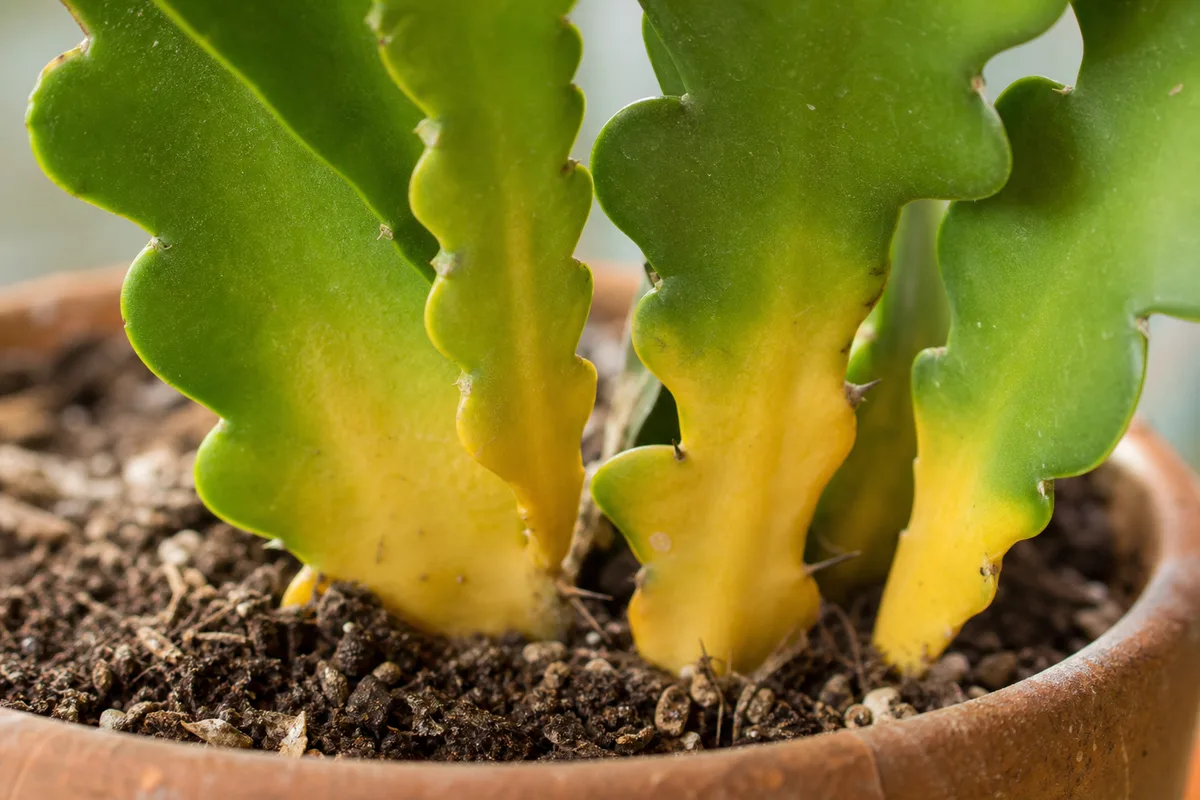
Yellow Leaves symptoms on Fishbone Cactus - compare with healthy tissue on the same plant.
Normal aging (low urgency):
- Oldest segments at the base or back of the trailing chain fade yellow over weeks
- Segments stay firm until they drop; new zigzag growth at tips stays plump and green
- Common on mature hanging plants with long trailing chains
Overwatering (most common indoors):
- Yellowing starts at segment bases near wet mix and spreads upward
- Segments feel soft or mushy; pot stays heavy; mix clings when you probe 1–2 inches deep
- Roots may rot if left sitting in damp compost-epiphytic cacti share this wet-soil vulnerability
- Hanging baskets in cachepots trap standing water and accelerate base yellowing
Underwatering:
- Segments wrinkle and thin before turning yellow or brown at edges
- Pot feels light; mix is dusty throughout the root ball
- Often follows treating fishbone cactus like a desert cactus with long dry spells
- BBC Gardeners’ World notes wrinkled segments when the plant has not received enough water
Too much direct sun:
- Yellow or bleached segments with red or purple tinting on sun-exposed faces
- Usually on south-window plants without acclimation
- Keep out of strong midday sun, especially in summer
Low light etiolation:
- Pale yellow-green new segments spaced far apart on thin stretched stems
- Often paired with slow dry-down and accidental overwatering in dim corners
Yellow segments vs. other fishbone cactus problems
| Pattern | Mix at 1–2 inches | Segment feel | New tip growth | Likely cause |
|---|---|---|---|---|
| Base-up yellow | Wet, heavy pot | Soft near soil | Still green but limp | Overwatering |
| Wrinkled then yellow | Dry throughout | Thin, puckered | Stunted or dull | Underwatering |
| Bleached with red tint | Normal | Firm, sun-facing | Normal | Too much direct sun |
| Pale stretched segments | Damp too long | Soft, spaced far apart | Etiolated | Low light + wet mix |
| One old base segment | On schedule | Firm until drop | Plump zigzags | Normal aging |
For wet-soil rescue, see overwatering and root rot. For dry-pot recovery, see underwatering. For light placement, see the light guide.
Why fishbone cactus gets yellow segments
Desert-cactus watering habits. Growers accustomed to succulents water too rarely in summer, then compensate with heavy soaks-both extremes yellow segments. Fishbone cactus is a tropical forest-dweller that likes warm, humid growing conditions spring through autumn with regular moisture when the top layer dries.
Overwatering in winter. Growth slows in cooler months. Reduce watering in winter; keep compost only just damp, never completely dry and never soggy. Continuing weekly summer watering into a cool dim room keeps mix wet while roots decline.
Poor drainage in hanging baskets. Epiphytic mix should drain fast. Dense peat, blocked holes, and outer cachepots without drainage leave segment bases in standing water. Brown, soft stems from overwatering require immediate unpotting and root inspection when rot has started.
Low light slowing dry-down. Epiphyllum cacti prefer bright, filtered light. Dim shelves extend wet periods-the same watering that worked in a bright window leaves roots damp for weeks in shade.
Repot shock and draft exposure. Sudden light changes, cold drafts below 10°C (50°F), or fresh repotting can yellow several segments temporarily. Most won’t survive temperatures below 10°C-cold windows trigger rapid segment loss.
How to confirm the cause
- Probe 1–2 inches deep in the mix. Water when this zone dries-that is the fishbone rhythm, not a fixed calendar.
- Lift the hanging pot. Heavy and wet suggests overwatering; light and dry suggests underwatering. Pot weight is a reliable moisture check on houseplants.
- Pinch segment bases near the soil line. Soft mush on wet mix means inspect roots-see root rot guide.
- Look for wrinkling before color change. Wrinkled firm-then-thin segments on dry mix point to drought, not rot.
- Check light exposure. South-window direct sun with bleached segments differs from dim etiolation with pale stretched growth.
- Count affected segments. One slow yellow base segment on a long trailing chain is often aging; three or more yellowing on wet mix needs immediate dry-down.
The first fix to try
If mix is wet and segments are soft at the base: stop watering until the top 1–2 inches are dry. Confirm drainage holes are open and empty saucers or cachepots. Do not fertilize yellow plants in soggy mix.
If mix is dusty dry and segments are wrinkled: water thoroughly until excess drains, then wait for the top 1–2 inches to dry before the next drink.
If bleached from direct sun: move to bright filtered light-east or west windows with protection from hot midday sun-and acclimate gradually.
Remove fully yellow spent segments with clean shears after the plant firms up; they will not re-green. Keep firm green segments even if edges look imperfect.
Step-by-step recovery
Work through these tiers in order after your first fix. Do not stack all steps on day one.
Tier 1 - Stabilize moisture (days 1–7)
- Pause or soak once based on your confirmation check-never both in the same week without re-testing mix.
- Empty cachepots and saucers within 30 minutes of any soak so standing water cannot wick back up overnight.
- Hold fertilizer until yellowing stops spreading and new tips look firm for two weeks.
Tier 2 - Improve root-zone conditions (days 7–21)
- Skewer-test the upper half of bark-heavy mix. If the surface looks pale but a skewer pulls damp several inches down, the plant is still overwatered at depth even if you stopped surface drinks.
- Move to brighter filtered light if low light has been slowing dry-down-without jumping straight into hot afternoon sun.
- Trim only fully yellow, mushy segments with sterile shears. Leave firm green tissue intact for photosynthesis.
Tier 3 - Escalate only when Tier 1–2 fail (week 3+)
- Unpot and inspect roots if bases stay soft on mix that has genuinely dried, or if sour smell persists. Trim brown mush, let cuts callus, and repot into airy epiphytic mix per the root rot guide.
- Propagate healthy upper cuttings if more than half the base tissue is gone but firm segments remain higher on the trail-see the propagation guide.
Recovery timeline and what to watch
Fully yellow segments drop and are not replaced in the same spot-new growth extends the trailing chain from healthy tips. Expect two to four weeks after watering rhythm stabilizes before new plump zigzag segments emerge.
Improvement signs: yellowing stops spreading; new segments look firm and evenly green; pot weight matches your dry-down schedule.
Worsening signs: bases turn mushy on still-wet mix; sour smell; multiple segments collapsing weekly; no new growth for a month in warm filtered light.
Lookalike symptoms
Yellow zigzag segments overlap several fishbone cactus problems. Branch on mix moisture and segment texture before treating every yellow segment the same way.
- Overwatering and root rot - Limp yellow segments on a heavy, cool pot with soft bases and sometimes sour smell. Stunted growth with yellowing leaves is a classic overwatering signal. Soaking makes this worse. See overwatering.
- Underwatering - Wrinkled, flattened lobes on a light pot before yellow-brown edges appear. See underwatering.
- Wilting - Turgor loss from drought and from root failure look alike until you weigh the pot. The wilting guide walks the dry-pot versus wet-pot branch.
- Sun scorch - Bleached yellow patches with red or purple tint on sun-facing segments while mix moisture is normal. See sunburn.
- Not enough light - Long thin stretched stems with pale spacing between lobes, often with damp mix from slow uptake. See not enough light.
- Leggy growth - Architectural stretch without base mush; yellowing is secondary to etiolation. See leggy growth.
- Normal senescence - One firm old base segment yellowing slowly on an otherwise plump trailing chain during active growth.
When to worry
Escalate same day if segment bases feel soft and yield to gentle pressure on wet mix, the soil smells sour, or yellow mush is spreading up from the soil line on a heavy pot-that pattern often means advancing rot.
Also escalate if three or more segments yellow within a week on still-wet winter mix, or if firm segments stay yellow and limp one week after the top half of mix has genuinely dried in warm filtered light.
Lower urgency: a single slow-yellow base segment on a long mature trail with firm green tips and normal pot weight between waterings is usually aging, not crisis.
Mistakes to avoid
- Do not treat like a desert cactus with month-long dry spells in active growth
- Do not keep watering when segments soften on a heavy wet pot
- Do not place in hot midday sun without acclimation-sun stress mimics drought yellowing
- Do not fertilize stressed yellow plants in wet soil
- Do not assume all yellow base segments are aging when mix stays wet and several fail at once
- Do not repot on day one unless roots are clearly mushy-dry-down alone often reverses early saturation
How to prevent yellow segments next time
From spring through autumn, water as needed to keep compost slightly moist but not soggy-let excess drain and never leave plants standing in water. Use epiphytic cactus mix in a pot with holes sized to the root mass.
Provide bright filtered light and moderate humidity during the growing season. In winter, move to a cooler spot if possible and reduce watering to keep mix only just damp.
Match seasonal rhythm in the watering guide rather than a fixed weekly schedule across hanger sizes and light levels.
Related fishbone cactus guides
- Fishbone cactus overview - species background and care hub
- Watering guide - top-half-dry rhythm and seasonal checks
- Overwatering - wet mix and limp yellow segments
- Underwatering - wrinkled segments on dry mix
- Root rot - mushy bases and sour soil
- Light guide - bright filtered placement and sun scorch avoidance
Conclusion
Yellow segments on fishbone cactus are a phylloclade problem disguised by the word “leaves.” Confirm with segment texture, pot weight, and top 1–2 inch mix moisture, then branch: stop watering if soft on wet mix, soak once if wrinkled on dry mix, move to filtered light if bleached from sun. Old yellow tissue may not reverse, but firm new zigzag tips mean the plant is back on track-and that is the recovery sign worth watching for.