Fishbone Cactus Care: Light, Water & Tips
Disocactus anguliger
Fishbone cactus is a cloud forest epiphyte - needs more water than desert cacti. Bright indirect light. Reduce watering in autumn to trigger spectacular nocturnal flowers.
Fishbone Cactus Care: Light, Water & Tips
Start with wateringThe most common care mistake for Fishbone CactusWatering guide →Fishbone Cactus care essentials
Light
bright indirect light
Water
Water when top inch dries in spring/summer - every 7–10 days. Reduce to every 2–3 weeks in autumn to trigger blooming.
Soil
Epiphytic mix: 40% potting compost + 30% perlite + 30% orchid bark.
Humidity
40–60%
Temperature
18–27°C (65–80°F)
Fertilizer
Use low-nitrogen cactus or orchid fertilizer to encourage blooming and stop if the plant is stressed, newly repotted, or not actively growing. High-nitrogen fertilizer; winter fertilizing.
About Fishbone Cactus
Fishbone Cactus is native to Mexico (Oaxaca, Chiapas) cloud forest, typically reaches Trailing stems up to 90 cm; 30–60 cm as a typical houseplant indoors, with moderate growth. Fishbone Cactus has a trailing growth habit and part of the Cactaceae family. It is also known as Ric Rac Cactus, Zigzag Cactus, Orchid Cactus, and Epiphyllum anguliger.
| Detail | Information |
|---|---|
| Also known as | Ric Rac Cactus, Zigzag Cactus, Orchid Cactus, Epiphyllum anguliger |
| Native region | Mexico (Oaxaca, Chiapas) cloud forest |
| Mature size | Trailing stems up to 90 cm; 30–60 cm as a typical houseplant |
| Growth rate | Moderate |
| Growth habit | Trailing |
| Scientific name | Disocactus anguliger |
| Family | Cactaceae |
Fishbone Cactus Care: Light, Water & Tips
What Is Fishbone Cactus?
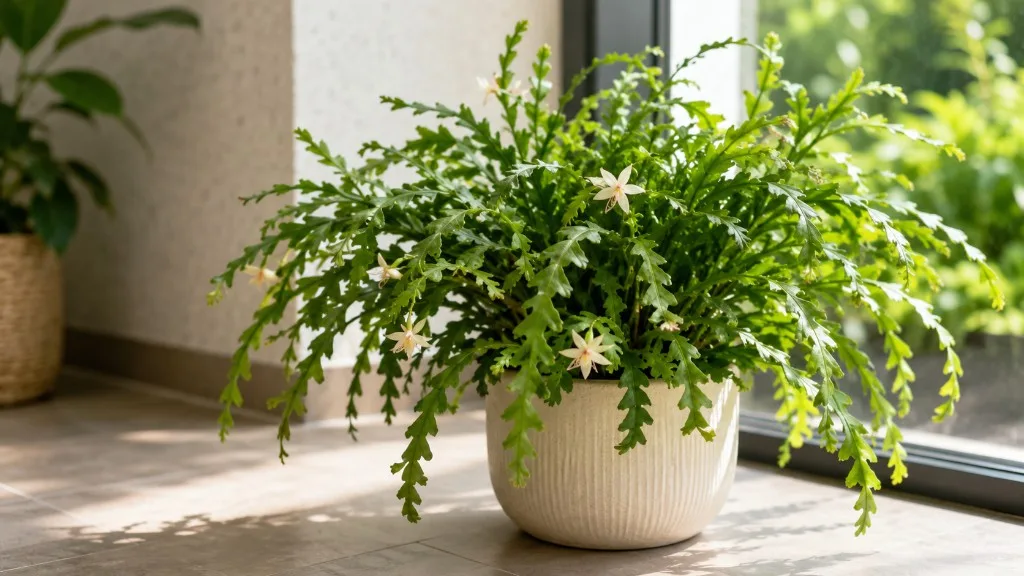
Fishbone cactus is an epiphytic jungle cactus grown for its flat, deeply lobed zigzag stems that trail gracefully from hanging baskets and high shelves. The accepted scientific name is Disocactus anguliger, though you will still see the older synonym Epiphyllum anguliger on tags, in catalogs, and in botanical databases - both names refer to the same species for practical care purposes. Common names include zigzag cactus, ric rac cactus, and orchid cactus, reflecting the stem shape and its kinship with other spineless, forest-dwelling cacti in the tribe Hylocereeae.
Indoors, fishbone cactus typically produces trailing stems 30 to 60 cm (12 to 24 inches) long in the first few years, eventually reaching up to 90 cm (3 feet) on a mature, well-fed specimen in a hanging basket. Growth is moderate - you might see one or two new stem segments per year on a settled plant rather than the explosive flush of a pothos. Unlike desert cacti, it has no spines on mature flat stems, though tiny hair-like structures may appear at areoles on new growth. The real show, when it arrives, is large, fragrant, night-blooming flowers in late autumn or early winter - white to pale yellow blooms that can perfume an entire room after dark.
If you are deciding whether fishbone cactus fits your home, the honest summary is this: it rewards Fishbone Cactus light guide, an airy epiphytic mix, and drought-tolerant watering checked by the pot - not a calendar - and it punishes desert-cactus habits, soggy roots, and cold drafts. It is easier than a finicky orchid and slightly more demanding than a snake plant about light and drainage. The payoff is sculptural trailing foliage with zero spine punctures, pet-safe status for most households, and - once the plant matures - some of the most dramatic nocturnal flowers in the houseplant world.
Botanical Background and Taxonomy
Fishbone cactus belongs to the family Cactaceae, but its ecology places it closer to a tropical epiphyte than to the barrel cacti most people picture. Molecular research reassigned Fishbone Cactus overview from Epiphyllum to Disocactus, a genus of climbing and epiphytic cacti native to Mexico and Central America with phylloclades - flattened, leaf-like stem segments that photosynthesize. Kew’s Plants of the World Online recognizes Disocactus anguliger as the current accepted name, with Epiphyllum anguliger retained as a widely used synonym in horticulture.
The species is endemic to Mexico, occurring as an epiphyte in evergreen forests on the Pacific slope. eFloraMex documents native records from Oaxaca, Guerrero, Jalisco, Michoacán, Nayarit, Colima, and México state, typically at elevations between roughly 1,100 and 1,800 meters. In habitat it anchors to tree branches with aerial roots, absorbing moisture from rain, fog, and decaying leaf litter rather than drawing water from desert soil. That single fact - cloud-forest epiphyte, not desert dweller - explains more about indoor care than any product label.
Secondary stems are flat, succulent, and deeply lobed, with rectangular or slightly rounded teeth that give the fishbone silhouette. Primary stems can become woody with age. Flowers emerge from areoles at the base of stem lobes: nocturnal, strongly scented, 6 to 20 cm long, white or cream with yellowish inner tepals according to botanical descriptions. The ovoid fruit is edible and sometimes compared to kiwifruit in flavor, though most houseplant growers never see fruit indoors without hand pollination.
When buying, confirm the botanical name on the tag. Selenicereus anthonyanus - sometimes sold under similar common names - has a related zigzag look but different growth and bloom timing. More importantly, some Euphorbia species are casually called zigzag cactus and carry very different toxicity profiles. For pet-safe confidence, you want Disocactus anguliger specifically.
The most expensive mistake with fishbone cactus is treating it like a desert cactus because the word “cactus” is on the label. Desert cacti such as Echinocactus or Mammillaria evolved for intense sun, mineral grit, and long dry periods between infrequent deep soaks. Fishbone cactus evolved under filtered forest canopy with regular moisture from rain and humidity, rapid drainage on bark, and no prolonged baking at the root zone.
That does not mean fishbone cactus wants wet feet - epiphytes still rot if water sits around roots - but it does mean three practical shifts for your home routine. First, use an airy, bark-heavy mix rather than straight cactus grit or heavy peat. Second, water when the upper mix dries, not when the entire pot has been bone dry for weeks. Third, prioritize bright indirect light over blazing south-window sun, which scorches flat stems faster than it toughens them.
Fishbone cactus is also drought-tolerant in the right sense: it stores water in succulent stem tissue and survives short dry spells without dying. Drought-tolerant here means forgiving of missed waterings during active growth, not indifferent to water for months. Stems shrivel when dry stress repeats; roots rot when wet stress repeats. The skill is reading the pot, not picking a side of the cactus stereotype.
Best Growing Conditions for Fishbone Cactus
Fishbone cactus performs best when your room approximates the warm, bright, moderately humid rhythm of Mexican cloud forest - without trying to recreate a rainforest in your living room. The four variables that decide almost every outcome are light, water, soil, and temperature. Align those and feeding, Fishbone Cactus repotting guide, propagation, and bloom triggers become manageable. Misalign one - especially water or light - and the plant declines slowly enough that people often blame the wrong variable.
Light Requirements
Fishbone cactus needs bright indirect light for most of the day. In nature it receives strong filtered light through canopy gaps, not open desert exposure. Indoors, that translates to an east-facing window - where gentle morning sun is usually safe - or a bright north, west, or south exposure set back from the glass or softened with a sheer curtain. A few hours of early direct sun on acclimated plants is fine; harsh afternoon sun on unacclimated stems produces bleached patches, brown scorch, and permanent scarring on the flat segments.
The fastest diagnostic for incorrect light is new stem growth, not old damage. Compact new segments with deep green color and relatively short internodes mean the plant is probably receiving enough energy. Long, pale, thin stems reaching toward the window mean more light is needed. Yellowing or bleached sun-facing tissue means less direct exposure or slower acclimation. Move gradually over one to two weeks when upgrading light - stems formed in dim shops burn easily if you jump straight to an unfiltered west sill.
Fishbone cactus tolerates medium indirect light for survival but rarely thrives there long term. In lower light, stems stretch, growth slows, and the pot dries so slowly that overwatering on Fishbone Cactus becomes more likely if you keep a summer Fishbone Cactus watering guide through winter. If your only spot is dim, compensate with a full-spectrum grow light on a 10–12 hour timer, positioned roughly 12–18 inches above the stems, and check moisture more carefully because photosynthetic demand drops.
For bloom potential, light matters year-round. Mature plants that bloom reliably receive several hours of bright filtered light daily in every season, not just during summer. Dim winter quarters may keep the plant alive while quietly eliminating bud formation for the following autumn.
Temperature and Humidity
Fishbone cactus prefers stable indoor temperatures between 65 and 80°F (18 and 27°C) during active growth. It tolerates brief dips toward 50°F (10°C) but suffers in sustained cold - watch uninsulated winter window sills, AC vents blowing directly on hanging baskets, and drafty doorways. The RHS recommends a minimum of 15°C (59°F) during the growing season indoors and protection below 10°C (50°F) - a range most heated homes already meet.
Humidity is helpful but secondary compared with light and watering. Target 40–60% relative humidity when you can; average home levels often suffice if watering and light are correct. Very dry air below about 30% - common above radiators in winter - can encourage spider mites on stressed plants. A pebble tray with the pot elevated above the water line, grouping plants, or a small humidifier near the basket all help more reliably than misting, which raises humidity briefly and can leave wet stem surfaces that invite fungal spotting if airflow is poor.
The cool winter rest that triggers blooming - discussed later - requires a deliberate temperature drop, not accidental cold damage. Aim for cool nights around 50–60°F (10–16°C) for several weeks in autumn, in a bright room, without freezing exposure. That is different from leaving the plant on a windowsill where glass temperature plummets below safe limits.
Soil and Drainage
Use an epiphytic, airy potting mix that drains fast while holding slight moisture in the root zone. A proven home recipe is 40% potting compost, 30% perlite, and 30% orchid bark - the blend referenced across LeafyPixels fishbone cactus care data and consistent with epiphytic cactus guidance from multiple horticultural sources. Some growers add 10% horticultural charcoal for extra freshness in humid rooms. The principle matters more than exact percentages: large pore spaces, bark chunks, and no compaction.
Standard bagged cactus mix alone is usually too mineral-heavy and too slow to dry in indoor conditions. Straight peat-heavy houseplant mix is worse - it compacts, suffocates epiphytic roots, and stays wet too long. Target a slightly acidic pH around 5.5–6.5; hobbyists rarely need to meter pH precisely, but if the mix has broken down into fine mud after two years, repot regardless of calendar.
Always use a container with a drainage hole. Hanging baskets are the classic choice because they match the plant’s natural arching habit and keep trailing stems off the floor, but any pot with drainage works if you empty runoff. Cachepots and saucers must not hold standing water - epiphytic cactus roots begin failing within days of saturation even though the plant is not a desert species.
How to Water Fishbone Cactus
The general rule for fishbone cactus is water when the top 1 to 2 inches (2.5 to 5 cm) of mix feel dry, then soak thoroughly until a small amount runs from the drainage hole. That usually works out to roughly every 7 to 10 days in spring and summer and every 2 to 3 weeks in autumn and winter for a typical 15–20 cm hanging basket in bright indirect light - but your calendar should be a reminder to check, not a rule to follow blindly. Pot size, bark ratio, room temperature, humidity, and light all change the interval.
Fishbone cactus is drought-tolerant in that it stores water in stem tissue and survives occasional missed waterings without immediate death. It is not drought-loving like a desert cactus. Letting the entire root zone stay bone dry for weeks during active growth produces flattened, ribbed, or shriveled stem edges that recover slowly even after you rehydrate. The goal is a full drink followed by an appropriate dry-down, not permanently damp soil and not desert-style neglect.
Check moisture with a finger, a wooden skewer, or by lifting the basket - a noticeably lighter pot means the root zone has dried. For hanging baskets, weight is often the fastest tell because the top surface dries faster than the center. If the top looks dry but the pot still feels heavy and cool, wait.
Watering Rhythm During Active Growth
During warm, bright months when new stem segments are forming, fishbone cactus uses water steadily. Water evenly across the mix surface until water exits the drainage holes, then empty the saucer or drip tray within 15 minutes. Epiphytic roots want access to moisture throughout the root ball, not a daily splash on the top inch alone - shallow sips encourage weak surface roots and fungal issues without reaching the center.
If you just bought the plant, expect a short adjustment period. Nursery specimens often arrive in peat-heavy mix that dries differently from your bark blend at home. Do not compensate for transplant shock by watering more frequently unless the pot is genuinely dry; stabilize light first, then refine the interval based on how fast your specific container dries in your specific room.
Seasonal Adjustments and Bloom Triggers
In cooler, dimmer months, growth slows and the pot dries more slowly. Stretch the interval between waterings and reduce or pause fertilizer until new growth resumes in spring. The most common winter failure mode is continuing a midsummer watering schedule in lower light, which keeps mix waterlogged and leads to yellow stems, mushy bases, and fungus gnats.
If you are trying to trigger blooming on a mature plant, autumn watering strategy changes deliberately. From roughly September through October, reduce frequency so the mix stays dry longer between soaks - not desiccated, but clearly drier than summer. Pair that with cool nights around 50–60°F (10–16°C) for four to six weeks and no fertilizer during the rest period. Resume normal watering and feeding when spring growth appears. Bud initiation depends on this combined signal of cooler temperatures, shorter days, and reduced moisture - not on one heroic dry week in isolation.
Common Watering Mistakes
The single most damaging mistake is watering on a fixed schedule without checking the pot. The second is letting the basket sit in a full saucer or cachepot, which suffocates roots within days even if the top of the mix looks fine. The third is applying desert cactus logic - waiting until the entire pot is dust-dry for weeks - and interpreting shriveled stems as a call for more water without checking whether the center is actually still wet from prior overwatering.
People also misread stem texture. Shriveling on a light, dry pot means drought; water thoroughly and let drain. Shriveling or yellowing on a heavy, wet pot means root stress - hold water, inspect roots if decline continues, and repot into fresh bark mix only after removing mushy tissue. Rot and drought can look superficially similar from across the room; moisture at depth is the tiebreaker.
How to Feed Fishbone Cactus
Fishbone cactus is a light to moderate feeder during active growth, not a heavy one. A balanced water-soluble fertilizer - for example 10-10-10 or 20-20-20 - diluted to one-quarter to one-half of the label rate is sufficient for most indoor hanging baskets. Apply to already-moist soil every four to six weeks from spring through early fall, or monthly if your potting mix contains a slow-release starter charge.
Hold fertilizer entirely during the cool winter rest, after a major repot until new growth appears, and while the plant is recovering from root rot on Fishbone Cactus or pest damage. Overfeeding produces salt buildup and brown stem margins that persist even when watering is correct. If margins crisp despite good moisture, flush the pot with plain water at two to three times the pot volume and pause feeding for six to eight weeks.
About six to eight weeks before expected bloom season on mature plants, some growers switch to a slightly higher-potassium formula for one or two applications to support flower development. This is optional, not mandatory - light, cool rest, and maturity matter far more than fertilizer tweaks. Never feed a plant sitting in dry, stressed soil; always water first.
Repotting and Root Health
Repot fishbone cactus roughly every one to two years, or whenever roots circle drainage holes, water runs straight through without soaking in, or the mix has broken down into fine, water-retentive mud. The best timing is early spring as active growth resumes, which gives the plant a full warm season to re-establish. Fishbone cactus blooms more reliably when slightly root-bound, so avoid repotting annually on a calendar if the root ball still fits comfortably with healthy mix structure.
Choose a pot only one size larger - typically 2.5 to 5 cm (1 to 2 inches) wider - or refresh mix in the same basket if size is adequate. Oversized pots hold excess wet mix around roots that cannot use it, which is the most common trigger for rot after repotting. Use fresh epiphytic blend, maintain the same planting depth, and water lightly for the first week while cut roots heal. Keep the plant in bright indirect light and skip fertilizer until you see new stem tips.
Signs It Is Time to Repot
Physical signs include roots emerging from drainage holes, a top-heavy basket that dries within a day of every watering, or mix that smells sour and compacts when pressed. Performance signs include stalled growth for months during warm weather despite adequate light, or chronic stem edge burn that persists after watering corrections - sometimes indicating mineral-loaded old mix rather than current care errors.
Do not repot a plant actively collapsing from overwatering until you have inspected roots and trimmed rot. Moving a failing root ball into fresh mix without fixing the underlying moisture problem rarely saves epiphytic cacti. Also avoid repotting while flower buds are visible if you can wait - bud drop after repotting is common.
Propagation Methods for Fishbone Cactus
The standard home propagation method for fishbone cactus is stem cuttings. The flat zigzag segments root easily, which is why nurseries often sell pots of multiple rooted cuttings rather than single large specimens. Division is possible on old, multi-stemmed plants but cuttings are simpler for most growers.
Take a 15–20 cm (6–8 inch) cutting comprising one or two stem segments using clean, sharp shears. Let the cut end callus in dry air for 24 to 48 hours before inserting into moist epiphytic mix - callusing reduces rot risk on succulent cactus tissue. Bury the cut end 2–3 cm deep, support the segment if needed so it does not flop, and place the pot in bright indirect light with stable humidity. Keep the mix lightly moist, not soggy, and avoid direct sun on unrooted cuttings.
Roots typically form in three to six weeks at warm room temperatures near 70°F (21°C). Gently tug the stem to feel resistance before treating the cutting as established. Multiple cuttings rooted in one hanging basket produce the full, trailing look faster than a single segment - a practical way to fill a basket without buying oversized specimens.
Do not propagate stressed, diseased, or heavily pest-infested plants; cuttings inherit the parent’s problems. Spring and early summer give the fastest rooting because warmth and light align with natural growth.
How to Get Fishbone Cactus to Bloom
Blooming is the headline feature of a mature fishbone cactus - and the feature most commonly missing in home collections. Young plants rarely flower no matter how well you care for them. Expect bloom potential on specimens roughly three years old or older with multiple trailing stems and visible woody base tissue. If your plant is a recent pot of small rooted cuttings, focus on growth first; flowers are a maturity reward, not a first-year entitlement.
When a mature plant still refuses to bloom, the usual causes are insufficient bright light year-round, no cool winter rest, overpotting, excessive nitrogen fertilizer, or repotting at the wrong time. Bud initiation responds to combined environmental cues, not a single trick.
To encourage flowering on an established plant:
- Provide bright indirect light daily through all seasons, including winter.
- From September to October, reduce watering frequency so the mix dries more thoroughly between soaks.
- Move the plant - if possible - to a location with night temperatures around 50–60°F (10–16°C) for four to six weeks, while still avoiding frost.
- Stop fertilizing during the rest period.
- Resume normal watering and light feeding when spring growth appears.
Slightly root-bound plants often bloom more readily than freshly repotted ones. That does not mean cramming roots into a tiny pot - it means resisting unnecessary upsizing when the current basket still supports healthy growth.
Fishbone cactus flowers are nocturnal - they open in the evening, release a strong sweet fragrance to attract moth pollinators, and typically fade within one to two days. The BBC Gardeners’ World Magazine notes that fishbone cactus flowers open at night with an intense fragrance, and that blooms often appear in late summer to autumn when cool winter rest precedes the flowering season.
Expect white to pale yellow flowers 6 to 20 cm long emerging from areoles at stem lobes. Multiple buds may open in succession over several weeks. Bud drop before opening usually traces to sudden repotting, drafty air, inconsistent watering during bud set, or dry indoor air - stabilize conditions and wait for the next cycle rather than repeatedly moving the basket.
Indoor growers rarely see fruit without hand pollination. The edible ovoid fruit described in botanical references is a bonus of outdoor cultivation in frost-free climates, not a typical houseplant outcome.
Common Fishbone Cactus Problems
Most fishbone cactus problems are environmental, not mysterious diseases. Flat stems show stress through texture and color long before the entire basket collapses. The useful habit is to check light, moisture at depth, and temperature in that order before reaching for fertilizer or pesticide.
Yellow Stems, Shriveled Segments, and Pests
Yellow stems can mean overwatering, underwatering on Fishbone Cactus, sudden light change, natural aging of older segments, or root failure. If yellow tissue is soft and the mix is wet, suspect overwatering and inspect roots for brown mushy tissue. If yellow segments are thin and the pot is light, drought stress is more likely. A single yellowing older segment on an otherwise firm plant is often normal senescence - remove it and watch new growth.
Shriveled or flattened stem edges usually indicate underwatering during active growth or repeated drought cycles. Rehydrate thoroughly, let the pot drain, and adjust the checking rhythm. Shriveling on wet mix points to root rot - stop watering, inspect, trim affected roots, and repot into fresh bark mix.
Brown, bleached, or scorched patches on sun-facing stems mean too much direct light or insufficient acclimation. Move the basket back from harsh exposure and judge recovery by new segments only - scorched tissue does not revert to green.
Leggy, pale, widely spaced new growth is almost always insufficient light. Move closer to a bright window or add a grow light, then consider shortening overly long stems in spring if shape matters.
Watch for spider mites in dry winter air - fine webbing and stippled stem surfaces are the tell. Mealybugs hide in stem axils as white cottony clusters. Scale appears as immobile bumps along older stems. Fungus gnats indicate overly wet surface mix; let the top layer dry slightly between waterings. Catch pests early with weekly inspection. A strong shower, manual removal, and insecticidal soap applied per label directions handle most infestations if you act before the population spreads.
Mushy stem bases combined with foul-smelling mix are advanced overwatering damage. Trim healthy cuttings above the rot and restart propagation rather than trying to save a fully collapsed base.
Is Fishbone Cactus Safe for Pets?
Fishbone cactus is widely considered non-toxic to cats and dogs, which makes it a strong choice for pet-aware households compared with many ornamental cacti and euphorbs. The ASPCA does not always list every obscure cultivar by common name, but The ASPCA lists Epiphyllum (fishbone cactus) as non-toxic to cats and dogs, while noting that any plant material can cause digestive upset if eaten in large quantities - even plants classified as non-toxic.
Non-toxic is not an invitation to let pets chew stems. Ingested fiber can still produce vomiting or diarrhea, and damaged plants are harder to grow back into a trailing showpiece. Hanging baskets above jump height, sturdy ceiling hooks, and room placement away from determined chewers all remain sensible.
The critical identification caveat: Euphorbia species are sometimes sold under zigzag or cactus-like common names and contain diterpene esters that are genuinely toxic to pets. When pet safety matters, confirm Disocactus anguliger on the tag rather than relying on “fishbone cactus” alone. Also distinguish Selenicereus anthonyanus, which shares a similar silhouette but is a different species with its own care profile - it is not the Euphorbia toxicity issue, but misidentification still leads to wrong care.
If you suspect significant ingestion of any houseplant, contact your veterinarian or the ASPCA Animal Poison Control Center at (888) 426-4435 (a consultation fee may apply). This is general information, not veterinary advice.
Conclusion
Fishbone cactus (Disocactus anguliger) is an epiphytic jungle cactus from Mexican cloud forests that trades a little attention for years of sculptural trailing stems and - once mature - fragrant night-blooming flowers. Give it bright indirect light, an airy epiphytic mix with orchid bark, drought-tolerant watering checked by the pot rather than a calendar, and warm stable temperatures with an optional cool autumn rest for bloom, and it becomes one of the lowest-risk statement plants for hanging baskets. Treat it like a desert cactus or a thirsty tropical foliage plant and it will punish you slowly through shriveled stems, yellow segments, or silent refusal to flower.
When something looks wrong, read the plant in context: leggy pale stems mean more light; bleached sun-facing tissue means less direct sun; shriveling on a light dry pot means water; shriveling on a wet pot means roots. Yellow segments usually trace to moisture imbalance, not a missing magic nutrient. Fix the environment first, adjust watering second, and inspect for pests before they spread. Propagate from healthy cuttings if rot wins, wait patiently for blooms on young plants, and enjoy the night fragrance when maturity and seasonal cues finally align - it is worth the wait.
When to use this page vs other Fishbone Cactus guides
- Fishbone Cactus overview - Canonical hub for this species - care topics and problems branch from here.
- Fishbone Cactus problems - Symptom-first path when you already know something is wrong.
Related Fishbone Cactus guides
- Fishbone Cactus watering
- Fishbone Cactus light
- Fishbone Cactus soil
- Fishbone Cactus propagation
- Fishbone Cactus fertilizer
- Fishbone Cactus repotting
- Fishbone Cactus pruning
- Brown Tips on Fishbone Cactus
- No Flowers on Fishbone Cactus
- Yellow Leaves on Fishbone Cactus
- Root Rot on Fishbone Cactus
- Overwatering on Fishbone Cactus
How to care for Fishbone Cactus?
How much light does Fishbone Cactus need?
bright indirect light
- bright indirect light - bright indirect light.
When should you water Fishbone Cactus?
Water when top inch dries in spring/summer - every 7–10 days. Reduce to every 2–3 weeks in autumn to trigger blooming.
- Top half of soil dry before watering - Water when top inch dries in spring/summer - every 7–10 days.
- Drain excess water - Water when top inch dries in spring/summer - every 7–10 days.
What soil works best for Fishbone Cactus?
Epiphytic mix: 40% potting compost + 30% perlite + 30% orchid bark.
- cactus mix - Epiphytic mix: 40% potting compost + 30% perlite + 30% orchid bark.
- perlite - Epiphytic mix: 40% potting compost + 30% perlite + 30% orchid bark.
- orchid bark - Epiphytic mix: 40% potting compost + 30% perlite + 30% orchid bark.
Grower notes for Fishbone Cactus
What matters most with Fishbone Cactus
Fishbone Cactus stores water in leaves, stems, roots, or a swollen base, so overcare is usually more dangerous than short dry spells. Strong light and drainage are the safety net. In practice, the care checkpoint is simple: bright indirect light. Pair that with epiphytic mix: 40% potting compost + 30% perlite + 30% orchid bark, and avoid changing water, pot size, and placement all at once.
Best placement in a real home
Fishbone Cactus belongs where bright indirect light is realistic for most of the day, not only where the pot looks good. Water when top inch dries in spring/summer - every 7–10 days. Reduce to every 2–3 weeks in autumn to trigger blooming. If the pot stays wet longer than expected, move the plant into better light or reassess the mix before watering again. Humidity target: 40–60%. Temperature comfort zone: 18–27°C (65–80°F).
Before you buy this plant
Choose Fishbone Cactus with firm new growth, clean leaf undersides, and soil that does not smell sour or feel compacted. Be cautious if you see shrivelled stems, sticky residue, collapsed crowns, or a pot that is wet in poor light. Cosmetic old-leaf damage is less worrying than weak roots or active pests.
First month after bringing it home
Do not repot Fishbone Cactus on day one unless the mix is failing or pests are obvious. Quarantine it, learn how fast the pot dries, and keep care boring while it adjusts. Watch especially for shrivelled stems, brown-tips, and no-flowers. If problems appear, correct the condition first rather than stacking fertilizer, repotting, and pruning together.
Pet-aware note for Fishbone Cactus
Fishbone Cactus is a better choice for pet-aware homes than toxic ornamentals, but pet safe does not mean the plant should be chewed. Use hanging, shelf, or room placement if pets dig in soil or shred leaves, and choose sturdier plants for high-traffic pet zones.
How to tell Fishbone Cactus is settling in
Also sold as Ric Rac Cactus, Zigzag Cactus, and Orchid Cactus, this plant should be judged by stable new growth rather than label names alone. If you plan to multiply it later, common methods include Stem cuttings. Repot only when you see roots heavily escaping and very rapid drying. If brown-tips shows up early, inspect light, watering, and roots before assuming the plant is permanently weak.
Is it pet safe?
Fishbone cactus is generally considered non-toxic to cats and dogs.
Non-toxic to cats and dogs per ASPCA. Safe in pet households.
Watering Fishbone Cactus
For Fishbone Cactus, top half of soil dry before watering and water every 7–14 days in growing season; every 3–4 weeks in winter. Reduce significantly in autumn and winter to encourage spring or autumn blooming.
| Detail | Information |
|---|---|
| How often | Every 7–14 days in growing season; every 3–4 weeks in winter |
| How to check | Top half of soil dry before watering |
| Seasonal changes | Reduce significantly in autumn and winter to encourage spring or autumn blooming |
Signs of overwatering
- yellowing or mushy stems
- root rot
Signs of underwatering
- flattening or shrivelling of the zigzag stem edges
Soil & potting for Fishbone Cactus
Use a mix of cactus mix, perlite, orchid bark, coco coir for Fishbone Cactus. Good to excellent. Target soil pH around 5.5–6.5. Repot every 2 years; prefers slightly pot-bound conditions, ideally in spring.
| Detail | Information |
|---|---|
| Recommended mix | cactus mix, perlite, orchid bark, coco coir |
| Drainage | Good to excellent |
| Soil pH | 5.5–6.5 |
| Repotting frequency | Every 2 years; prefers slightly pot-bound conditions |
| Best season to repot | Spring |
Signs it needs repotting
- roots heavily escaping
- very rapid drying
Humidity & temperature for Fishbone Cactus
Fishbone Cactus prefers 40–60%, though normal home humidity is usually fine. Keep temperatures around 18–27°C (65–80°F).
| Detail | Information |
|---|---|
| Humidity | 40–60% - normal home humidity is fine. |
| Ideal temperature | 18–27°C (65–80°F) |
Fertilizer & pruning for Fishbone Cactus
Use use low-nitrogen cactus or orchid fertilizer to encourage blooming and stop if the plant is stressed, newly repotted, or not actively growing. High-nitrogen fertilizer; winter fertilizing. for Fishbone Cactus.
| Detail | Information |
|---|---|
| Fertilizer type | Use low-nitrogen cactus or orchid fertilizer to encourage blooming and stop if the plant is stressed, newly repotted, or not actively growing. High-nitrogen fertilizer; winter fertilizing. |
Common problems on Fishbone Cactus
Brown Tips
LowLikely cause: Tip browning in fishbone cactus indicates low humidity or overexposure to direct sun
Quick fix: Raise humidity; move away from intense direct sun
Full fix guide →No Flowers
MediumLikely cause: No flowering is typically due to insufficient autumn drought and cold stress required to trigger bud initiation
Quick fix: Reduce watering in September–October; allow cool nights below 15°C for 4–6 weeks
Full fix guide →Yellow Leaves
MediumLikely cause: Common on this plant type; confirm with recent watering, light, and root checks.
Quick fix: Inspect the plant and correct the most likely care stressor before stacking treatments.
Full fix guide →Root Rot
MediumLikely cause: Common on this plant type; confirm with recent watering, light, and root checks.
Quick fix: Inspect the plant and correct the most likely care stressor before stacking treatments.
Full fix guide →Overwatering
MediumLikely cause: Common on this plant type; confirm with recent watering, light, and root checks.
Quick fix: Inspect the plant and correct the most likely care stressor before stacking treatments.
Full fix guide →Underwatering
MediumLikely cause: Common on this plant type; confirm with recent watering, light, and root checks.
Quick fix: Inspect the plant and correct the most likely care stressor before stacking treatments.
Full fix guide →Spider Mites
MediumLikely cause: Common on this plant type; confirm with recent watering, light, and root checks.
Quick fix: Inspect the plant and correct the most likely care stressor before stacking treatments.
Full fix guide →Mealybugs
MediumLikely cause: Common on this plant type; confirm with recent watering, light, and root checks.
Quick fix: Inspect the plant and correct the most likely care stressor before stacking treatments.
Full fix guide →Aphids
MediumLikely cause: Common on this plant type; confirm with recent watering, light, and root checks.
Quick fix: Inspect the plant and correct the most likely care stressor before stacking treatments.
Full fix guide →Leggy Growth
MediumLikely cause: Common on this plant type; confirm with recent watering, light, and root checks.
Quick fix: Inspect the plant and correct the most likely care stressor before stacking treatments.
Full fix guide →Slow Growth
MediumLikely cause: Common on this plant type; confirm with recent watering, light, and root checks.
Quick fix: Inspect the plant and correct the most likely care stressor before stacking treatments.
Full fix guide →Wilting
MediumLikely cause: Common on this plant type; confirm with recent watering, light, and root checks.
Quick fix: Inspect the plant and correct the most likely care stressor before stacking treatments.
Full fix guide →Drooping Leaves
MediumLikely cause: Common on this plant type; confirm with recent watering, light, and root checks.
Quick fix: Inspect the plant and correct the most likely care stressor before stacking treatments.
Full fix guide →Low Humidity
MediumLikely cause: Common on this plant type; confirm with recent watering, light, and root checks.
Quick fix: Inspect the plant and correct the most likely care stressor before stacking treatments.
Full fix guide →Not Enough Light
MediumLikely cause: Common on this plant type; confirm with recent watering, light, and root checks.
Quick fix: Inspect the plant and correct the most likely care stressor before stacking treatments.
Full fix guide →Fungus Gnats
MediumLikely cause: Common on this plant type; confirm with recent watering, light, and root checks.
Quick fix: Inspect the plant and correct the most likely care stressor before stacking treatments.
Full fix guide →Mold on Soil
MediumLikely cause: Common on this plant type; confirm with recent watering, light, and root checks.
Quick fix: Inspect the plant and correct the most likely care stressor before stacking treatments.
Full fix guide →Likely cause: Common on this plant type; confirm with recent watering, light, and root checks.
Quick fix: Inspect the plant and correct the most likely care stressor before stacking treatments.
Full fix guide →