Hibiscus Plant Care: Light, Water, Soil & Tips
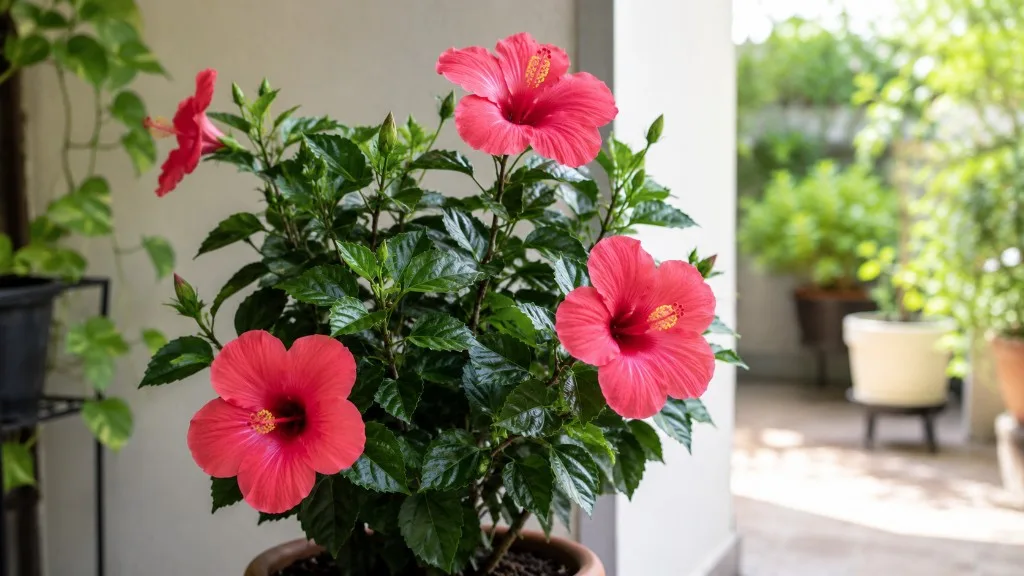
Hibiscus rosa-sinensis
Hibiscus needs 6+ hours direct sun for spectacular blooms. Water frequently in summer - may need daily. Weekly high-potassium feed. Overwinter inside above 10°C.
Hibiscus Plant Care: Light, Water, Soil & Tips
Start with wateringThe most common care mistake for HibiscusWatering guide →Hibiscus care essentials
Light
full sun - 6+ hours of direct sunlight for maximum flowering
Water
Water when top inch dries. May need daily watering in summer heat. Never in standing water. Bud drop indicates watering inconsistency.
Soil
Well-draining, slightly moisture-retentive compost. pH 6.0–7.0.
Humidity
Moderate to high (50–70%); naturally suited to Indian tropical climate
Temperature
20°C to 35°C (68–95°F)
Fertilizer
Use high-potassium fertilizer (NPK 6-6-12 or hibiscus-specific feed) to promote blooming and stop if the plant is stressed, newly repotted, or not actively growing. High-nitrogen fertilizers - produce lots of foliage but very few flowers.
About Hibiscus
Hibiscus is native to East Asia (widely naturalised across tropics), typically reaches 1–3 m tall; 1–2 m wide; compact in containers indoors, with moderate to fast in warm climates growth. Hibiscus has a bushy growth habit and part of the Malvaceae family. It is also known as China Rose, Gudhal, Japa Kusuma, and Shoe Flower.
| Detail | Information |
|---|---|
| Also known as | China Rose, Gudhal, Japa Kusuma, Shoe Flower |
| Native region | East Asia (widely naturalised across tropics) |
| Mature size | 1–3 m tall; 1–2 m wide; compact in containers |
| Growth rate | Moderate to fast in warm climates |
| Growth habit | Bushy |
| Scientific name | Hibiscus rosa-sinensis |
| Family | Malvaceae |
Hibiscus Plant Care: Light, Water, Soil & Tips
What Is Hibiscus?
Hibiscus is a genus of flowering plants in the family Malvaceae grown for showy blooms that can range from saucer-sized dinner-plate flowers on hardy perennials to the steady parade of smaller, vividly colored blossoms on tropical shrubs. In garden centers and nurseries, the word “hibiscus” usually refers to one of three distinct groups: tropical hibiscus (Hibiscus rosa-sinensis and its hybrids), hardy perennial hibiscus (Hibiscus moscheutos and hybrids, often called swamp rose mallow), and Rose of Sharon (Hibiscus syriacus), a woody shrub that survives colder winters than either of the others. All three share a love of sun and moisture, but their cold tolerance, winter behavior, pruning schedules, and container culture differ enough that treating them as interchangeable is the fastest route to bud drop, leaf loss, and a plant that never blooms the way you expected.
Tropical H. rosa-sinensis - also sold as China rose, Gudhal, Japa Kusuma, and shoe flower - is native to East Asia and widely naturalized across tropical and subtropical regions. Outdoors it can reach 1–3 m (3–10 ft) tall and 1–2 m (3–6 ft) wide, though container-grown plants stay more compact. Growth is moderate to fast in warm climates, producing a bushy evergreen shrub where frost never arrives. Individual tropical blooms typically last only a day or two, but healthy plants open new buds continuously through the warm season. Hardy H. moscheutos dies back to the ground each fall in cold climates and resprouts from the crown in spring, producing enormous flowers in mid to late summer. Rose of Sharon behaves as a deciduous shrub hardy to about USDA Zone 5, blooming later in summer on wood that persists through winter.
If you are deciding whether hibiscus fits your home or garden, the honest summary is this: hibiscus rewards strong light, consistent moisture, warm temperatures, and type-appropriate winter care - and it punishes shade, drought swings, cold exposure, and being moved while in bud. Tropical types are easier on a sunny balcony or conservatory than in a dim living room. Hardy types are easier in an in-ground perennial border than on a windowsill. The payoff is some of the most dramatic flowers you can grow in a container or temperate garden, plus propagation simple enough that a single well-grown tropical plant can supply next season’s patio pots for free.
Tropical vs Hardy Hibiscus: How to Tell Them Apart
The most important care decision starts before watering, feeding, or Hibiscus repotting guide: identify which hibiscus you actually have. Tags are not always reliable, especially on mass-market patio plants, but a few physical traits separate the main groups quickly.
Tropical hibiscus (H. rosa-sinensis) has smaller, dark green, glossy leaves with a polished surface. Stems are relatively soft and shrubby. Flowers come in a wide palette - red, pink, yellow, orange, salmon, peach, and bicolors - often with single or double forms. The plant stays evergreen in frost-free climates and is hardy outdoors only in USDA Zones 9–11. Everywhere else it is grown as a container plant brought indoors before nights drop toward 45–50°F (7–10°C), according to the RHS and Missouri Botanical Garden.
Hardy hibiscus (H. moscheutos and hybrids) has larger, heart-shaped leaves with a dull, matte finish - not glossy. Some cultivars show burgundy-tinged foliage. Flowers are enormous - often 6–12 inches (15–30 cm) across - in white, pink, red, and bicolor forms. The plant dies back to the ground after frost and returns from hardy roots in USDA zones 5–9 (some hybrids to zone 4). It is a herbaceous perennial, not a woody evergreen shrub.
Rose of Sharon (H. syriacus) is a woody deciduous shrub with medium-sized, dull green leaves and smaller flowers than dinner-plate hardy types. It tolerates Zones 5–9, blooms in late summer, and needs pruning of persistent wood, not the full cut-to-the-ground treatment of H. moscheutos.
If your plant dropped all its leaves outdoors after the first hard frost and you are in a cold-winter region, you likely have a hardy type - not a dead tropical plant. If it has glossy leaves and you bought it as a summer patio specimen, assume tropical until proven otherwise and plan for indoor shelter.
Botanical Background and Why the Type Matters
Hibiscus belongs to the Malvaceae family, a group that includes okra and cotton. Malvaceae plants generally prefer well-drained soil with steady moisture, dislike sudden cold, and show stress first through bud drop and leaf yellowing before obvious pest damage appears. Knowing the family helps you predict behavior: hibiscus is a heavy drinker in heat, a heavy feeder during bloom, and sensitive to environmental inconsistency in ways that tougher shrubs are not.
The Latin name Hibiscus rosa-sinensis means “rose of China,” reflecting its East Asian origin - not a relationship to actual roses. Retail naming is messy: “tropical hibiscus,” “Chinese hibiscus,” “Hawaiian hibiscus,” and plain “hibiscus” may all point to H. rosa-sinensis hybrids. Hardy types are sometimes labeled “perennial hibiscus,” “rose mallow,” or “dinner-plate hibiscus.” Rose of Sharon is frequently sold under its species name or as a landscape shrub without the word hibiscus prominent on the tag. Keep the botanical name when you have it. Two pots labeled “hibiscus” at the same garden center can require opposite winter protocols.
Why the distinction matters in practice: tropical hibiscus cannot survive freezing temperatures and suffers chill damage below about 45°F (7°C). Hardy hibiscus requires winter dormancy and will not thrive as a permanent houseplant. Rose of Sharon needs a cold season outdoors to maintain long-term vigor. Prune tropical hibiscus in late winter to shape flowering wood; cut hardy hibiscus nearly to the ground after frost; prune Rose of Sharon while dormant to control size. Water tropical pots frequently in summer heat; hardy in-ground plants need deep, less frequent soaking. Mixing these schedules on the wrong plant produces the classic complaint: “My hibiscus never blooms” - when the real issue is a tropical plant starving for sun indoors or a hardy plant drowning in a year-round watering routine meant for a patio pot.
Best Growing Conditions for Hibiscus
Hibiscus does best when your space approximates the warm, bright, humid rhythm of its native range - or, for hardy types, when summer conditions are hot and sunny enough to fuel the enormous blooms that make them worth growing. The four variables that decide almost every outcome are light, water, soil, and temperature. Get those aligned and feeding, repotting, pruning, and propagation become routine. Get one badly wrong - especially light on tropical plants or drainage on container specimens - and the plant declines faster than its tough-looking leaves suggest.
Light Requirements
Hibiscus needs strong light to bloom well. For tropical H. rosa-sinensis, the practical target is full sun - at least 6 hours of direct sunlight daily for maximum flowering. Outdoors, a south- or west-facing patio, sunny balcony, or open garden bed is ideal in most climates. In the hottest desert-style afternoons of Zone 9–10, a touch of filtered shade can prevent leaf scorch and bud drop, but dim exposure is a bigger problem than too much sun for bloom-focused growers. Indoors, a south-facing window or supplemental full-spectrum grow lights on a 10–12 hour timer is usually necessary; the plant may survive in bright indirect light, but flowers tell the truth about whether light is truly adequate.
Hardy H. moscheutos and Rose of Sharon also want full sun for the strongest bloom show. These are not shade perennials. Give them at least six hours of direct sun in the garden; less light means fewer flowers and weaker stems that flop under the weight of dinner-plate blooms.
The fastest diagnostic for incorrect light is new growth and bud formation, not old leaves. Compact internodes, firm stems, deep green foliage (for tropical types), and steady bud set mean the plant is probably happy. Leggy, pale growth with no buds means the plant wants more light. Bleached patches, brown scorch on sun-facing leaves, or midday curling on recently moved plants mean it wants softer light or slower acclimation. Acclimate gradually over one to two weeks when moving from a shaded nursery bench to full patio sun - leaves formed in low light burn easily if you jump straight into afternoon exposure.
Temperature and Humidity
Tropical hibiscus prefers stable warmth between 20 and 35°C (68–95°F) during active growth and struggles below 10°C (50°F). The RHS lists a minimum night temperature of 7–10°C (45–50°F) for overwintering tropical plants. Plan to bring containers indoors before nights drop toward 45°F (7°C), even if daytime temperatures still feel mild. Prolonged chill causes leaf drop, bud loss, and stem dieback. Avoid placing indoor plants directly above radiators, beside open fires, or in the path of air-conditioning vents - rapid temperature swings trigger the same bud drop as inconsistent watering.
Hardy hibiscus tolerates freezing winter temperatures in suitable zones when dormant. H. moscheutos is root-hardy to about zone 5 (some hybrids to zone 4) with mulch protection; Rose of Sharon handles Zone 5. Neither belongs indoors year-round. They need seasonal cold to complete their natural cycle.
Humidity matters more for tropical hibiscus indoors than for in-ground hardy plants. Target 50–70% relative humidity when possible - naturally comfortable in many Indian tropical regions, but often too dry in heated winter homes. Group plants, use a humidity tray with damp pebbles, or run a small humidifier near the canopy. Very dry air below about 30% encourages spider mites, one of the most common indoor hibiscus pests. Do not rely on misting alone; wet foliage in cool, stagnant air invites fungal problems without lasting humidity benefit.
Soil and Drainage
Use a well-draining, slightly moisture-retentive mix with a target pH of 6.0–7.0 (slightly acidic to neutral). A practical container recipe is 40% potting soil, 30% compost, 20% coarse sand, and 10% perlite - enough organic matter to hold moisture between waterings, enough grit and perlite to prevent waterlogging. Hibiscus dislikes extremes: bone-dry root balls and soggy stagnant mix both cause bud drop and yellow leaves.
For in-ground hardy hibiscus, loamy garden soil amended with compost performs well. These plants tolerate brief wet feet better than desert succulents - they evolved in marshy edges - but standing water around crowns for days still invites rot. Raised beds help in heavy clay. For tropical containers, a drainage hole is non-negotiable; decorative cache pots without drainage are a short-term display option only.
Repot into fresh mix every one to two years for container tropical plants. Compacted peat-heavy mixes lose air space over time, and compacted mix is one of the fastest paths to root problems even when you water correctly.
How to Water Hibiscus
The general rule for container hibiscus is: water when the top inch (2–3 cm) of mix feels dry, then water thoroughly until excess drains from the bottom - and never let the pot sit in standing water. More precisely, plan around daily watering in peak summer heat and every two to three days otherwise as a starting point for active tropical plants, then refine based on how fast the actual pot dries in your home. Pot size, soil mix, light, and season all change the interval, so a calendar answer is a starting point, not a final one.
Use your finger or a wooden chopstick to check moisture an inch or two into the mix before you water. If the deeper mix is still damp, wait. If the surface is dry and the pot feels noticeably lighter, soak the root ball until water runs freely from drainage holes. Empty the saucer within 30 minutes so roots are not reabsorbing stagnant runoff - and so pets are not drinking fertilizer-contaminated water.
Hibiscus watering guide During Active Growth
During active growth - warm, bright months when new leaves and buds are forming - tropical hibiscus uses water aggressively. The pot dries on a predictable rhythm and the plant shows clear signals when it is ready: slight leaf droop in afternoon heat (recovering by evening), lighter pot weight, and dry surface soil. Water thoroughly at those signals, not a little every day by reflex. Deep watering encourages roots to explore the full pot; shallow sips keep the center dry while the surface looks wet.
Hardy in-ground hibiscus prefers deep, less frequent soaking that wets the root zone several inches down. Two to three long sessions per week during summer heat usually beats daily sprinkles that never reach deep roots. Mulch around hardy plants to reduce evaporation and even out soil moisture.
Bud drop before flowers open is one of the clearest signs that watering has been inconsistent - too dry, too wet, or alternating between the two. Hibiscus sets buds when conditions feel stable, then aborts them when stress arrives. If buds are dropping, fix the watering rhythm before reaching for fertilizer or moving the plant.
Seasonal Adjustments and Winter Care
In cooler, dimmer months, tropical hibiscus slows. The summer watering rhythm that worked on the patio will overwater the same plant indoors in November. Stretch intervals, verify moisture deeper in the pot, and reduce frequency until the top inch dries more slowly. The RHS advises watering overwintering tropical plants only when the top layer of compost is dry and ceasing feed until spring growth resumes. Growth may look semi-dormant: fewer leaves, no buds, slow metabolism. That is normal if the plant is cool but above the minimum temperature threshold.
For hardy hibiscus overwintering outdoors, allow stems to die back after frost. Cut H. moscheutos stems to a few inches above soil level in late fall and apply 3–4 inches of mulch over the crown in Zones 4–6. Remove mulch gradually in spring when new shoots emerge. Rose of Sharon needs less drastic cutting - prune dead or crossing wood while dormant, but do not cut established shrubs to the ground unless renovating an overgrown specimen.
When moving tropical plants indoors for winter, do so before frost and before the furnace dries the air dramatically. Expect some yellow leaf drop from lower light and changed humidity. Resist compensating with extra water; reduced light means reduced uptake. Resume the active-season rhythm only when new growth appears in spring and the plant moves back outdoors after the last frost.
Common Watering Mistakes
The single most common cause of problems with hibiscus is watering on a calendar instead of on the plant’s actual state. Other frequent mistakes include: watering a little every day instead of deeply when needed, leaving the pot sitting in a full saucer, watering by reflex when buds drop without checking whether the mix is already wet, and using the same summer schedule on a cool indoor winter plant.
underwatering on Hibiscus shows up as wilting, dry yellow leaves, and bud drop before opening. overwatering on Hibiscus shows up as yellow leaves with green veins, mushy stems at the base, and fungus gnats hovering over a perpetually wet surface. When in doubt, check moisture at root depth before adding more water - hibiscus recovers from brief dryness more easily than from chronic root rot on Hibiscus.
How to Feed Hibiscus for Maximum Blooms
Hibiscus is a heavy feeder during active growth and bloom, but fertilizer cannot fix bad light, damaged roots, or a pot that stays wet too long. Feed only when the plant is healthy, actively growing, and drying the pot on a normal rhythm.
Use a high-potassium fertilizer - such as NPK 6-6-12 or a hibiscus-specific bloom formula - at half the label strength every two weeks from March through October (or through your local warm season). Potassium supports flower formation; excess nitrogen pushes foliage at the expense of blooms. A balanced 10-10-10 at half strength works if that is what you have, but watch for leafy, flowerless growth and shift toward higher potassium if that pattern appears.
Apply fertilizer to already-moist soil so the solution distributes through the root zone without burning dry roots. Flush the pot with plain water monthly during the feeding season to wash accumulated salts from the mix - especially important in containers where evaporation leaves minerals behind. Pause feeding entirely during winter dormancy, after repotting, during recovery from pest damage, and whenever the plant is shedding leaves from cold or low-light stress. Resume when new growth is clearly visible and temperatures are stable.
For in-ground hardy hibiscus, incorporate compost at planting and side-dress with balanced granular fertilizer or compost tea in early summer when shoots are knee-high. Overfeeding hardy plants is less common than underfeeding in poor sandy soils, but salty chemical buildup is rarely an issue in open ground compared with pots.
Repotting and Root Health
Repot tropical hibiscus roughly every one to two years, or whenever the pot dries much faster than it used to, roots circle drainage holes, or water runs straight through without soaking in. The best time is late winter or early spring before new growth accelerates - February or March in many Northern Hemisphere climates, matching RHS repotting guidance. Hardy in-ground plants do not need repotting; they benefit from periodic compost mulching instead.
Go up only one pot size at a time. A pot too large holds too much wet mix relative to the root system, which is the most common cause of root rot after repotting. Use fresh, well-draining mix, firm it gently around the root ball, and water lightly for the first week while damaged roots heal. Slightly root-bound tropical plants often bloom more freely than freshly repotted ones - do not repot purely on calendar if the plant is flowering heavily and drinking normally.
Signs It Is Time to Repot
The clearest signs are physical: roots emerging from drainage holes, roots circling the surface, water racing through dry mix in seconds, or a top-heavy plant that tips easily. A sour smell from the mix or soil that stays wet for a week after a single watering also signals that repotting with fresh, airier mix is overdue even if the calendar says otherwise.
Hardy hibiscus planted in ground rarely needs division unless you are propagating or the clump has outgrown its space. Divide dormant crowns in early spring if you want multiple plants.
Propagation Methods for Hibiscus
The simplest home propagation method for tropical hibiscus is softwood or semi-ripe stem tip cuttings taken in late spring or early summer when growth is active. Division works for crowded hardy clumps; seed is possible but variable on hybrids.
For stem cuttings: select a healthy, non-flowering shoot and cut a 7–10 cm (3–4 inch) section just below a leaf node. Remove lower leaves, dip the cut end in rooting hormone if you have it, and insert into a moist, peat-free sandy cutting mix. Provide bottom heat of 24–27°C (75–80°F) and high humidity - a heated propagator is ideal; a clear plastic bag over a pot on a warm windowsill works as a home alternative. Roots often form in about two weeks under warm conditions, according to RHS propagation notes. Pot rooted cuttings into individual containers and grow them on without disturbing roots until the following season.
Do not propagate a stressed, pest-infested, or drought-shocked parent plant. Cuttings inherit the parent’s condition, and weak parents produce weak offspring. Address environmental problems first, then take cuttings from the healthiest new growth.
Hardy hibiscus can be divided in early spring by lifting the crown and separating sections with healthy buds. Each division needs roots and at least one shoot bud to succeed.
Common Hibiscus Problems
Most hibiscus problems are environmental, not mysterious. They show up as bud drop, yellow leaves, or pests that map to specific causes. The hardest part is usually patience: stress builds over days, and recovery takes weeks once conditions stabilize.
Bud Drop, Yellow Leaves, and Pests
Bud drop before flowers open usually traces to inconsistent watering, low humidity, sudden temperature change, or moving the plant while buds are forming. Hibiscus hates relocation during budding. If you must move a container, do it before bud set or after flowering, not when buds are swelling. Stabilize water and humidity first; do not chase bud drop with more fertilizer.
Yellow leaves can mean overwatering, underwatering, low light, nutrient deficiency, natural older-leaf shedding, chill damage, or pests. Check moisture at depth first, then light exposure, then inspect leaf undersides and stem joints for spider mites, aphids, scale, and whitefly. Spider mites are especially common on indoor tropical hibiscus in dry winter air; look for fine webbing and stippled yellow speckling. A strong shower, insecticidal soap, and higher humidity handle early infestations if you act before populations explode.
Brown leaf edges often point to dry soil, salt buildup, or low humidity. Flush the pot with plain water if you have been feeding heavily in a container. Root rot from chronic overwatering produces yellowing, wilting despite wet mix, and a mushy base - repot into fresh mix, trim dead roots, and reduce watering frequency.
Hardy hibiscus emerging in spring sometimes looks dead until soil temperatures warm - wait until late spring before assuming crown death. Rose of Sharon leafs out later than many shrubs; late emergence is normal, not a failure.
Is Hibiscus Safe for Pets?
Pet safety depends partly on species, and commercial labeling is not always precise. The ASPCA lists Hibiscus syriacus (Rose of Sharon) as non-toxic to dogs, cats, and horses. Tropical H. rosa-sinensis is widely sold as a pet-friendly patio plant, and it does not appear on most high-alert toxic houseplant lists - but non-toxic does not mean edible. The ASPCA and veterinary sources note that ingestion of any plant material can cause vomiting, diarrhea, or reduced appetite in pets, especially when large quantities, potting soil, or fertilizer residue are involved.
Practical precautions: keep hibiscus out of reach of curious chewers, empty drainage saucers so pets do not drink runoff that may contain fertilizer salts, store fertilizers securely, and avoid pesticide sprays on plants accessible to animals. If a pet vomits repeatedly, refuses food, or shows lethargy after eating plant material, contact your veterinarian or a pet poison hotline regardless of the plant’s nominal toxicity status.
For households with heavy chewers, hibiscus is lower risk than lilies or sago palm - but a stable, truly pet-safe alternative on a floor-level shelf may still be the better choice if your cat treats every leaf as a snack.
Conclusion
The most useful thing to know about hibiscus is that “hibiscus” is not one plant with one care sheet. Tropical Hibiscus rosa-sinensis is a glossy-leaved, frost-tender bloomer that wants six or more hours of sun, steady moisture, warm temperatures above about 45–50°F (7–10°C), and high-potassium feeding through the warm season - usually in a pot you move indoors before cold nights. Hardy H. moscheutos and Rose of Sharon are different organisms with different winter scripts: die-back or dormant wood, in-ground culture, and full sun without the indoor compromise.
Identify your type first. Match light and water to how the pot or garden bed actually dries. Feed for blooms only when growth is active. Repot tropical plants on a one-to-two-year rhythm with fresh, airy mix. Take cuttings in summer when the parent is healthy. When buds drop or leaves yellow, fix the environment before stacking fertilizer, repotting, and relocation into one stressful afternoon. Get those decisions right and hibiscus repays you with flowers that are genuinely worth the effort - whether a daily parade of tropical color or a few weeks of dinner-plate blooms that stop traffic in the perennial border.
When to use this page vs other Hibiscus guides
- Hibiscus overview - Canonical hub for this species - care topics and problems branch from here.
- Hibiscus problems - Symptom-first path when you already know something is wrong.
Related Hibiscus guides
How to care for Hibiscus?
How much light does Hibiscus need?
full sun - 6+ hours of direct sunlight for maximum flowering
- full sun - 6+ hours of direct sunlight for maximum flowering - full sun - 6+ hours of direct sunlight for maximum flowering.
When should you water Hibiscus?
Water when top inch dries. May need daily watering in summer heat. Never in standing water. Bud drop indicates watering inconsistency.
- Top 2–3 cm should be barely moist - not wet, not bone dry - Water when top inch dries.
- Drain excess water - Water when top inch dries.
What soil works best for Hibiscus?
Well-draining, slightly moisture-retentive compost. pH 6.0–7.0.
- 40% potting soil
- 30% compost - Well-draining, slightly moisture-retentive compost.
- 20% coarse sand - Adds weight and drainage; use coarse horticultural sand rather than fine beach sand.
Grower notes for Hibiscus
What matters most with Hibiscus
Hibiscus needs enough light and seasonal rhythm to bloom well. Leaves may stay alive in mediocre light, but flowers usually reveal whether the plant is truly getting what it needs. In practice, the care checkpoint is simple: full sun - 6+ hours of direct sunlight for maximum flowering. Pair that with well-draining, slightly moisture-retentive compost; pH 6.0–7.0, and avoid changing water, pot size, and placement all at once.
Best placement in a real home
Hibiscus belongs where full sun - 6+ hours of direct sunlight for maximum flowering is realistic for most of the day, not only where the pot looks good. Water when top inch dries. May need daily watering in summer heat. Never in standing water. Bud drop indicates watering inconsistency. If the pot stays wet longer than expected, move the plant into better light or reassess the mix before watering again. Humidity target: Moderate to high (50–70%); naturally suited to Indian tropical climate. Temperature comfort zone: 20°C to 35°C (68–95°F).
Before you buy this plant
Choose Hibiscus with firm new growth, clean leaf undersides, and soil that does not smell sour or feel compacted. Be cautious if you see bud-drop, sticky residue, collapsed crowns, or a pot that is wet in poor light. Cosmetic old-leaf damage is less worrying than weak roots or active pests.
First month after bringing it home
Do not repot Hibiscus on day one unless the mix is failing or pests are obvious. Quarantine it, learn how fast the pot dries, and keep care boring while it adjusts. Watch especially for bud-drop, spider-mites, and yellow-leaves. If problems appear, correct the condition first rather than stacking fertilizer, repotting, and pruning together.
Safety note for Hibiscus
Hibiscus is a better fit for pet-aware homes than many flowering ornamentals because ASPCA lists Hibiscus rosa-sinensis as non-toxic to cats, dogs, and horses. Still discourage routine chewing and keep fertilizers, pesticides, and thorny companion plants out of reach.
How to tell Hibiscus is settling in
Also sold as China Rose, Gudhal, and Japa Kusuma, this plant should be judged by stable new growth rather than label names alone. If you plan to multiply it later, common methods include Stem cuttings. Repot only when you see roots escaping drainage holes and very rapid drying after watering. If spider-mites shows up early, inspect light, watering, and roots before assuming the plant is permanently weak.
Is it pet safe?
Hibiscus rosa-sinensis is listed as non-toxic to cats, dogs, and horses by ASPCA.
ASPCA lists Hibiscus rosa-sinensis as non-toxic to cats, dogs, and horses. Large amounts of leaves, flowers, potting mix, or treated foliage can still cause stomach upset, and exact species identification matters because unrelated plants may share the hibiscus common name.
Watering Hibiscus
For Hibiscus, top 2–3 cm should be barely moist - not wet, not bone dry and water daily in peak Indian summer; every 2–3 days otherwise. Water generously in summer flowering season; reduce in cooler months.
| Detail | Information |
|---|---|
| How often | Daily in peak Indian summer; every 2–3 days otherwise |
| How to check | Top 2–3 cm should be barely moist - not wet, not bone dry |
| Seasonal changes | Water generously in summer flowering season; reduce in cooler months |
Signs of overwatering
- yellow leaves
- root rot
- mushy stem base
Signs of underwatering
- bud drop before opening
- wilting leaves
- dry yellow foliage
Soil & potting for Hibiscus
Use a mix of 40% potting soil, 30% compost, 20% coarse sand, 10% perlite for Hibiscus. Good drainage but moisture retention - hibiscus dislikes extremes. Target soil pH around 5.5–6.5. Repot every 1–2 years; pot-bound plants flower more freely, ideally in late winter or early spring before new growth.
| Detail | Information |
|---|---|
| Recommended mix | 40% potting soil, 30% compost, 20% coarse sand, 10% perlite |
| Drainage | Good drainage but moisture retention - hibiscus dislikes extremes |
| Soil pH | 5.5–6.5 |
| Repotting frequency | Every 1–2 years; pot-bound plants flower more freely |
| Best season to repot | Late winter or early spring before new growth |
Signs it needs repotting
- roots escaping drainage holes
- very rapid drying after watering
Humidity & temperature for Hibiscus
Hibiscus prefers moderate to high (50–70%); naturally suited to Indian tropical climate, though normal home humidity is usually fine. Keep temperatures around 20°C to 35°C (68–95°F).
| Detail | Information |
|---|---|
| Humidity | Moderate to high (50–70%); naturally suited to Indian tropical climate - normal home humidity is fine. |
| Ideal temperature | 20°C to 35°C (68–95°F) |
Fertilizer & pruning for Hibiscus
Use use high-potassium fertilizer (NPK 6-6-12 or hibiscus-specific feed) to promote blooming and stop if the plant is stressed, newly repotted, or not actively growing. High-nitrogen fertilizers - produce lots of foliage but very few flowers. for Hibiscus.
| Detail | Information |
|---|---|
| Fertilizer type | Use high-potassium fertilizer (NPK 6-6-12 or hibiscus-specific feed) to promote blooming and stop if the plant is stressed, newly repotted, or not actively growing. High-nitrogen fertilizers - produce lots of foliage but very few flowers. |
Common problems on Hibiscus
Bud Drop
HighLikely cause: Hibiscus drops flower buds in response to inconsistent watering, low humidity, temperature change, or moving the plant
Quick fix: Maintain consistent watering; raise humidity; stabilise temperature; do not move during budding
Full fix guide →Spider Mites
HighLikely cause: Spider mites thrive on hibiscus in dry conditions, particularly indoors
Quick fix: Shower plant; apply neem oil every 5 days for 3 weeks; raise humidity above 50%
Full fix guide →Yellow Leaves
MediumLikely cause: Overwatering, nutrient deficiency, or pests cause yellow leaves in hibiscus
Quick fix: Check watering; resume weekly fertilising; inspect for pests
Full fix guide →Brown Tips
MediumLikely cause: Common on this plant type; confirm with recent watering, light, and root checks.
Quick fix: Inspect the plant and correct the most likely care stressor before stacking treatments.
Full fix guide →Root Rot
MediumLikely cause: Common on this plant type; confirm with recent watering, light, and root checks.
Quick fix: Inspect the plant and correct the most likely care stressor before stacking treatments.
Full fix guide →Overwatering
MediumLikely cause: Common on this plant type; confirm with recent watering, light, and root checks.
Quick fix: Inspect the plant and correct the most likely care stressor before stacking treatments.
Full fix guide →Underwatering
MediumLikely cause: Common on this plant type; confirm with recent watering, light, and root checks.
Quick fix: Inspect the plant and correct the most likely care stressor before stacking treatments.
Full fix guide →Mealybugs
MediumLikely cause: Common on this plant type; confirm with recent watering, light, and root checks.
Quick fix: Inspect the plant and correct the most likely care stressor before stacking treatments.
Full fix guide →Aphids
MediumLikely cause: Common on this plant type; confirm with recent watering, light, and root checks.
Quick fix: Inspect the plant and correct the most likely care stressor before stacking treatments.
Full fix guide →Leggy Growth
MediumLikely cause: Common on this plant type; confirm with recent watering, light, and root checks.
Quick fix: Inspect the plant and correct the most likely care stressor before stacking treatments.
Full fix guide →Slow Growth
MediumLikely cause: Common on this plant type; confirm with recent watering, light, and root checks.
Quick fix: Inspect the plant and correct the most likely care stressor before stacking treatments.
Full fix guide →Wilting
MediumLikely cause: Common on this plant type; confirm with recent watering, light, and root checks.
Quick fix: Inspect the plant and correct the most likely care stressor before stacking treatments.
Full fix guide →Drooping Leaves
MediumLikely cause: Common on this plant type; confirm with recent watering, light, and root checks.
Quick fix: Inspect the plant and correct the most likely care stressor before stacking treatments.
Full fix guide →Low Humidity
MediumLikely cause: Common on this plant type; confirm with recent watering, light, and root checks.
Quick fix: Inspect the plant and correct the most likely care stressor before stacking treatments.
Full fix guide →Not Enough Light
MediumLikely cause: Common on this plant type; confirm with recent watering, light, and root checks.
Quick fix: Inspect the plant and correct the most likely care stressor before stacking treatments.
Full fix guide →Fungus Gnats
MediumLikely cause: Common on this plant type; confirm with recent watering, light, and root checks.
Quick fix: Inspect the plant and correct the most likely care stressor before stacking treatments.
Full fix guide →Mold on Soil
MediumLikely cause: Common on this plant type; confirm with recent watering, light, and root checks.
Quick fix: Inspect the plant and correct the most likely care stressor before stacking treatments.
Full fix guide →No Flowers
MediumLikely cause: Common on this plant type; confirm with recent watering, light, and root checks.
Quick fix: Inspect the plant and correct the most likely care stressor before stacking treatments.
Full fix guide →Small Flowers
MediumLikely cause: Common on this plant type; confirm with recent watering, light, and root checks.
Quick fix: Inspect the plant and correct the most likely care stressor before stacking treatments.
Full fix guide →Faded Flowers
MediumLikely cause: Common on this plant type; confirm with recent watering, light, and root checks.
Quick fix: Inspect the plant and correct the most likely care stressor before stacking treatments.
Full fix guide →