Hibiscus Fertilizer: High-Potassium Bloom Feeding Guide
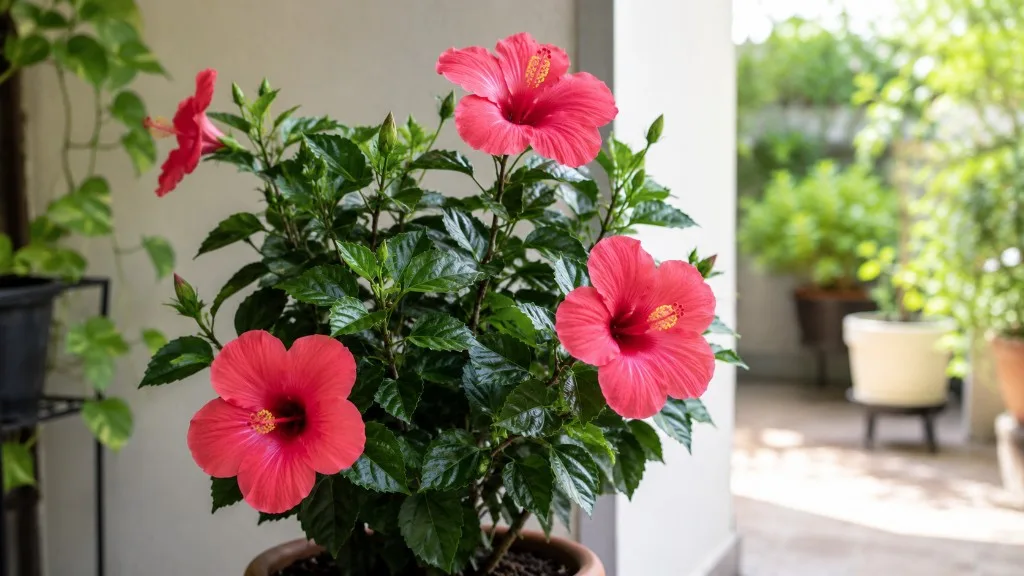
Hibiscus Fertilizer: High-Potassium Bloom Feeding Guide
Hibiscus Fertilizer: High-Potassium Bloom Feeding Guide
You bought a hibiscus for the flowers. Weeks later you have a glossy green shrub that refuses to open a bud, or a plant that yellows at the tips no matter how faithfully you feed it. The fix is rarely “feed more.” It is almost always feed differently - with a high-potassium, low-phosphorus formula applied lightly and often, timed to the plant’s growth rhythm, and matched to whether you are growing a tropical evergreen, a hardy perennial, or Rose of Sharon. This guide covers the NPK pattern specialist growers use, the feeding schedules that differ between pots and garden beds, and the tropical-vs-hardy split that generic fertilizer advice almost always ignores.
Why Potassium Drives Hibiscus Blooms
Hibiscus is a heavy feeder in the Malvaceae family, the same group that includes okra and cotton - plants built for warm climates and rapid tissue turnover. In its native range, roots tap a broad mineral profile through naturally rich, well-drained soils. On a patio in Ohio or a garden bed in Arizona, that mineral bank depletes fast. Every watering session leaches soluble nutrients from a pot. Even in-ground plants in sandy or heavily irrigated soils lose potassium and micronutrients faster than nitrogen.
Potassium regulates water movement inside plant cells, strengthens cell walls, and supports the energy chemistry behind flower formation and bud retention. Nitrogen drives leaf expansion - hibiscus needs it, but excess nitrogen without adequate potassium produces a lush, leafy plant that flowers reluctantly. Phosphorus supports root and reproductive tissue in many crops, yet hibiscus is unusually sensitive to phosphorus accumulation over time. The feeding strategy that produces the most reliable blooms is not “more phosphorus” but more potassium, moderate nitrogen, and minimal phosphorus buildup across the warm season.
The LSU AgCenter, which has published extensively on tropical hibiscus culture, recommends using two to three times more potassium than nitrogen - a ratio reflected in formulas like 12-4-18. That guidance applies most directly to tropical hibiscus kept in continuous bloom, but the underlying principle - potassium-forward feeding with restrained phosphorus - informs care for all hibiscus types grown for flowers.
The NPK Ratio Hibiscus Needs for Blooming
The three numbers on a fertilizer label - N-P-K - represent the percentage by weight of nitrogen, phosphorus, and potassium. For hibiscus, the pattern that specialist growers and extension horticulturists converge on is medium nitrogen, low phosphorus, high potassium. You do not need one exact formula, but you do need that relative balance every time you shop.
Medium Nitrogen, Low Phosphorus, High Potassium
Look for ratios where the first number (nitrogen) is moderate, the middle number (phosphorus) is the smallest of the three, and the third number (potassium) is the largest. Common examples include 17-5-24, 12-4-18, and 10-4-12. LSU AgCenter cites 12-4-18 as a good fertilizer ratio for hibiscus, noting that these plants need a medium amount of nitrogen, very little phosphorus, and high potassium for sustained flowering.
Nitrogen at moderate levels keeps foliage healthy without pushing the plant into an all-leaves growth mode. Low phosphorus prevents the slow accumulation that interferes with micronutrient uptake over months of regular feeding. High potassium supports the energy demands of repeated flowering, strengthens stems, and improves tolerance of heat and inconsistent watering - real stresses for container hibiscus on summer patios.
When you read a label, scan the minor elements panel too. Hibiscus needs chelated iron, magnesium, copper, manganese, and zinc in small but non-negotiable amounts. A formula with the right NPK but no micronutrients will eventually show deficiencies even when macronutrient feeding looks correct on paper.
Why Bloom Boosters Backfire
Garden centers stock bloom boosters with NPK ratios like 10-30-10 or 15-30-15 because phosphorus is traditionally associated with flowering in roses, tomatoes, and bulbs. On hibiscus, repeated use of these products is one of the more reliable ways to reduce bloom performance over time. The mechanism is well documented: excess phosphorus in the root zone does not usually scorch hibiscus directly, but it antagonizes the uptake of iron, zinc, and sometimes manganese - micronutrients the plant needs for chlorophyll production and normal leaf development. University of Missouri Extension documents this pattern across cropping systems: high soil phosphorus blocks zinc and iron uptake even when soil tests show adequate levels, producing visible deficiency symptoms in the foliage.
On a hibiscus, phosphorus stress often shows up as yellowing new growth with green veins (iron deficiency chlorosis), small curled leaves (zinc issues), or a general decline in vigor that gardeners misread as needing even more fertilizer. The plant may keep producing leaves while buds abort or fail to open. Switching to a high-potassium, low-phosphorus formula and flushing accumulated salts is the correction - not another round of bloom booster.
When to Fertilize Hibiscus
Timing matters as much as formula. Hibiscus metabolizes nutrients actively only when it is warm, bright, and growing. Feed on the plant’s schedule, not a generic houseplant calendar.
Active Growing Season
For tropical hibiscus grown outdoors or in bright conservatories, the active feeding window runs from early spring through late summer - roughly March through October in temperate climates, or whenever nighttime temperatures stay consistently above 60°F (15°C) and new growth is visible. Resume feeding when you see fresh shoots and flower buds forming, not on a fixed calendar date alone.
During this window, apply diluted fertilizer on a regular rhythm - typically every 1 to 2 weeks for liquid feeds on container plants. In-ground established shrubs can go every 3 to 4 weeks with liquid or follow slow-release label intervals in spring and midsummer. Build up over two to three applications as growth accelerates in spring rather than jumping from zero winter feeding to full-strength doses overnight.
Hardy hibiscus (H. moscheutos and hybrids) emerge late - often not until May in northern zones. Start feeding when new shoots are several inches tall, not when the bare ground first thaws. Rose of Sharon (H. syriacus) wakes up with other deciduous shrubs; a single spring application may be all it needs, with optional light summer supplementation if growth looks pale.
Fall Taper and Winter Rest
Do not use high-phosphorus fertilizers on hibiscus, and do not fertilize resting hibiscus in winter when growth has slowed and light is reduced. Roots cannot use the nutrients efficiently, and salts accumulate in cool, wet soil - a combination that damages fine root hairs. Begin tapering feed frequency in late summer as growth naturally slows. Stop entirely 6 to 8 weeks before your first expected frost for any hibiscus that spends time outdoors in a frost-prone climate. Tender new growth pushed by late-season fertilizer is vulnerable to cold damage.
Indoor tropical hibiscus in heated rooms with supplemental light may show sporadic winter growth. If new leaves are actively expanding, a single quarter-strength feed once a month is the upper limit. If the plant is resting with no new growth, plain water is the right choice. Hardy hibiscus and Rose of Sharon are fully dormant in winter and should receive no fertilizer at all until spring regrowth appears.
Best Fertilizer Types for Hibiscus
The best fertilizer for hibiscus matches the medium-low-high NPK pattern, dissolves cleanly, includes chelated micronutrients, and lets you control dose precisely. That usually means a water-soluble formula designed for hibiscus or flowering tropicals, though slow-release granules have a place for in-ground and low-maintenance routines.
Water-Soluble Liquid Feeds
Water-soluble liquid fertilizer is the most flexible option for hibiscus, especially in containers. You control concentration, frequency, and can pause instantly if the plant shows stress. Products labeled specifically for hibiscus - formulas in the 17-5-24 range - take the guesswork out of NPK selection. General-purpose balanced fertilizers like 20-20-20 are workable only short-term; phosphorus at parity with potassium violates the low-phosphorus principle and is a poor long-term choice for tropical types.
Always dilute liquid fertilizer to half the label strength unless the product is explicitly formulated for frequent light feeding at the printed rate. Hibiscus roots are efficient but sensitive to salt shock. Half strength applied every 1 to 2 weeks delivers a steadier nutrient stream than full strength applied monthly - and it is far easier to adjust if the plant responds with overly soft, dark green growth that signals excess nitrogen.
Slow-release granules (such as Osmocote-type products with ratios near 15-9-12) suit gardeners who prefer fewer applications. Choose a formula where potassium meets or exceeds nitrogen and phosphorus stays moderate. Apply in spring and again in midsummer for in-ground tropical hibiscus, or use as a base layer supplemented with occasional half-strength liquid potassium during peak bloom in containers. Scratch granules into the top inch of soil, water in, and keep granules off foliage and stems.
How Often to Feed Hibiscus
Frequency depends on where the plant lives, which hibiscus type you grow, and how fast it is growing. These are starting points; the plant’s newest leaves and bud set are the final authority.
Container tropical hibiscus in Hibiscus light guide: Feed every 7 to 14 days with half-strength high-potassium liquid during active growth. Smaller pots dry and leach faster, so the shorter end of that range applies to plants in 8–12 inch containers that receive daily watering in summer heat.
Container tropical hibiscus in partial shade or indoors: Feed every 2 to 3 weeks at half strength. Lower light means lower nutrient demand. Overfeeding in dim conditions produces salt buildup without corresponding growth.
In-ground tropical hibiscus: Feed every 3 to 4 weeks with liquid, or apply slow-release granular in spring and midsummer per label rates. Established in-ground plants have a larger soil reservoir and more stable moisture.
Hardy hibiscus (dinner-plate types): Feed when new shoots reach several inches in late spring, then every 3 to 4 weeks through summer with balanced or high-potassium liquid at half strength. Stop by August in zones with October frost.
Rose of Sharon: One application of balanced slow-release fertilizer in early spring is usually sufficient. Overfeeding produces lush foliage with fewer flowers - a common complaint from gardeners who treat it like tropical hibiscus.
Newly repotted or recently purchased hibiscus: Hold fertilizer for 4 to 6 weeks while roots establish. Fresh potting mix often contains starter fertilizer, and damaged roots cannot handle salts.
Regardless of schedule, water the plant with plain water the day before feeding if the soil has dried significantly. Never apply fertilizer solution to dry, pulling-away-from-the-pot soil.
Step-by-Step Fertilizer Application
A consistent application method prevents the two most common failures: root burn from dry-soil feeding and leaf spotting from splashed concentrate.
First, check the soil moisture. If the top inch is dry, water thoroughly with plain water and wait until the next day to feed. Roots take up nutrients through water; feeding dry roots concentrates salts at the root interface. LSU AgCenter recommends applying water-soluble fertilizer in combination with irrigation rather than to dry soil.
Second, mix the fertilizer at half label strength in a watering can. Use a measuring spoon or syringe for consistency - eyeballing the scoop is how “half strength” becomes “sort of half strength” over time.
Third, pour the solution evenly over moist soil, not over leaves or the woody trunk base. Fertilizer on foliage can cause spotting; fertilizer piled against the stem can burn bark on young plants.
Fourth, let excess drain freely from the pot and empty the saucer. Standing water concentrates salts as it evaporates back into the root zone.
Fifth, record the date on a phone note or plant tag. When growth is fast in July, it is easy to lose track and feed twice in one week. A simple log prevents accidental doubling.
Once a month during the active season, substitute one feeding with a plain-water flush - water until a volume equal to roughly one-third of the pot capacity runs from the drainage holes. This leaches accumulated salts without starving the plant, provided you resume normal feeding at the next scheduled interval.
Container vs In-Ground Differences
The same hibiscus cultivar behaves like two different plants depending on root environment. Container culture concentrates every management decision.
Potted hibiscus has a finite soil volume. Each watering carries dissolved nutrients out of the drainage holes. Potassium - the bloom-critical element - is particularly mobile in soil solution and leaches readily. That is why container plants need more frequent, lighter feeding than in-ground specimens. A patio hibiscus in a 10-inch pot receiving daily summer water may need feeding every 7 to 10 days; the same cultivar planted in a garden bed with mulch might thrive on monthly liquid feeds plus one spring slow-release application.
Container hibiscus also experiences greater temperature swings in the root zone. A dark pot in full sun heats the soil, accelerating both growth and nutrient demand - and also increasing evaporation from the saucer, which leaves salt residues behind. In-ground roots stay cooler and more buffered.
Many tropical hibiscus varieties bloom more prolifically when slightly rootbound in containers, according to LSU AgCenter guidance. That does not mean starvation is beneficial - it means a modest root-to-soil ratio with consistent feeding outperforms an oversized pot with the same irregular care. Match pot size to the plant and compensate with regular diluted feeding rather than upgrading to a huge container and feeding rarely.
For in-ground tropical hibiscus in frost-free climates, slow-release granules applied twice yearly plus occasional liquid supplementation during peak summer heat often suffices. The soil acts as a nutrient buffer that containers simply cannot replicate.
Micronutrients Hibiscus Needs
Macronutrients get the headline numbers on the bag, but hibiscus bloom quality often hinges on elements present in trace amounts. A plant with correct NPK but missing iron or magnesium will look sickly long before it runs out of potassium.
Iron, Magnesium, and Trace Minerals
Iron deficiency is the most common micronutrient problem on hibiscus, especially when soil pH drifts above 6.5. Symptoms appear on younger leaves first: yellow tissue between green veins (interveinal chlorosis). Chelated iron - listed on labels as iron EDTA, iron DTPA, or iron EDDHA - remains available across a wider pH range than non-chelated forms. If your fertilizer includes iron, confirm it is chelated and soluble.
Magnesium supports chlorophyll and enzyme function. Deficiency shows on older leaves as yellowing between veins while veins stay green - the reverse age pattern of iron deficiency. A monthly Epsom salt drench (one tablespoon per 2–3 liters of water) can supplement magnesium when your primary fertilizer is low in Mg, though it is not a complete feed on its own and should not replace potassium-forward liquid feeding.
Zinc, manganese, copper, and boron appear in smaller quantities but prevent distorted new growth, bud failure, and edge burn. Cheap fertilizers sometimes use chloride-bound mineral forms that do not dissolve well and can accumulate to damaging levels over repeated applications. Paying for a formula with soluble or chelated trace elements is functional chemistry at the root surface, not marketing.
Soil pH between 5.8 and 6.5 keeps micronutrients available. If chlorosis persists despite correct feeding, test pH before adding more iron. Alkaline soil locks up iron regardless of how much you pour on.
Signs of Success and Over-Feeding
A well-fed hibiscus announces success through growth quality, not just flower count. New leaves should be deep green (for green-leafed varieties), firm, and proportionate to the cultivar - not oversized and floppy. Stems stay sturdy without excessive internode stretch. Flower buds form regularly at leaf axils and open fully without premature drop, assuming water and light are also stable.
Bud drop is often blamed on fertilizer, but inconsistent watering is the primary cause. The LSU AgCenter identifies excessive drying as a leading cause of bud drop and foliage decline in potted hibiscus. If buds abort despite even moisture and full sun, review whether nitrogen is too high relative to potassium - a common outcome of using general-purpose balanced feed instead of a high-potassium formula.
Signs of over-fertilizing include brown, crispy leaf tips and margins, sometimes progressing to whole-leaf browning on the oldest foliage first. A white or yellowish crust on the soil surface is a telltale sign. The plant may drop leaves suddenly after a heavy feeding, especially if the soil was dry when fertilizer was applied.
Phosphorus accumulation produces subtler, slower symptoms: persistent yellowing of new growth, stunted or twisted young leaves, reduced flowering despite healthy-looking older foliage, and a general sense that the plant is “stuck.” These symptoms overlap with iron and zinc deficiency because excess phosphorus causes those deficiencies - treating with more fertilizer worsens the cycle.
Excess nitrogen without adequate potassium produces dark green, soft leaves, long internodes, and abundant foliage with few flowers. The plant looks vigorous but performs poorly as a bloomer.
If you see any combination of crust, tip burn, chlorosis on new growth, and bud failure, stop feeding immediately and move to the recovery protocol below.
Flushing and Recovery Protocol
Recovery from over-fertilization is straightforward but requires patience. The goal is to dissolve and wash excess salts from the root zone while giving damaged roots time to regenerate.
Step 1: Move the plant to a spot with bright indirect light temporarily if it was in harsh direct sun while stressed. Reducing transpiration demand helps roots recover.
Step 2: Water thoroughly with plain room-temperature water until water runs freely from drainage holes for several minutes. For a severely crusted pot, repeat this flush two to three times over a week, letting the soil approach moist-but-not-soggy between flushes.
Step 3: Pause all fertilizer for 4 to 6 weeks. New growth after a flush is your signal that the root system is functioning again.
Step 4: When new leaves emerge healthy and green, resume at quarter strength for two applications, then return to half-strength on your normal schedule.
Step 5: If chlorosis on new growth persists after flushing, address iron deficiency separately with a chelated iron drench rather than returning to a high-phosphorus bloom product.
Badly burned leaves will not green up again - wait for replacement foliage. One to two full leaf cycles is a realistic recovery timeline for moderate burn. Severe root damage from repeated full-strength feeding on dry soil may take longer, and some branches may not recover.
Common Fertilizer Mistakes
The same errors appear repeatedly across forums and garden centers. Avoiding them is faster than fixing the damage.
Using bloom booster for every feeding is the top mistake. One application will not kill a hibiscus, but a season of 10-30-10 or similar formulas builds phosphorus to levels that lock out iron and zinc. Switch to high-potassium, low-phosphorus feed and stay there through the warm season.
Feeding at full label strength causes salt shock, especially in containers. Half strength on a shorter interval produces better results and is easier to dial back.
Fertilizing dry soil concentrates salts at the root interface and causes immediate burn. Water first, feed the next day.
Feeding a stressed plant - drought-stressed, heat-stressed, pest-infested, or recently repotted - forces roots to handle salts when they are least able. Fix the stressor first.
Ignoring micronutrients leads to chronic chlorosis that no amount of NPK adjustment fixes. Read the minor elements panel before buying.
Feeding through winter on a resting indoor plant builds salts in cool soil with no growth to use them. Pause unless you have active new leaves under strong supplemental light.
Treating all hibiscus types identically - feeding Rose of Sharon every two weeks like a tropical container plant - produces leafy shrubs with few flowers and unnecessary salt buildup.
Chasing flowers with nitrogen when the plant already has lush foliage pushes leaves, not blooms. Shift the ratio toward potassium, not toward more nitrogen.
Tropical vs Hardy Hibiscus Feeding
Not all plants sold as “hibiscus” share identical feeding needs. Getting the type right matters more than any product label.
Tropical hibiscus (H. rosa-sinensis) is the evergreen, year-round bloomer in warm climates that demands the high-potassium, frequent light feeding described throughout this guide. It wants 6 or more hours of direct sun for maximum flowering, consistent moisture, and half-strength liquid feed every 1 to 2 weeks during active growth. Bring it indoors before temperatures drop below 50°F (10°C) in cold climates, and reduce feeding sharply once inside unless you provide strong supplemental light.
Rose of Sharon (H. syriacus) is a hardy deciduous shrub rated for USDA zones 5–9 that grows actively in summer but goes fully dormant in winter. It is far less demanding than tropical hibiscus. A single balanced slow-release application in early spring usually suffices. Overfeeding produces abundant foliage with disappointing flower counts - the opposite problem tropical growers face. Rose of Sharon blooms on new wood; pruning in late winter shapes the plant without affecting the feeding calendar.
Hardy hibiscus (H. moscheutos and hybrids - the dinner-plate types) dies back to the ground in winter and emerges late in spring, often not until May in northern zones. Feed when new shoots are several inches tall, using a balanced or high-potassium formula every 3 to 4 weeks through summer. Stop by August in zones where frost arrives in October. These perennials store energy in roots over winter; late fertilizer pushes tender growth that frost kills.
If you are unsure which hibiscus you have, check three things: Is it evergreen or does it lose all leaves in winter? Does it die back to the ground or remain a woody shrub? What is its USDA hardiness rating on the nursery tag? A container plant with glossy evergreen leaves is almost certainly tropical. A bare-stemmed shrub that leafs out in late spring is likely Rose of Sharon. A plant that vanishes underground each fall and sends up thick shoots in late spring is hardy hibiscus.
The NPK ratio guidance - medium nitrogen, low phosphorus, high potassium - applies most strictly to tropical hibiscus. Hardy types and Rose of Sharon tolerate balanced formulas more readily because they are fed less often and face shorter active growing windows, but avoiding high-phosphorus bloom boosters still prevents micronutrient problems over time.
Conclusion
Hibiscus fertilizer success comes down to a pattern most bloom-focused gardening advice gets backwards: high potassium, moderate nitrogen, and low phosphorus, applied at half strength every 1 to 2 weeks during active warm-season growth for tropical types, with a full pause in winter. Formulas near 17-5-24 or 12-4-18 with chelated micronutrients give container and in-ground tropical plants the mineral profile they need for repeated flowering without the slow phosphorus buildup that causes chlorosis and bud failure.
Match the schedule to the plant: tropical hibiscus in pots need the most frequent feeding; hardy dinner-plate types need a shorter summer window; Rose of Sharon rarely needs more than one spring application. Water before you feed, flush salts monthly in containers, and read the plant’s newest leaves before reaching for the bottle again. If you are staring at a lush, flowerless hibiscus, check light and watering first - then swap any bloom booster in your cabinet for a high-potassium hibiscus formula and give the plant six weeks on the new routine before judging results. Blooms follow consistent care more reliably than they follow heroic single doses.
When to use this page vs other Hibiscus guides
- Hibiscus overview - Start here for whole-plant context before deep-diving this topic.
- Hibiscus problems hub - Jump to symptom-specific fix guides when this care topic does not resolve the issue.
- No Flowers on Hibiscus - Escalate here when fertilizer adjustments are not enough.
Related Hibiscus guides
- Hibiscus overview
- Hibiscus watering
- Hibiscus light
- Hibiscus soil
- Hibiscus propagation
- Hibiscus repotting
- No Flowers on Hibiscus
- Hibiscus problems
Related tool
Try the Fertilizer Dilution Calculator with hibiscus pre-selected to estimate needs for your setup.