No Flowers on Hibiscus: Causes, Checks & Fixes
Quick answer
Hibiscus that grows leaves but no flowers usually needs more direct sun-not brighter indirect light. First step: confirm whether you have tropical H. rosa-sinensis, hardy H. moscheutos, or Rose of Sharon, then count direct sun hours on the leaves during warm active growth.
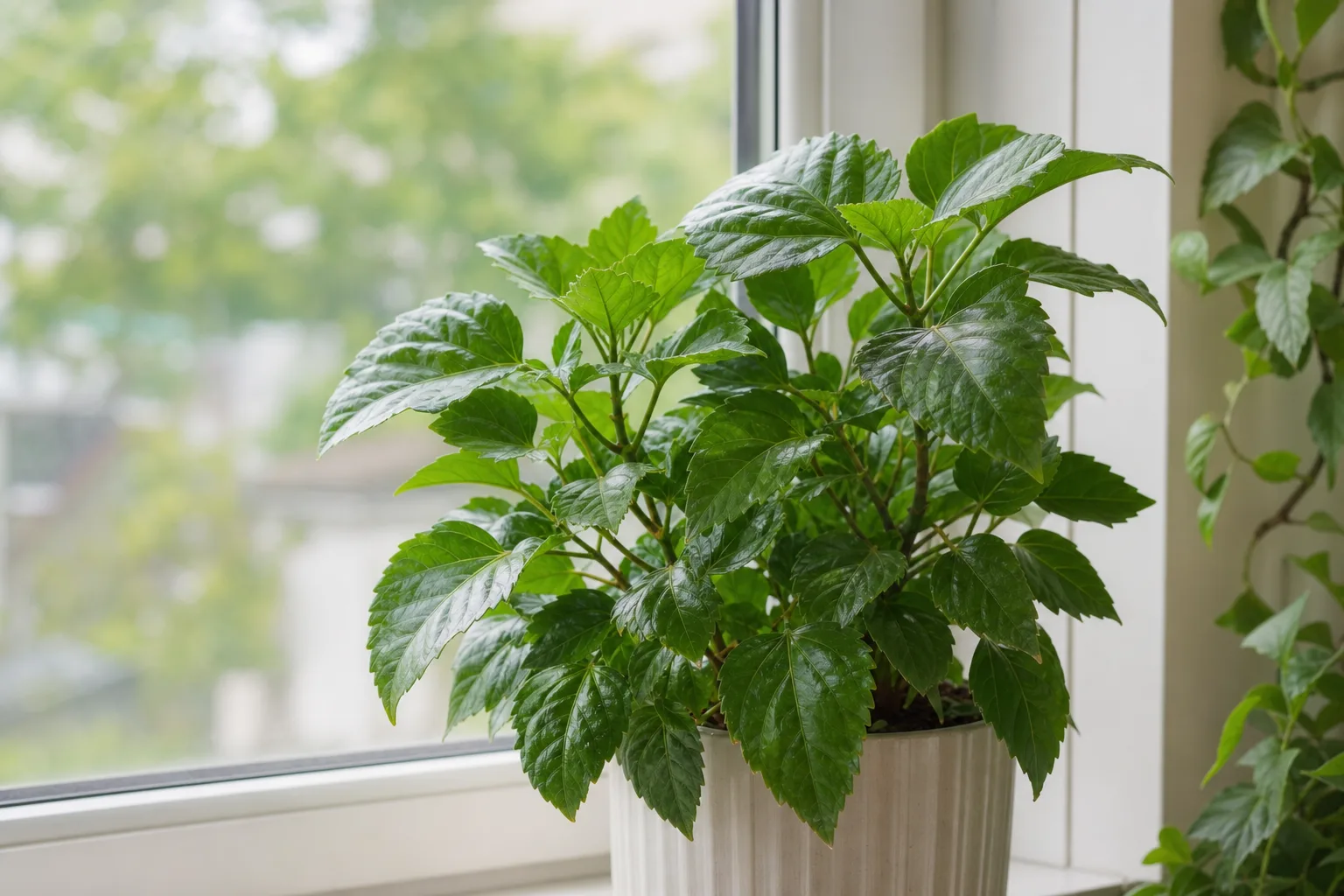
No Flowers on Hibiscus: Causes, Checks & Fixes
This guide covers no flowers on Hibiscus. See also the general No Flowers guide, watering, and light pages for this plant.
No Flowers on Hibiscus: Causes, Checks & Fixes
Quick answer
When hibiscus grows leaves but no flowers, start with type identification and direct sun-not fertilizer, Hibiscus repotting guide, or bloom booster. Tropical Hibiscus rosa-sinensis (China rose) is an evergreen sun shrub that needs at least six hours of direct sunlight daily for abundant bloom. Hardy H. moscheutos and Rose of Sharon (H. syriacus) also want full sun in the garden but follow different bloom calendars and winter rules.
First step: confirm which hibiscus you have, then count how many hours direct sun hits the leaves during warm active growth-not how bright the room looks to you. If stems are leggy, new leaves stay pale and small, and the plant has not bloomed for weeks in a dim corner, move it to the sunniest south or west window or a full-sun patio with gradual acclimation. Do not repot, hard-prune, or stack fertilizer on the same day you fix light.
Full species context: Hibiscus overview.
What no flowers looks like on Hibiscus
“No flowers” on hibiscus means different things depending on type and season. The plant may look healthy while refusing to bloom, or it may show stress signs that explain the gap.
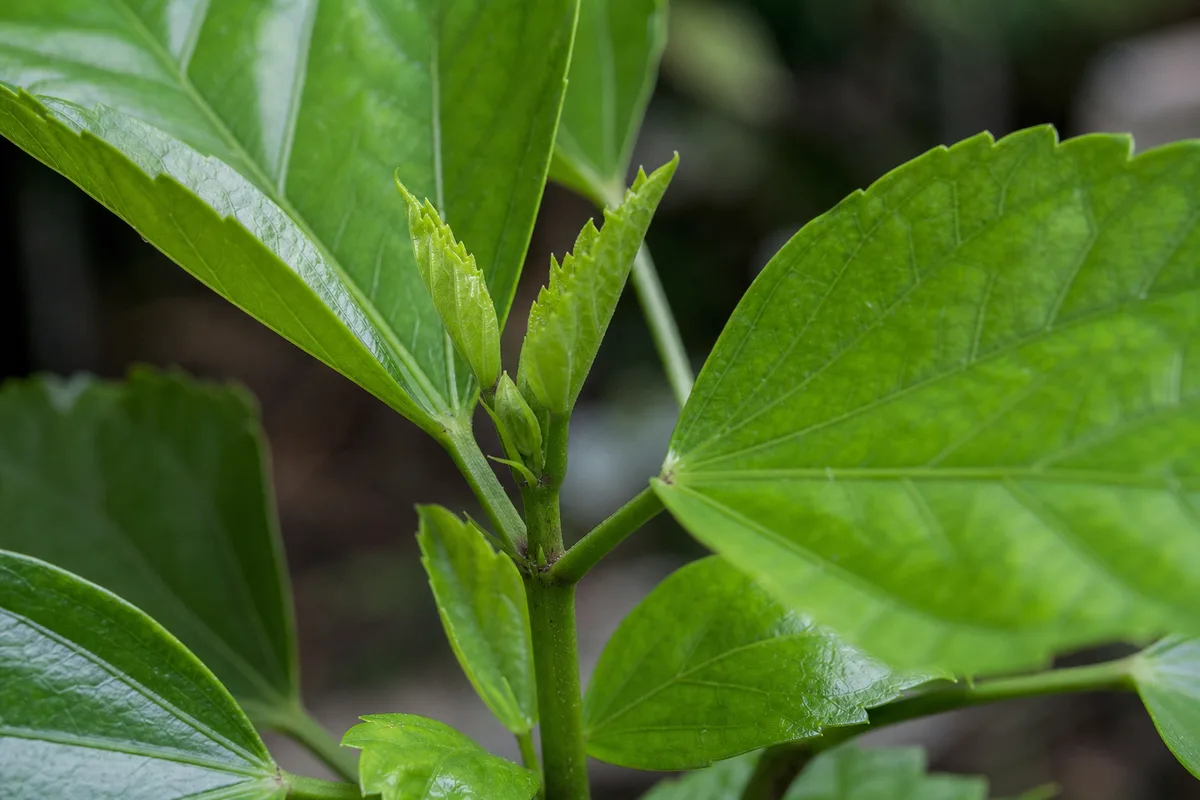
No Flowers symptoms on Hibiscus - compare with healthy tissue on the same plant.
Tropical H. rosa-sinensis in warm weather:
- Green foliage, zero buds for weeks - the classic bloom failure when light, temperature, or feeding is off
- Leggy, leaning stems - internodes stretch toward the brightest window; branches look thin and floppy
- Pale or undersized new leaves - fresh foliage opens lighter green and smaller than older sun-grown leaves on the same branch
- Bud initials that never swell - tight green bumps stall or abort before opening (see bud drop on hibiscus when buds form then fall)
- Compact plant, no buds despite strong sun - points to feeding imbalance, chill damage, or recent repot stress rather than light alone
Hardy H. moscheutos (dinner-plate types):
- No flowers in spring - normal; these bloom mid to late summer on new season shoots from the crown
- Tall leafy stems, no dinner-plate blooms by August - usually insufficient sun, excess nitrogen, or drought during bud set
- Winter dieback with no summer recovery - crown rot or wrong placement in shade
Rose of Sharon (H. syriacus):
- No late-summer flowers on woody branches - often too much shade, wrong pruning timing, or treating a landscape shrub like a tropical patio pot
These patterns differ from normal winter slowdown on tropical hibiscus brought indoors-short days and cool temperatures reduce flower production without meaning the plant is dying. Leggy pale growth during warm months still points to insufficient light, not season alone.
Why Hibiscus stops flowering: causes ranked by frequency
Work through causes in this order. The first two account for most home complaints.
Wrong type identified
Retail tags often say only “hibiscus.” Tropical, hardy, and Rose of Sharon types need opposite winter care. A hardy perennial kept indoors year-round rarely blooms like a tropical patio plant. A tropical specimen expected to flower in a Michigan winter without supplemental light will disappoint. See the type comparison in Hibiscus overview.
Insufficient direct sun
Insufficient light is a leading cause of poor flowering on tropical hibiscus. Plants grown too shady become tall and leggy and may hold green foliage while skipping bloom cycles for months. Hibiscus is a Malvaceae sun shrub-not a low-light foliage houseplant. Middle-of-room placement, north windows, and shaded balconies fall far below what NC State documents as full-sun requirement for H. rosa-sinensis. Deep dive: not enough light on hibiscus.
Chill exposure or indoor winter slowdown
Tropical hibiscus suffers when nights drop below about 45–50°F (7–10°C). Chill damage yellows leaves, drops buds, and can stall flowering for weeks. Indoors through winter, the same plant may grow slowly with few blooms until spring light and warmth return-that is expected, not a care failure. Do not confuse winter pause with a summer light deficit.
Excess nitrogen or phosphorus buildup
High-nitrogen fertilizer pushes dark green, soft leaves at the expense of buds. Repeated use of high-phosphorus bloom boosters accumulates phosphorus in the root zone, antagonizing iron and zinc uptake and producing yellow new growth with green veins plus weak flowering. Hibiscus wants high potassium, moderate nitrogen, low phosphorus-see hibiscus fertilizer for ratios like 12-4-18.
Pot too large or recent repot
A container much larger than the root ball diverts energy into roots instead of flowers. Tropical hibiscus often blooms more prolifically when slightly rootbound in modest pots with consistent feeding. Repotting during active bud swell commonly aborts blooms for several weeks.
Inconsistent watering
Wet/dry swings stress hibiscus and abort buds before they open. Excessive drying is a leading cause of bud loss on potted tropical plants. Dim corners that stay wet too long slow growth without producing flowers.
Pruning at the wrong time
Tropical hibiscus blooms on new growth-hard pruning in late summer removes flower-ready wood. Hardy H. moscheutos is cut nearly to the ground after frost and blooms on new shoots the following summer. Rose of Sharon flowers on persistent wood pruned while dormant. Pruning the wrong type at the wrong season removes the year’s bloom wood.
How to confirm the cause: 7-step bloom-failure checklist
| Check | What to verify | Points to |
|---|---|---|
| 1. Type | Glossy evergreen leaves + patio purchase = tropical; dies back in frost = hardy; woody landscape shrub = Rose of Sharon | Wrong winter expectations |
| 2. Direct sun hours | Count hours direct sun hits leaves in warm months; fewer than six strongly suggests light deficit | Not enough light |
| 3. Night temperature | Tropical types below ~50°F (10°C) nights stall or drop buds | Chill damage |
| 4. Fertilizer | High-K, low-P formula at half strength on moist soil during growth; no bloom booster habit | Hibiscus fertilizer |
| 5. Pot size | Roots circling drainage holes vs swimming in excess soil after oversized repot | Energy to roots, not blooms |
| 6. Hibiscus watering guide | Top inch dries between drinks; no chronic wet soil in shade or drought swings in heat | Bud drop |
| 7. Pruning timing | Recent hard prune, wrong season for your type, or buds forming then removed | Bloom wood removed |
Work the table top to bottom. If type is correct, sun is strong, nights are warm, and feeding matches high-potassium guidance-but buds form then fall-route to bud drop on hibiscus instead of assuming a light problem.
Decision shortcut: leggy stems + pale new leaves + no buds in warm weather = light problem first. Compact green plant + full sun + no buds = feeding, chill, repot, or seasonal pause next.
First fix: move to full sun with gradual acclimation
Move the pot to the brightest location available and change nothing else for one week.
Indoors, that means an unobstructed south or west window where leaves receive direct sun for much of the day. Outdoors after frost risk passes, place the container in full sun but acclimate over 7–14 days-start with morning sun, add hours gradually, and watch for bleaching on leaves formed in shade. A plant grown in dim light can scorch if jumped straight into harsh afternoon rays.
If your best window still falls short-common in winter-add a full-spectrum grow light 12–18 inches above the canopy for 12–14 hours daily. Placement details: hibiscus light requirements.
Do not repot, hard-prune, or apply bloom booster on the same day you fix light. Let new tip growth tell you the placement works before stacking other treatments.
Recovery timeline
| Situation | What to expect |
|---|---|
| Tropical, light improved in summer | Tighter new leaves in 1–2 weeks; bud initials often in 3–6 weeks if warmth and feeding align |
| Tropical, moved indoors for winter | Bloom pause until spring outdoor return or strong supplemental light-normal, not failure |
| Hardy H. moscheutos | Blooms mid to late summer on new season shoots regardless of spring anxiety; judge by August |
| Rose of Sharon | Late-summer flowers on woody branches after full-sun season and correct dormant pruning |
| After repot or hard prune | Bloom delay of several weeks while the plant re-establishes-avoid expecting instant flowers |
Stretched internodes from months in shade do not shrink back. Judge success by new growth and bud formation, not old leggy stems.
What not to do
- Do not treat bright indirect light as enough - hibiscus blooms on direct sun energy; see not enough light before accepting a dim-room outcome
- Do not use high-phosphorus bloom boosters - they harm long-term flowering on hibiscus; switch to high-potassium feed per hibiscus fertilizer
- Do not repot into a much larger pot hoping to force blooms - oversized containers delay flowering
- Do not apply full-strength fertilizer to dry soil - feed only on moist mix at half strength during active growth
- Do not treat hardy perennial hibiscus like a year-round tropical houseplant - it needs garden dormancy and a summer sun cycle
- Do not move the plant repeatedly while buds are forming - hibiscus drops buds when placement or light changes suddenly
- Do not remove healthy leaves to “encourage” flowering - that weakens photosynthesis without replacing the sun deficit
How to prevent repeat bloom failure
Site tropical hibiscus where six or more hours of direct sun is realistic through the warm season-sunny patio, bay window, or grow-light shelf. Feed with high-potassium, low-phosphorus fertilizer at half strength every one to two weeks during active growth on moist soil. Water when the top inch of mix dries, keeping rhythm steady through bud formation.
Bring tropical pots indoors before nights approach 50°F (10°C). Give the brightest cool window available through winter and accept slower bloom-or plan a spring patio return. For hardy types, plant in full sun, feed lightly through August, and prune by type after frost or while dormant.
Rotate pots weekly during indoor culture. Clean windows seasonally. When days shorten, either supplement light or cut watering to match reduced photosynthesis.
Related tool
Use the Plant Problem Diagnosis Tool to narrow causes for no flowers on this plant before changing multiple variables at once.
Related guides
- Hibiscus overview - tropical vs hardy identification, chill thresholds, bloom feeding overview
- Hibiscus light requirements - full-sun placement indoors and outdoors
- Not enough light on hibiscus - leggy growth, pale leaves, light confirmation steps
- Hibiscus fertilizer - high-potassium NPK ratios, bloom booster warnings
- Bud drop on hibiscus - buds form then abort before opening
Conclusion
Hibiscus bloom failure almost always traces to wrong type expectations, insufficient direct sun, or winter slowdown on tropical plants-not a missing bloom booster. Identify your hibiscus, count direct sun hours during warm growth, then address feeding and watering only after light and temperature check out. Leggy pale growth in a dim room needs more sun first; a compact plant in full summer sun that still refuses buds needs the fertilizer and chill branches of this checklist next.
When to use this page vs other Hibiscus guides
- Hibiscus watering guide - Use for routine moisture checks before assuming no flowers is the main issue.
- Hibiscus problems hub - Browse all 20 common issues on this species.