Hibiscus Light Requirements: Full Sun for Maximum Blooms
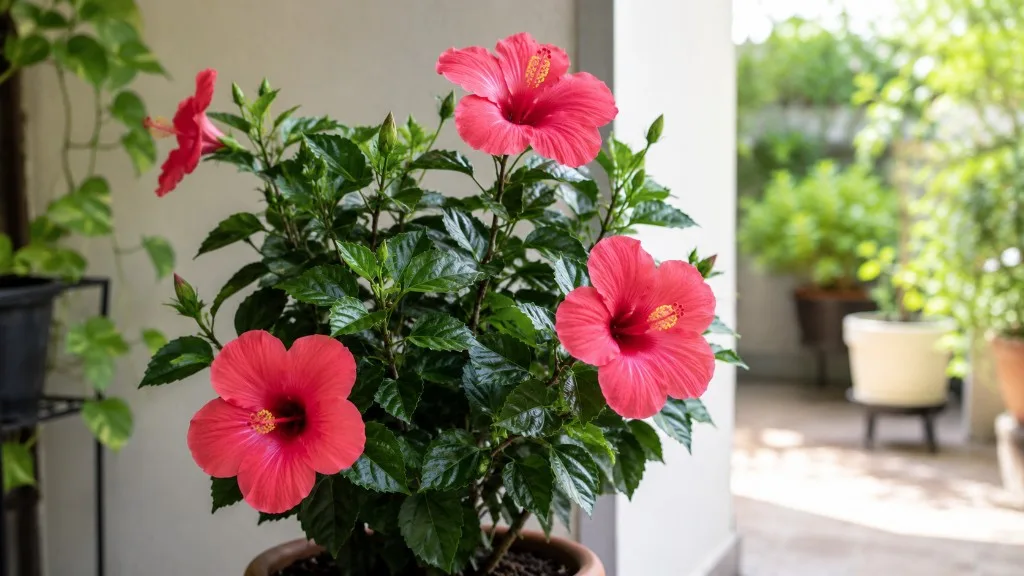
Hibiscus Light Requirements: Full Sun for Maximum Blooms
Hibiscus Light Requirements: Full Sun for Maximum Blooms
A hibiscus with glossy leaves and zero flowers is almost always a light problem dressed up as something else. Hibiscus rosa-sinensis and its hardy cousins can survive in mediocre brightness long enough to fool you - the foliage stays green, the pot looks fine, and you keep adjusting fertilizer while buds abort or never form. Blooms are the honest report card. They require full sun, meaning six to eight hours of direct, unfiltered sunlight daily for tropical types in most climates, with hardy species needing a similar minimum to produce their characteristic saucer-sized or abundant seasonal flowers. Without that photon budget, hibiscus shifts into survival mode: taller stems, fewer buds, and flowers that open weakly or not at all.
This is not a plant you tuck into a pretty corner and hope for the best. Hibiscus evolved in tropical and subtropical regions where intense, consistent sunlight drives both vegetative vigor and flower production. NC State Extension lists Chinese hibiscus as needing full sun (6 or more hours of direct sunlight a day), with partial shade tolerated but less ideal for heavy bloom. UF/IFAS notes that tropical hibiscus grows best in full sun to dappled shade, and weak, sprawling growth with little blooming is the predictable result of insufficient light.
This guide covers the decisions that turn a leafy hibiscus into a flowering one: how much light each type actually needs, why full sun drives blooms, where to place pots outdoors and indoors, when grow lights become necessary, how to read warning signs, and how to acclimate plants safely after winter indoors.
How Much Light Hibiscus Actually Needs to Bloom
Hibiscus is a high-light, high-energy plant. That phrase gets overused in houseplant articles, but for hibiscus it is literal. Flower production demands more photosynthetic output than leaf maintenance alone, and the plant will allocate resources accordingly. Give it enough direct sun and consistent moisture, and tropical hibiscus can bloom repeatedly through warm seasons. Restrict light, and the same genetics produce dark green leaves on long, floppy stems with buds that yellow and drop before opening.
The practical baseline for tropical hibiscus is six hours of direct sun minimum, with more hours supporting heavier bloom in moderate climates (USDA Hardiness Zones 9–11 for year-round outdoor culture, or summer patio culture farther north). UF/IFAS Florida-Friendly Landscaping guidance states that hibiscus grows best in full sun, adding that in extremely hot regions, afternoon shade prevents flower scorch when temperatures climb. That nuance matters: full sun is the default, but heat load can override the pure hour count in desert Southwest summers or on reflected-pavement balconies.
Hardy hibiscus - including Hibiscus moscheutos (rose mallow) and Hibiscus syriacus (rose of Sharon) - also perform best in full sun with six or more direct hours. They tolerate brief light shade better than tropical types, especially when soil moisture stays even, but partial shade reduces flower count noticeably on rose of Sharon and produces taller, floppier stems on rose mallow. Do not confuse hardy tolerance for shade with preference; both groups bloom most generously in open, sunny beds.
Indoor culture changes the math without changing the biology. A south-facing window might deliver strong brightness to human eyes while supplying only a fraction of outdoor full-sun intensity through glass, distance, and short winter days. Indoor tropical hibiscus often needs supplemental full-spectrum LED lighting at 12 to 14 hours daily to sustain flowering through winter, even when the plant sits in the brightest window available.
The Short Answer for Busy Growers
If you only remember five rules, use these. Target six to eight hours of direct sun for bloom performance on both tropical and hardy hibiscus outdoors. Judge success by buds and new stem thickness, not by whether old leaves look green in a dim room. In hot climates above 90°F (32°C), provide morning sun plus afternoon shade or filtered protection to prevent scorch and bud drop while keeping total daily light high. Indoors, place tropical hibiscus in the brightest south or west window within a foot of the glass, and add a grow light if new growth stretches or buds fail. Acclimate gradually when moving from indoor winter to outdoor summer - sudden full sun on soft leaves causes bleaching and collapse within days.
Give any placement change 10 to 14 days before declaring it a failure. Hibiscus reacts quickly to light shifts, but damaged leaves do not heal; only new growth and bud set tell you whether the current exposure is working.
Light also sets the pace for water use, pest pressure, and fertilizer demand. A hibiscus in correct full sun drinks faster, metabolizes feed more actively, and generally outcompetes spider mites better than a leggy plant starving in a corner. Treat light as the throttle for the entire care system - watering, feeding, and Hibiscus repotting guide schedules all assume a plant receiving adequate solar energy.
Tropical vs Hardy Hibiscus Light Needs
Not all hibiscus share the same life strategy, and mixing them up leads to expensive mistakes. Tropical hibiscus is evergreen, frost-tender, and built for year-round warmth and brightness. Hardy hibiscus is deciduous or semi-deciduous, cold-tolerant, and programmed for seasonal dormancy. Light requirements overlap in summer - both want full sun for blooms - but indoor winter management diverges completely.
Tropical Hibiscus (Hibiscus rosa-sinensis) Sun Requirements
Tropical hibiscus is the glossy-leaved, everblooming type sold as patio specimens, landscape shrubs in frost-free regions, and flowering houseplants elsewhere. It is native to East Asia and widely cultivated across tropical and subtropical climates worldwide. In USDA Zones 9–11, it can live outdoors year-round in full sun positions that receive six to eight hours of direct rays daily. In Zones 4–8, the same plant typically moves outdoors after last frost and returns indoors before first freeze, which means growers must solve the light problem twice: summer patio sun and winter window plus supplemental light.
Tropical hibiscus cannot bloom well in partial shade. Shade-grown plants develop long internodes, small leaves, and sparse flowers even when nutrition and water are correct. The plant is not being picky - it lacks the energy surplus needed to build flower buds when daily photon totals fall below its threshold. Indoors, tropical hibiscus is the only hibiscus type realistically kept as a year-round houseplant, and only when high light is provided.
If you are growing tropical hibiscus primarily for flowers, accept that it belongs in the sunniest realistic spot you can offer, not the spot that looks best in the living room layout.
Hardy Hibiscus and Rose of Sharon in Full Sun
Hibiscus moscheutos produces enormous dinner-plate blooms on herbaceous stems that die back to the ground in cold climates and resprout in spring. Hibiscus syriacus forms a woody shrub covered in smaller but abundant flowers from mid-summer into fall. Both are full-sun plants for maximum flower count, with rose mallow especially benefiting from open sky and minimal competition.
Hardy hibiscus tolerates brief periods of light shade better than tropical types - rose mallow in particular can handle one to two hours of dappled shade if soil moisture remains consistent - but rose of Sharon becomes markedly less floriferous and more disease-prone in partial shade. Neither type belongs indoors long-term. Hardy hibiscus requires winter dormancy with cold temperatures; forcing it in a warm, dim apartment triggers etiolation, fungal problems, and eventual decline.
For gardeners in cold climates, the light decision is simpler for hardy types: plant in the sunniest bed available and let seasonal photoperiod do its work. For tropical types in containers, light is a daily management task across seasons.
Why Full Sun Fuels Hibiscus Flower Production
Understanding why hibiscus demands sun helps you stop fighting the plant with bloom booster fertilizers in a north window. Flowers are expensive structures. Each bud draws on carbohydrate reserves, hormone signaling, and micronutrient pools built during active photosynthesis. When light is insufficient, the plant correctly prioritizes stem elongation toward brighter zones and leaf expansion for capture area over reproductive output that would drain limited resources.
Hibiscus blooms are also short-lived - often one to two days per flower on tropical types - which means continuous flowering requires continuous bud initiation. That cycle only runs when the plant receives enough daily light to photosynthesize beyond its maintenance baseline. LSU AgCenter guidance links bud drop and foliage decline to drying stress during hot sunny weather, because sun-exposed plants dry faster and drop buds when water stress hits during peak radiation hours.
Photosynthesis, Bud Formation, and Daily Light Demand
At the physiological level, hibiscus flower initiation responds to light intensity, photoperiod length, and temperature acting together. Tropical hibiscus does not require short-day or long-day photoperiod manipulation like some seasonal bloomers, but it does require high enough intensity during the lit hours for bud meristems to develop. Six hours of weak winter window light fails even if the clock shows six hours; six hours of direct outdoor sun succeeds because photon flux density is orders of magnitude higher.
Heat interacts with light in ways that confuse beginners. High light plus high temperature increases transpiration and metabolic rate. A well-watered hibiscus in full sun at 85°F (29°C) often blooms heavily. The same radiation at 95°F (35°C) on unacclimated foliage may cause midday wilt, petal burn, or bud abortion even though the plant “has enough sun.” That is why afternoon shade in extreme heat is compatible with full-sun bloom goals - you are moderating heat stress, not abandoning light requirements.
Container culture amplifies heat. Dark plastic pots on concrete absorb radiation and cook roots while leaves bleach. In full-sun placements, lighter-colored containers, pot feet for airflow, and mulching the soil surface reduce root-zone heat that masquerades as sun intolerance.
Best Outdoor Placement for Blooming Hibiscus
Outdoor placement starts with an honest site audit, not compass direction alone. A labeled “south bed” shaded by a neighbor’s tree after noon may deliver less usable light than an open east patio. Walk the space at 9 a.m., noon, and 4 p.m. during growing season and note where direct rays hit the pot or soil for how long. Hibiscus needs those rays on leaves, not just bright sky visible above.
In frost-free regions, plant tropical hibiscus in open beds or large containers with unobstructed southern or western exposure where six to eight hours of direct sun is realistic most days from spring through fall. In cooler regions, use the same sunny patio or deck for summer, then plan the indoor transition before nights drop below 50°F (10°C) consistently - light shock plus cold shock together devastate bud set.
Space plants for airflow. Crowding in full sun increases humidity around foliage and invites pests; hibiscus in strong light with good air movement generally stays cleaner and blooms more freely than plants jammed against a wall with reflected heat and stagnant air.
East, South, West Exposures and Heat Modifiers
An east-facing placement delivers cooler morning direct sun - often three to five hours depending on latitude and obstacles - plus bright ambient light the rest of the day. East is an excellent starting point for newly acclimated tropical hibiscus, for hot-climate summers when afternoon protection is needed, and for hardy hibiscus in regions where morning sun dries dew quickly and reduces foliar disease.
A south-facing placement provides the strongest total daily light in the northern hemisphere and is the default for maximum bloom count when heat is manageable. South exposure works especially well for hardy hibiscus in ground and tropical hibiscus in containers in moderate climates. Watch for one-sided growth and rotate containers every few days so all sides receive direct rays.
A west-facing placement delivers intense afternoon sun - valuable in cool coastal climates and risky in desert heat. West can produce spectacular bloom volume when the plant is acclimated and watered consistently through afternoon dry-down. It is a common failure point for recently moved indoor plants whose leaves were formed under lower intensity.
Avoid full shade locations entirely for bloom-focused culture. Hibiscus may live there; it will not perform there.
Morning Sun and Afternoon Shade in Hot Climates
UF/IFAS notes that hibiscus appreciates full sun to dappled shade, and in regions where temperatures frequently exceed 90°F (32°C), afternoon shade helps avoid heat stress and sunscald on tropical hibiscus while still maintaining sufficient total daily light. The practical pattern is morning sun plus bright afternoon shade - east exposure, east side of a structure, or south/west sites protected by sheer shade cloth, deciduous tree canopy, or a patio umbrella after noon.
This is not the same as planting in deep shade. The plant still receives high morning photon flux when temperatures are cooler and water stress is lower, then avoids the combined peak heat and peak radiation that scorches petals and triggers bud drop. If your hibiscus wilts heavily by mid-afternoon despite moist soil, light intensity at that hour may be excessive for the current acclimation state - add afternoon protection before reducing total morning sun.
In moderate climates, skip afternoon shade unless you see bleached leaf patches, crisp petal edges, or persistent midday wilt. Over-protecting a healthy acclimated plant in Ohio or coastal Oregon costs blooms you could have had for free.
Indoor Light and Window Placement for Hibiscus
Indoor hibiscus culture is where most bloom failures originate. Human eyes adapt to dim rooms; hibiscus does not. A spot that feels “bright” across the room may deliver etiolated stems - visible stretching toward glass, longer gaps between leaves, smaller new foliage - within two to three weeks. Tropical hibiscus kept indoors through winter can bloom under strong conditions, but the default outcome without planning is leaf drop, spider mites, and zero flowers.
Place the pot within 12 inches (30 cm) of the glass on the brightest suitable window. Light intensity drops sharply with distance; a hibiscus on a coffee table six feet from a south window is not receiving indoor “full sun” in any meaningful sense. Rotate the pot a quarter turn every few days to prevent hard lean and one-sided bud production.
Why Windows Rarely Match Outdoor Full Sun
Window glass filters ultraviolet light and reduces intensity. Winter sun angle lowers daily totals even at south windows. Overhangs, trees, and adjacent buildings shorten the direct-sun window to a few hours. A tropical hibiscus that bloomed all summer on the patio often stops bud formation indoors on the same nominal south window because total photons per day fell below the initiation threshold - normal, not a sign the plant is “broken.”
South-facing windows are the first choice for indoor tropical hibiscus when unobstructed. Expect strong performance from fall through spring in many latitudes; watch for leaf scorch if foliage presses against hot summer glass.
West-facing windows supply strong afternoon rays - useful in cool seasons, risky in summer heat against glass. Monitor for bleaching on the pane-facing leaf surface.
East-facing windows provide excellent morning direct sun but often insufficient total hours for heavy winter blooming without supplementation. East works as part of a combo strategy: window plus LED.
North-facing windows are not viable for bloom-focused tropical hibiscus long-term. Expect progressive yellowing, stretch, bud loss, and pest buildup. If north is your only option, commit to grow lights or accept foliage-only culture.
Humidity and drafts compound light stress indoors. Low winter humidity accelerates leaf edge browning on plants already struggling with insufficient light. Cold drafts from frequently opened doors near a bright window create bud drop independent of fertilizer. Fix the light first; then stabilize humidity in the 50–60% range when possible.
Grow Lights When Natural Sun Is Not Enough
When windows cannot deliver enough intensity for compact growth and continuous bud set, a full-spectrum LED grow light is the most reliable upgrade for indoor tropical hibiscus. Quality LEDs supply the red and blue wavelengths that drive flowering metabolism while keeping heat load manageable compared to older HID fixtures.
Position the fixture 12 to 24 inches (30–60 cm) above the foliage canopy, adjusting height based on leaf response. Leaves should look vibrant, not heat-curled or bleached. If new growth pale-yellows at the tips, raise the light; if stems stretch despite long run times, lower it incrementally or upgrade wattage.
Hours, Height, and Spectrum for Indoor Blooming
Run grow lights 12 to 14 hours daily during active growth, using a timer for consistency. Irregular on-off schedules stress hibiscus and disrupt bud rhythms. Some overwintering growers reduce to 8 to 10 hours for a semi-rest period without full dormancy; tropical hibiscus does not require true dormancy, but lower winter expectations are realistic even with lights.
Choose full-spectrum LEDs in the 3500K to 6500K range with adequate intensity for flowering plants - roughly 40 to 50 watts per square foot of canopy in commercial guidance, or the equivalent PAR/PPFD at canopy level when specifications are available. You do not need laboratory-grade meters to start; use new internode length and bud formation as your feedback loop. If stems elongate and no buds form after four weeks under a lamp, increase intensity or duration before increasing fertilizer.
Combine window and supplemental light when possible: south window plus overhead LED through winter often outperforms either alone. Rotate the pot weekly under artificial light just as you would at a window.
Hardy hibiscus overwintering in a dark garage for dormancy does not need grow lights during cold storage. Resume full outdoor sun after spring thaw. Do not apply indoor tropical hibiscus lighting protocols to dormant hardy roots in peat - entirely different biology.
Warning Signs Your Hibiscus Has the Wrong Light
Hibiscus communicates light problems through growth habit long before you run a light meter. Learn to read new growth and bud behavior rather than panicking over old blemished leaves that will never recover.
Too Little Light - Leggy Growth, Bud Drop, Few Blooms
Chronic under-lighting produces a recognizable syndrome:
- Long internodes - visible gaps between leaves on new stems; the plant reaches toward the brightest vector
- Smaller, darker green new leaves - photosynthetic priority over display tissue
- Few or no buds despite active feeding and warm temperatures
- Bud yellowing and drop before flowers open, especially after moving to a dimmer spot
- Thin, floppy stems that cannot support heavy bloom loads even if occasional flowers appear
- Increased spider mite pressure on indoor plants - stressed hibiscus in dry, dim conditions is mite-friendly
- Slow soil dry-down coupled with yellow lower leaves - often misdiagnosed as overwatering on Hibiscus when the real issue is low metabolic rate from insufficient light
Fix under-lighting by increasing direct sun hours outdoors or adding grow-light duration and intensity indoors. Reduce watering frequency to match slower growth until the plant rebalances. Do not respond to legginess with heavy nitrogen fertilizer alone - that produces more stretch, not more blooms.
Too Much Sun - Scorch, Bleached Leaves, Heat Stress
Excess light - or correct light without acclimation - shows different symptoms:
- Bleached or whitish patches on sun-facing leaves, especially after sudden outdoor moves
- Crisp brown edges and curling during peak midday hours
- Scorched petal tips on buds opening during heat waves
- Sudden leaf drop within days of a placement change
- Midday wilt despite moist soil when root-zone heat combines with radiation load
- Stalled new growth after initial burn - the plant pauses initiation while repairing stress
Fix overexposure by moving to morning sun, adding afternoon shade cloth or sheer curtain, or stepping back acclimation if you jumped too fast. Water consistently through recovery but avoid keeping soil soggy - heat-stressed roots need oxygen. Wait for new undamaged leaves before pushing stronger exposure again.
How to Acclimate Hibiscus to Stronger Light Safely
The most common sun injury happens in spring, when a hibiscus that spent winter in a dim room moves to a full-sun patio in one afternoon. Leaves formed under low intensity lack the structural and pigment protection needed for immediate high flux. The plant bleaches, drops foliage, and sometimes loses the season’s first bud wave.
Acclimate over 7 to 14 days minimum:
- Start in bright shade or east exposure for three to four days - open sky but limited direct midday rays
- Add one to two hours of direct morning sun daily, watching newest leaves for bleach signs
- Progress to full target exposure only when new growth looks firm, correctly colored, and unstretched
- Hold at a plateau if midday wilt or edge crisping appears - do not push through visible damage
- Adjust watering upward as exposure increases; soil should dry at the surface on a faster rhythm in brighter placements
- Avoid simultaneous repotting, heavy feeding, or major pruning during acclimation - one stress variable at a time
The same protocol applies when moving indoor window plants closer to glass in spring or when rotating a lopsided plant so the shaded side suddenly faces sun. Treat the newly exposed face like a new plant for a week.
Autumn transition indoors deserves the reverse patience. Before frost, move from full outdoor sun to the brightest indoor window; expect some leaf drop and bud pause. Supplement with grow lights early rather than waiting for severe stretch in January.
Conclusion
Hibiscus light requirements are blunt because the plant’s bloom biology is blunt: full sun drives flowers, and anything less trades blossoms for survival foliage. Tropical Hibiscus rosa-sinensis needs six to eight hours of direct sunlight daily for maximum flowering outdoors, with morning sun and afternoon shade modifying that target when heat exceeds roughly 90°F (32°C). Hardy H. moscheutos and H. syriacus share the full-sun preference for heavy bloom set but belong outdoors with seasonal dormancy, not in dim living rooms.
Place outdoor pots and beds where direct rays hit leaves for the counted hours - not where the spot merely looks sunny to you. Indoors, put tropical hibiscus against the brightest south or west window, supplement with 12 to 14 hours of full-spectrum LED when buds fail, and acclimate gradually whenever intensity jumps. Read new growth and bud set as your diagnostic: compact stems and opening flowers mean the light is right; stretch, bleach, and dropped buds mean adjust exposure before you rewrite watering or fertilizer.
Get the sun right first. Water consistently through hot bright days, feed during active growth, and hibiscus repays the placement with the flamboyant blooms that made you buy it - short-lived individual flowers, but a season-long parade of them when the light finally matches what the plant has been asking for all along.
When to use this page vs other Hibiscus guides
- Hibiscus overview - Start here for whole-plant context before deep-diving this topic.
- Hibiscus problems hub - Jump to symptom-specific fix guides when this care topic does not resolve the issue.
- Not Enough Light on Hibiscus - Escalate here when light adjustments are not enough.
- Leggy Growth on Hibiscus - Escalate here when light adjustments are not enough.
Related Hibiscus guides
- Hibiscus overview
- Hibiscus watering
- Hibiscus soil
- Hibiscus propagation
- Hibiscus fertilizer
- Hibiscus repotting
- Not Enough Light on Hibiscus
- Leggy Growth on Hibiscus
- Hibiscus problems
Related tool
Try the Plant Problem Diagnosis Tool with hibiscus pre-selected to estimate needs for your setup.