Overwatering on Hibiscus: Causes, Checks & Fixes
Quick answer
Overwatered tropical hibiscus wilts while the pot stays heavy, drops unopened buds, and shows yellow lower leaves on damp mix. First step: stop watering until the top 2–3 cm of soil approaches dry-do not add water because leaves look limp on already-wet soil.
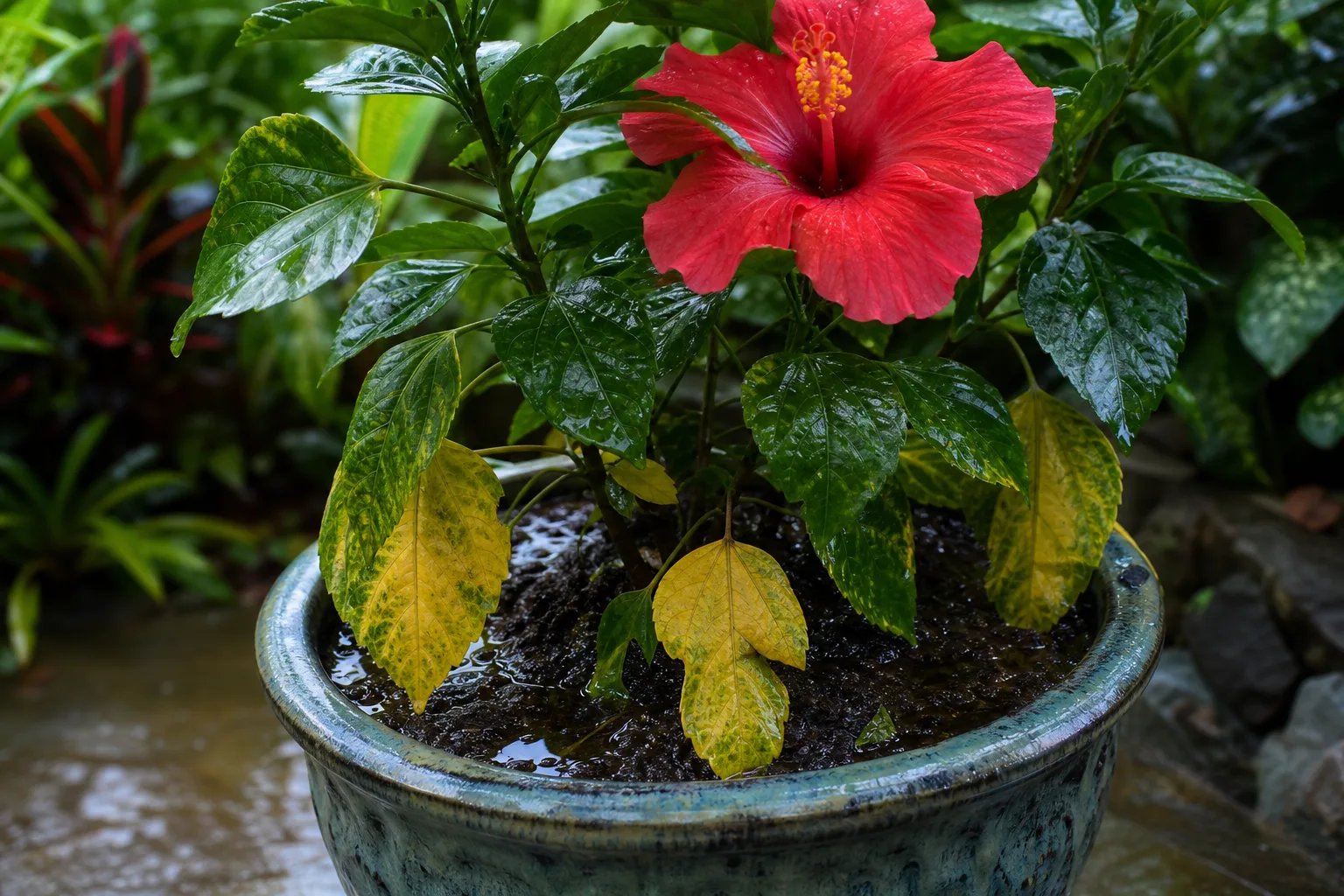
Overwatering on Hibiscus: Causes, Checks & Fixes
This guide covers overwatering on Hibiscus. See also the general Overwatering guide, watering, and light pages for this plant.
Overwatering on Hibiscus: Causes, Checks & Fixes
Quick answer
Overwatering on tropical hibiscus (Hibiscus rosa-sinensis) is not about giving one extra drink-it is about roots sitting in saturated mix long enough to lose oxygen. The signature pattern is limp leaves and dropping unopened buds while the pot stays heavy and the top 2–3 cm of mix feels damp or cool. That is the opposite of drought collapse on a feather-light, dusty-dry container.
First step: stop watering immediately. Do not pour because the canopy looks wilted-on wet soil, wilt means damaged roots cannot transport water, and another soak deepens the failure loop. Let the upper layer approach dry, confirm drainage holes are open, and only then decide whether roots need inspection or a lighter watering rhythm going forward.
For the even-moisture rhythm that prevents both extremes, see our hibiscus watering guide.
What overwatering looks like on Hibiscus
Hibiscus is a woody perennial shrub of the mallow family with large soft leaves and constant flower investment-not a succulent that stores water in thick tissue. When the root zone stays soggy, stress shows up through leaves, buds, and stems before you ever unpot.
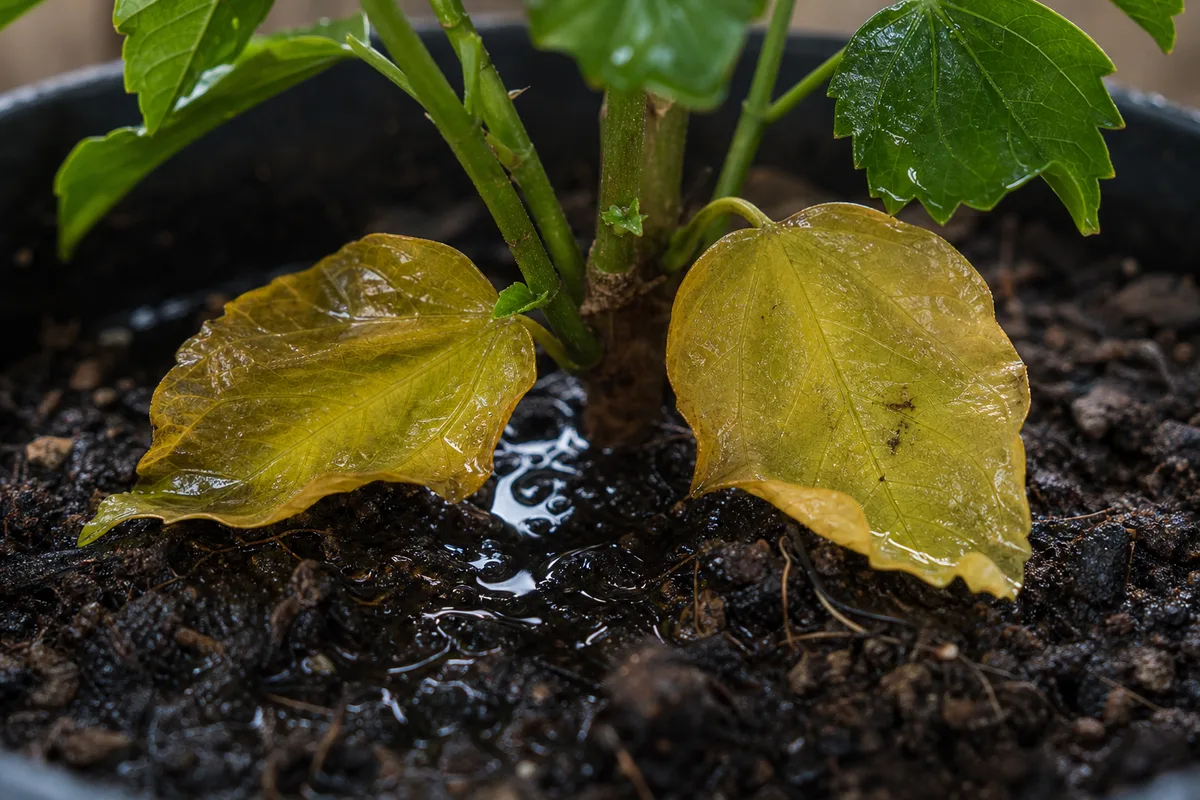
Overwatering symptoms on Hibiscus - compare with healthy tissue on the same plant.
Early signs
- Wilting or drooping leaves while mix several centimeters down stays moist-not just a briefly damp surface after watering
- Bud drop before blooms open, especially on a heavy pot that has not dried normally between drinks
- Yellow lower leaves that stay pale even after you stop adding water
- Soft, limp new growth with large leaves but stalled or aborted flowers
- Soil that stays dark and wet at the surface for more than a week in a warm container
- Fungus gnats when you disturb the mix-larvae thrive in persistently moist organic potting soil (see fungus gnats on hibiscus)
- Surface mold or algae on wet peat-often a companion clue (see mold on soil)
Unlike underwatering, overwatered hibiscus has damp mix throughout, sometimes a sour or musty smell, and wilt that does not perk up when you add more water.
Advanced signs
- Soft, dark, or collapsing stems at the soil line-Malvaceae shrubs often fail at the base before upper branches look obviously damaged
- Sour or swampy smell from the drainage hole or when you lift the pot
- Widespread yellowing spreading up the plant while mix remains wet
- Stalled new growth for weeks despite what looks like adequate care
- Brown mushy roots when you tip the plant out-escalate to root rot on hibiscus protocol
Bud drop deserves special attention. Hibiscus is notorious for shedding unopened buds when moisture swings-too much or too little water can trigger bud drop even after buds took weeks to form. On a heavy, wet pot, that pattern points to excess moisture starving roots of oxygen, not drought.
Why Hibiscus gets overwatered
Hibiscus wants roots kept moist in well-drained soil-a narrow window that confuses growers who read “loves moisture” as “keep adding water whenever I think about it.”
Calendar watering and the moisture paradox
In full sun on a hot patio, container hibiscus may need water every day when the top 2–3 cm dries-summer heat drives heavy transpiration through large leaves. In a cool indoor corner, shaded winter window, or oversized patio pot, the same calendar rhythm keeps mix saturated because uptake slows. Roots that evolved for warm, porous soils suffocate when oxygen cannot reach fine root hairs in waterlogged soil.
The trap: you learned to water at the first sign of wilt all summer. In cooler dim conditions, that reflex accelerates rot when roots are already failing in wet mix.
Winter slowdown vs. summer heavy drinker
Growth and water use drop when days shorten and temperatures cool-even in frost-free climates. Many potted plants need water only every five to ten days in winter, sometimes longer in cool rooms with reduced light. Continuing summer frequency on a quiet plant is one of the most common routes to winter overwatering.
Indoor hibiscus overwintered in bright conditions may still bloom sporadically and need a middle rhythm-less than summer, more than full dormancy-but the top 2–3 cm should still approach dry before the next deep soak.
Oversized pots, heavy mix, and saucer traps
Tropical hibiscus has relatively wide, shallow roots. A pot much larger than the root ball holds a soggy ring of wet mix that dries slowly-the surface may look fine while the center stays saturated for days. Heavy peat blends in cool conservatory rooms also slow evaporation.
Decorative cachepots and full saucers compound the problem. Hibiscus roots that sit in runoff re-enter stagnant, low-oxygen conditions within hours-the fastest route from “I am keeping it moist” to stem-base failure.
Fear after drought and post-repot soak stress
Many growers overcompensate after a dry spell or vacation wilt scare-heavy soak followed by another soak before the mix dried, which invites rot and resets the plant into another stress cycle. A thorough post-repot watering is correct once, but fresh mix in an oversized container without roots exploring it retains moisture differently for the first few cycles. Wait for normal dry-down signals rather than assuming your old daily interval still applies.
How to confirm the cause
Work through these checks before you change light, fertilizer, or repot:
- Moisture at depth - Press your finger into the top 2–3 cm of mix near the stem. Damp, cool, or dark soil several centimeters down while leaves wilt confirms overwatering is the leading suspect-not thirst.
- Pot weight - Lift the container. A heavy feel for days after the last watering supports excess moisture. Compare with weight one hour after a thorough soak when the plant was healthy.
- Wilting pattern - Overwatered hibiscus wilts on wet mix and does not perk up when you add water. Underwatered hibiscus wilts in hot sun on a light, dry pot and recovers within hours after a deep soak-see underwatering on hibiscus when drought fits better.
- Bud and leaf clues - Dropping tight green buds on a heavy wet pot points to moisture stress from excess water. Yellow lower leaves with damp mix fit overwatering better than a single nutrient issue.
- Stem firmness at soil line - Press the base gently. Firm wood-colored stems support mild overwatering rescue. Soft, dark, or mushy tissue at the soil line means advancing failure-inspect roots same day.
- Smell and drainage - Sour or swampy odor from the pot or drainage hole confirms anaerobic conditions. Confirm holes are open and no saucer water is wicking back up.
- Recent care context - Winter calendar habits, repotting into a larger pot, bottom-watering without dry-down checks, or panic watering after a wilt scare all raise overwatering likelihood on hibiscus.
If soil is bone dry throughout, the pot feels feather-light, and wilt perks up after a soak, treat underwatering first-not this page.
Lookalike symptoms to rule out
| Signal | Likely overwatering | Likely underwatering | Likely heat bud drop | Likely advancing root rot |
|---|---|---|---|---|
| Pot weight | Heavy for days | Light, almost hollow | Normal to heavy if recently watered | Heavy, wet for extended period |
| Top 2–3 cm of mix | Damp, cool, dark | Dry or dusty | May be moist if watered that morning | Damp with sour smell |
| Leaf wilt | Limp despite wet soil | Limp in hot sun; perks after soak | Afternoon wilt in extreme heat | Limp, spreading, no recovery |
| Buds | Drop on heavy wet pot | Drop on light dry pot | Drop in 90°F+ afternoons | Drop with yellowing and stem softening |
| Stem at soil line | Firm in mild cases | Firm | Firm | Soft, dark, mushy |
| Recovery after water | Worse or unchanged | Perks within hours | Shade may help; not more saturation | Requires root rescue |
Heat stress alone can wilt hibiscus and drop buds in extreme afternoon heat even when morning watering was correct. Check moisture at depth-if mix is dry, drought is still the problem; if moist with a heavy pot, overwatering or rot fits better than heat alone.
Normal spent flower drop is different from bud abort-you lose one-day blooms after opening, not tight unopened buds on wet soil.
Spider mites cause stippling and fine webbing in dry air, sometimes alongside underwatering. Inspect leaf undersides before assuming moisture alone will fix everything.
First fix for Hibiscus
Stop watering until the top 2–3 cm of mix approaches dry or barely moist.
That single action breaks the oxygen starvation cycle at the root zone. Move the plant to brighter indirect light temporarily if it sits in a dim corner where evaporation is slow-slow dry-down worsens wet soil, but avoid harsh midday sun on a stressed plant. Empty any saucer or lift the nursery pot out of decorative cover pots so no standing water touches the bottom.
Do not fertilize a waterlogged plant. Do not repot into an even larger container “to help drying”-that usually makes things worse. Do not prune heavily on day one unless stems are clearly mushy and dead.
Step-by-step recovery
After the initial dry-down pause, branch by severity:
Mild overwatering (firm stems, no sour smell)
- Let the top 2–3 cm approach dry completely before the next drink.
- When you water again, soak until drainage runs freely, then empty the saucer within thirty minutes.
- Resume the pot-based rhythm from the watering guide-check daily in heat, wait for real dry-down signals before each deep soak.
- Hold fertilizer until new growth looks firm and green for at least two weeks.
Moderate overwatering (yellow lower leaves, bud drop, heavy pot for a week)
- Complete the dry-down in step one, then tip the plant out gently and inspect roots. Firm pale roots in damp-not dripping-mix support continued dry-down rescue.
- Trim only clearly mushy root tips with clean pruners; leave healthy tissue intact.
- If mix is compacted and smells stale but roots are mostly firm, refresh the top inch with airy potting mix or repot into the same size container with well-draining media-see hibiscus repotting for timing and mix notes.
- Keep bright light without additional stress while roots recover. Watch for new bud sets that stay attached-that is your success signal.
Severe overwatering (soft stems at soil line, sour smell, mushy roots)
- Stop watering and inspect roots immediately-same day, not next week.
- Trim all brown, black, slimy, or mushy roots. Rinse away old saturated mix.
- Repot into clean, well-draining media in a right-sized pot-only one size larger than the trimmed root mass if upsizing is needed at all.
- Water lightly once to settle mix, then let the upper layer approach dry normally before the next drink.
- Follow the full root rot rescue protocol if more than half the root mass is compromised or stems collapse despite rescue.
Recovery timeline
Mild overwatering often shows improvement within three to seven days after a proper dry-down-leaves stiffen slightly and the plant stops dropping new buds. Moderate cases with yellow lower leaves may take one to three weeks of steady rhythm before new growth looks turgid and buds hold.
Yellow or soft leaves damaged by oxygen-starved roots do not re-green. Judge recovery by firm new growth and buds that stay attached-not by old blemished foliage.
If the plant stays wilted forty-eight hours after confirmed dry-down on firm roots, or yellowing spreads while you have already stopped watering, inspect roots again or review wilting on hibiscus for the full wet-vs-dry decision tree.
What not to do
Do not water because leaves look limp when soil is already wet-that feeds the failure loop and triggers more bud drop.
Do not fertilize a waterlogged plant to “perk it up”-salts on damaged roots add stress.
Do not repot into a larger pot on day one unless root inspection shows mushy tissue that requires trimming and fresh media.
Do not swing to drought-level neglect after an overwatering scare-hibiscus needs recovery rhythm, not a pendulum from swamp to desert.
Do not assume every yellow leaf means overwatering-confirm moisture at depth and pot weight before withholding or adding water.
Do not ignore soft stems at the base or sour smell-escalate to root rot protocol the same day.
How to prevent overwatering next time
Treat watering as a pot-drying rhythm, not a calendar rule. Check the top 2–3 cm of mix daily during active summer growth on sun-exposed containers; reduce checks-but not abandonment-in cooler months when growth slows.
Match container size to the root ball. Right-size pots make watering mistakes less dangerous than oversized patio containers that hold soggy mix around a small root zone.
Use well-draining, slightly moisture-retentive compost-not straight garden soil or dense peat without perlite. Confirm drainage holes stay open after repotting.
Always empty saucers or drain fully at the sink after every deep soak. Never let hibiscus sit in runoff overnight.
Keep placement as stable as possible-Chinese hibiscus is sensitive to environmental changes that compound watering errors when light, humidity, and temperature swing together. See also not enough light on hibiscus when dim placement slows dry-down.
During winter, cut frequency but maintain even moisture-wait for the top 2–3 cm to approach dry, then soak deeply once rather than dribbling small amounts that keep the surface wet while the center never breathes.
When to worry
Treat as urgent when stems soften at the soil line, mix smells sour, or every bud drops on a heavy wet pot while leaves collapse-inspect roots the same day and follow root rot rescue if tissue is mushy.
Worry about long-term damage if wet-soil wilt repeats weekly for a month-flowering can stall, lower leaves may shed, and fungus gnats often follow chronically moist hibiscus indoors.
Stop overwatering treatment and reconsider drought if the pot feels feather-light, mix is dusty dry throughout, and wilt perks up within hours after a thorough soak-that pattern points to underwatering instead.
A single overwatered cycle with quick recovery after one dry-down is not a crisis. Hibiscus is forgiving when you catch saturation early; it is unforgiving when soggy roots stack during bud formation.
Related Hibiscus guides
Overwatering rarely exists in isolation. For broader context on tropical vs. hardy types, bloom biology, and daily care rhythm, start with the hibiscus overview. When symptoms overlap, use dedicated pages for watering, underwatering, root rot, wilting, yellow leaves, bud drop, fungus gnats, mold on soil, repotting, and light requirements rather than guessing from wilt alone.
Conclusion
Overwatered hibiscus tells you clearly-a heavy pot, limp leaves, and buds falling before they open on damp mix. Stop watering, let the top 2–3 cm approach dry, drain fully on the next soak, and judge recovery by new buds and firm stems-not by old yellow leaves. On this sun-loving shrub, consistently moist does not mean constantly wet; the dry-down between deep drinks is what keeps roots breathing and blooms on the stem.