Underwatering on Hibiscus: Causes, Checks & Fixes
Quick answer
Underwatered hibiscus wilts in full sun, drops buds before they open, and sits in a pot that feels feather-light with dusty dry mix. First step: soak the root ball thoroughly until water drains freely, then resume watering when the top inch dries.
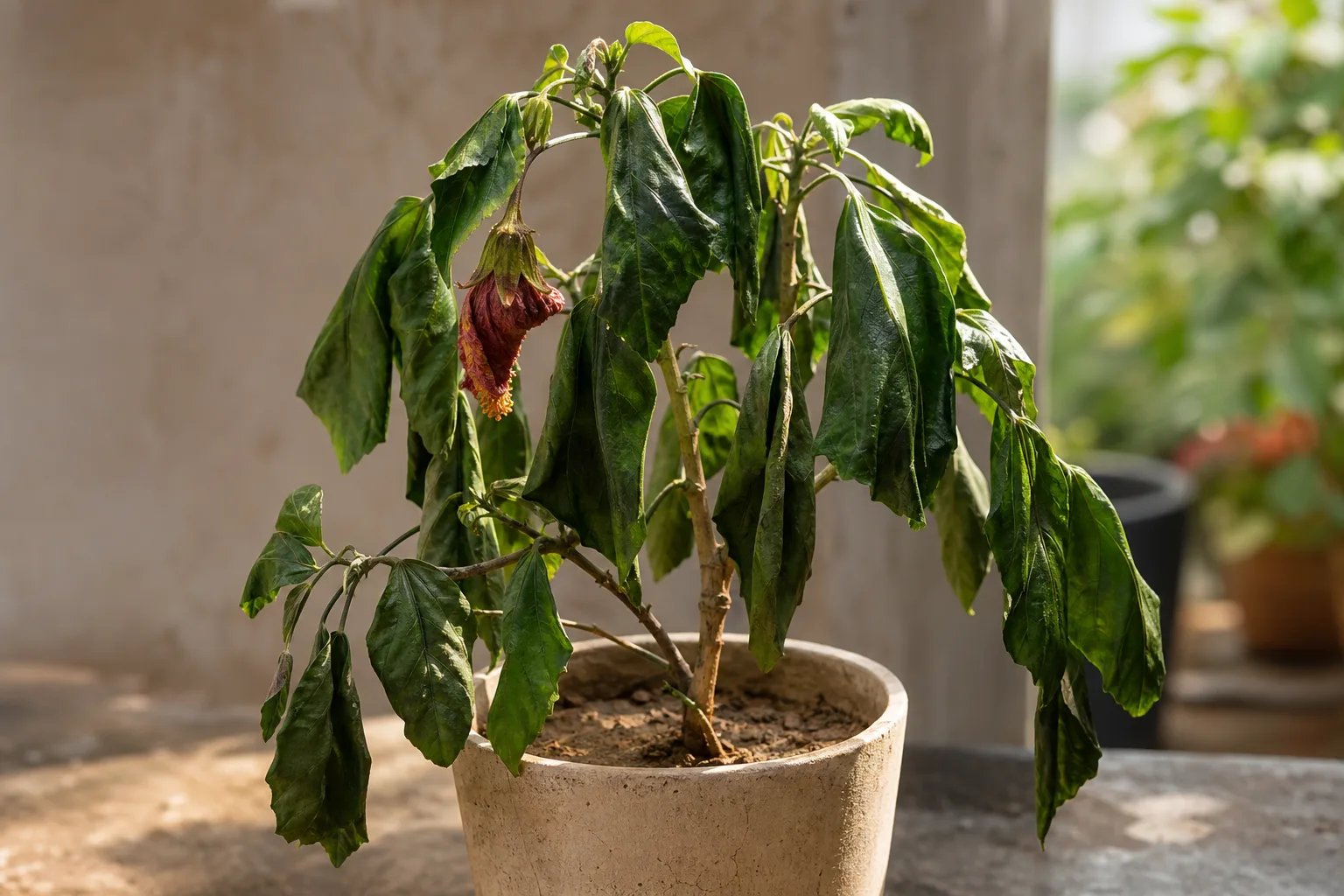
Underwatering on Hibiscus: Causes, Checks & Fixes
This guide covers underwatering on Hibiscus. See also the general Underwatering guide, watering, and light pages for this plant.
Underwatering on Hibiscus: Causes, Checks & Fixes
Quick answer
Tropical hibiscus (Hibiscus rosa-sinensis) is a thirsty, sun-loving shrub-not a drought-tolerant succulent. When the mix stays dry too long, large leaves lose turgor, unopened buds abort, and the pot feels almost weightless in your hands.
First step: soak the root ball thoroughly until water runs freely from the drainage holes. One deep drink that reaches the bottom roots beats several shallow sips that only dampen the surface. After the soak, let excess drain completely and do not water again until the top inch of mix feels dry.
What underwatering looks like on Hibiscus
Hibiscus shows drought stress early and visibly because it pushes big leaves and constant flower buds in warm weather.
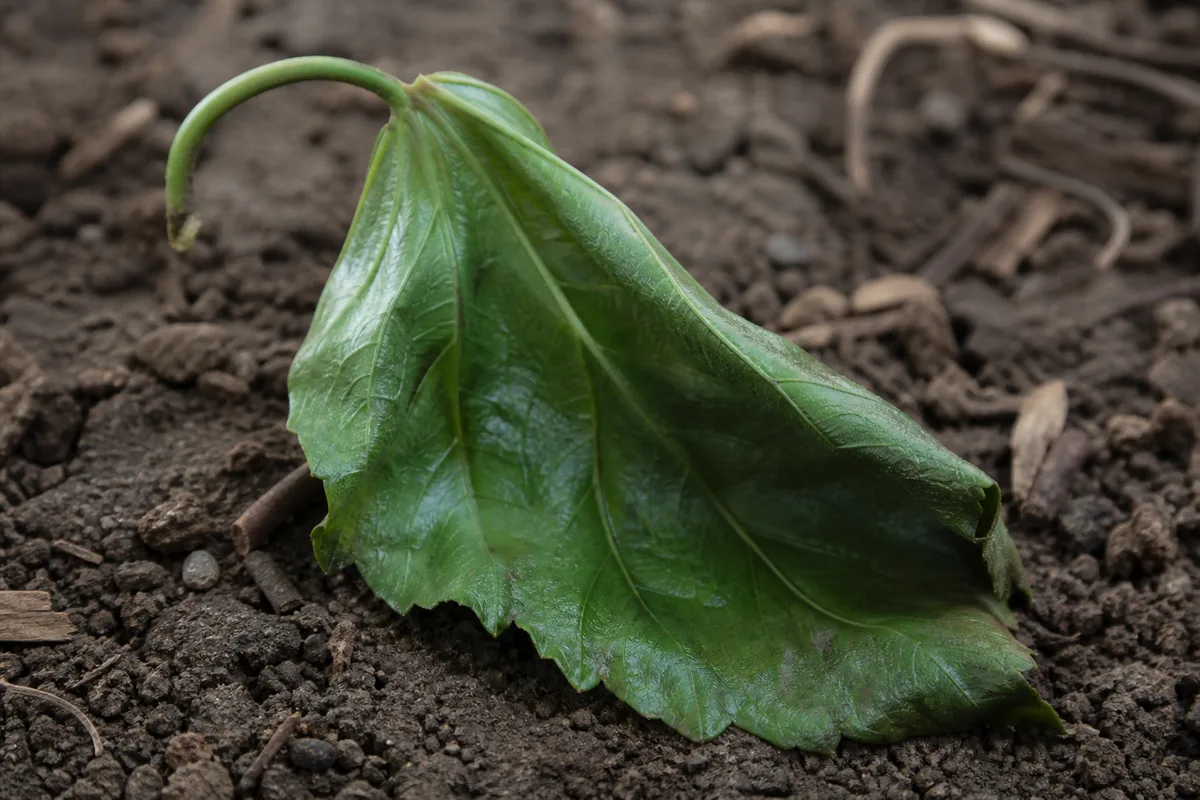
Underwatering symptoms on Hibiscus - compare with healthy tissue on the same plant.
Typical underwatering signs:
- [Wilting or drooping leaves on Hibiscus on Hibiscus](/plants/hibiscus/drooping-leaves/) that feel thin and limp, often worst in afternoon sun-dry soil commonly causes wilting when roots cannot supply water fast enough
- Bud drop before blooms open-one of the most common hibiscus-specific drought signals
- Dry yellow foliage, especially on older lower leaves after repeated dry cycles
- Crispy brown leaf edges when drought has gone on for days
- Soil pulled away from the pot rim and a dusty, light-colored surface
- Very light pot weight compared with how it feels an hour after watering
- Water running straight through the pot without soaking the center-hydrophobic mix after prolonged dryness
Unlike root rot on Hibiscus, underwatered hibiscus has dry mix throughout, no sour smell, and roots that stay firm and pale when you tip the plant out. Stems feel limp from lack of water uptake, not soft and mushy at the base.
Bud drop deserves special attention on Hibiscus overview. Hibiscus is notorious for shedding unopened buds when moisture swings-too much or too little water can trigger bud drop even after buds took weeks to form. That pattern is different from a healthy plant dropping spent one-day flowers after blooming.
Why Hibiscus gets underwatered
Hibiscus evolved for warm, humid climates with roots kept consistently moist-not long dry spells the way desert succulents or hardy shrubs can.
High water demand in Hibiscus light guide. Hibiscus wants six or more hours of direct sunlight for best flowering. More sun means faster transpiration and quicker pot drying. A container on a south-facing balcony in summer can need water every day while the same plant indoors in winter may go two to three days between drinks.
Calendar watering instead of soil checks. Many growers water weekly regardless of season. Cool months slow uptake, but peak summer heat does the opposite-hibiscus can wilt within twenty-four hours if the top inch dries and nobody checks.
Fear of overwatering on Hibiscus. Hibiscus roots need oxygen, so growers sometimes under-water after a rot scare. Chronic drought stresses the plant differently: buds drop, leaves yellow, and growth stalls without the mushy roots and sour smell that define rot.
Pot and mix factors. Root-bound plants in small pots dry in a day or two. Peat-heavy mix that has gone completely dry often repels water-the surface looks briefly damp after a quick pour while the root ball inside stays bone dry. Sandy, fast-draining mixes without enough organic matter also dry out faster than hibiscus prefers.
Environmental swings. Chinese hibiscus is sensitive to environmental changes-sudden shifts in light, temperature, humidity, and Hibiscus watering guide compound drought stress. A plant moved to a hotter patio, blasted by heating vents, or left dry after a vacation often shows wilt and bud drop together-making drought easy to miss if you blame only the move.
Inconsistent care during bloom season. Hibiscus flowers are short-lived-usually open for one day-so the plant constantly invests energy in new buds. Dry soil during that push forces the plant to sacrifice buds and older leaves to conserve moisture.
How to confirm the cause
Work through these checks before you change anything else:
- Pot weight - Lift the container. If the pot feels light, it needs water. Compare with weight one hour after a thorough soak.
- Moisture at depth - Push your finger 2–3 cm into the soil near the stem. Bone dry several centimeters down confirms drought. Surface dust alone can mislead if the middle is still moist.
- Wilting pattern - Underwatering usually wilts the whole canopy in hot sun, then perks up within hours after a soak. Overwatered hibiscus can also wilt, but the mix stays wet and may smell sour.
- Bud and leaf clues - Dropping tight green buds with dry soil points to moisture stress. Yellow lower leaves with dry edges after repeated drought cycles fit underwatering better than a single nutrient issue.
- Drainage test - Water slowly and watch whether the mix absorbs or channels straight to the saucer. Fast runoff with a still-light pot means hydrophobic dry mix.
- Root peek - Tip the plant out gently. Firm pale roots in dry mix support drought diagnosis. Brown mushy roots in wet mix mean rot-do not soak harder.
- Recent care context - Travel, a new hot location, skipped watering during a heat wave, or switching to a smaller pot all raise drought likelihood on hibiscus.
If soil is wet several centimeters down, stems are soft at the base, or the pot smells swampy, treat overwatering or root rot first-not underwatering.
First fix for Hibiscus
Water thoroughly from the top until water runs freely out of the drainage holes, then empty the saucer.
Water from the top so runoff reaches bottom roots. Pour slowly in stages so the mix absorbs rather than channels around the sides. For a very dry pot, run water until the surface darkens, wait ten minutes, and repeat once so the center rewets. The goal is one complete soak that reaches bottom roots-not a daily sprinkle that never penetrates.
Do not fertilize a drought-stressed hibiscus on day one. Do not repot immediately unless the mix is so hydrophobic that repeated soaks fail. Do not move the plant to a new spot while it is wilted-stabilize moisture first.
Step-by-step recovery
After the initial deep soak:
- Empty the saucer within thirty minutes so the plant is never standing in water. Hibiscus needs moisture at the roots, not a flooded bottom.
- Bottom-water if the mix repels water - Set the pot in a tray of water for thirty to forty-five minutes until the surface moistens, then drain fully. Repeat the next day if the center still feels dry when probed.
- Move out of harsh midday sun temporarily while leaves are limp. Bright indirect light for one to two days reduces transpiration while roots rehydrate. Return to full sun once turgor returns.
- Resume a pot-based rhythm - Water again only when the top inch of mix dries. In peak summer that may mean daily; in cooler months, every two to three days.
- Mist only as a minor humidity boost - Misting leaves does not replace root-zone moisture. It can help if dry indoor air compounds outdoor drought stress, but soaking the mix is what saves the plant.
- Hold fertilizer until new growth looks firm and green for at least two weeks. Salts on drought-damaged roots add stress.
- Prune only dead tissue - Snip fully crisp brown leaves if they bother you, but leave partially green leaves in place to photosynthesize during recovery.
If buds have already dropped, do not expect them to reopen. Keep moisture steady and wait for the next bud cycle-often one to three weeks in warm active growth.
Recovery timeline
Mild dehydration often shows improvement within twelve to twenty-four hours after a proper soak-leaves stiffen and the plant looks upright by the next morning. Moderate drought with bud drop may take one to two weeks of steady moisture before new buds form and hold.
Crispy leaf margins and fully yellowed drought-damaged leaves do not green up again. Judge recovery by turgid new growth and buds that stay attached-not by old blemished foliage.
If the plant stays wilted forty-eight hours after a confirmed thorough soak, or yellowing spreads while soil stays wet, stop repeating drought treatment and inspect roots for rot or pest stress.
Lookalike symptoms to rule out
Overwatering and root rot also cause wilting and yellow leaves, but soil stays wet, roots turn mushy, and the base may smell sour. Dry mix throughout rules this in favor of underwatering.
Heat stress alone can wilt hibiscus in extreme afternoon heat even when soil is moist. Check moisture at depth-if the mix is dry, drought is still the problem; if moist, shade during peak heat may be enough.
Cold or draft stress drops buds and yellows leaves when temperatures swing-hibiscus needs daytime temperatures around 65 to 75°F to develop buds and cannot withstand extreme humidity or temperature swings indoors. Moist soil with cold exposure fits temperature stress better than drought.
Spider mites cause stippling and fine webbing in dry air, sometimes alongside underwatering. Inspect leaf undersides before assuming moisture alone will fix everything.
Normal bud drop on double-flowering varieties happens even with good care-some hybrids shed more buds than singles. Chronic drop tied to dry soil and wilt is still a watering problem.
Nutrient deficiency yellows leaves but usually does not make the pot feather-light or soil dusty dry. Fix moisture first; fertilize only after the plant stabilizes.
Mistakes to avoid
Do not give tiny daily splashes that never reach bottom roots-hibiscus needs periodic deep watering.
Do not assume wilting always means overwatering. Check soil moisture before withholding water.
Do not drench twice a day for a week after one dry spell-that swings care toward rot.
Do not repot on day one unless the mix is hydrophobic beyond recovery with repeated soaks.
Do not increase fertilizer to force blooms on a drought-stressed plant.
Do not ignore bud drop as normal if the pot is drying out every one to two days in full sun-that is underwatering until proven otherwise.
How to prevent underwatering next time
Treat watering as a pot-drying rhythm, not a calendar rule. Check the top inch of mix daily during active summer growth on sun-exposed containers.
Match container size to the plant. Root-bound hibiscus in a small pot dries fast-plan to repot every one to two years when roots escape drainage holes and the mix dries within a day of watering.
Use well-draining, slightly moisture-retentive compost-not straight garden soil or pure sand. A mix with organic matter holds water long enough for roots to drink without staying soggy.
Keep placement as stable as possible. Avoid too little or too much water, drafts, and low light-hibiscus drops buds when care and environment swing together. If you must move it, pre-moisten the mix and avoid letting it go dry during the adjustment week.
Refresh peat-heavy potting soil that has gone hydrophobic after a long dry period. Top-dressing or Hibiscus repotting guide beats fighting mix that repels water.
During vacations or heat waves, use a trusted sitter, self-watering reservoir, or shade cloth-not hope that a thirsty tropical shrub will wait.
When to worry
Treat as urgent when the entire plant collapses in hot sun with bone-dry soil, or when every bud drops during peak bloom season after repeated dry cycles. Rehydrate the same day with a full soak and temporary shade.
Worry about long-term damage if drought repeats weekly for a month-stems may stay thin, flowering can stall, and spider mites often follow chronically dry hibiscus indoors.
Stop underwatering treatment and inspect roots if the plant stays wilted after a confirmed thorough soak, soil smells sour, or stems soften at the base-that pattern points to rot or another problem.
A single missed watering with quick recovery is not a crisis. Hibiscus is forgiving when you catch drought early; it is unforgiving when dry spells stack during bud formation.
Conclusion
Underwatered hibiscus tells you clearly-a light pot, limp leaves, and buds falling before they open in bright sun. Soak the root ball once, drain well, then water when the top inch dries. Old crispy leaves may not recover, but firm new growth and buds that hold mean you are back on track. On this plant, steady moisture is not optional-it is the price of those huge summer blooms.
When to use this page vs other Hibiscus guides
- Hibiscus watering guide - Use for routine moisture checks before assuming underwatering is the main issue.
- Hibiscus problems hub - Browse all 20 common issues on this species.
- Wilting on Hibiscus - Different entry point when symptoms overlap with underwatering.
- Brown Tips on Hibiscus - Different entry point when symptoms overlap with underwatering.
- Yellow Leaves on Hibiscus - Different entry point when symptoms overlap with underwatering.