Brown Tips on Hibiscus: Causes, Checks & Fixes
Quick answer
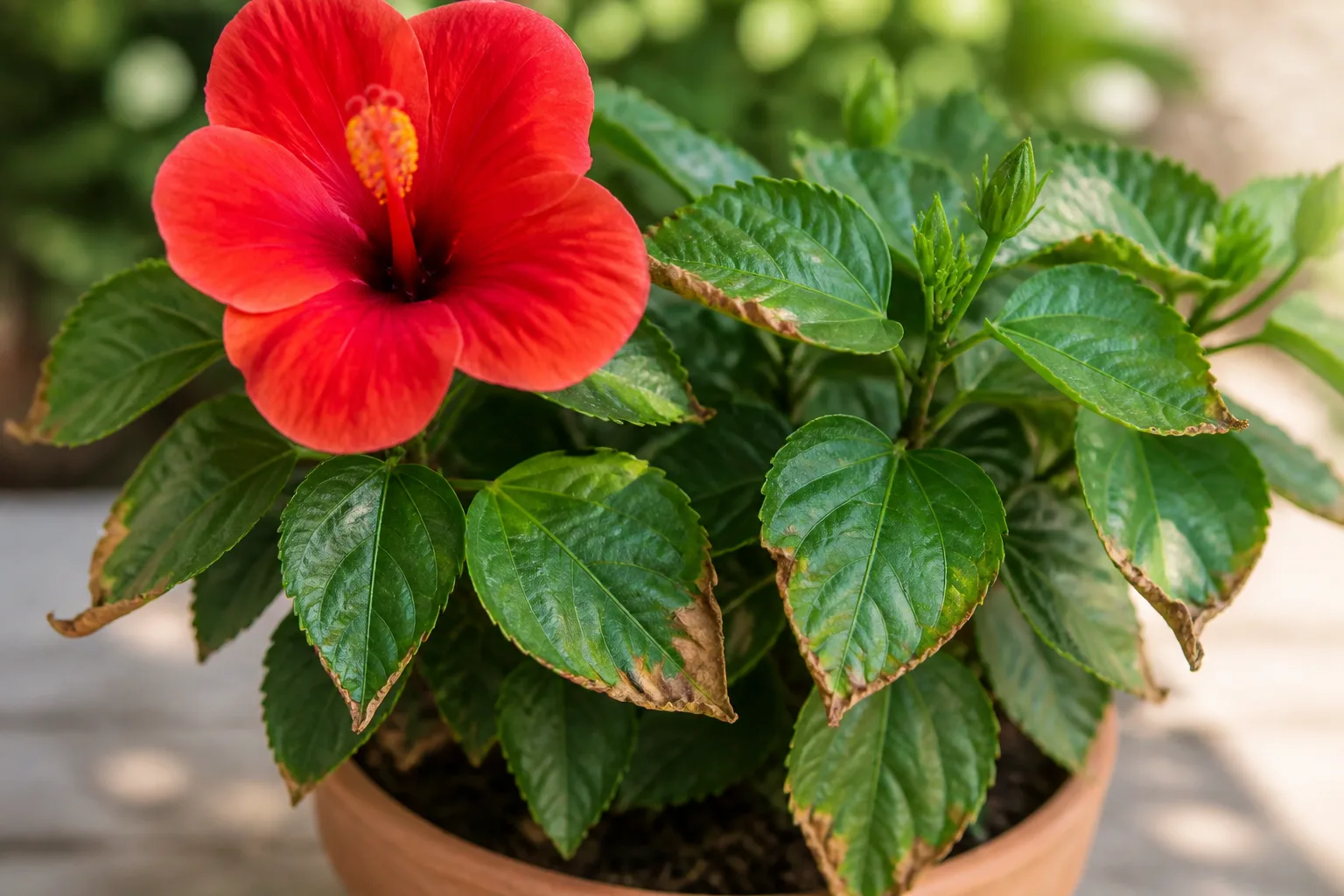
Brown tips on tropical hibiscus usually trace to drought crispy margins on a light dry pot, white salt crust after heavy feeding, sun scorch on glossy leaves moved to full sun, dry indoor air with spider mites, or potassium deficiency-not a single mystery stress. First step: lift the pot, check the top inch of mix for dryness, scan the soil surface for salt crust, and inspect leaf undersides before you water, flush, or feed.
Brown Tips on Hibiscus: Causes, Checks & Fixes
This guide covers brown tips on Hibiscus. See also the general Brown Tips guide, watering, and light pages for this plant.
Brown Tips on Hibiscus: Causes, Checks & Fixes
Quick answer
Brown tips on hibiscus are almost always environmental margin burn-drought, salt buildup, sun scorch, dry air, or nutrient stress-not a mysterious disease. Tropical Hibiscus rosa-sinensis shows damage fast because it pushes large glossy leaves and constant buds in heat; Malvaceae plants often signal stress through leaf margins and bud drop before obvious pest colonies appear.
First step: lift the pot and probe the top inch of mix. A light dry pot with crispy brown edges points to drought-see underwatering on Hibiscus. A white salt crust with brown tips on moist mix points to fertilizer burn-see the Hibiscus fertilizer guide. Brown patches on the sun-facing side after a patio move suggest sun scorch. Stippling plus webbing indoors suggests spider mites-see spider mites on Hibiscus. Make one correction at a time and watch new growth for two weeks.
What brown tips look like on Hibiscus
Hibiscus tip burn is not one uniform look. The pattern on the leaf, the pot, and recent care usually tells you which branch to follow.
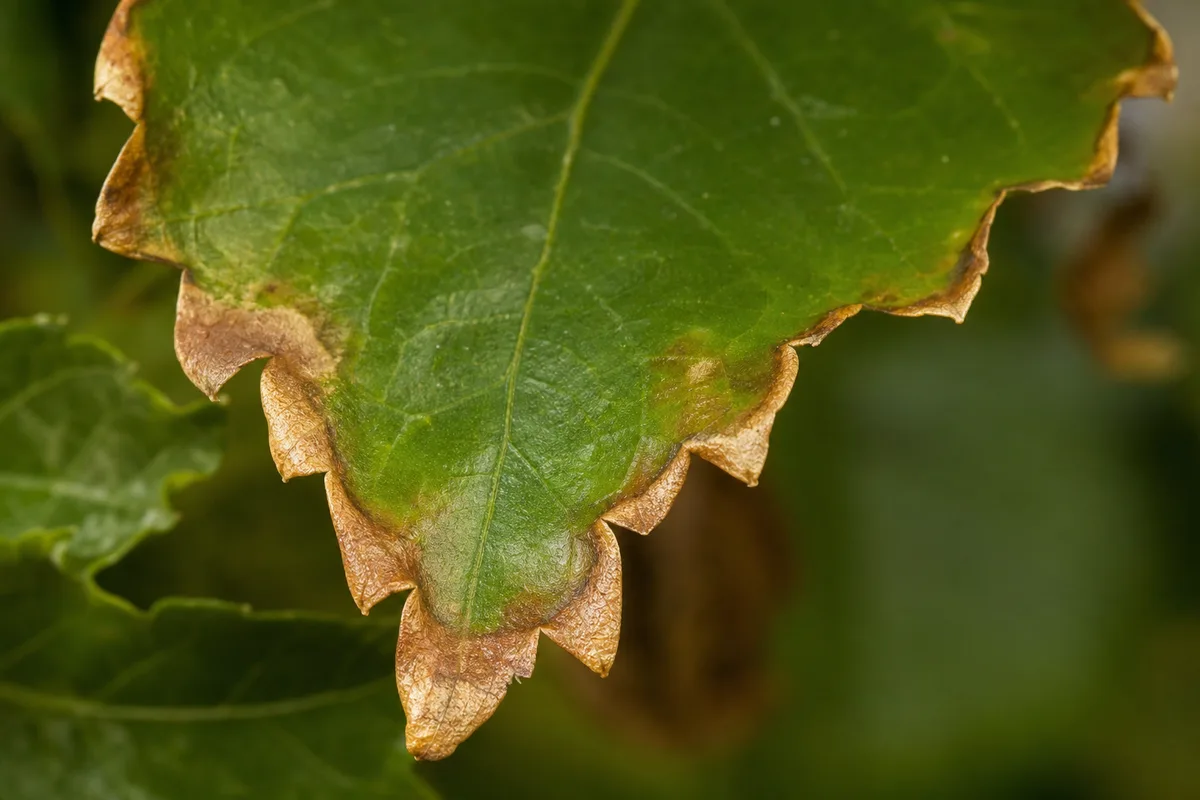
Brown Tips symptoms on Hibiscus - compare with healthy tissue on the same plant.
Drought crispy margins - Dry brown or tan edges and tips, often starting on older lower leaves after a hot dry spell. Brown tips or margins often indicate drought in spring and summer. The pot feels noticeably light, the mix is dusty several centimeters down, and leaves may wilt in afternoon sun before they crisp. This overlaps with underwatering but can appear as tip necrosis before whole-leaf yellowing.
Salt and fertilizer burn - Brown, crunchy leaflet tips and margins even when soil feels moderately moist. A white or pale crust on the soil surface or pot rim often appears after heavy feeding, bloom booster use, or months of liquid fertilizer without leaching. Hibiscus is potassium-hungry; high-phosphorus products and salt accumulation burn margins faster than on light feeders.
Sun scorch - Bleached, tan, or brown patches on the side of leaves facing the sun, not symmetrical tip burn on every leaf. Common when a nursery-shade plant moves straight to a south-facing patio. Glossy tropical leaves scorch more easily than the dull matte foliage of hardy H. moscheutos.
Low humidity and spider mites - Fine stippling (pale dots), bronzing, and later brown edges, often with fine webbing on undersides. Heated winter rooms below about 30% relative humidity favor mites on hibiscus-see low humidity.
Potassium deficiency - Older leaves develop scorched brown tips and edges while the rest of the blade stays green-a classic pattern when feeding is imbalanced or roots cannot uptake potassium.
Chill injury on tropical types - Brown or blackened leaf edges and bud loss when nights drop toward 45–50°F (7–10°C) on H. rosa-sinensis brought outdoors too early or left near a cold draft. Hardy hibiscus and Rose of Sharon tolerate frost when dormant; tropical types do not.
Not tip burn: Iron chlorosis shows yellow new leaves with green veins (interveinal chlorosis)-that is a pH or micronutrient problem, not margin necrosis. Yellow whole leaves with wet or dry soil patterns fit yellow leaves better than isolated tip burn.
Tropical vs hardy - identify your plant first
Brown-tip diagnosis depends partly on which hibiscus you grow.
Tropical hibiscus (H. rosa-sinensis) has small glossy dark green leaves, soft shrubby stems, and is cold-sensitive below about 45–50°F (7–10°C). Container plants in peak summer sun dry fast and need daily checks. Indoor winter culture raises drought and mite risk.
Hardy hibiscus (H. moscheutos) has large dull heart-shaped leaves and dies back to the ground after frost. Tip burn on new summer growth usually means drought at the marsh edge of its water needs or heat-not indoor dry air.
Rose of Sharon (H. syriacus) is a woody deciduous shrub with medium dull leaves. Margin burn in summer often ties to establishment drought or wind exposure on young wood.
If you are unsure, start with the Hibiscus overview type guide before you flush salts on a plant that only needed a deeper soak.
Why Hibiscus gets brown tips
Hibiscus evolved for warm, bright, humid climates with steady root-zone moisture-not the swings of a forgotten patio pot or a heated winter windowsill.
High water demand in Hibiscus light guide. Tropical hibiscus wants six or more hours of direct sunlight for best bloom. More sun means faster transpiration. A container on a hot balcony can go from moist to drought-stressed in a day, and margins crisp before the whole leaf yellows.
Salt buildup from feeding. Hibiscus is a heavy feeder during bloom but sensitive to phosphorus accumulation and soluble salts in pots. Repeated liquid feed without periodic leaching, or high-phosphorus bloom boosters, leaves salts that burn margins and antagonize iron uptake-yellow new growth with green veins is the lookalike, not tip burn alone.
Abrupt sun increase. Leaves grown in shade or under nursery shade cloth lack the waxy protection for full afternoon sun. Moving to a south patio without acclimation scorches sun-facing tissue on glossy tropical leaves.
Dry indoor air. Tropical hibiscus overwintering indoors faces low humidity beside heating vents. Spider mites exploit that dryness; stippling and bronzing precede brown tips. Misting alone rarely fixes root-zone drought or mite pressure.
Potassium shortage. Heavy bloom and rapid shoot growth deplete potassium in small pots. Older leaf tips and edges scorch brown while tissue between veins stays green when potassium is low relative to nitrogen.
Chill and drafts. Tropical types suffer cold injury when nights approach 45°F (7°C). Brown edges, bud drop, and partial leaf death follow-not the same as summer drought, but margins brown similarly.
Wind and salt spray (coastal gardens) can desiccate margins on exposed sides-worse on the windward face, similar to drought scorch.
Brown tips vs yellow leaves vs chlorosis
Readers often conflate three different hibiscus problems:
| Pattern | What you see | Likely cause | First check |
|---|---|---|---|
| Brown tips/margins | Dry crispy edges, sometimes salt crust | Drought, salt burn, K deficiency, scorch | Pot weight, soil crust, sun exposure |
| Yellow whole leaves | Blade turns yellow, may drop | Over/underwatering, chill, age, pests | Moisture at depth, temperature |
| Yellow leaves, green veins | New growth pale, veins stay green | Iron lockout, high phosphorus, high pH | Recent fertilizer type, soil pH |
Fix moisture or salts before you chase micronutrients. Fertilizing a drought-stressed or salt-burned hibiscus on day one often widens margin burn.
How to confirm the cause
Work through this checklist in order. Stop when one cause fits clearly.
- Pot weight - Lift the container. A light pot with dry mix several centimeters down supports drought. A heavy pot with moist mix and brown tips supports salt burn or overfeeding-not underwatering.
- Top-inch moisture - Push your finger 2–3 cm into the mix near the stem. Bone dry confirms drought; consistently wet with sour smell points to overwatering instead.
- Salt crust - Look for white or chalky residue on the soil surface, pot rim, or saucer. Recent bloom booster or weekly full-strength feed without leaching raises salt-burn likelihood.
- Light and recent moves - Did the plant move from shade to full sun in the last two weeks? Sun-facing brown patches on glossy leaves fit scorch. Count direct sun hours-hibiscus wants strong light but acclimated leaves.
- Leaf undersides - Check for stippling, webbing, and moving specks (paper-tap test). Mites mimic drought browning indoors.
- Feeding history - Heavy potassium-forward feed on schedule rarely causes tip burn alone; bloom boosters, dry-soil feeding, or skipped leaching do.
- Temperature context - Tropical pots outdoors on cool nights below 50°F (10°C), or plants beside winter drafts, fit chill injury.
- Which leaves - Older lower leaves with brown edges only often mean drought or potassium issue. New growth scorch on the sun side means light stress. Random stippling across the canopy suggests mites.
- Hibiscus type - Tropical container vs hardy in-ground changes which causes are most likely.
If soil is wet and sour, stems soften at the base, or damage spreads with black lesions, stop tip-burn treatment and inspect for root rot on Hibiscus or fungal leaf spot.
First fix for Hibiscus
Match the first action to the most likely cause-one change only.
If drought fits (light pot, dry mix, crispy margins)
Soak the root ball thoroughly until water runs freely from drainage holes, then empty the saucer. Follow the Hibiscus watering guide rhythm-water again when the top inch dries, which may mean daily in peak summer sun. Do not fertilize until new growth looks firm for two weeks.
If salt burn fits (white crust, brown tips on moist mix)
Stop feeding immediately. Flush the pot with plain water until it drains freely; wait ten minutes and flush once more. Pause fertilizer for four to six weeks. Resume at half strength with a high-potassium, low-phosphorus formula only after new leaves emerge clean-see Hibiscus fertilizer.
If sun scorch fits (recent move, sun-facing patches)
Give light afternoon shade or morning sun only for one to two weeks while the plant acclimates. Do not yank it back to a dim room-hibiscus needs strong light long term per light requirements. Water on the usual dry-top-inch schedule; scorch is not fixed by extra drowning.
If dry air and mites fit (stippling, webbing indoors)
Rinse leaf undersides in the sink or shower, improve humidity with a tray or humidifier, and treat active mites before assuming drought-see spider mites. Do not mist cool foliage repeatedly; that invites fungal issues without solving mites.
If chill injury fits (cold nights, tropical type)
Move the plant to a stable spot above 55°F (13°C) away from drafts. Remove only fully dead leaves; hold fertilizer until active growth resumes.
When two causes stack-drought and mites after a dry winter-fix moisture first, then reassess pests after forty-eight hours.
Recovery timeline
Brown tip tissue does not turn green again. Necrotic margins are permanent on that leaf. Judge success by new growth, not old blemished foliage-look for new leaves with clean edges, buds that stay attached, and stopped spread to unaffected foliage.
| Severity | What to expect |
|---|---|
| Mild drought | Turgor returns within hours after a soak; new growth clean in 1–2 weeks |
| Salt burn after flush | No new tip burn on emerging leaves within 2–4 weeks; old crispy tips remain until pruned or dropped |
| Sun scorch | Acclimated new leaves tolerate sun in 1–2 weeks; scorched patches stay on old blades |
| Mite damage | Stippling stops spreading 1–2 weeks after treatment and humidity improve |
| Chill injury | New growth may wait until stable warmth returns; damaged leaves may drop |
If brown margins spread to new leaves two weeks after the correct single fix, re-run the checklist-stacked stress (salt plus drought) or a misread cause is common.
What not to do
Do not fertilize a stressed hibiscus before you know whether tips are from drought or salts-feeding dry roots burns margins; feeding salt-loaded pots adds injury.
Do not flush and soak on the same day without diagnosis. They solve opposite problems.
Do not stack Hibiscus repotting guide, heavy pruning, pesticide, and fertilizer in one weekend. Hibiscus drops buds when care swings.
Do not assume bright indirect light is enough long term. Chronic low light weakens leaves; sun scorch happens when you finally move a weak plant to a patio-acclimate instead.
Do not mist as your only humidity fix in cool rooms. It rarely raises humidity enough for mites and can worsen foliage disease.
Do not trim every browned leaf at once unless pests or disease require it-partially green leaves still photosynthesize during recovery.
How to prevent brown tips next time
Water on pot-drying rhythm, not a calendar. Check the top inch daily in summer sun per the watering guide.
Leach container salts every six to eight weeks during active feeding-run plain water through until it drains freely before the next fertilizer dose.
Use high-potassium, low-phosphorus feed at half strength every one to two weeks in warm active growth-not bloom boosters as the main diet.
Acclimate to full sun over one to two weeks when moving from shade to a patio.
Raise winter humidity and inspect leaf undersides weekly on tropical hibiscus indoors-see low humidity.
Bring tropical pots in before nights drop toward 45°F (7°C)-chill margins are preventable.
Repot into fresh well-drained mix every one to two years so water and nutrients distribute evenly-compacted peat exaggerates drought and salt zones.
When to worry
Treat as urgent when brown spreads to new growth daily, stems soften at the crown, or pests coat every new shoot-those patterns exceed cosmetic tip burn.
Worry about long-term decline if every bud drops while margins brown and soil swings wet-to-dry weekly-unstable care compounds Malvaceae stress.
Indoor keepers: stressed hibiscus may drop damaged leaves. Rose of Sharon is listed non-toxic to cats and dogs; tropical hibiscus is generally low toxicity, but ingestion can still upset pets-pick up fallen leaves if chewers are nearby.
A few browned tips on older summer leaves after one missed watering is not a crisis. Hibiscus is forgiving when you catch margin stress early; it is unforgiving when drought, salts, and scorch stack through bloom season.
Related hibiscus problems
- Hibiscus overview - tropical vs hardy identification and baseline care
- Underwatering - drought crispy margins and bud drop
- Overwatering - wet soil with yellow leaves, not dry tips
- Yellow leaves - whole-leaf yellowing patterns
- Hibiscus fertilizer - salt burn, potassium, and flush protocol
- Low humidity - indoor dry air and mite risk
- Spider mites - stippling that mimics tip burn
- Not enough light - weak growth before scorch on sudden sun moves
Conclusion
Brown tips on hibiscus are readable once you separate dry light pots, salt crust, sun-facing scorch, mite stippling, and chill edges. Lift the pot, look at the soil surface, and inspect undersides before you soak, flush, or feed. Old brown margins will not green up-clean new leaves mean you chose the right branch. On this thirsty, sun-loving genus, margin health is mostly about steady moisture, restrained feeding, and gradual light changes-not more mystery treatments.
When to use this page vs other Hibiscus guides
- Hibiscus watering guide - Use for routine moisture checks before assuming brown tips is the main issue.
- Hibiscus problems hub - Browse all 20 common issues on this species.
- Low Humidity on Hibiscus - Different entry point when symptoms overlap with brown tips.
- Underwatering on Hibiscus - Different entry point when symptoms overlap with brown tips.
- Overwatering on Hibiscus - Different entry point when symptoms overlap with brown tips.