Root Rot on Hibiscus: Causes, Checks & Fixes
Quick answer
Root rot on tropical hibiscus usually shows as limp leaves and bud drop while the pot stays heavy and the top 2–3 cm of mix feels damp. First step: stop watering, lift the pot to confirm weight, and press the stem base-if soil is wet and stems are still firm, let the mix dry before inspecting roots.
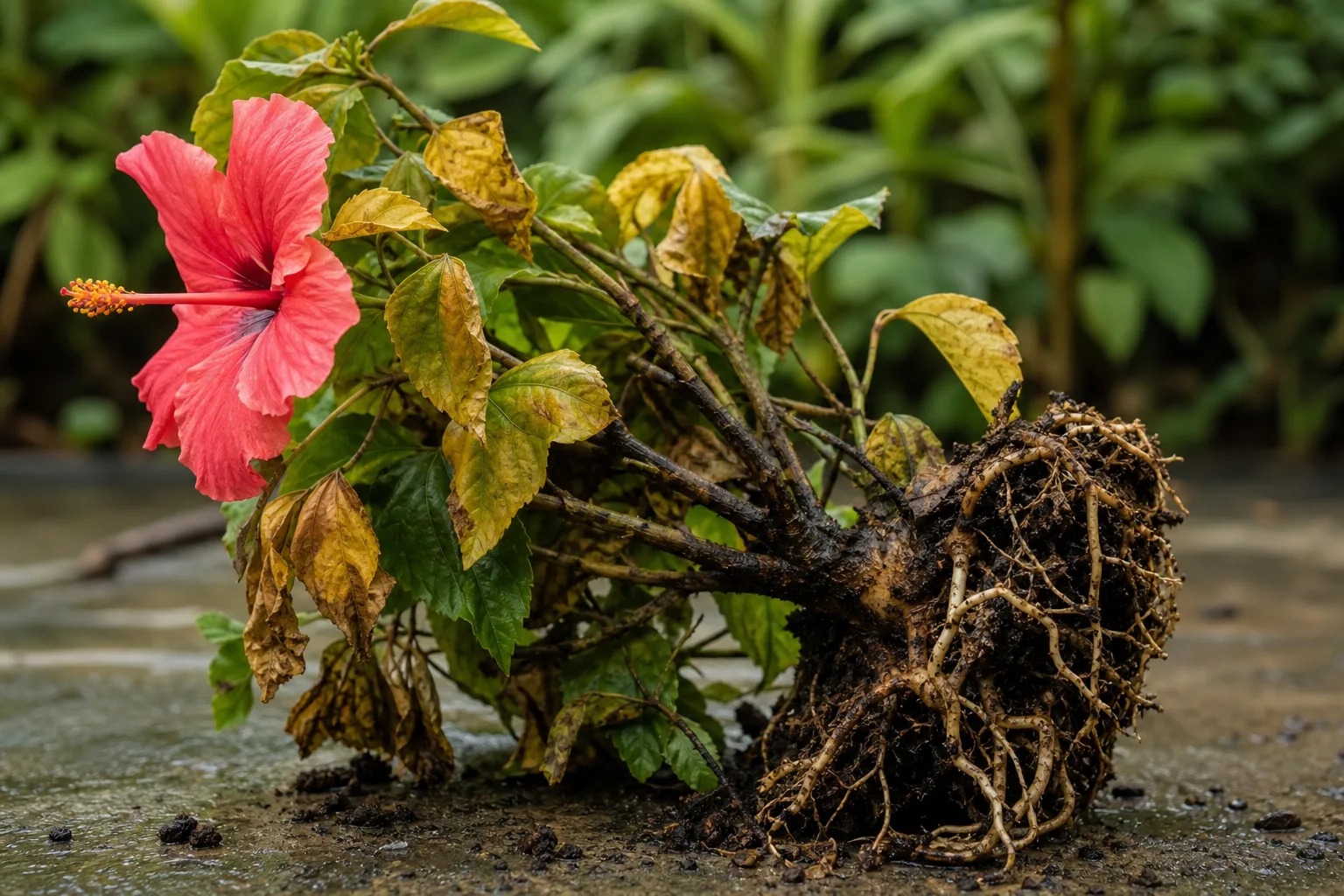
Root Rot on Hibiscus: Causes, Checks & Fixes
This guide covers root rot on Hibiscus. See also the general Root Rot guide, watering, and light pages for this plant.
Root Rot on Hibiscus: Causes, Checks & Fixes
Quick answer
Root rot on tropical hibiscus (Hibiscus rosa-sinensis) is almost always a drainage and watering rhythm failure, not a mysterious leaf disease. The defining signal is wilt and bud drop while the pot stays heavy-the opposite of drought collapse on a light, dry container.
First step: stop watering immediately. Lift the pot and press your finger into the top 2–3 cm of mix. If it feels damp or cool while leaves are limp, do not add more water. Let the upper layer approach dry, then inspect stem firmness at the soil line before you unpot or repot.
Root rot vs. drought wilt - why wet-soil collapse matters on hibiscus
Hibiscus is a sun-loving woody shrub that drinks heavily in summer heat-owners often learn to water at the first sign of wilt. That habit saves drought-stressed plants but accelerates rot when roots are already failing in saturated mix.
The diagnostic fork is simple:
| Signal | Likely drought (underwatering) | Likely root rot (overwatering) |
|---|---|---|
| Pot weight | Light, almost hollow feel | Heavy for days after last watering |
| Top 2–3 cm of mix | Dry or dusty | Damp, cool, or dark |
| Leaf wilt | Whole canopy limp in hot sun; perks up after soak | Limp leaves despite recent watering |
| Buds | Drop on dry, light pot | Drop on heavy, wet pot |
| Stem at soil line | Firm | Soft, dark, or mushy in advanced cases |
| Smell | None | Sour, swampy, or musty from pot |
| Roots (if inspected) | Firm, pale, in dry mix | Brown, black, slimy, or mushy in wet mix |
Many growers water a wilted hibiscus without checking moisture first-because the same plant needed daily drinks all summer. In cool dim rooms or oversized patio pots, that reflex turns reversible stress into stem-base rot within weeks.
See underwatering on hibiscus when the pot is light and mix is dry throughout, and wilting on hibiscus for the full wet-vs-dry decision tree.
What root rot looks like on Hibiscus
Tropical hibiscus shows root failure through leaves, buds, and stems before you ever see the roots themselves.
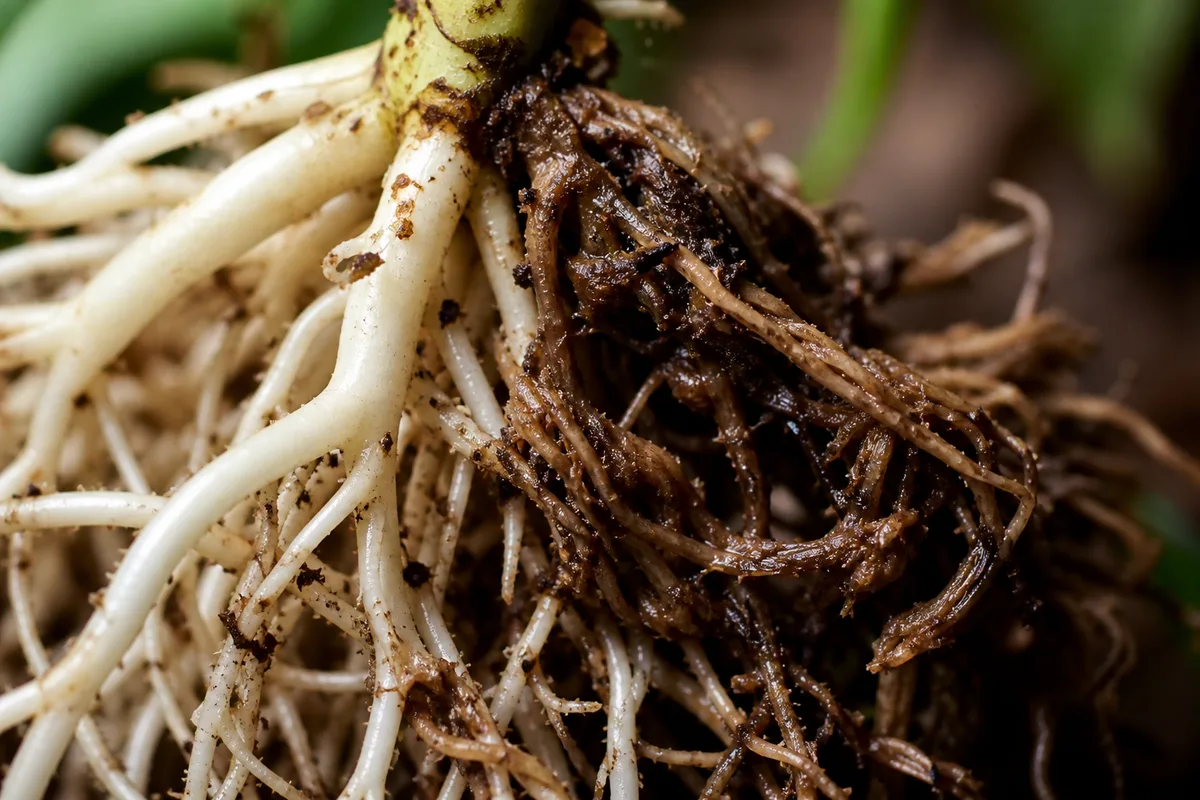
Root Rot symptoms on Hibiscus - compare with healthy tissue on the same plant.
Early signs
- Wilting or drooping leaves while the mix stays moist several centimeters down-not just surface dust
- Bud drop before flowers open, especially on a heavy pot that has not dried normally between waterings-too much or too little water can trigger bud drop on hibiscus
- Yellow lower leaves that do not recover after you stop watering
- Slow growth or stalled blooms in a pot that stays dark and wet at the surface for more than a week in warm weather
- Fungus gnats hovering when you disturb the soil-larvae thrive in persistently moist organic soil
- Surface mold on the topsoil-a warning that the upper layer is staying wet too long (see mold on soil on hibiscus)
Advanced signs
- Soft, dark, or collapsing stems at the soil line-Malvaceae shrubs often rot at the base before upper branches show obvious damage
- Sour or swampy smell from the drainage hole or when you lift the pot
- Leaves that turn brown and hang despite moist soil-damaged roots cannot move water upward
- Whole-plant collapse over one to two weeks when crown tissue turns mushy
Unlike underwatering, rotting hibiscus rarely perks up after you add water. More irrigation on already-failed roots deepens oxygen starvation.
Why Hibiscus gets root rot
Hibiscus wants consistently moist, well-drained roots-not soil that stays waterlogged for days. LSU AgCenter guidance for tropical hibiscus emphasizes an even supply of water without allowing roots to sit soggy; container plants in summer may need daily watering in summer, but that is not permission to flood the pot.
The moisture paradox
In full sun on a hot patio, hibiscus transpires through large soft leaves and may need water every day when the top inch dries. In a cool indoor corner, shaded winter window, or oversized container, the same watering rhythm keeps mix saturated because uptake slows. Roots that evolved for warm, porous soils suffocate when oxygen cannot reach fine root hairs in waterlogged soil.
Overwatering, poor drainage, and standing saucer water
The most common direct cause is watering before the top 2–3 cm approaches dry-especially after repotting, vacation overcompensation, or moving a summer-heavy drinker indoors for winter. Blocked drainage holes, decorative cachepots holding runoff, and dense garden soil in containers all trap moisture at the bottom where hibiscus roots live.
Oversized pots and shallow roots
Tropical hibiscus develops relatively wide, shallow roots. When a container is too large for the rootball, excess wet mix forms a soggy ring around small roots that dries slowly-even when the surface looks acceptable. Owners see wilt, add more water to “help,” and worsen the cycle. Right-size pots at repot; see hibiscus soil guide for mix and container pairing.
Low light and winter slowdown
Growth slows sharply when days shorten, temperatures drop, or the plant moves to dimmer indoor light. Mix that dried in two days on a July balcony may stay wet for a week in a cool room-while you still water on the old summer schedule. Winter overwatering is a silent rot trigger on quiet-looking hibiscus.
Compacted or exhausted mix
Peat-heavy potting soil that has been in the same pot for two or more seasons compacts, drains slowly, and holds water longer at the center. Water may run down the sides without recharging the root ball, or the whole mass may stay cold and wet after every drink.
How to confirm the cause
Work through these checks in order before repotting or trimming:
- Pot weight - Lift the container. A heavy pot days after watering with limp leaves supports rot over drought.
- Moisture at depth - Press into the top 2–3 cm. Damp or cool mix with wilt means stop watering-not another soak. Pair with a wooden skewer pulled from the center; a damp skewer on a heavy pot confirms the root zone is still wet.
- Stem firmness - Press the base of main stems at soil level. Firm stems suggest early-stage stress; soft, dark, or collapsing tissue means advanced rot.
- Bud and leaf pattern - Dropping tight green buds on a wet heavy pot fits root stress. Yellow lower leaves that spread while soil stays moist fit overwatering damage.
- Smell and drainage - Sour odor, blocked holes, or a full saucer confirm chronic wet conditions.
- Root inspection - Tip the plant out gently. Healthy hibiscus roots are firm and pale tan. Rotted roots are brown, black, translucent, slimy, or mushy and may smell foul.
- Recent context - New oversized repot, post-travel soaking before dry-down, winter move indoors, or cachepot display without draining all raise rot likelihood.
Confirmed rot: wet mix, mushy roots or soft stem base, sour smell, wilt that worsens with more water. Suspected early stress: damp mix, firm stems, yellow lower leaves-dry the pot and reassess in three to five days before aggressive surgery.
Lookalike symptoms to rule out
| Problem | Key difference on hibiscus |
|---|---|
| Underwatering | Light pot, dry mix throughout, wilt recovers after deep soak |
| Overwatering (early) | Wet mix and yellow leaves before roots turn mushy-fix drainage first |
| Mold on soil | Fuzzy growth only on surface; stems often firm if roots are healthy |
| Fungus gnats | Flying adults confirm wet organic mix-often co-occurs with rot risk |
| Heat wilt | Afternoon limp on firm stems with adequate moisture; recovery by evening |
| Bud drop alone | Can follow drought or rot-always pair with pot weight and moisture |
First fix for Hibiscus
Stop watering and let the top 2–3 cm of mix approach dry while you assess stem firmness.
That single pause breaks the oxygen-starvation cycle. Do not fertilize, repot, or prune heavily on day one unless stems are already mushy at the base.
If stems are still firm and only a portion of roots look damaged, proceed to the rescue workflow below. If the crown is soft and most roots are black mush, salvage is unlikely-see “When recovery is unlikely.”
Step-by-step rescue
After the initial dry-down pause (usually three to five days for a moderately wet pot in warm room):
- Unpot gently - Knock the plant out of the container and shake away loose wet mix. Work over newspaper; discard rotted tissue, not compost.
- Trim dead roots - Cut brown, black, or mushy roots back to firm white or tan tissue with clean, sharp pruners. Sterilize blades between cuts with rubbing alcohol if rot is extensive.
- Inspect the crown - Soft stem tissue at the soil line may need trimming to healthy wood. If the crown is entirely mushy, stop-recovery is rare.
- Air-dry cut surfaces - Let trimmed roots and any stem cuts sit in shade for two to four hours so cut faces callus slightly before repotting.
- Repot modestly - Use fresh, perlite-amended well-draining mix in a pot only slightly larger than the trimmed root mass-not the old oversized patio container. Confirm open drainage holes.
- Water once lightly - One modest soak until a little runoff appears, then drain fully and empty the saucer. Do not water again until the top inch approaches dry.
- Bright light, stable placement - Move to bright indirect or morning sun while roots heal; avoid stacking repot, hard prune, and pesticide on the same day.
Full repotting technique and timing are covered in the hibiscus repotting guide.
When recovery is unlikely
Stop rescue efforts when:
- The crown and main stems are soft and dark through several centimeters above the soil line
- More than roughly two-thirds of roots are mush with no firm anchor tissue remaining
- The plant collapses entirely within a week on drying mix with no new shoot activity
Tropical hibiscus rarely regenerates from a fully rotted crown the way some succulents might from stem cuttings. A healthy cutting from an unaffected upper branch is sometimes worth trying if green firm tissue remains above the rot line.
Recovery timeline
Mild early stress-firm stems, partial root damage, no crown mush-may stabilize within one to two weeks after trim-and-repot once watering rhythm is corrected.
Moderate rot with significant root loss often needs three to six weeks before you see trustworthy new growth. Judge progress by new stem shoots and firm stems, not by old yellow leaves re-greening.
Damaged leaves and dropped buds do not recover-they stay yellow, brown, or absent. Judge recovery by new stem shoots and firm stems, not by old yellow leaves re-greening. Success means upright new foliage, buds that stay attached, and a pot that dries on a normal cycle between drinks.
If limp leaves persist on wet mix two weeks after rescue, or yellowing spreads while you keep the mix appropriately dry, re-inspect roots for advancing decay or pest stress.
What not to do
Do not keep watering because leaves look wilted when the mix is already wet-watering a wilted plant with rotting roots makes the problem worse-that is the fastest way owners turn stress into fatal stem rot.
Do not repot into a larger container during recovery; oversized wet zones restart the cycle.
Do not use dense garden soil, pure peat without perlite, or pots without drainage holes.
Do not fertilize waterlogged or freshly trimmed roots-salts on damaged tissue add stress.
Do not assume summer daily-watering habits apply in winter dim rooms without checking dry-down speed.
Do not confuse surface mold alone with rot-but do not ignore recurring mold without fixing moisture (see mold on soil).
How to prevent root rot next time
Prevention on hibiscus is mostly pot reading, not calendar watering.
- Check the top 2–3 cm before every drink-water deeply when it approaches dry, not when you happen to think of it
- Soak until drainage runs, then empty saucers and cachepots within thirty minutes
- Match pot size to roots-one size up at repot, not a dramatic jump for “room to grow”
- Use well-draining, slightly moisture-retentive mix with perlite or bark fines; refresh compacted soil every one to three years
- Adjust rhythm by season-fewer full drinks in winter, more frequent checks (not blind daily floods) in peak summer sun
- Keep bright light when possible-shaded wet hibiscus grows soft and rots faster than sun-grown plants with the same mix
The hibiscus watering guide is the canonical reference for even moisture without soggy roots.
Practical checks
Urgency check
Treat as urgent today if stems soften at the soil line, the whole plant collapses on wet mix within days, or roots are mostly mush on inspection.
Monitor closely if leaves yellow on a heavy pot but stems are still firm-dry-down and inspection within a week usually suffice.
Lower urgency if you caught early yellow lower leaves on slightly damp mix with firm stems and no smell-correct watering before unpotting may be enough.
Best inspection order
- Lift pot weight
- Probe top 2–3 cm and optionally skewer the center
- Note bud drop and leaf yellowing pattern
- Press stem base for firmness
- Smell drainage area
- Unpot only if wet-wilt persists after appropriate dry-down or stems soften
Hibiscus care cross-check
If rot keeps returning despite careful watering, review:
- Is the pot oversized for the root ball? (soil guide)
- Is mix compacted or draining in under a minute after soak?
- Is the plant in deep shade with slow evaporation?
- Are drainage holes blocked or is a cachepot trapping water?
- Did a recent move indoors keep a summer watering schedule? (overview)
Related Hibiscus guides
- Watering hibiscus - even moisture, top 2–3 cm checks, saucer drainage
- Underwatering - dry-pot wilt fork
- Overwatering - early wet-soil stress before mushy roots
- Soil and drainage - mix recipes, pot sizing, shallow roots
- Repotting - right-size containers after trim
- Mold on soil - surface warning sign
- Fungus gnats - wet-mix co-symptom
- Bud drop - stress signal on wet or dry pots
Conclusion
Root rot on tropical hibiscus announces itself through wilt and bud loss on a heavy, wet pot-not through mystery spots on leaves. Stop watering, confirm moisture at the top 2–3 cm, inspect stems and roots, then trim and repot modestly into fresh draining mix if tissue is still firm. Old yellow leaves will not green up again; new shoots and stable buds mean you are winning. Match daily summer thirst to actual pot dry-down, never let roots swim in saucer water, and right-size containers so this heavy drinker gets moisture without suffocation.