Wilting on Hibiscus: Causes, Checks & Fixes
Quick answer
Wilting on hibiscus means leaves lost turgor because water is not reaching them. Lift the pot and feel the top inch of mix first-a light dry pot in summer heat needs a deep soak; a heavy wet pot with limp leaves means stop watering and check stem firmness at the base.
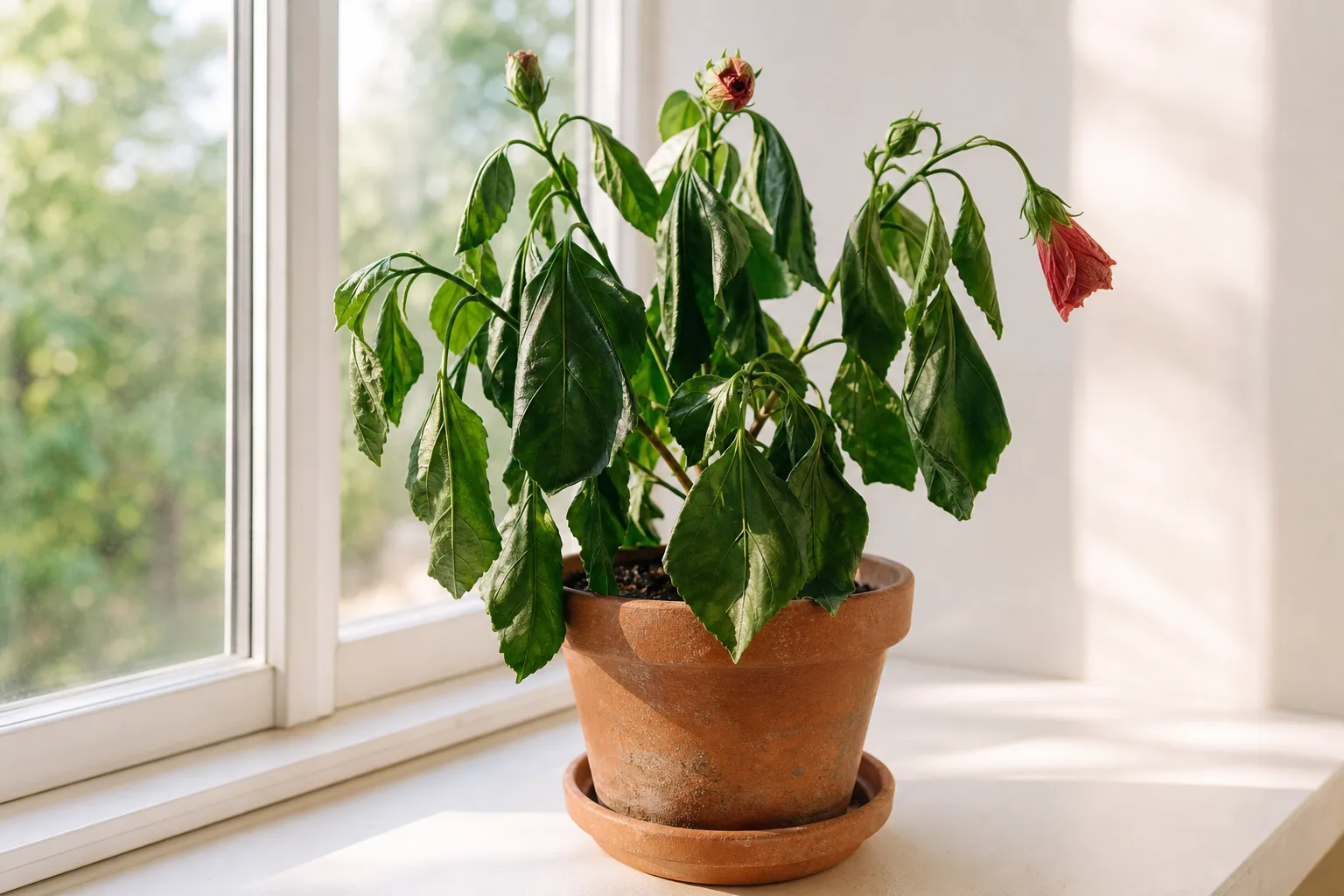
Wilting on Hibiscus: Causes, Checks & Fixes
This guide covers wilting on Hibiscus. See also the general Wilting guide, watering, and light pages for this plant.
Wilting on Hibiscus: Causes, Checks & Fixes
Quick answer
Wilting on hibiscus means the leaves have lost turgor because water is not moving from roots to foliage. On Malvaceae plants like hibiscus, that failure often starts below the soil line-not because the plant automatically needs a drink. First step: lift the pot and push your finger into the top inch of mix. A light, dry pot with limp leaves on a sunny summer patio calls for a deep soak. A heavy, wet pot with wilt means root stress, overwatering, or fungal wilt disease-a wilted plant with moist soil often has damaged roots that cannot absorb water-stop watering and check stem firmness at the base before you add more water.
What wilting looks like on hibiscus
On a healthy hibiscus, glossy tropical leaves or matte hardy leaves sit upright on firm stems, and buds open steadily when light and moisture are stable. Wilting changes that profile quickly-and the pattern tells you which branch to follow.
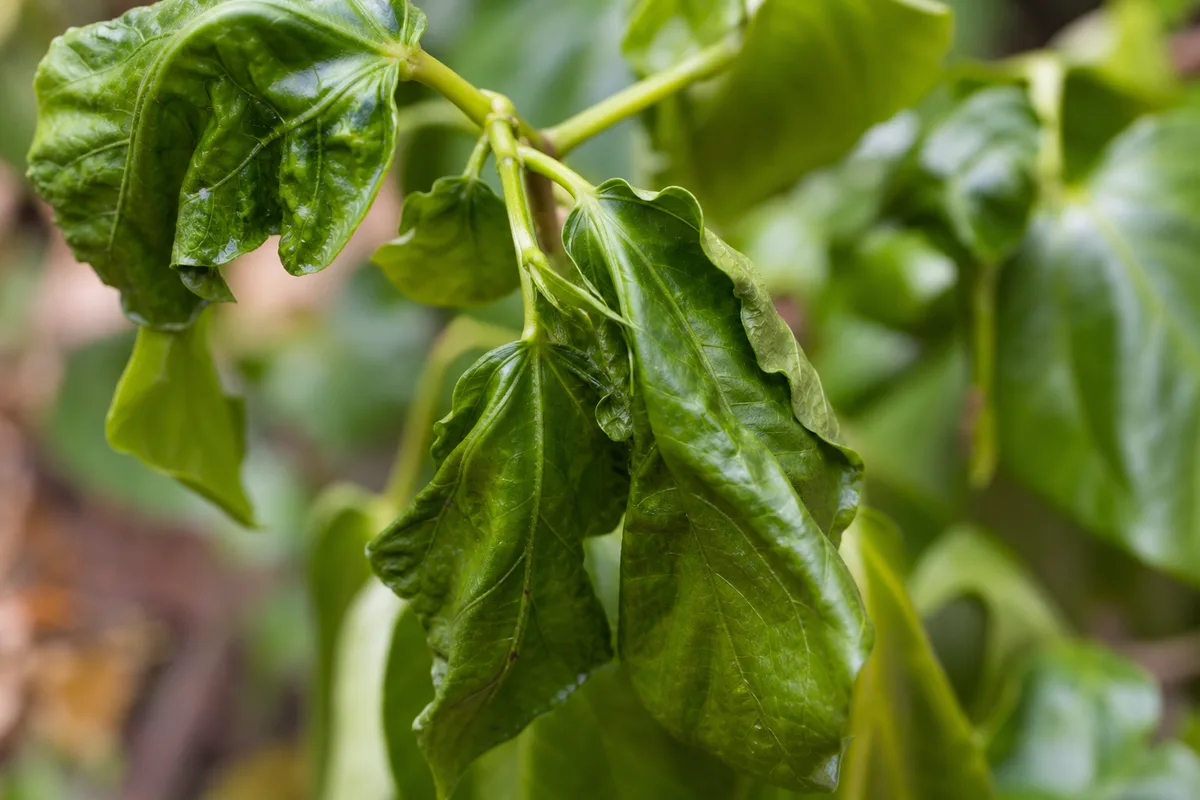
Wilting symptoms on Hibiscus - compare with healthy tissue on the same plant.
Dry-soil wilt is common on tropical patio pots in peak summer. Leaves hang limp and feel thin but not mushy. The pot feels noticeably light. Surface mix is pale and crumbly an inch down. Buds may drop before obvious leaf yellowing. This pattern often follows a missed watering, a heat wave that dried a small pot in one afternoon, or a plant recently moved to Hibiscus light guide without enough root mass to support transpiration.
Wet-soil wilt is the most dangerous misread. Lower leaves hang limp while the mix stays dark, cool, and heavy. Yellowing often starts on bottom leaves. Stems at the soil line may feel soft. You may see fungus gnats near the surface or a faint sour smell from drain holes. On tropical hibiscus, green leaves can wilt while soil is damp-classic sign that roots are not absorbing water even though the pot is full.
Heat-stress midday collapse shows limp leaves in afternoon sun that recover by evening on an otherwise healthy plant with adequate moisture. This temporary wilt is common when a nursery plant moves straight to a west-facing patio without acclimation. Leaves may curl or scorch on the sun-facing side while stems stay firm.
Chill-stress wilt appears after nights drop toward 45–50°F (7–10°C) on tropical types, or after bringing a patio plant indoors beside a cold window or AC vent. Leaves wilt suddenly, buds drop, and lower foliage yellows even when soil moisture looks fine. Tropical hibiscus cannot tolerate freezing; hardy types behave differently after frost (see below).
Gradual wilt over weeks in a dim room with leggy, pale growth and no buds often reflects insufficient light weakening the plant-not drought. Hibiscus needs strong light to hold firm foliage and bloom; see the lookalike section before you increase water.
Tropical vs hardy hibiscus - identify your plant first
Wilting diagnosis depends on which hibiscus you have. Tags are not always reliable, but a few traits separate the main groups quickly.
Tropical hibiscus (Hibiscus rosa-sinensis) has smaller, dark green, glossy leaves and soft shrubby stems. It stays evergreen in frost-free climates and is grown as a container plant elsewhere. It suffers chill damage below about 45–50°F (7–10°C) and cannot survive freezing. Wilt on a tropical patio plant in autumn often means bring it indoors-or reduce watering if it is already inside on a cool windowsill.
Hardy hibiscus (Hibiscus moscheutos and hybrids) has larger, heart-shaped, matte leaves and enormous summer flowers. It dies back to the ground after frost in cold climates and resprouts from the crown in spring. Post-frost wilt on in-ground hardy plants is often normal dormancy, not a watering emergency.
Rose of Sharon (Hibiscus syriacus) is a woody deciduous shrub with medium dull-green leaves. It drops leaves in fall and blooms on persistent wood. Frost wilt on established shrubs is seasonal, not thirst.
If your plant dropped all its leaves outdoors after the first hard frost in a cold-winter region, you likely have a hardy type-not a dead tropical plant. If it has glossy leaves and you bought it as a summer patio specimen, assume tropical until proven otherwise.
Wilting vs drooping vs bud drop
These symptoms overlap on hibiscus but point to different urgency.
Wilting is limp, flexible leaves that have lost turgor across part or all of the plant-often sudden. It usually means water stress, root failure, heat collapse, or chill damage.
Drooping can be milder: a few lower leaves hang while the crown and new growth stay upright. Slow droop on older foliage may be natural senescence. See the drooping-leaves guide if only the oldest bottom leaves sag and soil moisture is normal.
Bud drop often precedes visible wilt on hibiscus. Malvaceae plants abort buds when watering swings, light drops, or temperatures shift. If buds fall before flowers open but leaves still look firm, fix the environmental rhythm before assuming root rot. See bud drop on hibiscus when unopened buds fall cleanly.
Why hibiscus wilts
Hibiscus is a heavy drinker in heat with a low tolerance for inconsistent moisture, cold exposure, and root oxygen loss. When any of those break, wilt follows.
Underwatering and drought stress dry fine root hairs first. Tropical container plants on sunny patios may need watering daily in peak summer when the top inch of mix dries fast. Without working roots, even a later deep watering cannot restore turgor instantly. Bud drop often precedes obvious wilt.
Overwatering and root decline keep roots in saturated, oxygen-poor mix. Decaying roots cannot absorb water even when the pot is full-so the plant looks thirsty while soil stays wet. Calendar watering through cool autumn months, oversized pots, cachepots without drainage, and heavy peat mixes all keep tropical roots wet too long indoors.
Heat-stress wilt hits recently moved or root-bound patio plants in afternoon sun. Transpiration outpaces uptake temporarily. Stems stay firm; leaves recover overnight if moisture is adequate and the plant is not scorched.
Chill exposure damages tropical hibiscus quickly. Nights toward 45°F (7°C), cold windowsills, and AC drafts trigger leaf wilt, yellowing, and bud loss. Tropical types need indoor shelter before nights drop into the chill range.
Insufficient light produces leggy, soft stems and sparse foliage that wilts easily even when soil moisture looks adequate. Hibiscus blooms best with full sun - at least six hours of direct light daily outdoors or a very bright south window plus supplemental light indoors.
Transplant and overwintering shock interrupts water uptake when roots are disturbed, when a patio plant moves indoors to lower light and drier furnace air, or when a freshly repotted plant sits in wet mix while root tips heal. Open leaves may collapse for days even with correct watering.
Fungal wilt disease (Fusarium, Verticillium) can kill tropical hibiscus fast when green leaves wilt on damp soil without obvious rot at first. Wilt that spreads through the whole plant within one to two weeks on wet mix warrants urgent isolation and root inspection-see root rot on hibiscus.
How to confirm the cause
Work through these checks in order so you do not water a rotting plant or soak one that only needs warmth and light.
- Top-inch moisture - Insert a finger 2–3 cm into the mix near the stem. Dry confirms drought; damp or wet with limp leaves suggests root failure or disease.
- Pot weight - Lift the pot. Light weight plus wilt equals dry. Heavy, cool pot plus wilt equals oversaturated mix or dead roots.
- Stem firmness - Press the base of stems at soil level. Firm stems with wilted outer leaves are more recoverable. Soft, dark, or collapsing stems suggest rot advancing-see root rot.
- Leaf pattern - Yellowing from the bottom up on wet mix strongly suggests root decline. Even wilt across all leaves on dry mix points to drought. Scorch patches on sun-facing leaves suggest heat stress, not thirst.
- Environment - Note afternoon sun exposure, recent patio move, first cold night below 50°F (10°C), or indoor placement beside AC or a radiator.
- Plant type - Glossy evergreen tropical vs matte hardy perennial vs woody Rose of Sharon changes whether frost wilt is an emergency or dormancy.
- Smell and drainage - Sour odor, water sitting in a saucer for days, or mix that stays wet a week after watering confirms chronic overwatering habitat.
- Recent history - Hibiscus repotting guide within two weeks, vacation dry spell, fertilizer flush, or move indoors for winter narrows the cause quickly.
- Root inspection - If wet wilt persists after stopping water for several days, slide the plant from the pot. Healthy hibiscus roots are firm and pale; rotted roots are brown, translucent, or slimy.
Confirmed dry wilt: dry surface, light pot, firm stems, firm roots at the edge of the root ball. Confirmed wet wilt: moist mix, yellow lower leaves, mushy roots, or sour smell. Suspected heat wilt: afternoon limp on firm stems, recovery by morning, adequate moisture. Suspected chill wilt: wilt after cold night on tropical plant indoors or on patio below 50°F (10°C).
First fix for hibiscus
Lift the pot and check top-inch soil moisture before any other action. That single test separates opposite fixes.
If the mix is dry and the pot is light, water thoroughly until water runs freely from drainage holes, then empty the saucer within 30 minutes. On a sunny summer patio, that may mean daily checks-not a fixed weekly schedule. Follow the Hibiscus watering guide rhythm: soak when the top inch dries, never leave the pot sitting in standing water. Do not flood a severely dry plant repeatedly in one hour; one good drink, then reassess turgor the next morning.
If the mix is wet and the plant is wilted, stop watering immediately. Plants in waterlogged soil may die because roots cannot absorb oxygen Set the pot on folded paper towels to wick excess moisture from drain holes. Move to brighter light if the plant sits in deep shade-slow evaporation worsens wet soil indoors. Inspect stems and roots if leaves keep declining after the mix dries. Full wet-soil protocol is on the overwatering page.
If wilt followed afternoon heat on firm stems with adequate moisture, provide light afternoon shade for one to two weeks while the plant acclimates, or move to morning sun. Do not compensate with extra water if the top inch is already damp.
If wilt followed chill exposure on tropical hibiscus, move the plant to a stable spot above 50°F (10°C) away from cold windows and AC vents. Reduce watering to match slower winter metabolism-see the overview guide for overwintering rhythm.
Make one correction, then wait several days before stacking repotting, fertilizing, and heavy pruning together.
Step-by-step recovery by cause
Dry wilt path
- Water until water drains freely; discard all runoff from saucers.
- If the plant was severely dry, repeat a moderate drink after 24 hours only if the top inch is dry again-not sopping wet throughout.
- Keep tropical patio plants in full sun once rehydrated; indoor plants in the brightest window available.
- Resume normal rhythm only when the top inch of mix feels dry.
Wet wilt / root stress path
- Stop all watering. Wick excess moisture with paper towels under the pot.
- If roots are mushy on inspection, trim decayed tissue, repot into fresh well-drained mix in a pot sized to the remaining roots, and keep the mix barely moist-not wet-while the plant stabilizes.
- Remove soft lower leaves that will not recover.
- Wait for firm new growth before fertilizing.
Heat-stress wilt
Provide afternoon shade or morning-only sun for one to two weeks while roots catch up to transpiration demand. Water on the usual dry-top-inch schedule; heat collapse is not fixed by drowning a already-damp pot. Acclimate gradually when moving from shade to full patio sun.
Chill-stress wilt (tropical)
Stabilize above 50°F (10°C). Reduce watering frequency indoors in winter-cool roots plus wet mix invite decline. Expect some leaf drop; do not force growth with fertilizer until new shoots appear in spring.
Light-stress wilt
Move hibiscus to full sun outdoors or the brightest south window indoors. Leggy plants with no buds need more light, not more water. See not enough light on hibiscus.
Hardy hibiscus post-frost
Allow natural dieback. Cut H. moscheutos stems to a few inches above soil after frost and mulch the crown in cold zones. Do not water a dormant hardy crown as if it were a thirsty tropical pot. New shoots in spring confirm survival.
Recovery timeline
Mild drought wilt on tropical patio plants often shows firmer leaves within hours to one day after a proper soak. Severe drought may take several measured watering cycles before all leaves recover.
Heat-stress afternoon wilt frequently resolves the same evening once temperatures drop, if soil moisture was adequate.
Root rot or chronic overwatering recovery spans one to three weeks when stems at the base are still firm and enough healthy root remains. Yellow lower leaves rarely green up; new upright growth and bud set are the benchmarks-judge progress by new growth, not old damaged foliage.
Chill damage on tropical hibiscus may take weeks to stabilize; some leaves will not recover. Wait for spring warmth and new shoots before judging the plant dead.
Hardy hibiscus dormancy resolves with new crown shoots in late spring-not with winter watering.
What not to do
Do not pour more water onto a wilted hibiscus when the mix is already wet-overwatering wet soil is a common mistake when leaves look tired-that is the fastest way owners turn reversible stress into stem rot or fungal wilt. Do not fertilize a stressed plant before you know whether roots are healthy. Do not assume every wilting patio hibiscus in July is thirsty; confirm dryness first. Do not treat frost-wilted hardy hibiscus like a drought-stressed tropical pot. Do not repot on day one unless root rot, failed mix, or severe compaction is confirmed. Do not stack repotting, pruning, and pesticide on the same day.
How to prevent wilting on hibiscus
Water when the top inch of mix feels dry, then soak until water drains-use pot weight and finger checks, not a calendar. On sunny summer patios, that may mean daily monitoring for tropical containers. Give hibiscus full sun outdoors or the brightest indoor placement available. Bring tropical plants indoors before nights drop toward 45°F (7–10°C). Empty saucers within 30 minutes of every drink. Use well-drained mix in pots with drainage holes sized to the root mass-not oversized decorative cachepots holding standing water. Reduce watering frequency when tropical plants move indoors for winter. Inspect weekly during heat waves and after cold snaps.
When to worry
Act immediately if stems soften at the soil line, the mix stays wet while the whole plant collapses within days, or roots are brown and mushy on inspection-those signs mean rot or wilt disease is advancing and simple drying may not be enough. Sudden whole-plant collapse on wet soil with green leaves is urgent on tropical hibiscus.
You can wait and observe if only outer leaves are limp, stems at the base are firm, and you have already corrected a clear dry-wilt, heat, or draft mistake. Improvement shows as new leaves opening upright and buds forming within one to two weeks.
If stressed tropical hibiscus drops leaves indoors, the ASPCA lists Rose of Sharon (H. syriacus) as non-toxic to cats and dogs; tropical hibiscus is widely regarded as low toxicity, but fallen leaves and potting soil can still cause vomiting if pets chew them. Keep wilted leaf litter off floors where pets forage.
Hibiscus care cross-check
| Check | Healthy baseline | Wilting red flag |
|---|---|---|
| Top inch of mix | Dry before next soak on patio pots | Wet for 7+ days while leaves limp |
| Pot weight | Light when dry, moderate after watering | Stays heavy and cool between waterings |
| Stems at soil line | Firm and green | Soft, dark, or collapsing |
| Lower leaves | Occasional natural aging | Yellow on wet soil, spreading upward |
| Light | Full sun outdoors; bright south window indoors | Leggy growth, no buds, soft stems in dim room |
| Temperature (tropical) | Warm, stable, above 50°F (10°C) | Below 45–50°F (7–10°C) or AC blast |
| Buds | Steady set in warm bright conditions | Drop before opening during stress |
Related hibiscus problems
- Hibiscus overview - tropical vs hardy identification and baseline care
- Overwatering - wet soil with limp leaves and yellow lower foliage
- Underwatering - dry mix, light pot, bud drop before wilt
- Root rot - soft stems, sour smell, mushy roots on wet mix
- Drooping leaves - milder or partial limp foliage
- Not enough light - leggy growth with gradual soft wilt
- Bud drop - buds fall before flowers open during stress
- Hibiscus watering - top-inch rhythm and seasonal adjustments
When to use this page vs other Hibiscus guides
- Hibiscus watering guide - Use for routine moisture checks before assuming wilting is the main issue.
- Hibiscus problems hub - Browse all 20 common issues on this species.
- Underwatering on Hibiscus - Different entry point when symptoms overlap with wilting.
- Overwatering on Hibiscus - Different entry point when symptoms overlap with wilting.
- Root Rot on Hibiscus - Different entry point when symptoms overlap with wilting.