Drooping Leaves on Hibiscus: Causes, Checks & Fixes
Quick answer
Drooping leaves on tropical hibiscus usually mean moisture stress-either a light dry pot in full sun or a heavy wet pot with failing roots. First step: lift the pot and probe the top inch of mix before you water, soak, or move the plant.
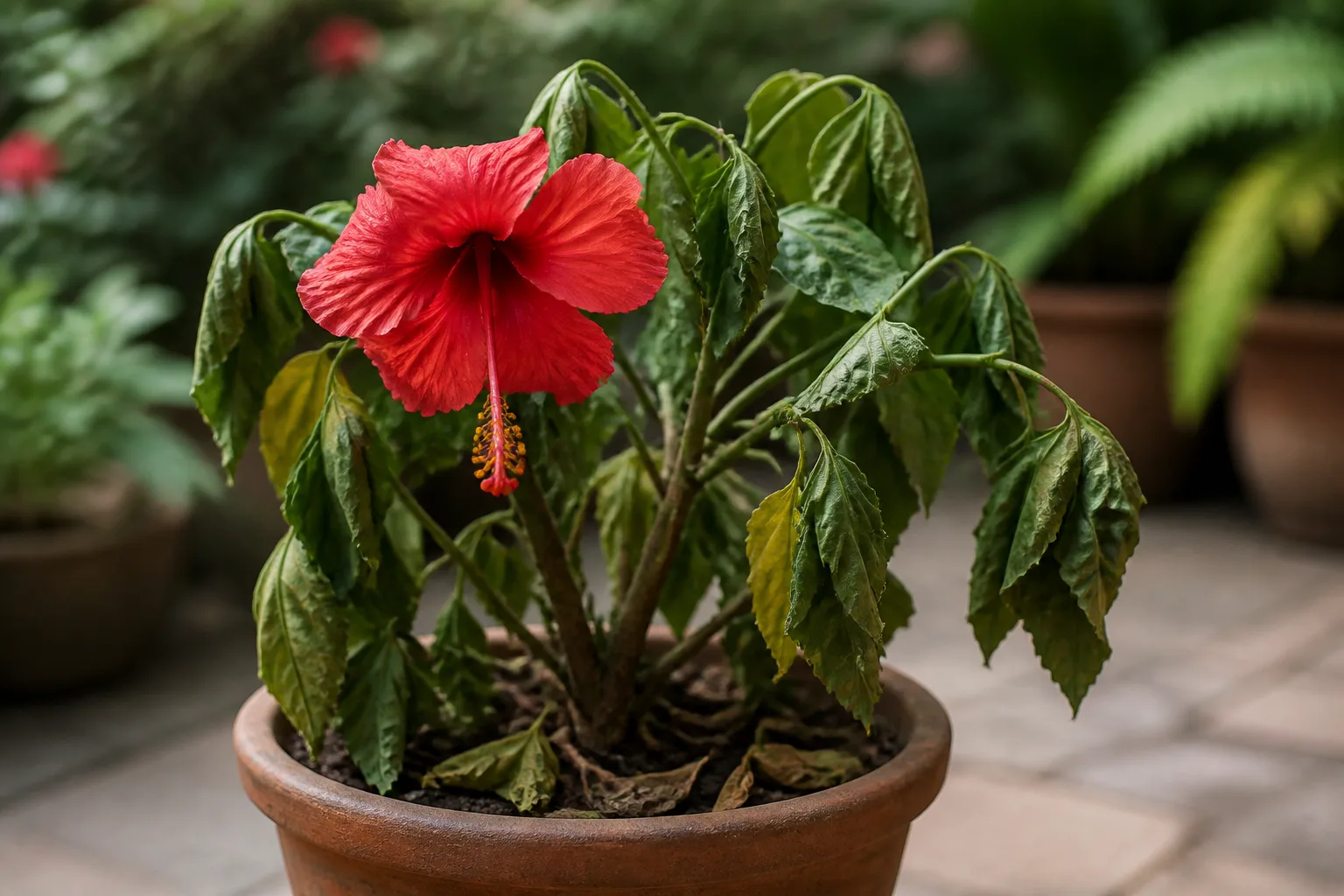
Drooping Leaves on Hibiscus: Causes, Checks & Fixes
This guide covers drooping leaves on Hibiscus. See also the general Drooping Leaves guide, watering, and light pages for this plant.
Drooping Leaves on Hibiscus: Causes, Checks & Fixes
Quick answer
Drooping leaves on tropical hibiscus (Hibiscus rosa-sinensis) mean the foliage lost turgor because roots are not supplying water fast enough-or because damaged roots on wet soil cannot absorb water even when the mix is saturated. Hibiscus is a sun-loving, moisture-demanding shrub, not a drought-tolerant houseplant. In a hot container on a sunny balcony, limp leaves often appear within hours of the mix drying, sometimes with unopened buds dropping at the same time.
First step: lift the pot and push your finger into the top inch of mix. A light, dry pot with limp leaves calls for a deep soak. A heavy, wet pot with limp leaves means stop watering and check drainage and roots. Do not guess from leaf appearance alone-the same droop pattern has opposite fixes. Full species context: hibiscus overview.
What drooping leaves look like on Hibiscus
Hibiscus announces stress through large, soft Malvaceae leaves that hang when turgor drops. The pattern you see-plus pot weight and soil moisture-tells you which branch to follow.
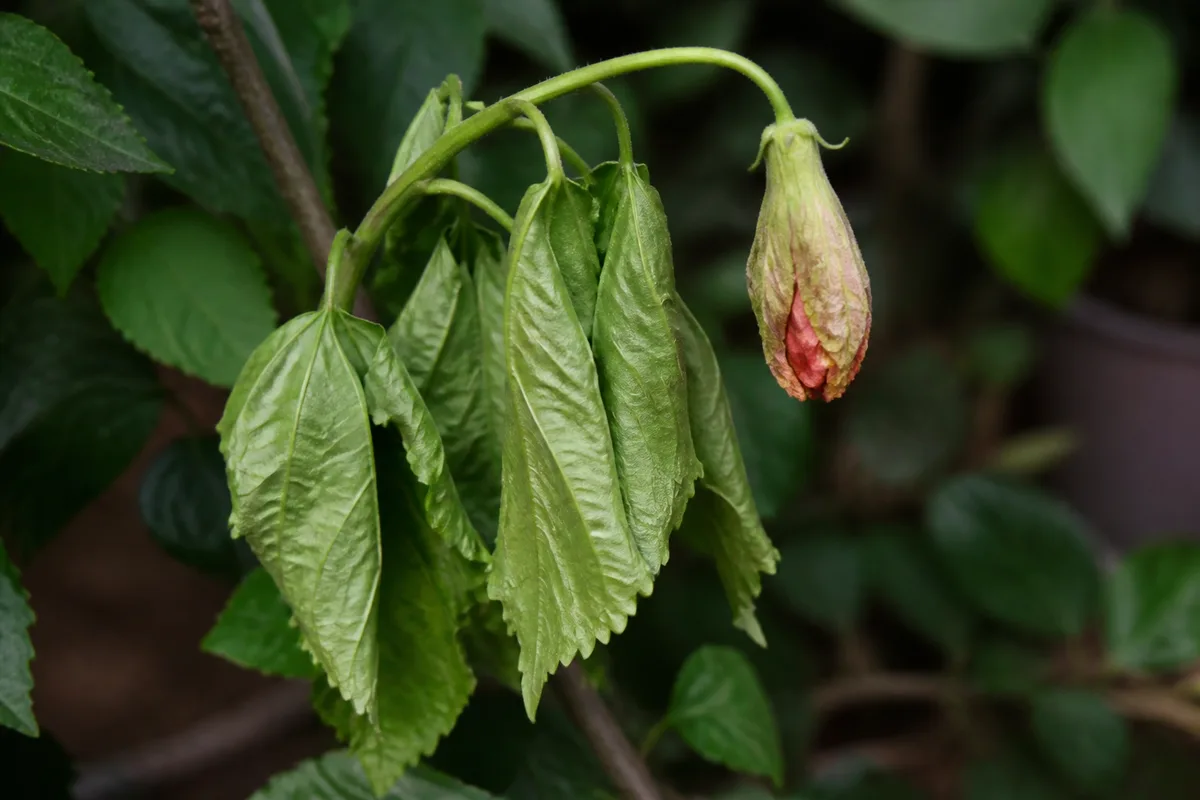
Drooping Leaves symptoms on Hibiscus - compare with healthy tissue on the same plant.
Afternoon drought droop (most common on container plants in sun):
- Whole canopy looks limp and thin by mid-afternoon on hot days
- Pot feels noticeably lighter than after a recent soak
- Top inch of mix is dusty dry; soil may pull away from the pot rim
- Plant often looks firmer in morning shade, then droops again as the pot dries
- Tight green buds may yellow and fall before opening
Overwatering and root-stress droop:
- Leaves hang limp even though mix stays wet several centimeters down
- Pot feels heavy; saucer may hold standing water
- Lower leaves yellow; base of stems may smell sour on inspection
- No perk-up after waiting-unlike drought wilt that responds to a soak
- Bud drop can happen on wet soil too when roots fail to absorb
Chill and draft droop:
- Drooping appears after nights below about 45–50°F (7–10°C) or beside a cold window or AC vent
- Leaves may yellow and drop with buds, even when soil moisture looks normal
- Common when tropical hibiscus moves from patio to indoor heat without acclimation
Insufficient light flop:
- Gradual soft, leggy growth with weak stems that cannot hold leaves upright
- Few or no buds; interior leaves may stay green while the plant looks floppy
- Soil moisture normal-more light is the fix, not more water
Pest-related droop:
- Fine stippling, bronzing, or webbing on leaf undersides in dry indoor air
- Sticky residue on new growth from aphids
- Drooping may persist until pests are controlled, even after correct watering
Hardy H. moscheutos and Rose of Sharon outdoors die back after frost-normal dormancy, not the droop this page targets. This guide focuses on container tropical hibiscus where limp leaves signal a fixable care problem.
Why Hibiscus leaves droop
Hibiscus evolved for warm climates with steady root-zone moisture and strong light. NC State Extension notes that Chinese hibiscus wants full sun to partial shade and that roots should be kept moist. It is also sensitive to environmental changes-moves, drafts, and care swings show up as leaf and bud drop before obvious pest damage.
Underwatering and heat. Hibiscus in six or more hours of direct sun transpires heavily. A container can dry within a day in peak summer. Calendar watering misses that rhythm. When roots cannot replace water fast enough, large leaves lose turgor first-often in afternoon sun while buds abort to conserve moisture.
Overwatering and root rot. Constantly wet mix drives out oxygen. Damaged roots cannot move water to leaves even when soil is saturated, producing the confusing pattern of limp leaves on wet soil. Fear of drought sometimes pushes growers to overwater after a wilt scare, making rot worse.
Chill exposure. Tropical hibiscus struggles below about 45–50°F (7–10°C). Hibiscus needs daytime temperatures around 65 to 75°F to develop buds, and prolonged cool nights, cold windowsills, or early frost on a patio trigger droop, yellowing, and bud loss. The RHS lists a minimum night temperature of 7–10°C (45–50°F) for overwintering tropical types.
Relocation stress. Moving from nursery to home, patio to living room, or sun to shade disrupts the plant’s water and light balance. Hibiscus often drops buds and limps for a week after a big move even when care looks correct on paper.
Low humidity indoors. Heated winter air below about 30% RH increases transpiration and spider mite risk. Edge browning and bud drop may accompany droop-see low humidity on hibiscus when crispy margins appear on moist soil.
Insufficient full sun. Hibiscus blooms and holds firm foliage best with full sun - at least six hours of direct light daily. Dim rooms produce weak floppy stems that look wilted even when watered correctly. Bright indirect light alone is rarely enough for a bloom-focused tropical hibiscus indoors.
Pests. Spider mites and aphids stress hibiscus in dry indoor conditions. Stippling and coated undersides reduce leaf function; droop may not resolve until pests are treated-see aphids on hibiscus when sticky new growth appears.
How to confirm the cause
Work through these checks in order. Pot weight plus top-inch moisture beats guessing from leaf limpness alone.
- Pot weight - Lift the container. Compare with how it felt one hour after your last thorough watering. A very light pot strongly supports drought; a heavy pot supports overwatering or saturated mix.
- Moisture at depth - Push your finger 2–3 cm into the mix near the stem. Bone dry several centimeters down confirms drought. Wet several centimeters down with limp leaves points to root stress, not thirst.
- Afternoon pattern - Drooping worst in hot afternoon sun on a dry pot that perks up after a soak fits drought. All-day limp on wet mix does not.
- Bud and leaf clues - Dropping tight green buds with a light dry pot fits moisture stress. Yellow lower leaves on wet heavy soil fits overwatering. See underwatering on hibiscus and overwatering on hibiscus for deeper branch guides.
- Recent environment - Note moves, first cold nights, new window placement, or heat/AC vents blowing on the canopy. Chill and relocation often pair droop with bud drop on otherwise normal soil.
- Light level - Leggy pale growth with no buds in a dim room suggests insufficient sun-see not enough light on hibiscus before you increase watering.
- Pest undersides - Tap a leaf over white paper; stippling, webbing, or moving specks mean treat pests alongside any watering correction.
- Drainage test - Water slowly and watch absorption. Fast channeling to the saucer with a still-light pot signals hydrophobic dry mix after prolonged drought.
If soil is wet, stems are soft at the base, or the mix smells sour, treat root problems first-not another soak.
First fix for Hibiscus
Your first action depends on what the pot tells you-not on how limp the leaves look.
If the pot is light and the top inch is dry: Water thoroughly from the top until water runs freely from drainage holes, then empty the saucer within thirty minutes. Pour slowly in stages so the mix absorbs rather than running around dry sides. One deep soak beats several shallow sprinkles. Do not fertilize, repot, or move the plant while leaves are limp from drought.
If the pot is heavy and mix stays wet: Stop watering. Move the plant to bright light with good air circulation, confirm drainage holes are open, and empty any standing saucer water. Probe again in two to three days. If limp leaves persist on wet mix, inspect roots gently for mushy brown tissue-see overwatering on hibiscus and root rot on hibiscus before soaking again.
If droop followed chill or a major move: Stabilize placement away from cold glass, heating vents, and AC drafts. Give the brightest spot or supplemental grow lights you can. Maintain even moisture without swinging from dry to soggy. Hold fertilizer until new growth looks firm.
If growth is leggy and floppy in a dim room: Increase light gradually-full sun outdoors or the brightest south-facing window plus grow lights indoors. Water correctly for the new light level; more water without more light will not stiffen weak stems.
Make one care correction at a time so you can read the plant’s response over the next week.
Step-by-step recovery
After the first fix matched to your diagnosis:
- Track morning posture - Hibiscus should look firmer by the next morning after a drought soak. All-day limp on wet soil means revisit roots, not water.
- Bottom-water hydrophobic mix - If water runs straight through a very dry pot, set the container in a tray of water for thirty to forty-five minutes until the surface moistens, then drain fully.
- Temporary midday shade after drought collapse - Move out of harsh afternoon sun for one to two days while roots rehydrate, then return to full sun once turgor returns.
- Resume pot-based rhythm - Water again only when the top inch of mix dries. Peak summer containers in full sun may need daily checks; cooler months may go two to three days.
- Raise humidity after indoor moves - A humidifier or pebble tray helps tropical hibiscus through winter transitions when furnace heat dries the air.
- Hold fertilizer until new leaves stay firm and green for at least two weeks. Salts on stressed roots add injury.
- Treat pests if confirmed - Rinse undersides and use appropriate controls; droop from mite damage will not resolve with watering alone.
Buds that dropped from drought or chill will not reopen. Keep conditions stable and wait for the next bud cycle-often one to three weeks in warm active growth.
Recovery timeline
Mild drought droop often improves within twelve to twenty-four hours after a proper soak-leaves stiffen and the plant looks upright by the next morning.
Moderate drought with bud drop may need one to two weeks of steady moisture before new buds form and hold.
Overwatering or root damage can take several weeks of corrected drainage and reduced watering before limp leaves re-firm. Mushy roots may require trimming and repot into fresh mix.
Relocation or chill stress may show gradual recovery over two to four weeks as new growth emerges under stable warmth and light.
Crispy margins and fully yellowed leaves do not green up again. Judge success by turgid new growth, firm stems, and buds that stay attached-not by old blemished foliage.
If the plant stays wilted forty-eight hours after a confirmed thorough soak on dry soil, or yellowing spreads while soil stays wet, stop repeating drought treatment and inspect roots and pests.
Lookalike symptoms to rule out
Wilting vs drooping. On hibiscus these terms describe the same loss of turgor. This page covers diagnostic branching; wilting on hibiscus overlaps when the whole plant collapses suddenly.
Normal older-leaf drop. Hibiscus sheds lower leaves occasionally on healthy plants. Widespread limp canopy with bud loss is stress, not normal renewal.
Heat wilt with moist soil. Extreme afternoon heat above about 90°F (32°C) can wilt hibiscus briefly even when mix is moist. Check depth-if dry, drought still applies; if moist, light afternoon shade may help without extra water.
Nutrient deficiency. Yellowing without light pot weight or dry mix may need fertilizer only after moisture and light are stable.
Mistakes to avoid
Do not water automatically because leaves look limp-check pot weight first. Wet-soil droop worsens with more water.
Do not assume drooping always means drought. Sour wet mix and soft stems mean the opposite fix.
Do not place a sun-grown hibiscus in bright indirect light hoping leaves will stiffen-insufficient light produces weak floppy growth.
Do not fertilize, repot, prune heavily, and spray pesticide on the same day a drooping plant is already stressed.
Do not ignore bud drop as normal when the pot dries every one to two days in full sun-that pattern is underwatering until proven otherwise.
Do not leave the pot in standing saucer water after a corrective soak-hibiscus needs moisture at roots, not a flooded bottom.
How to prevent drooping leaves next time
Treat watering as a pot-drying rhythm, not a calendar rule. Check the top inch of mix daily during active summer growth on sun-exposed containers-LSU AgCenter notes container hibiscus should not be allowed to wilt and may need daily watering in summer.
Give hibiscus full sun outdoors or the brightest indoor placement you can manage. Six or more hours of direct light supports firm growth and steady bloom-see hibiscus light requirements and hibiscus watering for baseline care.
Keep placement as stable as possible. Avoid letting a patio plant go dry during the adjustment week after moving indoors. Bring containers inside before nights drop toward 45°F (7°C).
Use well-draining, slightly moisture-retentive mix in a pot with open drainage holes. Refresh peat-heavy soil that has gone hydrophobic after a long dry spell.
Maintain 50–70% humidity when overwintering indoors-dry furnace air compounds droop and mite risk.
When to worry
Treat as urgent when the entire plant collapses in hot sun with bone-dry soil, or when every bud drops during peak bloom after repeated dry cycles. Rehydrate the same day with a full soak and temporary shade from harsh midday sun.
Worry about root rot when limp leaves persist on wet mix, stems soften at the base, or the pot smells sour-that needs drainage correction and root inspection, not another drink.
Stop drought treatment and escalate if the plant stays wilted forty-eight hours after a confirmed thorough soak on dry soil-inspect for rot, pests, or severe chill damage.
A single afternoon droop corrected within hours is not a crisis. Hibiscus is forgiving when you catch moisture stress early; repeated dry-wet swings during bud formation are what cost the bloom show.
Hibiscus care cross-check
Use these sibling guides when one symptom needs a deeper dive:
- Hibiscus overview - tropical vs hardy types, full-sun needs, chill thresholds
- Hibiscus watering - finger test, pot weight, summer daily-watering notes
- Underwatering on hibiscus - drought soak protocol, hydrophobic mix recovery
- Overwatering on hibiscus - wet-soil wilt, drainage fixes
- Wilting on hibiscus - sudden whole-plant collapse
- Low humidity on hibiscus - winter indoor crisp edges and bud drop
- Not enough light on hibiscus - leggy floppy growth without bloom
- Aphids on hibiscus - sticky new growth and coated leaves
- Root rot on hibiscus - mushy roots on chronically wet mix
When to use this page vs other Hibiscus guides
- Hibiscus watering guide - Use for routine moisture checks before assuming drooping leaves is the main issue.
- Hibiscus problems hub - Browse all 20 common issues on this species.
- Underwatering on Hibiscus - Different entry point when symptoms overlap with drooping leaves.
- Overwatering on Hibiscus - Different entry point when symptoms overlap with drooping leaves.
- Root Rot on Hibiscus - Different entry point when symptoms overlap with drooping leaves.