Low Humidity on Hibiscus: Causes, Checks & Fixes
Quick answer
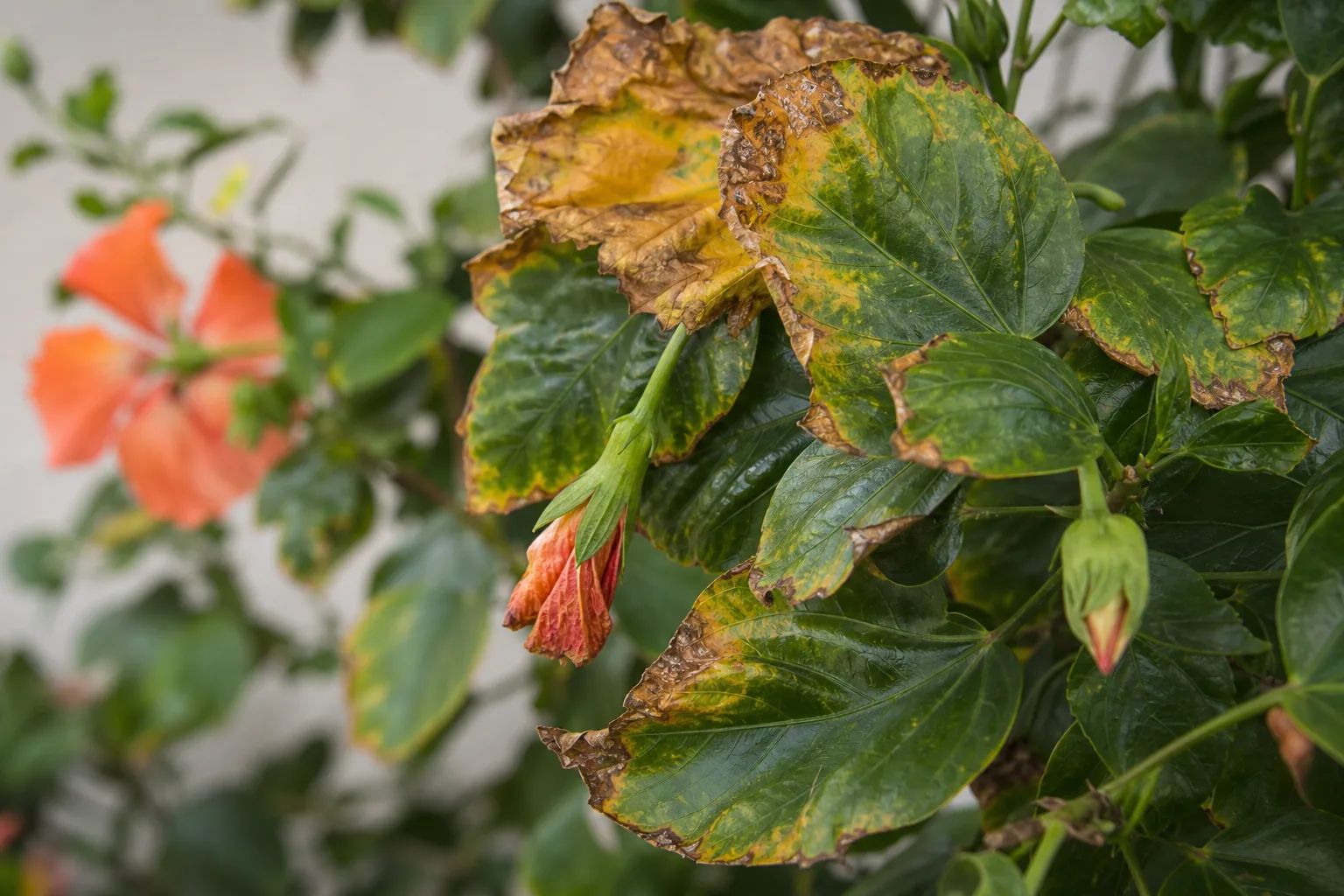
Low humidity on tropical Hibiscus (*H. rosa-sinensis*) shows as brown leaf edges, crisp tips, and dropping buds when indoor air falls well below the 50–70% relative humidity this plant prefers. First step: measure RH with a hygrometer near the canopy, then move the pot away from heating vents and add a humidifier or pebble tray-not misting alone.
Low Humidity on Hibiscus: Causes, Checks & Fixes
This guide covers low humidity on Hibiscus. See also the general Low Humidity guide, watering, and light pages for this plant.
Low Humidity on Hibiscus: Causes, Checks & Fixes
Quick answer
Low humidity on tropical Hibiscus (Hibiscus rosa-sinensis) shows up as brown or tan leaf edges, crisp shoot tips, and dropping flower buds when indoor relative humidity falls well below what this warm-climate shrub expects. The RHS advises bright, humid conditions with good ventilation for tropical hibiscus overwintered indoors-not the 20–30% RH that heated winter rooms often deliver.
First step: place a hygrometer at canopy height and read the number before you change watering. If RH is below 40% and the pot sits near a radiator, sunny glass, or AC vent, move the plant to a more stable spot and start raising ambient humidity with a humidifier or pebble tray. Do not assume every crispy edge is underwatering-check the top inch of mix first, then fix the air.
What low humidity looks like on Hibiscus
On tropical hibiscus kept indoors through winter, dry-air stress usually develops gradually over one to three weeks after the furnace starts or after the plant moves from a humid patio to a heated room.
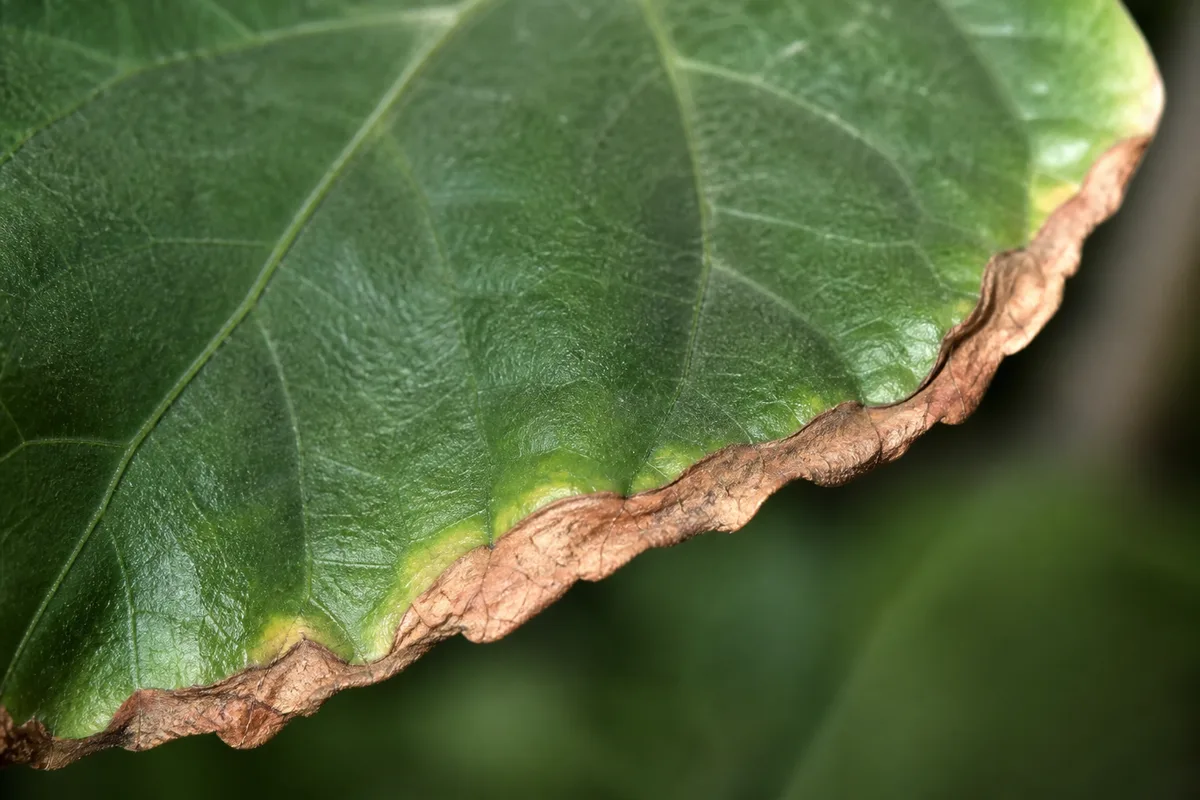
Low Humidity symptoms on Hibiscus - compare with healthy tissue on the same plant.
Typical patterns include:
- Brown or tan margins on otherwise green leaves, often worst on leaves closest to a heating vent, fireplace, or drafty window
- Crisp, dry tips on new shoots that were soft and glossy outdoors
- Yellowing and dropping buds before flowers open, sometimes before obvious leaf damage appears
- Midday leaf curl on sunny windowsills when transpiration outpaces what dry air allows-soil may still be moist
- Increased spider mite risk when RH stays very low; stippling on undersides often follows edge browning in the same dry microclimate
Hardy H. moscheutos and Rose of Sharon (H. syriacus) in outdoor beds rarely need humidifier-level care-the issue this page targets is container tropical hibiscus indoors, where furnace heat and forced-air vents strip moisture from large, soft Malvaceae leaves.
Why tropical hibiscus struggles in dry indoor air
Tropical hibiscus evolved in warm, humid East Asian and tropical climates where steady moisture in the air supports constant leaf transpiration and bud development. NC State Extension notes that Chinese hibiscus appreciates high humidity and is sensitive to environmental changes-moving the plant or shifting humidity often triggers leaf and bud drop before pest damage appears.
Indoors, several triggers stack against the plant:
- Winter furnace heat drops whole-room RH into the 20–30% range while the plant still holds sun-formed leaves from summer
- Radiators, fireplaces, and forced-air vents create hot dry microclimates that crisp margins on the nearest leaves within days
- Sunny south- or west-facing glass amplifies transpiration; dry air plus intense light browns edges faster than on a low-light houseplant
- Single-plant placement away from other pots loses the shared humidity that grouping provides-the RHS recommends grouping plants to maintain a humid microclimate
- Recent move indoors before nights cool combines lower light, drier air, and transplant stress-LSU AgCenter lists sudden environmental changes among common causes of flower bud loss
Hibiscus in full sun on a patio transpires heavily. When that same specimen comes inside, it keeps large leaves while the air around it is far drier than outdoors-even if you water correctly per hibiscus watering guidance.
Low humidity vs. underwatering vs. spider mites vs. bud drop
Dry air, drought, and pests overlap on hibiscus. Use this table before you humidify, soak, or spray:
| What you see | Likely cause | First check |
|---|---|---|
| Brown leaf edges; buds drop; RH below 40%; pot near heat vent | Low humidity | Hygrometer + relocate from vent; humidifier or pebble tray |
| Wilting; light dry pot; top inch dusty; edges brown on whole plant | Underwatering | Underwatering on Hibiscus - deep soak, then reset rhythm |
| Fine yellow stippling + webbing on undersides; tap test shows moving specks | Spider mites in dry air | Spider mites on Hibiscus - rinse undersides, raise RH above 50% |
| Buds yellow and fall; soil swings wet/dry; no stippling | Water inconsistency | Bud drop on Hibiscus - stabilize watering before humidifying |
| Brown tips only on oldest leaves; salt crust on saucer | Salt buildup / fertilizer flush need | Brown tips on Hibiscus - flush soil, then reassess humidity |
UMN Extension notes that spider mites thrive in dry, warm conditions-very dry indoor air below about 30% RH raises mite risk on hibiscus even when watering is correct. Treat humidity and inspect undersides weekly through heating season.
How to confirm the cause
Work through these checks in order:
- Hygrometer reading - Place a digital hygrometer at canopy height for 24 hours. Tropical hibiscus targets 50–70% RH indoors; readings below 40% strongly support dry-air stress. Room-level numbers matter more than how wet the pebble tray looks.
- Placement scan - Note distance to radiators, heat vents, fireplaces, frequently opened doors, and south-facing glass. Leaves touching cold window panes at night add chill stress on top of dry air.
- Soil moisture - Press into the top inch of mix. Dry, light pot points to underwatering; heavy wet pot with crispy edges may mean root problems or salt stress-not humidity alone.
- Bud pattern - Buds dropping with stable moisture and low RH fit humidity or move stress. Buds dropping on a wet, heavy pot fit watering inconsistency first.
- Leaf underside inspection - Hold leaves to light and check for stippling, webbing, or moving specks. Edge browning without stippling fits humidity; stippling plus webbing fits mites.
- Timeline - Symptoms appearing within two weeks of moving indoors or turning on central heat fit environmental humidity crash. Slow tip browning on one side only often tracks a single heat source.
- New growth quality - Firm green new leaves with only older margin burn suggest humidity is the limiting factor. Soft wilted new tips on wet soil suggest root or watering issues.
If RH is acceptable (above 50%) and symptoms persist, branch to underwatering, spider mites, or bud drop rather than adding more humidity.
First fix for Hibiscus
Move the pot away from the driest heat source, then raise ambient humidity with a humidifier or pebble tray-not misting alone.
That single action addresses the most common indoor pattern: a tropical hibiscus sitting in a 25% RH microclimate beside a vent. The RHS advises avoiding radiators and draughts and increasing humidity by placing the pot on a tray of damp gravel or clay pellets with the pot base above the water line.
After relocation:
- Run a small humidifier near the plant until RH at canopy height reads 50–60% for several days. Humidifiers change whole-room air more reliably than occasional misting.
- Set up a pebble tray if a humidifier is not available-fill a shallow tray with stones, add water below pot level, and keep the saucer above standing water so roots do not wick soggy mix.
- Group the hibiscus with other houseplants to share transpired moisture, but leave enough space for airflow and pest inspection.
- If the top inch of mix is dry and the pot is light, give one deep soak at the sink per watering guidance before humidifying-dry roots plus dry air compound wilt.
- If stippling or webbing is present, rinse leaf undersides and follow spider mite treatment while you raise RH; humidity alone will not clear an active colony.
Make one major change at a time-relocate and humidify first, then reassess in seven to ten days before Hibiscus repotting guide, fertilizing, or heavy pruning.
Recovery timeline
Mild edge browning on a few leaves often stabilizes within one to two weeks once RH stays above 50% and the plant is away from heat vents. Bud drop may slow within the same window if humidity was the primary trigger and watering stays consistent.
Crisp brown margins on old leaves do not turn green again-judge recovery by new leaves emerging without burn, buds holding on the plant, and no fresh stippling on undersides. Moderate winter damage across much of the canopy may need three to four weeks after stable humidity before normal bloom rhythm returns.
If edges keep spreading while RH reads above 55%, revisit watering rhythm, salt buildup (brown tips), and mite inspection before assuming humidity is still too low.
What not to do
- Do not mist heavily every day as your only fix-wet foliage in cool rooms invites fungal spotting without lasting RH benefit.
- Do not overwater because leaves look crispy; soggy mix on a stressed hibiscus causes yellow leaves and bud drop that mimic humidity stress.
- Do not fertilize a plant shedding buds and edges until humidity and watering are stable-feed stresses roots before new growth is clean.
- Do not leave the pot on a radiator or directly above a floor vent while you run a humidifier across the room; local hot dry air will still crisp the nearest leaves.
- Do not stack repotting, pruning, and pesticide on the same day as a humidity fix-hibiscus drops buds when moved or stressed.
- Do not ignore spider mites because you raised humidity; mites need direct treatment even after RH improves.
How to prevent dry-air stress next time
Bring tropical hibiscus indoors before nights drop toward 45–50°F (7–10°C) and before furnace season dries the air sharply-see hibiscus overview for overwinter timing. Set up the humidifier or pebble tray when the plant moves, not after buds start falling.
Place overwintering plants on a bright south-facing windowsill with enough direct light for semi-dormant growth, but pull pots back from cold glass on frosty nights and away from heat vents. Check RH weekly with a hygrometer through heating season.
During summer outdoors, hibiscus rarely needs artificial humidity-focus prevention on the indoor transition window. Resume outdoor placement after last frost when ambient humidity naturally rises again.
Tropical vs. hardy hibiscus - humidity expectations
This guide targets tropical H. rosa-sinensis overwintered as a container houseplant. Hardy hibiscus (H. moscheutos) and Rose of Sharon (H. syriacus) in outdoor ground plantings tolerate normal garden humidity and winter dormancy; they do not need humidifiers indoors and should not be kept as permanent houseplants.
If your plant dropped all leaves after outdoor frost in a cold-winter region, you likely have a hardy type, not a humidity-starved tropical specimen. Confirm type before you humidify a dormant outdoor perennial.
Related hibiscus problems
- Hibiscus care overview - 50–70% RH targets, temperature minimums, and overwinter placement
- Watering Hibiscus - moisture rhythm when dry air and drought overlap
- Spider mites on Hibiscus - stippling and webbing in dry heated rooms
- Bud drop on Hibiscus - when buds abort from humidity swings or inconsistent care
- Underwatering on Hibiscus - dry pot and wilt vs. dry air browning
- Brown tips on Hibiscus - salt flush and edge burn differentiation
When to use this page vs other Hibiscus guides
- Hibiscus watering guide - Use for routine moisture checks before assuming low humidity is the main issue.
- Hibiscus problems hub - Browse all 20 common issues on this species.
- Brown Tips on Hibiscus - Different entry point when symptoms overlap with low humidity.