Bud Drop on Hibiscus: Causes, Checks & Fixes
Quick answer
Bud drop on tropical hibiscus means unopened flower buds detach before petals open-usually from moisture swings, cold drafts, relocation during bud swell, or pests inside buds. First step: lift the pot and probe the top inch of mix; a light dry pot calls for a deep soak, a heavy wet pot calls for holding water.
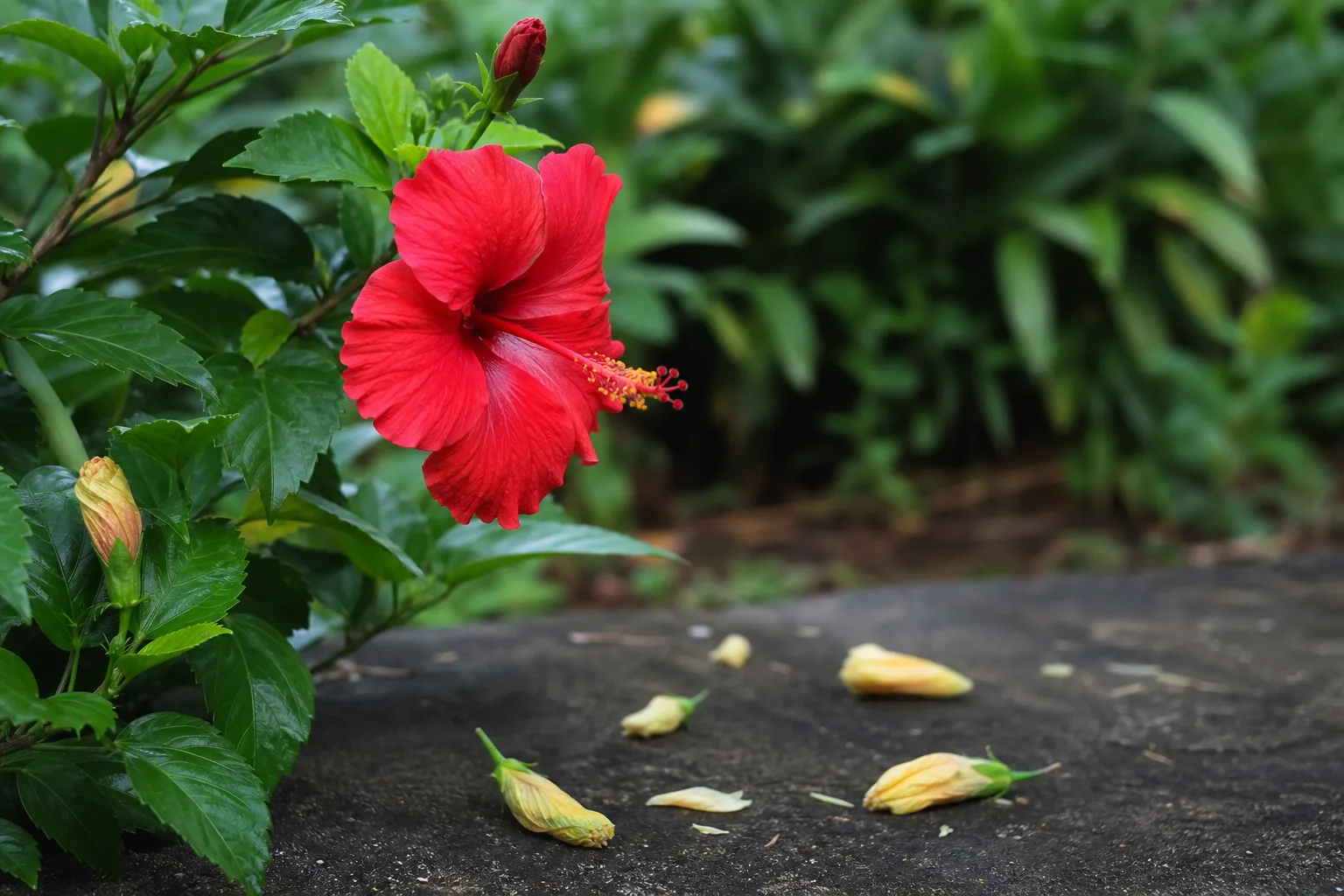
Bud Drop on Hibiscus: Causes, Checks & Fixes
This guide covers bud drop on Hibiscus. See also the general Bud Drop guide, watering, and light pages for this plant.
Bud Drop on Hibiscus: Causes, Checks & Fixes
Quick answer
Bud drop on tropical hibiscus (Hibiscus rosa-sinensis) means tight unopened flower buds detach from the stem before petals open-you find green or yellowing buds on the soil or patio while leaves may still look mostly healthy. On this sun-loving Malvaceae shrub, buds are often the first stress signal: hibiscus aborts expensive reproductive tissue before obvious leaf damage appears.
First step: lift the pot and check the top inch of mix before you fertilize, spray, or move the plant. A feather-light, dry pot with afternoon wilt points to drought-soak until water runs from drainage holes. A heavy, wet pot with limp yellow leaves points to overwatering-hold water and check drainage. If soil moisture looks normal, inspect fallen buds for pests and review recent temperature swings or relocation.
What bud drop looks like on Hibiscus
Bud drop is about what falls and when, not simply fewer flowers at season end.
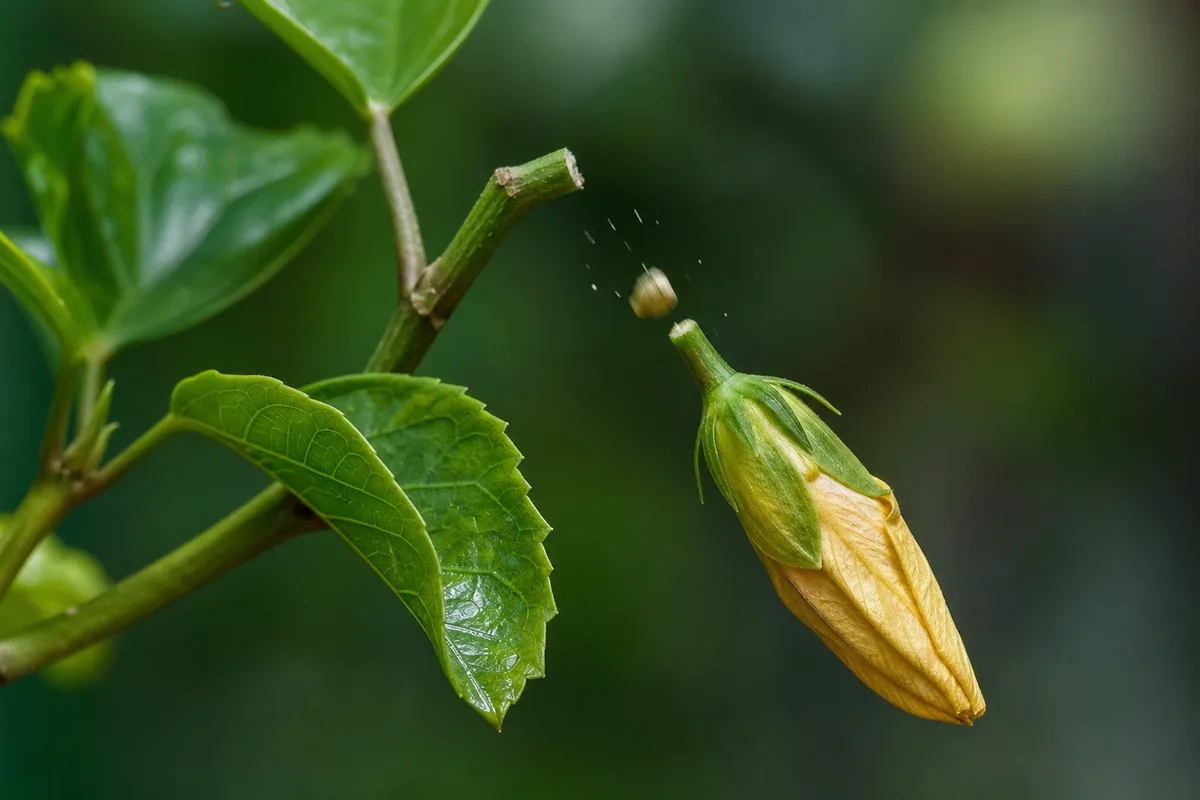
Bud Drop symptoms on Hibiscus - compare with healthy tissue on the same plant.
Typical bud-drop signs:
- Unopened buds on the ground or in the saucer-often pea- to marble-sized, still closed, sometimes with a yellowing base
- Bare pedicels where a bud was attached; the tiny stem tip may look cleanly broken or slightly dry
- New buds still forming at branch tips while older buds in the same cluster are missing
- Afternoon wilting on the same plant, especially when a container in full sun dries fast
- Leaf yellowing on lower or outer leaves when stress has gone on for days-not always present on the first bud loss
What distinguishes stress bud drop from normal bloom fade:
- Spent one-day blooms open fully, show stamens, then close and drop within a day-that is normal hibiscus senescence, not bud drop
- Double-flowering cultivars may shed more buds even with decent care; chronic drop tied to dry soil, chill, or a recent move is still a fixable stress problem
- Pest-damaged buds often discolor before falling-thrips turn larger buds grayish-brown; gall midge stunts tiny “microbuds” bright yellow before they drop
Tropical H. rosa-sinensis is the patio and houseplant hibiscus most readers mean. Hardy H. moscheutos and related perennials have different winter dormancy patterns-this guide focuses on evergreen tropical types that bloom on new wood in warm weather.
Why Hibiscus drops buds
Hibiscus evolved for warm, humid climates with moist roots and long sunny days. Flower buds demand steady water and stable conditions during the weeks they take to swell-when anything swings, the plant sheds buds first.
Drought and inconsistent watering. Drying out too much is the most common trigger for tropical hibiscus bud drop. LSU AgCenter guidance notes that hibiscus allowed to wilt between waterings often drop flower buds and yellow lower leaves. Boom-bust watering-wet for days, then dry for days-produces the same abort signal. Container plants in six or more hours of direct sun may need daily watering in peak summer; a weekly calendar schedule misses that rhythm.
Overwatering and root stress. Keeping hibiscus too wet causes root problems that ultimately produce a sick-looking plant dropping buds, even when the surface looks damp. Soggy mix reduces oxygen uptake; buds abort while leaves turn yellow and limp.
Cold, heat, and draft stress. Hibiscus needs daytime temperatures around 65 to 75°F to develop buds indoors; cold snaps and drafty entryways cause buds to drop or fail to form. Prolonged extreme heat above 95°F can also stress some hybrids into shedding blooms as a defense mechanism. Night temperatures below 55°F are risky for tropical types brought indoors.
Relocation and environmental change. Chinese hibiscus is sensitive to environmental changes-moving the plant can cause leaf and bud drops. Common triggers include nursery-to-home transport, patio-to-indoor winter transition, and repotting during active bud swell. Minnesota Extension recommends acclimating plants gradually when moving between light levels to prevent bud loss.
Low humidity and winter indoor heat. Dry forced-air heat drops humidity just when hibiscus needs stability after coming inside. Low humidity alone rarely causes mass bud drop on a well-watered plant, but it compounds drought and relocation stress.
Insufficient light during bud formation. Hibiscus requires very bright light to bloom well indoors-at least four to five hours of direct sun from a western or southern exposure. Dim winter windows stall bud development; buds that do form may abort when the plant cannot support them.
Excess nitrogen. Too much nitrogen spurs leaf growth and can cause unopened buds to drop. Heavy feeding during stress makes the problem worse, not better.
Pests inside buds. When environmental causes are ruled out, inspect fallen buds. Thrips attack larger buds showing color, turning them rotten grayish-brown before drop. Hibiscus gall midge lays eggs in tiny developing buds, stunting them bright yellow; larvae feed inside where sprays reach poorly. UF/IFAS extension notes double-flowering types and some cultivars drop buds more readily even before pests enter the picture.
Bud drop vs lookalike symptoms
Underwatering drops buds with a light dry pot and afternoon wilt-see our underwatering guide when drought is the leading suspect.
Overwatering and root rot also cause yellow leaves and bud loss, but soil stays wet, the pot feels heavy, and roots may smell sour-see overwatering and root rot.
Aphids and thrips coat buds and new growth with sticky residue or silvery scarring-aphids on hibiscus need isolation and targeted treatment, not just a watering tweak.
Low humidity alone rarely explains every fallen bud, but dry indoor air stacks with winter relocation stress after plants move inside.
Not enough light stalls bud formation and can abort buds that do start-check light requirements if the brightest window still looks dim.
Normal spent bloom drop happens after flowers open for their single day-the petals close, the bloom falls, and the calyx may follow days later. That is deadheading territory, not premature bud abort.
How to confirm the cause
Work through these checks in order-the answer usually appears before you need sprays or fertilizer:
- Pot weight - Lift the container. A feather-light pot compared with how it feels an hour after a thorough soak confirms drought. A heavy pot that sloshes when tilted suggests saturation.
- Top-inch moisture - Push your finger 2–3 cm into mix near the stem. Bone dry several centimeters down with wilt fits underwatering. Damp or wet several days after the last drink fits overwatering.
- Wilting pattern - Drought wilts the whole canopy in hot sun, then perks up within hours after a soak. Overwatered hibiscus wilts with wet mix and may smell sour at the base.
- Recent moves or weather - Bud loss within a week of bringing the plant home, moving patio to indoor, or repotting during bud swell points to relocation stress. A cold night below 55°F or a heat wave above 95°F fits temperature abort.
- Bud inspection - Cut open fallen buds. Grayish-brown petals with color showing suggest thrips. Bright yellow stunted microbuds with visible maggot-like larvae inside suggest gall midge. Clean green buds with dry soil point to moisture stress.
- Pest check on new growth - Look at bud scales and shoot tips. Soft aphid clusters, fine stippling, or webbing add insect pressure to the diagnosis.
- Cultivar context - Double hybrids drop more buds under marginal care. Chronic loss on a dry, wilting plant is still a watering problem until proven otherwise.
If soil was dry, the plant wilted afternoons, and buds fell cleanly without interior larvae, drought or inconsistent moisture is the working diagnosis-fix water before anything else.
First fix for Hibiscus
Lift the pot and probe the top inch of mix-then act on what you find.
For a light, dry pot with wilt: Water thoroughly from the top until water runs freely from drainage holes, then empty the saucer within thirty minutes. One deep soak that reaches bottom roots beats several shallow sprinkles. Do not fertilize, repot, or move the plant while it is wilted.
For a heavy, wet pot with limp yellow leaves: Stop watering until the top inch dries. Confirm drainage holes are open and the saucer is not holding water. Do not drench harder hoping to “revive” the plant-that deepens root stress.
For recent relocation with stable moisture: Hold the plant in one bright spot, maintain even watering, and add a humidity tray or grouping with other plants if indoor air is dry. Wait two weeks before repotting or heavy pruning.
For pest-coated or larva-filled buds: Remove and discard fallen buds from the soil surface-sanitation breaks gall midge and thrips cycles. Isolate the plant and inspect remaining buds before choosing a labeled insecticide; systemic products may be needed for midges feeding inside buds, per UF/IFAS guidance.
Make one care correction at a time so you can read the plant’s response over the next week.
Step-by-step recovery
After the initial fix matched to your diagnosis:
- Stabilize placement - Keep the hibiscus in one bright location. Avoid shifting between patio and indoor repeatedly during bud formation.
- Resume a pot-based watering rhythm - Water when the top inch of mix dries. In peak summer sun that may mean daily for containers; in cooler indoor months, every two to three days.
- Acclimate gradually - When moving outdoors in spring or indoors in fall, step through intermediate light over several days rather than one abrupt change.
- Hold fertilizer until new growth looks firm and green for at least two weeks. Salts on stressed roots add bud-drop risk.
- Clean up fallen buds weekly - Especially if you suspect gall midge or thrips; do not compost infected buds near hibiscus.
- Prune only dead tissue - Snip fully crisp leaves if they bother you, but avoid heavy pruning during active bud swell-it removes flower wood and adds stress.
- Boost humidity modestly indoors - A pebble tray or humidifier helps winter transitions; misting leaves does not replace root-zone moisture.
If buds have already dropped, do not expect them to reopen. Keep conditions steady and wait for the next bud cycle.
Recovery timeline
Mild stress from one missed watering or a short relocation often stabilizes within one to two weeks once moisture and placement stay consistent-new buds form at branch tips and hold through swell.
Moderate drought with multiple fallen buds may take two to three weeks of steady watering before the next reliable bud set in warm active growth.
Root-related stress from chronic overwatering can take several weeks after drainage improves before buds hold again-judge progress by firm new leaves and roots that stay pale and firm when you tip the plant out, not by old yellow foliage.
Fallen buds and yellow stress leaves do not reopen or re-green. Judge recovery by turgid new growth and buds that stay attached.
If every bud drops again after you corrected one factor, revisit the checklist-stacked stress (dry soil plus cold draft plus recent move) needs each layer addressed.
Mistakes to avoid
Do not fertilize a bud-dropping hibiscus hoping to force blooms-excess nitrogen often drops more buds.
Do not repot, heavily prune, or relocate during active bud swell unless root rot forces your hand.
Do not assume all bud drop is normal because doubles shed more-check pot weight and soil moisture first.
Do not stack repotting, pruning, pesticide, and fertilizer on the same day after bud loss.
Do not ignore fallen buds on the soil surface when midges or thrips are suspected-sanitation is part of control.
Do not treat every case with deep soaking-saturated roots abort buds too.
How to prevent bud drop next time
Treat watering as a pot-drying rhythm, not a calendar rule. Check the top inch of mix daily during active summer growth on sun-exposed containers-see our hibiscus watering guide for seasonal adjustments.
Keep placement as stable as possible. If you must move the plant, pre-moisten the mix and acclimate light gradually per Minnesota Extension guidance.
Match light to bloom demand: brightest window indoors, full sun outdoors after frost danger passes.
Maintain humidity during winter indoor transitions without letting the root zone stay soggy.
Choose well-drained, moisture-retentive mix and repot when root-bound plants dry out within a day of every watering.
Scout buds weekly during peak bloom season-early pest removal prevents interior bud damage.
For cultivars prone to shedding, your care margin is smaller: steady moisture and stable temperature matter more on doubles than on singles.
When to worry
Treat as urgent when the entire plant collapses in hot sun with bone-dry soil-rehydrate the same day with a full soak and temporary shade from harsh midday sun.
Worry about gall midge or thrips when fallen buds show interior larvae or grayish rot and new buds keep aborting despite stable moisture-pest control becomes the priority.
Stop watering and inspect roots if stems soften at the base, soil smells sour, and bud drop accompanies widespread yellowing on wet mix-that pattern points toward root rot, not drought.
A single bud lost after a windy day or one missed check is not a crisis. Repeated weekly abort cycles during peak bloom season mean the care rhythm or environment still needs correction.
Related hibiscus care guides
Bud drop rarely exists in isolation on this plant. For broader context on tropical vs hardy types, bloom biology, and daily care rhythm, start with the hibiscus overview. When symptoms overlap with sibling problems, use the dedicated pages for underwatering, overwatering, low humidity, not enough light, aphids, and no flowers rather than guessing from bud drop alone.
Conclusion
Hibiscus bud drop is the plant’s early warning system-unopened buds fall when moisture, temperature, light, or placement swing during the weeks buds take to form. Lift the pot, probe the top inch, and fix the dominant stress before you fertilize or move the plant again. Fallen buds do not reopen; success is new buds that stay attached through bloom. On tropical hibiscus, consistency is not optional-it is the price of those huge summer flowers.