Best Soil for Hibiscus: Mix, pH, and Drainage Guide
Best Soil for Hibiscus: Mix, pH, and Drainage Guide
Best Soil for Hibiscus: Mix, pH, and Drainage Guide
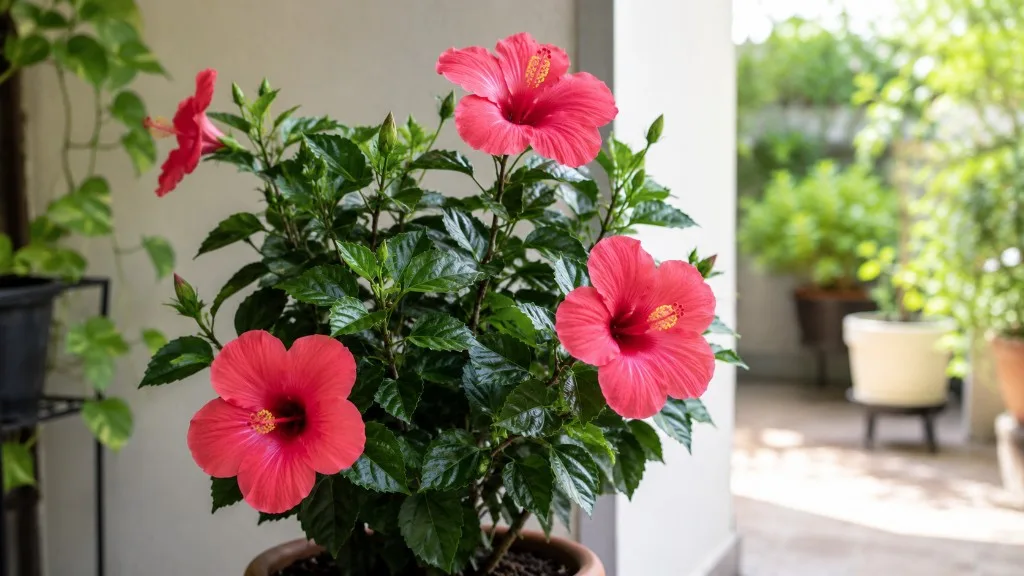
The best soil for hibiscus is not a single bagged product - it is a root-zone system that stays rich in organic matter, drains fast enough to prevent rot, and holds slightly acidic pH so the plant can absorb iron and other micronutrients. Tropical hibiscus (Hibiscus rosa-sinensis) is a heavy-feeding, bloom-driven shrub that punishes sloppy substrate choices quickly: waterlogged mix triggers root rot on Hibiscus within weeks, while dense or alkaline soil produces pale yellow leaves and dropped buds even when you water and feed on schedule. Get the mix right and hibiscus rewards you with the glossy foliage and daily flowers it is famous for on sunny balconies, conservatories, and patio containers.
The practical target for most home growers is straightforward: use a lightweight, soilless potting blend amended with perlite, pine bark, or coarse sand for aeration; maintain pH between 6.0 and 6.8 (slightly acidic); and never use straight garden soil in a container. A reliable DIY recipe is 40% peat moss or coco coir, 30% quality potting soil or compost, 20% perlite, and 10% pine bark fines - adjusted up or down depending on your pot material and climate. Repot into fresh mix every one to three years, match pot size to the root ball rather than the leaf canopy, and run a simple drainage check after every full watering.
This guide covers what hibiscus roots actually need from their medium, how to hit the right pH, commercial and homemade mix options, pot selection, Hibiscus repotting guide steps, and the soil mistakes that cause more damage than any single missed watering.
Why Soil Quality Matters More Than You Think for Hibiscus
Hibiscus is often sold as a forgiving patio plant, which creates a dangerous assumption: that any potting soil and any container will work as long as you water regularly. In practice, soil is the control system for everything else you do. It decides how long moisture sits around the roots after you water, how much oxygen reaches fine root hairs, whether iron and manganese stay available at the right pH, and how quickly soluble salts from fertilizer accumulate. A hibiscus in the wrong mix can look fine for a month and then shed every developing bud in a single week - a pattern growers often blame on watering when the real issue is anaerobic roots sitting in compacted, slow-draining medium.
Tropical hibiscus evolved in warm, humid climates with rainfall that drains through porous, organic-rich soils. LSU AgCenter guidance for Louisiana landscape plantings recommends a slightly acid soil pH between 6.5 and 6.8 and emphasizes well-drained beds, noting that native clay soils in the Gulf Coast region often need amendment with sand and organic matter before hibiscus will thrive (LSU AgCenter - Tropical Hibiscus). Container culture amplifies every soil weakness because the root zone is confined. There is nowhere for excess water to go except out the drainage hole, and no deep soil profile to buffer compaction or pH drift.
Think of soil as infrastructure, not decoration. Light, aerated, slightly acidic mix supports the feeding and Hibiscus watering guide hibiscus demands during active growth. Heavy, alkaline, or exhausted mix forces you into a reactive cycle of yellow-leaf fixes, emergency repots, and lost flowers - all of which are harder to reverse than getting the substrate right from the start.
What Hibiscus Roots Need from Their Growing Medium
Hibiscus roots want three things simultaneously: access to moisture between waterings, constant access to oxygen, and a steady supply of nutrients held in organic matter and replenished through feeding. Missing any one of those three produces recognizable symptoms above ground long before you inspect the roots. Understanding the root architecture helps explain why mix texture matters as much as ingredients.
Tropical hibiscus develops relatively wide, shallow roots compared to many woody shrubs. RHS overpotting guidance warns that when a container is too large for the rootball, excess wet mix stays saturated around small roots and commonly leads to chronic wet conditions and root rot. Shallow roots also mean the upper layers of mix dry first - which is why the “top inch dry” watering cue works - but they also mean the roots live in the zone most affected by compaction and salt crust on the soil surface.
The Drainage vs Moisture Retention Balance
Drainage and moisture retention sound like opposites, but hibiscus needs both in the same pot. The mix must release excess water within minutes of a thorough watering while still holding enough moisture that the plant does not crash between daily summer drinks. LSU AgCenter recommends well-drained beds amended with organic matter for landscape hibiscus and warns that garden soil is too heavy and compacted for containers, where confined roots need fast-draining, soilless mix.
The balance shifts with your environment. A hibiscus on a sun-baked terrace in peak summer may need a mix with slightly more coir or peat to buffer drying between twice-daily checks. The same plant moved to a shaded indoor window in winter needs sharper drainage and less water-holding capacity because evaporation drops sharply. Pot material changes the equation too: porous terra-cotta pulls moisture from the mix edges and dries faster, while glazed ceramic and plastic retain wetness longer - often requiring extra perlite or bark in the blend.
Run this quick test after repotting: water until runoff flows freely from the drainage holes, then press a finger into the top inch after ten minutes. It should feel moist but not squishy. Press again at the drainage hole level through the empty saucer space if accessible - there should be no standing water. If water sits on the surface or the pot weight barely changes after a full watering, the mix is too dense.
Why Rich Organic Matter Drives Blooms
Hibiscus is a heavy feeder that produces large flowers on new wood throughout the warm season. That metabolic output draws heavily on nitrogen, potassium, and micronutrients - but those nutrients must live in a medium that supports biological activity and cation exchange. Compost, worm castings, and well-aged bark supply slow-release nutrition and improve soil structure. LSU AgCenter notes that hibiscus prefers slightly acid soil pH between 6.5 and 6.8 in landscape plantings and suffers micronutrient deficiencies when pH rises too high.
Organic matter is not a substitute for fertilizer during peak bloom season, but it is the difference between a mix that stays friable and biologically active for two years and one that collapses into a brick after three watering cycles. Aim for 20–30% compost or well-rotted organic amendment in container mixes. In garden beds, work 5–8 cm of compost into the planting area rather than filling the hole with pure compost, which can hold too much moisture around the root ball.
Ideal pH for Hibiscus Soil
Hibiscus prefers slightly acidic soil, with most authoritative sources converging on a target range of 6.0 to 6.8. LSU AgCenter specifies 6.5 to 6.8 for landscape plantings in Louisiana. NC State lists acid to slightly acid soil pH (4.5–6.5) as suitable. Biology and horticulture references commonly cite a broader acceptable window of 5.5 to 7.0, with performance declining toward the alkaline end. The practical sweet spot for containers is 6.2 to 6.7 - acidic enough to keep iron available, neutral enough that normal tap water and limestone-free potting components do not push you into deficiency territory within a single season.
pH matters because it controls nutrient solubility. Iron, manganese, and zinc become less available as pH rises above 7.0. Hibiscus shows this as interveinal chlorosis - green veins on yellow new leaves - even when fertilizer is applied regularly. The problem is not lack of iron in the pot; it is that alkaline conditions lock iron into forms roots cannot absorb. Fixing chlorosis without addressing pH leads to repeated foliar sprays and frustration.
Peat moss and sphagnum peat naturally acidify mix slightly. Coco coir is more neutral but still works well with a modest peat component or acid-forming fertilizer. Avoid unbuffered hard water (high bicarbonate) for routine irrigation in alkaline regions - over months it can shift container pH upward. Collected rainwater or filtered water helps in those situations, though pH testing is the only way to know if your local conditions create drift.
How to Test and Adjust Soil pH
Test container mix at repotting time and annually for in-ground plantings. Inexpensive pH meter probes or slurry test kits (mix + distilled water) give adequate accuracy for home hibiscus culture. For landscape beds, a laboratory soil test through your regional extension service is worth the small fee because it also reports nutrient levels and lime requirement.
If pH is too high (alkaline):
- Repot into fresh mix with a higher proportion of peat or sulfur-amended commercial blend.
- For in-ground plants, apply elemental sulfur or aluminum sulfate per soil test recommendations - LSU AgCenter notes sulfur or aluminum sulfate to decrease pH in landscape beds.
- Avoid dolomitic lime near hibiscus unless a soil test specifically shows need.
If pH is too low (below 5.5):
- Reduce peat proportion and add a small amount of dolomitic lime - roughly 5 ml per 4 L of mix as a starting point, then retest.
- Watch for manganese toxicity symptoms (brown speckling on older leaves) in extremely acid conditions.
Adjustment is gradual. Make small changes, retest in two to three weeks, and avoid stacking chemical amendments with heavy fertilizer applications on the same day.
Best Commercial Potting Mix for Hibiscus
You do not need a bag labeled “hibiscus soil” to succeed - you need a mix with the right physical structure and pH tendency. Look for products described as potting mix (not topsoil), for tropical or flowering plants, or professional container blend. The ingredient list should lead with peat moss or coco coir, include perlite, vermiculite, or pine bark for aeration, and avoid high proportions of composted forest products alone, which can compact.
What to look for on the label:
- Lightweight, soilless formulation
- Perlite, pumice, or bark listed among first five ingredients
- pH listed or described as suitable for acid-loving or flowering plants
- No added water crystals or excessive wetting agents (they can mask drainage problems)
What to skip:
- Topsoil, garden soil, or “raised bed” mixes in containers - too dense
- Cactus-only mixes without amendment - drainage is good but organic matter and moisture retention may be too low for daily summer watering demands
- Heavy manure-based mixes as the sole medium - salt load and moisture retention can overwhelm roots
Most quality all-purpose potting mixes work as a base at 30–40% of your final blend, with you adding perlite, bark, and compost to customize. If you prefer a single-bag solution, choose a flowering-container or premium tropical plant mix and still verify drainage with the post-watering test described above. No commercial product compensates for a pot without drainage holes or an oversized container.
DIY Hibiscus Potting Mix Recipes
Homemade mix gives you control over drainage, acidity, and cost - especially if you grow multiple containers or repot annually. Measure by volume, not weight: a “part” can be a scoop, bucket, or liter depending on batch size.
Container Mix for Tropical Hibiscus
Standard all-purpose container recipe:
| Component | Proportion | Role |
|---|---|---|
| Peat moss or coco coir | 40% | Moisture retention, slight acidity |
| Quality potting soil or compost | 30% | Nutrients, structure |
| Perlite | 20% | Aeration, drainage |
| Pine bark fines | 10% | Long-term porosity, slow organic breakdown |
High-drainage recipe for plastic pots in humid climates:
- 30% coco coir
- 25% potting soil
- 25% perlite
- 20% pine bark fines
Moisture-buffering recipe for terra-cotta in hot, dry climates:
- 45% peat moss or coir
- 25% compost
- 15% perlite
- 15% vermiculite
NC State propagation guidance recommends a rooting medium of one part peat and one or two parts perlite (by volume) - a principle that applies equally to drainage-focused container mixes for hibiscus. Another widely recommended formula is two parts potting soil, two parts peat moss, and one part perlite or vermiculite. Both align with the core principle: organic richness plus explicit aeration components.
Mix dry ingredients thoroughly in a wheelbarrow or tarp until the perlite and bark are evenly distributed - uneven mixing creates wet zones and dry zones in the same pot. Pre-moisten slightly before repotting so the first watering penetrates evenly.
In-Ground Soil Amendments for Landscape Hibiscus
In-ground tropical or hardy hibiscus in suitable climates (USDA zones 9–12 for H. rosa-sinensis) benefits from loamy, well-drained beds. Heavy clay needs coarse sand and pine bark or compost worked into the planting zone to a depth of 25–30 cm. LSU AgCenter recommends amending clay-based Louisiana soils and conducting a soil test before and after amendment to verify pH and drainage improvement.
For a new landscape planting:
- Test native soil pH and texture.
- Loosen the planting area wider than the root ball, not just the hole.
- Incorporate 25–33% organic amendment by volume into backfill - not 100% compost in the hole alone.
- Plant with the crown at or slightly above grade to prevent water pooling at the stem base.
- Mulch with 5–8 cm of bark keeping mulch off the trunk.
Raised beds solve chronic wet-clay problems more reliably than repeated sand additions in low-lying sites.
Choosing the Right Pot for Your Soil System
Soil and pot function as one system. The best hibiscus potting mix in a container with no drainage holes still fails. RHS container guidance emphasizes adequate drainage holes as non-negotiable for container hibiscus.
Size: Choose a pot only 2.5–5 cm wider in diameter than the current root ball for established plants. Tropical hibiscus shallow roots cannot use a large volume of unused wet mix - oversizing is a primary root rot trigger. A 30–40 cm pot suits most mature container specimens; increase size only when roots circle the bottom and top growth demands it.
Material:
- Terra-cotta: Pulls moisture through walls; pair with slightly richer mix; water more often in heat.
- Plastic or resin: Retains moisture; add extra perlite; ideal where pots must be moved.
- Glazed ceramic: Similar to plastic but heavier; verify drainage holes are open, not painted shut.
Cachepots: Never let the inner pot sit in accumulated runoff. Empty saucers within 30 minutes of watering. Decorative outer pots without holes require a nursery pot inside - never direct planting into a sealed container.
How to Repot Hibiscus with Fresh Mix
Repot when roots are moderately bound, mix has compacted or broken down, drainage has slowed noticeably, or the plant dries out unnaturally fast because peat has degraded into dust. Timing: early spring as new growth begins, or after the main flush in late summer - avoid repotting during peak bloom if avoidable, and never repot a severely stressed plant unless roots are clearly rotting.
Step-by-step:
- Water lightly one day before to soften root ball.
- Choose new pot 2.5–5 cm larger; confirm drainage holes are open.
- Place 2–3 cm fresh mix in the pot bottom - no gravel layer required (gravel reduces effective drainage depth).
- Slide hibiscus out, tease circling roots gently outward with fingers or a blunt tool.
- Trim black, mushy roots with clean shears; dust cuts if rot was present.
- Set plant so crown sits at or 1 cm above final soil line.
- Backfill with mix, firm lightly to remove air pockets without compacting.
- Water thoroughly until runoff clears; discard saucer water.
- Keep in Hibiscus light guide for one week; resume normal sun exposure gradually.
- Hold fertilizer for three to four weeks while roots establish.
Fresh mix restores aeration and pH buffer capacity - the single most effective intervention for a hibiscus that has been in the same pot for three or more years.
Signs Your Hibiscus Soil Is Wrong
Soil problems show up through the leaves, buds, and watering rhythm before roots become visible. Learn to read these signals:
- Bud drop without pest pressure: Often linked to drying swings (mix too fast-draining or pot too small) or chronic wet roots (mix too dense, pot too large, poor drainage).
- Yellow new leaves with green veins: Classic iron chlorosis from alkaline pH or cold, wet roots limiting uptake.
- Yellow older leaves with wet mix: Possible nitrogen deficiency in exhausted mix or overwatering on Hibiscus in compacted soil.
- Water sits on surface after watering: Hydrophobic or compacted peat; mix needs refresh or top-dress removal.
- Musty or sour smell from pot: Anaerobic conditions - repot urgently, trim affected roots.
- White crust on soil surface: Salt accumulation from hard water and fertilizer in slow-draining mix; flush or repot.
- Plant wilts despite wet soil: Root rot has destroyed absorptive roots; inspect immediately.
LSU AgCenter links flower bud drop, sudden foliage decline, and excessive yellowing to excessive drying in container media - a reminder that wrong soil cuts both ways, too dry and too wet (LSU AgCenter).
Common Hibiscus Soil Mistakes
Using garden soil in pots is the most damaging routine error. Garden soil compacts in containers, reducing oxygen and turning weekly watering into a root suffocation cycle. Pathogens and weed seeds ride along. Always use soilless potting components in containers.
Adding a gravel layer at the pot bottom does not improve drainage - it creates a perched water table where the fine-textured mix above meets coarse gravel below, keeping the root zone wetter than a uniform mix would. Fill the entire pot with consistent blend.
Oversizing the pot “so it can grow into it” leaves hibiscus roots swimming in unused wet mix. Match pot to root mass.
Ignoring pH for years lets tap water and lime-based amendments shift conditions alkaline. Test at repotting; amend proactively.
Letting mix degrade without refresh - peat breaks down, perlite floats to the surface, and the center compacts. Plan full mix replacement every 1–3 years, not just top-dressing.
Planting too deep buries the crown and encourages stem rot. Keep the soil line at the same level as the nursery pot or slightly higher.
Seasonal Soil and Repotting Adjustments
Soil performance changes with season even when you do not change the recipe. In active growth (warm months, long days), roots are metabolically active and tolerate repotting best. Mix dries faster; verify daily in heat. Organic matter mineralizes quicker in warmth, so nutrient demand rises - exhausted mix shows deficiency sooner.
In cool or low-light periods, evaporation drops. The same mix that worked in July stays wet longer in December. Reduce watering frequency before changing the mix, but if roots smell sour or leaves yellow with consistently wet soil, refresh drainage by repotting into a sharper blend rather than waiting for spring.
Repotting frequency:
- Fast-growing container hibiscus in warm climates: every 1–2 years
- Established specimens in large pots: every 2–3 years, or when drainage fails
- Landscape plantings: amend and mulch annually; full soil renovation only if test indicates problems
After repotting in spring, resume fertilization only after three to four weeks of root recovery.
Soil and Fertilizer: How They Work Together
Soil holds and releases nutrients; fertilizer replenishes what watering leaches and what blooms consume. They are partners, not substitutes. Rich mix with compost supplies baseline nutrition; regular feeding during bloom season supplies the high nitrogen and potassium hibiscus demands. LSU AgCenter recommends water-soluble fertilizer combined with irrigation during the growing season and notes that Epsom salt (magnesium sulfate) at one tablespoon per gallon of pot size monthly supports dark green foliage without changing pH (LSU AgCenter).
Critical interaction: fertilizer applied to waterlogged, compacted mix concentrates salts without oxygen for root uptake - burn follows. Fix drainage and aeration before increasing feed rate. Alkaline mix makes micronutrient fertilizers less effective until pH is corrected.
Apply granular or liquid feed to moist soil, spread under the canopy rather than against the stem, and flush the pot with plain water monthly during heavy feeding to prevent salt crust - especially in plastic pots with slow drainage.
Troubleshooting Root Problems in Hibiscus
When soil failure progresses to root damage, act quickly. Gently remove the plant from its pot and inspect roots against a light background. Healthy hibiscus roots are firm, white to tan, and spread evenly. Rotting roots are brown, black, slimy, or hollow and smell sour.
For early rot in otherwise salvageable plants:
- Trim all mushy roots back to firm tissue.
- Rinse remaining roots in lukewarm water.
- Repot into fresh, sharper mix in a smaller clean pot if root mass was reduced significantly.
- Water once lightly; keep bright indirect light and high humidity around foliage (not wet soil).
- Avoid fertilizer until new white root tips appear - usually three to six weeks.
For advanced rot (most roots gone, stem softening): take healthy cuttings as backup propagation before discarding the parent plant.
Prevention beats rescue: well-draining, slightly acidic, regularly refreshed mix in a right-sized pot eliminates the vast majority of hibiscus root emergencies before they start.
Hardy vs Tropical Hibiscus: Soil Differences
This article focuses on tropical hibiscus (Hibiscus rosa-sinensis), the evergreen flowering shrub common in containers and frost-free landscapes. Hardy hibiscus - including Rose of Sharon (H. syriacus) and Rose mallow (H. moscheutos) - tolerate different conditions because they die back or go dormant in cold climates and often live in ground rather than pots.
Tropical hibiscus needs lighter, faster-draining container mix, consistent moisture, and pH 6.0–6.8. It cannot tolerate freezing roots and depends on year-round pot culture in most regions.
Hardy hibiscus in USDA zones 4–9 typically grows in native garden loam amended for drainage. Rose of Sharon accepts a wider pH range and tolerates clay better once established. Rose mallow often thrives in moist to wet soils - the opposite drainage priority from tropical types - because it evolved in swamp-edge habitats.
Do not apply tropical hibiscus container recipes to hardy mallow in a rain garden, or vice versa. Confirm which species you own before choosing soil strategy.
Conclusion
The best soil for hibiscus combines three non-negotiable traits: rich organic matter to support heavy feeding and bloom production, fast, reliable drainage to keep shallow tropical roots breathing, and slightly acidic pH between 6.0 and 6.8 so iron and micronutrients stay available. A proven container recipe - 40% peat or coir, 30% potting soil or compost, 20% perlite, and 10% pine bark - hits that balance for most homes, adjusted for pot material and climate.
Skip garden soil in containers, skip oversized pots, and skip gravel drainage layers. Test pH at repotting, refresh mix every one to three years, and match watering to how your specific blend dries in your specific light. When bud drop, yellow leaves, or wilting appear, check the root zone before reaching for fertilizer - soil problems announce themselves early if you know what to look for. Get the substrate right and hibiscus soil stops being a guessing game; it becomes the stable foundation everything else in your care routine builds on.
When to use this page vs other Hibiscus guides
- Hibiscus overview - Start here for whole-plant context before deep-diving this topic.
- Hibiscus problems hub - Jump to symptom-specific fix guides when this care topic does not resolve the issue.
- Root Rot on Hibiscus - Escalate here when soil adjustments are not enough.
- Mold on Soil on Hibiscus - Escalate here when soil adjustments are not enough.
Related Hibiscus guides
- Hibiscus overview
- Hibiscus watering
- Hibiscus light
- Hibiscus propagation
- Hibiscus fertilizer
- Hibiscus repotting
- Root Rot on Hibiscus
- Mold on Soil on Hibiscus
- Hibiscus problems
Related tool
Try the Soil Mix Calculator with hibiscus pre-selected to estimate needs for your setup.