Mold on Soil on Hibiscus: Causes, Checks & Fixes
Quick answer
Surface mold on Hibiscus soil is almost always harmless saprophytic fungus feeding on wet organic matter-not a leaf disease. First step: stop watering until the top inch of mix is dry, then scrape off the visible mold.
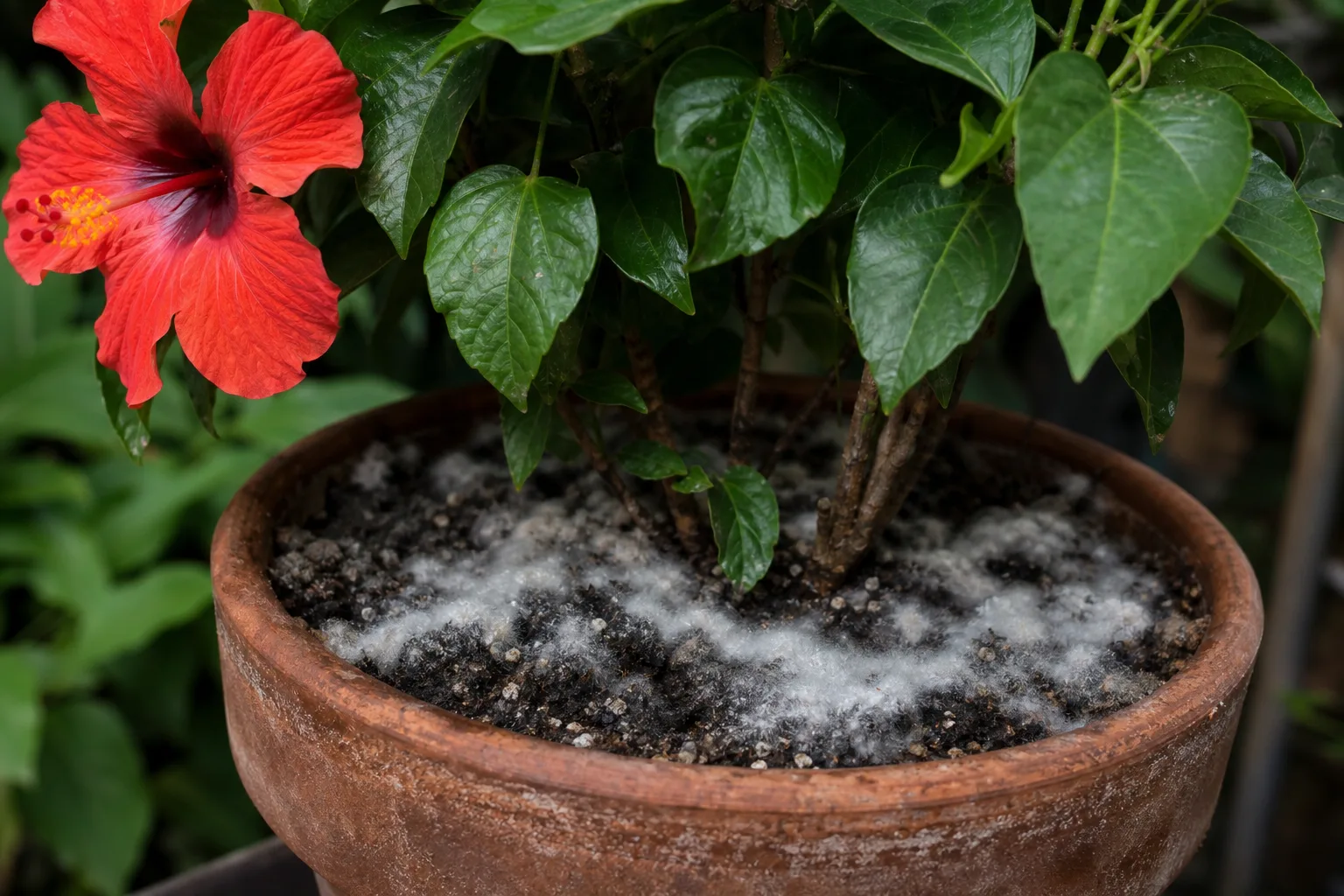
Mold on Soil on Hibiscus: Causes, Checks & Fixes
This guide covers mold on soil on Hibiscus. See also the general Mold on Soil guide, watering, and light pages for this plant.
Mold on Soil on Hibiscus: Causes, Checks & Fixes
Quick answer
White, gray, or yellow fuzz on your Hibiscus potting mix is almost always saprophytic fungus-a decomposer feeding on organic matter in constantly moist soil, not a disease attacking living leaves or roots. Extension experts confirm this type of mold is harmless to the plant and usually disappears once the surface dries.
That does not mean you should ignore it. On tropical Hibiscus (Hibiscus rosa-sinensis), recurring surface mold is a reliable warning that the top layer is staying wet longer than the plant can use-most often after bringing a summer-heavy drinker indoors, watering on autopilot through winter, or letting fallen petals and yellow leaves decay on the mix.
First step: pause watering until the top inch (2–3 cm) of soil feels dry, then scrape off the visible mold. Do not reach for fungicide, cinnamon, or a full repot until you have corrected the moisture rhythm that caused the mold.
What mold on soil looks like on Hibiscus
Surface mold appears as a fluffy or powdery layer on top of the potting mix-not on leaf surfaces. Common colors:
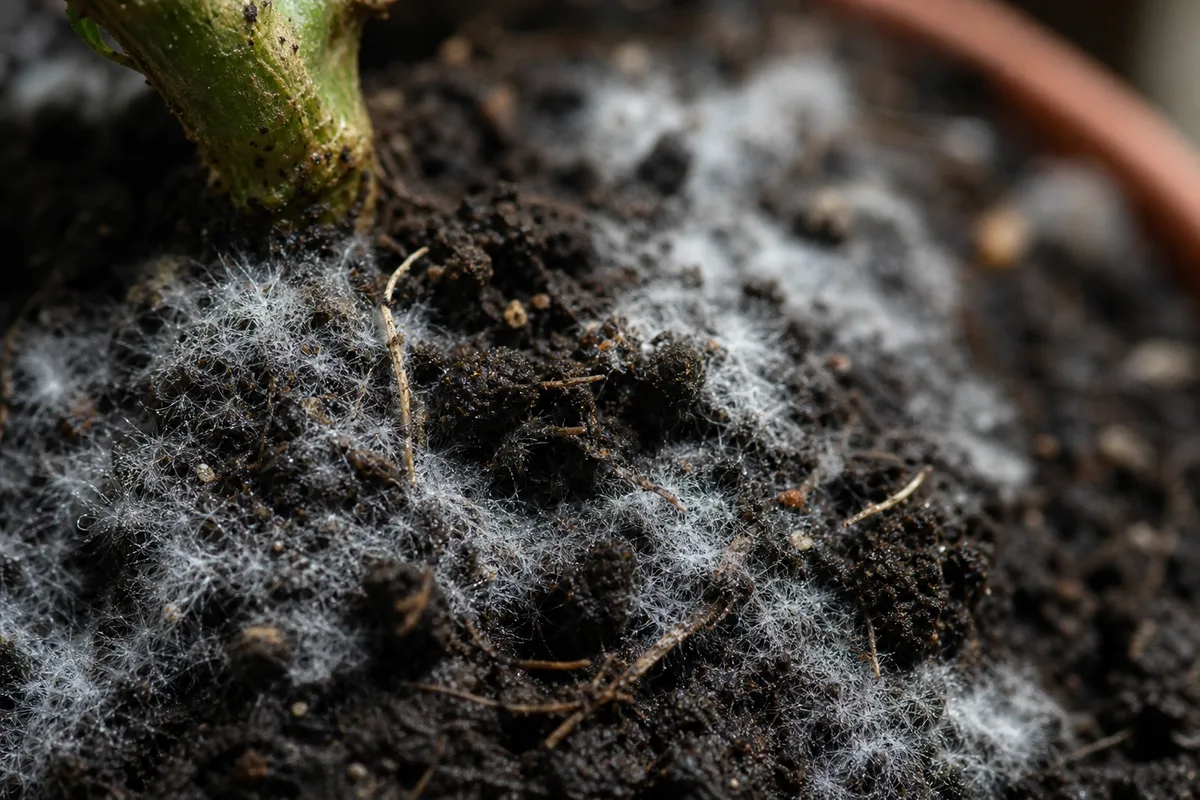
Mold on Soil symptoms on Hibiscus - compare with healthy tissue on the same plant.
- White or gray cottony patches spread across damp topsoil
- Yellow or pale orange film, especially on wet organic-rich mix
- Small mushroom-like caps in advanced cases (often the harmless flowerpot parasol fungus, Leucocoprinus)
You may also notice a musty smell near the pot, fungus gnats hovering when you disturb the soil, or green algae on the rim if light is low and moisture is constant.
What healthy Hibiscus looks like with surface mold: stems firm at the base, leaves still green or only seasonally yellowing (common after a move indoors), and no sour rot smell from the pot. The mold sits on the soil; the plant above it often looks otherwise fine.
That contrast matters. Hibiscus is sensitive to water stress-it drops buds and yellows leaves from both too much and too little water-but surface mold alone rarely wilts an otherwise healthy plant. Wilting with soggy soil points past cosmetic mold toward root trouble.
Why Hibiscus gets mold on soil
Hibiscus is a tropical, moisture-loving shrub that drinks heavily in warm, bright conditions. Outdoors in summer it may need water daily. Indoors in winter, growth slows sharply and the same schedule keeps the surface wet while roots use far less water-exactly the environment saprophytic fungi prefer.
overwatering on Hibiscus relative to current growth
The most common trigger is watering on a calendar instead of checking the pot. Hibiscus likes evenly moist roots during active growth, but it still needs well-drained mix that dries at the surface between drinks. When you water before the top inch dries-especially after the plant moves to lower light-the surface stays damp and mold follows.
This hits hard during overwintering. Master Gardener advice for tropical Hibiscus brought indoors notes that plants enter a mild rest: they need less water, less fertilizer, and fewer leaves through winter. Continuing a summer Hibiscus watering guide on a plant that is dropping leaves in dimmer light is a classic mold setup.
Fallen petals, leaves, and rich mix
Hibiscus sheds spent flowers and yellow leaves, especially after environmental changes. That debris on the soil surface is free food for saprophytic fungi. Compost-heavy, peat-based mixes already contain decaying organic matter; adding wet leaf litter accelerates surface mold.
Low light and poor airflow indoors
Hibiscus performs best in bright light-even Hibiscus light guide when possible. Indoors near a south or west window is ideal for overwintering. In dim corners or crowded plant shelves, evaporation slows, the surface stays wet longer, and spores that are always present in potting mix and indoor air colonize the damp top layer.
Oversized pots and blocked drainage
A pot much larger than the root ball holds a large wet zone that dries slowly. Saucers left full of water, decorative pot covers, or clogged drainage holes trap moisture at the surface-the same conditions that invite fungus gnats and, eventually, root rot on Hibiscus.
The fungus-gnat connection
Mold and fungus gnats often share a pot. Both thrive in persistently moist organic soil. Gnats are usually a nuisance on established Hibiscus, but their presence confirms the surface has been wet too long and that you should dry the mix before the problem escalates to root stress.
How to confirm the cause
Work through these checks before treating anything beyond the soil surface.
- Surface vs. plant tissue - Is the growth only on soil? Firm green stems and no fuzzy patches on leaves support harmless surface mold. White powder on leaves is more likely powdery mildew-a different problem.
- Moisture at depth - Stick a finger 2–3 cm into the mix. If it feels wet while mold is visible, overwatering relative to current use is confirmed. If the pot is light and mold appears only after bottom-watering, the surface may stay wet while lower mix is fine.
- Season and location - Did you recently bring the plant indoors? Is it winter with reduced light? That context strongly links mold to too much water for dormant-season growth, not a random fungal attack.
- Pot weight and drainage - Lift the pot after watering. Heavy days later with no uptake means slow drying. Confirm drainage holes are open and the saucer is emptied.
- Debris on the surface - Fallen petals, yellow leaves, or old mulch on the soil feed mold. Remove them and see if new growth appears only where debris accumulated.
- Stem and root check - Press the base of the stem. Firm is good; soft or mushy is not. If you suspect deeper trouble, tip the plant out gently. Healthy roots are pale and firm; brown, mushy roots with a sour smell mean root rot, not harmless surface mold alone.
If stems are firm, roots look healthy, and only the topsoil is fuzzy, you have confirmed cosmetic saprophytic mold driven by moisture-proceed with drying and surface cleanup, not emergency fungicides.
First fix for Hibiscus
Stop watering until the top inch of soil is dry to the touch.
That single pause breaks the cycle mold needs. Hibiscus can tolerate brief surface dryness better than it tolerates roots sitting in soggy mix for weeks-especially indoors in winter when the plant is already in rest mode.
After the surface dries:
- Scrape off the moldy top layer (about 1–2 cm) with a spoon and discard it-not in your compost if you want to limit spore spread.
- Remove fallen petals and yellow leaves from the pot surface.
- Replace the scraped layer with a small amount of fresh, dry potting mix if you removed a lot of material.
- Resume watering only when the top inch dries again, watering thoroughly until it runs from drainage holes, then empty the saucer.
Do not spray fungicide on harmless surface mold. Do not repot on day one unless scraping and drying fail to help within two weeks.
Step-by-step recovery
If mold returns after the first fix, work through these steps in order-one change at a time so you can read the plant’s response.
Week 1: Dry surface and cleanup
Hold to the dry-top-inch rule. Increase air movement around the pot-a small fan on low or spacing plants apart helps the surface dry faster without blasting Hibiscus leaves, which can crisp in direct forced air.
Week 2: Adjust the watering method
Water at the soil line, not over the foliage, to keep spent petals from washing onto the mix. Consider bottom-watering: set the pot in a tray of water for 15–30 minutes, then remove and drain fully. This keeps the surface drier while roots still get moisture.
Week 3: Match season to schedule
If the plant is overwintering indoors, cut watering frequency sharply. Brightest window available (south or west exposure when possible), reduced fertilizer, and less water together mirror how Hibiscus naturally slows in cooler months.
If mold still returns
Scraping only the top layer often fails long-term because spores live throughout the mix. A full repot into fresh, well-drained soil in a right-sized container-after gently rinsing roots and working promptly so they do not dry out-may be necessary if mold repels water or returns within days of each scrape.
Recovery timeline
Cosmetic mold should not reappear within one to two weeks once the surface stays dry between waterings. The visible fuzz itself may collapse within days of drying.
Fungus gnats, if present, often decline over two to four weeks as the surface dries-longer if generations were already established.
Judge success on the plant, not just clean soil:
- New leaves and buds forming without constant yellowing
- Stems firm at the soil line
- Pot weight dropping predictably between waterings
- No sour smell from the mix
If mold vanishes but leaves keep yellowing, buds drop, or stems soften, the underlying issue is likely chronic wet roots-shift focus from surface cleanup to drainage and possible root inspection.
Lookalike symptoms
| What you see | Likely cause | How it differs from soil mold |
|---|---|---|
| White fuzz on soil only | Saprophytic mold | Plant tissue healthy; mold disappears when surface dries |
| White powder on leaf surfaces | Powdery mildew | Fungal growth on leaves, not soil; needs different treatment |
| Green slick on soil and pot rim | Algae | Slimy green film in low light + constant moisture |
| Black spots on leaves | Leaf spot or other disease | Tissue damage on foliage, not fluffy soil surface |
| Wilting + wet soil + yellow leaves | Overwatering / root rot | Stem base may be soft; roots brown and mushy when inspected |
| Tiny black flies after watering | Fungus gnats | Insects, not mold-but share wet-soil cause |
Mistakes to avoid
Do not drench the soil with fungicide for harmless surface mold. Hibiscus leaves are sensitive to chemical burns, and the product will not fix wet conditions.
Do not keep watering to “help” a leaf-dropping overwintering plant. Yellowing after a move indoors is often environmental, not thirst. Adding water to already-wet mix drives mold and risks root rot.
Do not scrape mold repeatedly without drying the soil. You remove the symptom while leaving the cause intact-and spores in the deeper mix simply recolonize fresh surface mix.
Do not use decorative pot sleeves that trap humidity around the soil surface unless you adjust watering downward.
Do not assume mold means the plant is doomed. Extension guidance on recurring hibiscus pot mold emphasizes that these fungi tend to come and go and are usually a nuisance-not a death sentence for an otherwise healthy plant.
Hibiscus care cross-check
Surface mold is a moisture signal. Align these basics with your season:
- Light: Brightest spot indoors when overwintering; full sun when outdoors in warm months
- Water: Top inch dry before the next drink; daily in peak summer heat outdoors, much less indoors in winter
- Mix: Well-draining but slightly moisture-retentive-avoid pure peat that stays soggy in dim light
- Pot: Sized to the root ball with open drainage; empty saucers after every watering
- Debris: Remove spent blooms and fallen leaves from the soil surface weekly
Hibiscus is flagged as toxic to cats and dogs in the LeafyPixels database. Scraping mold and handling soil is not a major exposure risk, but keep disturbed soil and plant debris away from pets that chew pots or floor spillover.
How to prevent mold next time
Prevention is environmental, not chemical:
- Water by touch, not calendar-especially after moving the plant indoors or when light drops in autumn
- Remove floral debris and yellow leaves from the pot surface before they decay
- Maintain airflow around grouped plants so surfaces dry between waterings
- Use pots with drainage and never leave standing water in saucers
- Reduce water and fertilizer together during overwintering rest
- Bottom-water if overhead watering keeps the surface constantly wet
- Repot with fresh mix when mold recurs despite corrected habits, using a container only slightly larger than the root ball
Healthy drying cycles-not sterile soil-are what keep surface mold from becoming a chronic annoyance on Hibiscus.
When to worry
Escalate beyond surface cleanup if:
- Mold returns within days of scraping despite a dry top inch
- Stems soften at the soil line or smell sour
- Leaves wilt and yellow while mix stays wet (possible root rot)
- Large fungus gnat populations persist after four weeks of dry-surface care
- Water pools on the surface or runs straight through because moldy mix has become hydrophobic
Those signs mean the pot environment-not just the visible fuzz-needs deeper correction, often including unpotting, root inspection, and Hibiscus repotting guide into fresh, faster-draining mix. Cosmetic mold on firm, actively recovering Hibiscus rarely requires that level of intervention.
When to use this page vs other Hibiscus guides
- Hibiscus watering guide - Use for routine moisture checks before assuming mold on soil is the main issue.
- Hibiscus problems hub - Browse all 20 common issues on this species.
- Fungus Gnats on Hibiscus - Different entry point when symptoms overlap with mold on soil.
- Overwatering on Hibiscus - Different entry point when symptoms overlap with mold on soil.
- Root Rot on Hibiscus - Different entry point when symptoms overlap with mold on soil.