Slow Growth on Hibiscus: Causes, Checks & Fixes
Quick answer
Tropical hibiscus grows at a moderate to fast pace in warm full sun with new shoots and buds through the warm season; a dim winter pause is normal. First step: count direct sun hours, note whether new shoots appeared in the last eight weeks, and check roots at drainage holes before fertilizing or repotting.
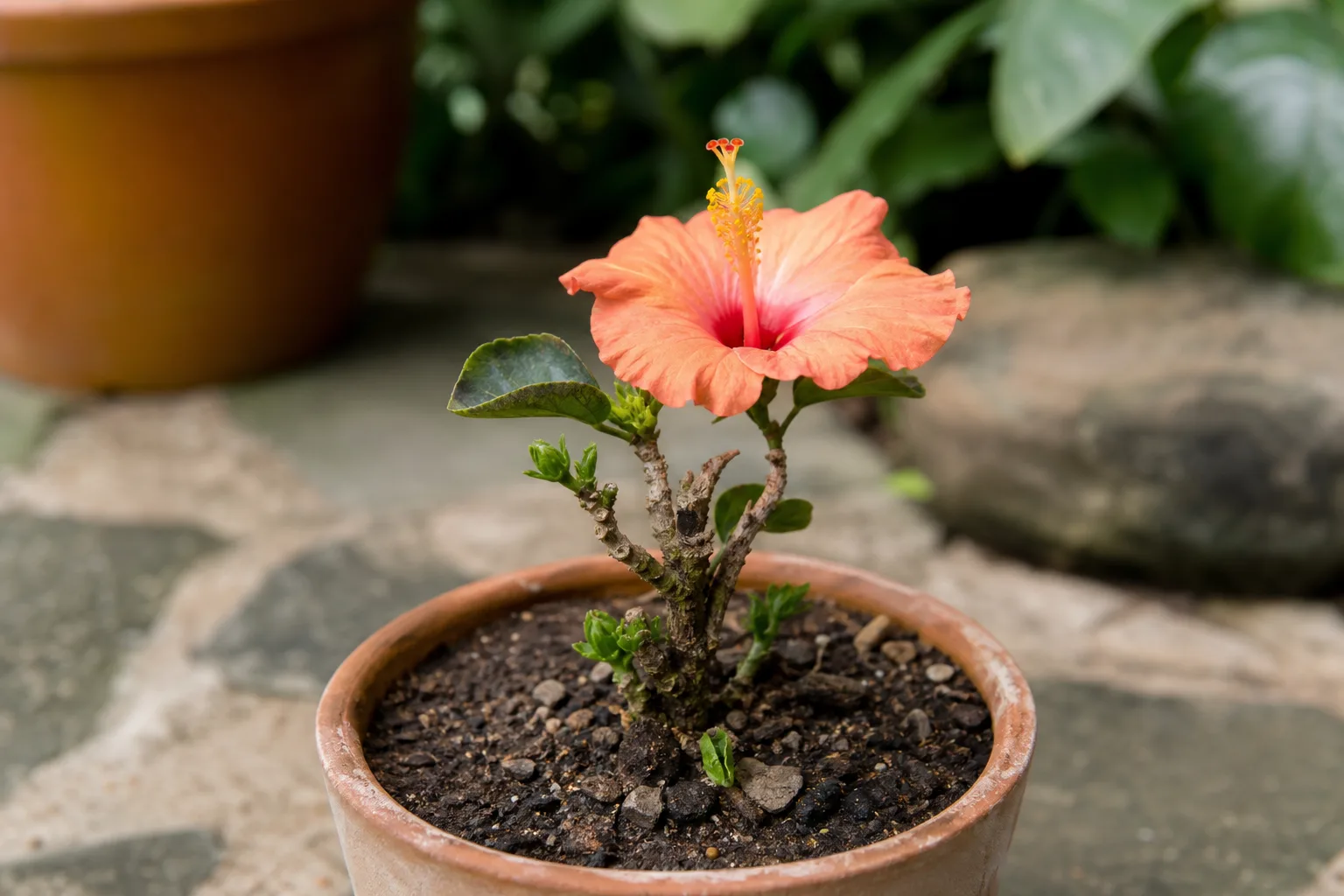
Slow Growth on Hibiscus: Causes, Checks & Fixes
This guide covers slow growth on Hibiscus. See also the general Slow Growth guide, watering, and light pages for this plant.
Slow Growth on Hibiscus: Causes, Checks & Fixes
Quick answer
Hibiscus is a sun-loving Malvaceae shrub-not a low-light foliage houseplant. Tropical Hibiscus rosa-sinensis shows a medium growth rate in good conditions and can push new shoots and flower buds steadily through warm months when it receives at least six hours of direct sun. A patio pot in full summer sun may add visible length and daily blooms; the same plant indoors in a dim winter room may show no new growth for eight to ten weeks while existing leaves stay green-that is often normal seasonal slowdown, not decline.
Slow growth becomes a problem when no new shoots or buds appear through an entire warm spring and summer, when every new leaf is smaller and paler than last season’s, or when growth stalls alongside wet soil, chill exposure, circling roots, or pest damage.
First step: count direct sun hours on the leaves during warm months, note how many weeks since the last new shoot opened, and peek at drainage holes for circling roots. That trio separates winter dormancy from light starvation, rootbound limits, nutrient issues, chill shutdown, and pest stress-before you stack repot, prune, and fertilizer on the same weekend.
What slow growth looks like on Hibiscus
Normal active-season pace vs. a true stall
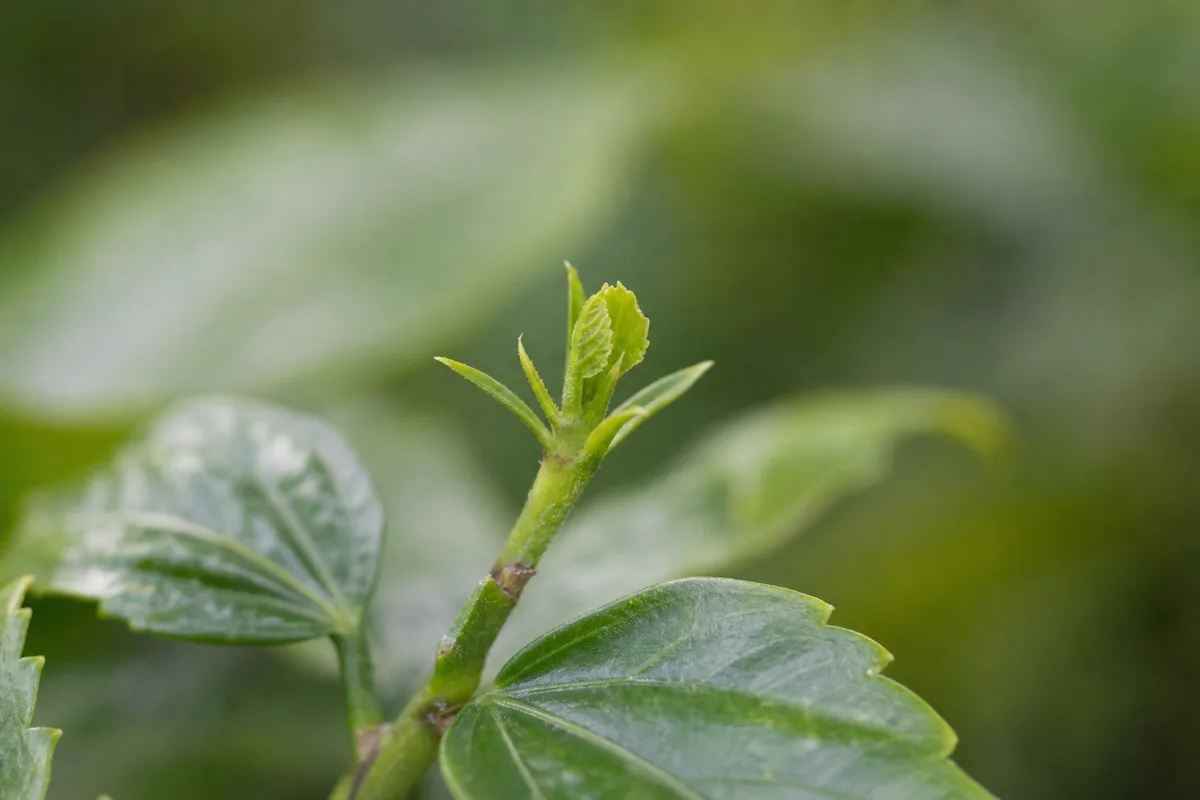
Slow Growth symptoms on Hibiscus - compare with healthy tissue on the same plant.
On a healthy tropical hibiscus in full sun during warm weather, expect moderate to fast visible growth: new tip leaves opening every one to three weeks on active branches, tight internodes, firm glossy foliage (for H. rosa-sinensis), and steady bud set when watering and temperature stay stable. LSU AgCenter notes almost non-stop blooming from spring through fall when sun, water, and feed align-flowers are the honest report card for vigor.
Slow growth as a symptom looks different:
- No new shoots or buds for eight or more weeks during March through September in a temperate home
- Each new leaf smaller, paler, or farther apart on the stem than leaves from six months ago
- Green foliage but zero buds for weeks despite warm temperatures-often light or phosphorus-related
- Water runs through the pot in seconds while growth stalls-rootbound or spent mix
- Soil stays wet for weeks in a dim corner with no new tissue-low light plus overwatering compound
- Sudden stall after nights below about 45–50°F (7–10°C) on tropical types-chill shutdown
Normal slow periods that are not emergencies:
- Winter indoor pause on tropical hibiscus-short days, cooler rooms, no buds for months
- Hardy H. moscheutos dormant-stems die back after frost; resprout from crown in spring is the growth event
- Rose of Sharon (H. syriacus)-woody deciduous shrub; spring wake-up is slower than tropical patio flush
- Two to three weeks after repot while roots settle in fresh mix
Visual comparison: active growth vs. stalled growth
Use this side-by-side mental picture when you inspect your plant-same species, different care contexts:
| What you see | Active growth (full sun, warm season) | Stalled growth (problem or winter rest) |
|---|---|---|
| New shoots | Fresh tip leaves every 1–3 weeks on several branches | No new tips for 8+ weeks in warm months-or expected pause in dim winter |
| Internodes | Short gaps between new leaf pairs; bushy tips | Long gaps, lean toward window, or static length for months |
| Buds & flowers | Bud initials and open blooms through warm months in strong sun | Zero buds for weeks despite warm temps-or normal bud absence in winter rest |
| Leaf color on new growth | Deep green (tropical), firm, size matches recent leaves | Pale, undersized, or yellow-veined new leaves |
| Pot dry-down | Mix dries on a predictable rhythm in bright light | Stays wet for weeks in shade, or races through in seconds when rootbound |
| Roots at drainage | White firm roots with room to expand | Dense circling mat, roots visible at holes |
| Season context | June patio pot in 6+ hours sun | January north window with 8 hours artificial daylight only |
If your plant matches the stalled column during warm bright months, treat it as a diagnostic problem. If it matches stalled in December with firm green leaves and reduced watering, seasonal rest is likely-recheck in March.
Expected growth rate for Hibiscus
Tropical H. rosa-sinensis (China rose, patio tropical)
NC State Extension lists a medium growth rate for Chinese hibiscus-faster than many foliage houseplants in warm full sun, but not instant. Container plants on sunny patios often look visibly taller and bushier within one summer. Indoors year-round without supplemental light, the same genetics may add little length for months while holding green leaves-survival mode, not peak performance.
Tropical hibiscus is best in full sun outdoors and often difficult to grow indoors year-round because window light rarely matches patio intensity. Judge indoor vigor by new shoots and buds, not whether old leaves look fine.
Hardy H. moscheutos and Rose of Sharon (H. syriacus)
Do not apply tropical patio expectations to hardy types:
- Hardy dinner-plate hibiscus dies back to the crown after frost and resprouts in late spring-months with no above-ground growth in winter is normal, not slow growth.
- Rose of Sharon is a deciduous woody shrub that wakes with other landscape shrubs; summer growth and late-summer bloom follow a different calendar than evergreen tropical pots.
If you bought a “hibiscus” that dropped all leaves after the first hard frost outdoors, you likely have a hardy perennial, not a stalled tropical plant. See the Hibiscus overview for type identification before you fertilize a dormant crown.
Why Hibiscus slows down
Ranked by how often they stall tropical patio and indoor specimens:
1. Insufficient full sun (most common limiter)
Hibiscus is built for open tropical light. Plants grown too shady become tall and leggy and inadequate light limits flowering even when foliage stays green. Below six hours of direct sun during active growth, photosynthesis drops, internodes stretch, bud set stops, and new shoot output stalls-often weeks before lower leaves yellow.
Dim rooms also slow pot dry-down, which invites root stress when summer watering rhythm continues in winter shade. Full light-and-water pairing: not enough light on Hibiscus and Hibiscus light needs.
2. Normal winter dormancy (not a problem)
Tropical hibiscus brought indoors before frost often pauses shoot growth from late fall through February. Short days, cooler rooms, and lower window intensity reduce metabolism. Leaves may stay green while no buds form for months. The RHS advises watering overwintering tropical plants only when the top layer dries and ceasing feed until spring-extra fertilizer does not jump-start a seasonal rest.
3. Rootbound container
Patio pots that bloomed heavily for two or three seasons often stall when roots circle drainage holes, water channels through dry mix in seconds, and the plant becomes top-heavy for pot size. Hibiscus can stay green while shoot output drops because stored root mass still supports existing foliage-stall precedes obvious wilt. Slightly root-bound tropical plants sometimes bloom heavily; severe crowding limits new growth. See Hibiscus repotting.
4. Overwatering and root stress in dim corners
Chronic wet mix in low light reduces root function. The plant looks static while soil stays damp for weeks-classic dim-corner trap. If lower leaves yellow with wet depth, inspect roots before feeding. Overwatering on Hibiscus and root rot cover wet-soil stalls.
5. Nutrient depletion or phosphorus buildup
Container hibiscus is a heavy feeder during active bloom but feeding a stalled dormant plant adds salt without photons. Conversely, months without feed in a busy summer pot can produce pale small new leaves. Worse: high-phosphorus bloom boosters accumulate and antagonize iron and zinc uptake, producing yellow new growth with green veins and bud failure despite green older leaves. Use high-potassium, low-phosphorus formulas during active growth per the Hibiscus fertilizer guide.
6. Chill exposure below 45–50°F (7–10°C)
Tropical hibiscus is not cold hardy. LSU AgCenter advises protecting plants from temperatures below 45°F. Prolonged chill stops growth, triggers leaf and bud drop, and can damage stems. A plant left on a cold porch or near a drafty door may stall for weeks after one cold night-even indoors afterward.
7. Pest stress on new growth
Spider mites, aphids, and scale attack tender new shoots first. A plant that starts a leaf then stalls with stippling, webbing, or sticky residue may be pest-limited. Check undersides with a magnifier before upgrading fertilizer. See spider mites on Hibiscus.
8. Recent repot, move indoors, or stacked care changes
Hibiscus drops buds when environment changes. Bringing a patio pot indoors, repotting, hard pruning, and feeding on the same week can pause growth for two to four weeks even when underlying care is correct. Stabilize placement first, then read new tip growth.
9. Type confusion (tropical vs hardy)
Expecting January shoot growth on a hardy crown that is correctly dormant, or winter bloom from a tropical plant in a dim room, creates false “slow growth” alarms. Identify type before corrective care.
How to confirm the cause
Work through this checklist in order:
- Calendar and type - Is it tropical, hardy, or Rose of Sharon? Is it late fall or winter with short days? Hardy outdoor dormancy is normal; tropical winter pause indoors is common.
- Direct sun hours - During warm months, count hours direct sun hits leaves. Fewer than six strongly points to light limit-see not enough light.
- New shoot and bud log - How many new tip leaves opened in the last eight weeks? Zero in summer is abnormal; zero in February may not be.
- New leaf size - Compare the newest leaf to one from last summer. Smaller, paler, or wider spacing confirms stress.
- Pot weight and moisture - Heavy wet pot with no growth suggests root stress. Light pot with wilt suggests drought-see underwatering and watering guide.
- Drainage-hole root check - Slide the plant slightly out or peek under the pot. Circling white roots at holes support rootbound diagnosis.
- Temperature - Note nights below 50°F (10°C) on tropical types, AC vents, and cold window glass.
- Feed history - High-phosphorus bloom booster use? Winter feeding on wet soil? Pause on feed until growth resumes.
- Pest scan - Stippling, webbing, sticky new tips on emerging growth.
Dormancy vs. stress stall comparison
| Pattern | Normal dormancy / season | Stress stall (needs action) |
|---|---|---|
| Timing | November–February indoors; winter hardy dieback outdoors | No shoots March–September in warm bright conditions |
| Existing foliage | Firm, mostly stable color | Yellowing, widespread drop, or pale new leaves |
| Buds | None for months in winter rest | None for weeks in summer full sun |
| Soil | Dries slowly; reduced watering appropriate | Chronically wet in shade, or instant channel-through when rootbound |
| Roots | Firm when checked | Mushy, sour smell, or severely circling with no room |
| Pests | None on new growth | Mites, aphids, or scale on tips |
| After fix | Growth resumes with March light and warmth | Needs light, repot, water, pest, or chill correction |
First fix for Hibiscus
Make one primary correction, then wait two to three weeks before stacking another.
If light is the confirmed limiter (warm season)
Move the pot to the sunniest location available-unobstructed south or west window indoors, or full patio sun outdoors after 7–14 days gradual acclimation. LSU AgCenter recommends six to eight hours of full direct sun daily for optimum performance. Do not repot, fertilize, or hard-prune the same day. Supplement with grow lights 12–18 inches above the canopy for 12–14 hours if the window falls short-inadequate light causes leggy stretch indoors.
If it is winter dormancy only
Reduce watering, skip fertilizer, and recheck in March when days lengthen. No repot, no bloom booster, no panic pruning.
If rootbound in early spring
Repot one size up with fresh well-drained mix-see repotting guide. Water once to settle; expect two to four weeks before new shoots. Do not jump two pot sizes.
If overwatering in a dim spot
Let the top inch (2–3 cm) dry before the next drink, improve light if possible, and inspect roots if stems soften. Growth cannot resume on anaerobic roots.
If nutrient issue after light is adequate
Resume half-strength high-potassium, low-phosphorus feed on moist soil only when new shoots are visibly forming in warm bright conditions. Flush salts if bloom booster was overused.
If chill exposure occurred
Move tropical plants to stable warmth above 60°F (15°C) away from drafts. Do not expect new growth until tissue stabilizes-may take several weeks.
If pests are on new tips
Isolate, rinse undersides, and treat the identified pest before expecting shoot expansion.
Recovery timeline
| Milestone | What to expect |
|---|---|
| Light upgrade in spring | Tighter new leaf pairs in 1–2 weeks; first bud initials in 3–6 weeks if warmth and water align |
| Winter rest | Growth resumes when day length and warmth increase-often March–April indoors |
| Spring repot from rootbound | 2–4 weeks pause, then new shoots; full vigor may take one warm season |
| Chill recovery | Stall may persist several weeks after warmth returns; damaged stems may not resprout |
| Corrected overwatering | First firm new tip leaf in 2–4 weeks if roots are still mostly firm |
Judge success by new shoots and bud set, not old leaf size or color. Stretched internodes from months in shade do not shorten-see leggy growth for reshaping after light improves.
What not to do
Do not fertilize a winter-dormant or dim-room plant hoping to force growth-salt stress without photons worsens yellow new leaves. Do not use high-phosphorus bloom booster on a stalled plant; phosphorus buildup stalls buds. Do not stack repot, hard prune, pesticide, and fertilizer the same week-hibiscus aborts buds when several variables change at once.
Do not confuse hardy winter dieback with tropical slow growth. Do not keep summer watering rhythm on a cool indoor winter plant. Do not expect patio growth rates from a north window in February without grow lights.
How to prevent slow growth next time
Align daily care with how hibiscus actually grows in your space:
- Place tropical pots where six or more hours of direct sun is realistic during the warm season-patio, south window, or grow lights.
- Know your type-tropical vs hardy vs Rose of Sharon-so winter behavior matches expectations on the overview.
- Repot every one to two years or when roots circle-before a full summer of zero shoots.
- Water when the top inch dries; cut frequency when winter light drops.
- Feed high-potassium, low-phosphorus at half strength every 1–2 weeks only during visible active growth.
- Bring tropical pots indoors before nights hit 45–50°F (7–10°C).
- Log new shoot count monthly in warm months so a stall shows early-not after an entire summer passes.
Pet safety when repotting or feeding to boost growth
The ASPCA lists Rose of Sharon (H. syriacus) as non-toxic to cats, dogs, and horses. Tropical hibiscus is widely regarded as low toxicity, but ingesting leaves, flowers, or fertilizer-contaminated soil can still upset pets. When repotting or feeding to correct slow growth, keep mix and runoff away from pets, empty saucers promptly, and contact a veterinarian if a pet shows repeated vomiting or lethargy after ingestion.
When to worry
Escalate when zero new growth through a bright warm spring pairs with wet sour soil, soft stems at the base, widespread yellowing, or sticky webbing on new leaves-inspect roots and pests today.
Patience is enough when leaves are firm, the calendar is winter, you repotted two weeks ago, or hardy stems are correctly dormant outdoors. A hollow stem with no firm shoots for two months after corrected care is an honest stopping point-consider propagation from healthy wood if any remains.
Related Hibiscus guides
- Hibiscus overview - tropical vs hardy types, growth rate, and troubleshooting order
- Light requirements - full sun placement, grow lights, and acclimation
- Watering - top-inch rhythm and seasonal adjustments
- Fertilizer - high-potassium feeding and phosphorus caution
- Not enough light - stretch, pale leaves, and bud failure before full stall
- Leggy growth - long internodes when light-not general slowness-is the issue
- Overwatering - wet-soil stall in dim corners
- Root rot - sour soil and soft stems
- Repotting - rootbound recovery timing
- Spider mites - pests limiting new shoot expansion