Yellow Leaves on Hibiscus: Causes, Checks & Fixes
Quick answer
Yellow leaves on tropical hibiscus usually trace to watering imbalance, chill below 45°F (7°C), low light, pests, or normal lower-leaf aging-not missing fertilizer. First step: probe the top inch of mix, lift the pot for weight, and inspect leaf undersides before changing feed or repotting.
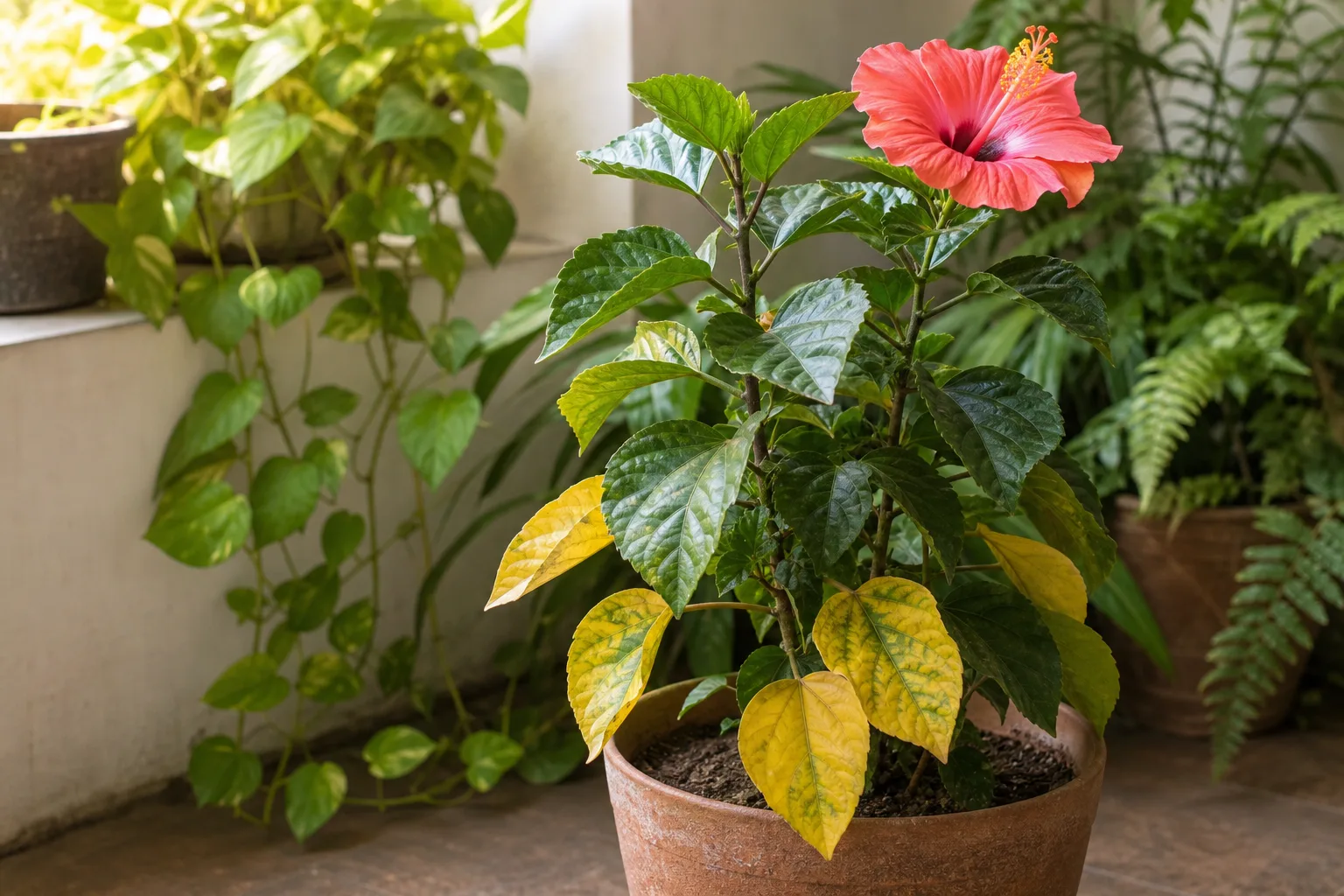
Yellow Leaves on Hibiscus: Causes, Checks & Fixes
This guide covers yellow leaves on Hibiscus. See also the general Yellow Leaves guide, watering, and light pages for this plant.
Yellow Leaves on Hibiscus: Causes, Checks & Fixes
Quick answer
Yellow leaves on tropical hibiscus (Hibiscus rosa-sinensis) are a symptom, not a single diagnosis. This woody evergreen shrub pushes big glossy leaves and constant buds in warm weather-so it shows stress early through lower-leaf yellowing, bud drop, or wilt before the whole plant collapses.
First step: probe the top inch (2–3 cm) of mix, lift the pot for weight, and scan leaf undersides for pests. Wet heavy soil with limp yellow lower leaves points to overwatering or root stress-not thirst. A feather-light pot with crisp yellow edges points to drought. Chill below about 45°F (7°C), drafty doorways, and the shift from patio to dim indoor rooms cause rapid yellow-and-drop without any watering mistake.
Do not fertilize a stressed hibiscus on day one. Fix moisture, light, and temperature first-then feed only after branch tips push firm green leaves for two weeks. See the hibiscus overview yellow-leaves FAQ and watering guide for the full care rhythm this page builds on.
Tropical vs hardy hibiscus - why type matters
Yellow-leaf troubleshooting starts with which hibiscus you own, because winter behavior and normal aging differ sharply.
Tropical hibiscus (H. rosa-sinensis) is a woody evergreen shrub with small, dark green, glossy leaves and soft shrubby stems. It needs warm temperatures, bright light, and consistent moisture in containers. Outdoors it survives only in frost-free climates; everywhere else it comes indoors before nights drop toward 45–50°F (7–10°C). Yellow lower leaves on a blooming patio pot in October often mean chill, reduced light, or overwatering on the new indoor schedule-not a nutrient crisis.
Hardy hibiscus (H. moscheutos) is an herbaceous perennial with larger, matte, heart-shaped leaves that dies back to the crown after frost. Fall yellowing and complete leaf drop outdoors is normal dormancy, not a watering emergency. Rose of Sharon (H. syriacus) is a woody deciduous landscape shrub that yellows and drops leaves in autumn as part of its cold-season cycle.
If your plant has glossy leaves and arrived as a summer patio specimen, treat it as tropical until proven otherwise. The rest of this guide focuses on container tropical hibiscus, with notes where hardy types differ.
What yellow leaves look like on Hibiscus
Hibiscus yellows leaves in recognizable patterns once you know what to match against pot weight, light, and recent moves.
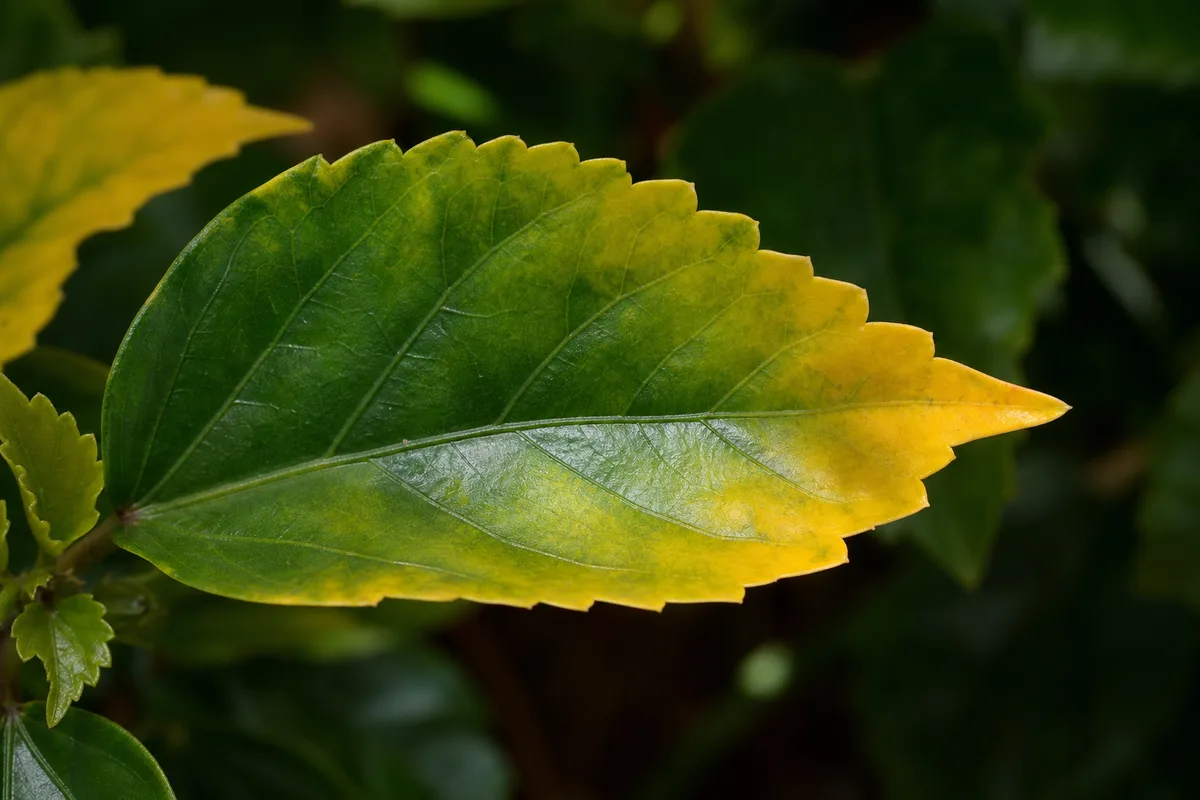
Yellow Leaves symptoms on Hibiscus - compare with healthy tissue on the same plant.
Normal lower-leaf aging on blooming tropical types
On a healthy tropical hibiscus in active growth, one or two older lower leaves may fade to yellow over weeks while branch tips stay firm and buds keep forming. That pattern is common on woody shrubs that shed spent foliage as they push new shoots at stem tips-not a rosette crown pattern. Remove fully yellow leaves by hand to reduce pest hiding spots. Widespread yellowing climbing up the stem while tips wilt is not normal aging.
Overwatering (limp yellow lower leaves, wet heavy pot)
Overwatered hibiscus often shows limp, soft yellow lower leaves while the mix stays wet and the pot feels heavy. The plant may wilt even though you watered recently-the classic wilt-on-wet-soil paradox that means roots are struggling, not that the plant needs more water. Bud drop often precedes widespread leaf damage. Sour smell, fungus gnats, or surface mold on wet mix raise rot risk-see overwatering on hibiscus and root rot on hibiscus.
Underwatering (crisp yellow leaves, light dry patio pot)
Drought-stressed hibiscus in full summer sun wilts in afternoon heat, drops tight green buds, and develops dry yellow or brown-edged leaves on a light, dusty pot. The top inch of mix is bone dry several centimeters down. Crisp texture and fast recovery after a deep soak distinguish drought from rot. Full detail lives on underwatering on hibiscus.
Chill and draft stress (rapid yellow-and-drop below 45–50°F)
Tropical hibiscus cannot withstand extreme temperature swings. Prolonged exposure below about 45°F (7°C)-an open doorway, an unheated garage, or leaving a patio pot out too late in fall-causes rapid yellowing and leaf drop, often with bud loss, even when soil moisture looks fine. Moving indoors before the furnace dries the air helps, but expect some lower-leaf drop from the combined shock of less light, lower humidity, and changed watering uptake.
Low light (pale leggy growth, few buds)
Hibiscus blooms best with full sun-at least six hours of direct light daily. In dim rooms, upper leaves may pale or yellow while stems stretch toward the window and bud set stalls. Leggy pale growth with yellowing upper foliage fits not enough light on hibiscus better than a root problem-especially if the pot dries slowly because the plant is barely photosynthesizing.
Spider mites and aphids (stippling, honeydew, coated new growth)
The most common hibiscus pests-aphids and spider mites-both cause yellowing, but the pattern differs from watering stress. Aphids cluster on flower buds and tender new shoots, leaving sticky honeydew and sometimes curled youngest leaves-see aphids on hibiscus. Spider mites cause fine yellow or white stippling on glossy leaves, often with webbing at leaf bases in dry heated winter air-see spider mites on hibiscus. Pest yellowing can overlap with drought indoors; always inspect undersides before assuming moisture alone will fix the problem.
Nutrient stress and iron chlorosis (yellow with green veins)
After chronic wet roots, long-term container culture, or alkaline tap water, older leaves may yellow while veins stay green-a pattern called iron chlorosis. Fix drainage and moisture rhythm before reaching for fertilizer. Feeding waterlogged or cold-stressed roots worsens salt buildup and can accelerate yellowing. The hibiscus fertilizer guide covers timing; this page covers when not to feed.
Why Hibiscus gets yellow leaves
Hibiscus belongs to the Malvaceae family-plants that prefer steady moisture, warm temperatures, and bright light. Stress shows first as bud drop and leaf yellowing before obvious pest colonies or mushy roots appear.
Watering rhythm mismatches are the leading cause on container plants. Summer patio pots in full sun may need water when the top inch dries daily; the same plant indoors in November dries far slower. Calendar watering that worked in August overwaters in December-and yellow leaves on hibiscus are often caused by abrupt changes in soil moisture, air temperature, or drafts.
Environmental sensitivity compounds the problem. Chinese hibiscus is sensitive to environmental changes-moving from patio to living room, blasting heat from a radiator, or opening a cold entryway near the pot triggers leaf drop even when you change nothing else.
Heavy drinking in heat means underwatering yellows leaves differently: crisp dry edges on a light pot in blazing sun. Malvaceae roots should be kept moist with good drainage-long dry spells and soggy stagnant mix both produce yellow foliage.
Low light indoors reduces the plant’s ability to use water and nutrients efficiently. A summer watering schedule in a dim winter room keeps mix wet too long, yellowing lower leaves while upper growth goes pale and leggy.
Pests exploit dry indoor air. Spider mites surge when humidity drops below about 30% in heated homes. Aphids multiply on soft new growth during warm active months.
Normal senescence on actively blooming tropical hibiscus sheds the oldest lower leaves as branch tips push new glossy foliage-a harmless pattern if tips and buds look healthy.
How to confirm the cause
Work through this checklist before repotting, fertilizing, or spraying:
- Top-inch moisture - Push your finger 2–3 cm into the mix near the stem. Wet several centimeters down with a heavy pot suggests overwatering. Bone dry throughout suggests drought.
- Pot weight - Lift the container. Heavy after days without watering fits rot risk; feather-light in full sun fits drought.
- Leaf texture and pattern - Limp soft yellow lower leaves on wet mix vs. crisp yellow edges on dry mix. Stippling and webbing on undersides vs. uniform yellowing.
- Recent environment - Indoor move, frost exposure, drafty doorway, or radiator blast in the last week? Chill and transition stress yellow leaves without thirst.
- Light level - Leggy pale stems with few buds in a north window point to light before fertilizer.
- Pest scan - Check swelling buds, branch tips, and leaf undersides for aphids, stippling, or fine webbing.
- Bud status - Dropping tight green buds with dry soil suggests drought; bud drop on wet heavy soil suggests root or temperature stress.
- Plant type - Glossy evergreen tropical vs. matte hardy perennial changes whether fall outdoor yellowing is an emergency.
Lookalike quick reference
| Pattern | Pot / soil | Branch tips | Likely cause |
|---|---|---|---|
| Limp yellow lower leaves, wilt on wet soil | Heavy, wet, may smell sour | Wilting, buds drop | Overwatering / root rot |
| Crisp yellow edges, afternoon wilt | Light, dusty dry | Limbs recover after soak | Underwatering |
| Rapid drop after cold night or indoor move | Moisture unchanged | Tips may stay green briefly | Chill / transition stress |
| Pale leggy upper leaves, no buds | Dries slowly | Stretching toward light | Not enough light |
| Stippling, webbing, honeydew | Either | Newest tissue damaged | Spider mites / aphids |
| One or two lower leaves over months | Stable | Firm tips, blooming | Normal aging |
First fix for Hibiscus
Match your first action to the most likely cause from the checklist-not a bundle of treatments.
If soil is wet and the pot is heavy: Pause watering until the top inch dries. Confirm drainage holes are open and empty any saucer water. Do not fertilize. If many leaves yellow while soil stays soggy, inspect roots the same day-see root rot on hibiscus.
If soil is dry and the pot is light: Soak the root ball thoroughly until water runs from drainage holes, then drain fully. One deep drink beats daily splashes that never reach bottom roots.
If chill or a recent indoor move is the trigger: Move the plant to a bright stable spot above 55°F (13°C) away from drafts and radiator blasts. Hold water steady-do not drench a plant that is already in wet mix just because it dropped leaves.
If stippling, webbing, or aphids are present: Rinse leaf undersides and buds with a firm water stream before any spray. Isolate from other plants if mites are spreading.
If light is clearly insufficient: Move to the brightest window or add supplemental grow light before changing fertilizer.
Only after moisture, light, and temperature stabilize for two weeks-and new branch-tip leaves look firm and green-resume feeding at half strength during active growth. Cease feed during overwintering dormancy per the overview guide.
Remove fully yellow spent leaves by hand. When trimming near pets, note that the ASPCA lists Rose of Sharon (H. syriacus) as non-toxic to cats and dogs; eating any hibiscus foliage can still cause mild stomach upset-keep dropped leaves out of reach.
Recovery timeline
Mild stress from a single missed watering or one cold draft often stabilizes within one to two weeks once the environment and moisture rhythm match what the roots need. Lower yellow leaves may drop; watch for new glossy leaves at branch tips and buds that stay attached.
Moderate overwatering recovery without mushy roots may take two to four weeks of corrected drainage and dry-down cycles before new growth looks vigorous. Fully yellow leaves do not turn green again-judge success by fresh tip growth, not old foliage.
Chill or indoor-transition drop can look dramatic for one to three weeks, then pause as the plant acclimates. Do not repot during this window unless roots are visibly rotting.
Pest-related yellowing stops spreading within one to two weeks of consistent rinsing and treatment once humidity and watering also stabilize.
If yellowing climbs the stem while branch tips wilt on wet soil after four weeks of corrected care, escalate to root inspection or consider whether the pot is oversized and holding stagnant mix.
What not to do
Do not fertilize stressed, waterlogged, or cold-shocked hibiscus-salt buildup on damaged roots worsens yellowing.
Do not increase watering when the plant wilts on already wet soil; that deepens root damage.
Do not assume every yellow leaf needs repotting on day one. Confirm cause first unless roots are mushy and smelly.
Do not treat spider mites with insecticides labeled only for insects-mites need oils or miticides.
Do not keep tropical hibiscus outdoors once nights approach 45°F (7°C) expecting leaves to toughen up-they will yellow and drop.
Do not judge recovery by whether old lower leaves re-green. Woody hibiscus renews from branch tips, not a central crown.
How to prevent yellow leaves next time
Treat watering as a pot-drying rhythm, not a calendar rule-check the top inch before every drink. Match summer patio frequency to winter indoor slowdown as described in the watering guide.
Bring tropical containers indoors before frost and before extreme indoor heat dries the air. Acclimate gradually between patio and house to minimize transition drop.
Give hibiscus six or more hours of direct light when possible-the light guide covers placement and grow lights.
Scout buds and leaf undersides weekly during warm growth and dry winter heating season.
Use well-draining, slightly moisture-retentive mix and right-sized pots-see soil guide. Empty saucers within thirty minutes after watering.
Hold fertilizer during overwintering and resume only when spring growth returns firm and green.
Related Hibiscus guides
- Hibiscus overview - tropical vs hardy ID, yellow-leaves FAQ, winter protocol
- Watering hibiscus - top-inch checks, seasonal rhythm, saucer drainage
- Overwatering · Underwatering · Root rot
- Not enough light · Aphids · Spider mites
- Fertilizer - when to feed after stress recovery
Conclusion
Yellow leaves on hibiscus reward systematic checking: wet heavy pot vs. light dry container, chill exposure vs. thirst, stippling vs. uniform fade, one spent lower leaf vs. climbing wilt. Fix the most probable stressor first-usually moisture rhythm, temperature stability, or light-then watch branch tips for glossy new growth and attached buds. That is the signal this woody tropical shrub is back on track.