How to Prune Hibiscus: When, Where & What to Cut
How to Prune Hibiscus: When, Where & What to Cut
How to Prune Hibiscus: When, Where & What to Cut
Quick Answer
First action: remove dead, damaged, or diseased branches back to live wood or their point of origin-before any shaping, pinching, or bloom-focused cuts.
Hibiscus flowers on new wood-stems produced during the current growing season-so timing and cut placement directly control bloom count. Do major structural work in late winter through early spring, before the main growth surge. On tropical hibiscus, pinch soft branch tips in spring and mid-summer to increase branching; on hardy rose mallow, cut last year’s stems to the crown each spring. Cut 5–10 mm (about ¼ inch) above a healthy node, favor outward-facing buds when shaping, and avoid hedge shears if flowers matter more than a flat green wall.
Know Your Hibiscus Type Before You Cut
The most important pruning decision happens before you open a blade: identify which hibiscus you own. Garden centers label many plants simply “hibiscus,” but ornamental types differ in cold hardiness, dieback habit, and how hard you can cut in one session. All major types flower on new growth, yet they do not share the same pruning calendar.
Tropical Hibiscus (Hibiscus rosa-sinensis)
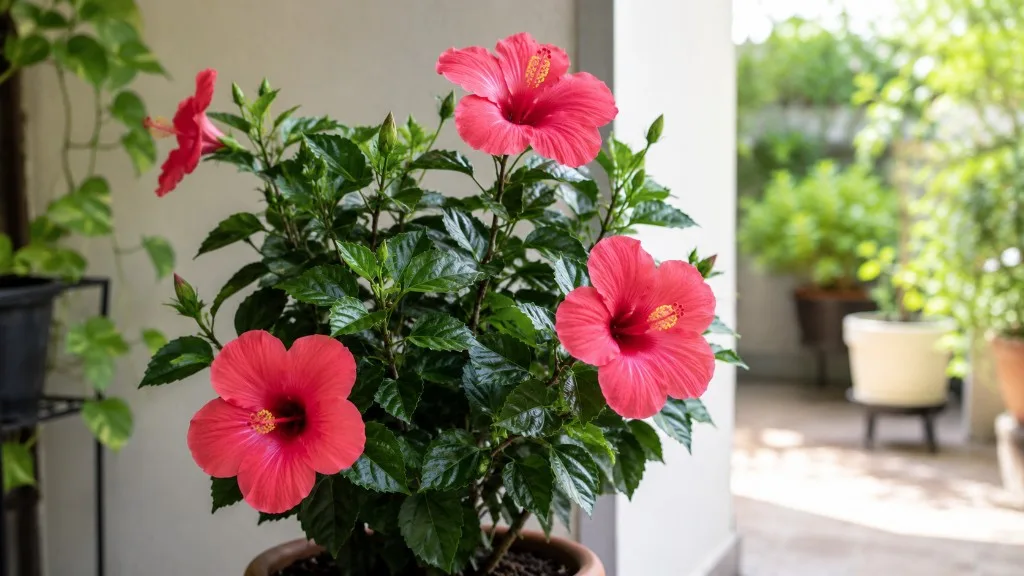
Tropical hibiscus-Hibiscus rosa-sinensis, also called Chinese hibiscus or China Rose-is the glossy-leaved, everblooming shrub sold for patios, balconies, and conservatory growing. It is root-hardy outdoors in USDA zones 9–11 and is widely grown in containers elsewhere. Individual flowers last only a day or two, but healthy plants push successive flushes through the warm season when light, water, and feeding align.
Tropical hibiscus needs light to moderate pruning, not the ground-level reset you give a dormant hardy perennial. UF/IFAS Extension recommends maintaining a natural arching form with hand pruners rather than shearing, because shearing removes developing flower buds. Pinching branch tips in spring and mid-summer increases flower production on this type. Severe summer pruning removes buds and reduces flowering for a noticeable stretch-critical if your goal is color, not just a smaller silhouette.
Hardy Hibiscus and Rose Mallow (Hibiscus moscheutos)
Hardy hibiscus-Hibiscus moscheutos and close relatives-is the perennial that dies back in winter and returns with large late-summer flowers. It is root-hardy in USDA zones 4–9 and is often the last perennial to emerge in spring, sometimes not showing shoots until late May in northern gardens. Do not assume the plant died because it wakes slowly.
Because hardy hibiscus freezes back annually, hard spring pruning is normal care, not an emergency measure. Missouri Botanical Garden advises cutting back stems to approximately 3–4 inches in late autumn before new spring shoots emerge; many growers wait until basal shoots appear and cut remaining stems to about 6 inches (15 cm) above the crown. You are resetting a herbaceous perennial that blooms on fresh annual shoots-not tip-pinching a permanent woody frame.
Rose of Sharon (Hibiscus syriacus)
Rose of Sharon-Hibiscus syriacus-is a deciduous shrub hardy in USDA zones 5–9 that leafs out slowly and blooms in late summer. It flowers on new wood like the other types, which is why wrong timing is a common reason it underperforms.
Rose of Sharon accepts moderate spring pruning-often up to one-third of length-before new growth begins, with removal of dead, weak, and crossing branches. It does not need the ground-level cut of hardy rose mallow, but it also should not receive the light year-round tip work you might give a frost-free tropical plant. Treat it as a long-lived shrub with a permanent branch framework that you renew on the outer layer each spring.
What Pruning Does for Hibiscus
Unpruned hibiscus pushes long shoots toward the strongest light. Flowers cluster at the tips because buds form on relatively young, well-lit stems. The result is color at the ends, bare wood underneath, and a canopy so dense in the wrong places that inner buds never develop.
Pruning redirects vigor into manageable structure and fresh lateral shoots-the wood that actually carries blooms. It cannot fix chronic shade, soggy roots, or heavy nitrogen feeding; those conditions produce leaves, not flowers. Treat pruning as shape and bloom-cycle management on a plant that already gets adequate sun and consistent moisture.
New Wood, Nodes, and Flowering Biology
NC State Extension states that Chinese hibiscus flowers bloom on new growth. When you shorten a stem, dormant buds near the cut and along the remaining branch often activate, especially once the stem receives better light. A cut made just above a healthy node-the slightly swollen point where a leaf or side branch attaches-typically produces one or more new shoots from buds at that node.
Each flower bud forms at or near the tip of a maturing shoot once the stem has enough light and age. Pinching or shortening those shoots before they become long and leggy multiplies the endpoints where buds can form. UF/IFAS specifically recommends pinching developing branch tips in spring and mid-summer on H. rosa-sinensis to increase flower production-a low-risk technique that counts as pruning even when you use fingernails on soft new growth.
What to Check Before You Cut
Walk the plant in good light before choosing a blade. Look for:
- Dead or frost-killed tips - gray, brittle wood with no green under a light bark scratch
- Crossing or rubbing branches - bark wounds that invite disease in humid climates
- Weak interior spindles - thin shoots that steal energy without ever flowering
- Spent flowers and seed pods - on tropical types, old blooms can linger and signal where to deadhead
- Pest clusters at tips - aphids often concentrate on tender new hibiscus growth
- Overall stress - recent transplant, drought wilting, or heavy bud drop suggests delaying hard cuts
If the plant was moved, repotted, or brought indoors for winter within the past few weeks, limit yourself to deadwood removal until growth stabilizes. Stacking structural pruning on top of environmental shock is a common reason hibiscus sits idle for weeks after an otherwise “safe” cut.
When to Prune Hibiscus
Timing splits into three categories: annual structural work, post-flush maintenance, and anytime emergency cleanup. Confusing them is the most common scheduling mistake.
Late-Winter and Early-Spring Structural Window
The best time for major hibiscus pruning is late winter through early spring, before the main growth surge and before flower buds form on the shoots you want to keep. RHS growing guidance recommends shortening the previous season’s growth in February or early March to leave a flowering framework, and removing up to one-third of woody growth if the plant is overgrown.
For hardy hibiscus, late winter to very early spring is when you cut last year’s dead stems to the ground or to a few inches above the crown. For Rose of Sharon, prune in early spring before leaves fully expand. For tropical hibiscus in frost-free climates, save larger renovation projects for early spring when recovery is fastest.
Container growers face one extra decision. If a tropical hibiscus sits in a bright indoor window all winter, RHS guidance supports pruning in February or early March. If it overwinters in a cool, dark basement or garage, wait until spring when you move it back to strong light-regrowth in dim storage produces weak, leggy shoots.
Post-Bloom Light Pruning Through the Season
Once a major flush finishes on tropical hibiscus, light pruning after flowering keeps the bloom cycle going. Either deadhead spent blooms or shorten bloomed stems by about one-third to a healthy node to redirect energy into new flowering shoots. Combine that with tip pinching through spring and mid-summer as UF/IFAS describes-removing the soft terminal inch or two of fast-growing shoots to force side branches.
Do not perform maintenance while flowers are at peak display unless you accept losing the show. Wait until individual blooms wilt-tropical flowers last about a day-and until a stem’s flush is visibly winding down. On Rose of Sharon, which blooms heavily in late summer, spring pruning is the main shaping event; mid-season work should stay limited to deadheading and minor corrective cuts.
Emergency Cuts Any Time
Dead, diseased, damaged, or dangerously placed branches come out as soon as you notice them-wind-snapped stems, cankered branches, rubbing wood, or shoots blocking walkways. UF/IFAS notes that canker on hibiscus can kill branches or entire plants and that infected branches should be pruned out promptly. This is sanitation, not bloom management.
Likewise, remove suckers from the base if you are training a single-trunk standard, and trim frost-killed tips back to live wood as soon as you can identify where green cambium resumes. Scratch the stem lightly: green or moist cream underneath means live tissue; dry brown means keep cutting lower.
The First Cut to Make
Start with whole-branch removal of dead, damaged, and diseased wood-not with a flat pass across the outer canopy. Trace problem branches back to a main trunk or healthy lateral and remove them in one clean cut. On tropical hibiscus, dead wood is often tip dieback from frost, drought, or indoor winter stress; trim back to the first firm green node rather than assuming the whole branch is lost.
On hardy hibiscus in early spring, “dead wood” often means last year’s entire stem skeleton above the crown. Cut those stems once you see where basal shoots are emerging. Clearing dead material first reveals the live framework so you can judge thinning and shortening without hiding problems inside a leafy shell.
How to Prune Hibiscus Step by Step
Work from the inside out, stepping back every few cuts to judge symmetry and airflow.
- Inspect in good light, noting dead tips, crossing branches, weak interior spindles, and the shape you want.
- Remove dead, damaged, and diseased wood back to live tissue or branch origin; use loppers on thick canes.
- Thin congested interior stems by removing selected older branches at their point of attachment.
- Shorten remaining long shoots to a node 5–10 mm above an outward-facing bud, especially after bloom flushes on tropical and Rose of Sharon plants.
- Pinch or tip-prune soft new growth on tropical hibiscus in spring and mid-summer to encourage lateral branching.
Where to Place Each Cut
Position the blade 5–10 mm (about ¼ inch) above a healthy node, ideally one with an outward-facing bud if you are shaping an open shrub form. Angle the cut slightly so water sheds away from the bud on horizontal stems. If a stem already shows tiny new leaves below a faded flower, that node is your target.
Leaving a long naked internode above a node invites dieback; cutting flush into the node damages the buds you need. On thick woody canes, a single clean bypass cut heals faster than multiple hesitant trims up the same branch.
Tools and Sanitation
Hibiscus stems range from soft green tips you can pinch with fingers to woody canes that need bypass pruning shears or loppers. Bypass blades make clean scissor cuts; anvil pruners crush living tissue. Wipe blades with rubbing alcohol or a 10% bleach solution when moving from a diseased stem to healthy wood, or between plants when disease has been present.
Skip wound sealants and pruning paints; hibiscus heals best from clean, open cuts in dry air. Wear gloves when handling cut material if pets or children might contact fallen stems-ASPCA lists hibiscus as toxic to cats and dogs, causing vomiting and diarrhea if ingested.
How Much You Can Safely Remove
The safe amount depends on species, season, and plant health-not enthusiasm.
For annual structural pruning on tropical hibiscus and Rose of Sharon, removing up to one-third of total length and volume in a single late-winter or early-spring session is a widely used guideline on healthy established plants. RHS guidance describes shortening previous season’s growth to leave a flowering framework, with stronger shoots reduced to 4–7 cm (2–3 inches) from the base on very vigorous wood.
Hardy hibiscus routinely accepts cutting all previous-year stems to the ground or to about 6 inches (15 cm) above the crown because the plant’s natural cycle expects that reset.
Post-flush tip pruning on tropical types is measured in inches, not fractions of the whole plant. Pinching 1–3 inches (2.5–7.5 cm) of soft terminal growth in spring and mid-summer is standard bloom encouragement per UF/IFAS. Scalping every shoot to the same height in midsummer removes developing buds across the canopy.
A drought-stressed, recently transplanted, or post-frost-shocked hibiscus should receive light corrective cuts only until normal growth resumes. If you need dramatic size reduction on tropical hibiscus, prefer one well-timed early-spring cut over three aggressive summer cuts that repeatedly remove immature flowering wood.
Pruning Containers, Hedges, and Standards
Container tropical hibiscus stays smaller but follows the same new-wood bloom biology. Root restriction often concentrates flowering once the plant is slightly pot-bound, but recovery from a hard cut depends on strong light and consistent moisture afterward. Time the main prune for the week you move the pot to its summer position-not during dim indoor months when regrowth is weak.
In-ground hedges are where hibiscus pruning most often goes wrong. UF/IFAS explicitly warns that shearing hibiscus into formal hedges removes developing flower buds; train a less formal hedge with a hand pruner instead. If uniform height matters more than flowers, choose a different hedge species.
Standards-tree-form plants on a single trunk-require ongoing removal of shoots below the head and periodic shortening of crown branches. Preserve a clear structural skeleton and renew flowering wood on the outer crown each spring rather than trying to maintain bloom on shaded interior twigs inside the head.
Recovery After Pruning
Regrowth after a moderate prune can look sparse for a week and then suddenly fill in. That temporary thinness is normal. In warm active growth, new shoots often appear within two to four weeks near cut nodes. The next serious flower flush on lightly pruned tropical plants often follows four to eight weeks later depending on heat and daylight.
After a major structural cut, give the plant Hibiscus light guide (tropical types want at least six hours of direct light daily for strong flowering), consistent moisture without waterlogging, and a two-to-three-week pause on heavy fertilizer so new shoots harden before you push soft nitrogen growth. Once new shoots reach 2–3 inches (5–8 cm), resume balanced feeding at label strength, especially in containers where nutrients leach quickly.
Signs pruning worked: fresh lateral shoots emerging from nodes, tighter internodes on pinched tips, improved airflow through the center, and bud swell on maturing outer shoots within a few weeks in warm weather. Signs something went wrong: prolonged leaf drop, no new shoots after four weeks in active warmth, or soft aphid-covered tips suggesting the plant was over-fertilized immediately after a hard cut.
Mistakes to Avoid
Heavy pruning in summer is the most common bloom killer on tropical hibiscus and Rose of Sharon. Because these plants flower on new growth, summer hard cuts remove the shoots preparing to open. UF/IFAS states plainly that severe summer pruning on H. rosa-sinensis removes flower buds and reduces flowering for a period of time.
Shearing like a formal hedge produces clipped stubs that stay vegetative and shed buds you never see form. Pruning during peak bloom wastes the growth cycle that already invested energy in opening flowers. Cutting too much on a stressed plant stalls recovery for months. Leaving long stubs above nodes dies back unsightly and blocks clean branching. Treating hardy hibiscus like tropical hibiscus leads to timid tip trims when the plant needed a full spring cutback, or vice versa.
Another subtle error is never thinning the interior, only shortening exterior whips. The plant looks round briefly, then sends all new color to the outer shell again. True maintenance alternates between removing selected old canes at the base and tip-pruning or post-flush shortening on the renewed outer layer.
If you pruned at the wrong time, the fix is usually patience plus good culture-not another immediate hard cut.
Conclusion
Hibiscus pruning works when you match the cut to the species and the season. Identify whether you are growing tropical hibiscus, hardy rose mallow, or Rose of Sharon before choosing intensity-hardy types want a spring reset to the crown; tropical and shrub types want moderate early-spring shaping plus post-flush light cuts. All flower on new wood, so a late-winter or early-spring structural session before the main growth surge sets the year’s shape.
Start by removing dead, damaged, and diseased wood. Cut just above nodes with sharp bypass tools, favor hand pruning over hedge shears if blooms matter, and never remove more than one-third of a tropical or Rose of Sharon plant in one session unless you are deliberately renovating an overgrown specimen and accept a bloom pause. Watch for new shoots within two to four weeks in warm weather as proof your cuts landed correctly.
When to use this page vs other Hibiscus guides
- Hibiscus overview - Start here for whole-plant context before deep-diving this topic.
- Hibiscus problems hub - Jump to symptom-specific fix guides when this care topic does not resolve the issue.
- Leggy Growth on Hibiscus - Escalate here when pruning adjustments are not enough.
- Slow Growth on Hibiscus - Escalate here when pruning adjustments are not enough.
- Brown Tips on Hibiscus - Escalate here when pruning adjustments are not enough.