Mogra Plant Care Guide: Jasminum sambac Indoors
Jasminum sambac
Mogra needs 5–6+ hours direct sun, consistent moderate moisture, biweekly feeding with flowering fertiliser, and pruning after each bloom flush. Non-toxic to pets.
Mogra Plant Care Guide: Jasminum sambac Indoors
Start with wateringThe most common care mistake for MograWatering guide →Mogra care essentials
Light
full sun to partial shade - 4–6 hours of direct sun for prolific flowering
Water
Every 2–4 days during active growth - keep soil moderately moist. Allow top 2–3 cm to dry. Reduce in winter. Consistent moisture prevents bud drop.
Soil
Well-draining potting mix with 15 % perlite and 10 % compost. Moderately moisture-retaining. pH 6.0–7.5.
Humidity
Moderate to high (50–70%); native to tropical Asia and thrives in Indian conditions
Temperature
20°C to 35°C (68–95°F)
Fertilizer
Use high-potassium liquid fertilizer or rose fertilizer to promote abundant blooms and stop if the plant is stressed, newly repotted, or not actively growing. High-nitrogen fertilizers - cause excessive foliage at the expense of flowers.
About Mogra
Mogra is native to South and Southeast Asia (Indian subcontinent origin), typically reaches 0.5–3 m tall depending on variety and training indoors, with moderate to fast in warm weather growth. Mogra has a bushy growth habit and part of the Oleaceae family. It is also known as Arabian Jasmine, Motia, Mallige, Gundu Malli, and Sampaguita.
| Detail | Information |
|---|---|
| Also known as | Arabian Jasmine, Motia, Mallige, Gundu Malli, Sampaguita |
| Native region | South and Southeast Asia (Indian subcontinent origin) |
| Mature size | 0.5–3 m tall depending on variety and training |
| Growth rate | Moderate to fast in warm weather |
| Growth habit | Bushy |
| Scientific name | Jasminum sambac |
| Family | Oleaceae |
Mogra Plant Care Guide: Jasminum sambac Indoors
You can keep a Mogra alive in a dim corner. You usually cannot make it bloom there. Mogra - the intensely fragrant jasmine known across India as Motia, Mallige, or Bela, and internationally as Arabian jasmine - is a tropical flowering shrub whose white blossoms are the whole point of growing it. The botanical name is Jasminum sambac, a member of the Oleaceae (olive) family native to India or Southeast Asia and cultivated throughout South and Southeast Asia. When the flowers show up, they open in the evening, perfume the air within minutes, and fade by morning. When they do not show up, the problem is almost always environmental, not mystical.
This guide is built for the grower who wants real blooms, not just glossy leaves. By the end you should know which Mogra variety you likely have, how much direct sun it needs, how to water without losing buds, when and how to prune for the next flush, what soil and feed support fragrance, and how to avoid the most expensive mistake in jasmine care: buying the wrong plant because the label said “jasmine.”
What Mogra Is (and Why It Is Not Every Plant Called “Jasmine”)
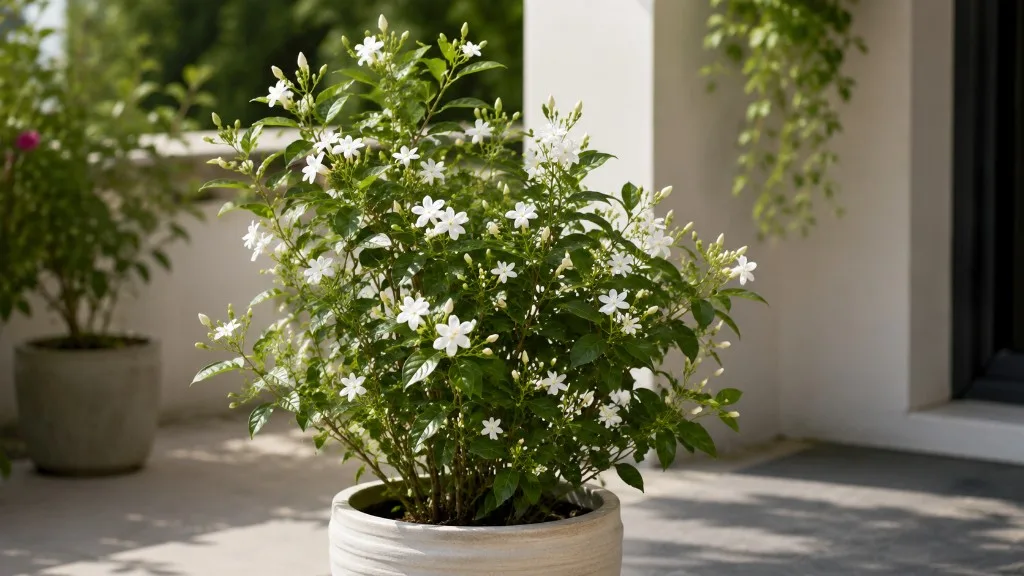
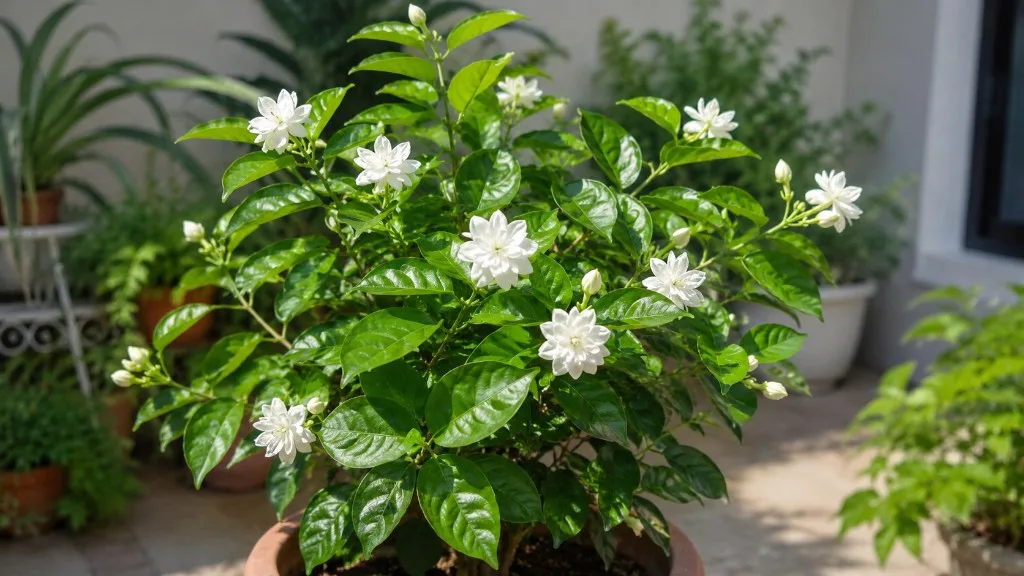
Jasminum sambac is an evergreen shrub or short climber that typically reaches 0.5–3 m in cultivation depending on variety, training, and pot size. In warm weather it grows at a moderate to fast pace with a naturally bushy habit, though many Indian growers train it as a compact bush or short climber on a support. The leaves are glossy, ovate, and almost stalkless in many cultivars, with slightly wavy margins. The flowers are waxy white - sometimes double, sometimes single - and borne in clusters of three to twelve.
The name confusion is where many care failures start. In English-language shops the same plant is sold as Arabian jasmine, Sambac jasmine, or pikake (Hawaiian lei jasmine). In the Philippines it is sampaguita, the national flower. In South India it is Mallige; in North India Mogra or Motia often refers specifically to the beloved double-flowered forms, while single-petaled types may be called Motiya or Bela. All of these names can point to Jasminum sambac, but they can also be slapped onto unrelated plants.
That matters because several toxic plants share the jasmine name. Carolina jessamine (Gelsemium sempervirens) is a yellow-flowered vine often mislabeled as jasmine; it contains neurotoxic alkaloids dangerous to pets and people. Star jasmine (Trachelospermum jasminoides) is a different genus entirely, though it is also commonly called jasmine and is non-toxic. Night-blooming jasmine (Cestrum nocturnum) is yet another species with different care needs. Before you follow any jasmine advice - including this article - confirm the tag reads Jasminum sambac or at least Jasminum species. If the flowers are yellow and trumpet-shaped, you do not have Mogra.
The Missouri Botanical Garden treats Arabian jasmine as a tropical ornamental for USDA hardiness zones 9–11, where it can bloom repeatedly through warm months. In temperate regions it is grown as a container plant moved outdoors in summer and overwintered indoors. In India and other tropical climates it is a balcony staple, temple garden flower, and commercial crop - which tells you something important about its needs: it wants warmth, strong light, steady moisture during growth, and a seasonal rhythm rather than identical care every month.
Popular Mogra Varieties and Regional Names
Commercial growers recognize multiple cultivars of Jasminum sambac that differ in petal count, flower shape, fragrance intensity, and growth habit. Indian nurseries add regional names on top of that, which is why two plants both called “Mogra” can look different and still be the same species. Knowing your cultivar helps set expectations for flower form and scent strength, even though core care - sun, water, prune-after-bloom - stays the same.
Maid of Orleans, Motia, and Single-Petal Forms
‘Maid of Orleans’ is the cultivar most often associated with sampaguita and Hawaiian pikake leis. It bears flowers with a single layer of five or more oval petals, intensely fragrant and produced in steady flushes through warm weather. In Indian trade it overlaps with names like Mograw, Motiya, and Bela. This is the form many beginners receive: manageable size, strong scent, and reliable blooming when light is adequate.
Single-petaled types are often slightly more generous with fragrance per flower than the heaviest doubles, and they are the ones most commonly exported and grown in pots on sunny balconies. If your Mogra has flat, star-like white flowers with one ring of petals, you are likely in this group.
Double Mogra, Grand Duke, and Belle of India
Double Mogra in Indian markets usually means cultivars with multi-petaled, rosette-like flowers. The best-known is ‘Grand Duke of Tuscany’, whose blossoms resemble small white roses; it is also called Butt Mograw, Rose jasmine, or Gundu Malli in different regions. The Spruce and Wikipedia both note that double forms can be somewhat less fragrant per flower than single types, though a well-fed plant still perfumes an entire terrace on a still evening.
‘Belle of India’ produces elongated single or double petals with a distinctive shape, while ‘Mysore Malli’ resembles Belle of India but with shorter petals and particularly strong scent. Indian growers also reference regional landraces - Boddu malle, Rai, Suji mallige, Iruvatchi, Khoya, Virupakshi - many of which are selections maintained for local flower markets and garland trade. Ugaoo’s Indian growing notes describe clusters that may be single, semi-double, or fully double, with main flowering in summer and monsoon plus additional flushes in warm regions.
If you bought a plant specifically for fat, rose-like blooms, you probably have a double type. Treat it the same as singles for light and water, but be patient: doubles sometimes push fewer buds per flush and benefit even more from post-bloom pruning to multiply flowering wood.
How Mogra Flowers Bloom and When They Peak
Mogra does not bloom once and finish. In tropical and subtropical climates it flowers in cycles through the warm season. The Spruce notes bloom from late spring into early fall in temperate zones, with near year-round flowering possible in truly warm climates. Indian commercial guides describe profuse seven-day flowering phases during summer and monsoon, separated by rest intervals of roughly three to four weeks before the next flush - a pattern that explains why your plant can look idle for a month and then suddenly cover itself in buds.
Each flower is a short-lived event. The Sill and multiple growers note that blossoms typically open in the late evening, release peak fragrance overnight, and are spent by the following morning. That biology is why Mogra is traditionally planted near doorways, balconies, and courtyard seating areas: you grow it where you live in the evening, not where it looks best at noon.
Bud formation is the sensitive stage. Once buds are visible, inconsistent moisture, a sudden move, or a sharp drop in light often causes bud drop before opening - the single most common complaint from new Mogra owners. The flowers themselves are white when fresh, sometimes fading slightly pink with age depending on cultivar and heat. Harvesting open flowers for garlands or indoor bowls is fine, but removing too much wood during an active flush reduces the next cycle.
Why Night-Opening Blossoms Matter for Placement
Because fragrance peaks at night, a Mogra in a south-facing balcony or west patio where you sit after sunset outperforms the same plant in a front room you only visit at midday. Indoors, the best spot is the sunniest window - typically south or west in the Northern Hemisphere - even if that room is a bedroom you open in the evening. If you must keep it in a bright living area that goes dark early, you will still get flowers, but you may miss the scent unless you pass the plant at night.
Do not rely on brief daytime visits to judge success. Check the plant after dusk during bloom season. If you smell nothing despite visible buds, look at light and feeding first, then humidity. Weak scent on a blooming plant sometimes means insufficient sun or excess nitrogen pushing foliage over flowers.
Light: Mogra light guide Is the Bloom Switch
Mogra is not a low-light houseplant that happens to flower. It is a sun-driven bloomer. Aim for full sun to part shade, with 4–6 hours of direct sun daily as the practical minimum for prolific flowering. In very hot dry climates, light afternoon shade prevents leaf scorch, but deep shade produces leggy stems, dark green leaves, and few or no buds.
Outdoors in India, a terrace, rooftop, or east-to-south balcony is ideal. Indoors, place the pot within a bright window where direct sun strikes the leaves for several hours; a sheer curtain is acceptable if the plant still receives a strong light dose. The Sill is blunt: east windows may work but often lack enough direct sun to drive flowering; south or west is better, and supplemental grow lights are appropriate in dim apartments. Jordan’s Jungle and similar guides cite 4–6 hours minimum; Tree Care Zone and Top Tropicals push toward six or more hours for peak fragrance intensity - a useful distinction. Survival is possible with bright indirect light; peak bloom and scent want direct sun.
Watch the plant’s feedback. Leggy stems with long gaps between leaves mean insufficient light. Bleached, yellowing, or crisp sun-facing leaves mean too much unfiltered midday sun for that placement - pull back slightly or add afternoon shade. When moving a Mogra from shade to sun, acclimate over one to two weeks to prevent sudden leaf burn. Never change light, pot size, and Mogra watering guide on the same week during bud formation; that combination triggers bud drop more reliably than any pest.
If you lack outdoor sun, a full-spectrum LED grow light 12–14 inches above the foliage for 12–14 hours daily during short winter days can maintain bloom potential indoors. The goal is not to mimic office lighting; it is to replace tropical intensity the window cannot deliver.
Watering: Even Moisture Without Waterlogged Soil
Mogra roots want steady moisture during active growth and clearly reduced water during rest. The calendar is a guide; the pot is the answer. During spring-through-fall growth and flowering, plan to water roughly every 2–4 days, or about every 2–3 days in peak summer, allowing the top 2–3 cm of soil to dry between waterings. In winter semi-rest, stretch toward once weekly when the mix dries more slowly. The Spruce recommends watering container plants when the top few inches have dried; The Sill suggests allowing the mix to dry about halfway down in bright light - both describe the same principle: do not keep roots soggy, do not let the plant crash into drought while buds are forming.
Consistent moisture prevents bud drop. That sentence is worth repeating because beginners often interpret it as “keep wet.” It means avoid oscillating between bone-dry and flooded. A Mogra that dries to wilting and then gets a drowning refill will shed buds before you smell a single flower. A Mogra in heavy wet mix in mediocre light will yellow, drop leaves, and rot roots. The middle path is boring and effective: check the soil, water thoroughly until runoff exits drainage holes, empty the saucer within thirty minutes.
Indian commercial practice adds a nuance home growers can borrow. Traditional potted Mogra culture in India sometimes includes a planned dry rest after a flowering phase - stopping irrigation for a period, even defoliating if leaves do not drop naturally, then light pruning, manuring, and resuming water as new flowering wood appears. You do not need that level of intensity for a balcony pot, but the lesson stands: Mogra expects rhythm, not identical daily watering year-round.
Reading Soil Moisture to Stop Bud Drop
Use your finger or a dry chopstick to probe 2–3 cm deep before every major watering. Cool, damp soil means wait. Dry at that depth plus a noticeably lighter pot means water now. Lift the pot regularly until you learn its weight cues. If buds are present, err slightly toward even moisture rather than deep drought, but never against a pot that has not dried at the surface.
overwatering on Mogra signs include yellow leaves, soft stems, sour-smelling mix, and persistent wet soil in a dim spot. underwatering on Mogra signs include wilting, dry crispy leaf tips, and buds dropping while still closed. Agri Farming’s India-focused notes emphasize that bud drop and flowering failure in Mogra often trace to root stress from waterlogging, especially in heavy mixes during humid monsoon weeks - a common story in Delhi balconies where owners water on a summer schedule through rainy weeks.
In monsoon climates, reduce frequency even while growth looks active; in arid summer regions, a deep soak on a weekly rhythm with surface checks between may work better than shallow daily splashes. Match water to how fast the pot dries in your air, not to a blogger’s city.
Humidity, Temperature, and Seasonal Rhythm
Mogra is native to tropical Asia and thrives in moderate to high humidity, roughly 50–70%, though it tolerates average room humidity if light and water are correct. The Sill notes normal room humidity is survivable but higher humidity supports more flowers. In dry winter homes or air-conditioned rooms, a humidity tray, plant grouping, or small humidifier near the pot helps more than misting leaves, which raises humidity for minutes and can encourage fungal spotting on dense jasmine foliage.
Temperature comfort sits roughly 20–35°C (68–95°F) during active growth. The Missouri Botanical Garden lists USDA zones 9–11 for outdoor permanence; protect from temperatures below 10°C. Cold drafts from winter windows, sudden AC blasts, and unheated balconies on chilly nights cause leaf drop, blackened buds, and stalled flowering. If you overwinter indoors in a temperate climate, choose the brightest cool room you have rather than a warm dark corner; growth slows but the plant should not freeze.
Seasonal care changes are not optional. March through October is the active window for feeding, regular watering, and expecting bloom flushes in most of India and equivalent climates. Winter means reduced water, no fertilizer, and patience. North Indian growers often see peak vigor late spring and summer; warm coastal and southern regions may see flushes across more months. Excellent Indian climate fit is one of Mogra’s advantages - but only when the plant gets sun, airflow, and a drying period between waterings appropriate to monsoon humidity.
Good airflow matters because dense, humid, shaded jasmine can develop foliar fungal issues. Space pots instead of crowding them against a wall, and avoid letting irrigation water sit on leaves overnight.
Soil Mix, pH, and Container Choice
Mogra wants well-draining soil that still holds moderate moisture - the classic tropical flowering shrub compromise. LeafyPixels plant specifications recommend well-draining potting mix with about 15% perlite and 10% compost, moderately moisture-retaining, pH 6.0–7.5. A practical home recipe: 50% potting mix, 30% compost, 20% coarse sand or perlite. Agri Farming’s India-focused blend suggests 40% garden soil, 40% compost, 20% river sand for monsoon drainage in clay pots - a useful regional variant.
The Spruce and The Sill both emphasize moist, well-drained soil without waterlogging. Mogra cannot tolerate standing water; Ugaoo’s Indian guide is explicit that plants die quickly in waterlogged soil. If your mix stays wet for days after a single watering, add perlite or sand and improve light before blaming the plant.
pH 6.0–7.5 is slightly acidic to neutral. Most compost-enriched mixes land there naturally; obsessive pH tuning is rarely needed unless you are growing in very alkaline garden soil converted to containers.
For pots, drainage holes are non-negotiable. Terracotta or clay breathes well in humid Kerala-style climates and helps monsoon-era drying; plastic is fine if you tend to underwater and want slower drying. A 30 cm (12-inch) round pot is a common reference for established Indian Mogra bushes; repot incrementally rather than jumping sizes. Go up one pot size every two years or so, because slightly root-bound plants often flower better than freshly pampered ones in oversized containers - a pattern familiar from jasmine and rose growers worldwide.
Fertilizer That Fuels Fragrance, Not Just Foliage
Feeding Mogra is about fueling blooms without pushing empty foliage. During active growth from roughly March through October, feed every two weeks with a high-potassium liquid feed or diluted rose fertilizer to support flower formation.
High-nitrogen fertilizers are a common mistake. They produce deep green leaves and long shoots with fewer flowers - exactly the opposite of what you want. If your plant looks lush and leggy but never sets buds, review nitrogen sources first, then light.
Always apply fertilizer to already-moist soil, never to a drought-stressed or newly repotted plant. Pause feeding in winter, during pest recovery, and for two weeks after major root disturbance. A modest compost top-dress after pruning, as Indian commercial guides describe alongside NPK, supplies organic matter without salt shock.
Organic options - vermicompost, well-rotted cow manure, neem cake in light doses - work well in clay-pot Indian culture. Liquid potassium support during flush formation is the tiebreaker when blooms stall despite good sun and water.
Pruning After Each Bloom Flush
Pruning Mogra is how you convert one short flowering spike into many branching stems that each carry buds next cycle. Prune after each flowering flush to maintain shape and encourage branching, removing up to one-third of thin stems at a time.
The timing rule is simple: prune when the flush is finished, not when buds are forming. Hard cuts in early spring on wood that was about to bloom delete the summer show. For continuous-blooming ‘Maid of Orleans’, choose a relative rest window - often late autumn or after a heavy flush - for the most significant cuts. Use clean, sharp bypass pruners, sterilized between plants, and cut just above a node or lateral branch to direct new growth outward.
Remove dead, diseased, and crossing stems any time of year. Pinching soft tips during the growing season encourages bushiness if you prefer not to wait for formal pruning. Training as a short climber on a stake or trellis is optional; most balcony growers want a rounded bush that stays below shoulder height for easy harvesting.
If you follow the traditional Indian defoliation-and-rest approach, treat it as an advanced technique for mature plants, not a first-year requirement. For most home pots, post-flush light pruning plus resumed watering and feeding is enough to trigger the next bloom wave.
Mogra repotting guide Without Disrupting Flowers
Repot every two years in typical conditions, or when you see roots emerging from drainage holes, very rapid drying, or water running straight through without soaking in. The best season is spring, after the first flush of flowers, when warm weather and increasing light help roots recover. Avoid repotting during peak bud formation unless the mix is clearly failing - root rot on Mogra smell, chronic wilting in wet soil - because repot shock plus light change drops buds en masse.
Move up only one pot size. An oversized pot holds excess wet mix that roots cannot colonize quickly, the classic setup for root rot after repotting. Use fresh well-draining mix similar to your established recipe, maintain the same root depth, and water lightly for the first week while cut roots callus. Hold fertilizer for two weeks after repotting.
Remember that Mogra often flowers best slightly root-bound. If the plant blooms reliably and dries quickly but still looks healthy, delaying repotting one season is reasonable. Repot when performance declines - yellowing despite good light, watering twice daily in summer just to keep up, or obvious root crowding - not merely because the calendar says so.
Propagation from Semi-Hardwood Cuttings
The reliable home propagation method for Mogra is semi-ripe cuttings taken during active growth, or stem cuttings in summer per Missouri Botanical Garden guidance. Select healthy 10–15 cm stems with firm wood and at least one node, remove lower leaves, and insert into moist, well-draining medium - sand and peat, perlite and potting mix, or pure coco coir. Maintain high humidity with a clear cover or humidity tent, keep in bright indirect light while roots form, and expect rooting in about 4–6 weeks under warm conditions.
Change one variable at a time: do not propagate from a stressed, bud-dropping, or pest-ridden parent and expect easy success. Water the parent the day before taking cuttings, use a sterile blade, and avoid letting cuttings sit in waterlogged medium. Gentle bottom heat speeds rooting in cooler months. Once new growth appears and roots resist a light tug, acclimate to brighter light gradually.
Division is possible on large, multi-stemmed mature bushes with substantial root mass, but cuttings are the standard for most balcony growers who want one more pot for the terrace edge.
Pet Safety and the Toxic “Jasmine” Lookalikes
For cat and dog households, true jasmine is one of the rare fragrant ornamentals that is actually welcome: the ASPCA lists Jasminum species as non-toxic to cats, dogs, and horses. That applies to Jasminum sambac - Mogra - when the botanical name is correct. Pet-safe does not mean chew-proof; eating any plant material can cause mild stomach upset in quantity, and soil or fertilizer is a separate concern. Keep pots out of digging range if your pet treats containers as litter boxes.
The critical safety step is identity verification. Carolina jessamine (Gelsemium sempervirens) is frequently confused with jasmine and is highly toxic, with alkaloids that can cause serious neurological signs in pets. It is yellow-flowered, not white waxy Mogra. If a shop label says only “jasmine” without a genus, do not assume safety. ASPCA Poison Control is 888-426-4435 in the US if ingestion of an unknown plant occurs.
Mogra is a better choice for pet-aware homes than many toxic ornamentals, but hanging baskets, raised shelves, or room placement still make sense for enthusiastic chewers. Rabbits, birds, and other exotic pets have less clear data; default to keep out of reach unless a species-specific veterinarian confirms safety.
Common Mogra Problems and Real Fixes
Most Mogra troubles are environmental patterns, not exotic diseases. The diagnostic order that saves time is: soil moisture, then light, then pests, then recent changes (repot, move, fertilizer). Fix the condition first; prune damaged growth after the plant stabilizes.
No flowers despite healthy leaves almost always means insufficient direct sun or too much nitrogen. Increase sun first - that is non-negotiable for Mogra - then review fertilizer type and watering consistency. Bud drop before opening points to irregular watering, drafts, or a sudden relocation during bud formation. Yellow leaves with wet mix signal overwatering or poor drainage; yellow leaves with dry mix and wilting signal underwatering. Leggy growth is low light. Spider mites appear as stippling and fine webbing in dry winter air; raise humidity, shower the foliage, and treat with insecticidal soap if needed.
Spider Mites, Bud Drop, and Yellow Leaves
Spider mites thrive when jasmine sits in bright sun with dry surrounding air - common on winter windowsills with heaters running. Inspect leaf undersides weekly during dry months. Early rinsing plus humidity correction often prevents chemical treatment; established infestations need insecticidal soap or horticultural oil applied per label, with repeat treatments weekly until clear.
Bud drop is the symptom growers feel most personally, because you watch the promise vanish. Once buds are set, keep watering steady, avoid moving the pot, and do not fertilize heavily or repot until the flush finishes. If buds drop repeatedly despite good sun, check whether the mix drains fast enough and whether roots smell healthy.
Yellow leaves during monsoon often mean too much water without enough drying; in summer heat they may mean underwatering or salt buildup from hard tap water. Flush the pot with plain water monthly in hard-water areas, and always empty saucers.
Mealybugs and scale hide in leaf axils and stems; isolate the plant, dab alcohol on visible pests, and follow with soap sprays. Root rot from chronic overwatering requires unpotted inspection, removal of black mushy roots, and repot into fresh fast-draining mix with a temporary watering reduction.
Do not stack interventions. If bud drop appears, do not simultaneously repot, prune hard, and double fertilizer - that guarantees a longer recovery.
Conclusion
Mogra is not a mysterious religious-garden plant that blooms on faith. It is Jasminum sambac, a tropical shrub that tells you plainly what it needs: 4–6 hours of direct sun, even moisture while growing, well-drained compost-rich soil near pH 6.0–7.5, potassium-forward feeding from spring through fall, and light pruning after each bloom flush to multiply flowering wood for the next cycle. Give it warmth above 10°C, humidity near 50–70% when possible, and a stable spot during bud formation, and the evening fragrance that fills a balcony or doorway is the natural result.
If your plant is all leaves and no flowers, assume light is insufficient before you buy another fertilizer. If buds form and fall, stabilize water and stop moving the pot. If the label said jasmine but the flowers are yellow, you are not growing Mogra at all - and no care tweak will produce white Sambac scent from a toxic lookalike. Confirm the species, match care to tropical rhythm, and Mogra becomes one of the most rewarding fragrant plants you can grow in a sunny Indian home or any bright container garden worldwide.
When to use this page vs other Mogra guides
- Mogra overview - Canonical hub for this species - care topics and problems branch from here.
- Mogra problems - Symptom-first path when you already know something is wrong.
Related Mogra guides
How to care for Mogra?
How much light does Mogra need?
full sun to partial shade - 4–6 hours of direct sun for prolific flowering
- full sun to partial shade - 4–6 hours of direct sun for prolific flowering - full sun to partial shade - 4–6 hours of direct sun for prolific flowering.
When should you water Mogra?
Every 2–4 days during active growth - keep soil moderately moist. Allow top 2–3 cm to dry. Reduce in winter. Consistent moisture prevents bud drop.
- Water when top 2–3 cm of soil is dry - Allow top 2–3 cm to dry.
- Drain excess water - Empty the saucer after watering so the roots are not sitting in standing water.
What soil works best for Mogra?
Well-draining potting mix with 15 % perlite and 10 % compost. Moderately moisture-retaining. pH 6.0–7.5.
- 50% potting mix - Well-draining potting mix with 15 % perlite and 10 % compost.
- 30% compost - Well-draining potting mix with 15 % perlite and 10 % compost.
- 20% coarse sand or perlite - Well-draining potting mix with 15 % perlite and 10 % compost.
Grower notes for Mogra
What matters most with Mogra
Mogra needs enough light and seasonal rhythm to bloom well. Leaves may stay alive in mediocre light, but flowers usually reveal whether the plant is truly getting what it needs. In practice, the care checkpoint is simple: full sun to partial shade - 4–6 hours of direct sun for prolific flowering. Pair that with well-draining potting mix with 15 % perlite and 10 % compost. Moderately moisture-retaining; pH 6.0–7.5, and avoid changing water, pot size, and placement all at once.
Best placement in a real home
Mogra belongs where full sun to partial shade - 4–6 hours of direct sun for prolific flowering is realistic for most of the day, not only where the pot looks good. Every 2–4 days during active growth - keep soil moderately moist. Allow top 2–3 cm to dry. Reduce in winter. Consistent moisture prevents bud drop. If the pot stays wet longer than expected, move the plant into better light or reassess the mix before watering again. Humidity target: Moderate to high (50–70%); native to tropical Asia and thrives in Indian conditions. Temperature comfort zone: 20°C to 35°C (68–95°F).
Before you buy this plant
Choose Mogra with firm new growth, clean leaf undersides, and soil that does not smell sour or feel compacted. Be cautious if you see bud-drop, sticky residue, collapsed crowns, or a pot that is wet in poor light. Cosmetic old-leaf damage is less worrying than weak roots or active pests.
First month after bringing it home
Do not repot Mogra on day one unless the mix is failing or pests are obvious. Quarantine it, learn how fast the pot dries, and keep care boring while it adjusts. Watch especially for bud-drop, yellow-leaves, and leggy-growth. If problems appear, correct the condition first rather than stacking fertilizer, repotting, and pruning together.
Pet-aware note for Mogra
Mogra is a better choice for pet-aware homes than toxic ornamentals, but pet safe does not mean the plant should be chewed. Use hanging, shelf, or room placement if pets dig in soil or shred leaves, and choose sturdier plants for high-traffic pet zones.
How to tell Mogra is settling in
Also sold as Arabian Jasmine, Motia, and Mallige, this plant should be judged by stable new growth rather than label names alone. If you plan to multiply it later, common methods include Stem cuttings. Repot only when you see roots emerging from holes and very rapid drying. If yellow-leaves shows up early, inspect light, watering, and roots before assuming the plant is permanently weak.
Is Mogra safe for pets?
Jasminum sambac (Mogra/Arabian Jasmine) is listed as non-toxic by ASPCA. Safe for cat and dog households.
ASPCA lists Jasminum species as non-toxic to cats and dogs. Note: confirm botanical name - Carolina Jasmine (Gelsemium) is a different, highly toxic plant often incorrectly labelled jasmine.
Watering Mogra
For Mogra, water when top 2–3 cm of soil is dry and water every 2–3 days in summer; once a week in winter. Water regularly during spring–summer flowering peak; reduce in winter semi-rest.
| Detail | Information |
|---|---|
| How often | Every 2–3 days in summer; once a week in winter |
| How to check | Water when top 2–3 cm of soil is dry |
| Seasonal changes | Water regularly during spring–summer flowering peak; reduce in winter semi-rest |
Signs of overwatering
- yellow leaves
- root rot
- leaf drop
Signs of underwatering
- bud drop before opening
- wilting leaves
- dry crispy tips
Soil & potting for Mogra
Use a mix of 50% potting mix, 30% compost, 20% coarse sand or perlite for Mogra. Good drainage while retaining some moisture. Target soil pH around 6.0–7.5. Repot every 2 years; slightly root-bound plants flower better, ideally in spring, after the first flush of flowers.
| Detail | Information |
|---|---|
| Recommended mix | 50% potting mix, 30% compost, 20% coarse sand or perlite |
| Drainage | Good drainage while retaining some moisture |
| Soil pH | 6.0–7.5 |
| Repotting frequency | Every 2 years; slightly root-bound plants flower better |
| Best season to repot | Spring, after the first flush of flowers |
Signs it needs repotting
- roots emerging from holes
- very rapid drying
Humidity & temperature for Mogra
Mogra prefers moderate to high (50–70%); native to tropical Asia and thrives in Indian conditions, though normal home humidity is usually fine. Keep temperatures around 20°C to 35°C (68–95°F).
| Detail | Information |
|---|---|
| Humidity | Moderate to high (50–70%); native to tropical Asia and thrives in Indian conditions - normal home humidity is fine. |
| Ideal temperature | 20°C to 35°C (68–95°F) |
Fertilizer & pruning for Mogra
Use use high-potassium liquid fertilizer or rose fertilizer to promote abundant blooms and stop if the plant is stressed, newly repotted, or not actively growing. High-nitrogen fertilizers - cause excessive foliage at the expense of flowers. for Mogra.
| Detail | Information |
|---|---|
| Fertilizer type | Use high-potassium liquid fertilizer or rose fertilizer to promote abundant blooms and stop if the plant is stressed, newly repotted, or not actively growing. High-nitrogen fertilizers - cause excessive foliage at the expense of flowers. |
Common problems on Mogra
Aphids
MediumLikely cause: Aug 21, 2023 · Mogra plants are generally hardy, but they can be susceptible to aphids , whiteflies, and spider mites. Regularly inspect the leaves and stems for any signs of infestation.
Quick fix: Confirm diagnosis on your Mogra, then address the most likely care or pest factor described in current extension guidance.
Full fix guide →Brown Tips
MediumLikely cause: Thriving in both sun and shade, this fragrant everbloomer offers endless blooms that can enhance your rooms or be used for jasmine tea. Discover the beauty and aromatic pleasure of growing Jasminum Sambac indoors, with useful tips and varie
Quick fix: Confirm diagnosis on your Mogra, then address the most likely care or pest factor described in current extension guidance.
Full fix guide →Compacted Soil
MediumLikely cause: Oct 8, 2025 · 2. Soil Requirements Always grow Arabian Jasmine in well-draining soil under full sun to partial shade. Use soil enriched with compost or organic matter for maximum bloom. For potted plants, add sand or perlite to improve drai
Quick fix: Confirm diagnosis on your Mogra, then address the most likely care or pest factor described in current extension guidance.
Full fix guide →Bud Drop
HighLikely cause: Low humidity or inconsistent watering during bud formation
Quick fix: Maintain stable moisture and humidity; do not move plant during flowering
Full fix guide →Deformed New Growth
MediumLikely cause: 😍 Mogra /🌿Jasmine plant Care tips #shorts # new #garden #farming 🌸 Mogra / Jasmine Plant Care Tips | More Flowers, Healthy Growth & Easy Gardening 🌿 Mogra (Jasmine) ek bahut hi sundar aur ... Sep 17, 2024 · Regular pruning helps maintain th
Quick fix: Confirm diagnosis on your Mogra, then address the most likely care or pest factor described in current extension guidance.
Full fix guide →Distorted Leaves
MediumLikely cause: Signs of overwatering for Jasminum sambac include yellowing leaves , a soggy soil surface, and potentially root rot. Persistently wet soil can suffocate the roots, inhibiting their ability to absorb nutrients efficiently.
Quick fix: Confirm diagnosis on your Mogra, then address the most likely care or pest factor described in current extension guidance.
Full fix guide →Draft Stress
MediumLikely cause: May 24, 2026 · Mogra : Stress relief || Jasmine || white flowers || Arabian Jasmine @Sunshine Naturelove 319 subscribers Subscribe Oct 27, 2025 · 8 likes, 0 comments - priyawmusic on October 27, 2025: "Best vatevari mogra draft clear🤭🤗 ️##p
Quick fix: Confirm diagnosis on your Mogra, then address the most likely care or pest factor described in current extension guidance.
Full fix guide →Drooping Leaves
MediumLikely cause: Mar 22, 2024 · Yellowing leaves in Mogra plants can signal various underlying issues, including improper care, nutrient deficiencies, pests, or diseases. Identifying the root cause is crucial for implementing the appropriate remedy.
Quick fix: Confirm diagnosis on your Mogra, then address the most likely care or pest factor described in current extension guidance.
Full fix guide →Dry Hydrophobic Soil
MediumLikely cause: Aug 6, 2025 · Incorporate compost or well-decomposed cow dung manure (2:1 ratio with loamy soil ) to improve soil structure and nutrient retention. Good drainage prevents waterlogging and root rot. Mogra requires consistent moisture, avoidi
Quick fix: Confirm diagnosis on your Mogra, then address the most likely care or pest factor described in current extension guidance.
Full fix guide →Flowers Turning Brown
MediumLikely cause: Apr 23, 2024 · Why are my Mogra flowers turning brown ? The browning and dropping of flower buds may be indicative of an excess or insufficient water supply, necessitating a comprehensive drainage assessment and adjustments to the water int
Quick fix: Confirm diagnosis on your Mogra, then address the most likely care or pest factor described in current extension guidance.
Full fix guide →Iron Deficiency
MediumLikely cause: Is your Mogra plant struggling with yellow leaves and no flowers? It might be the iron deficiency caused by alkaline soil. Mar 19, 2025 · Jasmine or Mogra is one of the most beloved flowering plants known for its fragrant white blooms. Howe
Quick fix: Confirm diagnosis on your Mogra, then address the most likely care or pest factor described in current extension guidance.
Full fix guide →Fertilizer Burn
MediumLikely cause: Apr 17, 2026 · In this video, I explain the biggest fertilizer mistake most people make after pruning their mogra plant. 👉 Giving P & K fertilizer too early...more. May 5, 2025 · Discover the top 5 expert-approved tips to make your mogra (j
Quick fix: Confirm diagnosis on your Mogra, then address the most likely care or pest factor described in current extension guidance.
Full fix guide →Heat Stress
MediumLikely cause: Oct 19, 2022 · Our assembled J. sambac JSDB genome provides fundamental knowledge to study the molecular mechanism of heat stress tolerance, and improve jasmine flowers and dissect its fragrance.
Quick fix: Confirm diagnosis on your Mogra, then address the most likely care or pest factor described in current extension guidance.
Full fix guide →High Humidity
MediumLikely cause: Aug 18, 2025 · The humidity will be quite high, between 78% and 97%. It'll mostly stay cloudy throughout the period, which may result in heavy rainfall of about 203 mm overall.
Quick fix: Confirm diagnosis on your Mogra, then address the most likely care or pest factor described in current extension guidance.
Full fix guide →Leggy Growth
MediumLikely cause: Insufficient sun or not pruning after flowering
Quick fix: Move to full sun; prune by one-third after each bloom flush
Full fix guide →Leggy Seedlings
MediumLikely cause: Sep 23, 2024 · Growing Mogra (Arabian Jasmine) from seeds requires patience and attention to detail, but it’s a rewarding experience. By carefully preparing the seeds, providing the right environment, and consistently nurturing the seedling
Quick fix: Confirm diagnosis on your Mogra, then address the most likely care or pest factor described in current extension guidance.
Full fix guide →Magnesium Deficiency
MediumLikely cause: Natuur Magnesium Oil with Mogra is a premium transdermal supplement designed to bridge the gap of magnesium deficiency while offering a luxurious sensory experience.
Quick fix: Confirm diagnosis on your Mogra, then address the most likely care or pest factor described in current extension guidance.
Full fix guide →Mealybugs
MediumLikely cause: To promote flowering, apply a high-phosphorus fertiliser or a balanced, slow-release fertiliser. Regular pruning will promote bushy development and get rid of any dead or overgrown branches. Pests include aphids, whiteflies, and mealybugs s
Quick fix: Confirm diagnosis on your Mogra, then address the most likely care or pest factor described in current extension guidance.
Full fix guide →Mosaic Virus
MediumLikely cause: A virus isolate associated with yellow mosaic disease was purified from commercially cultivated jasmine (Jasminum sambac) from Andhra Pradesh, India and it contained flexuous filamentous particles of ~720 × 13 nm.
Quick fix: Follow extension or botanical guidance for Mogra mosaic virus; adjust care before applying broad treatments.
Full fix guide →Mold on Soil
LowLikely cause: Apr 30, 2026 · Mogra cannot withstand water logging and plants will be killed in the waterlogged soil in no time. Watering is stopped during November to enable the plants to rest.
Quick fix: Confirm diagnosis on your Mogra, then address the most likely care or pest factor described in current extension guidance.
Full fix guide →Nutrient Lockout
MediumLikely cause: Mar 19, 2025 · Nutrient Deficiency: Lack of essential nutrients , especially nitrogen, phosphorus, and magnesium, affects plant growth. Solutions to Boost Mogra Growth: Use a balanced fertilizer (NPK 10-10-10) once a month to provide essent
Quick fix: Confirm diagnosis on your Mogra, then address the most likely care or pest factor described in current extension guidance.
Full fix guide →Pale Leaves
MediumLikely cause: Mar 22, 2024 · In this guide, we’ll explore the causes behind yellowing Mogra leaves and provide effective treatments to restore your plant to its flourishing glory. Yellowing leaves in Mogra plants can signal various underlying issues, inc
Quick fix: Confirm diagnosis on your Mogra, then address the most likely care or pest factor described in current extension guidance.
Full fix guide →Pot Too Large
MediumLikely cause: Oct 8, 2025 · Not everyone has the luxury of large gardens, but Arabian Jasmine adapts easily: Jasmine can grow in a pot or hanging basket just as well as in open ground. Use clay or ceramic pots for better aeration. Prune regularly to cont
Quick fix: Confirm diagnosis on your Mogra, then address the most likely care or pest factor described in current extension guidance.
Full fix guide →Not Enough Light
MediumLikely cause: May 1, 2025 · Mogra plants need at least four to six hours of sunlight daily to produce abundant blooms. However, during the summer, it is advisable to provide them with afternoon shade to protect them from scorching heat.
Quick fix: Confirm diagnosis on your Mogra, then address the most likely care or pest factor described in current extension guidance.
Full fix guide →Red Leaves
MediumLikely cause: Feb 28, 2023 · There are numerous types of Jasminum Sambac differentiated by the shape of their leaves and their corolla’s structure. The cultivars that need mention are Maid of Orleans, Belle of India, Arabian Nights, Grand Duke of Tuscany
Quick fix: Confirm diagnosis on your Mogra, then address the most likely care or pest factor described in current extension guidance.
Full fix guide →Powdery Mildew
HighLikely cause: Common Diseases and Precautions Powdery Mildew Symptoms: White, powdery fungal patches on leaves. Precaution: Ensure proper air circulation, avoid overhead watering, and use a fungicide when needed.
Quick fix: Confirm diagnosis on your Mogra, then address the most likely care or pest factor described in current extension guidance.
Full fix guide →Potassium Deficiency
MediumLikely cause: Sep 17, 2024 · Feed your mogra jasmine plant with a balanced, slow-release fertilizer every 4-6 weeks during the growing season (spring to early fall). Fertilizers high in potassium and phosphorus are particularly beneficial for promoting f
Quick fix: Confirm diagnosis on your Mogra, then address the most likely care or pest factor described in current extension guidance.
Full fix guide →Rust Disease
MediumLikely cause: Oct 18, 2023 · Rust and blight are the primary diseases that harm the mogra plant. If you are addressing the signs like de-coloration, foliage wilting, or less blooming, then use a soapy solution or insecticide spray on the infected parts.
Quick fix: Confirm diagnosis on your Mogra, then address the most likely care or pest factor described in current extension guidance.
Full fix guide →Seeds Not Germinating
MediumLikely cause: Mogra Flower Seeds for Planting – Heirloom, Non-GMO, Premium Quality Organic Garden Seeds with High Germination
Quick fix: Confirm diagnosis on your Mogra, then address the most likely care or pest factor described in current extension guidance.
Full fix guide →Slow Growth
LowLikely cause: Underwatering cause slow growth and fewer blooms. Poor Drainage: Mogra prefers well-drained soil. Ensure drainage holes if grown in a pot. Lack of Nutrients: Nitrogen deficiency can stunt growth . Mogra needs slightly acidic well feed soil.
Quick fix: Confirm diagnosis on your Mogra, then address the most likely care or pest factor described in current extension guidance.
Full fix guide →Spider Mites
MediumLikely cause: Dry, low-humidity indoor conditions
Quick fix: Rinse with water; treat with neem oil; increase humidity
Full fix guide →Yellow Leaves
MediumLikely cause: Overwatering or iron deficiency
Quick fix: Check drainage; apply iron chelate if inter-veinal yellowing
Full fix guide →