Yellow Leaves on Mogra: Causes, Checks & Fixes
Quick answer
Yellow leaves on Mogra usually mean the roots are stressed by wet soil, dry soil, or poor iron uptake-not random bad luck. First step: stick your finger 2–3 cm into the mix and note whether leaves are soft and wet-soil yellow or papery and dry.
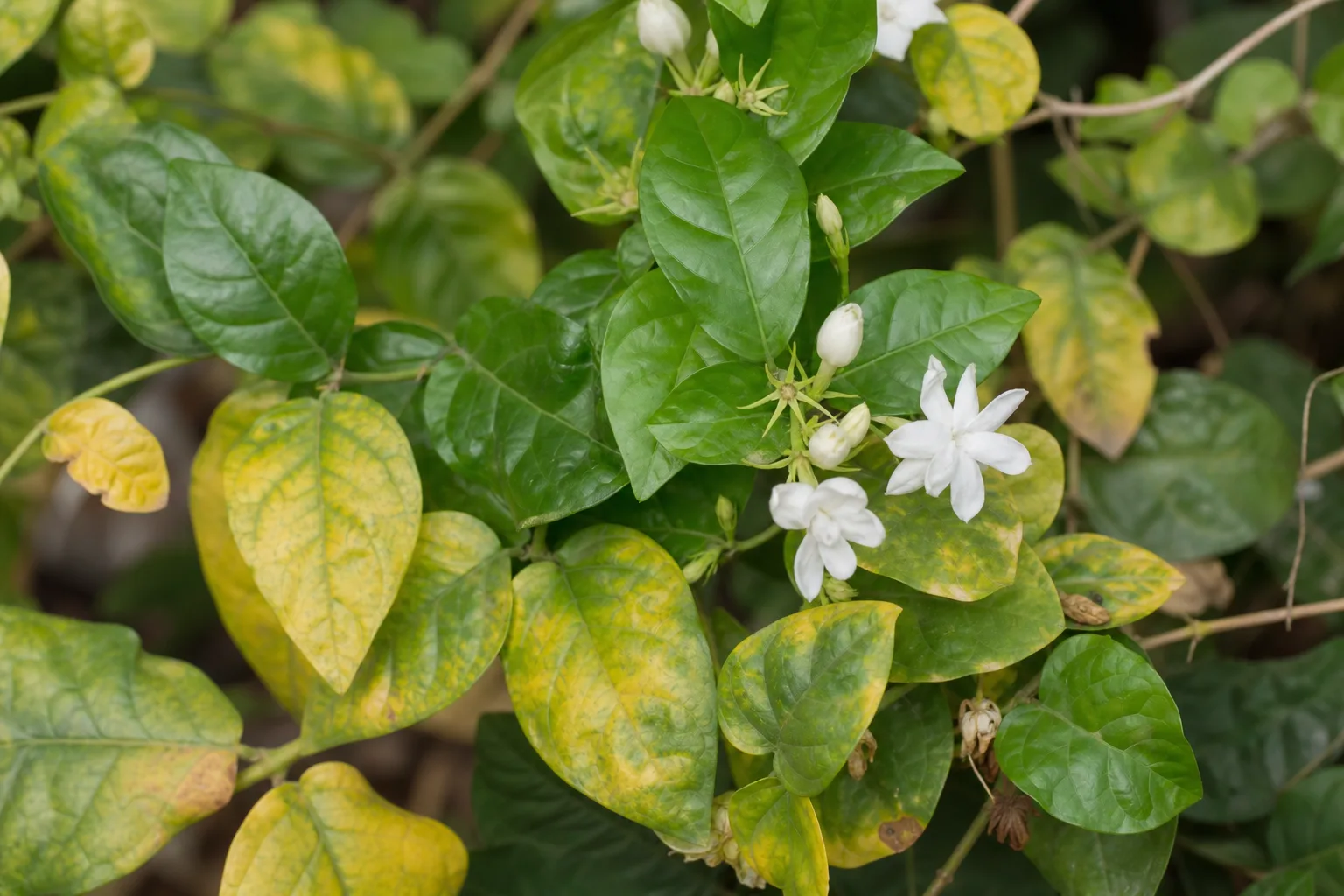
Yellow Leaves on Mogra: Causes, Checks & Fixes
This guide covers yellow leaves on Mogra. See also the general Yellow Leaves guide, watering, and light pages for this plant.
Yellow Leaves on Mogra: Causes, Checks & Fixes
Quick answer
Yellow leaves on Mogra (Jasminum sambac, Arabian jasmine) are a stress signal from the roots-not a single disease. On Mogra overview, the two most common triggers are wet soil suffocating roots and iron chlorosis when mix stays too alkaline or roots are too damaged to absorb nutrients. A few oldest lower leaves fading over months can also be harmless turnover.
First step: pause watering and check moisture 2–3 cm below the surface. Mogra is meant to stay moderately moist during warm growth, but it cannot tolerate waterlogging-chronic wet mix is the fastest route to yellowing and root decline. Only after you know whether the pot is wet or dry should you adjust drainage, iron, light, or pest treatment.
What yellow leaves look like on Mogra
Mogra carries broad-ovate, dark green evergreen leaves on downy stems. Healthy foliage looks glossy and firm; yellowing usually announces itself in one of several patterns:
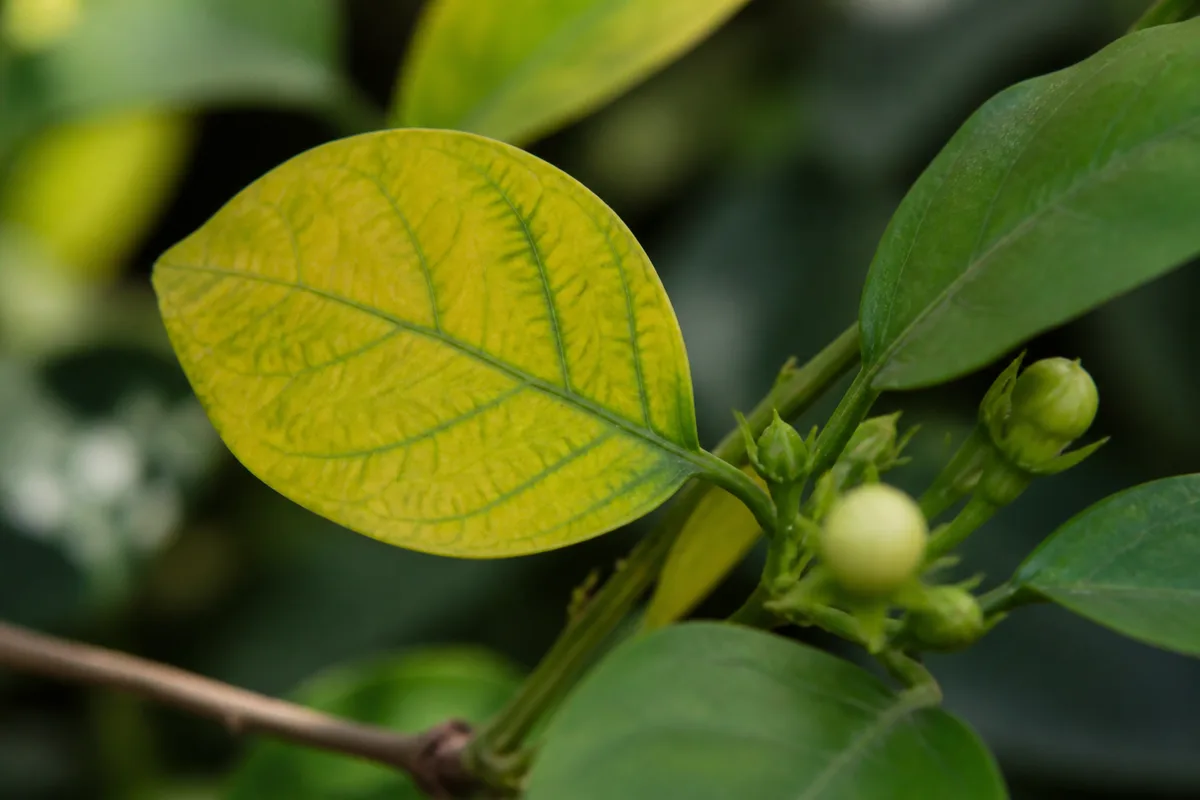
Yellow Leaves symptoms on Mogra - compare with healthy tissue on the same plant.
- Lower, older leaves only - uniform yellow from the tip or margin inward, then drop. Stems stay firm and new growth stays green. Often normal senescence or mild nitrogen depletion in an older pot.
- Soft, limp yellow leaves with wet soil - tissue feels slightly swollen or translucent. May pair with sour smell, fungus gnats, or bud drop. Classic overwatering or poor drainage.
- Dry, papery yellow leaves with dusty soil - edges may curl; pot feels light. underwatering on Mogra during a hot spell or after soil turned hydrophobic.
- Interveinal yellowing on new growth - leaf tissue between veins turns yellow or lime-green while veins stay dark green. Common iron chlorosis when pH drifts above 7.0 or roots are stressed.
- Pale, washed-out upper leaves with long gaps between leaves - weak light; Mogra may stay alive but loses deep green color and flowers poorly.
- Stippled or mottled yellow patches - check undersides for spider mites; irregular mosaic on several shoots may suggest virus in regions where jasmine yellow mosaic occurs.
Already-yellow leaves will not green up again. Judge recovery by new shoots, not old foliage.
Why Mogra gets yellow leaves
Mogra evolved in tropical Asia as a sun-loving, moisture-sensitive shrub. It wants evenly moist but well-drained soil in full sun to part shade-a narrower balance than many foliage houseplants tolerate.
Overwatering and poor drainage
This is the leading cause indoors and in monsoon-season pots. Mogra’s fibrous roots need oxygen between drinks. When mix stays saturated for days-especially in low light, oversized pots, or containers without open drainage-roots decline and cannot deliver water or nutrients upward, so leaves yellow even though soil feels wet. Waterlogging also triggers root rot on Mogra and bud drop, two problems Mogra is especially prone to in heavy clay or compacted store mix.
Iron chlorosis in alkaline or stressed roots
Mogra prefers slightly acidic to neutral mix (pH 6.0–7.5). In alkaline soil, hard tap water, or chalky compost, iron becomes unavailable even when present. The signature is yellow tissue with green veins, often on newer leaves first. Wet, damaged roots can produce the same look because the plant cannot take up iron until the root zone recovers.
Underwatering and dry pockets
Mogra needs consistent moisture during active growth and flowering. Long dry cycles-common when summer heat outpaces a once-weekly schedule-kill fine feeder roots. The plant sheds older leaves to conserve water, leaving dry, papery yellow foliage. Peat that dries completely can also repel water and create dry zones around roots while the surface looks damp.
Insufficient light
Mogra needs 4–6 hours of direct sun for prolific flowering. In dim corners, photosynthesis drops, water use slows, and the same watering routine that worked in summer suddenly leaves mix wet too long. Pale yellow-green upper leaves with stretched stems point here before iron or pests.
Natural lower-leaf aging
Evergreen does not mean every leaf lives forever. One or two bottom leaves yellowing slowly on an otherwise vigorous Mogra-especially after a bloom flush or light pruning-is often normal turnover. Remove them when fully yellow.
Pests that yellow foliage
Aphids, whiteflies, mealybugs, and spider mites all target Mogra’s tender new growth. Feeding damage and sap loss yellow and distort young leaves; honeydew can encourage sooty mold that blocks light. Dry indoor air favors spider mites on leaf undersides.
Nutrient gaps and fertilizer timing
Nitrogen shortage yellows oldest leaves first while veins stay roughly the same color. Heavy feeding on drought-stressed or wet-rooted plants can salt-burn margins. Do not fertilize until moisture and light are stable.
Cold, drafts, and winter rest
Mogra dislikes temperatures below about 10°C and sudden cold drafts. Cool stress yellows and drops leaves. In winter semi-rest, growth slows and water needs fall-yet many owners keep summer frequency, which yellows foliage from the base up.
Yellow mosaic disease
In commercial jasmine-growing regions, yellow mosaic on Jasminum sambac is linked to jasmine potyviruses associated with yellow mosaic disease and related agents, producing patchy chlorosis on multiple shoots. This is uncommon in a typical home pot but worth considering if pattern and spread do not match watering or pH issues.
How to confirm the cause
Work through these checks in order:
- Soil moisture at 2–3 cm - Wet with soft yellow leaves: suspect overwatering. Bone-dry with papery leaves: suspect underwatering. Slightly dry top with wet core: compacted or poor-draining mix.
- Leaf texture and pattern - Soft and translucent = wet roots. Papery and curled = drought. Green veins with yellow tissue = iron chlorosis. Lower leaves only, firm stems = aging or nitrogen.
- Pot weight and drainage - Lift the pot. Heavy days after watering with no dry-down signals excess retention. Confirm holes are open and saucer is empty.
- Light exposure - Count direct sun hours. Pale stretched growth in a north window fits low light plus slow drying.
- Pest scan - Inspect undersides and growing tips with a phone light for mites, aphids, or cottony mealybugs.
- Season and watering history - Winter rest with continued summer schedule is a common hidden trigger.
- Root spot-check (if wet soil + multiple yellow leaves) - Slide the plant partly out. Firm white-cream roots support other diagnoses; brown mushy roots confirm rot from wet mix.
Separate one bottom leaf every few weeks from five leaves yellowing in ten days-the first can wait; the second needs immediate watering correction or root inspection.
First fix for Mogra
Stop guessing and check the top 2–3 cm of soil with your finger.
- If wet or cool and damp: hold all watering until that zone dries. Empty the saucer. Do not fertilize. If more than a few leaves are soft-yellow, partly unpot and inspect roots before the next drink.
- If dry throughout: water deeply until a little runs from drainage holes, then discard saucer water. Wait until the top 2–3 cm dries again before the next soak.
- If interveinal yellowing on new growth with firm roots and appropriate moisture: suspect iron lockout. Flush accumulated salts with plain water if you feed heavily, then apply chelated iron per label once roots are neither soggy nor bone-dry.
Do not repot, prune heavily, or stack fertilizer on day one unless roots are visibly rotting in wet mix.
Step-by-step recovery
Once the first moisture correction is made, follow the path that matches your diagnosis:
Overwatering recovery
- Hold water until top 2–3 cm is dry; keep bright light and airflow.
- Remove fully yellow leaves and any mushy stems at the base.
- If soil smells sour or roots are brown, unpot, rinse rotted tissue away, and repot into fresh well-draining mix with perlite or coarse sand-only as much larger as the root ball requires.
- Resume watering when the top 2–3 cm dries; never let the pot sit in runoff.
Iron chlorosis recovery
- Fix watering first so roots can function.
- Test or estimate pH; if mix is alkaline or long-fertilized, flush with water.
- Apply chelated iron (Fe-EDDHA or labeled chelate) per product directions.
- Use slightly acidic, compost-enriched mix at next repot; avoid hard alkaline water when possible.
Underwatering recovery
- Soak thoroughly once; for hydrophobic peat, water twice thirty minutes apart or bottom-water until the surface moistens.
- Trim fully yellow leaves.
- Move to a schedule tied to dry-down-every 2–4 days in active summer growth for most pots, less in winter.
Low-light recovery
- Move to 4–6 hours of direct sun or the brightest available spot; shield from harsh afternoon scorch only in peak summer heat.
- Adjust watering downward to match slower use in the new spot.
- Prune leggy stems after the next bloom flush to encourage bushier green growth.
Pest recovery
- Isolate the plant.
- Rinse leaf undersides with a firm water stream.
- If pests persist, use insecticidal soap or horticultural oil on a test leaf first, then treat per label-avoid spraying heat-stressed or drought-stressed foliage.
Recovery timeline
- Stabilization - Yellowing should slow within 7–14 days after the correct moisture or light fix.
- New green growth - Expect healthy emerging leaves within 2–4 weeks if roots remained mostly firm.
- Old yellow leaves - Drop or stay yellow; they will not revert to green.
- Flowering - Bud formation may pause until care stabilizes; do not force bloom with heavy fertilizer on recovering roots.
- Severe root rot - Recovery can take 6–8 weeks or fail if most roots were mushy; judge by firm base stems and new shoots, not old leaves.
Lookalike symptoms
| What you see | Often confused with | How to tell them apart |
|---|---|---|
| Lower leaves yellow, firm plant | Overwatering | Soil is appropriately dry at 2–3 cm; only 1–2 old lowers affected over months |
| Wilting with wet soil | Underwatering | Mix is saturated; wilt despite water means root damage, not drought |
| Uniform pale plant | Iron chlorosis | Uniform pale yellow without green veins on new growth-often low nitrogen or low light |
| Bud drop only | Leaf problem | Buds fall with green leaves-check humidity swings and inconsistent moisture, not chlorosis |
| Brown crispy tips | Yellow leaves | Tips brown and dry; yellowing is more uniform or interveinal |
Mistakes to avoid
- Watering more because leaves look limp while soil is already wet - deepens root rot on Mogra.
- Applying iron or nitrogen before checking moisture - wasted on soggy roots that cannot absorb nutrients.
- Mogra repotting guide into a much larger pot - extra wet soil volume keeps Mogra roots saturated longer.
- Keeping the pot in a full saucer - reabsorbs runoff and suffocates roots.
- Moving to deep shade to “rest” a yellow plant - slows drying and worsens chlorosis.
- Ignoring pests because leaves are yellow, not holed - mites and aphids yellow tissue without chewing holes.
Mogra care cross-check
Yellow leaves often mean your baseline rhythm slipped. Realign these before adding more treatments:
- Water - Every 2–4 days in active growth when top 2–3 cm dries; once weekly or less in winter semi-rest.
- Light - 4–6 hours direct sun for flowering; brighter is usually better than dimmer indoors.
- Mix - Well-draining with compost and perlite or sand; pH near 6.0–7.5.
- Humidity - Moderate to high (50–70%) helps buds; dry air invites spider mites.
- Temperature - Protect from below 10°C and heating or AC drafts.
- Feeding - Balanced or flowering fertilizer during active growth only; pause on stressed plants.
Slightly root-bound Mogra often flowers better-do not upsize pots unless roots circle heavily or soil dries within hours.
How to prevent yellow leaves
- Water on dry-down at 2–3 cm, not a fixed calendar.
- Use pots with open drainage; empty saucers within minutes of watering.
- Give enough sun that the pot dries predictably between drinks.
- Refresh or top-dress alkaline, compacted mix every 1–2 years.
- Reduce watering when growth slows in cool months.
- Inspect leaf undersides weekly during dry indoor winters.
- Avoid changing water, pot, and location the same week-Mogra drops leaves when shifted during flowering.
When to worry
Escalate immediately if:
- More than a third of leaves yellow within a week with soggy mix and sour smell
- Stems soften at the soil line or blacken upward
- Roots are mostly brown and mushy on inspection
- Patchy mosaic yellowing spreads to new shoots despite corrected care-consider virus and isolate from other jasmines
- Yellowing continues for 4+ weeks after fixing moisture and light
A single bottom leaf every month on a blooming, firm plant rarely needs emergency action.
Conclusion
Yellow leaves on Mogra are diagnosable once you read soil moisture, leaf texture, and which leaves are affected. Wet roots and iron chlorosis cover most home cases; aging, drought, low light, pests, and virus account for the rest. Check the top 2–3 cm of mix before fertilizing or repotting, fix drainage and light, and measure success by new green shoots-not by waiting for old yellow foliage to recover.
When to use this page vs other Mogra guides
- Mogra watering guide - Use for routine moisture checks before assuming yellow leaves is the main issue.
- Mogra problems hub - Browse all 20 common issues on this species.
- Overwatering on Mogra - Different entry point when symptoms overlap with yellow leaves.
- Underwatering on Mogra - Different entry point when symptoms overlap with yellow leaves.
- Not Enough Light on Mogra - Different entry point when symptoms overlap with yellow leaves.