Mogra Repotting: When, How, and Mistakes to Avoid
Mogra Repotting: When, How, and Mistakes to Avoid
Mogra Repotting: When, How, and Mistakes to Avoid
By sai-ananth · Reviewed by LeafyPixels Review Board · Methodology: botanical references and practical container constraints · Last reviewed June 2026
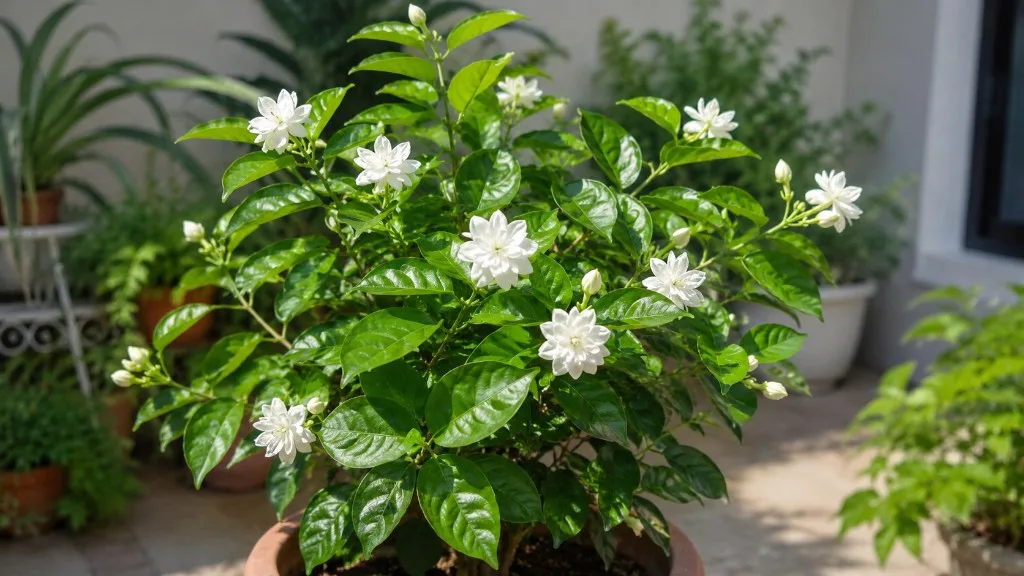
The worst week to repot a balcony mogra is not deep winter - it is the week before a major bud flush, when white clusters are still tightening at the nodes and the root ball is only mildly crowded. Mogra (Jasminum sambac, Arabian jasmine / Mallige / Motia) is a bloom-sensitive shrub that often flowers best when slightly root-bound, yet still needs fresh mix every couple of years when drainage collapses or salts build up. The skill is timing: repot after the first spring flush fades, go one pot size up, refresh soil without bare-rooting, and tie aftercare to watering, light, and fertilizer pauses so the next fragrant wave still arrives on schedule.
This guide is for growers searching mogra repotting by the Indian common name. The same species appears in our broader jasmine repotting guide with multi-species Jasminum coverage; this page focuses on shrubby container mogra - post-first-flush calendars, root-bound flowering trade-offs, monsoon balcony pacing, and coordination with post-flush pruning. Pair it with the Mogra overview, soil mix deep-dive, and propagation guides so you change one variable at a time.
Quick Answer - Post-First-Flush Timing and Root-Bound Flowering
Repot mogra in spring after the first major flower flush finishes, when spent blooms have dropped and new vegetative shoots are pushing - not while tight bud clusters are forming. Replace the mix every two years as a typical interval, or sooner when roots circle the drainage holes, water runs straight through without absorbing, or the pot dries unnaturally fast. Go only one pot size up - roughly 5–8 cm (2–3 inches) wider in diameter - because UC ANR notes container J. sambac is unhappy in oversized pots where wet mix surrounds a small root ball. Slightly root-bound plants often flower better; do not upsize early just because the pot looks small. Use the canonical mogra soil blend (50% potting mix, 30% compost, 20% perlite), hold fertilizer for four weeks, and expect 1–2 weeks of mild transplant shock before new white root tips appear - practitioner guidance, not a fixed guarantee.
Why Repotting Matters for Mogra (Jasminum sambac)
Mogra is not a static houseplant in a decorative cachepot. In warm conditions it behaves as a twining or sprawling evergreen shrub that repeats bloom cycles on relatively young wood, sending long shoots toward the brightest edge of a balcony or window. Below the canopy, the root ball is doing parallel work: holding moisture for bud formation, absorbing potassium during flush, and breathing through air pockets in the mix. When peat and compost decompose after a monsoon season or two, those air pockets collapse. Water sits longer near the bottom while the surface looks dry - the classic setup for bud drop and root rot even when you water on a sensible schedule.
Repotting resets that root environment. It is also the only routine moment when you can inspect root color, smell the lower mix for sourness, trim mushy tissue, and decide whether a same-size refresh (new mix, same pot) beats a true upsize. For mogra, the goal is not maximum root freedom - it is balanced tightness: enough room for fresh white feeder roots, not so much empty wet soil that establishment stalls for months and the next flush slips to late summer or disappears entirely. UC Master Gardener container repotting guidance notes that root-bound plants in decomposed mix lose pore space and drainage - the structural failure mogra balcony growers notice as fast dry-down followed by chronic wet feet at the pot bottom.
A Balcony Recovery Snapshot
In April 2025, a Maid of Orleans mogra in a 20 cm terracotta pot on a Pune east-facing balcony was repotted eleven days after the April flush ended - spent flowers removed, no tight bud clusters remaining. The root ball was moderately circled at the bottom but firm and white. It moved into a 25 cm pot with fresh 50/30/20 mix, received filtered morning sun for three days, and showed new white root tips at the drainage hole by day ten. The June flush opened on schedule with roughly the same cluster count as the previous year. That outcome matches what we expect when timing, pot size, and aftercare align; a mid-bloom repot on the same specimen the prior year had dropped half its buds and needed six weeks to recover - the mistake that shaped this calendar-first approach.
When to Repot Mogra
Calendar dates alone mislead mogra because first flush timing shifts by climate. North Indian balcony plants may peak in late April or May; warm coastal and tropical containers can flush earlier and repeat through much of the warm season. The reliable trigger is plant state, not a diary entry: repot after a flush finishes and before the next bud wave builds, when you see vegetative push and no longer need to sacrifice open flowers. Skip elective repotting when tight white buds cover the plant, during deep winter below 10°C (50°F), or when the plant is wilting from drought or recovering from overwatering - stabilize first, repot second. Emergency repot for mushy roots or collapsed drainage should not wait for season.
Signs the Root Zone Needs Attention
Plan a repot or same-size refresh when two or more of these appear together:
- Roots emerging from drainage holes or circling tightly when you lift the plant
- Water runs straight through the pot without absorbing, often paired with pale, exhausted mix
- The pot dries much faster than it used to - sometimes within hours on a hot terrace - because roots occupy most of the volume
- Growth stalls despite adequate light and feeding, with smaller leaves on new shoots
- White crust or sour smell near the drainage hole, suggesting salt buildup or anaerobic lower mix
- Chronic yellow lower leaves that do not resolve after correcting watering alone
A single sign may mean something else - spider mites, nitrogen excess, or a recent move. Confirm by lifting the plant and inspecting the root ball before you commit to repot week. Ask Extension guidance on container Arabian jasmine recommends pulling the plant out and inspecting roots when buds fail - black roots at the bottom signal chronic overwatering and a repot with coarse mix, while a dense root mat with fast dry-down suggests root-binding that a slightly larger pot can fix.
Best Season - After the First Flush
Missouri Botanical Garden recommends loose, humusy, evenly moist but well-drained soil for container J. sambac, grown in full sun to part shade - conditions that peak during warm active growth. Repotting aligns with that rhythm: spring through early summer, immediately after the first major flush, gives roots weeks of warmth and lengthening days to colonize fresh mix before the next bud cycle.
Coordinate with pruning: shorten spent flush wood first, wait 3–7 days, then repot - not the same afternoon as a hard cut. UC ANR extension guidance advises replacing container soil every two years and choosing a pot only 2–3 inches larger than the previous one, with adequate drainage - the backbone interval for this guide.
Post-First-Flush Repot Calendar by Climate
Use bloom state, not only the month on a calendar:
| Grower context | Typical first flush | Best repot window | Recovery pacing (guidance) |
|---|---|---|---|
| North India balcony (Delhi, Lucknow, Pune winter-cool) | Late April – May | May – early June, after flush fades | Allow 4–6 weeks before expecting the next heavy wave; avoid late June repot if monsoon rains will keep mix saturated |
| Coastal / tropical (Mumbai, Chennai, Kerala, Bengaluru warm) | March – April, often repeating | After each major flush if mix is failing; routine refresh every 2 years | Faster root re-entry in heat; watch monsoon overwatering in fresh mix |
| Temperate container indoors (overwintered J. sambac) | Late spring – summer | Late spring as new growth begins outdoors or in a bright room | 6–8 weeks to next flush is common; hold fertilizer 4 weeks |
During monsoon, avoid elective repot unless drainage has failed or root rot is active. Fresh mix plus daily rain on a shaded veranda keeps the root zone saturated for weeks - stress mogra tolerates poorly. If you must repot in heavy rain season, use extra perlite per the monsoon-adjusted soil ratio, ensure the pot never sits in a full saucer, and place the plant where 4–6 hours of direct sun still reaches the leaves so the mix dries on a rhythm.
Repot vs Top-Dress vs Wait
Not every tight pot needs a larger container. Mogra’s bloom chemistry rewards patience.
| Situation | Action | Bloom impact |
|---|---|---|
| Mildly root-bound, flowering well, mix still drains | Wait; scrape and replace top 3–5 cm of mix in spring if crusty | Lowest risk; preserves current flush timing |
| Mix exhausted or salty, roots OK, pot size still appropriate | Same-size repot - fresh 50/30/20 blend, same diameter | Brief shock; often 2–3 weeks before vegetative push |
| Roots circling, fast dry-down, stalled growth | Full repot one size up after post-flush window | 4–6 weeks to next major flush is typical guidance |
| Severe root rot | Emergency repot now - trim rot, smaller pot if needed | Expect lost buds; save the plant first |
If the plant flowers abundantly in a slightly tight pot, do not repot early just because a calendar says two years. Refresh when drainage or root density demands it - the same logic Gardener’s Supply applies to jasmine containers: repot every couple of years or when root-bound, ideally in spring before active growth peaks.
Choosing Pot Size and Soil
Pot size: Move up one step only - about 5–8 cm (2–3 inches) wider in diameter, with a functional drainage hole. The Spruce’s Arabian jasmine guide recommends a container only an inch or two larger when repotting, with plenty of drainage holes and moist, well-drained mix - the same conservative upsize mogra needs. A 20 cm pot might step to 25 cm; not 30 cm. Grand Duke of Tuscany and other double-flowered cultivars often stay shorter and bushier; a Maid of Orleans trained as a small standard may need a heavier base pot for stability - see cultivar notes on the overview.
Soil: Do not duplicate mix recipes here. Use the single canonical mogra soil guide - 50% potting mix, 30% compost, 20% perlite - with extra perlite in monsoon balconies or dim AC rooms. RHS J. sambac guidance describes loam that is moist but well-drained with neutral pH - your container blend should echo that balance, not garden topsoil.
Grafted nursery stock: Indian mogra is often grafted onto a vigorous rootstock. Keep the graft union above the soil line when repotting; burying it invites rot on the scion. If the rootstock sends suckers below the union, remove them during repot rather than letting them overtake the flowering top.
How to Repot Mogra Step by Step
Work through these eight steps in order. Total active time is usually 30–45 minutes; recovery unfolds over weeks.
- Water lightly the day before so the root ball holds together but is not soggy.
- Gather tools: new pot, fresh mix, chopstick, clean scissors, tarp or newspaper, optional rooting hormone for any propagation cuttings saved from healthy trimmings per the propagation guide.
- Tip the plant out on its side, support the base, and slide the pot away. If stuck, run a knife around the rim - do not yank stems.
- Inspect roots: white and firm is healthy; brown mushy tissue gets trimmed back to solid white. Black, sour-smelling mix near the center means past overwatering - remove all compromised material.
- Tease circling roots at the bottom and lower sides with fingers or a chopstick. Make 4–5 shallow vertical scores on a dense root ball if needed - never strip the entire ball bare. UC container repotting guidance recommends trimming circling roots and removing no more than one-third of the root mass when severely bound.
- Add mix to the new pot, set the plant so the original soil line sits 2–3 cm below the rim, and fill around the sides, tamping lightly with a chopstick to remove large air gaps.
- Water until drainage runs clear, empty the saucer within 30 minutes, and place the plant in bright indirect or morning sun for 3–7 days before returning to full terrace sun.
- Hold fertilizer for four weeks, keep moisture steady but not soggy per the watering guide, and watch for new white root tips at the drainage hole as the earliest success signal.
Prepare the Day Before
Watering the day before reduces root tearing when you tip the plant out. Sterilize the new pot if reusing, pre-moisten fresh mix until it crumbles like a wrung sponge - not dripping - and clear a workspace where you can lay the root ball on its side without snapping woody stems. Plan repotting for a cool morning, not mid-afternoon on a 38°C terrace when wilt recovery is harder.
Inspect and Tease Roots
Healthy mogra roots smell like earth, not vinegar. Spread circling roots outward with gentle pressure; cut only dead, mushy, or black tissue. If more than one-third of the root mass is compromised, consider a smaller pot than planned so the remaining roots can dry the mix on a reasonable schedule - upsizing rot-prone plants is a common balcony mistake.
Label what you see for future you: “mostly white, lightly circled” versus “dense mat, salt crust, sour lower third” - the second profile repots sooner next cycle.
Plant at the Correct Depth
Set mogra at the same depth it grew before, with the graft union above the mix line on grafted plants. Planting too deep suffocates the lower stem; too shallow exposes fine surface roots that dry out in terrace heat. Leave 2–3 cm headspace below the rim for watering and top-dressing without overflow.
First Watering and Placement
The first watering settles mix around roots - apply slowly until water exits the hole, then stop. Do not soak again until the top 2–3 cm dries. Move the plant to filtered light for several days; even sun-loving mogra benefits from a brief soft landing while root hairs re-establish. Then return to 4–6 hours of direct sun for prolific flowering per the light guide.
Aftercare and Recovery Timeline
Treat the first month after repot as a recovery phase, not a growth-maximizing phase.
Week 1–2: Mild wilting, a pause in new leaves, or a few yellow lower leaves can be normal transplant shock - keep moisture steady, avoid fertilizer, and do not move the pot daily. If wilting worsens while mix stays wet, suspect overwatering in an oversized pot or hidden rot; inspect again.
Week 3–4: New white root tips and 2–3 cm of fresh green shoot growth suggest establishment. Resume half-strength feeding only after that push, per the fertilizer guide.
Week 4–6: Many container mogra plants rebuild enough root volume to support the next bud cycle. Temperate indoor specimens may need longer.
These ranges are practitioner guidance observed across balcony and indoor containers - not laboratory thresholds. Cool rooms, monsoon rain, or a pot that was too large can extend recovery; slightly root-bound repots in warm sun often recover faster.
If buds fail to return after a mistimed repot, see the no-flowers troubleshooting page before stacking more interventions.
Common Mistakes
Too-large pot: Empty wet mix around a small root ball is the fastest route to rot after repot. One size up only.
Bare-rooting: Stripping all old mix removes fine root hairs that absorb water. Keep the core intact; tease the bottom and sides only.
Mid-bloom repot: Disturbing roots while buds are tight or open sacrifices the current flush and often delays the next.
Same-week stacking: Repotting, hard pruning, and heavy feeding in one week overloads mogra. Pick one major stress event per fortnight.
Reusing exhausted mix: Old peat that smells sour carries pathogens and poor structure. Fresh 50/30/20 blend every repot.
Monsoon neglect: Fresh mix plus daily rain without sun or drainage checks keeps roots anaerobic for weeks.
Pet and Child Safety Note
Mogra (Jasminum sambac) is listed as non-toxic to cats and dogs by the ASPCA. Fresh mix, perlite dust, and fertilizer granules are still worth keeping away from pets and children during repot - large ingestions can cause mild stomach upset, and spilled amendments are not food.
Confirm the plant is true jasmine, not Carolina jasmine (Gelsemium), which is highly toxic and sometimes mislabeled “jasmine” at nurseries - the Mogra overview covers lookalike safety in detail. If a pet eats an unidentified “jasmine” or repot debris and shows vomiting or lethargy, contact your veterinarian with the plant label or a photo.
Related Mogra Care Guides
Build repotting into the wider routine:
- Mogra overview - cultivar ID, placement, and care hub
- Soil - canonical mix, drainage tests, monsoon adjustments
- Watering - post-repot moisture rhythm
- Light - sun exposure after transplant
- Fertilizer - when to resume feeding
- Pruning - coordinate post-flush trim and repot
- Propagation - save healthy trimmings during repot
- No flowers - when mistimed repot delays bloom
For multi-species climbing jasmines (J. officinale, J. polyanthum), use the dedicated jasmine repotting guide - this page stays focused on shrubby J. sambac mogra culture.
Conclusion
Mogra repotting rewards patience more than aggression. After the first flush, one pot size up, fresh well-drained mix from the soil guide, and boring aftercare protect both roots and the next wave of fragrance. Slightly root-bound plants often outperform early upsizing. When drainage fails or roots circle, repot - but when the plant is flowering well in a tight pot, top-dress or wait rather than chasing a calendar. Link repot timing to pruning and watering changes one at a time, and treat recovery weeks as normal rather than a sign of failure.