No Flowers on Mogra: Causes, Checks & Fixes
Quick answer
Mogra (*Jasminum sambac*) grows leaves but no flowers when direct sun, pruning timing, or feeding push foliage over buds. First step: confirm the tag reads *Jasminum sambac*, then move the plant to 4–6 hours of direct sun daily before changing fertilizer or repotting.
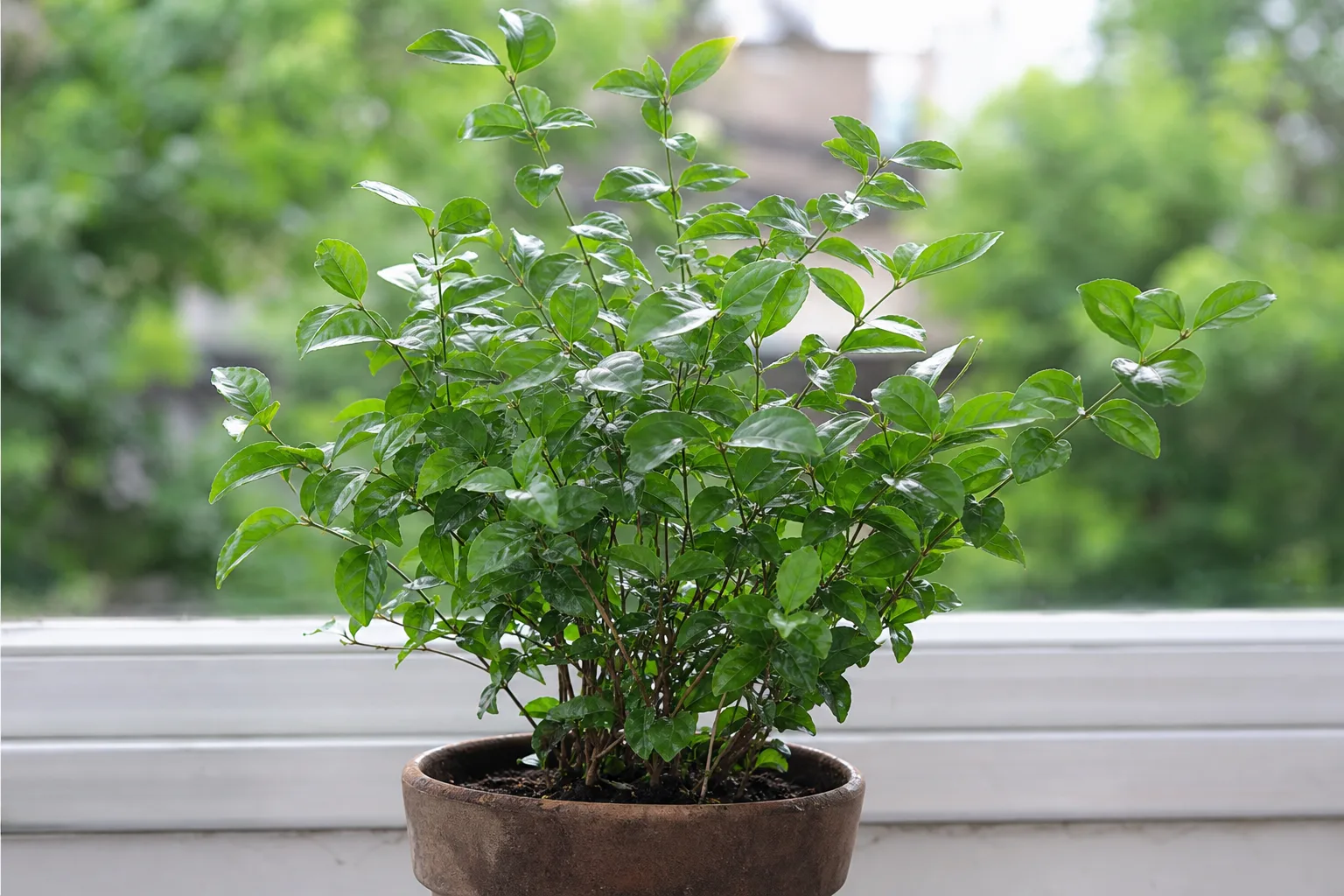
No Flowers on Mogra: Causes, Checks & Fixes
This guide covers no flowers on Mogra. See also the general No Flowers guide, watering, and light pages for this plant.
No Flowers on Mogra: Causes, Checks & Fixes
Quick answer
When Mogra grows healthy foliage but no flowers for weeks or months, the plant is surviving-not blooming. Mogra is Jasminum sambac (Arabian jasmine), a tropical Oleaceae shrub native to tropical Asia that sets fragrant white blossoms in cyme clusters on relatively young shoots when light, pruning rhythm, and feeding align. Leaves can look fine in a dim corner while buds never form.
First step: confirm the botanical name, then increase direct sun. Check that the tag reads Jasminum sambac-not Carolina jessamine (Gelsemium sempervirens, toxic yellow-flowered vine) or star jasmine (Trachelospermum jasminoides). Move the pot to 4–6 hours of direct sun daily (south- or west-facing window, sunny balcony, or grow light) before Mogra repotting guide, heavy feeding, or hard pruning. Our Mogra overview covers species confirmation and cultivar expectations; the light guide details window placement.
Reviewed by LeafyPixels Review Board · Updated 2026-06-15 · Sources: Missouri Botanical Garden, RHS, UC ANR.
What no flowers looks like on Mogra
No flowers on Mogra is not a leaf disease-it is absent or extremely rare cyme clusters at shoot tips while the rest of the plant looks vegetatively healthy.
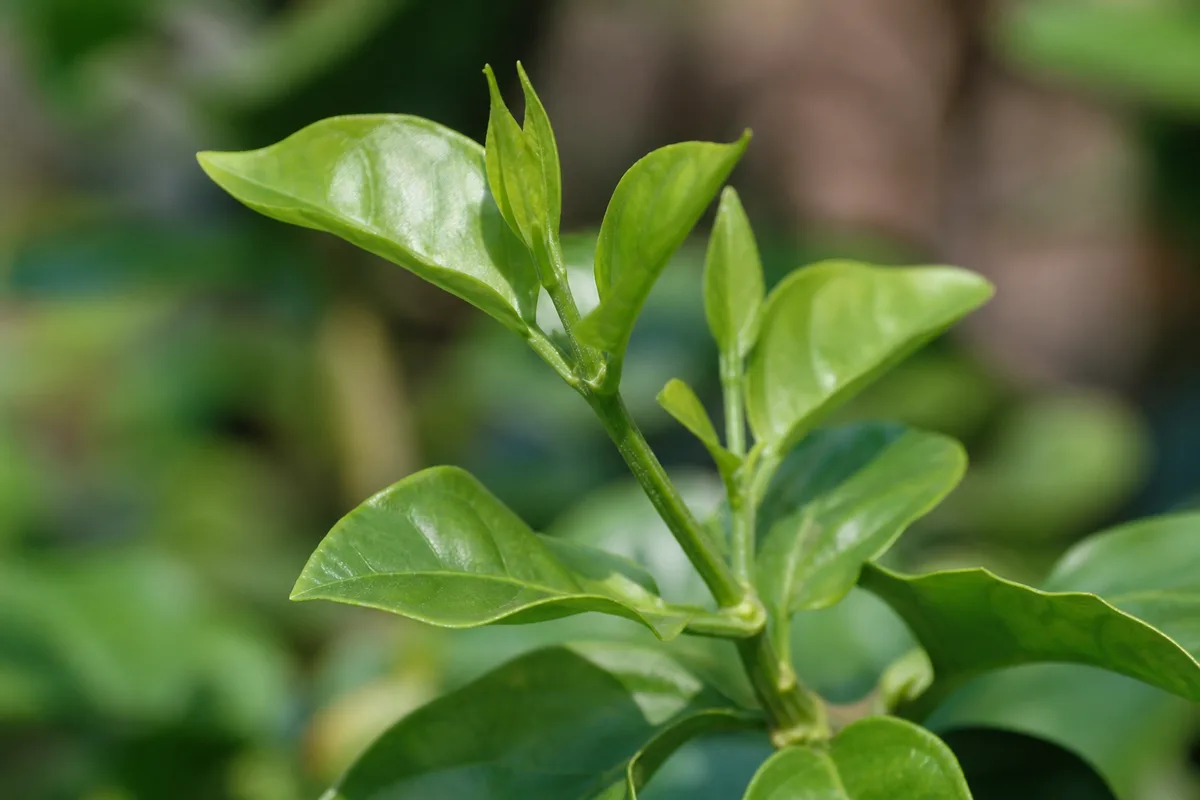
No Flowers symptoms on Mogra - compare with healthy tissue on the same plant.
Healthy foliage but no cymes or buds
You may see glossy green leaves, steady new shoots, and even fast summer growth-with zero tight white bud clusters at stem tips for a full flush cycle or longer. That pattern differs from bud drop, where buds appear and abort. Here, the plant never commits to bud set in the first place.
Low-light signs: leggy stems and absent clusters
The classic no-bloom Mogra in insufficient light shows long internodes (wide gaps between leaf pairs), stems reaching toward the brightest direction, and small, dark green leaves on whippy shoots. Flowers cluster at tips of relatively young wood; when light is too weak, the plant invests in stretch instead of cymes. Compare with leggy growth and not enough light pages if stems look sparse and reaching.
Visual comparison: leggy no-bloom vs. budded shrub
Picture two container Mogra on the same balcony season:
| What you see | Likely meaning |
|---|---|
| Long bare stems, large leaves only at tips, no white clusters anywhere | Insufficient direct sun-primary no-flowers cause |
| Compact bush, short internodes, tight white bud clusters at multiple tips | Adequate light and recent post-flush pruning |
| Lush deep-green leaves, fast vertical shoots, no buds | Often high-nitrogen feed or oversized pot |
| Young 15–20 cm cutting with one thin stem | Immature plant-may need a full warm season before heavy bloom |
Mogra flowers in cymes-several tubular white blooms on downy axillary clusters. If you never see those clusters forming, you are in no-flowers territory, not bud-drop recovery.
Why Mogra stops flowering
Mogra blooms in warm-season flushes separated by rest intervals-not continuously like some gesneriads. In tropical climates it may flower repeatedly; in containers it often peaks late spring through summer with sporadic later waves if light stays strong. When flushes fail entirely, one of these causes usually fits.
Insufficient direct sun (primary cause)
Mogra wants full sun to part shade-roughly 4–6 hours of direct sun daily as the practical minimum for prolific flowering. Bright indirect light through a north window or across a dim room keeps foliage alive but rarely drives cyme formation. The Mogra light guide is explicit: survival is possible in mediocre light; peak bloom wants direct sun.
Indoor growers often confuse “bright room” with “bright on the leaves.” If direct sun never strikes the canopy for several hours, expect no flowers despite green leaves.
Pruning at the wrong time (removed flowering wood)
Mogra sets buds on relatively fresh shoots made during warm active growth. Prune after each flowering flush to maintain shape and encourage branching-removing up to about one-third of thin spent stems. That post-flush cut multiplies the flowering wood for the next cycle.
Heavy pruning in early spring, mid-winter, or while buds are swelling deletes the wood that was about to bloom. Never pruning after a flush lets the plant become a leggy shell with flowers only at distant tips-or none at all in shade. See the pruning guide for cut placement above nodes.
High-nitrogen fertilizer pushing leaves over buds
Heavy nitrogen produces deep green foliage and long shoots with fewer flowers-a common balcony mistake after a lush monsoon growth spurt. Mogra wants a high-potassium liquid feed or diluted rose fertilizer during active growth (roughly March through October), not continuous high-nitrogen lawn or leafy-growth formulas. If the plant looks like a green hedge with zero cymes, review nitrogen sources before adding more feed.
Oversized pot diverting energy to roots
Mogra in an oversized container with excess wet soil often pushes roots and leaves instead of buds-especially combined with dim light. Slightly root-bound plants in appropriately sized pots frequently flower better than freshly upsized ones. Do not repot into a much larger pot hoping to force blooms; that delay can cost an entire flush cycle.
Immature plant or recent hard prune
A young nursery liner or recent cutting may need one full warm season of root and shoot development before heavy flowering. A hard rejuvenation prune can also pause blooms for weeks while new wood rebuilds. Patience is warranted only when light and feeding are already correct- not when the plant sits in shade.
Seasonal rest between flush cycles
Mogra naturally rests between flushes-roughly three to four weeks without new buds in warm climates is normal, not failure. Winter semi-rest indoors (reduced water, no feed, shorter days) may show no flowers for months until spring light returns. Distinguish seasonal pause from chronic no-bloom by checking whether the plant ever flowered in that spot during the prior warm season.
How to confirm the cause
Work through this numbered checklist in order. You are matching visible pattern + recent care history to one primary fix.
-
Species check - Tag reads Jasminum sambac or at least Jasminum with white waxy cyme flowers (not yellow trumpet Gelsemium). Wrong species means wrong advice entirely.
-
Direct sun hours - Note whether direct sun hits leaves 4–6 hours daily during the growing season. Use midday shadow sharpness: soft diffuse shadow means indirect; crisp defined shadow means direct. If below threshold, light is the lead suspect.
-
Stem architecture - Long internodes, tip-heavy growth, and absence of bud clusters point to light and/or missing post-flush pruning. Compact multi-branched shoots with no buds suggest feeding or pot size.
-
Pruning history - Did you hard-prune in late winter or spring? Skip post-flush trims for several cycles? Either can explain absent buds on otherwise healthy wood.
-
Fertilizer review - List recent feeds. High-nitrogen products, fresh manure top-dress, or lawn runoff on balcony pots fit lush-no-bloom pattern. Cross-check the fertilizer guide.
-
Pot size vs. root ball - Slide the plant partly out. A small root ball swimming in a large wet pot supports the oversized-container diagnosis.
-
Plant age - First-year cuttings and tiny liners get a pass if light is being corrected now; established plants with years of no bloom in the same dim spot do not.
-
Bud-drop distinction - Any plump buds that formed then fell? That is bud drop, not no flowers-stabilize moisture first.
Confirmed no-flowers from light fits when stems are leggy, direct sun is under four hours, and no cymes have formed for a full warm-season flush. Confirmed pruning or feed issue fits when light is adequate (compact growth, sun-exposed terrace) but heavy nitrogen or mistimed cuts align with the timeline.
First fix for Mogra
Move the plant to 4–6 hours of direct sun daily-or add a grow light-before fertilizer or repot.
Place the pot at the brightest south- or west-facing window, on a sunny balcony with gradual acclimation, or under a full-spectrum LED 12–14 inches above foliage for 12–14 hours daily when natural light is weak. Acclimate over one to two weeks if the plant came from deep shade to prevent sudden leaf scorch.
Once sun is corrected and the last flush has finished (if any), light-prune spent stems by up to one-third, cutting just above a healthy node to branch flowering wood for the next cycle. Hold repotting and high-nitrogen feed until new compact shoots appear.
Do not stack repot + hard prune + full-strength fertilizer in the same week-that combination triggers bud drop on the rare buds that do form.
Recovery timeline and realistic expectations
After direct sun improves and a post-flush prune is done, expect visible cyme clusters on healthy shoots within two to six weeks during warm active growth-faster on a summer terrace, slower indoors in late winter.
Signs you are winning: shorter internodes on new growth, multiple branching tips, small white bud clusters visible before evening opening, and eventually night fragrance from open blooms.
Signs the problem is deeper: still no buds after a full warm season in corrected sun (review species ID and root health), or yellow leaves and soggy soil (water/nutrient stress-not light alone).
One lost flush from late correction is normal. Repeated zero-bloom cycles in adequate sun point to chronic overwatering on Mogra in heavy mix, wrong species, or a pot that never dries at the surface-escalate to root inspection rather than more fertilizer.
Lookalikes at a glance
| Symptom pattern | Likely problem | Differentiating check |
|---|---|---|
| Leggy stems + no buds ever | Insufficient direct sun | Less than 4 h direct sun on leaves; see not enough light |
| Healthy compact plant + no buds | Pruning timing or high nitrogen | Good sun but no post-flush prune, or lush feed history |
| Buds form then fall | Bud drop | Plump buds yellowed and dropped-see bud drop guide |
| Yellow leaves + no buds | Water or root stress | Wet soil, sour smell, or dry wilt-fix roots before chasing bloom |
| Never flowered, young small pot | Immature plant | First season after propagation; correct light and wait |
| Yellow trumpet flowers | Wrong plant (Gelsemium) | Toxic lookalike-not Mogra; do not follow jasmine advice |
What not to do
Do not keep Mogra in a north window or dim corner hoping fertilizer will substitute for sun-that is the most common no-flowers mistake indoors.
Do not repot into a much larger container to force blooms; excess wet soil around a small root ball delays flowering.
Do not apply full-strength high-nitrogen fertilizer on a plant that has not bloomed- you will get taller green shoots, not cymes.
Do not hard-prune in spring when summer buds are forming on older wood, and do not prune during an active flush hoping to “wake up” the plant.
Do not confuse seasonal rest between flushes with failure and react by overwatering or overfeeding.
How to prevent repeat bloom failure
Match Mogra’s bloom rhythm: direct sun, post-flush pruning, potassium-forward feeding during active growth, and minimal disturbance while buds swell.
- Give 4–6 hours direct sun (or equivalent grow light) through the warm season; see the light guide.
- Prune after each flush-shorten spent stems up to one-third and tip-pinching soft shoots through summer; details in the pruning guide.
- Feed with high-potassium liquid every two weeks during March–October on moist soil, not high nitrogen; see the fertilizer guide.
- Repot incrementally after a bloom flush, not mid-cycle; avoid oversized pots.
- Confirm species on purchase-white Jasminum sambac cymes, not yellow jessamine.
- Inspect for pests on soft tips; heavy infestations steal energy from bud set.
When to worry
Chronic no flowers with declining yellow leaves and wet soil suggests root stress-not a light-only fix. Mass bud loss after buds formed is bud drop, not this page. Never flowered after two warm seasons in verified direct sun warrants root inspection, species re-confirmation, and possibly a master gardener or extension office visit with photos.
Mogra rarely dies from bloom failure alone if roots stay firm. Fragrance returns when the next flush opens under sun, correct pruning, and steady care-the same bar set in our overview.
Related Mogra problems
- Bud drop - buds formed then fell
- Not enough light - dim-site triage
- Leggy growth - stretch without blooms
- Mogra light needs - window and grow-light placement
- Mogra pruning - post-flush cut timing
- Mogra fertilizer - potassium vs. nitrogen
When to use this page vs other Mogra guides
- Mogra watering guide - Use for routine moisture checks before assuming no flowers is the main issue.
- Mogra problems hub - Browse all 20 common issues on this species.