How to Propagate Mogra: Semi-Ripe Cuttings Guide
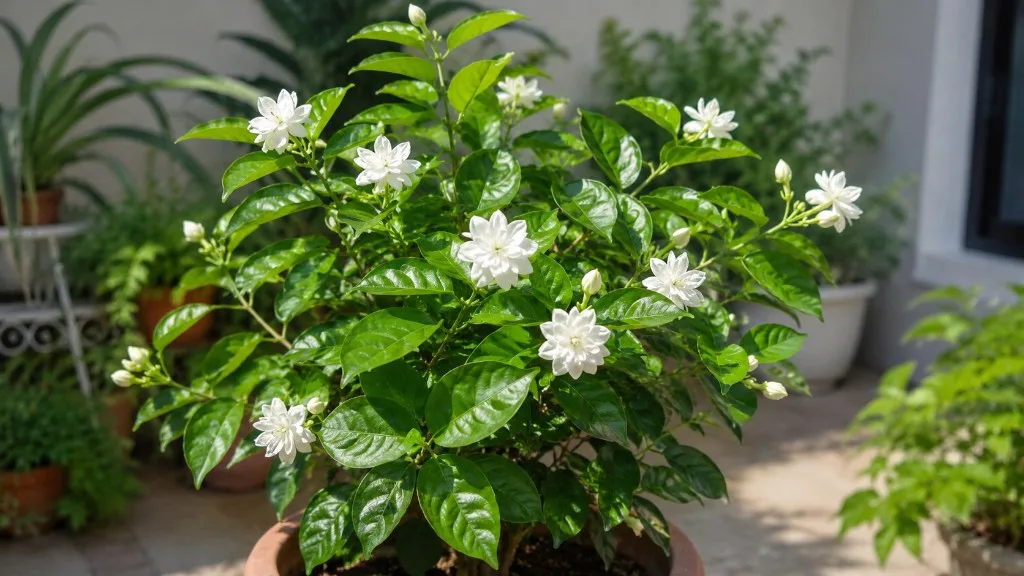
How to Propagate Mogra: Semi-Ripe Cuttings Guide
How to Propagate Mogra: Semi-Ripe Cuttings Guide
By sai-ananth · Reviewed by LeafyPixels Review Board · Last reviewed 15 June 2026
Most Mogra cuttings fail before they ever root - not because Jasminum sambac is difficult, but because growers treat a woody tropical shrub like a soft-stemmed pothos. Mogra (Arabian jasmine, Motia, Mallige) is propagated almost exclusively by semi-ripe stem cuttings taken from firm, current-season growth. Stems that are too green wilt in hours; stems that are woody or already flowering divert energy away from root formation and sit in damp mix until they rot. If your cutting turned black at the base, you likely used the wrong tissue, kept the tray waterlogged during monsoon humidity, or left flower buds on the stem.
This guide is a complete propagation workflow for Jasminum sambac: how to identify semi-ripe tissue with a pinch test, when to cut on an Indian balcony versus a temperate windowsill, how to set up a perlite mix with a vented humidity cover, whether IBA rooting hormone is worth using on Mogra, and how to pot up without losing the plant in week six. For the same species under the English name “jasmine,” see our jasmine propagation guide - botanical care is identical; this page is written for Mogra growers searching by the Indian common name. If the parent plant has active root rot, stabilize it before taking material.
Why Mogra Propagation Fails for Most Growers
The three failures I see most often on balcony Mogra are wrong stem age, flowering shoots, and wet, airless rooting trays. Jasminum sambac is a bushy Oleaceae shrub native to tropical Asia that roots from nodes on semi-lignified stems - not from leaves alone, not from fully hardened old wood, and rarely from soft tips without constant mist. Growers who copy water-jar tutorials meant for soft-stemmed houseplants often watch semi-hardwood Mogra stems develop basal rot in stagnant water long before any roots appear.
Timing matters as much as technique. Cuttings taken during peak bloom, right after Mogra repotting guide, or while the parent is fighting wilting or yellow leaves carry less stored energy and higher pathogen load. Monsoon outdoor propagation without a covered tray and daily venting saturates perlite for days; stem tissue that would root in a dry-warm June week rots in a waterlogged July tray. Cool indoor nights below 15°C (59°F) slow cell division at the cut surface so cuttings stay green for ten weeks without roots - then collapse when summer heat returns and fungus already colonized the base.
Finally, many guides skip the node burial rule. Adventitious roots emerge from nodes - the swollen joints where leaves attach - not from bare internodes. A 12 cm cutting with no node buried below the mix line may stay alive on stored starch and never produce a root system. Match tissue type, season, moisture, and node depth before blaming the species.
Best Propagation Method: Semi-Ripe Stem Cuttings
Semi-ripe cuttings - also called semi-hardwood cuttings - are the standard home method for Jasminum sambac. The Royal Horticultural Society lists propagation by semi-ripe cuttings for Arabian jasmine, and the RHS semi-ripe protocol describes the tissue as having a hard base and soft tip, taken when current-season growth has begun to firm. That is the window where Mogra stems resist rot long enough to sit in moist mix for four to eight weeks while roots form, yet still carry living cambium at buried nodes.
Stem cuttings give you a genetic clone of the parent - same flower form (single ‘Maid of Orleans’ versus double ‘Grand Duke of Tuscany’), same fragrance intensity, same growth habit. Seed is unreliable for named cultivars. Division and offset propagation do not apply to Mogra; it is not a rhizomatous or succulent species. Layering works for outdoor specimens but cuttings are faster for container growers who want three new pots from one parent in a single season.
What Semi-Ripe Tissue Looks Like on Mogra
Pinch a stem between thumb and finger along its length. On semi-ripe Mogra wood, the lower third feels firm and resists bending sharply; the upper third bends easily; bark at the base may shift from bright green toward tan without turning fully brown and woody. Leaves are full size, not the tiny pale flush of brand-new spring growth. If the whole stem bends like a wet noodle, it is still softwood - it roots fast in research mist chambers but dehydrates on a home windowsill without a sealed humidity dome. If the stem snaps dry with no green inside, it is hardwood - better suited to winter hardwood protocols on other jasmine species, not the semi-ripe approach Mogra prefers.
Select lateral shoots on the lower half of the plant when possible. They are slightly firmer than vertical water sprouts and often root more evenly. Avoid stems with open flowers, heavy bud clusters, or pest stippling on the undersides. Two to four healthy leaves at the tip are ideal; the buried portion should be leafless.
Why Water Jars Often Fail on Semi-Hardwood Stems
Water propagation can work on very soft Mogra tips in warm, bright conditions, but semi-hardwood tissue submerged in stagnant water frequently rots at the cut surface before roots emerge. The wound exposes cambium to oxygen-limited, bacteria-rich water; semi-lignified bark does not callus as quickly as soft tissue. If you experiment with water, submerge only the lowest node, change water every 48 hours, keep leaves above the rim, and transfer to mix as soon as roots reach 2–3 cm. For highest success on semi-ripe Mogra, start in perlite-amended mix from day one - the same approach detailed in our jasmine propagation guide for J. sambac.
Simple Layering as an Outdoor Alternative
For Mogra planted in a temple garden bed or large terrace container with long arching stems, simple layering is a low-equipment option. Bend a semi-ripe stem to the soil surface, wound the underside lightly, peg it into moist mix while still attached to the parent, and wait until roots form at the buried node - typically eight to twelve weeks in warm weather. The RHS groups jasmine with woody plants suited to semi-ripe cuttings and layering. Sever and pot only after the layered section resists a gentle tug. Layering is impractical for small indoor pots but excellent when you want one large new bush without a propagation tray.
Best Timing to Take Mogra Cuttings
The right moment is when the parent is pushing current-season stems that have firmed at the base while the plant is still in active growth - not dormant, not drought-stressed, and not mid-crisis from overwatering.
Temperate vs Tropical and India Windows
For temperate container growers, take cuttings from late spring through early summer (May–July in the Northern Hemisphere) after the first strong flush, and again in late summer to early autumn when semi-ripe wood is abundant. Morning harvest reduces midday wilting - standard RHS semi-ripe guidance.
For Indian and tropical balcony growers, Mogra often grows year-round with peaks after monsoon breaks and in pre-summer warmth. Propagate when nights stay above 15°C (59°F) and days are bright. Pre-monsoon late spring and post-monsoon early autumn are reliable windows on open terraces. During peak monsoon, propagate only under a covered tray with daily venting - saturated outdoor rain on an uncovered cutting tray is the fastest route to stem rot. UCANR notes Arabian jasmine thrives in warm, sunny conditions; rooting speed tracks warmth.
Indoor AC rooms can root Mogra whenever you can hold ~20°C (68°F) and bright indirect light, usually spring through early autumn even if outdoor nights are cool.
Avoid Flowering Shoots and Stress Periods
Mogra is bloom-driven. Stems carrying open flowers or tight bud clusters divert auxin and carbohydrates toward reproduction. Cuttings from those shoots root more slowly and fail more often. Take material from non-flowering laterals or wait one to two weeks after a flush fades, then select fresh semi-ripe growth from the post-bloom surge. Pinch remaining buds off prepared cuttings before inserting them.
Do not propagate within two weeks of repotting, shipping, heavy pruning, or pesticide spray on the parent. Heat above 35°C (95°F) without shade and humidity control, or cold below 10°C (50°F), also produce weak cuttings regardless of calendar date.
Materials and Rooting Setup
Gather supplies before you cut so stems do not sit on the counter drying out.
- Sharp bypass secateurs - wiped with soap and water or 70% isopropyl alcohol if the parent had mealybugs or aphids
- 8–10 cm pots or a modular tray with drainage holes
- Peat-free compost blended 50:50 with perlite, or compost plus 30% coarse perlite
- Clear plastic bag, humidity dome, or mini propagator with vent holes
- IBA rooting hormone powder or liquid (recommended for J. sambac)
- Labels - Mogra cuttings look identical at rooting stage; note cultivar and date
- Optional heat mat if ambient temperatures fall below 18°C (64°F)
Choose a parent with firm stems, clean leaf undersides, and no active root rot. Weak parents produce weak cuttings.
Cutting Length, Node Selection, and Leaf Removal
Take cuttings 10–15 cm (4–6 inches) long. Make the bottom cut just below a node, about 3–6 mm beneath the ridge. Make the top cut just above a node so the parent stub can sprout cleanly. Include at least two nodes per cutting when possible - one buried, one above soil.
Remove the lower one-third to one-half of leaves. The buried section must be bare - leaves that contact wet mix rot and spread fungus to the stem. Leave two to three pairs of leaves at the top; trim oversized leaflets by one-third to reduce transpiration. Remove flowers, buds, and damaged tissue.
Take three to four cuttings if you want two rooted plants - not every cutting roots.
Rooting Medium and Humidity Cover
Pre-moisten mix until it feels like a wrung-out sponge, not dripping. Fill pots and poke a dibber hole so you do not scrape hormone off the cut end when inserting. The medium must hold moisture without staying waterlogged - pure compost alone stays too wet; pure sand dries too fast for indoor growers who cannot mist hourly.
Set trays in bright indirect light - an east windowsill, shaded balcony bench, or 30–45 cm below a grow light. Direct sun through plastic cooks stems.
Cover with a humidity dome or bag propped on stakes so plastic does not touch leaves. Slight condensation is good; streaming water droplets mean too much moisture - vent 5–10 minutes daily. UCANR emphasizes bright light for Arabian jasmine; cuttings need the same quality without scorching.
Optional IBA Rooting Hormone for Jasminum sambac
Jasminum sambac responds strongly to IBA (Indole-3-butyric acid). Research on Mogra cuttings at Indira Gandhi Krishi Vishwavidyalya found 1500 ppm IBA produced the highest survival (88.33%), root count, and shoot quality in a mist chamber - outperforming 500, 1000, and 2000 ppm and untreated controls. Home growers without mist still benefit from powder or liquid IBA labeled for semi-hardwood cuttings.
Moisten the bottom 1–2 cm of the cut, dip in hormone, and tap off excess - heavy hormone burns semi-hardwood tissue. A 5–10 second liquid dip at 1000–1500 ppm matches research concentrations; follow product label rates for powders. Untreated cuttings may root in warm, humid setups, but hormone improves consistency on J. sambac, in cooler seasons, and when parent material is limited.
Step-by-Step: Take, Prepare, and Plant Cuttings
- Select semi-ripe lateral stems with a firm base and soft tip; confirm at least two nodes.
- Cut below the lowest node with one clean slicing motion; cut the top above a node.
- Strip lower leaves, remove buds, optionally trim top leaflets, apply IBA to the basal 1–2 cm.
- Fill pots with pre-moistened compost-perlite mix; dibber holes 3–4 cm deep.
- Insert the cutting so one to two nodes sit at or below soil level; settle mix gently without compacting.
- Water lightly with a fine rose or spray until evenly moist - not flooded.
- Cover with humidity dome; place in bright indirect light at ~20°C (68°F).
- Label cultivar and date; space cuttings 5–8 cm apart in trays to prevent overlapping foliage.
Some growers plant three cuttings around the edge of one 10 cm pot for a bushier first plant - workable for compact balcony Mogra. Separate or grow on together after rooting.
Rooting Conditions: Light, Temperature, and Moisture
Light: 10–14 hours of bright indirect exposure daily. Deep shade keeps cuttings alive but delays rooting for weeks. Hot direct sun bleaches leaves inside the dome.
Temperature: Target 18–24°C (64–75°F) ambient air and 20–22°C (68–72°F) root zone if using a heat mat. Below 15°C, rooting slows dramatically; above 30°C without venting, rot outpaces root formation. Keep cuttings away from cold AC drafts in Indian apartments.
Moisture: Check mix every two to three days. Surface should feel lightly damp. Add a few tablespoons per small pot, not a full soak. Overwatering is the number one killer - sour smell, fungus gnats, and black stem bases mean the medium is too wet. Do not fertilize during rooting; cuttings have no functional roots to absorb nutrients.
Slight wilting on day one is normal; recovery within 24–48 hours under the dome confirms the cutting can balance transpiration. Persistent collapse means increase humidity slightly or trim more leaf area.
How Long Mogra Cuttings Take to Root
Most semi-ripe Mogra cuttings root in four to eight weeks under warm, bright, humid conditions near 20°C, consistent with RHS semi-ripe cutting timelines. Timeline bands:
- Warm (20–24°C) with bottom heat and IBA: first resistance at 3–4 weeks; pot-ready at 4–5 weeks
- Room-temperature windowsill without heat: 5–8 weeks typical
- Cool autumn bench below 16°C: 8–12 weeks or failure - add heat or wait for spring
Test at four weeks with a very gentle tug - slight resistance suggests roots. Do not yank; new roots snap easily. New leaf growth or a firm green stem that no longer wilts when you vent the cover are better positive signs.
Worked scenario: Three semi-ripe ‘Maid of Orleans’ cuttings taken 8 June from a Bangalore balcony parent, dipped in 1500 ppm IBA, planted in 50:50 compost-perlite under a vented dome at ~24°C day / 20°C night. Gentle resistance at week 5; potted individually week 7 after roots 3–4 cm long. First new flush visible week 9. Your dates will shift with temperature and light - use resistance and new growth, not calendar alone.
If a cutting stays green with zero roots after ten weeks, restart with fresher material rather than nursing indefinitely.
Potting Up and First Eight Weeks of Aftercare
Move rooted cuttings to 10–12 cm solo pots when roots are 3–5 cm or the plant resists a gentle tug and shows new top growth. Use well-draining mix aligned with our Mogra soil guide - pH 6.0–7.5, amended with 20–30% perlite if the base mix is heavy. Plant at the same depth as in the propagation tray; burying deeper can rot bark not adapted to soil contact.
Water thoroughly once after potting, then let the top 2 cm approach dry before the next soak - same discipline as mature plants per our watering guide. Empty saucers so pots never sit in standing water.
Harden off the humidity cover over 7–10 days: one hour uncovered day one, increasing daily until the dome stays off permanently. Sudden removal causes leaf drop on tender new roots.
Light: Bright indirect for 7–10 days after potting, then gradual introduction to the 4–6 hours of direct sun Mogra needs for flowering per our light guide. Scorched leaves on a young plant set back growth more than one month of slightly lower light.
Feeding: Wait until active new growth is obvious - usually three to four weeks after solo potting - then apply quarter to half strength balanced liquid feed every four to six weeks during the growing season per our fertilizer guide. Overfeeding root-limited young plants burns tender roots.
Pinch tips once stems reach 15–20 cm to encourage branching. Flowering may come the same season if rooted in spring, or the following year after autumn rooting - energy goes to roots first.
Signs Propagation Is Failing
| Symptom | Likely cause | First response |
|---|---|---|
| Black or mushy stem base | Wet mix, no drainage, unvented dome, soft tissue | Discard; restart with firmer stems and drier mix |
| Green cutting, no roots after 8+ weeks | Too cool, too dim, node too shallow | Add heat and light; confirm node 3–4 cm deep |
| Grey mould on leaves | Excess humidity without airflow | Remove affected leaves; vent twice daily |
| Shrivelled stem, wet mix | Basal rot already advanced | Discard cutting; sterilize tray |
| Sour smell from medium | Chronic overwatering | Fresh mix; lighter watering |
Persistent mold on soil in the propagation tray also signals poor airflow.
Recovery Steps Before Starting Over
Before discarding the whole batch, check whether temperature, node depth, or dome venting was off - one fix can save remaining green cuttings. If more than half show black bases, clean the tray with soap, take fresh semi-ripe material from a healthier section of the parent, and reset mix. Do not propagate from a parent in active root rot hoping to salvage the plant - take only material from firm, unaffected stems after the parent recovers.
When Not to Propagate Mogra
Propagation is a backup plan, not emergency surgery. Do not take cuttings as the first response to severe dehydration, active pest outbreaks, or foul-smelling soil on the parent - stabilize care using the relevant [plant-problem pages](/plants/mogra/Mogra overview/) first. If the only available stems are woody, flowering, or pest-damaged, wait for cleaner growth rather than multiplying failure.
Skip propagation during heat waves above 35°C without shade control, during cold snaps below 10°C, or while the parent is recovering from repot shock. One healthy cutting batch beats four weak ones taken too soon.
Conclusion
Mogra propagation succeeds when you match semi-ripe stem tissue to a vented humidity setup at ~20°C in bright indirect light. Identify firm-based, soft-tipped stems with clean nodes, dip optionally in IBA rooting hormone - strongly supported for Jasminum sambac at 1500 ppm in research - plant in compost and perlite, and expect roots in four to eight weeks in warm conditions. Pot up gently, harden off the cover, then give young plants steady water, gradual sun, and light feed once new growth appears.
When cuttings fail, the cause is almost always wet airless mix, flowering or soft tissue, or cold dim conditions - not some mysterious reluctance in Arabian jasmine. The Missouri Botanical Garden and RHS both describe Jasminum sambac as a straightforward semi-ripe cutting subject. Take three cuttings instead of one, vent the dome daily, and a single fragrant parent becomes a row of Motia pots ready for the next bloom flush.
When to use this page vs other Mogra guides
- Mogra overview - Start here for whole-plant context before deep-diving this topic.
- Mogra problems hub - Jump to symptom-specific fix guides when this care topic does not resolve the issue.