Root Rot on Mogra: Causes, Checks & Fixes
Quick answer
Root rot on Mogra starts when container mix stays waterlogged - often during winter indoor rest or bloom-season overwatering. Stop watering, unpot to inspect roots, trim mushy tissue, air-dry 24–48 hours, then repot into fresh well-drained mix.
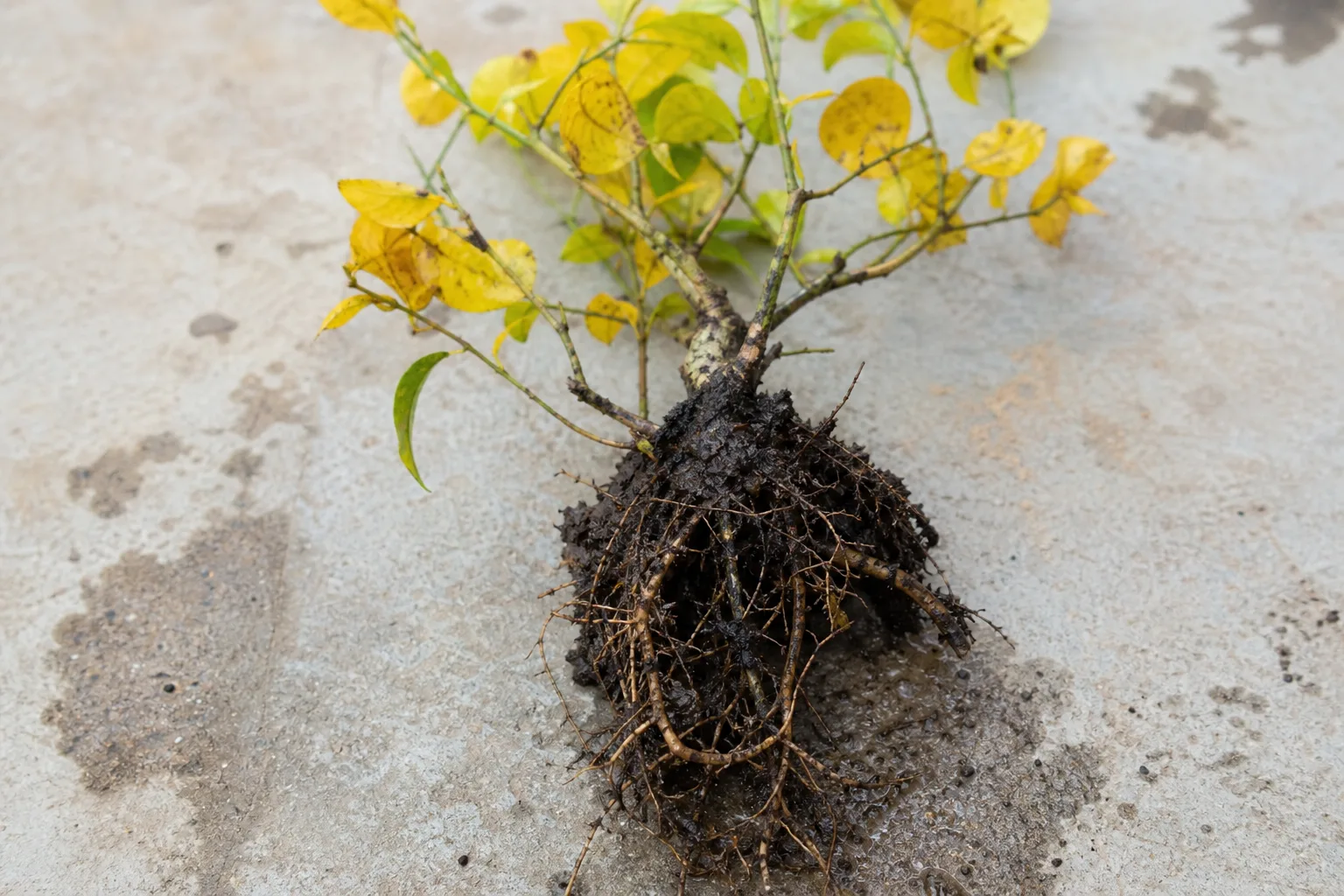
Root Rot on Mogra: Causes, Checks & Fixes
This guide covers root rot on Mogra. See also the general Root Rot guide, watering, and light pages for this plant.
Root Rot on Mogra: Causes, Checks & Fixes
By sai-ananth · Reviewed by LeafyPixels Review Board · Methodology: botanical references and practical container constraints · Last reviewed June 2026
Use this page when unpotting confirms rotted roots - mushy tissue, sour mix, or soft stem risk. If you have not inspected roots yet and only see wet soil with yellow lower leaves, start with our overwatering guide first.
Root rot on Mogra (Jasminum sambac - Arabian jasmine, Mallige, Motia) is almost never a mysterious disease. It is what happens when a tropical flowering shrub sits in waterlogged container mix long enough for roots to lose oxygen and decay. The trap is familiar: lower leaves yellow, buds drop before opening, the pot feels heavy, yet foliage wilts as if the plant is thirsty. That wet-wilt paradox - limp leaves with soggy soil - is the signature of failing roots, not drought.
First step: stop all watering immediately. Do not add another drink because leaves look limp. Unpot only after you have confirmed wet soil, checked drainage holes, and ruled out a simple dry-down failure. This page covers confirmed root rot on Mogra - inspection, severity staging, trim-and-repot rescue, propagation salvage when the base is lost, and prevention tied to seasonal watering rhythm from our watering guide.
Why Mogra gets root rot
Mogra is a bushy twining evergreen shrub - not a rosette succulent - that wants loose, humusy, evenly moist but well-drained soil in full sun to part shade. In a pot, “evenly moist” does not mean constantly wet. Roots need air between waterings. When mix stays saturated, fine feeder roots die first; fungi and bacteria finish what oxygen starvation started. The Royal Horticultural Society lists the same species as preferring moist but well–drained loam - a pairing that only works when excess water exits the container.
Winter rest and calendar-watering trap
The most common indoor trigger is calendar watering through winter semi-rest. Mogra slows growth when days shorten and rooms cool below about 15°C (59°F). Mix that dried in two days during monsoon may take seven to fourteen days indoors in December - yet many growers keep the summer twice-weekly rhythm out of habit or fear of losing fragrance. The pot stays heavy, lower leaves yellow, and roots suffocate while the bushy canopy still looks mostly green from stored starch. The RHS advises watering sparingly in winter for greenhouse-grown J. sambac - the same rule applies to overwintered balcony pots brought inside.
Bloom-season overwatering fear
The second trap is overwatering through bud-drop anxiety. Mogra aborts buds when moisture swings - but waterlogging kills roots just as surely as drought. Growers who see tight green clusters and increase frequency without checking depth keep the lower half of the pot sodden while the surface looks pale. Buds drop anyway because damaged roots cannot deliver water, even though the mix feels wet. UCANR extension guidance notes J. sambac does not tolerate too much moisture and needs thorough watering followed by real dry-down - not constant sogginess around swelling buds.
Heavy mix, cachepots, and blocked drainage
Root rot accelerates when cultural mistakes stack:
- Moisture-retentive mix without enough perlite - especially the 50/30/20 blend used in dim rooms without shifting toward more drainage
- Oversized decorative pots holding wet mix around a small root ball
- Cachepots and saucers that trap runoff after bottom-watering
- Blocked drainage holes plugged by roots, mesh, or compacted peat
- Low light indoors slowing evaporation while watering rhythm stays on summer autopilot
Any one factor can cause trouble. Three together - heavy compost, weekly calendar watering, glazed cachepot - predict rot within a single winter.
What root rot looks like on Mogra
On this bushy jasmine, rot usually starts at the root tips and shows upstairs before the crown fails:
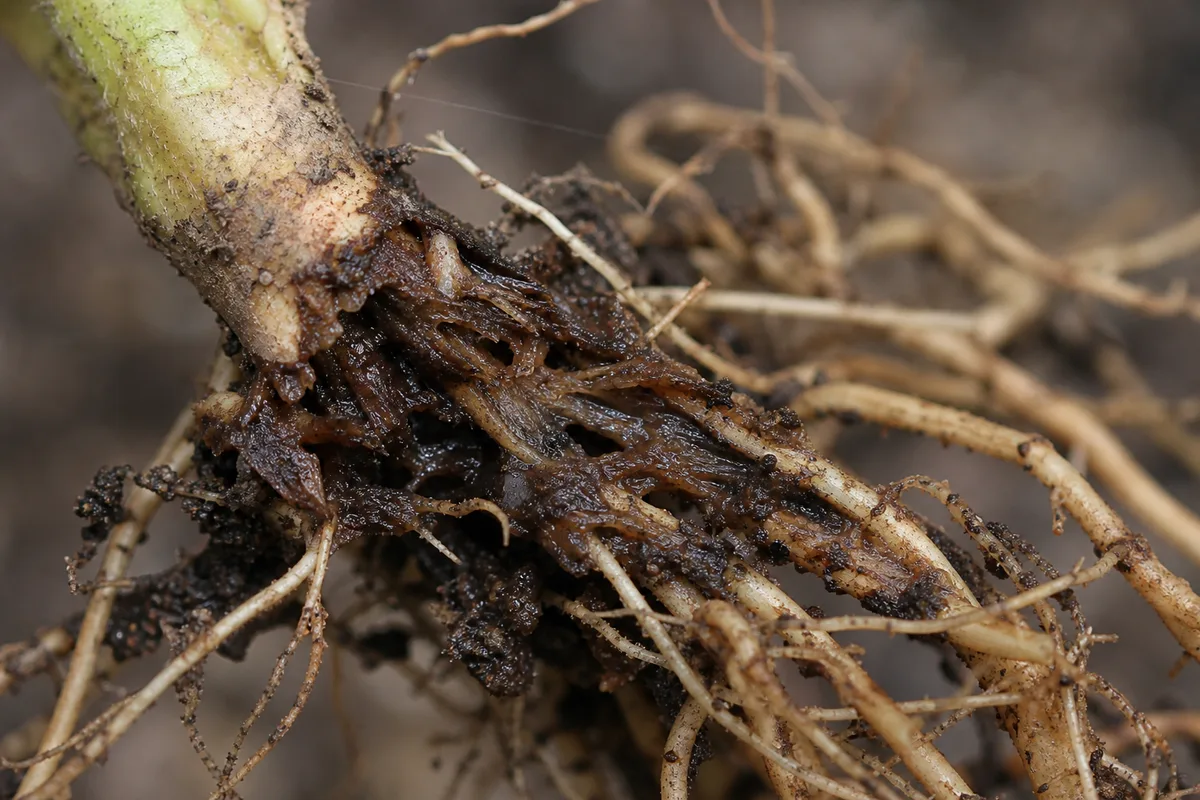
Root Rot symptoms on Mogra - compare with healthy tissue on the same plant.
- Yellowing lower leaves on an otherwise full canopy - often the first sign on a mature shrub
- Wilting or limp foliage despite heavy, wet soil - the wet-wilt paradox; roots cannot absorb water
- Bud drop before bloom opening on wet mix - overlaps with bud drop from drought, but here the pot stays heavy
- Sour or fermented smell when you probe near the drainage hole or lift the root ball
- Soft stem tissue at the soil line in advanced cases - rot climbing from roots into the crown
- Fungus gnats and mold on the soil surface when the top inch stays damp for weeks
- Brown, translucent, or slimy roots on unpotting - healthy mogra roots are firm and pale cream to white
Compare with underwatering: a light pot, dry mix pulled away from the pot wall, and quick perk-up within an hour after a thorough soak point to thirst, not rot. Compare with early overwatering: wet soil and yellow lower leaves but firm roots on inspection - rescue is simpler and rot may not have started.
What to look for when you unpot
You do not need a microscope - three zones tell the story on container J. sambac:
- Healthy roots - Firm when squeezed, pale cream to white, spread evenly through the lower ball. They smell earthy, not sour.
- Rotted roots - Brown, black, or translucent; mushy or slimy; outer cortex slips off when you tug gently. They often cluster at the pot bottom where water sat longest.
- Stem at soil line - Bark-covered tissue should feel solid. Spongy, collapsing, or water-soaked bark means rot has climbed past the root zone.
If you see zone 2 or 3, treat as confirmed rot. Zone 1 only with wet mix and yellow lower leaves means early overwatering - pause watering and reassess before a full trim-and-repot.
Yellow lower leaves and wet-wilt on twining jasmine
Mogra’s bushy habit hides root failure longer than a small herbaceous plant. Lower leaves yellow and drop while upper shoots still look acceptable - because the shrub carries stored energy in woody stems. Do not wait for total collapse. Missouri Botanical Garden overwatering guidance explains that roots in saturated soil cannot absorb oxygen and the plant may wilt despite wet mix - the exact pattern mogra growers misread as “needs more water.” UK extension guidance on wet soil describes the same mechanism: oxygen-poor roots reduce water uptake, so foliage wilts even when the mix is saturated.
Field note: January cachepot rescue
In January 2026, a two-year-old J. sambac ‘Belle of India’ on a north-facing sill showed yellow lower leaves and wet-wilt despite soil that had not been watered for ten days - the glazed cachepot still held runoff, the pot weighed heavy, and a faint sour note came from the drainage hole. Unpotting revealed roughly one-third mushy brown roots at the lower ball; upper stems stayed firm. After trim to white tissue, 36-hour air-dry on newspaper, and repot into fresh 50/30/20 mix one pot size down, the first firm new shoot appeared at week five at 18°C. Lower yellow leaves were trimmed once new growth was obvious; bloom resumed at week eleven. The lesson matched extension rescue guidance: reducing soil moisture and removing infected root tissue matters more than hoping the old mix dries in place.
How to confirm the cause
Work through these checks in order before repotting:
- Pot weight and soil moisture - Lift the pot. Heavy weight plus wilted leaves equals trouble, not thirst. Press your finger 2–3 cm deep near the rim; cool clinging soil at depth with a heavy pot supports rot or advanced overwatering.
- Drainage audit - Confirm holes are open. Empty every saucer and cachepot. If water pools for days after one soak, drainage failed before roots did.
- Smell test - Sour or fermented odor from the drainage hole or after gently sliding the root ball partly out strongly suggests decay.
- Stem firmness - Pinch the stem at the soil line. Firm bark-covered tissue is hopeful; soft, mushy, or collapsing tissue means rot is advancing into the crown.
- Unpot inspection - Knock the plant out gently. Healthy roots are firm, pale, and spread evenly. Rotted roots are brown, black, translucent, or slimy and pull away in clumps.
- New growth check - Stalled buds, no fresh leaf tips, and progressive lower-leaf loss on wet mix confirm root-zone failure.
If roots are still mostly firm, sour smell is absent, and only lower leaves yellow, you may be at early overwatering - pause watering, improve drainage, and reassess in one week before a full trim-and-repot. If mushy roots, sour mix, or soft stem base are present, treat as confirmed rot and move to rescue.
Confirmation decision table
| Sign | Root rot (confirmed) | Early overwatering | Underwatering |
|---|---|---|---|
| Pot weight | Heavy, wet | Heavy, wet | Light |
| Soil at 2–3 cm | Cool, clinging | Cool, clinging | Dry, crumbly |
| Leaf pattern | Yellow lower + wilt on wet soil | Yellow lower, may perk when mix dries | Wilt, dry tips, bud drop |
| Root texture on unpot | Mushy, brown, slimy | Firm, pale | Firm, may be dry and brittle |
| Smell | Sour or fermented | Neutral or earthy | Dry, no sour note |
| Stem at soil line | May be soft | Firm | Firm |
| First action | Stop water → trim → repot | Stop water → dry-down | Thorough soak → fix schedule |
First fix for Mogra
Stop watering and unpot to inspect roots.
That single action prevents the most common mistake - adding water to a wilting plant whose roots are already drowning. Once you confirm mushy tissue, do not delay repotting hoping the mix will dry on its own; decaying roots release compounds that keep the root zone hostile even after surface soil dries.
After inspection, make one primary change: trim dead roots, air-dry the remaining root ball, and repot into fresh well-drained mix. Do not simultaneously relocate to harsh new sun, fertilize, or prune half the canopy - each adds stress while roots are compromised.
Step-by-step rescue by severity
Mild - firm stem, less than one-third of roots mushy
- Stop watering and empty all standing water from saucers and cachepots.
- Unpot and gently rinse away old mix to see the full root mass.
- Trim all brown, mushy, or slimy roots with clean, sharp shears. Cut back to firm white tissue.
- Air-dry the trimmed root ball 24–48 hours in bright indirect light on newspaper - let cut surfaces callus.
- Repot into fresh 50/30/20 mix (50% potting mix, 30% compost, 20% perlite) in a pot sized to the remaining root mass - not dramatically larger.
- Wait one to two weeks before the first careful soak, checking pot weight daily. Water only when the top 2–3 cm is dry at depth.
Moderate - soft lower roots, firm upper stem, one-third to half of roots lost
Follow the mild protocol, but:
- Remove additional soft tissue at the crown if any bark-covered stem feels spongy - cut back to firm wood
- Consider taking two to three semi-ripe cuttings from healthy upper stems as insurance before repotting the parent - see propagation for tissue selection and humidity setup
- Expect four to eight weeks before meaningful new growth; judge success by firm new shoots, not old yellow leaves re-greening
Severe - mushy stem base or more than half of roots gone
- Assess salvageability - If the stem base is soft throughout, the parent is unlikely to recover. Move to propagation salvage.
- Take cuttings immediately from the firmest upper stems - semi-ripe tissue with a firm base and soft tip, no flower buds, nodes buried in perlite-amended mix under a vented humidity cover.
- Discard the rotted base and old mix - do not compost indoors; pathogens persist. Wisconsin Horticulture Extension advises not reusing potting mix from root-rot cases and disinfecting tools between cuts.
- Sterilize the old pot or switch containers before starting fresh cuttings.
Severe crown involvement is often fatal for the original plant. Honest salvage means propagation, not repeated repots of a mushy base.
Recovery timeline
Days 1–3: Stop watering. Complete unpot, trim, and air-dry. Old leaves may continue yellowing - that is normal; the plant cannot support full canopy on reduced roots.
Week 1–2: First careful soak after repot only when top 2–3 cm is dry. Pot should feel lighter before you water. No fertilizer.
Weeks 3–6: Watch for firm new shoots from upper nodes or the center of the bush. One or two fresh leaves matter more than saving every yellow lower blade.
Weeks 6–12: Moderate cases may resume normal watering rhythm for the season. Bud formation may lag one flush behind recovery - do not overwater to “push” blooms.
Worsening signs: Stem softening above the soil line after repot, sour smell returning within days, complete leaf collapse, or no new growth by week eight in warm conditions. Escalate to propagation or accept loss.
Old damaged leaves will not fully re-green. Recovery means stable roots and clean new growth - trim yellow foliage for appearance once the shrub is clearly rebounding.
Propagation salvage when the base is compromised
When the root ball is mostly mushy but upper stems are still firm, semi-ripe cuttings are your realistic save path. Mogra roots from semi-ripe stem cuttings taken in warm weather - 10–15 cm stems, firm base, soft tip, lower leaves removed, optional IBA hormone, perlite-amended mix under a vented dome at roughly 20°C.
Work fast: rot advances up the stem while you hesitate. Take cuttings before the last firm tissue goes soft. Discard any cutting whose base turns black in the tray - restart with fresher material. Full workflow, hormone notes, and potting-up timing live in our Mogra propagation guide. Stabilize any remaining parent wood only if the stem base is still firm after trimming - otherwise put energy into cuttings, not nursing a collapsing base.
What not to do
Do not keep watering because leaves wilt when soil is already wet - watering a plant with rotting roots worsens the problem.
Do not fertilize while roots are damaged or immediately after repot - salts stress tissue that cannot absorb them.
Do not repot into dense garden soil, pure compost, or a much larger pot - center stays sodden for months.
Do not skip the air-dry step after trimming - wet cut surfaces invite secondary rot in fresh mix.
Do not assume one dry week fixes advanced rot - if roots are mushy on inspection, trim-and-repot is required.
Do not repot into the same mix without trimming - decaying roots inoculate old media; fresh well-drained mix and removed mushy tissue are both required.
Do not mist heavily hoping to revive leaves - focus on root-zone oxygen and drainage, not foliar moisture on a drowning shrub.
How to prevent root rot on Mogra
Prevention is seasonal rhythm plus drainage discipline, not a single trick:
- Check before you water - Finger or skewer to 2–3 cm depth; water only when dry at that depth, not when the surface looks pale
- Match frequency to season - Every two to three days in warm active growth; roughly weekly or longer in cool winter rest when the same pot dries slowly indoors
- Use the canonical mix - 50% potting mix, 30% compost, 20% perlite with an open drainage hole; shift toward more perlite in humid monsoon balconies or dim AC rooms
- Empty cachepots within 30 minutes of every soak - mogra in decorative outer pots is a common silent rot setup
- Right-size the container - Pot matched to root mass, not the size you hope the shrub becomes next year
- Pair watering with light - Low-light indoor mogra uses less water; if the pot stays heavy five days while lower leaves yellow, fix light and drainage before the next drink
- Quarantine new nursery plants - Inspect roots at purchase; repot out of peat-heavy nursery mix if drainage is poor
If the same wet-soil symptoms return after you corrected watering, compare wilting, underwatering, and yellow leaves before stacking repotting, fertilizer, and relocation together. When rot recurs twice in one season despite corrected drainage and seasonal rhythm, contact your local cooperative extension office for hands-on diagnosis - chronic failure may point to a blocked drainage layer, nursery-borne pathogens, or a mix that stays wet too long in your specific room.
When to worry
Escalate immediately if:
- Stem base is soft or collapses when you pinch at the soil line
- Most of the root mass is mushy on first unpotting
- Sour smell persists within 48 hours after trim-and-repot
- Leaves collapse completely despite your best dry-down effort
- No firm new shoots appear by week eight in warm growing conditions
An established Mogra with firm woody stems, a partial root trim, and clean new tips after six weeks should recover. A shrub that lost the entire root ball and crown softness is a propagation project, not a repotting project.
Root rot vs. overwatering on Mogra
These pages serve different stages of the same moisture failure:
- Overwatering - Early triage when soil stays wet too long but roots may still be firm. Stop watering, improve drainage, dry-down.
- Root rot (this page) - Confirmed decay: mushy roots, sour mix, soft stem risk. Trim, air-dry, repot, or propagate.
Start on the overwatering page if you have not unpot yet. Move here when inspection confirms rotted tissue.
Related Mogra guides
- Mogra overview - species ID, bloom cycles, and balcony culture
- Watering - seasonal rhythm, 2–3 cm dry-down, wet-wilt paradox
- Soil - 50/30/20 mix and drainage tests
- Propagation - semi-ripe cuttings when the base is lost
- Overwatering - early wet-soil triage before confirmed rot
- Wilting - wet-wilt vs. dry-wilt differential
- Bud drop - moisture swings during bud formation
- Repotting - timing and pot sizing after recovery