Bud Drop on Mogra: Causes, Checks & Fixes
Quick answer
Bud drop on Mogra usually means the plant lost steady moisture or humidity while buds were swelling. First step: leave the plant where it is and water on a consistent schedule so the top 2–3 cm of mix dries between drinks-not bone dry for days.
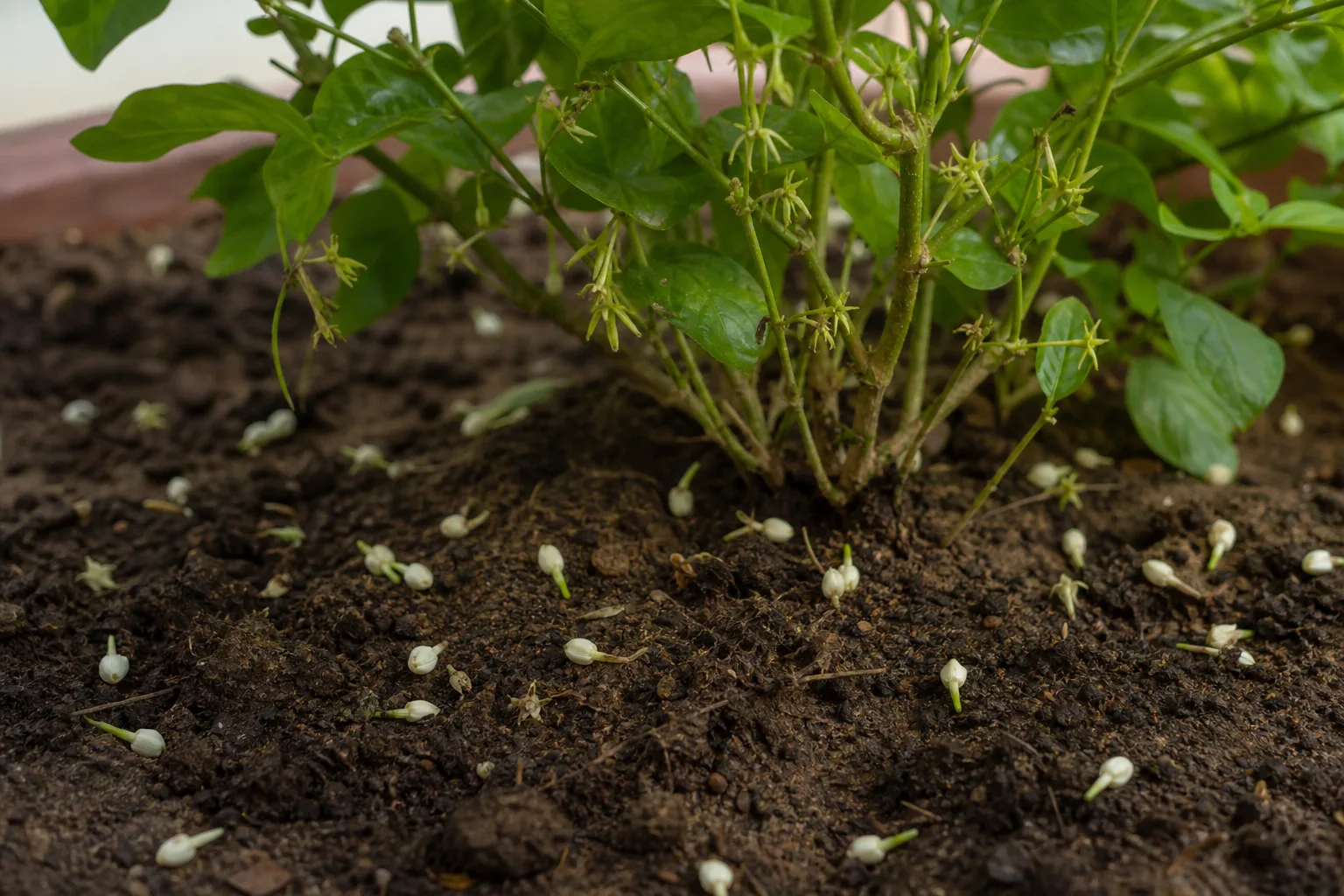
Bud Drop on Mogra: Causes, Checks & Fixes
This guide covers bud drop on Mogra. See also the general Bud Drop guide, watering, and light pages for this plant.
Bud Drop on Mogra: Causes, Checks & Fixes
Quick answer
Bud drop on Mogra (Jasminum sambac, Arabian jasmine) is the plant aborting flower buds before they open-a stress response, not a mystery disease. Mogra sets buds on tender new shoots and keeps them only when moisture, humidity, and temperature stay steady through the vulnerable swelling stage.
First step: stop moving the plant and stabilize watering. Check whether the top 2–3 cm of mix has been swinging between bone dry and soggy, or whether dry winter air and drafts have been hitting budded stems. Fix that rhythm before Mogra repotting guide, pruning hard, or adding fertilizer.
What bud drop looks like on Mogra
You may notice tight clusters of small, waxy white buds at shoot tips-Mogra flowers in cymes of several blooms on downy stems. Instead of opening into fragrant single or double white flowers, buds may:
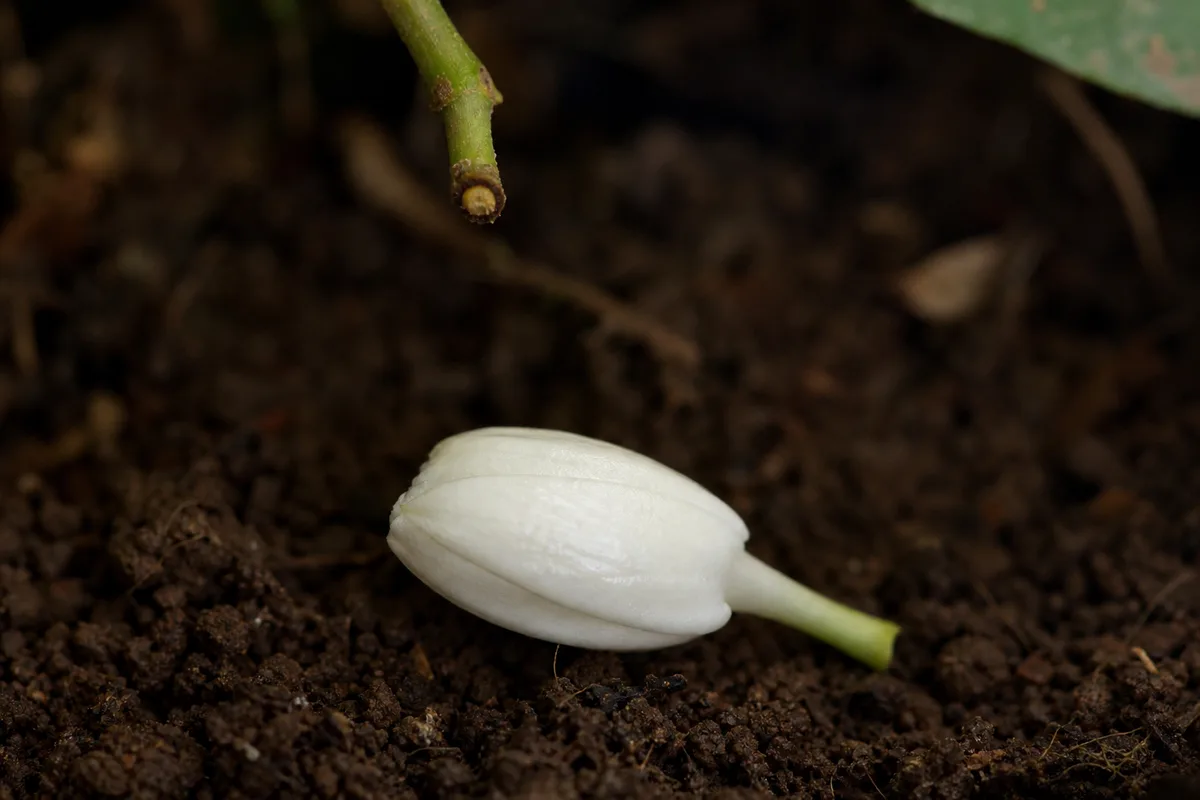
Bud Drop symptoms on Mogra - compare with healthy tissue on the same plant.
- Turn yellow or tan, then drop cleanly from the stem
- Shrink and dry while still closed, sometimes leaving a brown scar at the node
- Fall one at a time from the newest cluster while older open flowers remain
- Drop in a batch after you moved the pot, repotted, or skipped watering during a heat spell
Leaves often stay green through early bud loss, which confuses owners into chasing leaf problems. On Mogra, dropped buds with otherwise normal foliage usually mean the root zone or air around the buds changed-not that the whole plant is dying.
Advanced stress may add wilted new growth, crispy leaf edges, or sticky residue on buds if thrips are involved-but the hallmark is buds aborting before opening.
Why Mogra drops buds
Mogra evolved in tropical Asia as an evergreen shrub that flowers repeatedly when warm, bright, and evenly moist. Indoors or on a balcony, buds fail when that balance breaks during bud development.
Inconsistent watering during bud set
This is the most common trigger on Mogra. The plant wants evenly moist, well-drained soil-not a wet-dry yo-yo. Letting the mix go fully dry while buds swell pulls water away from the most sensitive tissue first. overwatering on Mogra is the other side of the same problem: damaged roots cannot supply buds even when the surface looks wet.
Mogra’s own care profile lists bud drop before opening as a classic underwatering on Mogra sign. During active growth and flowering, many growers water every two to four days in summer and pull back in winter semi-rest-but the pattern matters more than the calendar.
Dry air and drafts
Mogra prefers moderate to high humidity (roughly 50–70% in home terms). Heated rooms, air conditioning, and fans strip moisture from bud tissue faster than from mature leaves. Flowering houseplants are especially sensitive to drafts and dry air. A plant beside a sunny window in winter often gets warm days and cold glass at night-a combination that aborts buds on many flowering houseplants.
Relocation and repotting shock
Moving a budded Mogra to a new room, turning it for “even growth,” or repotting mid-flush forces the plant to readjust while buds demand steady resources. Bud drop can follow moving the plant, chilling, low humidity, or uneven soil moisture. Bud drop after any recent move or fresh potting mix is so common on flowering plants that environmental shock should top your suspect list before disease.
Insufficient light after buds form
Mogra needs full sun to part shade-about four to six hours of direct sun daily for prolific flowering. Buds that formed in good light may drop if the plant is shifted to a dim corner, shaded by other pots, or kept indoors without enough window exposure. Leaves may survive in mediocre light; buds do not.
Temperature extremes
Mogra grows best around 20–35°C (68–95°F) and dislikes sustained cold below about 10°C (50°F). Sudden cold drafts, outdoor nights without protection, or blasting heat from a register can all trigger bud loss. Severe heat and water stress during bloom can scorch or brown flower buds. Cool nights with warm days can help some bloomers, but sharp swings during bud swell are risky.
Pests on developing buds
Thrips and spider mites both target tender bud tissue. Thrips can cause bud blast-unopened buds brown and die-while mites thrive in the same dry, warm conditions that stress Mogra. Check buds and leaf undersides if drops come with silvery streaks, distortion, or fine webbing.
Too much nitrogen at the wrong time
Heavy nitrogen feeding pushes foliage at the expense of flowers. That rarely causes instant bud drop alone, but it fits a pattern of lush leaves, few buds, and aborted buds when combined with uneven watering.
How to confirm the cause
Work through these checks in order. You are looking for a recent change that overlaps with when buds started failing.
-
Timeline - Note moves, repots, fertilizer changes, heat-wave watering skips, or new AC use in the last two weeks. A clear event plus bud drop strongly suggests stress, not pathogen.
-
Soil moisture at depth - Insert a finger 2–3 cm into the mix. If buds drop while that zone has been repeatedly dry, suspect underwatering. If it stays wet for days with a sour smell or yellowing lower leaves, suspect overwatering and root stress.
-
Pot weight - Lift the container. A very light pot during active bud growth means drought stress; a heavy pot that never lightens points to poor drainage or overwatering.
-
Air around buds - Feel for drafts from vents, doors, or window gaps. Winter sun on glass creates hot-cold swings within inches of the pane.
-
Light level - Confirm appropriate bright light-four to six hours of direct sun or very bright indirect light for Mogra overview. Leggy stems with small leaves and dropping buds often share a dim site.
-
Pest inspection - Tap a budded stem over white paper or use a magnifier on bud scales and leaf undersides. Thrips are fast and slender; mites leave stippling and webbing.
-
Root spot-check (only if soil stays wet) - If buds drop while mix is constantly soggy, slide the plant partly out of the pot. Firm white roots support a watering fix; brown mushy roots need drainage correction before expecting new buds.
Confirmed environmental bud drop fits when buds fail after a identifiable stress, leaves are mostly healthy, and correcting moisture or placement stops further loss within one to two weeks.
First fix for Mogra
Leave the plant in place and restore even moisture.
Water thoroughly until excess drains from the bottom, then empty the saucer. Resume watering when the top 2–3 cm of mix feels dry-not when leaves look wilted and not on a rigid calendar that ignores how fast the pot dries in your home. If dry air is obvious (winter heat, AC room), add humidity with a pebble tray, grouped plants, or a humidifier near-but not blasting-the foliage.
Do not repot, hard-prune, or fertilize until bud drop stops and new growth looks stable. Stacking interventions while buds are aborting usually makes the next flush fail too.
Step-by-step recovery
Once the first fix is in place, work through these steps in order:
-
Hold position - Keep the same orientation to the light source. Avoid rotating the pot daily while buds are present.
-
Stabilize humidity - Aim for steady moisture in the air around the plant without keeping crowns wet overnight. Grouping pots or a humidifier beats occasional misting if you cannot maintain humidity.
-
Adjust watering to season - In warm active growth, Mogra uses water quickly; in winter semi-rest, stretch intervals but never let buds sit on fully desiccated mix.
-
Protect from drafts - Move the pot once to a stable bright spot away from vents and cold glass if needed-but not repeatedly. Choose the spot and stay there through the bloom cycle.
-
Hold fertilizer - Skip feed until new buds hold for a week. Then use a phosphorus- and potassium-forward formula at reduced strength during active growth, not high nitrogen.
-
Treat pests if confirmed - Rinse budded stems with lukewarm water for mites; for thrips on buds, use a labeled houseplant spray and repeat per label until damage stops. Isolate heavily infested plants from other bloomers.
-
Prune after the flush - When flowering finishes, trim up to one-third of spent stems to encourage bushiness and the next bud set-standard Mogra practice, but only after blooms, not during swelling buds.
Recovery timeline
Further bud drop should slow within one to two weeks once moisture and placement stabilize. Individual buds that fell will not reopen.
Expect new bud clusters on healthy shoots within two to six weeks during warm active growth-faster on a well-lit balcony in summer, slower indoors in low winter light. Open flowers on the same plant are a good sign that conditions have improved even if some buds were lost.
Signs you are winning: buds stay plump and white longer, fewer daily drops, firm new leaves at tips, and eventually night-opening fragrant blooms.
Signs the problem is worsening: all buds abort on every cluster, new growth wilts despite wet soil (root issue), or buds brown with pest debris-escalate to root inspection or pest treatment rather than more water.
Lookalike symptoms
-
No buds at all - Usually light or maturity, not bud drop. See insufficient sun, young plant, or heavy nitrogen before assuming abort stress.
-
Flowers open then brown quickly - Often heat or inconsistent water during open bloom, overlapping with bud drop but needing the same moisture fix.
-
Yellow leaves with bud drop on Mogra - May combine underwatering with overwatering history; read soil moisture and roots, not buds alone.
-
Fungal bud rot - Rare on Mogra indoors; brown mushy buds with gray mold on wet foliage differ from clean yellow drop from dry air.
-
Normal post-shipping loss - A few buds may fall after nursery transport; worry when loss continues after two weeks of stable care.
What not to do
Do not move the plant repeatedly for photos or rearranging while buds are swelling. Avoid repotting into a much larger pot mid-bloom hoping for “more energy”-excess wet soil around a small root ball aborts buds on moisture-loving bloomers.
Do not drench daily because buds fell; confirm dryness first. Do not apply full-strength nitrogen fertilizer on a stressed plant. Do not mist buds heavily at night if airflow is poor-surface moisture can invite rot on tight bud clusters.
How to prevent bud drop next time
Match Mogra’s normal rhythm: bright light, even moisture, moderate humidity, and minimal disturbance during bud set.
- Water when the top 2–3 cm dries, more often in summer flowering peaks, less in winter rest-but never long drought during visible buds.
- Keep humidity reasonable in heated or air-conditioned rooms with trays, grouping, or a humidifier.
- Repot in spring after a bloom flush, not when buds are visible; slightly root-bound plants often flower better than freshly upsized pots.
- Prune after flowering to shape the plant and trigger the next flush.
- Inspect buds weekly in dry seasons for thrips and mites before populations explode.
When to worry
One lost cluster after a single dry day is recoverable. Mass bud loss on every shoot, combined with soggy soil and yellowing leaves, suggests root failure-not just humidity. Repeated failure across multiple bloom cycles despite stable care points to chronic too-little light or a potting mix that dries unevenly; fix placement and soil structure before buying another plant.
Mogra rarely dies from bud drop alone if roots stay firm and you stop the stress trigger. The fragrance returns when the next flush opens under steady conditions.
When to use this page vs other Mogra guides
- Mogra watering guide - Use for routine moisture checks before assuming bud drop is the main issue.
- Mogra problems hub - Browse all 20 common issues on this species.