Underwatering on Mogra: Causes, Checks & Fixes
Quick answer
Underwatering on Mogra shows as a light dry pot, limp glossy leaves, and often bud drop before blooms open. Check moisture at 2–3 cm depth and pot weight-then bottom-water thoroughly once and resume the dry-check rhythm from our watering guide.
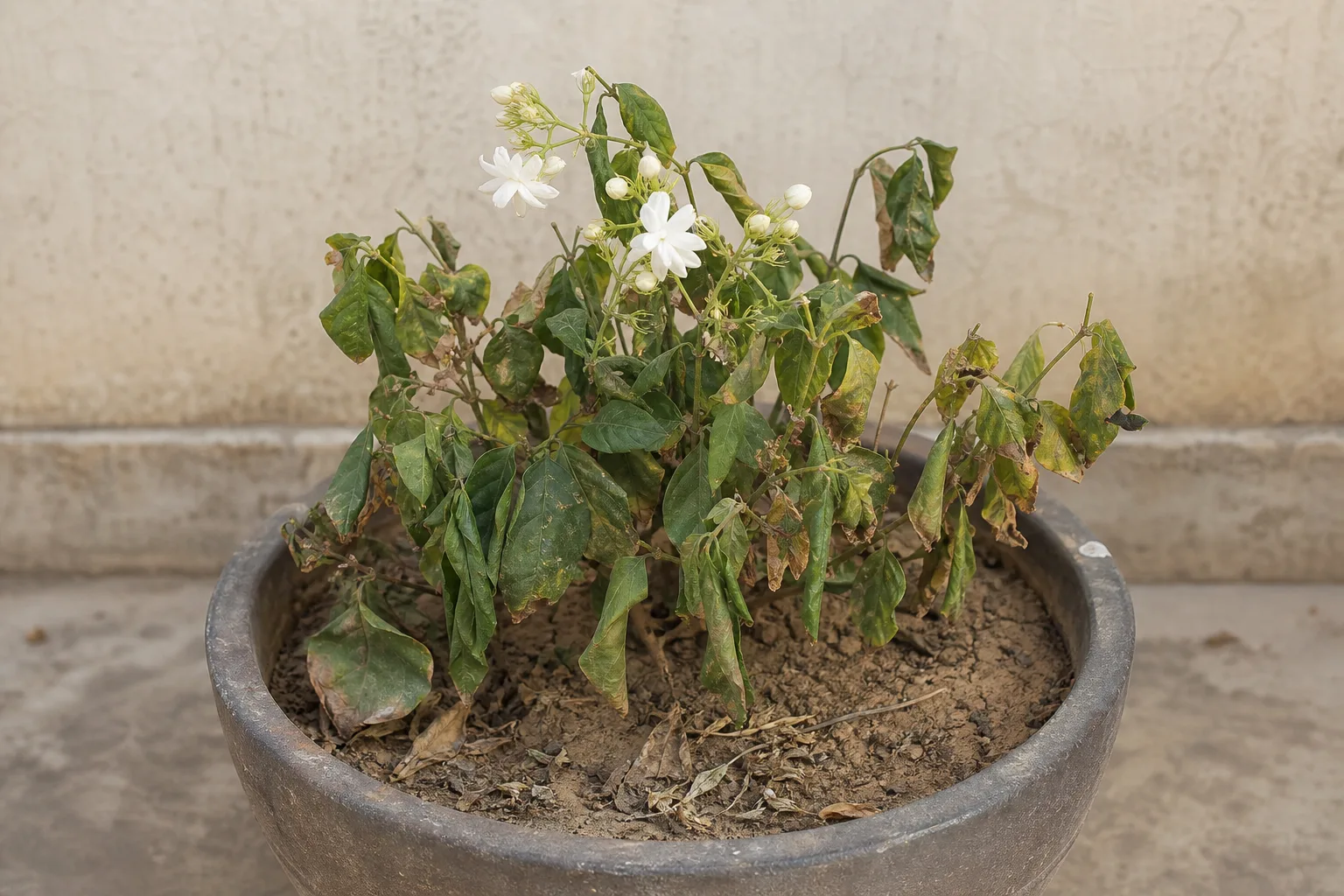
Underwatering on Mogra: Causes, Checks & Fixes
This guide covers underwatering on Mogra. See also the general Underwatering guide, watering, and light pages for this plant.
Underwatering on Mogra: Causes, Checks & Fixes
Quick answer
Underwatering on Mogra (Jasminum sambac - Arabian jasmine, Mallige, Motia) is not a slow fade. During summer bloom, a small balcony pot can go from fine to limp leaves and dropped buds in a single hot weekend while the mix shrinks away from the pot wall.
First step: press your finger 2–3 cm into the mix and lift the pot. A light, dry pot with limp glossy foliage and plump buds falling before they open points to drought. A heavy, wet pot with wilt despite moisture means a different problem-see wilting and overwatering before you add more water.
First fix: bottom-water or soak thoroughly once until the root ball rehydrates, drain completely, then resume the 2–3 cm dry-check rhythm for your season and pot size. One full drink beats repeated surface sips that never reach deep roots.
Why Mogra gets underwatered
Mogra is a tropical flowering shrub that wants evenly moist, well-drained soil during active growth-not bone-dry weeks followed by panic soaks. Underwatering happens when care rhythm fights that biology.
Summer bloom peak and small balcony pots
During peak flowering, mogra transpires heavily. A twelve-inch terrace pot in full sun can lose usable moisture in one hot afternoon. Growers who water on a weekly calendar while the top 2–3 cm dries every two days leave the plant chronically thirsty-especially in porous terracotta that breathes faster than plastic.
Our watering guide frames warm-season checks as every one to three days when dry at depth, sometimes daily for small exposed pots. Underwatering on mogra is often a season mismatch, not neglect.
Fear of overwatering after bud-drop scares
Fragrance-focused growers sometimes pull back hard after one overwatering scare or bud drop episode. Mogra does punish soggy mix-but it also drops buds when the root zone dries during active growth. Swinging from flood to drought is as damaging as chronic dryness; the fix is steady dry-down checks, not avoiding water entirely through bloom season.
Stopped wicks and self-watering failures
Self-watering pots, wicks, and cachepots only work when drainage stays open and the reservoir refills. A clogged wick or empty reservoir lets mogra sit dry for weeks while leaves still look briefly firm in cool morning air-then collapse in afternoon heat. Always confirm the root zone, not the gadget label.
What underwatering looks like on Mogra
On mogra’s smooth, glossy, non-fuzzy leaves, drought stress shows predictable patterns:
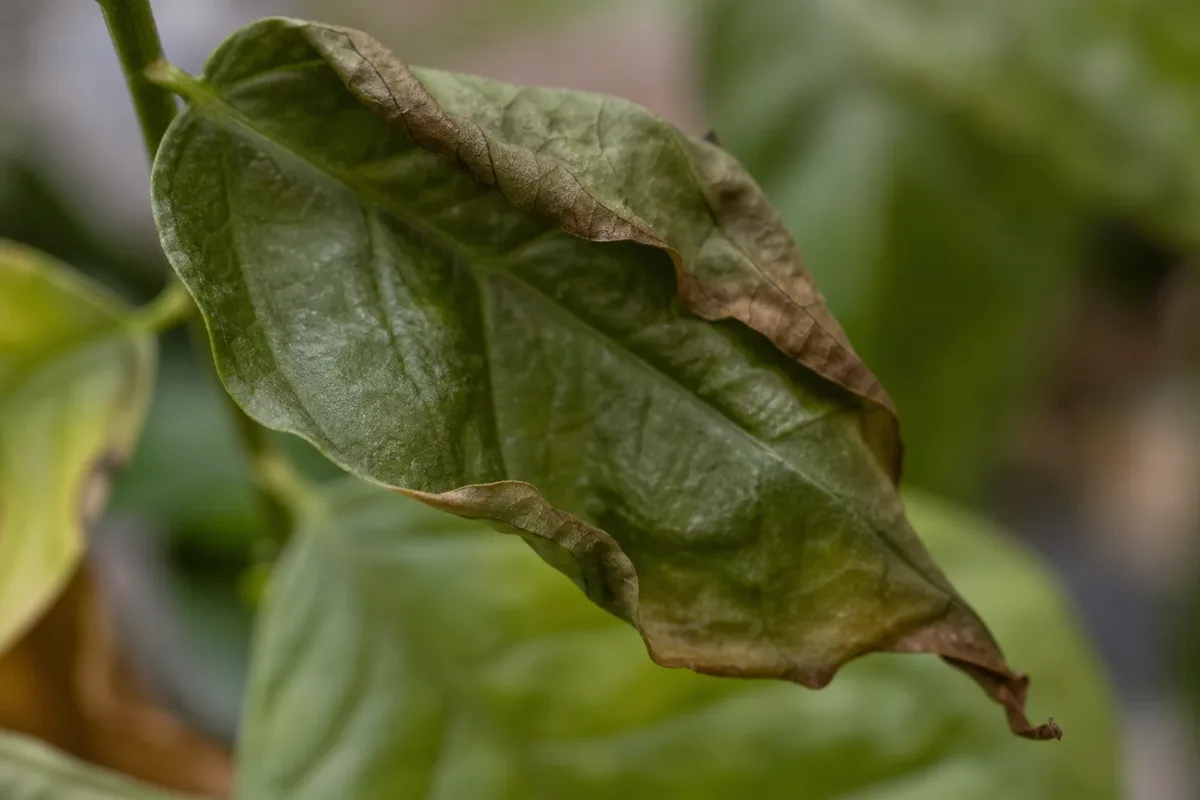
Underwatering symptoms on Mogra - compare with healthy tissue on the same plant.
- Limp turgor loss - stems and petioles hang; foliage loses its usual firm angle
- Light pot and dusty mix - soil pulls away from the pot edge; surface looks pale and crumbly
- Dry crispy leaf margins - especially on older leaves exposed to sun and wind
- Bud drop before opening - tight white clusters shrivel or fall while stems stay green; a hallmark drought signal during bloom
- Slow rebound after a sip - surface-only watering leaves the plant limp again by the next day
Unlike root rot, the mix feels light and dry, roots are usually firm and pale when inspected, and there is no sour smell. Unlike wet-wilt root failure-where roots cannot absorb water despite wet mix-leaves often perk within hours after a proper soak.
How to confirm the cause
Work through these checks in order before you change anything:
- Moisture at 2–3 cm depth - Dry, crumbly mix at that depth supports drought. Cool, clinging soil means wait-even if leaves look sad.
- Pot weight - Lift the container. Noticeably lighter than right after a thorough watering supports underwatering.
- Stem base firmness - Firm green tissue at the soil line fits thirst. Soft, dark tissue with sour odor points to rot, not drought.
- Bud stage - Plump buds dropping en masse during hot bloom season with a light pot strongly suggests dry root zone-not the same pattern as buds aborting on wet heavy mix.
- Time and recovery - Afternoon limpness that firms overnight with a moderately heavy pot may be heat stress, not chronic drought. Persistent limpness with a light pot after morning supports thirst.
- Drainage sanity - Confirm you are not misreading a plant sitting in an empty reservoir while the inner root ball is dust-dry.
If dry mix at depth, a light pot, and firm stems align, underwatering is the working diagnosis. If wet soil and a heavy pot align with wilt, stop and read wilting before soaking.
Dry wilt vs. wet wilt decision table
| What you observe | Most likely cause | First action |
|---|---|---|
| Light pot + dry 2–3 cm + limp leaves | Underwatering | Soak or bottom-water once; drain fully |
| Heavy pot + wet mix + limp leaves | Root uptake failure / overwatering | Pause watering; check drainage; see overwatering |
| Moderate pot weight + afternoon limp only | Heat stress | Shade during peak heat; verify even moisture |
| Light pot + bud drop + crisp margins | Drought during bloom | Rehydrate once; daily dry checks in summer |
| Light pot + stippling + webbing | Spider mites | Inspect undersides; treat pests before assuming thirst |
This page owns the dry branch. The wet branch lives on wilting and overwatering.
First fix for Mogra
Rehydrate the root ball once-thoroughly and completely.
When the top 2–3 cm is dry and the pot is light:
- Bottom-water - Set the pot in a basin of room-temperature water for twenty to thirty minutes until the surface darkens, then lift and drain fully.
- Or top-water in two passes - If mix repels water, water until runoff, wait ten minutes, then water again so the second drink penetrates depth.
- Empty the saucer - Mogra should never sit in standing runoff after recovery.
Do not mist the canopy instead of soaking soil. Do not leave the pot submerged for days. One proper drink, appropriate dry-down, repeat-matching the RHS guidance for moist but well-drained container culture.
Step-by-step recovery
Mild drought (missed watering, firm stems)
Bottom-water or soak once, drain fully, and wait. Most mogra perk within a few hours to overnight. Track how fast the top 2–3 cm dries in your light and pot-adjust to dry-down, not a calendar.
Moderate drought (hydrophobic mix, repeated dry spells)
When water runs straight down the sides and the core stays dry, use repeated bottom-soaks or two-pass top watering until a skewer pulled from mid-depth shows even moisture. Over the next week, check weight daily during bloom season. Buds may still abort from the stress episode; new clusters need stable moisture to return.
Severe chronic drought (brittle stems, widespread bud loss)
After weeks of dryness, fine roots may be damaged. Rehydrate slowly-one full soak, then let the top third dry before the next drink. Do not swing to daily drenching. If stems stay limp more than 48 hours after correct soaking, or lower leaves yellow while you were sure the mix was dry, escalate to wilting for root inspection. Some leaf edges will stay brown permanently; judge recovery by firm new shoots, not old tissue.
Recovery timeline
| Situation | What to expect |
|---|---|
| Mild thirst (one missed drink) | Perk-up within hours after one soak |
| Bloom-season drought with bud drop | Foliage firms in 24–48 hours; new buds may take weeks |
| Hydrophobic dry core | One to three bottom-soaks over several days |
| Chronic repeated drought | Weeks to restore bloom rhythm; some margins stay crisp |
Signs you are winning: firm new leaves, stable swelling buds, predictable dry-down at 2–3 cm, and a pot weight you learn to read by feel.
Signs the problem is worsening: limpness deepening after a proper soak, soft stem base, most leaves yellowing on wet mix (wrong diagnosis-switch to overwatering), or no new growth after two weeks of corrected rhythm.
Lookalike symptoms
Wilting with wet soil is the most dangerous lookalike-owners soak again and worsen root rot. Saturated mix drives out air and roots stop functioning even when water is present. Heavy pot plus clammy mix means pause, not drink.
Heat-stress afternoon wilt on a sunny balcony can limp leaves while soil is adequately moist. If the plant firms overnight and the pot is not light, stabilize shade and even moisture instead of adding daily water.
Low humidity can crisp bud tips and margins while soil moisture is fine-see low humidity when a hygrometer reads very dry air beside a heat vent.
Leggy pale growth in deep shade can look weak, but the fix is more light-not more water on already-wet mix.
What not to do
- Do not drench daily after one dry spell - that swings to overwatering and bud drop from soggy roots
- Do not mist instead of soaking - surface moisture does not rehydrate a dry root ball
- Do not water on reflex without the 2–3 cm check - you may be treating wet-wilt with more water
- Do not fertilize a drought-stressed plant - salts stress roots trying to recover
- Do not assume every limp leaf means thirst - read the decision table first
Mogra has smooth glossy leaves-not fuzzy foliage. Cold water shock is less of a concern than failing to soak deeply enough after prolonged dryness.
How to prevent underwatering on Mogra
Learn your pot’s dry-down speed each season. During summer bloom, check daily; in winter semi-rest, stretch toward weekly or longer when the top 2–3 cm stays cool and damp. Pair checks with our watering guide rhythm: warm active growth when dry at depth, reduced frequency when growth slows.
Use open drainage, empty saucers after every drink, and right-size pots-oversized containers are rarely the fix for a plant that dries too fast; a root-bound summer bloomer in a small terracotta pot may simply need more frequent checks, not a huge new pot mid-season.
If you travel during bloom, arrange a sitter who lifts the pot or probes depth-not someone who sprinkles the surface every third day.
When to worry
Escalate if:
- Limpness persists more than 48 hours after a confirmed thorough soak on dry mix
- Stem base softens or smells sour after you thought the problem was drought
- Most leaves yellow while mix stays wet - you may have misread wet wilt as thirst
- No firm new growth within two weeks after stabilizing moisture
- Repeated bud loss every bloom cycle despite calendar watering - inspect roots and drainage before the next season
Early drought on mogra is highly recoverable. Chronic drought plus misapplied soaking can still damage fine roots-when in doubt, use the full wilting workflow.
Related mogra problems
- Mogra overview - species ID, bloom cycles, and balcony culture
- Watering - 2–3 cm dry check, bloom-season rhythm, rehydration technique
- Wilting - dry versus wet wilt decision path
- Overwatering - heavy pot, yellow lower leaves, wet mix
- Bud drop - buds aborting from drought and from soggy roots
- Drooping leaves - when limp growth is not full wilt
When to use this page vs other Mogra guides
- Mogra watering guide - Use for routine moisture checks before assuming underwatering is the main issue.
- Mogra problems hub - Browse all 20 common issues on this species.
- Wilting on Mogra - Different entry point when symptoms overlap with underwatering.
- Brown Tips on Mogra - Different entry point when symptoms overlap with underwatering.
- Yellow Leaves on Mogra - Different entry point when symptoms overlap with underwatering.