Best Soil for Mogra: Mix, Drainage & Repotting
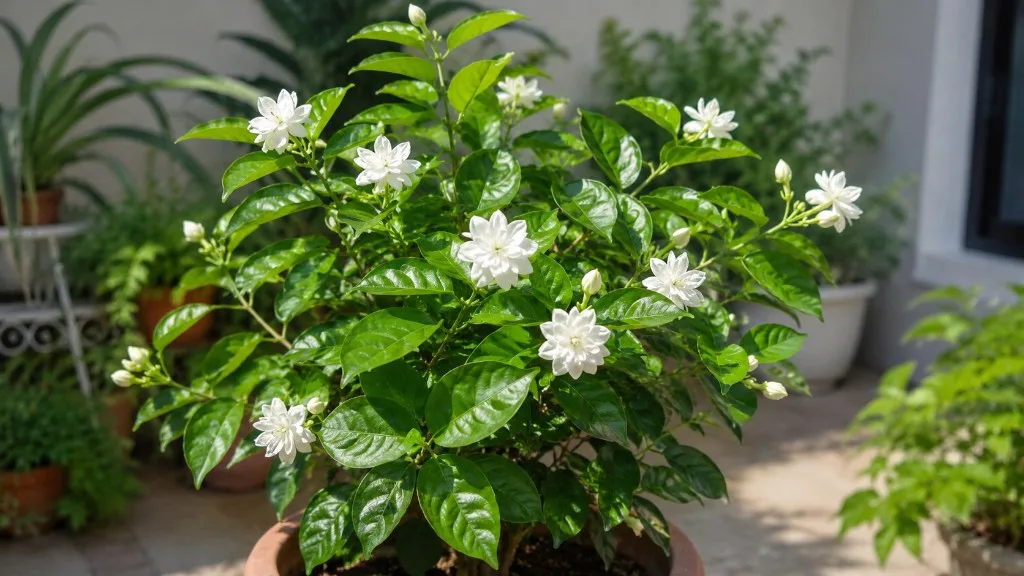
Best Soil for Mogra: Mix, Drainage & Repotting
Best Soil for Mogra: Mix, Drainage & Repotting
By sai-ananth · Reviewed by LeafyPixels Review Board · Methodology: botanical references and practical container constraints · Last reviewed June 2026
Mogra can carry glossy leaves and tight green buds while the root zone at the bottom of the pot sits in dense, oxygen-starved mix. The failure rarely shows on day one. Water moves more slowly through the container after a few monsoon weeks, peat and compost compact, and the fibrous roots of Jasminum sambac - the species behind Mogra, Mallige, Motia, and Arabian jasmine - start suffocating in substrate that looks fine on top. By the time buds drop before opening, lower leaves yellow, or the mix smells sour when you probe near the drainage hole, the soil system has usually been failing quietly for weeks. Getting mogra soil right is not about copying a random bag label from the nursery. It is about building one well-draining, moderately fertile mix that holds enough moisture for continuous bud set without trapping water around the roots - then pairing that mix with a pot sized to the root ball, not your ambitions for next year’s growth.
This guide covers why mogra soil fails in Indian balconies and AC-cooled rooms, what the roots actually need, one canonical mix ratio (no conflicting recipes), climate variants for monsoon humidity versus dry indoor air, drainage and pH management, when and how to repot, and the soil mistakes that cause bud drop and root rot even when watering looks correct on paper. For the same species under the English name “jasmine,” our jasmine soil guide goes deeper on general Jasminum culture; this page is written for mogra growers searching by the Indian common name. Pair soil work with our watering, light, and repotting guides so you change one variable at a time.
Why Mogra Soil Fails More Often Than the Plant
Most mogra problems get blamed on watering or light first, and both matter enormously. But the same watering routine that keeps mogra healthy in a loose, fast-draining mix will rot roots in a compacted peat-heavy blend sitting in an oversized decorative pot on a shaded veranda. Soil decides how fast water exits the container, how long moisture lingers near the roots, and how steadily nutrients become available between feedings. The Royal Horticultural Society describes cultivated J. sambac as preferring loam that is moist but well-drained with neutral pH - drainage protecting roots from stagnation, moisture supporting the energy demands of repeated flowering. Your job is a balanced root environment that dries on a rhythm matching how you water and where the plant lives.
Mogra fails in pots for predictable soil reasons: too much organic matter without enough perlite or coarse sand, oversized containers that hold wet mix around unused space, garden soil or topsoil substituted for container blend, decorative cachepots that trap runoff, and mix that has decomposed past one or two monsoon seasons without refresh. Each problem produces similar above-ground symptoms - yellow leaves, stalled growth, mold on the soil surface - which sends growers chasing fertilizer or brighter windows when the root zone is the actual bottleneck. Soil is the system that decides whether your watering schedule works or fights you every week.
What Mogra Roots Need From Your Mix
Mogra is not a desert plant and not a bog plant. In a container, roots depend entirely on the structure you provide - fine feeder roots need oxygen as much as water. A fertile mix gives slow-release nutrition and microbial activity; drainage amendments keep that fertility from becoming a waterlogged sponge. The Missouri Botanical Garden recommends loose, humusy, evenly moist but well-drained soil for Jasminum sambac, grown in full sun to part shade as a container plant in temperate climates. That phrase - evenly moist but well-drained - is the design target for your mix, not a license to keep the pot soggy.
Native Range and Container Reality
Mogra is native to tropical Asia, with India and Southeast Asia at the center of its cultural and horticultural history. In open ground, roots spread through loamy soil that drains freely during heavy rain yet holds humidity in the root zone. In a pot on a Mumbai balcony or a Delhi windowsill, none of that happens automatically. Container mix compacts under repeated watering, salts accumulate from hard tap water and fertilizer, and the root ball occupies an ever-smaller fraction of the pot as stems and leaves grow outward. UCANR extension guidance on J. sambac notes the species does not tolerate too much moisture and prefers a blend of organic and inorganic components - peat moss or compost, perlite, and vermiculite - with slightly acidic chemistry. Your recipe should echo open, loamy ground rather than field soil, which compacts rapidly in pots.
Bloom Demand vs Drainage Speed
Mogra blooms repeatedly when light, water, and soil work together. Continuous bud set costs energy; roots must absorb water and nutrients on a steady rhythm without swinging between flood and drought. That is why the mix should be moderately moisture-retentive in the organic fraction and fast-draining in the mineral fraction - not one or the other in isolation. When the lower half of the pot stays saturated while the surface looks dry, buds often abort before opening even though you watered on schedule. That bud-drop pattern is frequently a root-zone oxygen problem, not a calendar problem. Fixing the mix - or repotting into fresh blend with more perlite - often resolves bud drop faster than changing fertilizer alone. Low-light indoor mogra needs a leaner compost fraction than a sun-baked terrace pot; heavy wet compost in a dim room is one of the most common hidden causes of flower loss.
Best Soil Mix for Mogra
The best soil for mogra is a well-draining, moderately fertile container blend with pH between 6.0 and 7.5, loose enough for air to reach roots, stable enough to hold moisture for several days in a typical eight-to-ten-inch pot, and refreshed every two years or sooner when drainage slows. One canonical ratio covers most homes when adjusted for your room:
Canonical Home Recipe (One Ratio)
50% quality potting mix · 30% compost or worm castings · 20% coarse perlite, pumice, or horticultural sand
This is the single recipe this guide uses throughout - in the quick answer, the body, and the FAQs. It replaces the old conflicting formulas (15% perlite / 10% compost in one place, 50/30/20 in another) that made the previous page impossible to act on.
How to blend one repot’s worth:
- 50% indoor or outdoor potting mix - Choose a soilless peat- or coco-based blend labeled for containers, not garden soil or pure peat. Avoid moisture-control formulas with water-absorbing gel crystals; they stay wet too long for mogra in average indoor conditions.
- 30% compost or worm castings - This is the fertility fraction. Worm castings are gentler and less moisture-retentive than heavy wet compost. Do not substitute fresh manure or unfinished compost, which can burn roots and harbor pathogens.
- 20% coarse perlite, pumice, or horticultural sand - This is the drainage and aeration fraction. Perlite is the most accessible choice in India; coarse sand works if it is horticultural grade, not fine river sand that compacts. Rice-husk chunks or cocopeat chips can substitute for part of the perlite fraction in humid coastal climates if they are coarse, not powder-fine.
For a typical 20–25 cm (8–10 inch) mogra pot, measure by volume in a bucket: roughly 3 litres potting mix, 2 litres compost, 1 litre perlite - scale proportionally for larger containers. Mix on a tarp until uniform; uneven blending creates wet pockets that cause localized root rot.
Ready-made shortcut: A quality commercial potting mix amended with one part perlite to every two parts bagged mix, plus a scoop of compost, works when you cannot batch-blend. Same species guidance appears in our jasmine soil guide for growers using the English common name.
Fast-Draining vs Moisture-Retentive Variant
One ratio does not fit every placement. Adjust the canonical 50/30/20 blend rather than inventing a second incompatible recipe:
| Condition | Adjusted blend | Why |
|---|---|---|
| Monsoon balcony, high humidity, dim corners | 40% potting mix · 20% compost · 40% perlite or coarse sand | Nights stay humid; less compost reduces waterlogging risk |
| Hot terrace, full sun, fast drying | 55% potting mix · 30% compost · 15% perlite | More organic matter holds moisture between daily waterings |
| AC room, low light, slow drying | 45% potting mix · 15% compost · 40% perlite | Heavy compost + low evaporation = sour mix and bud drop |
During peak monsoon, probe the bottom of the pot after watering - if mix stays wet more than three days in moderate light, shift toward the fast-draining column before the next repot. Our overwatering guide covers rescue when the mix is already saturated.
Drainage, Aeration, and the One-Minute Test
Drainage is the non-negotiable property of mogra soil. Root rot in containers almost always traces to mix that does not drain quickly enough, a container without an exit path for water, or watering that ignores how fast the mix actually dries in your room. Aeration and fertility are tuning knobs: enough air in the mix that roots breathe between waterings, enough organic matter that the plant is not living on fertilizer alone, but not so much heavy compost that the bottom stays damp for a week after every drink.
Waterlogging displaces oxygen from pore spaces and damages fine feeder roots. The goal is mix that accepts a full watering, releases excess within minutes, and dries evenly enough that the top 2–3 cm dry test from our watering guide reflects conditions deeper in the pot. If only the surface dries while the core stays wet, your drainage fraction is too low, your pot is too large, or both.
Drainage Hole and Cachepot Rules
A drainage hole is mandatory for long-term mogra care - it is the exit path that makes watering decisions recoverable. Without it, even a perfect mix eventually saturates from the bottom up. Skip the gravel layer at the pot bottom: Illinois Extension notes that gravel inside the pot does not improve drainage - it creates a perched water table that keeps soil above the gravel saturated longer. Fill the entire pot with blended mix.
If you use a decorative cachepot, water the nursery pot in a sink, let runoff drain completely, then return it to the cover pot. Never let mogra sit in standing water. Terracotta dries faster than plastic; plastic retains moisture longer - factor that into your variant choice above, not into a second conflicting recipe.
pH, Minerals, and When to Flush
Mogra prefers slightly acidic to neutral soil, pH 6.0–7.5. The RHS lists neutral pH for J. sambac; most quality peat- or coco-based potting mixes already fall in or near this range, so exact pH adjustment is rarely necessary indoors unless leaves show chronic interveinal yellowing despite good care. Alkaline conditions above pH 7.5 can lock up iron and manganese, producing yellowing between leaf veins even when fertilizer is present.
Hard tap water and repeated fertilizing build salts in container mix over months. When leaf edges brown despite appropriate watering, or white crust forms on the soil surface, flush the pot - run water through until it flows freely from the bottom for several minutes - before repotting into fresh blend. If crust is heavy, refresh at the next repot rather than only top-dressing. A simple slurry test with a home pH meter or kit on a sample of mixed, moist soil confirms whether alkaline drift is part of the problem; flush first, then repot if symptoms persist.
Pot Size and Material Pairing
Soil and container choice are a matched set. When repotting, go up only one size - roughly 2–5 cm (1–2 inches) wider than the current container. UCANR notes that mogra is unhappy in an oversized pot; excess soil holds moisture around roots that are not yet using it. Mogra can bloom well when slightly root-bound, so resist jumping to a dramatically larger decorative container after one good flowering season.
Match pot depth to root habit - mogra forms a relatively shallow, fibrous root mass compared with deep tap-rooted trees. A wide, stable base helps top-heavy terrace specimens; a nursery pot one size up beats a tall narrow vase that keeps the bottom anaerobic. After repotting, hold fertilizer for four to six weeks while new root hairs establish.
When to Refresh or Repot the Mix
Mogra soil is not permanent. Organic components decompose, fine roots die and break down, and repeated watering compacts structure until drainage slows even though the mix looks fine on the surface. UCANR recommends replacing container soil every two years for J. sambac; fast-growing terrace plants may need attention sooner.
Signs the mix needs replacing:
- Water runs through without absorbing, or sits on the surface while running down the sides
- The pot takes noticeably longer to dry than six months ago
- Roots circle the bottom or emerge from drainage holes
- Mix smells sour, musty, or stagnant when you probe near the bottom
- New growth stalls, buds drop before opening, or flowering declines despite good light
- White crust covers the soil surface
Spring, after the first flush of flowers, is the safest window for routine repotting on mogra, when the plant can rebuild root hairs quickly. Avoid winter repot unless roots show clear distress - severe waterlogging, sour smell, or a container that will not drain. Full procedural detail also lives in our repotting guide.
Step-by-Step Repot Checklist
Before you start: Water one day before repotting so the root ball holds together. Prepare fresh 50/30/20 mix, choose a pot one size up with a drainage hole, and have clean scissors ready.
Step 1 - Remove the plant. Tip the pot gently and slide the root ball out. Run a knife around the inside edge if it sticks rather than yanking stems.
Step 2 - Inspect roots. Healthy mogra roots are firm and white to tan. Mushy, brown, or foul-smelling roots indicate rot - trim to healthy tissue with sterilized scissors and shift toward the fast-draining variant (more perlite, less compost). See root rot if damage is extensive.
Step 3 - Prepare the new pot. Add enough fresh mix to the bottom so the top of the root ball sits about 2 cm below the rim. No gravel layer.
Step 4 - Position and fill. Set the root ball centered and fill around it with fresh mix, working soil gently between roots with a chopstick. Keep the plant at the same depth as before - burying the crown deeper invites stem problems.
Step 5 - Water and settle. Water lightly until it runs from drainage holes, then empty the saucer. Keep in appropriate light but out of harsh midday sun for one to two weeks if the plant was stressed. Hold fertilizer for four to six weeks.
Soil Mistakes That Kill Buds and Roots
Using garden soil or topsoil in containers compacts, holds water unevenly, and introduces pathogens. Never substitute outdoor dirt for container mix, even if it looks dark and fertile in a temple garden bed.
Overpotting ranks second. A mogra moved from a 20 cm pot into a 35 cm decorative container sits in waterlogged mix for weeks after every watering. Leaves may stay green while roots rot in unused outer soil.
Loading the mix with heavy compost in the name of fertility - especially indoors in low light - produces a wet, anaerobic root zone. Compost is seasoning, not the main ingredient.
Treating gravel at the pot bottom as a drainage fix makes saturation worse by creating a perched water table.
Ignoring drainage holes or cachepots without draining traps runoff. Lift the nursery pot to water, drain completely, then return to the decorative shell.
Repotting and immediately fertilizing heavily combines two stressors. Wait four to six weeks.
Confusing soil problems with light problems delays the real fix. Mogra in low light stays wet longer even in decent mix; audit light and drainage fraction together.
Watering on a calendar turns mediocre soil into dangerous soil. The top 2–3 cm dry test only works when mix dries evenly - which requires proper structure and pot size.
Practical Checks
Run these checks after every repot and whenever growth or flowering slips for no obvious reason.
One-Minute Drainage Check
After a full watering until water runs from drainage holes, watch three things. First, water should not sit on the surface more than a few seconds - pooling means compaction or hydrophobic peat. Second, water should exit the holes within two to three minutes in a typical eight-to-ten-inch pot. Third, pick up the pot after thirty minutes - heavier than before, but not so saturated that the saucer fills repeatedly. If the pot is still dripping after thirty minutes, increase perlite fraction or downsize the container before adjusting watering alone.
Root-Zone Smell Test
Fresh mix smells earthy. Sour, swampy, or stagnant soil when you probe near the bottom means roots may be losing oxygen before leaves show the full problem - common after a monsoon season in a mix with too little perlite. If smell pairs with fungus gnats or surface mold, treat as a soil-system failure, not a pest-only issue.
Know Your Plant: Jasminum sambac Soil Context
Mogra (Jasminum sambac) is the same species as Arabian jasmine, Mallige, and Motia - a twining or sprawling evergreen shrub from tropical Asia grown widely on Indian balconies, in courtyards, and as a potted sacred-garden specimen. Cultivars such as ‘Maid of Orleans’ (single white flowers) and ‘Grand Duke of Tuscany’ (double flowers) share the same drainage rules; the double form may need slightly more vigilant drainage in cool rooms because dense foliage slows evaporation from the pot surface.
In containers, mogra typically reaches 1–1.5 m on a terrace and can be trained larger against a support. It flowers primarily in warm months with sporadic blooms at other times when light and soil stay stable. Soil should protect that bloom rhythm: evenly moist but never waterlogged, refreshed before compaction wins, and paired with the overview care basics for the full picture. If chronic wet mix persists after repotting, consult our root rot and overwatering guides before stacking more changes.
Conclusion
The best soil for mogra is not a single magic bag from the nursery. It is a well-draining, moderately fertile system - 50% quality potting mix, 30% compost or worm castings, and 20% coarse perlite or sand - with pH 6.0–7.5, a drainage hole, and a pot sized to the root ball rather than your hopes for next monsoon. Run the one-minute drainage test after repotting, replace mix every two years or when drainage slows, and dial the compost fraction down in humid, low-light rooms where wet mix triggers bud drop before you blame the watering can.
Mogra rewards growers who think in systems. Light drives blooming. Watering follows how the mix dries. Soil connects both by deciding whether roots breathe, drink, and feed on a steady rhythm or struggle in alternating flood and stagnation. Mix once with intention, refresh before compaction wins, and adjust perlite upward when monsoon humidity or AC stillness keeps the pot wet too long. Get that balance right and the plant stops merely surviving in the pot - it has what it needs to set buds and fill the evening air with the fragrance you brought it home for.
When to use this page vs other Mogra guides
- Mogra overview - Start here for whole-plant context before deep-diving this topic.
- Mogra problems hub - Jump to symptom-specific fix guides when this care topic does not resolve the issue.
- Root Rot on Mogra - Escalate here when soil adjustments are not enough.
- Mold on Soil on Mogra - Escalate here when soil adjustments are not enough.
Related Mogra guides
- Mogra overview
- Mogra watering
- Mogra light
- Mogra propagation
- Mogra fertilizer
- Mogra repotting
- Root Rot on Mogra
- Mold on Soil on Mogra
- Mogra problems
Related tool
Try the Soil Mix Calculator with mogra pre-selected to estimate needs for your setup.